About Arun Kumar N

Arun has been associated with India International Times since 2018 and he has been a key reporter in covering science and space related stories. He can be reached at arunKnn@indiainternationaltimes.com.

Salvaging SDGs still possible, but countries must act now: Guterres

Addressing ministers at UN Headquarters in New York, he called for urgent action to rescue lagging Sustainable Development Goals (SDGs) amid war, inequality and fiscal strain.

Transformation is not only necessary – it is possible,” he declared, highlighting landmark commitments adopted in recent months: the Pandemic Agreement at the World Health Assembly in Geneva, pledges to expand marine protected areas at the third UN Ocean Conference in Nice, and the new vision for global finance agreed in Sevilla at the fourth International Financing for Development Conference.

These are not isolated wins, they are signs of momentum and signs that multilateralism can deliver.

The remarks opened the ministerial segment of the High-level Political Forum on Sustainable Development (HLPF), the UN’s central platform for reviewing the 2030 Agenda and its 17 SDGs.

Get back on track

Mr. Guterres warned that the world remains far off track to meet the 2030 targets.

“Only 35 per cent of SDG targets are on track or making moderate progress. Nearly half are moving too slowly. And 18 per cent are going backwards,” he said.

He urged governments to act with urgency and ambition.

The Sustainable Development Goals are not a dream. They are a plan – a plan to keep our promises to the most vulnerable people, to each other, and to future generations.

Citing gains since 2015, including expanded social protection, declining child marriage and growing women’s representation, he said the SDGs remain “within reach” if world leaders channel resources and political will.

The Secretary-General also linked development and peace, noting ongoing violence in Gaza, Sudan, Myanmar, Ukraine and elsewhere.

At every step, we know sustainable peace requires sustainable development,” he said, calling for immediate ceasefires and renewed commitment to diplomacy.

ECOSOC President Bob Rae addresses the ministerial segment of the HLPF.

Double down on multilateralism

Bob Rae, President of the Economic and Social Council, echoed the Secretary‑General’s call, warning that global disruption – from climate change to economic disarray – requires deeper solidarity.

The SDGs are not optional ideals, but rather essential commitments,” he said.

Now is not the time for us to abandon our ideals…it is now actually the time to double down on our multilateral obligations to one another.”

Mr. Rae cautioned that shrinking national budgets and rising nationalist politics are undermining progress but insisted that “multilateralism delivers real, tangible benefits for people at every level of society.”

He called for closer partnerships with civil society, local governments, and the private sector, stressing that SDGs must be “integrated into budgets and policies around the world, not as at odds, but as the core of how governments should serve their people.”

Match ambition and delivery

Philémon Yang, President of the General Assembly, emphasized aligning political commitments with concrete action.

He praised the Compromiso de Sevilla and last year’s Pact for the Future, which aim to reform global financial systems, scale up climate finance, and strengthen international tax cooperation.

The gap between ambition and delivery can only be closed through solidarity, resources and political will,” he said.

“The deadlines for the 2030 Agenda are fast approaching,” he warned. “Whether we like it or not. And while progress is lagging, we have the tools and ambition to deliver.”

Accountability and partnership

The HLPF, established at the landmark Rio+20 UN Conference on Sustainable Development in 2012, serves as the primary UN platform for monitoring SDG progress, including through Voluntary National Reviews (VNRs).

This year’s forum, convened under the auspices of the ECOSOC, runs until 23 July with a focus on five goals: health, gender equality, decent work, life below water, and global partnerships.

More than 150 countries have presented VNRs – with 36 reporting this year – showcasing national efforts and challenges in implementing the 2030 Agenda.

Mr. Guterres praised the reviews as “acts of accountability” and “templates for other countries to follow and learn from.”

With just five years left to meet the global goals, he urged ministers to “transform these sparks of transformation into a blaze of progress – for all countries.

Source link

Droughts are causing record devastation worldwide, UN-backed report reveals

This is according to a new report from the UN Convention to Combat Desertification (UNCCD), the U.S. National Drought Mitigation Center (NDMC) and the International Drought Resilience Alliance on the global impacts of droughts from 2023 to 2025.

“Drought is a silent killer. It creeps in, drains resources, and devastates lives in slow motion. Its scars run deep,” said UNCCD Executive Secretary Ibrahim Thiaw.

“This is not a dry spell,” stressed Dr. Mark Svoboda, report co-author and NDMC Director. “This is a slow-moving global catastrophe, the worst I’ve ever seen. This report underscores the need for systematic monitoring of how drought affects lives, livelihoods, and the health of the ecosystems that we all depend on.” 

Record devastation in Africa

According to the report, as 90 million people face acute hunger across Eastern and Southern Africa, some areas in the region have been experiencing the worst drought ever recorded.

In Ethiopia, Zimbabwe, Zambia and Malawi, maize and wheat crops have suffered repeated failures. In Zimbabwe in particular, the 2024 corn crop was down 70 per cent year on year, maize prices doubled, and 9,000 cattle died of thirst and starvation.

Some 43,000 people in Somalia died in 2022 alone due to drought-linked hunger. The crisis continued through 2025, with a quarter of the population facing crisis-level food insecurity at the beginning of the year.

As a result of drought, Zambia is suffering one of the world’s worst energy crises: in April, the Zambezi River plummeted to 20 per cent of its long-term average, and the country’s largest hydroelectric plant, the Kariba Dam, fell to 7 per cent generation capacity, causing electricity blackouts of up to 21 hours a day. This has led to the shuttering of hospitals, bakeries, and factories, further compounding the devastation.

Worldwide impacts

But the effects of drought extend beyond Africa. For example, by September 2023 in Spain, two years of drought and record heat caused a 50 per cent drop in the olive crop, doubling olive oil prices nationwide.

In Türkiye, drought-accelerated groundwater depletion has triggered sinkholes, endangering communities and their infrastructure while reducing aquifer storage capacity.

In the Amazon Basin, record-low river levels in 2023 and 2024 led to mass deaths of fish and endangered dolphins, disrupted drinking water supplies and created transport challenges for hundreds of thousands. Ongoing deforestation and fires also threaten to shift the Amazon from a carbon sink to a carbon source.

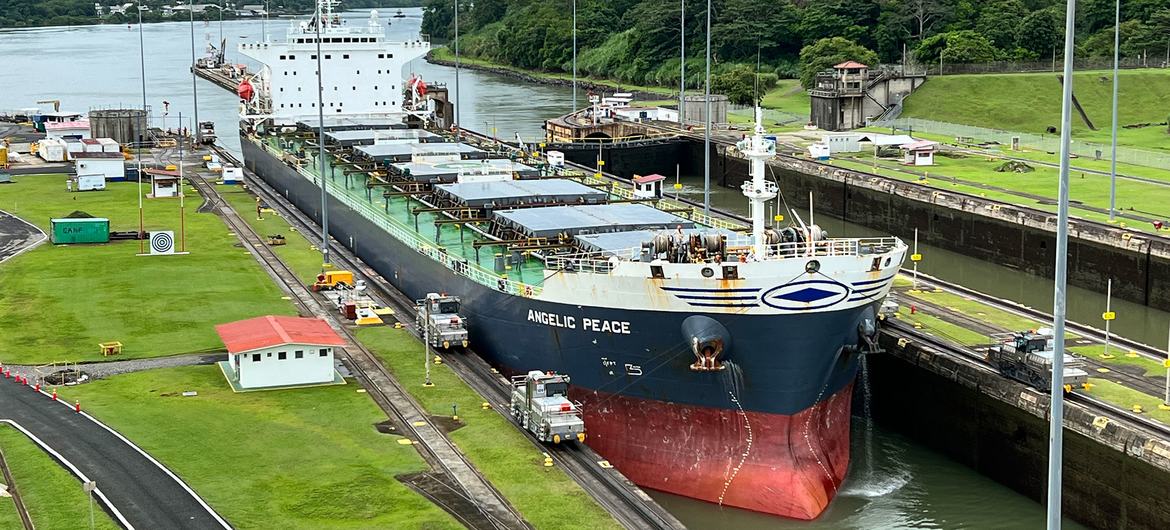
Declining water levels in the Panama Canal slashed transit by more than one-third, leading to major global trade disruptions. Among the spillover effects were declines in American soybean exports and shortages and rising prices reported in UK grocery stores.

Call for cooperation and solutions

The report listed several recommendations to help combat this crisis, including stronger early warning systems, real-time drought and drought impact monitoring, and nature-based solutions such as watershed restoration and indigenous crop use.

It also called for more resilient infrastructure – including off-grid energy and alternative water supply systems – and global cooperation, particularly regarding transboundary river basins and trade routes. 

Effective partnerships can stop the next pandemic

Dr. Ibrahim Abubakar, a professor of infectious diseases at University College London,  issued this warning at a recent meeting of the UN Economic and Social Council (ECOSOC) in New York.

It is not a question of if but when, and Dr. Abubakar believes the answer is sooner than anyone wants in part because the global healthcare system remains drastically  siloed.

This is a problem because, intrinsically, a pandemic cannot be stopped by one country alone.

“Infectious diseases will not respect borders. Therefore, health systems to ensure equity, dignity and universal access must also be agile to implement policies across borders,” Dr. Abubakar said.

Rather, stopping pandemics — and promoting broader global development — requires robust partnerships and consistent investment in multilateral systems as a practice, not just an ideal.

“If we are to meet the ambitions of the 2030 Agenda, we must reimagine cooperation, not as a transactional action but as a dynamic, inclusive and future-ready partnership,” said Lok Bahadur Thapa, vice president of ECOSOC.

A goal to unite all goals 

The High-Level Political Forum (HLPF) on Sustainable Development is convening at UN Headquarters in New York to discuss progress – or lack thereof – towards the globally agreed 17 Sustainable Development Goals (SDGs).

The first 16 SDGs deal with specific aspects of development — such as poverty, gender equality and climate change — but the 17th puts forward a path to achieve the others. And this path lies in embracing global partnerships between State governments, civil society organizations, communities and the private sector.

However, with an annual financing gap for the SDGs which exceeds $4 trillion, the partnerships of today are not sufficient to realize the goals for tomorrow.

“We must forge truly transformative partnerships that break traditional silos: governments, civil society, the private sector and multilateral institutions all have roles to play in an inclusive coalition for sustainable development,” Dima Al-Khatib, director of the UN Office for South-South Cooperation (UNOSSC) said at an HLPF event.

Prioritize prevention, not reaction

Right now, the current health system, which includes pandemic preparedness, is oriented towards halting health emergencies once they emerge as opposed to proactively preventing them, according to Dr. Abubakar.

Member States recently adopted a pandemic prevention treaty which endeavours to do just this — limit the likelihood of future pandemics.

But for many, this emphasis on prevention extends beyond pandemics to issues like rehabilitation services and primary care, both of which experts say are critical investments not only in human well-being but also in peace and security.

Moreover, these types of preventative medicine are cheaper than reactive medicine, according to Mandeep Dhaliwal, the Director of Health at the UN Development Programme (UNDP).  

“It’s important to invest in prevention as much as it is in treatment, and it is more cost-effective because … you’re turning off the tap,” Ms. Dhaliwal said.

However, convincing investors to support preventive care can be difficult because, when done correctly, tangible results are not necessarily visible.

Health is in every system

Nevertheless, investing in preventive medicine like primary care and the socioeconomic determinants of health — such as climate and nutrition — can help ensure that health systems are holistically supporting people before a crisis begins.

“Health is not a silo… the factors that influence health are often outside the health sector,” Ms. Dhaliwal said, citing the example of air pollution which is a climate problem that inherently influences health.  

This sort of holistic investment requires robust partnerships which work to ensure that every initiative — no matter how seemingly distanced — considers health implications.

“We have too often treated [health] as a downstream issue, something that improves only if other systems are working. But we now understand that health and well-being is not simply the result of good developments. It’s the starting point,” said Tony Ott, a professor of agricultural sciences at the Pennsylvania State University.

The weak link in the health system

Migrants and displaced people tend to be among those least likely to have access to preventive medicine and often those most impacted by the social determinants of health.

“Migration and displacement, whether it’s driven by conflict, climate change or economic factors, are defining factors in terms of our health,” he said.  

By the end of 2024, 123.2 million people were forcibly displaced worldwide, a decade-high number which proves that in the 10 years since the SDGs were adopted, the world has regressed in relation to displacements.

For Dr. Abubakar, these displaced people — and the millions more voluntary migrants — embody why the health system simply cannot continue to silo itself and must instead embrace cross-border partnerships.

“Health systems must ensure access to essential services regardless of immigration status … Any community without access is that weak link that may mean we are all not protected,” Dr. Abubakar said, referring to the next pandemic.

Communities at the centre

The idea of partnerships as foundational to achieving the SDGs is logical for many people. After all, the goals are universal in nature and demand global collaboration.

But this collaboration, especially for health, must do more than just engage experts — it must engage the people who seek out healthcare. Dr. Abubakar said that all health policies must be culturally appropriate to local contexts, something which can only happen if communities are placed at the centre of healthcare.

“The new future that I see would embrace global partnership, including countries irrespective of income level, public and private sector, academic and civil society. And within this framework, communities must be at the centre… not just as recipients but as co-creators of solutions.”
 

Source link

Terror and chaos for Gaza’s people now entering the ‘death phase’

In an alert, the UN agency for Palestine refugees, UNRWA, relayed desperate testimonies from its colleagues who are also struggling to survive in the war-torn enclave.

“We’re in the death phase,” one UNRWA worker said. “Everything around people at the moment is death, whether it’s bombs or strikes, children wasting away in front of their eyes from malnourishment, from dehydration, and dying.”

Doctors and nurses who continue to work in the UN agency’s clinics and medical centres “are watching children disappear and die in front of their eyes, and there’s absolutely nothing that they can do about it,” the worker continued.  

Civilians ‘faced sniper and tank-fire’

The development comes after desperate Gazans seeking aid came under fire at the weekend “from Israeli tanks, snipers and other gunfire”, according to the UN World Food Programme (WFP).

In a detailed statement after the incident on Sunday 20 July, it explained that a 25-truck lorry convoy crossed the Zikim border point in northern Gaza “destined for starving communities”. 

Shortly after passing the final checkpoint after the Zikim crossing point, the convoy encountered large crowds of civilians waiting to access food supplies. This was when the shooting began, leaving “countless” Gazans dead, WFP said, echoing reports by the health authorities.

Condemning the incident, WFP noted that the victims “were simply trying to access food to feed themselves and their families on the brink of starvation”.

The UN agency said furthermore that the violence had happened “despite assurances from Israeli authorities that humanitarian operational conditions would improve; including that armed forces will not be present nor engage at any stage along humanitarian convoy routes.”

Without such fundamental guarantees, it will not be possible to continue providing life-saving support across the Gaza Strip, WPF said, its reaction coming a day after a reported 36 people seeking aid were reportedly killed close to a Gaza Humanitarian Foundation hub run by the Israeli and US in the south of the Strip. 

Deir Al-Balah evacuation shock

In central Gaza’s Deir Al-Balah, meanwhile, 50,000 to 80,000 people have been impacted by a mass displacement order issued by the Israeli military – the first since war erupted on 7 October 2023.

“The new order cuts through Deir Al-Balah all the way to the Mediterranean Sea, further splintering the Strip,” OCHA said. “It will limit the ability of the UN and our partners to move safely and effectively within Gaza, choking humanitarian access when it is needed most.”

UN staff remain in Deir Al-Balah across “dozens of premises” whose coordinates have been shared with the warring parties. “These locations – as with all civilian sites – must be protected, regardless of displacement orders,” OCHA insisted, as  Israeli tanks reportedly moved into southern and eastern areas of the city.

According to reports, this may be where some of the remaining hostages seized in Hamas-led terror attacks on 7 October 2023 in Israel may still be held.

Gaza cut in two

The latest evacuation order means that almost 88 per cent of Gaza is impacted by displacement orders or falls within Israeli-militarized zones. Some 2.1 million civilians who have been uprooted multiple times are now squeezed into the little remaining space, where essential services have collapsed.

“There’s nowhere for [Gazans] to escape. They are trapped,” said UNRWA Senior Emergency Officer Louise Wateridge. “They cannot leave the Gaza Strip. They’re trying to keep their children alive. They’re trying to keep themselves alive.”

In comments to UN News, the veteran humanitarian explained that no food is available and only very limited water, explaining why so many desperate Gazans risk their lives to fetch aid from the few distribution centres and arrival points still operational.

“Children are malnourished, they’re dehydrated, they are dying in front of their [parents’] eyes,” Ms. Wateridge continued. “The bombs and the strikes are continuing; there’s no way to run, there’s nowhere to hide. There’s no way to escape there.” 

Source link

Doha agreement brings DR Congo government and M23 rebels a step closer to peace

In a statement released on 19 July, MONUSCO said that the Declaration of Principles, signed in Doha under the mediation of Qatar, “reflects the parties’ resolve to prioritise peaceful means, establish a ceasefire, and set up a joint mechanism to define its practical implementation.”

“This important declaration marks a shift towards easing tensions and protecting civilians seriously affected by the conflict,” declared Mr. Bruno Lemarquis, Deputy Special Representative of the UN Secretary-General in the DRC and Acting Head of MONUSCO. “We commend the commitments made and call for their timely and good-faith implementation.”

These commitments include measures to facilitate the voluntary, safe, and dignified return of internally displaced persons and refugees to their places or countries of origin, and the encouragement of inclusive dialogue, seen as vital to addressing the root causes of the conflict and achieving lasting peace.

Earlier this year, the M23 launched an offensive in North and South Kivu provinces, capturing cities and villages, including provincial capitals Goma and Bukavu. Thousands of civilians were killed, hundreds of thousands more were displaced, and serious human rights violations were committed.

The Declaration of Principles comes less than a month after a peace agreement signed by Congo and Rwanda, long accused by the Congolese Government of supporting the M23.

The Mission’s statement highlighted the Declaration’s emphasis on civilian protection and support for the ceasefire, with assistance from MONUSCO and other partners, and reaffirmed its readiness to support the cessation of hostilities, particularly through the establishment of a credible and jointly agreed verification mechanism.

MONUSCO’s statement concluded by urging all parties to honour their commitments, act in good faith throughout the process, and prioritise human rights, security, and the aspirations of the Congolese people in all decisions. 

Source link

Desks become beds as Haitian school shelters people displaced by violence

The classrooms at Anténor Firmin school in Hinche in central Haiti are no longer studiously quiet.

Once a place of learning, it now echoes with the sounds of babies crying, water containers clanking, and voices murmuring through the night.

Over 700 people displaced by violence are crammed into the crumbling compound, sleeping on floors where children once solved math problems.

Among them is Edens Désir, a former teacher, who continues to believe that education should be the key to a more prosperous and peaceful future for this beleaguered Caribbean Island nation.

Edens Désir teaches a class at Anténor Firmin school.

A trained accountant and former secondary-school teacher, his life was upended by the violent clashes that erupted in March 2025 in Saut-d’Eau and Mirebalais, two small towns south of Hinche.

Like 6,000 others, he fled massacres, rape, arson, and looting.

“Everything I built, little by little, was destroyed,” he said. “I walked away with nothing.”

Warring gangs have long controlled most of the Haitian capital, Port-au-Prince, some 30 miles (48 km) away.

It is only recently that their sphere of influence has moved to more the more rural areas of Centre department where, Hinche and Saut-d’Eau are located.

Edens Désir, found refuge in the school where he once studied, a place now stripped of its purpose. Desks have become beds. Classrooms have turned into shelters. Families lie packed into rooms never meant to house them.

A classroom at Anténor Firmin school in Hinche now serves as both a shelter and an informal learning space for displaced children.

Even in these crowded rooms, he found a way to start over. Not for himself, but for the children around him. With a whiteboard, a marker, and quiet determination, he has brought a sense of purpose to lives that have been thrown off course.

“Ever since I was a kid, I loved teaching,” he explained. “It’s what matters most to me. I’d rather be in front of a class than sitting around doing nothing. For these kids, school is the only real chance they’ve got.”

Living in limbo

Once on the verge of expanding a small business, Mr. Désir now lives in limbo. “That plan is gone. Violence made sure of it. My only option now is to leave and try to start over somewhere else. But as long as I’m here, I will keep sharing what I know.”

These days, he takes life one day at a time. “I can’t make plans anymore,” he said. “Each day, I just figure things out as they come. Each night, I wonder if there will be food tomorrow.”

Clean water is scarce. Long queues stretch at distribution points, where women and children wait patiently, balancing heavy containers.

Hygiene conditions are dire. With few latrines and showers available, hundreds are left without privacy or sanitation. The health risks are growing, especially for the most vulnerable.

Food is just as uncertain. “There are nights I go to sleep without eating,” he says. “But I keep teaching because the kids are here.”

IOM staff and a civil protection agent asses the needs of displaced people

Delivering aid to the displaced is no easy task. The main road between Port-au-Prince and Hinche remains blocked by insecurity, cutting off supply routes and isolating entire communities.

Despite the hurdles, the UN’s International Organization for Migration (IOM) has reached over 800 families across 17 displacement sites, providing emergency items such as shelter kits, blankets, kitchen sets, and jerrycans.

IOM teams continue working directly with displaced families, host communities, and local authorities to assess needs and provide relief.

Site committees and civil protection teams are being trained to better manage the shelters. The most fragile sites are being relocated to safer areas and mental health support is offered to those affected by the violence.

Protect the vulnerable

These efforts aim to protect the most vulnerable, especially children, from a crisis they did not choose but are now forced to navigate.

Edens Désir believes that knowledge is the best defence against dehumanization. When violence tears everything apart, forcing children into displacement, splitting families, and cutting off access to education, teaching becomes an act of resistance.

Even when the days feel heavy, he keeps showing up for the children who still believe in him.

“If we want things to change, we need people who grow into better citizens,” he said. “I don’t know if what I’m doing is enough to make that happen, but it gives me purpose. It breaks my heart to know that one day I’ll have to leave them behind and look for a better future.”

Source link

Humanitarians report more deaths, displacement and desperation in Gaza

“Every day brings more preventable deaths, displacement and desperation,” the agency said in a humanitarian update.

On Friday, Israeli authorities issued another displacement order, this time for parts of North Gaza.

OCHA said it continues to receive deeply troubling reports of malnourished children and adults being admitted to hospitals with insufficient resources available to treat them.

Fuel crisis deepens

The energy crisis in Gaza is also deepening, despite the resumption of limited fuel imports as the quantities that are entering – while critical for continuity – “remain at lower levels than what we were previously able to extract from dwindling internal reserves, which have now been fully depleted”.

The situation has forced solid waste collection to be paused in recent days, and additional wells have had to shut down, particularly in Deir Al-Balah.

“While specific health services, including dialysis, have reduced or shut down, others could go on for a few more days before they too will have to go dark,” OCHA warned.

“With every day that passes, people have less clean water and healthcare and more sewage flooding ground floors.”

Since the limited entry of fuel entry supplies resumed on 9 July, the UN has managed to send just over 600,000 litres of diesel to Kerem Shalom. On Thursday,

it was able to send 35,000 litres of much-needed benzene for the first time.

OCHA said these volumes are limited because Israel has allowed only 14 trucks over the past week. 

The agency stressed that to maintain lifesaving operations, hundreds of thousands of litres of fuel are needed every day. The limited fuel currently entering is primarily allocated to health, water and communications services as well as to power vehicles.

Humanitarian movements curtailed

Humanitarian movements inside Gaza also continue to be restricted.

On Thursday, seven out of 13 attempts to coordinate the movement of aid workers and supplies with the Israeli authorities were facilitated.

Teams were able to retrieve some fuel, collect some water, relocate generators, provide supplies related to hygiene and sanitation and transfer much-needed medical supplies.

The six remaining attempts were either outright denied or approved initially, but then faced obstacles on the ground.

End international media ban

Meanwhile, the head of the UN Palestine refugee agency UNRWA called on Friday for the ban on international media entering Gaza to be lifted.

“650 days of atrocities against civilians with no international media allowed in,” Philippe Lazzarini wrote in social media post, adding that over 200 Palestinian journalists have been killed during this time.

“Media ban fuels dis-information campaigns questioning first-hand data and accounts from eyewitnesses and international humanitarian organizations,” he said.

Source link

World News in Brief: Violence in Haiti, rising insecurity in DR Congo, expert panel on nuclear war

Displaced Haitians are dispersed among the 250 active displacement sites across the country, most of which are informal. Just over a fifth of these sites are managed by humanitarian organizations, meaning that many are living in precarious conditions.  

In June alone, more than 200 alerts were reported across displacement sites, over 80 per cent of which were related to essential needs such as lack of water, food, shelter or healthcare.

OCHA noted that nearly 1.3 million people are now internally displaced in Haiti, the highest number ever recorded in the country due to violence.

Constrained UN response

The UN and partners have supported more than 113,000 displaced Haitians this year, providing essential services such as water, shelter, sanitation and healthcare.

The humanitarian response is severely constrained by limited funding and persistent insecurity, hampering humanitarian access to the most affected areas and delaying the delivery of aid. 

Despite the challenges, the agency continues to work closely with Haitian authorities and humanitarian partners to coordinate relief efforts and mobilise additional resources to support displaced communities. 

DR Congo: Ongoing violence in the east drives displacement, impedes aid delivery

Ongoing violence in North and South Kivu provinces in the eastern Democratic Republic of the Congo (DRC) continues to claim the lives of civilians and to trigger new displacement. 

In North Kivu, UN partners on the ground in Rutshuru and Lubero territories reported that fighting between M23 and other armed groups was ongoing until Tuesday, resulting in eight civilian deaths and 42,500 displaced people as of earlier this week. 

Since early July, heavy clashes between M23 and other armed groups in South Kivu have also persisted, as local partners said the fighting has displaced at least 37,000 people from their homes. 

Aid access restrictions 

The surge in violence is making it harder for humanitarians to deliver assistance to vulnerable communities. 

While partners and teams on the ground are doing their best to maintain services for those affected, access restrictions and severe funding shortages pose significant obstacles. 

A humanitarian convoy coordinated by OCHA along the road between the provincial capital Bukavu and the city of Uvira, primarily planned for this Friday, has been postponed due to a lack of security guarantees on that route. 

Many UN partners on the ground are forced to scale back their operations, disrupting essential services for those in need. 

OCHA called on the international community to take urgent action to address these severe funding gaps and avert a humanitarian tragedy. 

New panel to examine the effects of a nuclear war

The UN Secretary-General has appointed an independent scientific panel of 21 experts to examine the physical and societal consequences of a nuclear war on a local, regional and planetary scale in the days, weeks and decades following such an event.

The creation of the panel, mandated by a General Assembly resolution, comes at a time when nuclear guardrails are being eroded and “the risk of nuclear war is higher than at any point since the depths of the Cold War,” UN deputy spokesperson Farhan Haq said on Friday during the daily media briefing from Headquarters in New York. 

The panelists will seek input from a wide range of stakeholders – including international and regional organizations, the International Committee of the Red Cross (ICRC), civil society and affected communities. 

Members will hold their first meeting in September and will submit a final report to the General Assembly in 2027. 

Source link

UN80 initiative should be ‘inclusive and transparent’, recognises General Assembly

The text, introduced by Russia and adopted without a vote, “welcomes the efforts of the Secretary‑General to strengthen the United Nations in order to keep pace with a changing world” and calls on UN entities and specialised agencies to align their reform efforts “as appropriate”.

In the resolution, the 193-member Assembly “recognises the central role of Member States in the reform process, which should be inclusive and transparent”.

It also “looks forward to receiving, in accordance with established procedures” the Secretary‑General’s proposals under the initiative, “taking into account the necessity to have clearly defined objectives and an evidence-based approach, and aiming at strengthening the impact of the United Nations and enhancing its agility, responsiveness and resilience while addressing the issue of duplicative efforts and ensuring effective and efficient mandate delivery across all three pillars of the work of the United Nations.”

Launched by the Secretary-General in March, the UN80 Initiative centres on three priorities: enhancing operational efficiency, assessing how mandates – or key tasks – from Member States are implemented and exploring structural reforms across the UN system.

Mixed reactions on timing

Several delegations voiced backing for the reform effort, but questioned the timing of the resolution.

Speaking for the European Union, Denmark said the process was “premature and unnecessarily rushed”, noting that limited time for consultations “did not allow for the constructive engagement such an initiative requires”.

Australia, on behalf of the CANZ group (Canada, Australia and New Zealand), echoed that view, warning that an early resolution “risks limiting both the scope and ambition of the forthcoming proposals”.

Switzerland, speaking for a group including Iceland, Norway and Liechtenstein, also stressed that reform should be “ambitious and strategic”, building on existing assets while ensuring long‑term efficiencies.

Japan emphasised its “commitment to multilateralism” and said the initiative responds to the urgency of revitalising the UN.

“The success of the UN80 initiative relies on our shared and complementary responsibilities,” its delegate said.

Member States in the driving seat

Exercising its right of reply, Russia rejected claims that the text was rushed, saying it had “conducted several rounds of consultations” and “took into account the red lines specified by delegations, which came out in the silence procedure”.

The silence procedure sets out a window of time for delegations to express objections to a draft resolution or decision before it is formally acted upon.

The Russian delegate said the resolution puts Member States “into the driving force of this process” while recognising the Secretary‑General’s prerogative as chief administrative officer under the UN Charter.

“We seek success in the UN’s adaptation to current and future challenges,” the Russian delegate said, calling the resolution’s adoption “a very important step” to ensure universal support for the initiative.

Source link

Mandela’s legacy ‘is now our responsibility’, Guterres says on International Day

In his remarks, the Secretary-General celebrated the extraordinary life of the South African civil rights icon, affectionately known by his Khosa clan name, Madiba.

“He endured the brutal weight of oppression, and emerged not with a vision of vengeance and division – but of reconciliation, peace and unity,” Mr. Guterres said.

“Today, Madiba’s legacy is now our responsibility. We must carry forward his commitment to peace, justice and human dignity.”

To honour this legacy, the UN chief awarded the annual Nelson Mandela Prize to two individuals who reflect the late leader’s commitment to peace and collective action, and this year’s theme of combating poverty and inequity: Brenda Reynolds of Canada and Kennedy Odede of Kenya. 

Brenda Reynolds, Nelson Mandela Prize awardee, speaks in the UN General Assembly hall on the observance of the annual Nelson Mandela International Day.

Brenda Reynolds: turning pain into action

Brenda Reynolds is a Saulteaux member from Fishing Lake First Nation in Canada, and as a social worker she has spent decades advancing Indigenous rights, mental health and trauma-informed care.

“There are many parallels to what we had experienced in both our countries, where the governments made impacted policies to change who we are, to face oppression, to face violations of human rights in our countries,” Ms. Reynolds said in her acceptance speech.

In 1988, she supported 17 teenage girls in the first residential school sexual abuse case in Saskatchewan. 

“These charges were the beginning of other disclosures that came from across Canada from survivors speaking about their sexual abuse experiences. Those charges and the disclosures became the largest class action lawsuit to date in Canada,” known as Canada’s Indian Residential Schools Settlement Agreement, she explained.

Afterwards, she became a special adviser to the Truth and Reconciliation Commission and developed the Indian Residential School Resolution Health Support Program – both created by the agreement – helping shape survivor support and trauma responses nationwide.

Secretary-General António Guterres (left) with Nelson Mandela Prize awardee Kennedy Odede of Kenya at the informal meeting on the observance of the annual Nelson Mandela International Day.

Kennedy Odede: from slums to CEO

After growing up in Kenya’s Kibera Slum, Kennedy Odede went from living on the street to global recognition when he was named one of TIME magazine’s 2024 100 Most Influential People and became a New York Times bestselling author.

“At ten years old, fleeing domestic violence, I joined the ranks of Nairobi’s street children. One day I stole a mango because I was starving. A mob gathered to beat me dead, until a stranger stepped forward, paid for that mango, and in that single act of grace, showed me that kindness could interrupt cycles of violence,” Mr. Odede recounted in his acceptance speech.

He began his journey as an activist by saving his meagre factory earnings to buy a soccer ball and bring his community together. 

“That ball was not just for play; it was a tool for organising. A centre around which a community could form,” he said. 

This soon grew into Shining Hope for Communities (SHOFCO), the largest grassroots movement in Kenya he now leads as CEO. SHOFCO operates across the country, empowering local groups and delivering vital services to over 4 million people annually.

“Mandela showed all of us at SHOFCO, that leadership is not a privilege reserved for those born to power. It belongs to anyone willing to serve and look within.” 

Source link

UN envoy urges Colombia to ‘stay the course’ as peace faces new strains

Briefing the Security Council for the last time as head of the UN Verification Mission, Special Representative Carlos Ruiz Massieu said the peace agreement provided a roadmap for addressing the root causes of conflict.

The Final Peace Agreement of 2016 set out the path to be followed: a holistic and comprehensive roadmap for addressing deep-rooted structural issues that have driven violence in Colombia for decades,” he told ambassadors.

He cited progress in land reform, rural development, the reintegration of more than 13,000 former combatants, the start of a “complex journey” for truth and reconciliation and opening of political space.

Today, Colombia is a very different country from that it was in the years prior to the signing of the peace agreement,” he added, noting, however, that gaps and challenges remain.

SRSG Ruiz Massieu briefs the Security Council.

Violence persists

Chief among these is the limited presence of civilian and military state institutions in various regions of the country where existing peace dividends remain inadequate and violence persists, including against social leaders and ex-combatants.

At least 472 former fighters have been killed since 2016, four in recent weeks alone, Mr. Ruiz Massieu said, urging measures to strengthen their protection and ensure accountability.

It is also essential to achieve effective complementarity between peacebuilding policies, security strategies and efforts to combat illicit economies,” he added.

Painful moments revived

Mr. Ruiz Massieu highlighted progress on opening political space, noting “a widespread rejection of political violence”, but warning that the attempted assassination of presidential candidate Miguel Uribe in June revived painful memories and underscored the need to remove violence from electoral competition.

To address persistent insecurity, he urged full implementation of security guarantees alongside rural development programmes and strategies to combat illicit economies.

“Expanded and sustained state presence remains essential,” he said, stressing the need for coordinated investments in conflict-prone regions.

A wide view of the Security Council meeting on the UN Verification Mission in Colombia (UNVMC).

Upcoming elections

The briefing also comes as Colombia enters a sensitive period leading to elections next year.

Mr. Ruiz Massieu appealed to all actors to uphold commitments for a peaceful campaign and to advance the comprehensive vision of the 2016 accord, which includes provisions for women as well as Afro-Colombian and Indigenous communities.

In their pursuit of peace, Colombians have a deeply rooted history of resilience and persistence,” he said. “Sometimes their efforts have not yielded the expected results, but other times, thanks to patience and perseverance, they have achieved significant progress.

Path to peace is never easy

The path to peace is never easy, nor is it free of obstacles. But, staying the course is always worthwhile,” he concluded. “The 2016 peace agreement is a striking example of this.”

Mr. Ruiz Massieu, who has led the mission for more than six years, will soon assume duties as the Special Representative of the UN Secretary-General for Haiti.

He thanked the Council for its “consistent and crucial” support, adding that the UN mission’s role in fostering trust “will remain as important as ever in the period ahead”.

Source link

‘You have to be able to rule your life’: The care revolution in Latin America

The workers we don’t pay or see are grandmothers, mothers, daughters — the women who take care of children, look after ill family members, and give dignity to the elderly. 

To do this vital care work, they give up formal employment with pay cheques. 

“Our system is designed as if women didn’t do care work. And that forces us to choose between raising children or working,” said Meredith Cortés Bravo, a founder of a grassroots organization in Chile that supports these women.

But in Latin America, this is slowly changing — a care revolution is underway that is asking governments and employers to consider what it would mean to recognize, protect and fund care work. 

“Care is essential for every family and for every community. The revolution is to make it visible, to make it valuable and to invest,” María Noel Vaeza, UN Women’s regional director for Latin America and the Caribbean, told UN News.

The most off-track goal

The High-Level Political Forum (HLPF) on Sustainable Development is convening at UN Headquarters in New York in order to discuss progress – or lack thereof – towards the globally agreed Sustainable Development Goals (SDGs).

While 18 per cent of the Goals are on track for 2030, achieving gender equality remains the Goal that is most off-track. Discriminatory laws and gender-based norms persist worldwide, with women dedicating approximately twice as many hours to unpaid care work as men.   

“Gender equality is not a side issue. It is central to peace, it is central to justice, and it is central to sustainable development and the credibility of the multilateral system itself,” Sima Bahous, Executive Director of UN Women said at an HLPF session this week.

The revolution is underway

Before the revolution began, Latin America faced a care crisis during the COVID-19 pandemic, according to Ms. Vaeza.  There was not enough care available outside of the home for sick people, forcing society to recognize that taking care of others is work. 

“Unpaid care work is what keeps the economy running, but it’s unfair because it’s invisible, undervalued and underfunded. We must recognize it,” Ms. Vaeza said. 

In Latin America, 17 are countries actively working to redesign their care economies, ensuring more protections and income for the women and men who provide this work. 

“The biggest shift has been putting care at the centre of public policy, not just academic debates,” said Virginia Gontijo, UN Women programme lead in Brazil.

This work is already bearing fruit. 

In Chile, one of the region’s most ambitious care systems is already delivering in 151 municipalities, with the ultimate goal of reaching 75,000 people in the next few years.  

UN Women is working with State governments and civil society groups to ensure that these new systems, policies and laws are shaped by and for caregivers.

A care system in Brazil worked closely with a care activist network to train caregivers in labour rights and promote long-term professional development.  

“I never felt my work was valued. But after this project, I feel better prepared to take part in political discussions and make our voices heard,” said Lucileide Mafra Reis, a domestic worker activist in Brazil.

A woman and young girl in Mexico.

Care is a human right

Mexico and Peru have taken a more rights-based approach to care, codifying it as a basic human right. 

While the international community has yet to make a similar guarantee, Ms. Vaeza said that the human rights framework is an exceptionally effective one — it restores dignity and recognizes that care is a fundamental part of human life trajectories, from birth to death.

“If you say that care is a human right, it means that the government and the state have to provide support,” she Ms. Vaeza.  

For Aideé Zamorano González — a mother who founded Mama Godin, an organization in Mexico which evaluates the impact of care policies on women — it is equally as important that employers protect women’s right to do care work. 

This means ensuring that workplaces have policies that are supportive of mothers as workers, such as schedules that allow them to drop their children off at school.

For her, these sorts of policies are crucial for women’s rights and particularly for their freedom and autonomy.

“You have to be able to rule your life,” Ms. Zamorano González told UN News

Beyond just autonomy, however, it is also about safety. If a woman can make her own money — and therefore, her own decisions — she can leave abusive relationships and avoid economic exploitation. 

“Every other type of violence depends on the economic power that you have. If you have the ability to make your own decisions and own money, you are safer,” said Ms. Zamorano González. 

An economic investment

Changes to legal classifications and governmental support for care work not only benefit the caregivers but also promote economic growth across societies. 

“[Care] is an investment, a strategic investment for social justice, for gender equality and for sustainable development,” Ms. Vaeza said.

She noted that dedicating government funds to paying caregivers will return the investment threefold — both by increasing caregivers’ purchasing power and by generating tax revenue. 

In Chile and Colombia, new care systems are estimated to contribute 25.6 per cent and 19.6 percent respectively to their national GDPs, according to UN Women.

“When you invest in a women’s organization, you strengthen a living network, a tree with many branches that reaches places no office or institutional programme ever could,” Ms. Bravo said. 

Export the revolution

Latin America’s progress on care is a model for other regions around the world, Ms. Vaeza said, and demonstrates the importance of changing legal frameworks for women and girls. 

“It’s extremely important that this revolution be exported. It’s an investment, a strategic investment for social justice, for gender equality and for sustainable development,” she said. 

But while the revolution is ongoing, Ms. Zamorano González underlined the importance of economic empowerment for women as a means to protect their own rights even when laws and policies fall short. 

“We are under capitalism, so while we change the system, let’s play the game. Let’s get our own means to have freedom,” she said. 

Source link

On the road in war-torn Gaza

Moving around Gaza has become ever more difficult amid the ongoing 21-month-long war.

Mr. Saad, who was displaced from the town of Beit Lahia in the northern Gaza Strip, was waiting for the vehicle pulling the cart he was sitting in to move.

“Transportation is very difficult and unsafe,” he told UN News. “The roads are exhausting. We pray to God to grant us patience and to return home.”

This was on Rashid Street, west of the city, which connects the north and south of the Strip. It is crowded with carts, cars and three-wheeled motorcycles that have also been converted into means of transportation.

The area is interspersed with tents of displaced people, all surrounded by the rubble of buildings destroyed by war on both sides of the road.

War and evacuation orders have left many in Gaza scrambling for transportation to safety.

A luxury not for everyone

“People can barely find enough to eat, so how will they pay for transportation?” Umm Haytham Al-Kulak asked while waiting in a passenger compartment attached behind a motorcycle,

“We walk mostly; we can’t take public transportation,” she said.

“May God help the drivers. Fuel prices are high, and all the people are exhausted and overwhelmed.”

In Gaza, many people have no choice but to use risky ways to get around during the ongoing war.

Sky high fuel costs

Drivers are paying skyrocketing prices for fuel, which is a heavy burden, Abdel Karim Abu Asi said as he waited for his car to be fully loaded with passengers.

“The price of a litre of diesel has reached 100 shekels [around $27],” he said. “What should we do? We’re trying to use locally produced fuel, but it causes significant damage to cars and a lot of problems.”

This isn’t the only problem facing drivers. Mr. Abu Asi said the prices of spare parts are very high. A part that used to cost around 100 shekels now sells for around 2,000 shekels, or around $560.

“We also suffer from the destruction of the streets, and no matter how hard the municipalities try to repair them, the problem is not solved because they require a large number of bulldozers to clear them,” he said.

“People must be helped with transportation costs and many other aspects.”

Fuel vendors sell their products at sharply inflated prices, with a litre of fuel reaching around 100 shekels.

Only option

Despite all the challenges, people there continue to go about their daily lives, even if it takes all day to get from one place to another. That’s what happened to Hussein Al-Hamarneh, who was waiting in a car to travel to the southern Gaza Strip.

Mr. Al-Hamarneh believes that most of these means of transportation are “uncomfortable, such as tuk-tuks [three-wheeled motorcycles] and carts pulled by cars, which are primarily designed to transport goods or animals, not people”.

“This is the only option for those who do not own cars,” he said.

Tayseer Abu Asr, who arranges for passengers to board a cart pulled by a car, stood on the section of the road.

“We’re trying to help people get around,” he said. “These carts have become our only means of transportation after the destruction of buses and taxis.”

On top of these challenges during the ongoing war, the Gaza Strip is facing a fuel crisis.

UN agencies warned earlier this week that the fuel shortage in Gaza has reached critical levels. They said if supplies run out, it will place an unbearable new burden on the population.

Aid cuts leave refugee agency unable to shelter six in 10 fleeing war in Sudan

Globally, $1.4 billion of the agency’s programmes are being shuttered or put on hold, UNHCR said in a new report.

“We can’t stop water, you can’t stop sanitation, but we’re having to take decisions when it comes, for example, to shelter,” said UNHCR Director of External Relations, Dominique Hyde.

“We’re have people arriving on a daily basis from Sudan, from the Darfur regions…arriving in Chad, not able to be given any shelter.”

In an urgent appeal for flexible funding from donors, Ms. Hyde noted that up to 11.6 million refugees and others risk losing access this year to direct humanitarian assistance from UNHCR. The figure represents about one-third of those reached by the organization last year.

On the Sudan-Chad border, the UN agency is now unable to provide “even basic shelter” to more than six in 10 refugees fleeing the conflict. Thousands more vulnerable people have been left stranded in remote border locations in South Sudan, too. “If we just had a bit more support, we could get them to settlements,” she insisted.

Because of the funding cuts, basic activities have already been hit hard. These include refugee registration, child protection, legal counselling and prevention of and responses to gender-based violence.

Every aid sector hit

In South Sudan, 75 per cent of safe spaces for women and girls supported by UNHCR have closed, leaving up to 80,000 refugee women and girls without access to medical care, psychosocial support, legal aid, material support or income-generating activities. This includes survivors of sexual violence, UNHCR noted.

“Behind these numbers are real lives hanging in the balance,” Ms. Hyde said.

“Families are seeing the support they relied on vanish, forced to choose between feeding their children, buying medicines or paying rent, while hope for a better future slips out of sight. Every sector and operation has been hit and critical support is being suspended to keep life-saving aid going.”

Libya influx

Many of those impacted by the war in Sudan have taken the decision to move from Chad and Egypt to Libya, into the hands of people smugglers who dangerously overload boats with desperate people seeking to cross the Mediterranean Sea to Europe.

“What we’re observing now is that in terms of arrivals in Europe of…Sudanese refugees, [it] has increased since the beginning of the year by about 170 per cent compared to the first six months of 2024,” said UNHCR spokesperson Olga Sarrado.

Support slashed from Niger to Ukraine

In camps hosting Myanmar’s Rohingya refugees in Bangladesh, education for some 230,000 children could now be suspended. Meanwhile in Lebanon “UNHCR’s entire health programme is at risk of being shuttered by the end of the year”, Ms. Hyde continued.

In Niger and other emergency settings, cuts in financial aid for shelter have left families in overcrowded structures or at risk of homelessness. In Ukraine, financial aid has also been slashed, “leaving uprooted families unable to afford rent, food or medical treatment”, Ms. Hyde noted.

Assistance to returning Afghans has also become another victim of the global aid cuts. Around 1.9 million Afghan nationals have returned home or been forced back since the start of the year, “but financial aid for returnees is barely enough to afford food, let alone rent, undermining efforts to ensure stable reintegration”, UNHCR said.

Legal aid halted

Overall, several UNHCR operations hit by severe funding gaps have now had to curtail investments in strengthening asylum systems and promoting regularization efforts.

In Colombia, Ecuador, Costa Rica and Mexico, any prolonged lack of legal status means prolonged insecurity for people on the move, the UN agency said. This results in deepening poverty “as refugees are excluded from formal employment and greater exposure to exploitation and abuse,” Ms. Hyde explained.

Approximately one in three of the agency’s 550 offices around the world has been impacted by the cuts, Ms. Hyde told journalists in Geneva:

“We’re not in a position to do so much contingency planning; what we’re able to do is make decisions on priorities – and at this point the priorities as I mentioned are dramatic.”

For 2025 UNHCR needs $10.6 billion. Only 23 per cent of this amount has been provided.

“Against this backdrop, our teams are focusing efforts on saving lives and protecting those forced to flee,” Ms. Hyde said. “Should additional funding become available, UNHCR has the systems, partnerships and expertise to rapidly resume and scale up assistance.”

Source link

Syria crisis: Hundreds killed in ongoing violence, hospitals overwhelmed

Briefing reporters in Geneva, UN human rights office, OHCHR, spokesperson Ravina Shamdasani highlighted “credible” reports of “widespread violations and abuses, including summary executions and arbitrary killings, kidnappings, destruction of private property and looting of homes” in the city of Sweida.

“Among the reported perpetrators were members of the security forces and individuals affiliated with the interim authorities, as well as other armed elements from the area, including the Druze and Bedouin,” she said.

Many hospitals are struggling to cope with the influx of injured, the UN refugee agency UNHCR also noted.

Forced to flee

On Friday morning, OHCHR colleagues reported that clashes were continuing and that “a lot of people are trying to flee or have fled the area”, Ms. Shamdasani continued.

Latest updates from the UN humanitarian affairs coordination office, OCHA, on Thursday indicated that nearly 2,000 families had been displaced from areas affected by the fighting.

Hundreds have reportedly been killed since sectarian violence involving the Druze and Bedouin communities erupted on 12 July, triggering an intervention by Syrian security forces.

OHCHR’s Ms. Shamdasani highlighted an incident on 15 July in which at least 13 people were killed when “armed individuals affiliated with the interim authorities deliberately opened fire at a family gathering”.

Briefing an emergency meeting of the Security Council in New York on Thursday, UN Assistant Secretary-General Khaled Khiari also referenced reports of “civilians, religious figures and detainees being subjected to extrajudicial executions and humiliating and degrading treatment”. He urged all parties to protect civilians and civilian infrastructure.

Rumours and fact-checking

Ms. Shamdasani stressed that the UN human rights office has been trying to verify the information through “contacts on the ground…families of people who were killed, eyewitnesses”, but that obtaining reliable estimates of the death toll remains challenging.

“There are lots of videos circulating,” she said. “Some claim to be fighters who are in the area filming the abuses and violations they’re carrying out. We are trying to verify some of these videos, but there’s a lot of disinformation out there and a lot of it is being used to incite further violence to inflame tensions.”

The OHCHR spokesperson also expressed concern about reports of civilian casualties resulting from Israel’s airstrikes on Sweida, Dara’a and central Damascus.

“Attacks such as the one on Damascus on Wednesday pose great risks to civilians and civilian objects,” she warned, calling for the strikes to cease.

Israel had launched the strikes pledging to protect the Druze community.

The violence and displacement have sparked “considerable” humanitarian needs, with the health and aid systems struggling to keep up, said William Spindler of the UN refugee agency UNCHR.

“Many of the hospitals have been overwhelmed by the number of people who have been injured in the recent fighting,” he said.

According to OCHA, the UN World Health Organization (WHO) has dispatched enough trauma and emergency surgery kits for 1,750 interventions to the area, but many “remain undelivered due to access constraints”.

Since the displaced had to flee at very short notice, they are in desperate need of essentials – blankets, jerry cans, solar lamps – but providing these items has been a challenge.

Too risky to enter

“We have this in stock and we are ready to deliver them as soon as the security allows it,” Mr. Spindler said. “For now, this has not been possible.”

Mr. Spindler also warned of water shortages due to electricity outages. He said that people are unable to buy bottled water or food because of the insecurity.

UNHCR has an office in rural Sweida and Mr. Spindler expressed concern about the impact of the hostilities on the agency’s operations, infrastructure and personnel.

“We know that humanitarian infrastructure has been affected,” he said, describing an incident on 15 July in which a warehouse of the Syrian Arab Red Crescent was severely damaged by shelling.

The UNHCR spokesperson called on all parties to the conflict to respect and protect humanitarian premises, personnel and assets “in accordance with international humanitarian law”.

As war rages on in Ukraine, organised crime is taking new forms

Since February 2022, both legal and illegal economies in Ukraine have been severely disrupted by the war. 

The report examines the evolution of organised crime structures in the country and focuses on six distinct areas: drug trafficking and production, online scams and fraud, arms trafficking, economic crime, trafficking in persons, and the facilitation of illegal exit and draft evasion.

“The war has not only inflicted untold suffering on the Ukrainian people, but has also triggered a marked evolution in organised crime – which can have profound implications for the country’s journey towards recovery and reconstruction,” said Angela Me, Chief of Research and Analysis at UNODC.

Drug trafficking

While the trafficking of cocaine and heroin through Ukraine has decreased drastically since 2022, the production and trafficking of synthetic drugs such as cathinones and methadone have increased.

The expansion of cathinone trafficking in recent years has been facilitated by the darknet, notably through market platforms such as Hydra, which was dismantled in April 2022.

Regarding methadone, the report noted that most of the Ukrainian production is trafficked within the country and not abroad, as domestic demand for the drug is on the rise.

Arms trafficking

The war has also increased the availability of weapons in the country, notably due to a massive influx of arms from the battlefield.

This surplus is resulting in a rise in arms seizures and violence among civilians, marked notably by an increase in domestic and intimate partner violence.

Although there is no evidence to suggest large-scale arms trafficking outside Ukraine, UNODC highlighted the importance of monitoring the situation in light of the sheer number of weapons available and the historic regional presence of criminal actors specialising in arms trafficking.

While there is, as of now, no evidence of drones being used in a non-military context, civilian drones and 3D-printed components for frontline attacks could fuel new illicit markets, the report found.

Trafficking in persons

As roughly 14 million people have been displaced by the war, some criminal groups have exploited these populations by luring them into shelters or accommodations disguised as humanitarian assistance providers, where they are subjected to forced labour.

While intensified patrolling of the borders, paired with the near-complete closure of the eastern and north-eastern borders, has limited the smuggling of migrants through Ukraine, traffickers have instead turned to facilitating draft evasion by Ukrainian men.

“Curtailing organised crime is a key requirement for achieving sustainable peace, justice, national security and the protection of human rights,” said Matthias Schmale, UN Resident and Humanitarian Coordinator in Ukraine, as the global body stands ready to support the country in this critical work. 

Source link

UN sounds alarm over Syria as sectarian clashes and Israeli strikes escalate

The Druze-majority Sweida governorate, long relatively insulated from earlier phases of Syria’s 14‑year conflict, has now become a flashpoint.

Briefing an emergency meeting of the Security Council, UN Assistant Secretary‑General Khaled Khiari painted a grim picture: hundreds of casualties among soldiers and civilians –including women, children and the elderly – alongside reports of mass displacement, attacks on infrastructure, and hospitals “at or near capacity” amid power and water cuts.

There were further alarming reports of civilians, religious figures and detainees being subjected to extrajudicial executions and humiliating and degrading treatment,” he said.

Violent reprisals and looting have devastated communities, with graphic footage circulating widely on social media amplifying fear and anger.

He urged all parties to protect civilians and civilian infrastructure.

Timeline of escalation

12 July: Series of mutual kidnappings in Sweida escalate into armed clashes between Bedouin tribes and Druze armed groups.

14 July: Syrian security forces deploy to “halt clashes” and “restore order”. At least 10 personnel reportedly killed by Druze armed groups, others abducted. Reports surface of the abuses against civilians as forces enter Sweida.

Clashes intensify, leaving hundreds dead or wounded among security forces and Druze fighters, casualties also reported among Druze and Bedouin civilians, including women, children and the elderly. Sectarian rhetoric surges on social media.

15-16 July: Hundreds of Druze from the occupied Syrian Golan and Syria gather on both sides of the ceasefire line, in the presence of the Israel Defense Forces (IDF), expressing solidarity with the Druze community in Sweida.

Israeli airstrikes compound crisis

Against this backdrop, Israel, “pledging to protect” the Druze community launched “escalatory” strikes on Syrian territory, Mr. Khiari said.

Between 12 and 16 July, air raids targeted Damascus authorities’ forces and official buildings, military installations and the vicinity of the Presidential Palace.

In addition to violating Syria’s sovereignty and territorial integrity, Israel’s actions undermine efforts to build a new Syria at peace with itself and the region, and further destabilise Syria at a sensitive time,” Mr. Khiari said.

He urged both Israel and Syria to uphold the 1974 Disengagement of Forces Agreement and “refrain from any action that would further undermine it and the stability on the Golan.”

A wide view of the UN Security Council meeting on the situation in Syria.

Humanitarian fallout

According to the UN Office for the Coordination of Humanitarian Affairs (OCHA) there are severe disruption to supply routes, with insecurity and road closures blocking aid deliveries. The UN World Health Organization (WHO) dispatched trauma care supplies to Daraa, but Sweida remains inaccessible.

Mr. Khiari stressed the need for humanitarian access and called on Damascus to ensure any investigations into alleged abuses are “transparent and in line with international standards.”

Call for genuine reconciliation

Reaffirming the Security Council’s March call for an inclusive, Syrian-owned political process under resolution 2254, Mr. Khiari warned: “Security and stability in Sweida, and indeed in post-Assad Syria can only be achieved through genuine reconciliation and with the participation of all components of Syria’s diverse society.

He urged all Syrian stakeholders to commit to dialogue and emphasised the UN’s support for an inclusive and credible political transition that ensures accountability, fosters national healing and lays the foundation for Syria’s long-term recovery and prosperity.

Only then, can Syria truly emerge from the legacy of conflict and embrace a peaceful future,” he concluded.

ASG Khiari briefs the Security Council.

Source link

UN chief reports progress in Cyprus talks, urges swift implementation of trust measures

Mr. Guterres was speaking to reporters after hosting Greek Cypriot leader Nikos Christodoulides and Turkish Cypriot leader Ersin Tatar at the UN Headquarters in New York.

Today’s discussions were constructive. Both leaders reviewed the progress on the six initiatives they agreed to in March to build trust,” he said.

Out of these six initiatives, four have been achieved: the creation of a technical committee on youth, initiatives on the environment and climate change, restoration of cemeteries, and an agreement on demining that will be closed once the final technical details are established.

“And discussions will continue on the remaining two,” the UN chief added, referring to the opening of four crossing points on the divided island and solar energy in the buffer zone.

New initiatives

In addition, the leaders reached a common understanding on new initiatives, including a consultative body for civil society engagement, exchanging cultural artifacts, improving air quality monitoring, and addressing microplastic pollution.

It is critical to implement these initiatives – all of them – as soon as possible for the benefit of all Cypriots,” Mr. Guterres said.

The Secretary-General also confirmed that he will meet both leaders again during the UN General Assembly’s high‑level week in September. Another informal meeting in the same format is planned later this year.

A long road ahead

There’s a long road ahead. And it is important to think about what the future can mean – for all Cypriots,” he said.

But these steps clearly demonstrate a commitment to continuing a dialogue on the way forward and working on initiatives that benefit all Cypriots,” he added.

Secretary-General Guterres speaks to the media at the UN Headquarters, in New York.

Supporting dialogue

The United Nations has been playing a central role in efforts towards a comprehensive and mutually acceptable settlement to the Cyprus issue, supporting dialogue between Greek Cypriot and Turkish Cypriot leaders.

While sufficient common ground has not been found to allow for the resumption of formal negotiations, engagement towards that end continues – including informal meetings convened by the Secretary-General and other top UN officials.

Meanwhile, the UN Peacekeeping Force in Cyprus (UNFICYP), deployed since 1964, remains on the ground, helping to maintain stability across the island.

Source link

Guterres deplores Israeli strike on Gaza church

Three people were killed and at least 10 others were injured in the bombing of the Holy Family Church in Gaza City, according to media reports.

Stephanie Tremblay, a spokesperson for the Secretary-General, noted that the church was both a place of worship and a sanctuary for civilians.

“Attacks on places of worship are unacceptable. People seeking shelter must be respected and protected, not hit by strikes,” she said during the daily media briefing from New York.

“Too many lives have already been lost,” she added, before stressing the urgent need for an immediate ceasefire and the immediate and unconditional release of all hostages.

Strikes continue amid widespread displacement 

Meanwhile, Israeli strikes over the past 24 hours have hit sites hosting displaced Palestinians, some of whom were injured and killed.

The UN Office for the Coordination of Humanitarian Affairs (OCHA) reported that more than 11,500 people in Gaza were newly displaced between 8-15 July.

Overall, more than 737,000 people have been uprooted since the latest escalation of hostilities on 18 March, or roughly 35 per cent of the population

Furthermore, nearly everyone in Gaza has been displaced, in many cases multiple times, since the war began in October 2023.

Ms. Tremblay reminded journalists that most housing in Gaza is flattened or otherwise unhabitable and families are staying in the open because the UN has not been allowed to bring in tents and other shelter materials since early March.

Mediterranean swimming ban

She also highlighted a “worrying development” as humanitarians report that many displaced people are wary of bathing in the Mediterranean Sea after Israeli reinstated a ban prohibiting swimming and fishing.

“OCHA says that for many, the sea has been their only option to wash, as there is barely any functioning water infrastructure and almost no fuel to pump water, a much-needed outlet in the hot weather in Gaza,” she explained. 

More fuel needed

Humanitarians also continue to report that the amount of fuel Israel is allowing into Gaza is still nowhere enough to keep life-saving services operating and shutdowns are a real risk. 

Ms. Tremblay mentioned “a small but important step” that occurred on Thursday, as the UN was finally allowed to bring in some benzene – used to power ambulances and other critical services – for the first time in more than 135 days.

“That’s in addition to the limited amounts of diesel allowed over the past week. But it’s not enough,” she said.

“We are calling for more fuel – both benzene and diesel – to come in regularly. And the ban on shelter materials needs to be lifted immediately. Lives depend on both.” 

Source link

World News in Brief: violence spurs displacement in Syria, Israeli forces cross the Blue Line in Lebanon, mall fire kills dozens in Iraq

As of Thursday, nearly 2,000 families have been displaced from violence-affected areas in Sweida governate and are currently sheltering in a dozen collective sites. Many are unable to return home due to damage, looting or destruction of their homes.

The health systems in Sweida and neighbouring Dar’a governorate remain under critical strain, operating without power and facing severe supply shortages. Reports also suggest that at least two doctors were killed in the recent clashes, and some armed groups have occupied health facilities, putting patients and staff at risk.

Mobilisation amid constrained access

The UN and its partners are mobilising humanitarian assistance as security allows and working with authorities to facilitate access.

The World Health Organization (WHO) has dispatched 35 trauma and emergency surgery kits for 1,750 interventions, but many remain undelivered because of constrained access.  

“We urge all parties to protect people caught up in the violence, including by allowing them to move freely to seek safety and medical assistance,” said Associate Spokesperson for the Secretary-General Stephanie Tremblay at Thursday’s daily press briefing in New York.

She also stressed that security forces must respect applicable international law, norms and standards throughout their operations.

Lebanon: UN peacekeepers observe unauthorised Israeli activities  

Ms. Tremblay also reported that peacekeepers at the UN Interim Force in Lebanon (UNIFIL) continue to observe Israeli military activities in its area of operations.

On 16 July, Israeli soldiers crossed north of the Blue Line to conduct military exercises.  

UNIFIL peacekeepers have also heard several explosions, including one on 17 July near the Mission Headquarters in Naqoura.  

The “blue helmets” have additionally discovered unauthorized weapons and ammunition caches at one site, rocket launchers, rocket-propelled grenades, mortar rounds and ammunition boxes.  

Commitment to Lebanon

In response to recent observations the UN Special Coordinator for Lebanon, Jeanine Hennis-Plasschaert, and UNIFIL Head of Mission and Force Commander, Major General Diodato Abagnara, met with the Lebanese Army’s South Litani Sector Commander Brigadier General Nicolas Tabet in Tyre on 17 July.  

“Ms. Hennis-Plasschaert and General Abagnara underlined our commitment to supporting the implementation of Security Council resolution 1701, including strengthening State authority and helping restore stability in southern Lebanon,” Ms. Tremblay said.

As part of UNIFIL’s support, peacekeepers trained with Lebanese Armed Forces personnel in Tyre on 16 July, enhancing the operational competency of the Lebanese Army personnel.

Fire in Iraqi shopping mall

The United Nations has expressed condolences to the families of the victims of a tragic fire in the eastern Iraqi city of Kut on Wednesday.

According to news reports, the fire tore through the shopping centre – which opened only a week ago – leaving at least 61 people dead.  

“We express our strong solidarity with the people of Wasit Governorate in this profound loss,” Ms. Tremblay said.  

She also emphasised that the UN and its partners are ready to provide humanitarian assistance to help mitigate the tragedy’s impact.

Source link