World News in Brief: UN Support Office in Haiti, Goodwill Ambassador Theo James in Syria, urgent appeal for millions in DR Congo

The office established through a resolution in September, will provide support to the new Gang Suppression Force and the UN political mission in the country (BINUH).

The Spokesperson’s updates included that Stephen McOwan has been selected as interim director of the office and he joined some 37 staff members already up and running in Port-au-Prince over the weekend. 

Furthermore, a second office was established in Santo Domingo, capital of the neighbouring Dominican Republic last week, to provide resources, finance and travel services.

The country will also serve as a designated medical evacuation destination should the organization need it. 

Mr. Dujarric added that the first air asset to be delivered, a helicopter, is now in Port-au-Prince, while more equipment is coming from the UN Logistics Base in Brindisi and from the UN’s now closed mission in Iraq (UNAMI).

Goodwill Ambassador Theo James ‘hopeful’ after visit to Syria 

Walking through Damascus, the Syrian capital currently being rebuilt after years of conflict, British actor Theo James contemplated his own grandfather’s journey years ago, who was welcomed in Syria after escaping war in Greece. 

“It’s a reminder that we all have the choice to provide safety to those fleeing conflict and persecution,” said the Hollywood star and UN refugee agency (UNHCR) Goodwill Ambassador. 

Renewed clashes over the past weeks in northeast Syria have forced thousands to flee their homes, a year after the fall of the Bashar al-Assad regime. 

Mr. James visited the country this week in his capacity as a top advocate for UNHCR’s work, which is on the ground providing assistance to Syrian families. He visited Damascus, Zabadani and Eastern Ghouta, meeting families who have recently returned home.

Optimism despite crisis 

“I am hopeful for the future after meeting with Syrians who chose to return to their homes – though for many people, not much is left,” said Mr. James. 

However, almost 90 per cent of the population needs humanitarian assistance, according to UNHCR.

Mr. James added that much of the infrastructure is destroyed and access to basic services remains limited, among other struggles. 

“That’s why UNHCR’s work in Syria is critical to ensure that those who return receive support,” he said.

New funding appeal for DR Congo 

The Democratic Republic of Congo (DRC) and the humanitarian community have launched an urgent appeal for $1.4 billion to support millions in the country this year, the UN aid coordination (OCHA) agency announced on Wednesday. 

In what OCHA characterised as one of the ‘most neglected humanitarian crises’, nearly 15 million people are in need of aid. Due to limited funding, however emphasis is on reaching the 7.3 million most vulnerable, down from 11 million last year.

Impossible choices

The UN Humanitarian Coordinator in the DRC, Bruno Lemarquis, said “the combination of immense needs and limited resources, forces us to make extremely difficult, sometimes impossible, choices.” 

The funding appeal focuses exclusively on areas affected by three major shocks: conflict, climate hazards, and recurrent epidemics. It covers 228 health zones, compared to 332 in 2025.  

This drastic reduction comes in a humanitarian context that is already deeply disrupted, particularly in the east where the situation has continued to deteriorate since January 2025 following an offensive by M23 rebels.

Source link

Aid cuts push millions in West and Central Africa deeper into hunger

The UN World Food Programme (WFP) issued the warning on Friday, citing latest analysis from the food security framework Cadre Harmonisé, the regional equivalent of the Integrated Food Security Phase Classification (IPC) that uses a one to five scale – with five spelling catastrophe/famine – to inform response.

It projects that 13 million children are also expected to suffer from malnutrition this year while over three million people will face emergency levels of food insecurity – more than double the 1.5 million in 2020.

Nigeria, Chad, Cameroon, and Niger account for 77 per cent of the food insecurity figures, including 15,000 people in Nigeria’s Borno state at risk of catastrophic hunger for the first time in nearly a decade.

Although a combination of conflict, displacement, and economic turmoil has been driving hunger in West and Central Africa, the slashes to humanitarian funding are now pushing communities beyond their ability to cope.

“The reduced funding we saw in 2025 has deepened hunger and malnutrition across the region,” said Sarah Longford, WFP Deputy Regional Director.

“As needs outpace funding, so too does the risk of young people falling into desperation.”

Rations reduced, hunger soars

WFP urgently requires more than $453 million over the next six months to continue its humanitarian assistance across the region, where the impacts of the aid budget cuts are evident.

In Mali, when families received reduced food rations, areas experienced a nearly 65 per cent surge in acute hunger (IPC 3+) since 2023, compared with a 34 per cent decrease in communities that received full rations.

Continued insecurity has disrupted critical supply lines to major cities – including for food – and 1.5 million of the country’s most vulnerable people are on track to face crisis levels of hunger.

Malnutrition levels deteriorate

In Nigeria, funding shortfalls last year forced WFP to scale down nutrition programmes, affecting more than 300,000 children.  Since then, malnutrition levels in several northern states have deteriorated from “serious” to “critical.”

The UN agency will only be able to reach 72,000 people in Nigeria in February, down from the 1.3 million assisted during the 2025 lean season.

Meanwhile, more than half a million vulnerable people in Cameroon are at risk of being cut off from assistance in the coming weeks.

‘Paradigm shift’ needed

WFP underscored the importance of having adequate funding for its operations, which have helped to improve food security in the region.

For example, teams have worked with local communities in five countries to rehabilitate 300,000 hectares of farmland to support more than four million people in over 3,400 villages.

WFP programmes have also supported infrastructure development, school meals, nutrition, capacity building and seasonal aid to help families manage extreme weather and security risks, stabilise local economies and reduce dependency on aid.

“To break the cycle of hunger for future generations, we need a paradigm shift in 2026,” Ms. Longford said.

She urged governments and their partners to step up investment in preparedness, anticipatory action, and resilience-building to empower local communities.

Somalia declares drought emergency as millions face hunger after failed rains

On 10 November, the Federal Government of Somalia formally declared a drought emergency and appealed for urgent international assistance as conditions continued to deteriorate across northern, central and southern regions, according to the UN relief coordination office, OCHA.

Puntland is among the worst affected areas, where authorities estimate that nearly one million people need support, including 130,000 in immediate life-threatening need.

A UN assessment mission to Bari and Nugaal regions earlier this month found communities grappling with acute water and food shortages, with residents warning that catastrophe could unfold in the coming months.

“We have not received rain since last year; this is the worst drought in years,” said Abdiqani Osman Omar, the mayor of Shaxda village in Bari region.

“Hundreds of displaced families moved here three months ago, and more are coming. The new arrivals are mostly women and children as the men have moved to nearby Ethiopia in search of pasture and water.”

The village has no capacity to support them, he added, stating that even host communities need water and food assistance.

Dried up water sources, abandoned settlements

Across Puntland, water points have dried up, vegetation has withered and once-inhabited pastoral settlements now stand abandoned.

In Dhaxan town, where brief Gu’ season (April-June) showers offered short-lived hope earlier this year, residents are now dependent on expensive trucked water after the local borehole was found to be contaminated.

Community leader Jama Abshir Hersi said around 150 families moved to the town after the rains.

“We used to receive food and nutrition assistance, and medical supplies for our health unit. All that assistance has dwindled,” he said.

Funding shortfalls

Funding shortfalls are compounding the crisis.

As of 23 November, Somalia’s 2025 Humanitarian Response Plan was only 23.7 per cent funded, forcing major reductions in assistance. The number of people receiving emergency food aid plunged from 1.1 million in August to just 350,000 this month.

In Puntland alone, 89 supplementary feeding sites and 198 health and stabilization centres are facing severe supply shortages.

Millions going hungry

The drought is unfolding amid an already dire humanitarian landscape. At least 4.4 million people are projected to face acute food insecurity through December, while 1.85 million children under five are expected to suffer acute malnutrition through mid-2026.

Weather forecasts indicate little immediate relief. The UN Food and Agriculture Organization (FAO) warned that dry and hot conditions are expected to persist across most of the country, particularly in central and northern regions.

“The prevailing high temperatures and poor rain are likely to exacerbate water stress and limit pasture regeneration in most areas,” the agency said.
Peacekeeping: A lifeline for millions seeking a ‘future without fear’

Governments and civil society organizations have so far submitted more than 60 contributions to a review process mandated under the Pact for the Future, agreed by Member States last year.

The UN has an 80-year legacy that includes deploying multidimensional peacekeeping operations that combine police, troop and civilian personnel; special political missions engaged in conflict prevention, peacemaking and peacebuilding, and electoral support initiatives.

‘A lifeline for millions’

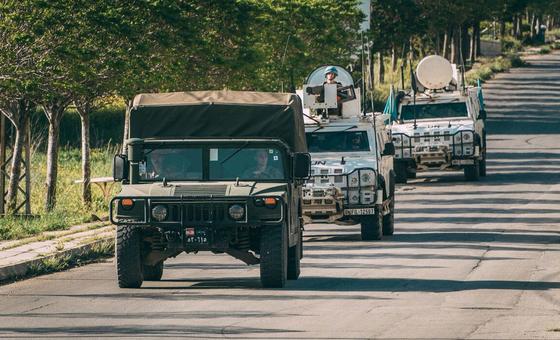
Peacekeeping is the largest and most visible activity in the field, with more than 60,000 men and women from 115 countries currently serving with 11 missions across the globe.

Peacekeeping is not a luxury; it is a lifeline for millions who count on it for a future without fear,” said Jean-Pierre Lacroix, Under-Secretary-General for Peace Operations.

He warned that today, “achieving lasting political solutions seems increasingly challenging.”  Last year, 61 active conflicts raged across the planet, according to the Sweden-based Uppsala Conflict Data Program – the highest number since 1946. 

“Conflicts have become protracted, involving more actors and often proxy forces, making negotiated solutions more difficult to achieve,” he said, indicating that the future will likely see more civilians who will require protection.

“It means the need for peace operations increases, potentially alongside other types of operations, including peace enforcement,” he added, and that “the contexts for deployment may be more uncertain and full success harder to achieve.”

Responsive and adaptable

Mr. Lacroix said the future requires “a UN that is capable and ready to respond through missions that are adaptable and tailored to the needs on the ground, guided by strong political strategies and leveraging the tools, capacities and expertise” of the UN and partners. 

Peace operations must first have “clear and prioritised mandates” that should also reflect the voice of host states, troop and police contributing countries, regional actors, local communities and other stakeholders.

He called for harnessing “the capacities of digital technologies and artificial intelligence to support the analysis of data as well as to assess the effectiveness of our responses through time.” 

Furthermore, pursuing political solutions to conflict should remain a priority, alongside protecting civilians, supporting the strengthening of government accountability.

Promotion and protection of human rights and the advancement of the women, peace and security agenda must also be prioritised. 

Additionally, “sustained and uncompromising efforts to uphold the UN Secretary-General’s zero tolerance policy on SEA (sexual exploitation and abuse)” must continue.

Political solutions crucial

Mr. Lacroix stressed that while “the UN’s ability to deliver on the imperative to protect people is very often the benchmark by which we are judged,” peacekeeping is not meant to be indefinite.

“To advance durable political solutions that enable peacekeeping to withdraw without a relapse into conflict requires the strong, unified and ongoing support of this Council – through the adoption of clear, prioritized mandates, active political engagement and statements of support,” he said.

These actions must be matched by countries continuing to pay the dues they owe the UN “in full and on time,” he added.

New tech ‘weaponised on an industrial scale’

Rosemary DiCarlo, UN Under-Secretary-General for Political and Peacebuilding Affairs, also commented on the current challenging environment.

She said that “conflicts have become more internationalised”, with influence from regional or global actors.  Meanwhile, non-state armed groups continue to proliferate, with many using terrorist tactics with no clear political agenda.

“New technologies, from AI to drones, are being weaponized on an industrial scale, increasing both the lethality of violence and the likelihood of escalation. And transnational drivers, such as organized crime, are now a regular facet of the conflict landscape,” she said.

Changing landscape

To inform the review, her office analysed the history of UN “special political missions” since the Organization’s establishment, identifying three priorities.

She noted that most missions today are deployed in the absence of a comprehensive peace agreement and often in politically volatile situations, even ongoing civil war.

“In such situations, the initial goals of our missions should be more limited – such as preventing a deterioration of violence, achieving a ceasefire, or helping a fragile incipient peace process get off the ground,” she said. 

The second priority should be improving coordination between peace operations and UN country teams, while the third is to end mandates which attempt to provide a one-size-fits-all approach.

Ms. Di Carlo concluded by highlighting how the failure or weak implementation of mandates is often related to lack of political support, whether in countries where missions are deployed, or the wider region, or among Security Council members themselves.

We will therefore need to engage with a laser-like focus on bringing the emphasis back to the political questions at the heart of each conflict and finding multilateral responses to them,” she said. 

Source link

UN refugee agency urges support to end displacement for millions of Syrians

That’s the message from Kelly Clements, Deputy High Commissioner with the UN refugee agency, UNHCR, speaking on Tuesday after concluding a five-day visit to Lebanon and Syria.

“The international community cannot afford to be mere observers, assessing and judging the developments in Syria,” she said.

“They must take an active role supporting stabilization and recovery efforts, helping Syrians rebuild and reshape their country.”

Homeward bound

More than 1.2 million people have returned to Syria since the fall of the Assad regime last December.  Roughly 850,000 have crossed back from Lebanon and elsewhere in the region.

UNHCR has scaled up support to those choosing to return, including by providing money and transportation, to ensure the process is dignified and sustainable. 

Meanwhile, returns continue inside Syria, with more than 1.7 million internally displaced people (IDPs), including just over 880,000 individuals who have departed from IDP sites in the north.

Commitment to cooperate

During her visit, Ms. Clements met with top government officials, refugees who have recently returned to Syria, and newly arrived refugees in Lebanon. 

In meetings with Lebanese Prime Minister Nawaf Salam and other cabinet members, she expressed appreciation for continued generosity in hosting Syrian refugees and committed to further cooperation in supporting voluntary returns.

Since January, nearly 200,000 Syrian refugees have returned from Lebanon. Many more have indicated that they plan to follow in the coming months, especially after the authorities waived exit fees for those who overstayed their residency.

Ms. Clements also met a group of Syrian refugees who arrived in Lebanon in the past few months after fleeing recent violence back home.  

“It’s been a dynamic period where we see both Syrians returning, but also others becoming newly displaced,” she said. 

“We count on the international community to continue supporting Lebanon and UNHCR’s work here,” she added.  “Millions of Syrian refugees are still in neighbouring countries, and the world must not forget about them.”

Return and rebuild

In Syria, Ms. Clements met with Social Affairs Minister Hind Kabawat as well as the governors of Homs and Idleb. She also spoke to recently returned refugees who shared their hopes to rebuild their lives and their country. 

“I saw up-close how people have preserved their will to return, stay and rebuild despite the harsh reality of destruction and lack of services following 14 years of war,” she said. 

 UNHCR and partners have expanded support to areas in Syria that are seeing high numbers of returns. 

Ms. Clements visited rural Damascus and met returnees who received shelter assistance and support to start small businesses. She also helped inaugurate a newly habilitated civil registry office in Idleb governorate, which the agency supported.

She stressed that UNHCR and partners are on the ground in Syria doing their part, “but there is so much more to be done and the international community’s commitment to support such efforts is critical.” 

Source link

Latin America and Caribbean: Millions more children could face poverty due to climate change

Even worse, the number could triple if countries do not meet their commitments to reduce greenhouse gas (GHG) emissions and to ensure that climate financing prioritises social and climate resilience services for children.

The finding comes in a report by the UN Economic Commission for Latin America and the Caribbean (ECLAC) and the UN Children’s Fund (UNICEF), published on Thursday in Panama.

Bearing the brunt

The report examines the potential effects of extreme weather events on increasing poverty levels among children and youth, along with national efforts to reduce GHG emissions as well as strategies to adapt and reduce losses and damage caused by climate change.

The 5.9 million figure represents the most optimistic scenario. However, if governments are slow in implementing actions to address mitigation and adaptation, as well as loss and damage, the number could reach 17.9 million.

Roberto Benes, UNICEF Regional Director for Latin America and the Caribbean, said that children and adolescents bear the greatest burden of climate change. 

Their developing bodies are more vulnerable to cyclones, heatwaves and other extreme phenomena which at the same time disrupt their families’ livelihoods and their education.

“If children and young people don’t have the resources to meet their basic needs and develop their potential, and if adequate social protection systems are not in place, the region’s inequalities will only be perpetuated,” he said.

Protect children and youth

Yet despite their vulnerability, climate finance does not prioritise the resilient services for health, nutrition, education, water and sanitation that children and young people need, to ensure their optimal cognitive and physical development. 

In Latin America and the Caribbean, only 3.4 per cent of all multilateral climate finance is dedicated to children, according to the report.  This is happening at a time of funding cuts and reduced development aid amid unprecedented needs.  

The report recommends that regional governments take action, including by strengthening the climate resilience of social services and critical infrastructure to better protect children and youth, with a particular focus on the first 1,000 days of life.

Authorities are urged to increase child-sensitive climate policy financing, with actions that specifically target the needs of children at different ages.

They also must promote greater climate awareness, education, empowerment and participation of children and youth. Additionally, environmental and climate education should be included in school curricula and educational programmes.

The report further recommends that countries promote adaptive social protection and emergency response policies that account for the specific needs of children and adolescents. 

Source link

Peacekeepers find weapons trove in southern Lebanon, as drought threatens millions

On Tuesday and Wednesday this week, peacekeepers with the UN Interim Force in Lebanon (UNIFIL) discovered rocket launchers, rocket shells, mortar rounds, bomb fuses and a tunnel containing munitions in separate incidents in Sectors East and West, UN Spokesperson Stéphane Dujarric told reporters in New York.

All finds were referred to the Lebanese Armed Forces in line with standard procedure.

UNIFIL also observed continued Israel Defense Forces activity, including an airstrike in Sector West and artillery fire from south of the Blue Line – which separates Israeli and Lebanese armed forces – into Sector East.

To strengthen Lebanese military capacity, the mission has been training personnel in surveying and removing explosive devices, securing contaminated sites and navigating mined areas.

“Such training activities are crucial now as the Lebanese Armed Forces engages daily in identifying and securing areas contaminated with unexploded ordnances and explosive remnants of war,” Mr. Dujarric said.

Complex operational space

Southern Lebanon remains a challenging operational environment, where UNIFIL works to implement Security Council resolution 1701, which brought an end to the 2006 hostilities between Israel and Hezbollah militants.

The Mission’s mandate includes monitoring the cessation of hostilities, supporting the deployment of the Lebanese Armed Forces in the south, and helping to ensure that the area between the Blue Line and the Litani River remains free of unauthorized weapons.

The region has experienced recurring tensions, including a sharp escalation last year marked by numerous Israeli airstrikes and ground operations. These incidents have affected local communities and resulted in damage to several UN positions, and injuries to several ‘blue helmets’ serving with UNIFIL.

Unprecedented water crisis

Lebanon’s largest reservoir, Lake Qaraoun, has dropped to its lowest level on record, the Litani River National Authority said.

Inflows during this year’s wet season reached just 45 million cubic metres – compared to an annual average of 350 million – following months of low rainfall and an intense heat wave.

The decline comes amid a wider nationwide emergency.

In early July, the UN Children’s Fund (UNICEF)-led water, sanitation and hygiene (WASH) group reported that rainfall had fallen by more than half in many regions along with decreased snow-melt, and several reservoirs and aquifers had dried up.

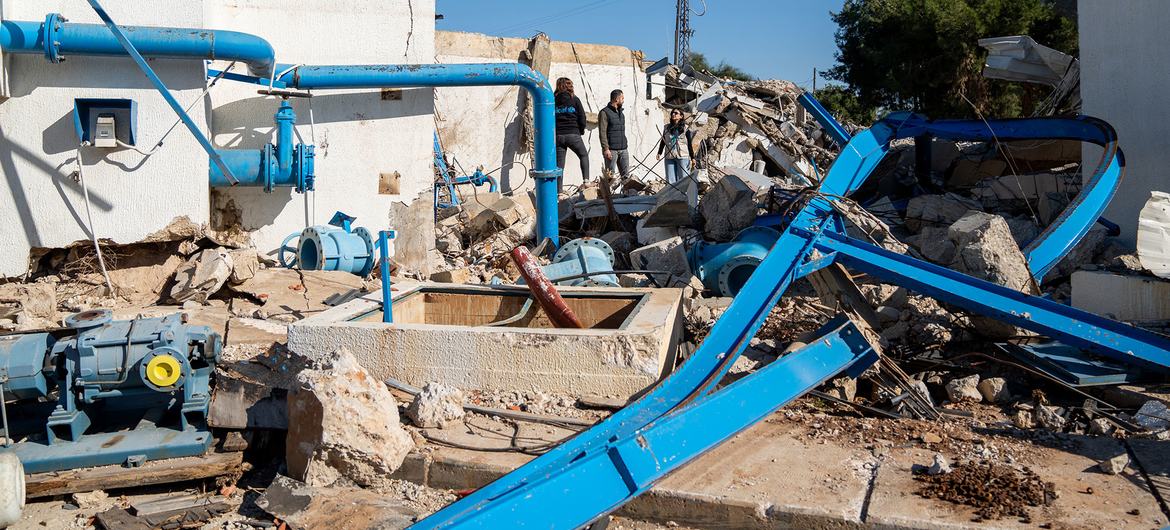
A water pumping station in southwest Lebanon damaged during the recent conflict.

Health risks rising

The drought is affecting all sectors, from agriculture and healthcare to education and local governance. An estimated 1.85 million people live in areas highly vulnerable to drought, with more than 44 per cent of the population dependent on costly and often unsafe water trucking services.

The severe strain on public water systems have been compounded by damaged infrastructure stemming from the recent fighting between Israel and Hezbollah and electricity shortages.

Health risks are rising, particularly in overcrowded settlements with poor sanitation, where residents may resort to unsafe water sources, heightening the threat of waterborne disease outbreaks, the WASH cluster warned.

Food security worries

The drought has also caused a sharp decline in food production and increased reliance on expensive imports, deepening food insecurity.

Wildfire risks are also mounting due to prolonged dry conditions.

The WASH cluster warned that without urgent international support to restore water systems and protect vulnerable communities, the crisis could further destabilize an already fragile nation.

Food lifeline fading for millions in South Sudan hit by conflict and climate shocks

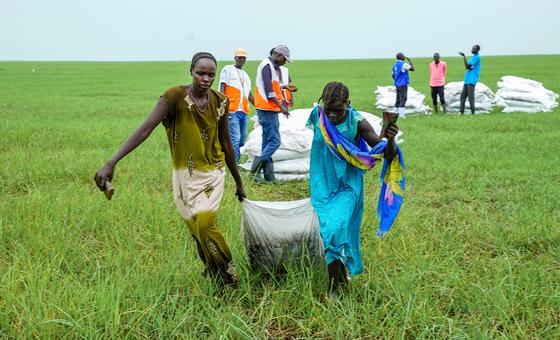
Earlier this month, the UN agency began airdropping emergency food assistance in Upper Nile state after surging conflict forced families from their homes and pushed communities to the brink of famine.

Nationwide, the picture is just as alarming, with half the country’s population – more than 7.7 million people – officially classified as food insecure by UN partner the IPC platform. This includes more than 83,000 face “catastrophic” levels of food insecurity.

“The scale of suffering here does not make headlines but millions of mothers, fathers, and children are spending each day fighting hunger to survive,” said WFP Deputy Executive Director Carl Skau, following a visit to South Sudan last week. 

The worst-hit areas include Upper Nile state, where fighting has displaced thousands and relief access is restricted. Two counties are at risk of tipping into famine: Nasir and Ulang.

South Sudan, the world’s youngest country, gained independence in 2011. This gave way to a brutal and devastating civil war which ended in 2018 thanks to a peace agreement between political rivals which has largely held.

However, recent political tensions and increased violent attacks – especially in Upper Nile state – threaten to unravel the peace agreement and return the nation to conflict.

The humanitarian emergency crisis has been exacerbated by the war in neighbouring Sudan. 

Since April 2023, nearly 1.2 million people have crossed the border into South Sudan, many of them hungry, traumatised, and without support. WFP says that 2.3 million children across the country are now at risk of malnutrition.

Crucial, yet fragile gains

Despite these challenges, the UN agency has delivered emergency food aid to more than two million people this year. In Uror County, Jonglei state, where access has been consistent, all known pockets of catastrophic hunger have been eliminated. Additionally, 10 counties where conflict has eased have seen improved harvests and better food security, as people were able to return to their land.

To reach those in the hardest-hit and most remote areas, WFP has carried out airdrops delivering 430 metric tons of food to 40,000 people in Greater Upper Nile. River convoys have resumed as the most efficient way to transport aid in a country with limited infrastructure. These included a 16 July shipment of 1,380 metric tons of food and relief supplies. WFP’s humanitarian air service also continues flights to seven Upper Nile destinations.

At the same time, a cholera outbreak in Upper Nile has placed additional pressure on the humanitarian response. Since March, WFP’s logistics cluster has airlifted 109 metric tons of cholera-related supplies to affected areas in Upper Nile and Unity states.

However, the UN agency says it can currently support only 2.5 million people – and often with just half-rations. Without an urgent injection of $274 million, deeper cuts to aid will begin as soon as September.

“WFP has the tools and capacity to deliver,” said Mr. Skau. “But without funding – and without peace – our hands are tied.” 

Source link

Funding shortages threaten relief for millions of Sudanese refugees: WFP

In an alert, the UN agency warned that it faces having to make “drastic cuts” to life-saving food assistance, which may “grind to a halt” in the Central African Republic, Egypt, Ethiopia and Libya in the coming months as resources run out.

WFP noted that the situation for many Sudanese refugees is already dire, more than two years since war erupted between Sudan’s national army and paramilitary rebels.

“In Uganda, many vulnerable refugees are surviving on less than 500 calories a day” – less than a quarter of daily nutritional needs – as new arrivals strain refugee support systems, WFP said. In Chad, which hosts almost a quarter of the four million refugees who fled Sudan, food rations will be reduced in the coming months without new contributions.

Vulnerable youngsters

Children are particularly vulnerable to sustained periods of hunger and malnutrition rates among young refugees in reception centres in Uganda and South Sudan have already breached emergency thresholds. According to WFP, refugees are already severely malnourished even before arriving in neighbouring countries to receive emergency assistance.

“This is a full-blown regional crisis that’s playing out in countries that already have extreme levels of food insecurity and high levels of conflict,” said Shaun Hughes, WFP Emergency Coordinator for the Sudan Regional Crisis.

“Millions of people who have fled Sudan depend wholly on support from WFP, but without additional funding we will be forced to make further cuts to food assistance. This will leave vulnerable families, and particularly children, at increasingly severe risk of hunger and malnutrition.”

Source link

Millions remain invisible – but Asia-Pacific leaders pledge change by 2030

Now, governments have committed to close that gap by 2030.

At the conclusion of the Third Ministerial Conference on Civil Registration and Vital Statistics in Asia and the Pacific, leaders adopted a renewed declaration to strengthen national civil registration systems – the foundational mechanisms that register births, deaths and other vital events.

The move extends the regional “CRVS Decade” initiative, first launched in 2014, into a new phase aligned with the Sustainable Development Goals (SDGs), especially target 16.9 on ensuring legal identity for all.

These numbers are more than statistics, they represent lives without legal recognition and families left without support,” said Armida Salsiah Alisjahbana, the Executive Secretary of the UN Economic and Social Commission for Asia and the Pacific (ESCAP), which convened the forum.

“This week has been a powerful call to action. We have seen inspiring examples of countries reaching the most marginalized, embracing digital innovation and strengthening legal and institutional frameworks.”

More than statistics

Civil registration and vital statistics (CRVS) systems are essential to establishing legal identity, accessing services, and ensuring inclusion in public policy.

A birth certificate can mean access to healthcare, education and social protection.

A death certificate enables families to claim inheritance, pensions and other rights.

Without these critical documents, individuals – especially women, children and rural populations – risk exclusion, vulnerability, and injustice.

Uneven progress

According to a recent ESCAP report, the region has made remarkable gains since 2012 – the number of unregistered children under five has fallen by over 60 per cent, from 135 million to 51 million.

As of 2024, 29 countries now register more than 90 per cent of births within a year, and 30 do the same for deaths. The number of countries publishing civil registration-based vital statistics nearly doubled in that period.

However, progress remains uneven – about 14 million children in the region reach their first birthday without having their birth registered. And 6.9 million deaths go unrecorded annually, particularly those that occur outside health facilities or in remote areas.

Many countries still face gaps in certifying and coding causes of death, hampering disease surveillance and public health responses, as seen during the COVID-19 pandemic.

ESCAP Photo/Panumas Sanguanwong

A participant at the Ministerial Conference on Civil Registration and Vital Statistics (CRVS) in Bangkok takes part in a demonstration at the Thai digital ID and verification exhibition booth.

Get everyone in the picture

The new Ministerial Declaration calls for universal and responsive CRVS systems that are inclusive, digitally enabled and resilient.

It emphasizes gender equity in registration, legal protections for personal data, and continuity of services during emergencies.

Governments also pledged to increase training, expand community outreach and improve cause-of-death reporting – including through verbal autopsies and improving certification systems.

Everyone counts. Data saves lives,” Ms. Alisjahbana said, “legal identity is a right, not a privilege. No one should be left behind – simply because they were never counted in the first place.”

Let us finish what we started. Let us get everyone in the picture and ensure every life truly counts.

Source link

Make midwives universally accessible and save millions of lives, WHO urges

According to the World Health Organization (WHO), this sort of large-scale life-saving is possible, if midwifery care is universally accessible and consistent with international standards.

Expanding and investing in midwifery models of care is one of the most effective strategies to improve maternal and newborn health globally,” said Dr. Anshu Banerjee, director for maternal, child and adolescent health and ageing at WHO.

In a recently released report, WHO outlined how individual countries, with the support of the international community, can mobilise relevant stakeholders and institute policies which support midwives.

Midwifery models of care

Midwives worldwide work diligently to provide a continuum of care to women, including care surrounding sexual and reproductive health, pregnancy, childbirth and postnatal care.

Emphasizing personalized and culturally conscious approaches, midwifery is especially helpful in reducing access barriers for women in rural or conflict-affected regions where hospitals may not be accessible.

“Skilled midwives help women trust in their bodies, their abilities and their care…ensuring women are consistently part of decision making and have access to the information they need,” said Ulrika Rehnstrom Loi, a midwifery expert at WHO.

The WHO report emphasised that midwifery models of care are especially important as concerns of over-medicalisation in childbirth become more pronounced.

“In a world where childbirth is increasingly medicalised, [midwives] offer a person-centered evidence-based approach that respects the physiological process of birth, restores dignity and autonomy to maternity care,” said Anna Ugglas, Chief Executive of the International Confederation of Midwives.

Implementing a global imperative 

Currently, the world faces a global shortage of around one million midwives. Concentrated and cross-sectoral action is needed to reverse this shortage.

“Midwifery models of care are not just smart solutions — they are a necessity,” Ms. Ugglas said.

The WHO report outlined that increasing the number of midwives worldwide requires policy action across many sectors, including health and education, in addition to advocacy campaigns.

In Morocco, the Association of Midwives conducted an awareness campaign which distributed flyers and cultivated partnerships with women and civil society organizations.

This campaign ultimately led to legislation in 2016 which defined what midwifery was, the first of its kind in Morocco.

Like the Moroccan example indicates, the report said that policymaking, advocacy and implementation must all happen simultaneously and that each country must adopt an approach which is specific to their context.

“[Midwifery] approaches improve outcomes, maximize resources and can be adapted to all countries,” said Dr. Banerjee.

Case study in rural midwifery

A campaign in the West Bank led by the Palestinian Red Crescent Society, the Palestine Committee of Norway and the Palestinian Ministry of Health worked to address the challenges that women in rural areas face when accessing care.

Through coordinating with hospitals and community members, the campaign expanded midwifery services to six regional hospitals and 37 villages between 2013 and 2016. This led to a 20 per cent decrease in unplanned caesarean sections and a 21 per cent decline in preterm birth rates.

And these were just the short-term effects, but Mr. Banerjee said that expanded midwifery access can have longer-term effects too.

“[Midwifery models of care] also enhance women’s and families’ experiences of care – building trusted partnerships for health at this critical stage of life.” 

Millions will die from funding cuts, says UN aid chief

“Cutting funding for those in greatest need is not something to boast about…the impact of aid cuts is that millions die,” warned Emergency Relief Coordinator Tom Fletcher.

Speaking from an overcrowded hospital in Kandahar in southern Afghanistan where three or four patients have to share a bed, Mr. Fletcher warned that the financial crisis has already forced UN aid teams to close 400 primary health centres across the country so far.

His warning echoes dire announcements of drastic cost-cutting measures in response to chronic – and now acute – funding shortfalls, including an end to selected aid programmes by numerous UN relief agencies. These include the World Food Programme (WFP), the World Health Organization (WHO), the UN Children’s Fund (UNICEF), the UN aid coordination office (OCHA), the UN refugee agency (UNHCR) and UNAIDS.

Life-or-death call

Back in Afghanistan, the reality of funding cuts continues to play out in its hospitals “where you can see doctors making the most horrific decisions about which lives to save and which lives not to save”, Mr. Fletcher said at Mirwais Regional Hospital.

The lack of investment in aid relief has also affected female Afghan health workers whose salaries are being cut by up to two-thirds, Mr. Fletcher continued. The plight of women in the country is well documented and has been condemned by the international community, having deteriorated following numerous prohibitive edicts issued by the de facto authorities who overran Kabul in 2021.

As part of his official visit to Afghanistan, Mr. Fletcher met de facto provincial governor Mullah Shirin Akhund to discuss the need to address Afghanistan’s humanitarian crisis. It comes after more than four decades of conflict that have left almost half the population – some 22.9 million people – needing humanitarian assistance to survive.

Women’s key role

In earlier talks during his official visit, Mr. Fletcher stressed that development was not possible without girls’ education and their full participation in the country’s economy.

Amid soaring malnutrition, a lack of basic services and dire economic forecasts, Afghanistan has few resources to cope with the arrival of a growing number of Afghan refugees sent back by neighbouring countries including Pakistan and Iran.

The scale of the pushbacks is enormous, with more than 250,000 Afghans returned in April alone, including 96,000 who were forcibly deported. On Tuesday, the UN refugee agency, UNHCR, voiced particular alarm over the fate of women and girls, who face increasing repression under Taliban rule.

While in Kandahar, Mr. Fletcher also visited a reception centre where the UN and humanitarian partners provide support, including health check-ups and cash. He said that the closure of hundreds of health facilities in the region had denied more than three million people access to primary care.