Measles cases drop in 2025 across Europe and Central Asia, but outbreak risks remain

While cases have reduced, the conditions that led to the resurgence of this deadly disease in recent years remain and must be addressed,” said Regina De Dominicis, the UN Children Fund (UNICEF) regional director for Europe and Central Asia.

Fifty-three countries in Europe and Central Asia reported 33,998 measles cases in 2025, down from 127,412 in 2024.

The overall decreasing trend in cases reflects both outbreak response measures and the gradual decline in the number of people susceptible to measles infection as the virus made its way through under-vaccinated communities, according to UN agencies.

Tackling deadly misinformation

However, many cases could have been prevented with higher routine vaccination coverage at community level and more timely response to outbreaks, UN agencies said.

“Until all children are reached with vaccination, and hesitancy fuelled by the spread of misinformation is addressed, children will remain at risk of death or serious illness from measles and other vaccine-preventable diseases,” she warned.

Hans Henri P. Kluge, WHO regional director for Europe, said eliminating measles is essential for national and regional health security, stressing that “in today’s environment of rampant fake news, it’s also crucial that people rely on verified health information from reliable sources such as WHO, UNICEF and national health agencies.”

Measles still present

The number of cases in 2025 still exceeded what has been reported for most years since 2000, and some countries reported more cases in 2025 than in 2024. Measles cases continue to be detected in 2026 in the region, according to WHO.

“Over 200,000 people in our region fell ill with measles in the past three years,” Dr. Kluge said.

“Unless every community reaches 95 per cent vaccination coverage, closes immunity gaps across all ages, strengthens disease surveillance and ensures timely outbreak response, this highly contagious virus will keep spreading.”

Highly contagious

Measles is one of the most contagious viruses affecting people. For every one person who has measles, up to 18 other unvaccinated people will be infected.

This makes measles around 12 times more contagious than influenza. As well as hospitalisation and death, the virus can cause long-term, debilitating health complications.

It can also damage the immune system by “erasing” its memory of how to fight infections for months to even years, leaving measles survivors vulnerable to other diseases and death.

Two doses of measles-containing vaccine provide up to 97 per cent life-long protection against measles

A vaccination rate of 95 per cent with two doses of the measles vaccine in every community each year is needed to prevent measles outbreaks and achieve herd immunity, which protects infants too young for measles vaccination and other people for whom it is not recommended due to medical conditions, like those who are immunocompromised.

Public health priorities

Outbreak preparedness and response alongside the target of measles elimination, remain public health priorities.

UNICEF and WHO work together with governments and with the support of partners, including Gavi, the Vaccine Alliance, and the European Union, to prevent and respond to measles outbreaks by, among other things:

  • engaging with communities
  • training health care workers
  • strengthening immunisation programmes and disease surveillance systems
  • initiating measles vaccination catch-up campaigns

Source link

UN warns civilians remain at risk as airstrikes continue across Gaza

UN Spokesperson Stéphane Dujarric told journalists at the regular news briefing in New York that the UN aid coordination office, OCHA, had received additional reports of airstrikes, bombing, shelling – including from at sea – and shootings in residential areas.

The violence, he said, “puts civilians in danger and adds to the immense hardship they have endured over the past 28 months.”

He added that civilians are protected under international humanitarian law wherever they are, “even if they cross military demarcation lines or are near them…civilians must always be protected and during military operations and constant care must be taken to spare them.”

Health centre reopens

Amid the ongoing hostilities, UN agencies reported limited but important progress in restoring essential services.

The UN ‘s Palestine refugee relief agency (UNRWA) said it has reopened the Bureij Health Centre in Deir al Balah after months of closure. The facility is now providing primary healthcare, maternal health services, laboratory testing and dental care.

However, thousands of patients remain without access to treatment and recovery, as critical services are still unavailable in Gaza.

“Their top priority is to scale up local services, including by rehabilitating damaged facilities and expanding critical care. This requires more medical supplies, including items that are not easily approved for entry by Israeli authorities, such as X-ray machines and laboratory equipment,” Mr. Dujarric said.

Shelter, protection needs remain acute

UN shelter partners said that by last week they had provided more than 5,600 families with emergency shelter assistance in just over one week, including nearly 5,000 tarpaulins and more than 12,000 bedding items.

Last month alone, similar assistance – including nearly 8,000 tents – reached more than 85,000 families. However, durable solutions are urgently needed, which requires permission from Israeli authorities to bring in machinery and construction materials to repair damaged structures, partner organizations said.

Source link

Global demand for meat and dairy set to rise, but climate and nutrition gaps remain

However, persistent nutritional gaps and mounting environmental pressures reveal a complex path ahead, according to a new study by the UN Food and Agriculture Organization (FAO) and the Organisation for Economic Cooperation and Development (OECD) – an influential international policy forum.

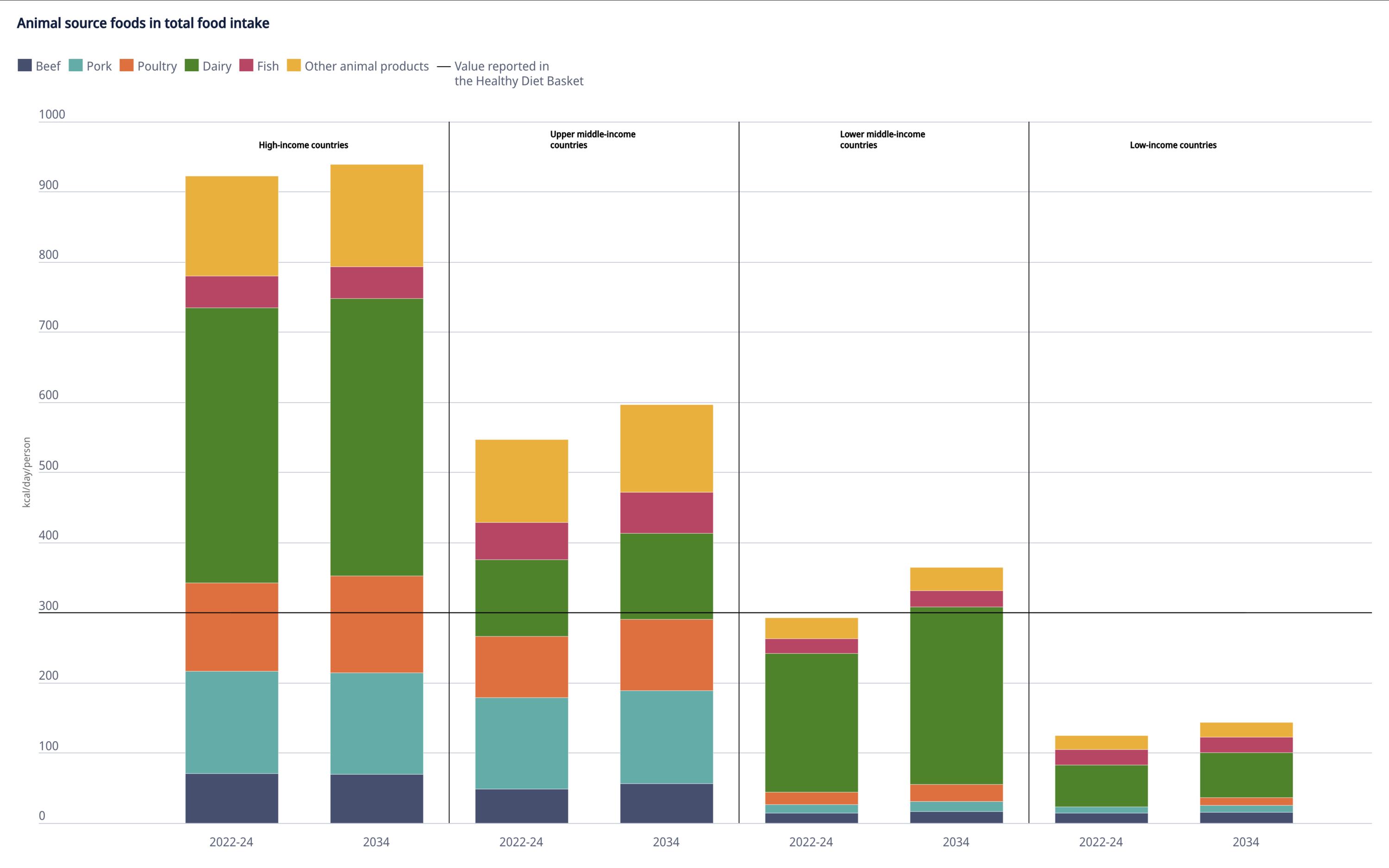
The Agricultural Outlook 2025-2034, released on Tuesday, projects a six per cent increase in global per capita consumption of animal-source foods by 2034 – beef, pork, poultry, fish, dairy and other animal products.  

The trend is most pronounced in lower middle-income countries, where intake is expected to rise by 24 per cent, far outpacing the global average.  

These projections point to better nutrition for many people in developing countries,” said Qu Dongyu, Director-General of the FAO.


Agricultural Outlook 2025‑2034

Increased incomes, better diets – but not for all

The surge in consumption in middle-income economies is attributed largely to rising disposable incomes, changing dietary preferences and urbanisation. In these countries, daily per capita intake of animal-sourced foods is projected to reach 364 kilocalories, surpassing the 300 kcal benchmark.

At the same time, consumption in low-income countries will remain low – reaching just 143 kcal per day, less than half the amount deemed necessary for a healthy diet – highlighting stark inequalities in access to nutrient-rich diets and the challenges ahead to ensure everyone is food secure.

Mr. Qu urged greater efforts to ensure people in the lowest-income countries also benefit from improved nutrition and food security.

Production expanding but emissions rising

To meet rising demand, global agricultural and fish production is projected to increase by 14 per cent over the next decade, largely driven by productivity gains in middle-income nations.

Output of meat, dairy and eggs is expected to grow by 17 per cent, while total livestock inventories are projected to expand by seven per cent.

However, these gains come at an environmental cost: direct greenhouse gas (GHG) emissions from agriculture are set to rise by six per cent by 2034, despite improvements in emissions intensity.

As production becomes more efficient, the emissions generated per unit of output will decline, but the overall footprint will still grow unless additional measures are taken.

Agricultural Outlook 2025‑2034

Other key findings

  • Cereal yields to grow 0.9 per cent annually, with harvested area expanding just 0.14 per cent per year – half the pace of the last decade
  • By 2034, 40 per cent of cereals will go directly to human consumption, 33 per cent to animal feed, and the rest to biofuels and industry
  • Biofuel demand set to rise 0.9 per cent annually, led by Brazil, India and Indonesia
  • Sub-Saharan Africa’s beef herd projected to grow 15 per cent, though productivity remains just one-tenth of North America’s
  • India and Southeast Asia will drive 39 per cent of global consumption growth by 2034; China’s share falling to 13 per cent from 32 per cent
  • High-income countries to see drop in per capita fats and sweeteners intake due to health trends and policy shifts

A win-win: More nourishment, fewer emissions

The report outlines a scenario in which nourishment improves for all, and agricultural emissions are reduced by as much as seven per cent below current levels by 2034.

Achieving this dual outcome would require major investments to improve productivity, alongside widespread adoption of existing low-emission technologies such as precision farming, improved livestock feed and prioritising nutritional production.

Future progress will depend on a blend of policy coordination, technological innovation and targeted investments – especially in countries where the gap between demand and nutritional value is stark.

We have the tools to end hunger and boost global food security,” said Mathias Cormann, Secretary-General of the OECD.

“Well-coordinated policies are needed to keep global food markets open, while fostering long-term productivity improvements and sustainability in the agriculture sector.”

Pivotal role for global trade

The Outlook also reiterates the importance of trade, given that 22 per cent of all calories eaten will have crossed international borders by 2034.

International trade will remain indispensable to the global agri-food sector,” the report stressed.

Multilateral cooperation and a rules-based agricultural trade are essential to facilitating these trade flows, balancing food deficits and surpluses across countries, stabilising prices and enhancing food security, nutrition and environmental sustainability.”

Source link

‘A compass towards progress’ – but key development goals remain way off track

The UN’s key Sustainable Development Goals Report released Monday by Secretary-General António Guterres, chronicles both progress and setbacks – showing that the world has made significant advances but is still drastically off-track to achieve its development goals by 2030.

Seize the day

This report is more than a snapshot of today. It’s also a compass pointing the way to progress. This report shows that the Sustainable Development Goals (SDGs) are still within reach, but only if we act – with urgency, unity, and unwavering resolve,” Mr. Guterres said.

The release of the report coincides with the first day of the High-Level Political Forum on Sustainable Development which will convene over the next ten days in New York in the hopes of answering the UN chief’s call to action. 

‘A global development emergency’

In 2015, the General Assembly adopted the 2030 Agenda, which outlined 17 Sustainable Development Goals – including ending poverty and ensuring that everyone had access to healthcare and quality education.

The ambitious SDGs were to be achieved by prioritising future generations through sustainable and climate-friendly initiatives.

“The 2030 Agenda represents our collective recognition that our destinies are intertwined and that sustainable development is not a zero-sum game but a shared endeavour that benefits us all,” said Li Junhua, UN Under Secretary-General for Economic and Social Affairs.

Ten years after this commitment, the agenda is facing increasingly strong headwinds, including a $4 trillion funding shortfall for the developing world and increasing geopolitical tensions which are undermining multilateralism.

“The problem is that the Sustainable Development Goals do not include the instruments that would be necessary to make them happen,” Mr. Guterres said.

In light of these challenges, only 18 per cent of the SDGs are on track to be met by 2030. Around 17 per cent are experiencing moderate progress. But over half of the goals are moving too slowly – and 18 per cent of the goals have gone backwards.

“We are in a global development emergency, an emergency measured in the over 800 billion people still living in extreme poverty, in intensifying climate impacts and in the relentless debt service,” the Secretary-General said.

Real lives transformed – and left behind

Between 2015 and 2023, maternal death rates and death rates of children under the age of five dropped by approximately 15 per cent. During this same period of time, 54 countries eliminated at least one tropical disease, and 2.2 billion cases of malaria were averted as a result of prevention areas.

“These victories are not abstract statistics – they represent real lives transformed, families lifted from poverty and communities empowered to build better and more resilient futures,” Mr. Li said.

However, just as some have had their lives transformed, many people around the world have been left behind.

One in 10 people still live in abject poverty and one in 11 experience food insecurity. Over 1.1 billion people live in slums or informal settlements without basic services, including access to clean water and sanitation. And in 2024, one person lost their life to conflict every 12 minutes.

In short, while many lives were transformed in the past ten years, many lives were not – and some were actually worsened or lost.

“What we have learned since then is that sustainable development is not a destination but rather a journey of innovation, adaptation and commitment to human dignity,” Mr. Li said.

Data at the heart of development

Reliable data is what underpins sustainable development, according to the Secretary-General’s report. It is what enables the UN, State governments and civil society leaders to understand what progress has been made and how to target increased investments for areas which require more work.

When the 2030 Agenda was first adopted in 2015, only a third of the SDGs had sufficient data and over a third lacked internationally agreed upon methodologies. Today, 70 percent of the SDGs are well-monitored and all indicators have internationally established monitoring mechanisms.

However, the progress made in monitoring development progress is, like all parts of the development agenda, under increasing threat.

“This report tells the SDG story in numbers, but it is, above all, a call to action,” Mr. Guterres said.

© UNICEF/Anderson Flores

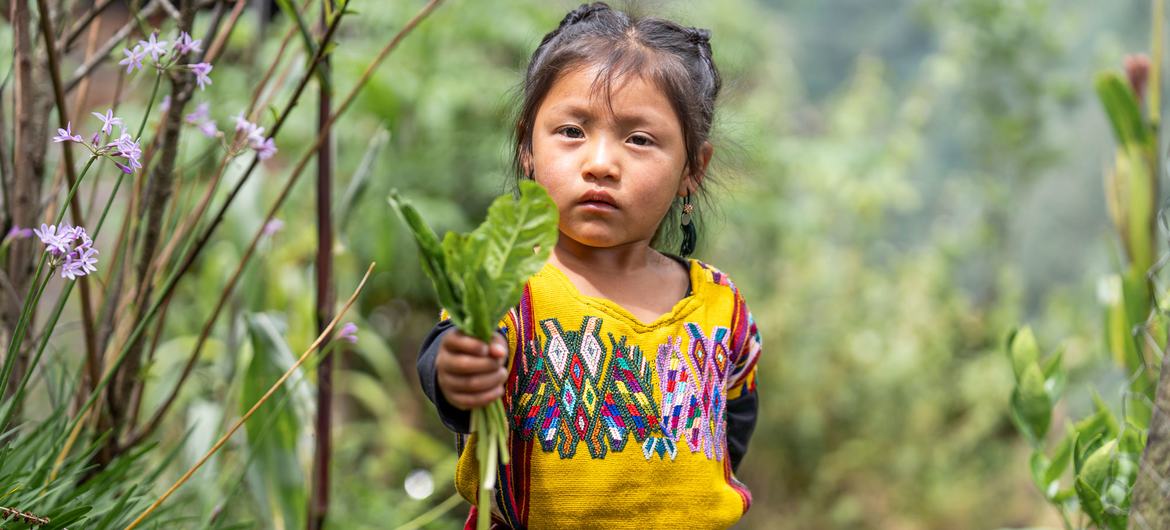
A young girl in Guatemala holds herbs from a kitchen garden.

Multilateralism is non-negotiable

The Secretary-General said that the SDGs cannot be achieved without significant reforms to the financial architecture, which must begin with an investment in multilateralism.

This year’s HLPF is a crucial moment that gives us hope and encourages us to think collectively outside the box,” said Lok Bahadur Thapa, Vice President of the Economic and Social Council (ECOSOC) at the meeting which opened the HLPF.

This forum is an acknowledgement that the work is not yet done – the goals require more investment and more commitment in the next five years in order to ensure that the world does not leave more people behind.

“This is not a moment for despair, but for determined action. We have the knowledge, tools, and partnerships to drive transformation. What we need now is urgent multilateralism – a recommitment to shared responsibility and sustained investment,” Mr. Li said.

Source link

Millions remain invisible – but Asia-Pacific leaders pledge change by 2030

Now, governments have committed to close that gap by 2030.

At the conclusion of the Third Ministerial Conference on Civil Registration and Vital Statistics in Asia and the Pacific, leaders adopted a renewed declaration to strengthen national civil registration systems – the foundational mechanisms that register births, deaths and other vital events.

The move extends the regional “CRVS Decade” initiative, first launched in 2014, into a new phase aligned with the Sustainable Development Goals (SDGs), especially target 16.9 on ensuring legal identity for all.

These numbers are more than statistics, they represent lives without legal recognition and families left without support,” said Armida Salsiah Alisjahbana, the Executive Secretary of the UN Economic and Social Commission for Asia and the Pacific (ESCAP), which convened the forum.

“This week has been a powerful call to action. We have seen inspiring examples of countries reaching the most marginalized, embracing digital innovation and strengthening legal and institutional frameworks.”

More than statistics

Civil registration and vital statistics (CRVS) systems are essential to establishing legal identity, accessing services, and ensuring inclusion in public policy.

A birth certificate can mean access to healthcare, education and social protection.

A death certificate enables families to claim inheritance, pensions and other rights.

Without these critical documents, individuals – especially women, children and rural populations – risk exclusion, vulnerability, and injustice.

Uneven progress

According to a recent ESCAP report, the region has made remarkable gains since 2012 – the number of unregistered children under five has fallen by over 60 per cent, from 135 million to 51 million.

As of 2024, 29 countries now register more than 90 per cent of births within a year, and 30 do the same for deaths. The number of countries publishing civil registration-based vital statistics nearly doubled in that period.

However, progress remains uneven – about 14 million children in the region reach their first birthday without having their birth registered. And 6.9 million deaths go unrecorded annually, particularly those that occur outside health facilities or in remote areas.

Many countries still face gaps in certifying and coding causes of death, hampering disease surveillance and public health responses, as seen during the COVID-19 pandemic.

ESCAP Photo/Panumas Sanguanwong

A participant at the Ministerial Conference on Civil Registration and Vital Statistics (CRVS) in Bangkok takes part in a demonstration at the Thai digital ID and verification exhibition booth.

Get everyone in the picture

The new Ministerial Declaration calls for universal and responsive CRVS systems that are inclusive, digitally enabled and resilient.

It emphasizes gender equity in registration, legal protections for personal data, and continuity of services during emergencies.

Governments also pledged to increase training, expand community outreach and improve cause-of-death reporting – including through verbal autopsies and improving certification systems.

Everyone counts. Data saves lives,” Ms. Alisjahbana said, “legal identity is a right, not a privilege. No one should be left behind – simply because they were never counted in the first place.”

Let us finish what we started. Let us get everyone in the picture and ensure every life truly counts.

Source link

AI lightens the workload – but risks remain, labour agency warns

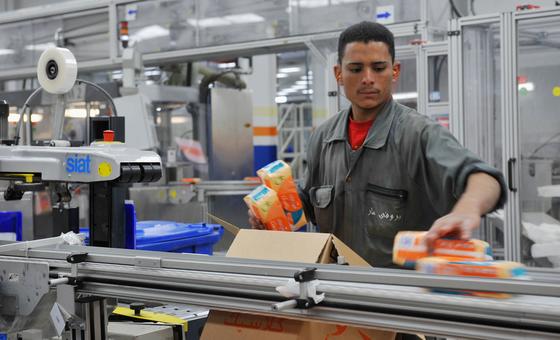
In a new report highlighting the universal impact of the technological revolution now underway, the UN International Labour Organization (ILO) insisted that it offered a way out from so-called 3D jobs that are “dirty, dangerous and demeaning”.

Health and safety

But the ILO also warned that greater oversight is needed to prevent unexpected safety issues caused by the roll-out of AI and associated technology in the workplace.

“Digitalization offers immense opportunities to enhance workplace safety,” said Manal Azzi, Team Lead on Occupational and Safety Health Policy at the ILO.

“Automation can reduce repetitive tasks, such as in factory production lines or in administrative work, allowing workers to take on more challenging tasks. But for us to fully benefit from these technologies, we must ensure they are implemented without incurring new risks.”

The ILO notes that these new tools are already revolutionizing how safety is managed across industries, from logistics to healthcare and construction. Even low-tech sectors are beginning to feel the benefits.

Here are some of the key unfamiliar risks associated with AI, robotics and digitalization:

  • Human-robot interaction: Workers who collaborate with or maintain robots may be exposed to injuries from malfunctions, unpredictable behaviour, or design flaws.
  • Cybersecurity threats: As workplaces become more connected, system failures or cyberattacks could compromise safety systems and endanger workers.
  • Ergonomic issues: Wearables and exoskeletons, if poorly designed or ill-fitting, can cause discomfort, strain, or injury rather than preventing them.
  • Mental health: Constant digital monitoring, algorithm-driven workloads and the pressure of always being connected can lead to stress, burnout, and other mental health problems.
  • Reduced human oversight: Over-reliance on automation and AI can decrease critical human judgement, potentially increasing safety risks when systems fail or make errors.
  • Digital supply chain hazards: Workers in parts of the tech supply chain, such as mining for materials in hostile environments or handling e-waste, face dangerous and often overlooked conditions.

Source link