Being away from excessive blue light from our gadgets slows ageing process

Changes in cell chemistry from blue light exposure observed in fruit flies could also potentially cause detrimental effects on our body, including accelerated aging.

Too much screen use has been linked to obesity and psychological problems. Now a new study has identified a new problem – a study in fruit flies suggests our basic cellular functions could be impacted by the blue light emitted by these devices. These results are published in Frontiers in Aging.

“Excessive exposure to blue light from everyday devices, such as TVs, laptops, and phones, may have detrimental effects on a wide range of cells in our body, from skin and fat cells, to sensory neurons,” said Dr Jadwiga Giebultowicz, a professor at the Department of Integrative Biology at Oregon State University and senior author of this study. “We are the first to show that the levels of specific metabolites –  chemicals that are essential for cells to function correctly – are altered in fruit flies exposed to blue light.“

“Our study suggests that avoidance of excessive blue light exposure may be a good anti-aging strategy,” advised Giebultowicz.


Mobile Phone/Photo:indiainternationaltimes

Turn off the light

The researchers at Oregon State University have previously shown that fruit flies exposed to light ‘turn on’ stress protective genes, and that those kept in constant darkness lived longer.

“To understand why high-energy blue light is responsible for accelerating aging in fruit flies, we compared the levels of metabolites in flies exposed to blue light for two weeks to those kept in complete darkness,” explained Giebultowicz.

Blue light exposure caused significant differences in the levels of metabolites measured by the researchers in the cells of fly heads. In particular, they found that the levels of the metabolite succinate were increased, but glutamate levels were lowered.

“Succinate is essential for producing the fuel for the function and growth of each cell. High levels of succinate after exposure to blue light can be compared to gas being in the pump but not getting into the car,” said Giebultowicz. “Another troubling discovery was that molecules responsible for communication between neurons, such as glutamate, are at the lower level after blue light exposure.”

Accelerating aging

The changes recorded by the researchers suggest that the cells are operating at suboptimal level, and this may cause their premature death, and further, explain their previous findings that blue light accelerates aging.

“LEDs have become the main illumination in display screens such as phones, desktops and TVs, as well as ambient lighting, so humans in advanced societies are exposed to blue light through LED lighting during most of their waking hours. The signaling chemicals in the cells of flies and humans are the same, so the there is potential for negative effects of blue light on humans,“ explains Giebultowicz.

Future work hopes to study the effects directly on human cells.

“We used a fairly strong blue light on the flies – humans are exposed to less intense light, so cellular damage may be less dramatic. The results from this study suggests that future research involving human cells is needed to establish the extent to which human cells may show similar changes in metabolites involved in energy production in response to excessive exposure to blue light,“ concluded Giebultowicz.


NASA’s Webb Detects Carbon Dioxide in Exoplanet Atmosphere

NASA’s James Webb Space Telescope has captured the first clear evidence for carbon dioxide in the atmosphere of a planet outside the solar system. This observation of a gas giant planet orbiting a Sun-like star 700 light-years away provides important insights into the composition and formation of the planet. The finding, accepted for publication in Nature, offers evidence that in the future Webb may be able to detect and measure carbon dioxide in the thinner atmospheres of smaller rocky planets.

WASP-39 b is a hot gas giant with a mass roughly one-quarter that of Jupiter (about the same as Saturn) and a diameter 1.3 times greater than Jupiter. Its extreme puffiness is related in part to its high temperature (about 1,600 degrees Fahrenheit or 900 degrees Celsius). Unlike the cooler, more compact gas giants in our solar system, WASP-39 b orbits very close to its star – only about one-eighth the distance between the Sun and Mercury – completing one circuit in just over four Earth-days. The planet’s discovery, reported in 2011, was made based on ground-based detections of the subtle, periodic dimming of light from its host star as the planet transits, or passes in front of the star.

Previous observations from other telescopes, including NASA’s Hubble and Spitzer space telescopes, revealed the presence of water vapor, sodium, and potassium in the planet’s atmosphere. Webb’s unmatched infrared sensitivity has now confirmed the presence of carbon dioxide on this planet as well.

NASA Prepares Webb Telescope /NASA

Filtered Starlight

Transiting planets like WASP-39 b, whose orbits we observe edge-on rather than from above, can provide researchers with ideal opportunities to probe planetary atmospheres.

During a transit, some of the starlight is eclipsed by the planet completely (causing the overall dimming) and some is transmitted through the planet’s atmosphere.

Because different gases absorb different combinations of colors, researchers can analyze small differences in brightness of the transmitted light across a spectrum of wavelengths to determine exactly what an atmosphere is made of. With its combination of inflated atmosphere and frequent transits, WASP-39 b is an ideal target for transmission spectroscopy.

First Clear Detection of Carbon Dioxide

The research team used Webb’s Near-Infrared Spectrograph (NIRSpec) for its observations of WASP-39b. In the resulting spectrum of the exoplanet’s atmosphere, a small hill between 4.1 and 4.6 microns presents the first clear, detailed evidence for carbon dioxide ever detected in a planet outside the solar system.

“As soon as the data appeared on my screen, the whopping carbon dioxide feature grabbed me,” said Zafar Rustamkulov, a graduate student at Johns Hopkins University and member of the JWST Transiting Exoplanet Community Early Release Science team, which undertook this investigation. “It was a special moment, crossing an important threshold in exoplanet sciences.”

No observatory has ever measured such subtle differences in brightness of so many individual colors across the 3 to 5.5-micron range in an exoplanet transmission spectrum before. Access to this part of the spectrum is crucial for measuring abundances of gases like water and methane, as well as carbon dioxide, which are thought to exist in many different types of exoplanets.

“Detecting such a clear signal of carbon dioxide on WASP-39 b bodes well for the detection of atmospheres on smaller, terrestrial-sized planets,” said Natalie Batalha of the University of California at Santa Cruz, who leads the team.

Understanding the composition of a planet’s atmosphere is important because it tells us something about the origin of the planet and how it evolved. “Carbon dioxide molecules are sensitive tracers of the story of planet formation,” said Mike Line of Arizona State University, another member of this research team. “By measuring this carbon dioxide feature, we can determine how much solid versus how much gaseous material was used to form this gas giant planet. In the coming decade, JWST will make this measurement for a variety of planets, providing insight into the details of how planets form and the uniqueness of our own solar system.”

NASA hopes to Launch Artemis I Moon Mission on Sept 3

NASA will target Saturday, Sept. 3 at 2:17 p.m. EDT, the beginning of a two-hour window, for the launch of Artemis I, the first integrated test of NASA’s Orion spacecraft, Space Launch System (SLS) rocket, and the ground systems at the agency’s Kennedy Space Center in Florida.

Mission managers met Tuesday to discuss data and develop a forward plan to address issues that arose during an Aug. 29 launch attempt for the flight test. During that launch attempt, teams were not able to chill down the four RS-25 engines to approximately minus 420 degrees F, with engine 3 showing higher temperatures than the other engines. Teams also saw a hydrogen leak on a component of the tail service mast umbilical quick disconnect, called the purge can, and managed the leak by manually adjusting propellant flow rates.

Artemis I launch on Aug 27, 2022 / NASA

In the coming days, teams will modify and practice propellant loading procedures to follow a procedure similar to what was successfully performed during the Green Run at NASA’s Stennis Space Center in Mississippi. The updated procedures would perform the chilldown test of the engines, also called the kick start bleed test, about 30 to 45 minutes earlier in the countdown during the liquid hydrogen fast fill liquid phase for the core stage.

Teams also are configuring platforms at Launch Pad 39B to enable engineers access to the purge can on the tail service mast umbilical. Once access is established, technicians will perform assessments and torque connection points where necessary.

Meteorologists with the U.S. Space Force Space Launch Delta 45 predict favorable weather conditions for Saturday. While rain showers are expected, they are predicted to be sporadic during the launch window.

The mission management team will reconvene Thursday to review data and overall readiness.

Gorbachev dies at 91; India connection, contribution

Mikhail Gorbachev, a friend of India who visited twice in the mid-1980s, died on Tuesday aged 91 after a prolonged illness. He was the last Soviet president who ended the Cold War without bloodshed though could not prevent the collapse of the Soviet Union.

“Mikhail Gorbachev passed away tonight after a serious and protracted disease,” said Russia’s Central Clinical Hospital. President Vladimir Putin expressed “his deepest condolences”, and World leaders paid tribute. European Commission chief Ursula von der Leyen said Gorbachev, who was awarded the Nobel Peace Prize in 1990, had opened the way for a free Europe.

U.S. President Joe Biden said he had believed in “glasnost and perestroika – openness and restructuring – not as mere slogans, but as the path forward for the people of the Soviet Union after so many years of isolation and deprivation.”

He will be buried in Moscow’s Novodevichy Cemetery next to his wife Raisa, who died in 1999.

On becoming general secretary of the Soviet Communist Party in 1985, aged just 54, he had set out to revitalize the system by introducing limited political and economic freedoms, but his reforms spun out of control.

“He was a good man – he was a decent man. I think his tragedy is in a sense that he was too decent for the country he was leading,” said Gorbachev biographer William Taubman, a professor emeritus at Amherst College in Massachusetts.

Gorbachev’s policy of “glasnost” allowed previously unthinkable criticism of the party and the state, but also emboldened nationalists who began to press for independence in the Baltic republics of Latvia, Lithuania, Estonia and elsewhere.

India Visits in 1986, 1988

Gorbachev, throughout his tenure championed for strong Soviet-India relations and visited India twice in 1986 and 1988. In 1986 he was received by then Indian Prime Minister Rajiv Gandhi.
“When friends come calling, our hearts light up. We are delighted to have you in our midst,” Rajiv Gandhi said during the press conference.

Gorbachev said India and Soviet Russia strive for lasting global peace and said Soviet Russia will always support India’s real interests. “We shall not take a single step in our foreign policy that could damage India’s real interests,” Gorbachev said. It was during this visit that Gorbachev and Gandhi also signed the Delhi Declaration which “called for the complete destruction of nuclear arsenals before the end of the century, and asserted the importance of solving problems in a non-violent way.”

Gorbachev’s India visit

Soviet Russia and India opened more avenues of cooperation in sectors of space, infrastructure development and defence during the visit. Russia committed to provide India with the latest military hardware and months after, India received advanced MiG29s from Soviet Russia.

When Rajiv Gandhi visited Moscow in 1987, Gorbachev held a private meeting with him lasting for six hours. He also dedicated a monument to his mother and former prime minister Indira Gandhi and named a Moscow square in her memory.

Football bounces back quickly among athletes after Covid-19 isolation: Study

A new joint study by LSU’s School of Kinesiology, LSU Athletics, Pennington Biomedical Research Center and Our Lady of the Lake researched how the immune system of elite student-athletes responded to the COVID-19 virus.

The football players who were diagnosed with COVID-19 were able to have their immune system back to its baseline after isolation. This is in stark contrast with older adults with comorbidities, who faced serious side effects and symptoms, and even death.

“When COVID-19 really started moving out of control, we met with Neil Johannsen, an exercise physiologist at LSU, and the athletic trainers Derek Calvert and Jack Marucci, and we discussed what we could do to make sure our athletes remained healthy. We especially wanted to make sure that athletes were not at risk for secondary infections when they came back from isolation,” said Guillaume Spielmann of LSU’s School of Kinesiology.

Isolation Effective After COVID


Louisiana State University football football who were diagnosed with COVID-19 were able to have their immune system back to its baseline after the CDC-recommended isolation CREDIT/ LSU

During the study period, the CDC had recommended 14 days of isolation. Saliva samples were collected from 29 student-athletes in 2020, before a COVID vaccine. Fourteen were COVID positive and 15 had no history of infection. Of the 14, only six reported mild symptoms from the virus, the other eight were asymptomatic throughout the isolation period.

“Salivary immunity is extremely important to ensure that people don’t contract secondary infections, so when athletes are coming back we need to make sure they are as healthy as can be. We found that the isolation period was sufficient to restore the athletes’ salivary immunity to the level seen in non-infected players,” Spielmann said.

Safely Return to Play After COVID

These findings suggested the student-athletes could safely return to practice and play football without a risk of secondary infection; that their immune system wasn’t at risk when playing the close contact sport.

“I was worried a bit about long-haulers and other more significant outcomes like the concerns for the development of myocarditis. Engaging in athletic activities at an elite level can be stressful on the body and you would want to arm yourselves with the best scientific information to help understand potential outcomes. This data helped to validate some of these decisions that were made,” said Shelly Mullenix, LSU’s Senior Associate Athletics Director for Health & Wellness.

For this study, three graduate students also participated in the research. Their research is now published in Scientific Reports.

“This kind of access is unique in Division I sports. You typically don’t have access to football players, so the fact that we have access is hugely instrumental as well,” Spielmann said. “LSU is a great place for this field.”

“I think this COVID research is something that we are really proud to be a part of and contribute to finding answers to such a devastating virus,” Marucci said.

Spielmann, an immunologist, researches the impact of stress on the immune system of elite and tactical athletes, including astronauts and fire fighters. But this study isn’t the first for Spielmann and LSU Athletics. Her next study will take a closer look at female athletes’ mental, physiological and immune resilience to stress.

Netflix: Coming soon films and web series, originals

Starting September, Netflix subscribers can enjoy several films ranging from Noah Baumbach’s black comedy ‘White Noise’, multiple award-winning Mexican director Alejandro Inarritu’s ‘Bardo and Lindsay Lohan’s romantic comedy ‘Falling for Christmas’.

As per the calendar put out on Tuesday by Netflix for this Fall, ‘Roald Dahl’s Matilda the Musical’, with Emma Thompson playing the terrifying Miss Trunchbull, ‘The Swimmers’ and ‘Mr. Harrigan’s Phone’, an adaptation of the Stephen King novel by John Lee Hancock will be available.

Some of the titles, such as ‘Bardo’ and ‘White Noise’, will debut on Netflix after theatre screening and ‘Falling for Christmas’, will land directly on the streaming service.

‘Bardo’, a “nostalgic comedy”, stars Daniel Gimnez Cacho playing a renowned Mexican journalist and documentary filmmaker who returns to his native country at an existential crossroads. Its world premiere will open at the Venice Film Festival, on Wednesday, August 31.

‘White Noise’, adapted from Don DeLillo’s 1985 novel, reports ‘Variety’, features Adam Driver as an ostentatious professor of Hitler studies, whose marriage (Greta Gerwig plays his wife) is upended after a horrifying accident creates an airborne toxic event of frightening and unknowable proportions. The film will be screened at the Venice and New York film festivals before landing on Netflix.

Another festival-bound film, ‘The Swimmers’, a refugee drama to be opened at the Toronto International Film Festival (TIFF), is coming to Netflix on November 23.

Directed by Sally El Hosaini, this true-life story follows two sisters who fled a war-torn Syria to attend the 2016 Rio Olympics.

Gulam Nabi Azad resigns finally from Congress, blames Rahul Gandhi’s leadership

Ghulam Nabi Azad dashed off his resignation letter not without blaming everything on 8 years of Rahul Gandhi’s leadership of Congress under whom he said proxies and puppets are propped up for the party president’s post.

Azad alleged that the senior leaders were abused, humiliated, insulted and vilified in a specially summoned meeting of the extended Congress Working Committee meeting after their G-23 group’s letter seeking reforms in the party in 2020, signed by 23 leaders.

In his resignation letter sent on Friday, Azad said, “Unfortunately, the situation in the Congress party has reached such a point of no return that now ‘proxies’ are being propped up to take over the leadership of the party. This experiment is doomed to fail because the party has been so comprehensively destroyed that the situation has become irretrievable. Moreover, the ‘chosen one’ would be nothing more than a puppet on a string.”

He said at the national level the Congress has conceded the political space to the BJP and state level space to regional parties. “This all happened because the leadership in the past eight years has tried to foist a non-serious individual at the helm of the party,” he alleged without taking the name of Rahul Gandhi.

Congress

Azad alleged that in August 2020 when he and 22 other senior colleagues, including former Union Ministers and Chief Ministers wrote to Sonia Gandhi to flag the abysmal drift in the party, the “coterie” tried to “unleash its sycophants on us and got us attacked, vilified and humiliated in the most crude manner possible”.

The veteran leader alleged that on the directions of this coterie, today his mock funeral procession was taken out in Jammu and those who committed this indiscipline were feted in Delhi by the General Secretaries of the AICC and Rahul Gandhi personally.

“Subsequently the same coterie unleashed its goondas to physically attack the residence of a former Ministerial Colleague Sh. Kapil Sibal who incidentally was defending you and your kin in the courts of Law for your alleged attacks of omission and commission,” Azad wrote in the letter.

He said that the only crime committed by the 23 senior leaders, who wrote that letter out of concern for the party, is that they pointed out the reasons for the weaknesses in the party and the remedies too.

Ranbir shares South Indian Thali with Nagarjuna, Rajamouli in Chennai

Actor Ranbir Kapoor on Wednesday tried out a tasty south Indian meal along with ace director S.S. Rajamouli and Telugu superstar Nagarjuna, on the sidelines of promotion of Ayan Mukherji’s upcoming film ‘Brahmastra’.

Ranbi  tried the south Indian meal typically served on a plantain leaf in the traditional way.  Earlier, at a press conference called by the ‘Brahmastra’ team, Ranbir said, “I am so happy to share our vision of ‘Brahmastra’ with you. All of you are from a state that is so rich in culture, in music and performing arts. It is my privilege to be here.”

Brahmastra Promotional tour in Chennai

Ranbir remembered that “Brahmastra started for Ayan and me in 2013. We were doing a film called ‘Yeh Jawaani Hai Deewani’ and during one of the schedules in Manali, he came and told me that he had this idea of two friends (this was before ‘RRR’) one of whom had the power of fire and the other the power of water. Of course, the film didn’t turn out the way he thought at that time and it has turned out the way you guys are seeing it right now.”

He thanked his co-actors and said, “I had the honour of working with legends such as Amitabh Bachchan sir and Nag(arjuna) sir in this film.” Thanking Rajamouli, who is presenting the film, he said, “Never in my wildest dreams have I thought that I would have a poster with S.S. Rajamouli’s name and my face on it. That is such a big privilege. Thank you so much for this.”

Talking about Alia Bhatt, his wife and co-star in the film, Ranbir said she is one of the best actors he has ever worked with and he had the good fortune of finally marrying her.

“Alia is somebody whom I met on this film. Our romance started on this film’s set but by the time the film got over, we are married and expecting a baby also. So, you can really understand how long this journey has been,” the actor said, adding, “It is really an emotional moment for all of us.”

Big Bull Rakesh Jhunjhunwala left behind Rs. 50,000 Crore for family; 4th child gets a bit

Legal fraternity sources have revealed that top stockbroker and Big Bull Rakesh Jhunjhunwala has left a will which will provide direction and intent on his heirs and the handling of his colossal fortune, believed to be worth approximately Rs 50,000 crore.

He had arranged in his will to ensure his estate, including shares and property, is bequeathed to his wife and three children. In fact, he would often speak about his fourth child – charity – and a little part of his fortune will go to his favourite charities though the exact amount is not known.

His assets – direct holdings in listed and unlisted companies as well as immovable properties pass on to his wife and three children, said a person from the legal fraternity on condition of anonymity.

The Big Bull is known to own 35 company holdings with huge investments in: construction and contracting (11 per cent), miscellaneous (nine per cent), banks (private sector) (6 per cent), finance (general) (6 per cent), construction and contracting (civil) (6 per cent), pharmaceuticals (6 per cent), and banks (public sector) (3 per cent).

Jhunjhunwala has three children – daughter Nishtha (18) and twin sons, Aryamaan and Aryavir (13). He would call charity his fourth child.

While his listed holdings are reportedly worth Rs 50,000 crore, his immovable properties include a sea-facing building in Malabar Hill, Mumbai, purchased from Standard Chartered Bank for Rs 176 crore in 2013, and a holiday home in Lonavala.

Moreover, his long time legal associate Berjis Desai is reportedly the main executor of the will. The will be read out in the presence of his family after all the Hindu rituals are completed.

Desai, who is ex-managing partner of J Sagar Associates, has known the value investor for close to 25 years. He is now an independent legal counsel engaged in private client practice and also a co-investor in Jhunjhunwala’s new aviation venture Akasa Air.

Adani Group shares fall drastically after ‘debt trap’ warning

Adani Wilmar stock lost 3.86 per cent intraday to Rs 663 on Wednesday against the previous close of Rs 689.60 on BSE, on Tuesday when it closed 4.73 per cent lower from the previous close of Rs 723.85 on Monday.

Its market cap fell to Rs 87,338 crore on BSE. The stock has lost 24.57 per cent till date from record high amid debt trp warning by CreditSights.

Adani Group, deeply overleveraged with numerous investments in capital-intensive businesses could land in “masive debt trap”, warned CreditSights, a Fitch Group’s debt research unit on Tuesday.

Currently, the conglomerate’s total debt is pegged at 2.3 trillion rupees ($28.80 billion). The conglomerate’s debt-funded growth plans could culminate in distress or default of its companies and impact the broader Indian economy in a “worst-case scenario”, the unit said.

Adani group debt trap warning

Shares in Adani Group companies including flagship Adani Enterprises, Adani Green Energy, Adani Ports, and Adani Power fell soon after the release of the report.

Shares of Adani Green, up about 170% in the last one year fell by 6.9%. Adani Power, which has seen five-fold increase in share price fell 5% on Tuesday.

The grim assessment comes at a time its group companies are investing in new sectors such as news media, telecom, cement and long-term infra projects.

As the interest rates are going up again, the heavy debt of the Adani companies may pose a risk due to the long gestation period of some infrastructure projects, CreditSights said in its report.

Another fact the research unit cited was “high key-man risk” in Gautam Adani’s absence as the management structure may find it inadequate to deal with.


Mind your language when diagnosing women with polycystic ovary syndrome

The language used by doctors when diagnosing female patients with polycystic ovary syndrome (PCOS) can negatively impact their wellbeing and how they view their condition later on in life, new research finds.

PCOS is a condition that affects the working of ovaries and can result in a range of physical symptoms (irregular periods or none at all) and metabolic issues (weight gain). Researchers from the University of Surrey found that the use of the word ‘raised’ by practitioners when discussing test results can lead to higher levels of body dissatisfaction and dieting behaviour amongst women, whilst the use of the word ‘irregular’ can result in concerns about fertility.

Jane Ogden, Professor of Health Psychology at the University of Surrey, said: “Diagnostic consultations may take a few minutes, yet how these minutes are managed, what words are used and how this makes a patient feel may change how they make sense of their condition and influence their wellbeing in the longer term. It is important that doctors have an awareness of the words they use and think about how they could be perceived by patients.”

pregnant lady/Commons.wikimedia.org

In one of the first studies of its kind, researchers from Surrey investigated the impact of PCOS diagnostic consultations and if the language used affected the subsequent wellbeing of patients.

To assess the impact, researchers surveyed 147 females with PCOS and asked about their satisfaction with their consultation, the language used during it and their overall wellbeing.

Researchers found that those who had felt uncomfortable with the consultation process were more likely to report poorer body esteem, reduced quality of life and greater concerns about health in later life. Over a quarter of those surveyed were dissatisfied with how doctors managed their distress and were unhappy with the lack of rapport they had with their practitioners.

“Words matter, as patients often replay conversations that they have had with doctors in a bid to make sense of situations. Although words such as ‘raised’ and ‘irregular’ are simple words they are vague which can cause women to worry, as they automatically think the worst, as they have not been provided with all the facts. Such anxiety at the time of diagnosis, can negatively impact how they feel about themselves as their life progresses,” Professor Ogden added.


Women aged above 45 behind surge in post-Covid cosmetic surgeries: Survey

After the stress of the COVID-19 pandemic, many Americans are now investing in themselves through cosmetic procedures, despite an uncertain economy.

The American Society of Plastic Surgeons (ASPS) polled member surgeons nationwide and found more than three-quarters of cosmetic-focused plastic surgery practices are seeing more business than before the pandemic, with nearly 30 percent reporting their business has at least doubled.

“With COVID, we prepared for the worst. But when we were able to reopen our office, we were pleasantly surprised with the incredible surge of demand for our cosmetic services, both surgical and noninvasive,” said Bob Basu, a board-certified plastic surgeon in Houston and board vice president of finance of the American Society of Plastic Surgeons. “I initially thought that we would see some of that demand drop off, and that’s not been the case. We’re actually still seeing very high demand.”

Covid/commons.wikimedia.org

Basu says there are a variety of reasons behind the increased demand. For many patients, COVID shutdowns and the ability to work from home gave them the time they needed to heal, without disrupting their normal busy routine. Others say the money saved on things like travel and dining out during the pandemic allowed them to invest in themselves.

“COVID changed everything. No one was traveling, vacations got canceled. So I think a lot of families and patients had a lot more disposable income. And so, they found that this is the right time for them to do a cosmetic plastic surgery procedure,” Basu said.

The survey also found that women between the ages of 31 and 45 were by far the most likely to request popular procedures such as breast augmentations, liposuction and tummy tucks. Basu says millennials are not only savvy about their options, but are also more open about their choice to seek plastic surgery than older generations.

tattoo/en.wikipedia.org

“Millennials are very sophisticated in terms of getting the information they want. They share their experiences with other people through social media platforms or other methods. And so, these procedures are no longer taboo — They’re actually relatable and accessible,” Basu said.  “Because of this open sharing, patients also come in well-versed about the procedures of interest. And so it really allows us to have a really productive discussion about their options.”

Megan Gilbert, 35, was one of those millennials who did her research. When the pandemic halted her young family’s busy lifestyle, they used the opportunity to focus on their health. But after a twenty-five-pound weight loss, Gilbert still had some insecurities when looking in the mirror.

A friend referred Gilbert to Dr. Basu, who worked with her to find the right size and type of breast implant. At the same time as her breast augmentation, he performed a breast lift to give her the look and shape she desired.

Tattoo/Tattoo inks/commons.wikimedia.org

“I couldn’t be happier with the results. Having that confidence back and feeling better about myself resonates in every part of my life, including with my family,” Gilbert said. “I want my kids to be happy and secure in their life and in who they are, and if they don’t see that in me, it’s hard for them to see it in themselves.”

Although the surge in cosmetic procedures may be driven by women under 45, Basu says he’s seeing more patients across every age group and gender who are interested in procedures to help them look and feel their best.

The survey found that over 40 percent of plastic surgeons are reporting longer wait times between consultation and surgery than before the pandemic, so experts encourage anyone considering a cosmetic procedure to plan ahead as much as possible.


Insufficient sleep in teenagers leads to obesity: Study

Adolescents who sleep less than eight hours a night are more likely to be overweight or obese compared to their peers with sufficient sleep, said a new study presented at ESC Congress 2022.

Shorter sleepers were also more likely to have a combination of other unhealthy characteristics including excess fat around the middle, elevated blood pressure, and abnormal blood lipid and glucose levels, said the study by Jesús Martínez Gómez, a researcher at the Cardiovascular Health and Imaging Laboratory, Spanish National Centre for Cardiovascular Research (CNIC), Madrid, Spain.

“Our study shows that most teenagers do not get enough sleep and this is connected with excess weight and characteristics that promote weight gain, potentially setting them up for future problems,” said study author Gómez. “We are currently investigating whether poor sleep habits are related to excessive screen time, which could explain why older adolescents get even less sleep than younger ones.”

Sleep/en.wikipedia.org

This study examined the association between sleep duration and health in 1,229 adolescents in the SI! Program for Secondary Schools trial in Spain. Participants had an average age of 12 years at baseline with equal numbers of boys and girls.

Sleep was measured for seven days with a wearable activity tracker three times in each participant at ages 12, 14 and 16 years. For optimal health, the American Academy of Sleep Medicine advises sleeping 9 to 12 hours a night for 6 to 12 year-olds and 8 to 10 hours for 13 to 18 year-olds.To simplify the analysis, the study used 8 hours or more as optimal. Participants were categorized as very short sleepers (less than 7 hours), short sleepers (7 to 8 hours), and optimal (8 hours or more).

Overweight and obesity were determined according to body mass index. The researchers calculated a continuous metabolic syndrome score ranging from negative (healthier) to positive (unhealthier) values that included waist circumference, blood pressure, and blood glucose and lipid levels.

At 12 years of age, only 34% of participants slept at least 8 hours a night, and this dropped to 23% and 19% at 14 and 16 years of age, respectively. Boys tended to get less sleep. Teenagers who got the most sleep also had better quality sleep, meaning they woke up less during the night and spent a higher proportion of the time in bed sleeping compared to those with shorter sleep. The prevalence of overweight/obesity was 27%, 24% and 21% at 12, 14 and 16 years of age, respectively.

Compared with optimal sleepers, overweight/obesity was 21% and 72% more likely in very short sleepers at 12 and 14 years, respectively. Short sleepers were 19% and 29% more likely to be overweight/obese compared with optimal sleepers at 12 and 14 years, respectively. Similarly, both very short and short sleepers had higher average metabolic syndrome scores at 12 and 14 years compared with optimal sleepers.

Mr. Martínez Gómez said: “The connections between insufficient sleep and adverse health were independent of energy intake and physical activity levels, indicating that sleep itself is important.”

All tattoos are not same, what’s harmful in ink matters

Although people have decorated their bodies for millennia with tattoo images as a form of self-expression but the inks used remained unregulated, resulting in products whose components are largely a mystery.

Now, researchers have analyzed almost 100 inks and report that even when these products include an ingredient label, the lists often aren’t accurate. The team also detected small particles that could be harmful to cells.

To be presented today at the fall meeting of the American Chemical Society (ACS) Fall 2022, the team from Binghamton University (State University of New York), the study probed the particle size and molecular composition of tattoo pigments using a variety of techniques, such as Raman spectroscopy, nuclear magnetic resonance spectroscopy and electron microscopy.

“The idea for this project initially came about because I was interested in what happens when laser light is used to remove tattoos,” says John Swierk, the project’s principal investigator. “But then I realized that very little is actually known about the composition of tattoo inks, so we started analyzing popular brands.”

Swierk and undergraduates in his laboratory interviewed tattoo artists to see what they knew about the inks they use on their customers. The artists could quickly identify a brand they preferred, but they didn’t know much about its contents. “Surprisingly, no dye shop makes pigment specific for tattoo ink,” Swierk explains.

“Big companies manufacture pigments for everything, such as paint and textiles. These same pigments are used in tattoo inks,” he said and noted that tattoo artists must be licensed in the locales where they operate for safety reasons, yet no federal or local agency regulates the contents of the inks themselves.

Tattoo inks contain two parts

Tattoo contains a pigment and a carrier solution. The pigment could be a molecular compound such as a blue pigment; a solid compound such as titanium dioxide, which is white; or a combination of the two compound types such as light blue ink, which contains both the molecular blue pigment and titanium dioxide.

The carrier solution transports the pigment to the middle layer of skin and typically helps make the pigment more soluble. It can also control the viscosity of the ink solution and sometimes includes an anti-inflammatory ingredient.

Swierk’s team has confirmed the presence of ingredients that aren’t listed on some labels. For example, in one case ethanol was not listed, but the chemical analysis showed it was present in the ink. The team has also been able to identify what specific pigments are present in some inks.

“Every time we looked at one of the inks, we found something that gave me pause,” Swierk says. “For example, 23 of 56 different inks analyzed to date suggest an azo-containing dye is present.” Although many azo pigments do not cause health concerns when they are chemically intact, bacteria or ultraviolet light can degrade them into another nitrogen-based compound that is a potential carcinogen, according to the Joint Research Centre, which provides independent scientific advice to the European Union.

In addition, the team has analyzed 16 inks using electron microscopy, and about half contained particles smaller than 100 nm. “That’s a concerning size range,” says Swierk. “Particles of this size can get through the cell membrane and potentially cause harm.”

NASA Engineer Develops Tiny, High-Powered terahertz Laser to Find Water on the Moon

Finding water on the Moon could be easier with a Goddard technology that uses an effect called quantum tunneling to generate a high-powered terahertz laser, filling a gap in existing laser technology.

Locating water and other resources is a NASA priority crucial to exploring Earth’s natural satellite and other objects in the solar system and beyond. Previous experiments inferred, then confirmed the existence of small amounts of water across the Moon. However, most technologies do not distinguish among water, free hydrogen ions, and hydroxyl, as the broadband detectors used cannot distinguish between the different volatiles.

Goddard engineer Dr. Berhanu Bulcha said a type of instrument called a heterodyne spectrometer could zoom in on particular frequencies to definitively identify and locate water sources on the Moon. It would need a stable, high-powered, terahertz laser, which was prototyped in collaboration with Longwave Photonics through NASA’s Small Business Innovation Research (SBIR) program.

“This laser allows us to open a new window to study this frequency spectrum,” he said. “Other missions found hydration on the Moon, but that could indicate hydroxyl or water. If it’s water, where did it come from? Is it indigenous to the formation of the Moon, or did it arrive later by comet impacts? How much water is there? We need to answer these questions because water is critical for survival and can be used to make fuel for further exploration.”

As the name implies, spectrometers detect spectra or wavelengths of light in order to reveal the chemical properties of matter that light has touched. Most spectrometers tend to operate across broad sections of the spectrum. Heterodyne instruments dial in to very specific light frequencies such as infrared or terahertz. Hydrogen-containing compounds like water emit photons in the terahertz frequency range — 2 trillion to 10 trillion cycles per second — between microwave and infrared.

Like a microscope for subtle differences within a bandwidth like terahertz, heterodyne spectrometers combine a local laser source with incoming light. Measuring the difference between the laser source and the combined wavelength provides accurate readings between sub-bandwidths of the spectrum.

Traditional lasers generate light by exciting an electron within an atom’s outer shell, which then emits a single photon as it transitions, or returns to its resting energy level. Different atoms produce different frequencies of light based on the fixed amount of energy it takes to excite one electron. However, lasers fall short in a particular portion of the spectrum between infrared and microwave known as the terahertz gap.

“The problem with existing laser technology,” Dr. Bulcha said, “is that no materials have the right properties to produce a terahertz wave.”

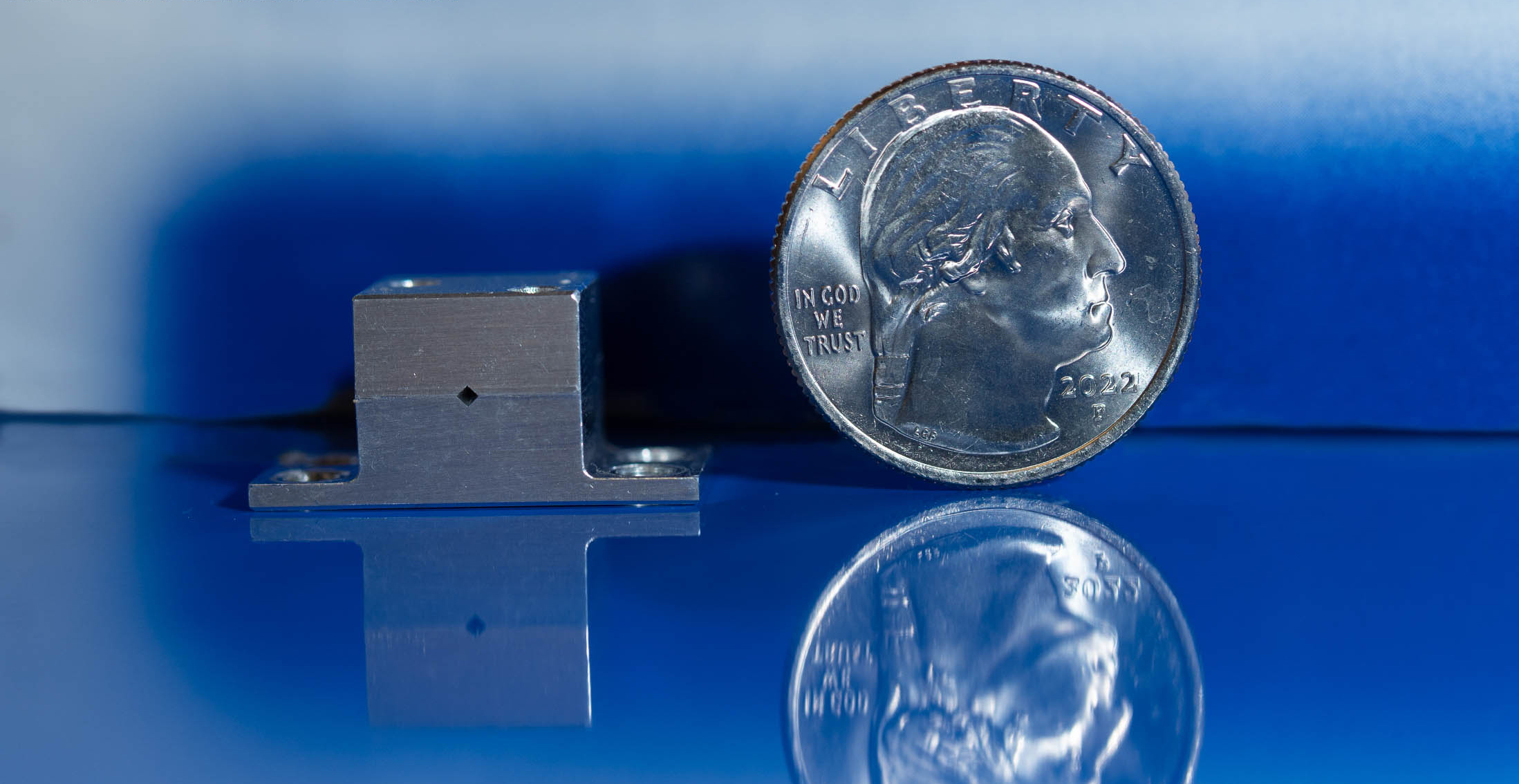
This tiny laser capitalizes on quantum-scale effects of materials just tens of atoms across to generate a high-powered beam in a portion of the spectrum where traditional lasers fade in strength/NASA/Michael Giunto

Electromagnetic oscillators like those that generate radio or microwave frequencies produce low-powered terahertz pulses by using a series of amplifiers and frequency multipliers to extend the signal into the terahertz range. However, this process consumes a lot of voltage, and the materials used to amplify and multiply the pulse have limited efficiency. This means they lose power as they approach the terahertz frequencies.

From the other side of the terahertz gap, optical lasers pump energy into a gas to generate photons. However, high-powered, terahertz-band lasers are large, power hungry, and not suitable for space exploration purposes where mass and power are limited, particularly hand-held or Small Satellite applications. The power of the pulse also drops as optical lasers push towards the terahertz bandwidths.

To fill that gap, Dr. Bulcha’s team is developing quantum cascade lasers that produce photons from each electron transition event by taking advantage of some unique, quantum-scale physics of materials layered just a few atoms thick.

In these materials, a laser emits photons in a specific frequency determined by the thickness of alternating layers of semiconductors rather than the elements in the material. In quantum physics, the thin layers increase the chance that a photon can then tunnel through to the next layer instead of bouncing off the barrier. Once there, it excites additional photons. Using a generator material with 80 to 100 layers, totaling less than 10 to 15 microns thick, the team’s source creates a cascade of terahertz-energy photons.

This cascade consumes less voltage to generate a stable, high-powered light. One drawback of this technology is its beam spreads out in a large angle, dissipating quickly over short distances. Using innovative technology supported by Goddard’s Internal Research and Development (IRAD) funding, Dr. Bulcha and his team integrated the laser on a waveguide with a thin optical antenna to tighten the beam. The integrated laser and waveguide unit reduces this dissipation by 50% in a package smaller than a quarter.

He hopes to continue the work to make a flight-ready laser for NASA’s Artemis program.

The laser’s low size and power consumption allow it to fit in a 1U CubeSat, about the size of a teapot, along with the spectrometer hardware, processor, and power supply. It could also power a handheld device for use by future explorers on the Moon, Mars, and beyond.

Twitter saga continues after Zatko revelations; Parag ridicules false claims

Twitter’s Indian-origin CEO Parag Agrawal has lashed out at the company’s former security chief Peiter ‘Mudge’ Zatko terming his claims false and riddled with inaccuracies.

Reacting to ongoing saga over bots controversy with Zatko, who was fired in January, he said, “We are reviewing the redacted claims that have been published, but what we’ve seen so far is a false narrative that is riddled with inconsistencies and inaccuracies, and presented without important context.”

Zatko claimed that Twitter lied about the actual number of bots on its platform and misled federal regulators about users’ data safety, substantiating Tesla CEO Elon Musk’s takeover bid and withdrawal from the move.

“There are news reports outlining claims about Twitter’s privacy, security, and data protection practices that were made by Mudge Zatko, a former Twitter executive who was terminated in January 2022 for ineffective leadership and poor performance,” Agrawal said in an internal message sent to the staff.

Zatko also alleged that the Indian government forced the micro-blogging platform to hire a “government agent” and allow him access to users’ sensitive data, a claim that was trashed by Twitter.

Agrawal said that this is frustrating and confusing to read, “given Mudge was accountable for many aspects of this work that he is now inaccurately portraying more than six months after his termination”.

“But none of this takes away from the important work you have done and continue to do to safeguard the privacy and security of our customers and their data,” he told employees.

Zatko’s disclosure before SEC

According to Zatko’s disclosure before the US Securities and Exchange Commission (SEC), Twitter has “major security problems that pose a threat to its own users’ personal information, to company shareholders, to national security, and to democracy”.

Agrawal said that given the spotlight on Twitter, “we can assume that we will continue to see more headlines in the coming days — this will only make our work harder. We will pursue all paths to defend our integrity as a company and set the record straight.”

Famous Galileo manuscript in Michigan University turns out to be a forged one

The popular Galileo manuscript at the University of Michigan Library was found to be a forgery, as per an investigation by the University authorities, after a historian flagged it. Based on the watermarks, they realized that it was no more than a century old and not from 1609 as claimed.

“It was pretty gut-wrenching when we first learned our Galileo was not actually a Galileo,” admitted Donna L. Hayward, the interim dean of Michigan’s libraries.

Caption: A handwritten manuscript believed to be the original work of astronomer Galileo Galilei in 1609 turned out to be a modern forgery (Image credit: University of Michigan Library)

The university was donated the piece in 1938 by a trustee Tracy McGregor, purportedly authenticized by Cardinal Pietro Maffi (1858-1931), the Archbishop of Pisa.

The manuscript was a replica of a rough draft by Galileo about the telescope, his new invention as a letter to the Doge of Venice in 1609. The final version is available in the State Archive in Venezia, Italy. It talks about the moons of Jupiter that Galileo found and wrote in his letter.

Credit for discovering the forgery goes to historian Nick Wilding who found the watermark odd and sought a probe. The university found it a forgery three months later and admitted it to the public. They’re suspecting that it was done a notorious forger from Italy by name Tobia Nicotra.

Actually, the watermark on the paper belonged to a post-1770 paper mill company, while Galileo wrote the letter in 1609. “It just kind of jumps out as weird,” Wilding told the NY Times.


Emotional AI and gen Z: The attitude towards new technology and its concerns

Artificial intelligence (AI) governs all that come under “smart technology” today. From self-driving cars to voice assistants on our smartphones, AI has ubiquitous presence in our daily lives. Yet, it had been lacking a crucial feature: the ability to engage human emotions.

The scenario is quickly changing, however. Algorithms that can sense human emotions and interact with them are quickly becoming mainstream as they come embedded in existing systems. Known as “emotional AI,” the new technology achieves this feat through a process called “non-conscious data collection”(NCDC), in which the algorithm collects data on the user’s heart and respiration rate, voice tones, micro-facial expressions, gestures, etc. to analyze their moods and personalize its response accordingly.

However, the unregulated nature of this technology has raised many ethical and privacy concerns. In particular, it is important to know the attitude of the current largest demographic towards NCDC, namely Generation Z (Gen Z). Making up 36% of the global workforce, Gen Z is likely to be the most vulnerable to emotional AI. Moreover, AI algorithms are rarely calibrated for socio-cultural differences, making their implementation all the more concerning.

We found that being male and having high income were both correlated with having positive attitudes towards accepting NCDC. In addition, business majors were more likely to be more tolerant towards NCDC,” highlights Prof. Ghotbi. Cultural factors, such as region and religion, were also found to have an impact, with people from Southeast Asia, Muslims, and Christians reporting concern over NCDC.

Research by Team:

Our study clearly demonstrates that sociocultural factors deeply impact the acceptance of new technology. This means that theories based on the traditional technology acceptance model by Davis, which does not account for these factors, need to be modified,” explains Prof. Mantello.

The study addressed this issue by proposing a “mind-sponge” model-based approach that accounts for socio-cultural factors in assessing the acceptance of AI technology. Additionally, it also suggested a thorough understanding of the potential risks of the technology to enable effective governance and ethical design. “Public outreach initiatives are needed to sensitize the population about the ethical implications of NCDC. These initiatives need to consider the demographic and cultural differences to be successful,” says Dr. Nguyen.

Overall, the study highlights the extent to which emotional AI and NCDC technologies are already present in our lives and the privacy trade-offs they imply for the younger generation. Thus, there is an urgent need to make sure that these technologies serve both individuals and societies well.

How to detect nanoplastics present in air

Large pieces of plastic can break down into nanosized particles that often find their way into the soil and water. Perhaps less well known is that they can also float in the air. It’s unclear how nanoplastics impact human health, but animal studies suggest they’re potentially harmful. As a step toward better understanding the prevalence of airborne nanoplastics, researchers have developed a sensor that detects these particles and determines the types, amounts and sizes of the plastics using colorful carbon dot films.

The researchers will present their results today at the fall meeting of the American Chemical Society (ACS). ACS Fall 2022 is a hybrid meeting being held virtually and in-person Aug. 21–25, with on-demand access available Aug. 26–Sept. 9. The meeting features nearly 11,000 presentations on a wide range of science topics.

“Nanoplastics are a major concern if they’re in the air that you breathe, getting into your lungs and potentially causing health problems,” says Raz Jelinek, Ph.D., the project’s principal investigator. “A simple, inexpensive detector like ours could have huge implications, and someday alert people to the presence of nanoplastics in the air, allowing them to take action.”

Of the many well-documented risks of dirty air, one potential danger is lesser known: chronic kidney disease. Learn about new research and how to protect yourself. CREDIT: Michigan Medicine

Millions of tons of plastic are produced and thrown away each year. Some plastic materials slowly erode while they’re being used or after being disposed of, polluting the surrounding environment with micro- and nanosized particles. Nanoplastics are so small — generally less than 1-µm wide — and light that they can even float in the air, where people can then unknowingly breathe them in. Animal studies suggest that ingesting and inhaling these nanoparticles may have damaging effects. Therefore, it could be helpful to know the levels of airborne nanoplastic pollution in the environment.

Previously, Jelinek’s research team at Ben-Gurion University of the Negev developed an electronic nose or “e-nose” for monitoring the presence of bacteria by adsorbing and sensing the unique combination of gas vapor molecules that they release. The researchers wanted to see if this same carbon-dot-based technology could be adapted to create a sensitive nanoplastic sensor for continuous environmental monitoring.

Carbon dots are formed when a starting material that contains lots of carbon, such as sugar or other organic matter, is heated at a moderate temperature for several hours, says Jelinek. This process can even be done using a conventional microwave. During heating, the carbon-containing material develops into colorful, and often fluorescent, nanometer-size particles called “carbon dots.” And by changing the starting material, the carbon dots can have different surface properties that can attract various molecules.

To create the bacterial e-nose, the team spread thin layers of different carbon dots onto tiny electrodes, each the size of a fingernail. They used interdigitated electrodes, which have two sides with interspersed comb-like structures. Between the two sides, an electric field develops, and the stored charge is called capacitance. “When something happens to the carbon dots — either they adsorb gas molecules or nanoplastic pieces — then there is a change of capacitance, which we can easily measure,” says Jelinek.

Then the researchers tested a proof-of-concept sensor for nanoplastics in the air, choosing carbon dots that would adsorb common types of plastic — polystyrene, polypropylene and poly(methyl methacrylate). In experiments, nanoscale plastic particles were aerosolized, making them float in the air. And when electrodes coated with carbon-dot films were exposed to the airborne nanoplastics, the team observed signals that were different for each type of material, says Jelinek. Because the number of nanoplastics in the air affects the intensity of the signal generated, Jelinek adds that currently, the sensor can report the amount of particles from a certain plastic type either above or below a predetermined concentration threshold. Additionally, when polystyrene particles in three sizes — 100-nm wide, 200-nm wide and 300-nm wide — were aerosolized, the sensor’s signal intensity was directly related to the particles’ size.

The team’s next step is to see if their system can distinguish the types of plastic in mixtures of nanoparticles. Just as the combination of carbon dot films in the bacterial e-nose distinguished between gases with differing polarities, Jelinek says it’s likely that they could tweak the nanoplastic sensor to differentiate between additional types and sizes of nanoplastics. The capability to detect different plastics based on their surface properties would make nanoplastic sensors useful for tracking these particles in schools, office buildings, homes and outdoors, he says.

This tiny sensor detects medicine levels from sweat drop in 30 seconds

Lithium can alleviate the symptoms of bipolar disorder and depression — if taken in just the right amount. Too little won’t work, while too much can bring on dangerous side effects. To precisely monitor the amount of this medication in the body, patients must undergo invasive blood tests. But today, scientists report the invention of a tiny sensor that detects lithium levels from sweat on the surface of a fingertip in as little as 30 seconds, without a trip to the clinic.

The researchers will present their results today at the fall meeting of the American Chemical Society (ACS). ACS Fall 2022 is a hybrid meeting being held virtually and in-person Aug. 21–25, with on-demand access available Aug. 26–Sept. 9. The meeting features nearly 11,000 presentations on a wide range of science topics.

Not only must lithium be taken at a certain dosage, but patients often struggle to take it as prescribed and may miss pills. So, when the medication doesn’t appear to be working, health care providers need to know how much medication the patient is actually swallowing. But current options for monitoring have significant drawbacks. For example, blood draws produce accurate results, but they are invasive and time consuming. Pill counters, meanwhile, don’t directly measure the intake of the medication. To address these limitations, the team turned to another body fluid.

“Although it may not be visible, the human body constantly produces sweat, often only in very small amounts,” says Shuyu Lin, Ph.D., a postgraduate student researcher who is co-presenting the work with graduate student Jialun Zhu at the meeting. “Small molecules derived from medication, including lithium, show up in that sweat. We recognized this as an opportunity to develop a new type of sensor that would detect these molecules.”

“Through a single touch, our new device can obtain clinically useful molecular-level information about what is circulating in the body,” says Sam Emaminejad, Ph.D., the project’s principal investigator, who is at the University of California, Los Angeles (UCLA). “We already interact with a lot of touch-based electronics, such as smart phones and keyboards, so this sensor could integrate seamlessly into daily life.”

Devising a sensor to detect lithium presented some technical challenges, however. Sweat is generally only present in minute amounts, but the electrochemical sensing needed to detect charged particles of lithium required an aqueous, or watery, environment. To provide it, the team engineered a water-based gel containing glycerol. This extra ingredient prevented the gel from drying out and created a controlled environment for the electronic portion of the sensor.

To trap the lithium ions after they traversed the gel, the team used an ion-selective electrode. The accumulating ions generate a difference in electrical potential compared with a reference electrode. The researchers used this difference to infer the concentration of lithium present in sweat. Together, these components comprise a tiny, rectangular sensor that is smaller than the head of a thumbtack and can detect lithium in about 30 seconds. The sensor is still in the preliminary testing phase, but ultimately, the researchers envision incorporating it into a larger, yet-to-be designed system that provides visual feedback to the provider or the patient.

After characterizing the sensor using an artificial fingertip, the team recruited real people to test it, including one person on a lithium treatment regimen. The researchers recorded this person’s lithium levels before and after taking the medication. They found that these measurements fell close to those derived from saliva, which prior research has shown to accurately measure lithium levels. In the future, the researchers plan to study the effects of lotion and other skin products on the sensor’s readings.

This technology also has applications beyond lithium. Emaminejad is developing similar touch-based sensors to monitor alcohol and acetaminophen, a painkiller also known as Tylenol®, while also exploring the possibility of detecting other substances. The complete sensing systems could include additional features, such as encryption secured by a fingerprint, or, for substances prone to abuse, a robotic dispensing system that releases medication only if the patient has a low level in their bloodstream.

The researchers acknowledge support and funding from the National Science Foundation, Brain and Behavior Foundation, Precise Advanced Technologies and Health Systems for Underserved Populations and the UCLA Henry Samueli School of Engineering and Applied Sciences.

ACS Fall 2022 will be a vaccination-required and mask-recommended event for all attendees, exhibitors, vendors and ACS staff who plan to participate in-person in Chicago. For detailed information about the requirement and all ACS safety measures, please visit the ACS website.

The American Chemical Society (ACS) is a nonprofit organization chartered by the U.S. Congress. ACS’ mission is to advance the broader chemistry enterprise and its practitioners for the benefit of Earth and all its people. The Society is a global leader in promoting excellence in science education and providing access to chemistry-related information and research through its multiple research solutions, peer-reviewed journals, scientific conferences, eBooks and weekly news periodical Chemical & Engineering News. ACS journals are among the most cited, most trusted and most read within the scientific literature; however, ACS itself does not conduct chemical research. As a leader in scientific information solutions, its CAS division partners with global innovators to accelerate breakthroughs by curating, connecting and analyzing the world’s scientific knowledge. ACS’ main offices are in Washington, D.C., and Columbus, Ohio.