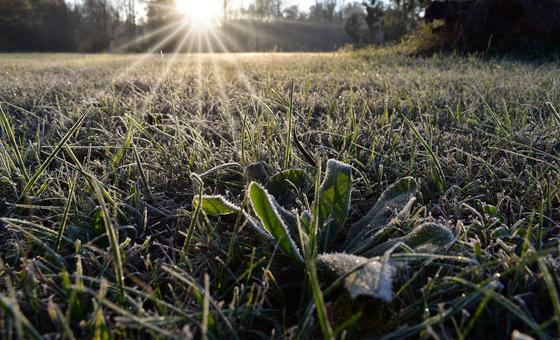
Arab region pushed to limits by climate extremes as 2024 smashes heat records

The World Meteorological Organization’s (WMO) first State of the Climate in the Arab Region report paints a stark picture of a region under constant pressure from rising temperatures and increasingly extreme weather.

The UN agency noted that “a number of countries [in the Arab region] reported temperatures of above 50°C (122°F) last year, while average regional temperatures for 2024 were 1.08°C higher than from 1991 to 2020.

Highlighting the significance of this data, WMO Secretary-General Celeste Saulo noted that scorching temperatures marked by intense and longer-lasting heatwaves “are pushing society to the limits…it is simply too hot to handle,” she said.

“Human health, ecosystems and economies can’t cope with extended spells of more than 50°C,” the WMO chief continued. “Droughts are becoming more frequent and severe in one of the world’s most water-stressed regions. And at the same time, we have seen some disruptive and dangerous deluges.”

Hostile climate

The UN report indicates an 83 per cent rise in recorded disasters in Arab nations between 1980-1999 and from 2000-2019. 

In addition to record-breaking heat, the region – which encompasses 15 of the world’s most water-scarce countries – has endured dust storms, prolonged drought and destructive floods.

Drought worsened in 2024 in western North Africa after six consecutive failed rainy seasons, especially over Morocco, Algeria and Tunisia, WMO said. Whereas in otherwise arid countries including Saudi Arabia, Bahrain and the United Arab Emirates, extreme rainfall and flash floods caused death and destruction. 

These weather shocks have deepened pressure on communities already grappling with conflict, rapid population growth, urbanisation and economic fragility. WMO warned that without stronger adaptation measures, these pressures will only intensify as temperatures continue their rapid upward trajectory.

2024 was the Arab region’s hottest year on record
• Temperatures rising nearly twice global average
• Heat, drought and extreme rain all intensified last year
• Nearly 60 per cent of Arab countries now have early warning systems
• WMO urges greater coordination on climate action

These rising extremes are already reshaping daily life across the Arab region where water shortages are worsening as higher temperatures accelerate evaporation and strain groundwater reserves.

Daily life imperilled

Urban centres face growing threats to energy provision, transport networks and public health, particularly for people working outdoors or living in informal housing. In rural areas, prolonged drought is eroding food production and forcing difficult trade-offs between agriculture, domestic water use and environmental protection.

Claire Ransom, Associate Scientific Officer at WMO’s Climate Monitoring & Policy Section, stressed that extreme heat is only of many extreme weather threats. “Dust storms, severe flooding, and other climate extremes placed immense pressure on communities all across the region in 2024, disrupting lives and impacting millions of people,” she said.

These events have inflicted major economic losses, displacing families, damaging crops and overwhelming emergency response systems, which are unevenly distributed across the region.

Coordinated action

Despite these challenges, the WMO assessment identifies areas of progress. Many countries have expanded preparedness systems and begun investing more strategically in adaptation. “There is progress; nearly 60 per cent of Arab countries now have multi-hazard early warning systems in place, and many are prioritizing water security strategies to cope with the mounting climate risks that we’ve seen in 2024 and beyond,” Ms. Ransom said.

While adaptation efforts are growing, the report concludes that only swift, sustained and collaborative action will be enough to prevent the harsh climate of 2024 from becoming the new normal.

Pressure for coordinated solutions is mounting as temperatures climb. The combination of extreme heat, water scarcity and fast-growing populations is amplifying existing vulnerabilities and threatening development goals across multiple countries. Many governments already struggle to maintain essential services during heatwaves, while poorer communities face the greatest risks from both rising temperatures and worsening storms.

“The key message from the report is clear. The Arab region really stands on the front lines of climate change, and timely information and coordinated action are no longer optional. They’re absolutely essential,” Ms. Ransom said.

The report was produced by the UN agency in partnership with the Economic and Social Commission for Western Asia and the League of Arab States. It is the first climate assessment dedicated entirely to the Arab region and aims to provide actionable science-based information to support decision-makers in the water-scarce region.
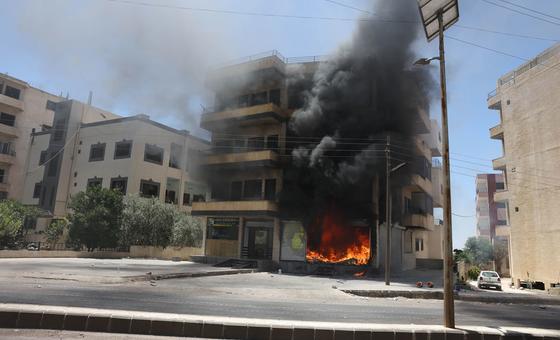
Security Council voices deep concern over deadly escalation in Syria’s Sweida region

Unrest began on 12 July when mutual kidnappings escalated into armed conflict between Druze groups and Bedouin tribes, drawing in Syrian security forces.

The violence spiralled, with reports of extrajudicial executions, desecration of corpses and looting. Footage circulated widely on social media fanned sectarian tensions and disinformation.

Nearly 200,000 displaced

In a presidential statement adopted on Sunday, ambassadors said they were “deeply concerned” by the recent fighting, which has included “mass killings” and led to the internal displacement of some 192,000 people.

The Council “strongly condemns the violence perpetrated against civilians…and calls on all parties to adhere to the ceasefire arrangement and to ensure the protection of the civilian population.”

The 15-member body reminded all sides of their obligations under human rights and international humanitarian law, stressing in particular the duty to “respect and protect” all medical and humanitarian personnel.

Council members urged all parties to allow “full, safe, rapid and unhindered humanitarian access” to affected communities in the heavily-Druze Sweida area and across Syria, in line with the principles of humanity, neutrality, impartiality and independence.

They also underscored the need to ensure the humane treatment of all combatants, including those who have surrendered, are wounded, detained, or have laid down their arms.

Protection for all

The statement called on the Syrian interim authorities to protect all Syrians “regardless of ethnicity or religion” and warned that “there can be no meaningful recovery in Syria without genuine safety and protection for all Syrians.”

The Council welcomed the interim authorities’ condemnation of the violence and their commitment to investigate those responsible, but urged them to ensure “credible, swift, transparent, impartial, and comprehensive investigations… in line with international standards.”

Reaffirming resolutions including 2254 (2015), the Council reiterated its “strong commitment to the sovereignty, independence, unity, and territorial integrity of the Syrian Arab Republic” and called on all States to avoid “negative or destructive interference” that could further destabilise the country.

The statement also recalled the 1974 Disengagement Agreement and the mandate of the UN Disengagement Observer Force (UNDOF) tmonitoring and patrolling the contested Golan on the Syria-Israel border, urging all parties to abide by its terms to maintain calm.

On the threat of terrorism, the Council cited the latest report of its Analytical Support and Sanctions Monitoring Team, voicing “grave concern over the acute threat posed by foreign terrorist fighters” in Syria. It urged the country to take decisive measures against ISIL (Da’esh) and Al-Qaida, in line with relevant resolutions.

Looking ahead, the Council repeated its call for “an inclusive, Syrian-led and Syrian-owned political process” based on resolution 2254, to safeguard the rights of all Syrians and enable them to “peacefully, independently and democratically determine their futures.”

Source link

Scores killed in Sudan’s Kordofan region as fighting intensifies

Amid ongoing communication disruptions in the area, confirming the exact civilian death toll remains difficult, but reports indicate that at least 300 people – including children and pregnant women – were killed in attacks on villages in Bara locality, North Kordofan State, between 10 and 13 July.

During the same period, a series of attacks – including an air strike on a school sheltering displaced families – reportedly killed more than 20 people, in the villages of Al Fula and Abu Zabad in West Kordofan State.  

OCHA is also alarmed by reports of renewed shelling in Al Obeid, the capital of North Kordofan State, “deepening fears and insecurity among civilians,” the humanitarian coordination agency reported.  

Tragic civilian toll

With thousands of people reportedly killed since the beginning of the conflict between former military allies-turned rivals over two years ago, the crisis in Sudan continues to take a devastating toll on civilians. 

These incidents are yet another tragic reminder of the relentless toll the conflict is taking on civilians across Sudan,” OCHA reported.

The office emphasises that civilians and civilian infrastructures – including schools, homes, shelters and humanitarian assets – must never be targeted, and called on all parties to the conflict to “fully respect their obligations under international humanitarian law.”

Toll from displacement

Described as “the largest as well as the fastest growing displacement crisis globally,” by the UN refugee agency (UNHCR) in February 2025, displacement continues amid the fighting.

People fleeing North Kordofan, as well as El Fasher in North Darfur State, continue to seek shelter in the rest of Sudan, including Northern State, with humanitarian partners on the ground reporting more than 3,000 displaced people arriving in the locality of Ad-Dabbah since June.

Although some have received food assistance, the steady influx of newly displaced families is putting additional strain on already stretched resources.  

With the rainy season approaching, OCHA warned that further hardship is likely, particularly as heavy rain and strong winds destroyed shelters and food supplies for about 2,700 displaced people in eastern Sudan this past Sunday. 

Source link

Chile and Argentina among coldest places on Earth as polar anticyclone grips region

On 30 June, both Chile and Argentina ranked among the coldest places on Earth, outside the polar regions.

Governments in both countries issued early warnings and cold-weather alerts in response to the “polar-origin anticyclone” behind the extreme conditions, WMO said.

The cold snap in South America contrasts blistering heat in the northern hemisphere, especially in Europe, putting lives at risk and further underscores the worsening impacts of climate change.

Heating systems affected

In Mar del Plata, Argentina – about 380 kilometres (240 miles) south of Buenos Aires – where winters are “cool” and temperatures seldom drop below freezing, the unusual cold snap has affected natural gas distribution, primarily used for heating.  

A UN staff member in the city reported that businesses were asked to remain closed to conserve gas supplies for homes. Schools and public buildings were also shut on Thursday and possibly Friday.

Across much of central and southern Argentina, temperatures were 10°C to 15°C – 50°F to 59°F – below seasonal averages.

Unusual weather conditions

The cold spell began on 26 June and peaked on 30 June, bringing record lows to large parts of the continent.  

“Although the Andean mountains and Patagonia are no strangers to cold temperatures in winter, the severity of this event was exceptional and even affected low-lying areas,” WMO said in a news release.

The high-pressure system brought atmospheric stability, resulting in clear skies and widespread severe frost.  

In Chilean cities of Santiago, Rancagua and Talca, stagnant cold air led to a buildup of pollutants and deteriorating air quality.

National meteorological services in both Chile and Argentina reported record low temperatures at multiple weather stations.  

Remarkably, snow blanketed parts of the Atacama Desert – the driest place on Earth – for the first time in over a decade. Snow also fell in unusual locations such as Mar del Plata, the Calamuchita Valley in Córdoba, and the hilly regions of northern Patagonia.  

Far-reaching impacts

Concerns are growing over the broader societal and economic impacts of the extreme cold.

Farmers in central Chile and northern Patagonia have reported crop damage due to early frosts, threatening fruit and winter harvests.

Meanwhile, transport and schooling were disrupted in towns unaccustomed to such severe winter weather. 

Emotional AI and gen Z: The attitude towards new technology and its concerns

Artificial intelligence (AI) governs all that come under “smart technology” today. From self-driving cars to voice assistants on our smartphones, AI has ubiquitous presence in our daily lives. Yet, it had been lacking a crucial feature: the ability to engage human emotions.

The scenario is quickly changing, however. Algorithms that can sense human emotions and interact with them are quickly becoming mainstream as they come embedded in existing systems. Known as “emotional AI,” the new technology achieves this feat through a process called “non-conscious data collection”(NCDC), in which the algorithm collects data on the user’s heart and respiration rate, voice tones, micro-facial expressions, gestures, etc. to analyze their moods and personalize its response accordingly.

However, the unregulated nature of this technology has raised many ethical and privacy concerns. In particular, it is important to know the attitude of the current largest demographic towards NCDC, namely Generation Z (Gen Z). Making up 36% of the global workforce, Gen Z is likely to be the most vulnerable to emotional AI. Moreover, AI algorithms are rarely calibrated for socio-cultural differences, making their implementation all the more concerning.

We found that being male and having high income were both correlated with having positive attitudes towards accepting NCDC. In addition, business majors were more likely to be more tolerant towards NCDC,” highlights Prof. Ghotbi. Cultural factors, such as region and religion, were also found to have an impact, with people from Southeast Asia, Muslims, and Christians reporting concern over NCDC.

Research by Team:

Our study clearly demonstrates that sociocultural factors deeply impact the acceptance of new technology. This means that theories based on the traditional technology acceptance model by Davis, which does not account for these factors, need to be modified,” explains Prof. Mantello.

The study addressed this issue by proposing a “mind-sponge” model-based approach that accounts for socio-cultural factors in assessing the acceptance of AI technology. Additionally, it also suggested a thorough understanding of the potential risks of the technology to enable effective governance and ethical design. “Public outreach initiatives are needed to sensitize the population about the ethical implications of NCDC. These initiatives need to consider the demographic and cultural differences to be successful,” says Dr. Nguyen.

Overall, the study highlights the extent to which emotional AI and NCDC technologies are already present in our lives and the privacy trade-offs they imply for the younger generation. Thus, there is an urgent need to make sure that these technologies serve both individuals and societies well.