Putting people at the heart of cities, key to improving urban life

Yet, amid this rapid transformation, one question rises above all: how can innovation truly serve the people, as more and more of them migrate to cities?

That question lies at the heart of this year’s World Cities Day, which will be celebrated in Bogotá, Colombia, under the theme People-Centred Smart Cities.

Organized by the UN’s urban agency, UN-Habitat, the event brings together mayors, experts on city life and community leaders from around the world to explore how data, design, and digital tools can build communities that are not only smarter, but also fairer, greener, and more inclusive.

By 2050, nearly 70 per cent of humanity is expected to live in urban areas, intensifying demands for housing, services, and climate resilience.

In his message for the day, UN Secretary-General António Guterres emphasized that innovation must close gaps, not widen them.

“A truly smart city puts people first, especially the most vulnerable,” Mr. Guterres said. “When we place people at the centre, digital innovation can help drive fairness and sustainability for all.”

Bogotá’s big experiment 

Bogotá, long known for urban experimentation, has earned global recognition for combining technology with citizen engagement.

From TransMilenio, its influential bus rapid transit system, to Ciclovía, which turns streets into car-free community spaces every Sunday, the city has redefined how urban design can foster social connection and sustainability.

For Elkin Velásquez, UN-Habitat’s Regional Director for Latin America and the Caribbean, Bogotá offers a compelling example of how data and dialogue can shape better futures.

“The global observance here will foster international dialogue on people-centred smart cities — where technology enhances quality of life and strengthens community bonds,” he said.

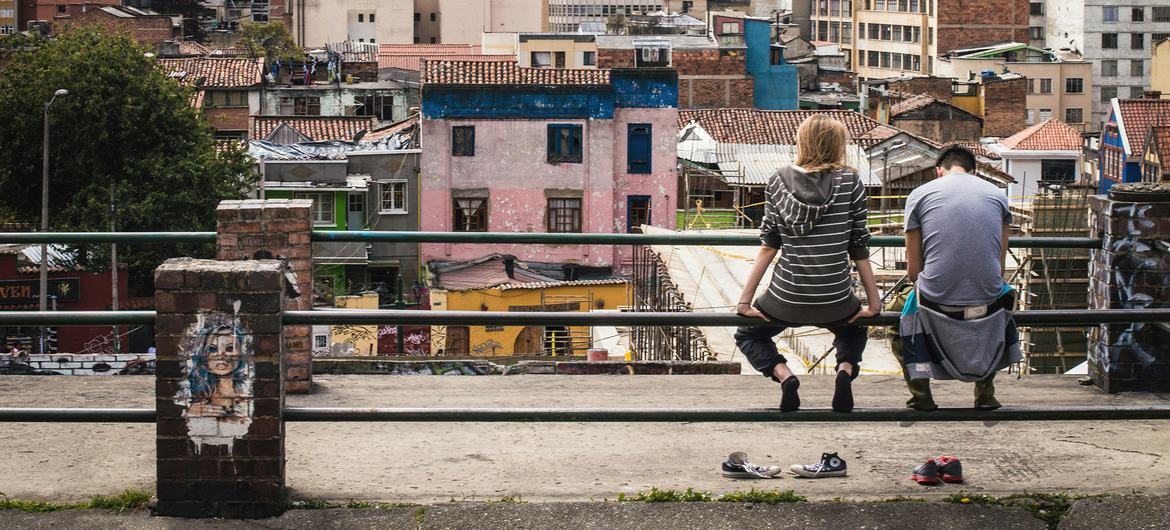
© Unsplash/Delaney Turner

Bogotá, Colombia’s capital city.

Listening to the city

Among the keynote speakers in Bogotá is Carlo Ratti, architect, engineer, and director of the MIT Senseable City Lab in the United States, as well as curator of the 2025 Venice Architecture Biennale.

Mr. Ratti, one of the world’s leading thinkers on urban innovation, believes that cities must evolve beyond the notion of the “smart city” toward what he calls the “senseable city.”

“I’m not fond of the term ‘smart city,’” Mr. Ratti said. “It often implies a top-down system guided by technology alone. Cities must first and foremost be about people — responsive, inclusive, and adaptive. A ‘senseable city’ uses technology not for its own sake, but to better listen to and serve its citizens.”

For Mr. Ratti, Bogotá embodies this spirit. “It has long intrigued me as a leading city for urban experimentation,” he said. “Projects like TransMilenio and Ciclovía have become global case studies.

“They show how local interventions, when scaled and embraced, can shift urban trajectories.”

On principle, Mr. Ratti believes that in an age of climate emergency and demographic transition, “the most radical act may be not to build or build differently”. As an alternative, he suggests prioritizing reuse, retrofitting, and transformation.

“And if you truly need to build on greenfield sites, learn from the logic of nature. In terms of energy and circularity, a tree is still much smarter than any building we can design”, he concluded. 

A people-centred vision

According to Anacláudia Rossbach, Executive Director of UN-Habitat, the city’s approach exemplifies what a people-centred smart city should look like.

“In Bogotá, the smart cities approach is people-centered, aiming to improve well-being and quality of life,” Ms. Rossbach said.

“Programmes like Ecobarrios and Mi Casa focus on resilience and sustainability, while digital initiatives such as Chatico, a virtual agent, use Artificial Intelligence to help citizens access information on public services and participate in consultations.”

These initiatives, she explained, represent a broader effort to advance sustainable mobility, data-driven policymaking, and bridge the digital divide.
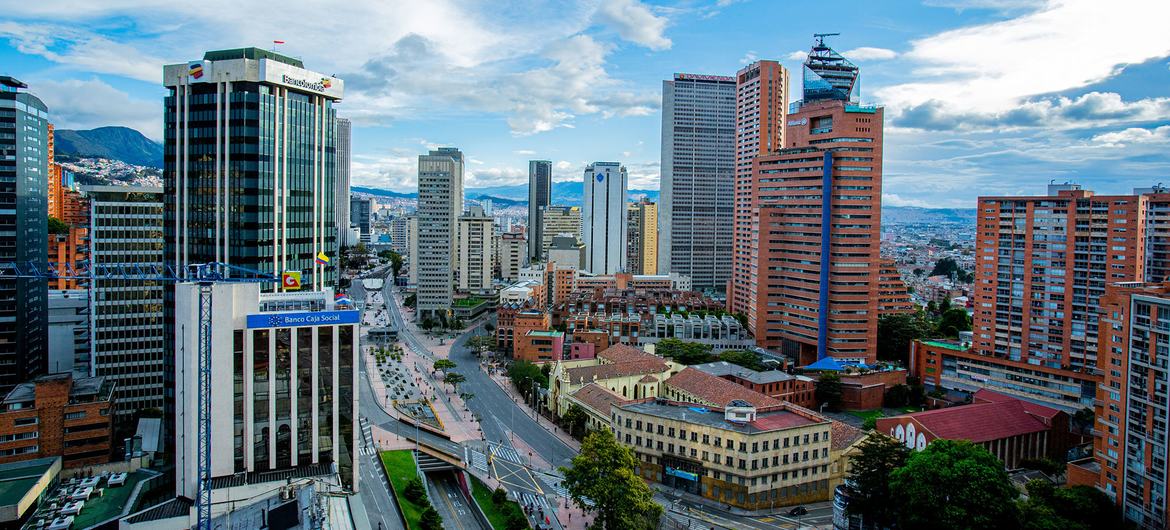
© Bogota Mayor’s Office/Cristia

Bogotá, Colombia, is recognized as a leader in smart city initiatives, with a focus on digital transformation, mobility, and urban sustainability.

“These are good examples of technology and innovation that serve people and communities,” Ms. Rossbach added. “It’s vital that such experiences are shared globally, allowing other cities to adapt these lessons to their own contexts.”

A global conversation

World Cities Day marks the conclusion of Urban October, UN-Habitat’s month-long campaign for sustainable and inclusive urbanization. This year’s observance in Bogotá aims to leave behind a legacy, one built on collaboration, learning, and shared commitment to a more equitable urban future.

“The legacy we seek is twofold,” Ms. Rossbach concluded. “First, to showcase the creativity of cities in advancing people-centred smart approaches. And second, to strengthen the networks of cooperation that ensure innovation serves people, and not the other way around.”

As digital tools become ever more embedded in urban life, the challenge for cities is clear: to ensure that smart solutions remain human ones.
 

Hurricane Melissa leaves thousands displaced across the Caribbean

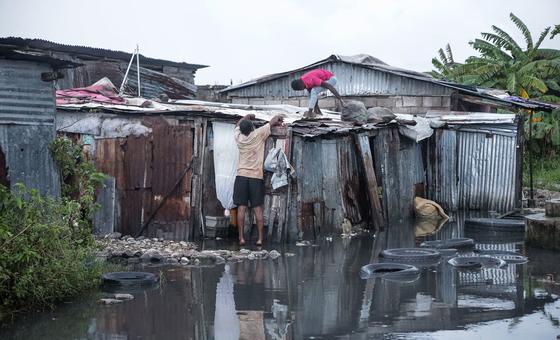
The hurricane caused widespread damage to homes, infrastructure and crops, leaving thousands displaced.

However, extensive storm preparation by governments, assisted by UN agencies and other NGOs, appears to have helped lessen the impact and saved lives in many areas. 

In Cuba, the hurricane struck the province of Santiago de Cuba with winds exceeding 200 km/h per hour and six hours of torrential rain. “Melissa is one of the three most powerful hurricanes ever recorded in Cuba and the strongest worldwide this year,” said Francisco Pichon, UN Resident Coordinator for Cuba, during a press briefing via videoconference in New York.

More than three million people were exposed to life-threatening conditions, and nearly 240 communities are cut off due to flooding and landslides”, he added speaking via video.

Existing vulnerabilities

The storm compounded existing vulnerabilities. Many affected areas had already suffered from last year’s Hurricane Oscar and earthquakes – while drought, rising viral diseases, and energy shortages caused further strain.

Despite these challenges, Cuba’s civil defence system helped evacuate over 77,000 people to protection centres, including schools temporarily repurposed as shelters.

Mr. Pichon highlighted the UN’s anticipatory action framework, which pre-positioned relief supplies and personnel before the storm hit. “This mechanism allowed us to respond quickly and ensure that essential goods reached the people who needed them most,” he said.

Plans are underway to reach two million people in the coming days, including food security, health, education, shelter, water and sanitation, and logistics.

Early preparedness saves lives

In Haiti, the storm’s slow movement brought flash floods, landslides, and severe damage to crops, said Gregoire Goodstein, the UN’s interim Humanitarian Coordinator.

“At least 24 people have died, 17 were injured, and 18 remain missing,” he reported. Around 15,000 people are currently sheltering in over 120 temporary facilities.

Early preparedness helped save lives. “We deployed emergency stocks, set up evacuation shelters, and sent out 3.5 million early warning messages,” Mr. Goodstein told journalists. “Rapid response teams worked alongside national authorities to ensure communities could evacuate safely,” he added.

Haiti faces the storm amid an ongoing humanitarian crisis, with 1.4 million people displaced, widespread hunger affecting half the population, and cholera outbreaks in some areas.

Mr. Goodstein noted that the UN’s Humanitarian Response Plan is currently 87 per cent underfunded, putting life-saving operations at risk.

“Humanitarian needs remain immense, and international cooperation is crucial.”

The UN continues to coordinate assistance across the Caribbean, supporting both immediate relief and longer-term recovery efforts in the wake of Hurricane Melissa.

‘Yawning gap’ remains between climate adaptation funds and funding pledges

That’s the main message in this year’s Adaptation Gap Report from the UN Environment Programme (UNEP).

By 2035, developing nations will need well over $310 billion per year in dedicated funding to adapt to a planet increasingly altered by polluting fossil-fuel emissions, the report states.

“Climate adaptation” refers to the ways countries respond to actual or expected climate change and its effects, to moderate the harm caused.

Examples include flood defences such as seawalls, improved drainage systems, or elevating roads and buildings. In 2023, vulnerable countries received around $26 billion. 

‘Adaptation is a lifeline’

UN Secretary-General António Guterres, who warned on Tuesday that humanity’s failure to limit man-made global warming to 1.5ºC above pre-industrial levels will lead to “devastating consequences,” said on Wednesday that the adaptation gap leaves the world’s most vulnerable people exposed to rising seas, deadly storms, and searing heat.

“Adaptation is not a cost – it is a lifeline,” declared the UN chief. “Closing the adaptation gap is how we protect lives, deliver climate justice, and build a safer, more sustainable world. Let us not waste another moment.”

Although far more needs to be done, the report notes that visible progress is being made to close the gap.

For example, most countries have at least one national adaptation plan in place, and climate funding for new adaptation projects rose in 2024 (although the current financial landscape means future funding is in jeopardy).

Baku to Belém, to $1.3 trillion

The latest adaptation data will help negotiations focused on tackling the climate crisis at the annual UN Climate Conference.

This year’s event, COP30, is being held next month in Belém, Brazil, where ramping up financing for developing nations will be high on the agenda.

At last year’s UN Climate Conference in Baku, Azerbaijan (COP29), a new goal – the Baku to Belém Roadmap – was launched: $1.3 trillion for climate finance – from public and private sources – by 2035.

This is not just for adaptation, it also covers the transition to economies that don’t rely on fossil fuels for energy.

The authors of the Adaptation Gap report agree that the roadmap could, if implemented, make a huge difference, but the devil is in the detail.

They argue that funding should come from grants rather than loans, which would make it even harder for vulnerable countries to invest in adaptation.

Speaking at the launch of the report on Wednesday, Inger Andersen, Executive Director of UNEP, called for a global push to increase adaptation finance – from both public and private sources – without adding to the debt burdens of vulnerable nations.

Investment now, she said, will avoid the cost of adaptation escalating.

Climate inaction is claiming millions of lives every year.

Climate inaction costing ‘millions of lives’: WHO

Underscoring the urgency of adapting to the changing climate, the World Health Organization (WHO) announced on Wednesday that climate inaction costs millions of lives each year.

The findings are contained within the latest Lancet Countdown on Health and Climate Change on Wednesday, which shows continued over-reliance on fossil fuels, coupled with a failure to adapt to a heating world, are already having a devastating toll on human health in all countries, rich and poor.

The rate of heat-related deaths, for example, has gone up by 23 per cent since the 1990s, to an average 546 000 deaths per year. Droughts and heatwaves added 124 million people to the numbers facing moderate or severe food insecurity in 2023, and heat exposure caused productivity losses equivalent to US$ 1.09 trillion to be lost.

Despite the human and economic costs, governments spent $956 billion on net fossil fuel subsidies in 2023, more than triple the annual amount pledged to support climate-vulnerable countries: fifteen countries spent more subsidising fossil fuels than on their entire national health budgets.

‘We have the solutions at hand’

“We already have the solutions at hand to avoid a climate catastrophe,” said Dr Marina Romanello, Executive Director of the Lancet Countdown at University College London. “Communities and local governments around the world are proving that progress is possible. From clean energy growth to city adaptation, action is underway and delivering real health benefits – but we must keep up the momentum.”

Dr. Romanello described the rapid phase out of fossil fuels in favour of clean renewable energy and efficient energy use as the most powerful lever to slow climate change and cut deaths, estimating that a shift to healthier, climate-friendly diets and more sustainable agricultural systems would massively cut pollution, greenhouse gases and deforestation, potentially saving over ten million lives a year.

In Southeast Asia, Guterres presses the case for climate action

Addressing a joint summit between the UN and Southeast Asian nations in Kuala Lumpur on Monday, Secretary-General António Guterres described the region as “a beacon of cooperation” and a vital pillar of global stability.

With Timor-Leste’s accession, he said, the collective spirit of the regional organization known as ASEAN had “grown stronger,” making the bloc an essential partner in shaping “a more balanced and interlinked world.”

The Association of Southeast Asian Nations now has 11 full members, alongside partners which include China, India, the European Union, Russia and Australia.

The UN, for its part, has a comprehensive partnership framework with the bloc as well as plans for joint action.

Peace, Myanmar and regional stability

Mr. Guterres outlined four areas of deepening collaboration – peace and prevention; sustainable development and financial justice; climate action and digital transformation.

He commended ASEAN countries for their strong contributions to peacekeeping and regional mediation efforts.

The UN chief praised Malaysia for helping to facilitate a ceasefire between Cambodia and Thailand, and reiterated the importance of dialogue and restraint in the South China Sea to uphold international law and freedom of navigation.

Turning to Myanmar, the Secretary-General condemned ongoing violence, describing the humanitarian situation as “appalling.”

“Thousands are dead. Millions displaced. Humanitarian needs are soaring,” he said, calling for an immediate halt to hostilities, protection of civilians, and “the release of those arbitrarily detained, including democratically elected leaders.”

He reaffirmed the UN’s support for ASEAN’s 2021 Five-Point Consensus to resolve Myanmar’s protracted conflict following the coup – and the Security Council resolution demanding a ceasefire that same year.

A fairer financial system

The Secretary-General also made a strong call for overhauling what he described as an “outdated and unfair” global financial architecture that leaves developing nations “locked out of prosperity.”

“It is high time for reform,” he said, noting that ASEAN economies remain underrepresented in global financial institutions despite their growing economic weight.

Climate change target ‘on life support’

In his keynote address, the Secretary-General warned that the target on limiting global warming to 1.5 degrees Celsius above pre-industrial levels “is on life support,” urging both developed and developing nations to step up climate ambition ahead of COP30 in Brazil next month.

On digital transformation, he underscored the UN’s commitment to ensuring artificial intelligence serves humanity.

Standing together

At a press conference following the Summit, Mr. Guterres said ASEAN “offers a vision of hope” amid global uncertainty.

“The United Nations is proud to be ASEAN’s partner,” he said, “as we work to ensure a better, more peaceful future for people across the southeast Asian region and around the world.”

High stakes and high flavour: Indigenous chef brings Amazonian soul to COP30

Indigenous chef and activist Tainá Marajoara will serve dishes rooted in ancestral Amazonian traditions, showcasing the biodiversity and spirituality of Brazil’s Indigenous Peoples.

Between rounds of negotiations, delegates will be treated to flavours such as maniçoba, açaí and pirarucu – all prepared with more than 10 tonnes of agroecological ingredients sourced through fair and sustainable food systems.

A taste of ancestral wisdom

“Our kitchen will feature canhapira, an Indigenous Marajoara dish that remains part of local cuisine today,” Ms. Marajoara explained. 


The dish comes from the Marajoara people, an Indigenous group native to Marajó Island, a vast river island where the Amazon meets the Atlantic.

“There will be plenty of açaí. We managed to secure its inclusion despite earlier controversy.

“We’ll also serve maniçoba, a dish made from cassava leaves cooked for seven days with pork, as well as tucupi, jambu, tacacá, and the Amazon’s iconic fish, pirarucu. We plan to buy at least two tonnes of it alone.”

Tainá is the founder of Ponto de Cultura Alimentar Iacitatá, the cultural and culinary collective selected to oversee the COP30 kitchen, which will serve everyone attending – from presidents to porters. 

© Courtesy of Tainá Marajoara

The indigenous activist and chef Tainá Marajoara, from Brazil, at the Food and Agriculture Museum and Network in Rome.

Peace meal

More than just a meal, the ancestral cook sees this culinary effort as a statement. “We want to show that it is possible to live in peace. We need to live in peace,” she said.

“Throughout COP30, we are building a space of ancestral diplomacy, making it clear that recognising the link between Indigenous and local communities and food sovereignty is urgent.

“As long as ancestral lands are violated and violence spreads across forests, rivers, and fields, our people and our culture are being killed.”

Speaking from Rome, where she was attending the World Food Forum at the UN Food and Agriculture Organization (FAO) headquarters, Ms. Marajoara stressed the COP30 kitchen will embody the values of sustainability, justice, and respect for life.

UN News/Felipe de Carvalho

Tucupi is a yellow broth extracted from wild cassava, traditional in Amazonian cuisine.

Rooted in climate justice

For the Chef, Indigenous food systems represent much more than sustenance, they are a living form of environmental stewardship and spiritual connection.

“This knowledge has been invisible for too long,” she said. “Leading the COP30 kitchen is an act of cultural and ancestral diplomacy.”

She hopes the initiative will become a model for future international events. “This will be the first COP to feature a community-based, family-farming kitchen. It proves that it can be done, and it shouldn’t stop here. Let COP30 become a historic milestone, one that inspires similar initiatives across the world.”

Food and conservation

Ms. Marajoara emphasised that food sovereignty and environmental conservation are inseparable.

“The world is in collapse,” she warned. “There is no more time for endless negotiations. Protecting Indigenous and local community territories is a concrete, effective way to safeguard the planet’s climate.”

Climate science and early warnings key to saving lives

“Early-warning systems work,” he told the World Meteorological Organization (WMO) in Geneva. “They give farmers the power to protect their crops and livestock. Enable families to evacuate safely. And protect entire communities from devastation.”

“We know that disaster-related mortality is at least six times lower in countries with good early-warning systems in place,” the UN chief said.

He added that just 24 hours’ notice before a hazardous event can reduce damage by up to 30 per cent.

In 2022, Mr. Guterres launched the Early Warnings for All initiative aiming to ensure that “everyone, everywhere” is protected by an alert system by 2027.

Progress has been made, with more than half of all countries now reportedly equipped with multi-hazard early-warning systems. The world’s least developed countries have nearly doubled their capacity since official reporting began “but we have a long way to go,” the UN chief acknowledged.

At a special meeting of the World Meteorological Congress earlier this week, countries endorsed an urgent Call to Action aiming to close the remaining gaps in surveillance.

Extreme weather worsens

WMO head Celeste Saulo, who has been urging a scale-up in early-warning system adoption, warned that the impacts of climate change are accelerating, as “more extreme weather is destroying lives and livelihoods and eroding hard-won development gains”.

She spoke of a “profound opportunity to harness climate intelligence and technological advances to build a more resilient future for all.”

Weather, water, and climate-related hazards have killed more than two million people in the past five decades, with developing countries accounting for 90 per cent of deaths, according to WMO.

Mr. Guterres emphasized the fact that for countries to “act at the speed and scale required” a ramp-up in funding will be key.

Surge in financing

“Reaching every community requires a surge in financing,” he said. “But too many developing countries are blocked by limited fiscal space, slowing growth, crushing debt burdens and growing systemic risks.”

He also urged action at the source of the climate crisis, to try to limit fast-advancing global warming to 1.5 degrees Celsius above pre-industrial era temperatures – even though we know that this target will be overshot over the course of the next few years, he said.

“One thing is already clear: we will not be able to contain global warming below 1.5 degrees in the next few years,” Mr. Guterres warned. “The overshooting is now inevitable. Which will mean that we’re going to have a period, bigger or smaller, with higher or lower intensity, above 1.5 degrees in the years to come.”

Still, “we are not condemned to live with 1.5 degrees” if there is a global paradigm shift and countries take appropriate action.

At the UN’s next climate change conference, where states are expected to commit to reducing greenhouse gas emissions over the next decade, “we need to be much more ambitious,” he said. COP30 will take place on 10-21 November, in Belén, Brazil.

“In Brazil, leaders need to agree on a credible plan in order to mobilize $1.3 trillion per year by 2035 for developing countries, to finance climate action,” Mr. Guterres insisted.

Developed countries should honour their commitment to double climate adaptation funding to $40 billion this year and the Loss and Damage Fund needs to attract “substantial contributions,” he said.

Mr. Guterres stressed the need to “fight disinformation, online harassment and greenwashing,” referring to the UN-backed Global Initiative on Climate Change Information Integrity.

“Scientists and researchers should never fear telling the truth,” he said.

He expressed his solidarity with the scientific community and said that the “ideas, expertise and influence” of the WMO, which marks its 75th anniversary this week, are needed now “more than ever”.

Record rise in carbon dioxide levels during 2024: UN weather agency

The surge was driven by continued human emissions, more wildfire activity and weakened absorption by land and ocean “sinks” – a development that threatens to create a vicious climate cycle.

Tripling since the 1960s

The WMO’s latest Greenhouse Gas Bulletin shows that CO₂ growth rates have tripled since the 1960s, accelerating from an annual average increase of 0.8 parts per million (ppm) to 2.4 ppm per year, in the decade from 2011 to 2020.

The rate jumped by a record 3.5 ppm between 2023 and 2024 – the largest increase since monitoring began in 1957.

Average concentrations reached 423.9 ppm in 2024, up from 377.1 ppm when the bulletin was first published in 2004.

Roughly half of  CO₂ emitted remains in the atmosphere, while the rest is absorbed by land and oceans; storage that is weakening as warming reduces ocean solubility and worsens drought.

The 2024 spike was likely amplified by an uptick in wildfires and a reduced uptake of CO₂ by land and the ocean in 2024 – the warmest year on record, with a strong El Niño weather pattern effect.

“There is concern that terrestrial and ocean CO₂ sinks are becoming less effective, which will increase the amount of CO₂ that stays in the atmosphere, thereby accelerating global warming. Sustained and strengthened greenhouse gas monitoring is critical to understanding these loops,” said Oksana Tarasova, WMO senior scientific officer who coordinates the bulletin research.

Other record highs

Methane and nitrous oxide – the second and third most significant long-lived greenhouse gases – also set new emission records.

Methane levels rose to 1,942 ppb, 166 per cent above pre-industrial levels, while nitrous oxide hit 338 ppb – a 25 per cent increase.

The heat trapped by CO2 and other greenhouse gases is turbo-charging our climate and leading to more extreme weather. Reducing emissions is therefore essential not just for our climate but also for our economic security and community well-being,” said WMO Deputy Secretary-General Ko Barrett.

Monitoring and action

The WMO issued the report ahead of the COP30 climate conference in Belém, Brazil, beginning in November, emphasising that sustained global monitoring is vital for guiding climate action.

The ‘clean revolution is unstoppable’ but will it arrive too late?

In recent years, one of the bright spots amid gloomy predictions about the climate has come from the International Renewable Energy Agency (IRENA) – an Abu Dhabi-based intergovernmental body – which has consistently pointed out the plummeting costs and soaring efficiency of clean energy sources, such as solar and wind power.

On Tuesday, IRENA launched its latest progress report, which reiterated the impressive rise of renewables – 2024 saw a record-breaking additional 582 Gigawatts of renewable energy capacity – but warned that this is still far from the annual increase necessary to wean us off the fossil fuels which are accelerating global warming.

“The clean energy revolution is unstoppable,” said Mr. Guterres in reaction to the study.

Renewables are deployed faster and cheaper than fossil fuels – driving growth, jobs, and affordable power. But the window to keep the 1.5°C limit within reach is rapidly closing. We must step up, scale up and speed up the just energy transition – for everyone, everywhere.”

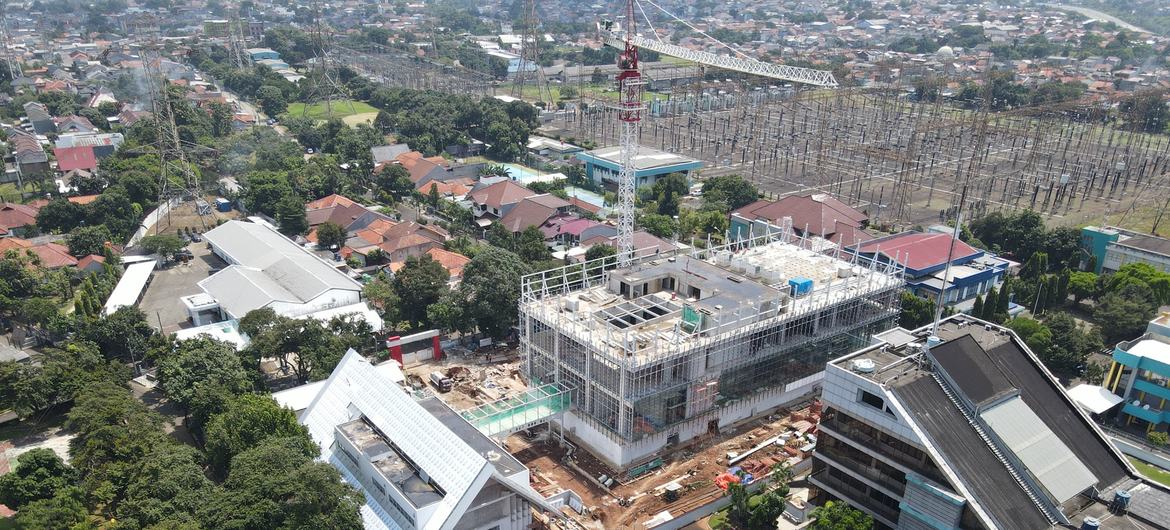
Indonesia is modernizing its electricity grid.

Still off track

At the COP28 UN climate conference, governments committed to produce 11.2 Terawatts of energy from renewable sources by 2030.

So, whilst the 2024 figure is impressive, it’s still way off the 1,122 GW of capacity that needs to be added every year, if that goal is to be reached in time.

The report calls on the world’s richest countries to take the lead in turning away from polluting energy sources such as coal and oil and raise their share of renewables to around 20 per cent of global capacity by the end of the decade.

A major increase in investment for the transition is urgently needed, the reports states, to fund upgrades to electricity grids, supply chains, and clean-tech manufacturing for solar, wind, batteries and hydrogen.

Indirect disaster effects cost the world nearly $2 trillion per year, Guterres says on International Day

Most of the exorbitant costs of disaster are preventable with proper funding and planning —one of the main messages for this year’s International Day for Disaster Risk Reduction, themed Fund Resilience, Not Disasters, observed on Monday.

“Every dollar invested in resilience saves many more in avoided losses and protects the dignity of those most at risk. The choice is ours. We can continue to fund disaster response or we can invest in resilience,” said Amy Pope, chief of the International Organization for Migration (IOM).

In 2024 alone, nearly 46 million people were displaced by disasters, the highest number ever recorded, but disaster risk reduction efforts remain severely underfunded, according to the IOM. 

Preventable disaster costs

“As the climate crisis accelerates, disasters are multiplying and amplifying – devastating lives and livelihoods, erasing decades of development gains in an instant,” said UN Secretary-General António Guterres in his message to mark the Day. 

“The cost to the global economy is staggering: an estimated $2 trillion every year, when indirect costs are taken into account.”

Indirect costs include the wider social and ecosystem losses that come as a result of natural catastrophes. Earthquakes, floods, storms, droughts and heatwaves made up 95 per cent of direct costs in the past two decades, according to the report. 

“Wildfires in Europe and the Americas, and devastating earthquakes in Myanmar and Afghanistan prove that no country is immune, but the heaviest toll falls on communities already struggling with conflict, poverty, and hunger,” said Ms. Pope.

Different natural catastrophes affect different regions in the world. In South Sudan, annual floods can submerge houses, farmland and schools, forcing people to flee their homes and increasing food insecurity. 

As a disaster prevention measure, dykes have been constructed in South Sudan with the support of the IOM, protecting farmland and restoring livelihoods. 

Promoting disaster reduction 

The International Day for Disaster Risk Reduction was established in 1989 to foster a global culture of risk-awareness and celebrate how communities around the world are reducing their exposure to disasters. 

“The impact of disasters depends in large part on the choices we make, how strong our infrastructure is, how much we invest in prevention, and how well we protect the most vulnerable,” said Ms. Pope.

With planning and funding, the negative impacts of disasters can be reduced. Accordingly, this year’s Day call is for an increase in disaster risk funding and for the development of risk-adapted and resilient private investment. 

Mr. Guterres stressed that for every decision they make, the public and private sectors must take risk into account to minimise exposure and vulnerability to hazards. 

“On this Day, let’s commit to meet surging risk with a surge in funds, and build a safer and more equitable future for all,” he said. 

‘No end’ expected to floods and storms as global heating continues

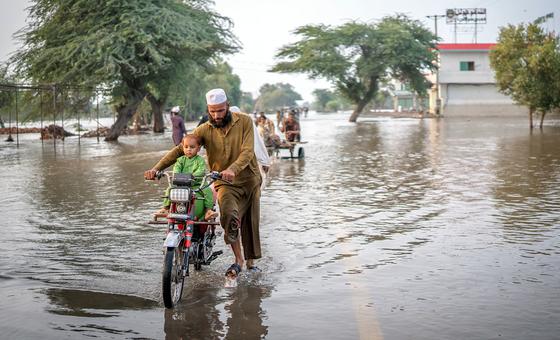
Water-related hazards continue to cause major devastation this year,” said Celeste Saulo, WMO Secretary-General. “The latest examples are the devastating monsoon flooding in Pakistan, floods in South Sudan and the deadly flash floods in the Indonesian island of Bali. And unfortunately, we see no end to this trend.”

Ms. Saulo highlighted that these emergencies have been happening amid increasingly warm air temperatures, which allow more water to be held in the atmosphere leading to heavier rainfall.

Her comments coincided with the publication of a new WMO report on the state of the world’s waterways, snow and ice which notes that 2024 was the hottest in 175 years of observation, with the annual mean surface temperature reaching 1.55 °C above the pre-industrial baseline from 1850 to 1900.

Storm Boris legacy

Against this backdrop in September 2024, central and eastern Europe experienced devastating flash-floods caused by deadly Storm Boris which uprooted tens of thousands of people. Similar disasters are likely to happen more often, even though they should – in theory – be extremely rare.

In the Czech Republic, several rivers flooded in an extreme fashion “that actually statistically should only occur every 100 years,” said Stefan Uhlenbrook, WMO Director of Hydrology, Water and Cryosphere Division.

A ‘century event’ happened…unfortunately, statistics show that these extreme events might become even more frequent,” he said, his comments echoing uncertainty over global water security, linked to the WMO report’s findings that only one-third of the world’s river basins have been at “normal” levels. 

Himalayan deluge

Another example of the increasingly erratic behaviour of the world’s water cycle is the extremely heavy rainfall that has affected parts of Himachal Pradesh or Jammu and Kashmir.

The region saw extremely heavy rainfall when it was not expected; the monsoon came early,” said Sulagna Mishra, WMO Scientific Officer. “So, this is what we are talking about as the unpredictability of the system is growing, more and more.”

Turning to the impact of last year’s pronounced El Niño weather phenomenon, WMO’s report indicates that it contributed to severe drought in the Amazon basin last year.

Equally, northwest Mexico and the northern part of North America saw below-average rainfall, as did southern and southeastern Africa.

“El Niño at the start of 2024 played a role,” explained Ms. Saulo, “but scientific evidence shows that our changing climate and rising temperatures lead to more extreme events, both droughts and floods.”

Our connected world

The WMO report’s other findings confirm wetter-than-normal conditions over central-western Africa, Lake Victoria in Africa, Kazakhstan and southern Russia, central Europe, Pakistan and northern India, southern Iran and north-eastern China in 2024.

One of the key messages of the UN agency report is that what happens to the water cycle in one part of the world has a direct bearing on another.

Melting glaciers continue to be a major concern for meteorologists because of the speed at which they are disappearing and their existential threat to communities downstream and in coastal areas.

“2024 was the third straight year with widespread glacial loss across all regions,” Ms. Saulo said. “Glaciers lost 450 gigatonnes, this is the equivalent of a huge block of ice seven kilometres in height, seven kilometres wide and seven kilometres deep, or 180 million Olympic swimming pools, enough to add about 1.2 millimetres to global sea level, increasing the risk of floods for hundreds of millions of people on the coasts.”

The report also highlights the critical need for improved data-sharing on streamflow, groundwater, soil moisture and water quality, which remain heavily under-monitored.  

Guterres urges countries to ‘seize this historic opportunity’ as renewable energy use grows

The latest push follows the release of two reports on Tuesday which affirmed that the so-called “renewables revolution” is accelerating at unprecedented rates.

For the first time ever, renewable energy has generated more power than coal, according to new analysis by Ember, a global think tank working to speed up the clean energy transition.

Energy shift underway

Solar and wind outpaced the growth in global electricity demand in the first half of this year, resulting in a small decline in coal and gas when compared to the same period in 2024.

This represents “a crucial turning point,” according to Ember’s Senior Electricity Analyst, Małgorzata Wiatros-Motyka.

“Solar and wind are now growing fast enough to meet the world’s growing appetite for electricity. This marks the beginning of a shift where clean power is keeping pace with demand growth,” she said in a press release.

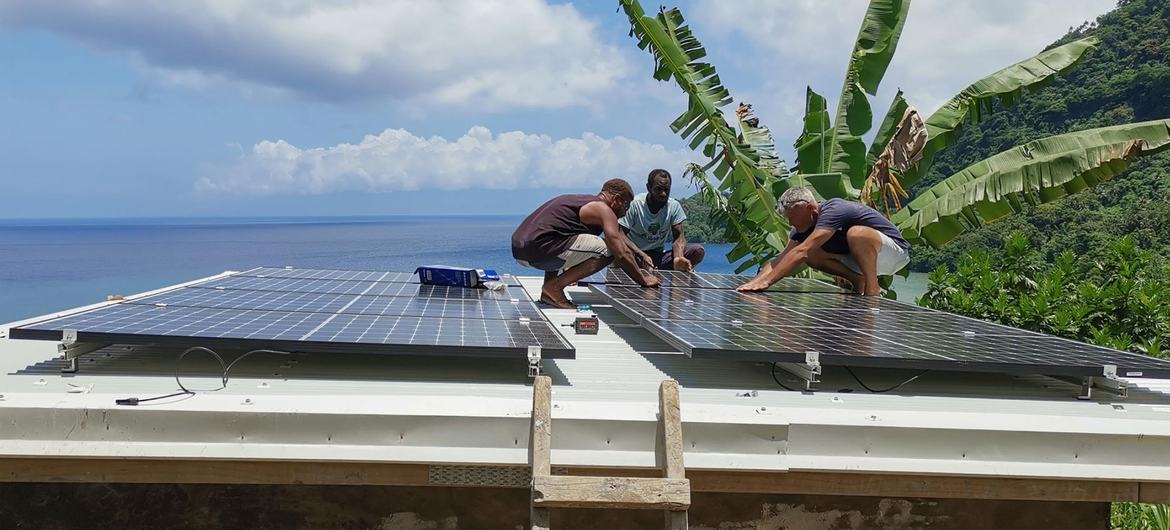
People in Vanuatu in the southwestern Pacific install solar panels on a roof.

Solar-powered success

In a separate report, the International Energy Agency (IEA) revealed how installed renewables power continues to grow and is expected to double by 2030.

Global renewable power capacity is projected to increase by 4,600 gigawatts (GW) – “roughly the equivalent of adding China, the European Union and Japan’s total power generation capacity combined,” the agency said.

Growth is being led by the rapid rise of solar PV (photovoltaic) technology, which converts sunlight into energy.  It will account for around 80 per cent of the increase, followed by wind, hydro, bioenergy and geothermal.

‘A better future for all’

In response to the news, UN Secretary-General António Guterres tweeted that “the clean energy future is no longer a distant promise – it’s here.” 

He urged the international community to “seize this historic opportunity and supercharge the global shift towards a better future for all.”

The reports echo the findings of the Secretary-General’s Moment of Opportunity report, issued in July.

They also reflect messages by world leaders attending his Climate Summit held last month during high-level week as part of the lead-up to the COP30 conference in Brazil this November. 

However, the UN chief has consistently stressed that whilst progress has been made, the energy transition is not yet fast or fair enough

Therefore, efforts need to be stepped up if the world is to meet the goal of limiting global temperature rise to 1.5 degrees Celsius above pre-industrial levels, as outlined in the Paris Agreement on climate change.