Indigenous protesters block COP30 entrance, demand action from Brazilian Government

The Munduruku, who live primarily in the Amazon states of Amazonas, Mato Grosso and Pará, are demanding an end to projects and extractive activities that threaten Indigenous territories, particularly in the Tapajós and Xingu River basins.

‘Legitimate’ protests and government response

COP30 Executive Director Ana Toni described the demonstrations as “legitimate” and confirmed that the government is listening. Protesters were directed to meet with the Minister of Indigenous Peoples, Sônia Guajajara, and the Minister of the Environment and Climate Change, Marina Silva.

Ms. Toni highlighted that COP30 has more than 900 Indigenous participants, a significant increase from the 300 registered at last year’s conference in Baku, Azerbaijan.

“Brazil has a strong democracy that allows for different forms of protest, both inside and outside the conference,” she said, adding that hosting COP30 in the Amazon was meant to ensure Indigenous voices are heard.

© UNFCCC/Diego Herculano

Security officers guard the UN Climate Conference venue as the Munduruku Indigenous People protest.

Indigenous youth voices underline urgency

For Indigenous youth participants, the protest reflects both the urgency of their demands and the value of being present at the international conference.

Amanda Pankará, from the Pankará people in Pernambuco, told UN News that COP30 provides a space where Indigenous issues can gain greater visibility.

“We would have much more to contribute if more Indigenous people were participating in these discussions. These demands are valid. We are claiming the right to land, the right to life… Being here today, representing those who haven’t had the opportunity to be here, reinforces our presence and responsibility. We are the ones who create this protective barrier, so we want to be heard.”

Commitment to climate action

During a meeting held on Thursday, many Indigenous leaders described COP30 as the most inclusive climate conference they had attended.

Chilean Indigenous youth Emiliano Medina – from the Mapuche people – who participated in the meeting, said Indigenous representatives reaffirmed their commitment to combating the climate crisis.

He emphasized that protests like Friday’s are a way to present demands and highlight where policies fall short. “Similar demonstrations have been taking place around the world in communities affected by climate change,” he said.

Indigenous Peoples block an entrance to the UN Climate Conference in Belém, Brazil.

‘COP in the Amazon is meant to hear these voices’

Ana Toni stressed that holding COP30 in the Amazon enables broad participation by Indigenous peoples, something that would have been more limited if the event were held in Rio de Janeiro, São Paulo, or Brasília. She assured that the voices of demonstrators are being heard and noted that further demonstrations are expected throughout COP30.

“The purpose of holding a conference in the Amazon is precisely to listen to these demands,” she concluded.

UN News is reporting from Belém, bringing you front-row coverage of everything unfolding at COP30.

High stakes and high flavour: Indigenous chef brings Amazonian soul to COP30

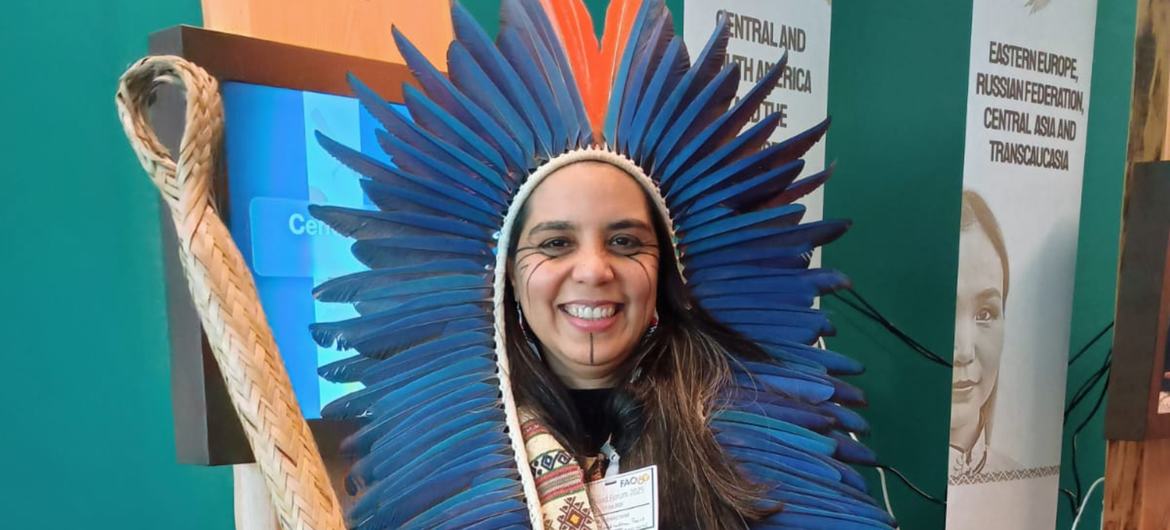
Indigenous chef and activist Tainá Marajoara will serve dishes rooted in ancestral Amazonian traditions, showcasing the biodiversity and spirituality of Brazil’s Indigenous Peoples.

Between rounds of negotiations, delegates will be treated to flavours such as maniçoba, açaí and pirarucu – all prepared with more than 10 tonnes of agroecological ingredients sourced through fair and sustainable food systems.

A taste of ancestral wisdom

“Our kitchen will feature canhapira, an Indigenous Marajoara dish that remains part of local cuisine today,” Ms. Marajoara explained. 


The dish comes from the Marajoara people, an Indigenous group native to Marajó Island, a vast river island where the Amazon meets the Atlantic.

“There will be plenty of açaí. We managed to secure its inclusion despite earlier controversy.

“We’ll also serve maniçoba, a dish made from cassava leaves cooked for seven days with pork, as well as tucupi, jambu, tacacá, and the Amazon’s iconic fish, pirarucu. We plan to buy at least two tonnes of it alone.”

Tainá is the founder of Ponto de Cultura Alimentar Iacitatá, the cultural and culinary collective selected to oversee the COP30 kitchen, which will serve everyone attending – from presidents to porters. 

© Courtesy of Tainá Marajoara

The indigenous activist and chef Tainá Marajoara, from Brazil, at the Food and Agriculture Museum and Network in Rome.

Peace meal

More than just a meal, the ancestral cook sees this culinary effort as a statement. “We want to show that it is possible to live in peace. We need to live in peace,” she said.

“Throughout COP30, we are building a space of ancestral diplomacy, making it clear that recognising the link between Indigenous and local communities and food sovereignty is urgent.

“As long as ancestral lands are violated and violence spreads across forests, rivers, and fields, our people and our culture are being killed.”

Speaking from Rome, where she was attending the World Food Forum at the UN Food and Agriculture Organization (FAO) headquarters, Ms. Marajoara stressed the COP30 kitchen will embody the values of sustainability, justice, and respect for life.

UN News/Felipe de Carvalho

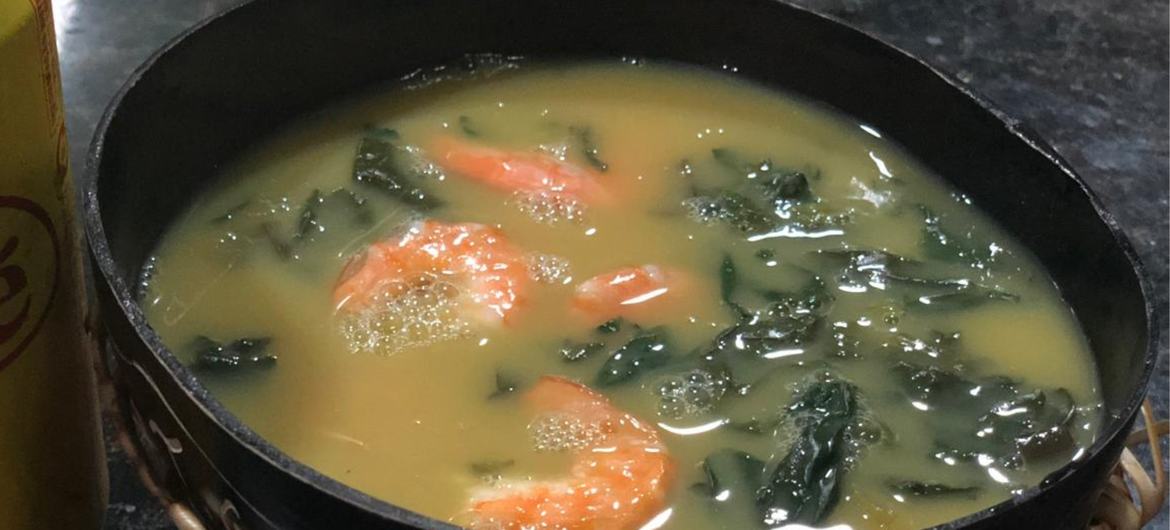
Tucupi is a yellow broth extracted from wild cassava, traditional in Amazonian cuisine.

Rooted in climate justice

For the Chef, Indigenous food systems represent much more than sustenance, they are a living form of environmental stewardship and spiritual connection.

“This knowledge has been invisible for too long,” she said. “Leading the COP30 kitchen is an act of cultural and ancestral diplomacy.”

She hopes the initiative will become a model for future international events. “This will be the first COP to feature a community-based, family-farming kitchen. It proves that it can be done, and it shouldn’t stop here. Let COP30 become a historic milestone, one that inspires similar initiatives across the world.”

Food and conservation

Ms. Marajoara emphasised that food sovereignty and environmental conservation are inseparable.

“The world is in collapse,” she warned. “There is no more time for endless negotiations. Protecting Indigenous and local community territories is a concrete, effective way to safeguard the planet’s climate.”

Indigenous Peoples Day highlights AI’s risks and opportunities

An estimated 476 million Indigenous Peoples live across 90 countries, representing 5,000 different cultures.

Without proper safeguards, AI risks harming Indigenous rights through inequitable distribution of the groundbreaking technology, environmental damage and the reinforcement of damaging colonial legacies.

The growing amount of electricity generation needed for AI data centres and other infrastructure is also intensifying climate change pressures, according to the UN.

When situated near Indigenous Peoples’ lands, AI data sites can exacerbate environmental degradation, negatively affecting the ecosystems they depend on.

Moreover, decisions on AI are often made by governments and major tech companies excluding any consultation with Indigenous Peoples. This has meant Indigenous language, knowledge and culture are regularly included in AI datasets without consent, perpetuating patterns of appropriation and misrepresenting Indigenous Peoples.

Despite challenges and risks, AI also presents new opportunities. Worldwide, Indigenous Peoples have explored the use of AI, using it as a tool for preserving intergenerational knowledge, empowering youth, and preserving culture, language and identity.

Safeguards for and innovations from Indigenous Peoples in the realm of AI are the focus of this year’s International Day of the World’s Indigenous Peoples, as well as recipients of the Equator Prize.

2025 Equator Prize  

To commemorate the day, the UN Development Programme (UNDP) has announced the ten community-based, Indigenous-led organizations that will be recipients of the 2025 Equator Prize.  

This award honours environmentally grounded solutions led by Indigenous Peoples that promote sustainable development, with winners demonstrating this year’s prize theme, “Nature for Climate Action”.

Winners will receive $10,000, be honored at a high-level online ceremony later this year and may join global events, including the UN General Assembly and the UN Climate Change Conference, COP30, taking place in Brazil later this year.

Prize recipients  

The Latin American recipients include Cooperativa de Mujeres Artesanas del Gran Chaco (COMAR) in Argentina, Associação Uasei dos Povos Indígenas de Oiapoque (Uasei) in Brazil, the Hakhu Amazon Foundation in Ecuador and the First Agrobiodiversity Zone in Peru.  

COMAR supports Indigenous women through Matriarca, a brand turning traditional crafts into sustainable products. Uasei fosters an Indigenous-led bioeconomy around native açaí, while Hakhu defends the Ecuadorian Amazon and Indigenous rights through advocacy, decolonial education and grassroots media. 

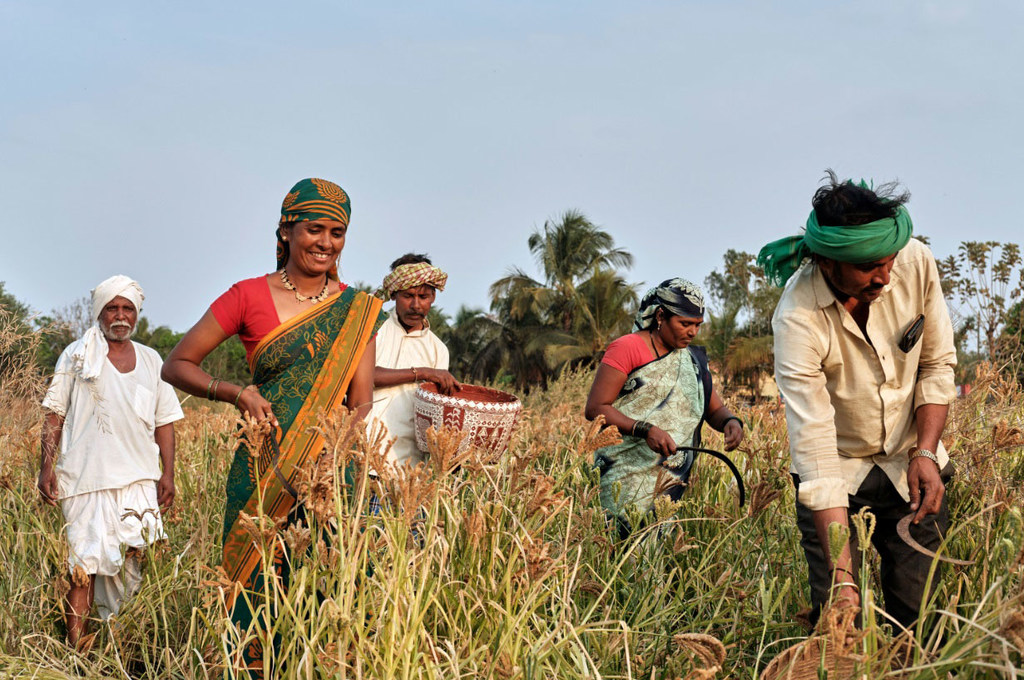
In India, Bibifathima Swa Sahaya supports village farmers through multi-cropping, seed banks and solar-powered processing – combining traditional knowledge with regenerative agriculture and renewable energy. 

© Equator Initiative/Bibifathima Swa Sahaya Sangha

The 2025 Equator Prize winners exemplify this year’s theme, “Nature for Climate Action,” with a special focus on youth- and women-led climate action.

In Indonesia, Mitra BUMMA supports community enterprises protecting 100,000 hectares of rainforest while also boosting local economies and governance. The Ranu Welum Foundation empowers Indigenous Dayak communities through forest conservation and cultural preservation.

In Papua New Guinea, Sea Women of Melanesia Inc. empowers women to lead marine conservation by combining traditional knowledge with modern science.

And in Africa, Nature and People As One in Kenyaempowers pastoralist communities to restore drylands using traditional knowledge and affordable restoration methods, and Sustainable Ocean Alliance Tanzania restores marine ecosystems through sustainable seaweed farming and empowers coastal communities.

“On this important day, the 2025 Equator Prize winners are a reminder of the importance of honoring and recognizing the vision and leadership of Indigenous Peoples and local communities,” said Marcos Neto, UN Assistant Secretary-General and Director of UNDP’s Bureau for Policy and Programme Support. 

Indigenous youth meet trailblazers ahead of Nelson Mandela Day

Accompanied by their parents and mentors from the midwestern state of Wisconsin, the group wore handmade ribbon skirts and vests featuring seven coloured bands, each symbolizing a Sustainable Development Goal (SDG) of personal significance, such as good health and gender equality.

Also visiting the UN in New York for the first time that day was Brenda Reynolds, a social worker from Canada and a member of the Fishing Lake First Nation. She was joined by her husband, Robert Buckle, and 12-year-old granddaughter Lillian, and wore one of her own ribbon skirts for the occasion.

Ms. Reynolds will be awarded the 2025 United Nations Nelson Rolihlahla Mandela Prize on 18 July. The Prize, presented every five years, recognizes two individuals whose life work exemplifies service to humanity. Ms. Reynolds will receive the award alongside Kennedy Odede, a social entrepreneur from Kenya.

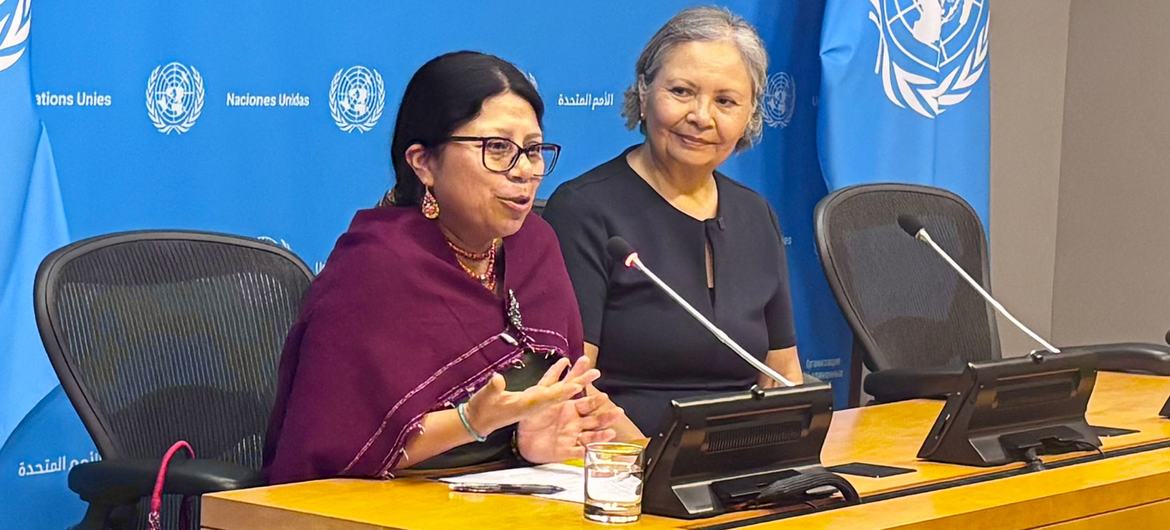
Mirian Masaquiza Jerez, a UN Social Affairs Officer, and Brenda Reynolds, a recipient of the 2025 United Nations Nelson Rolihlahla Mandela Prize, brief Indigenous youth visiting UN Headquarters in New York.

Agents of change

After a UN tour (unanimously enjoyed) and a quick stop for lunch and souvenirs at the UN Bookshop (where one plushie hummingbird was traded for a green turtle named “Coral”), the group settled into a briefing room.

Onstage, Ms. Reynolds was joined by Mirian Masaquiza Jerez, a Kichwa woman from Ecuador and a Social Affairs Officer at the UN Department of Economic and Social Affairs (UNDESA), easily recognized in the UN corridors for always wearing traditional regalia from her Indigenous community of Salasaka,

“Wherever you go to public spaces, wear who you are,” she said.  “The UN is the place to raise your voice. Be free to be who you are.”

Encouraging them to speak their languages and honour their cultures, Ms. Masaquiza urged the young students to see themselves as agents of change.

“You didn’t come by invitation. You came because you belong,” she said. “You are the future. You are the present. As Indigenous, we have the space. Use it.”

A painful past

Ms. Reynolds shared her personal story with the group, reflecting on her early career as a counsellor at Gordon’s Indian Residential School in Saskatchewan, the last federally funded residential school to close in Canada.

She described seeing children as young as five separated from their families for a year at a time and issued shirts with numbers instead of their names written inside: “The only other time I had seen people identified that way was when Jewish people had numbers tattooed on them.”

During her first year at Gordon’s in 1988, a young girl confided that she had been abused. By the next morning, 17 would come forward, launching what would become the province’s first major residential school abuse case.

Ms. Reynolds, then labeled a “troublemaker,” went on to help shape the Indian Residential Schools Settlement Agreement and advise the Truth and Reconciliation Commission. Her work has impacted hundreds of thousands of Indigenous People across Canada.

The room echoed with laughter, knowing nods and tears, and phrases from Ojibwe and other languages represented by the Indigenous Peoples in the room, including Potawatomi, Ho-Chunk, Ojibwe, Menomonee, Oneida, Navajo, Hawaiian, Pacific Islander, and Afro-Indigenous communities.

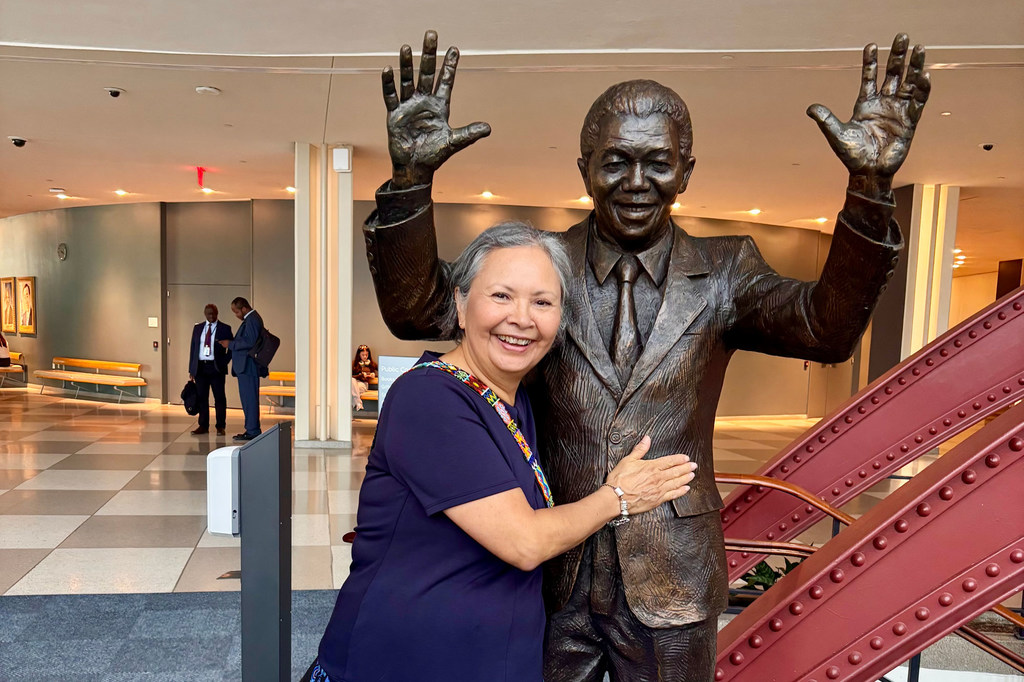
Brenda Reynolds, a recipient of the 2025 United Nations Nelson Rolihlahla Mandela Prize, poses with a statute of the late South African President at UN Headquarters in New York.

Coming full circle

The youth came from the Daughters of Tradition and the Sons of Tradition, part of a long-running healing initiative by Milwaukee’s Healing Intergenerational Roots (HIR) Wellness Institute, which supports Indigenous communities with no-cost, comprehensive mental healthcare and other services.

The founder, Lea S. Denny, wants Indigenous youth to see themselves in positions of power. This particular group has been together for eight years, with some heading off to college in the fall.

One father, attending with his three daughters, reflected on raising Indigenous youth in the digital age. “We want them to access the world out there,” he said, “but also protect the inside world we want to hold dear.” He said he also offered the advice that “if you don’t see yourself on the screen, sometimes you have to be the first.”

The day finished with hugs and exchanges of handmade leis as a symbol of the breath of life and sharing a good life source.

They will reunite on 18 July to see Ms. Reynolds accept the Mandela Prize in the General Assembly Hall.

Before then, a planned detour to visit Times Square.

Meanwhile, Ms. Reynolds and her family discussed their plans for a Broadway show. On the way out, she paused to hug a life-sized bronze statue of Nelson Mandela, a gift from the South African Government to the UN.

“I started my work with children,” she said. “And today, I spoke to children. This feels full circle for me.”

Source link

World News in Brief: Inter-ethnic violence in Syria, Indigenous Peoples’ rights, global information security

The violence erupted two days after a Druze merchant was abducted on the highway to Damascus.

The incident marks the latest episode of sectarian bloodshed in Syria, where fears among minority groups have surged since Islamist rebels toppled former dictator Bashar al-Assad in December and installed a new caretaker Government, which is gaining increasing international recognition.

Those targeted include the Druze sect, an offshoot of Shia Islam.  

UN voices ‘deep concern’

On Monday, UN Deputy Special Envoy for Syria, Najat Rochdi, expressed “deep concern” over these reports and urged authorities and stakeholders to “take immediate steps to protect civilians, restore calm and prevent incitement.”

She also underscored the need for inclusion, trust-building and meaningful dialogue to advance a credible and inclusive political transition in Syria.

UN human rights chief says ‘wisdom’ of Indigenous Peoples needed in climate change, digital policy upgrades

The UN human rights chief spoke at a high-level political forum on the rights of Indigenous Peoples on Monday.

Underscoring how crucial such forums are to advancing the rights of Indigenous Peoples, Volker Türk highlighted developments in Colombia, Finland and Guatemala that have given them more self-determination.

But despite these advances, violations against Indigenous Peoples’ rights continue.

Many still lack formal land recognition, while mining activity, deforestation and large-scale agricultural development often cause environmental destruction.

Indigenous Peoples also experience immense discrimination and face the brunt of climate chaos, Mr. Türk stressed.

Toll on activists

Furthermore, data from the human rights office reveals that 26 per cent of rights activists killed in 2023 and 2024 were Indigenous, largely in the Americas.

Additionally, states are using AI in ways that harm Indigenous Peoples through surveillance, data exploitation and exclusion from decision-making. Türk thus called for human rights-based approaches that uphold Indigenous data sovereignty and self-determination.

The High Commissioner also called for future policies on climate, digital technologies and other areas to “reflect the wisdom and experience of Indigenous Peoples.”

“This is not only essential to respect and fulfil the human rights of Indigenous Peoples,” he concluded. “There is growing recognition that the ideas and approaches of Indigenous Peoples hold important lessons for all of us.”

Guterres welcomes step forward in securing digital technology worldwide

The UN chief Antonio Guterres on Monday, welcomed the adoption by consensus of the UN Open Ended Working Group on Information and Communication Technologies.

It was established in 2020 with a five-year mandate to promote regular institutional dialogue and initiatives focused on keeping digital technologies safe and secure.  

The Secretary-General welcomed the Final Report of 10 July, which summed up the past five years of negotiations, said a statement issued by his Spokesperson.  

It reflects shared views on current and emerging threats, responsible government policies, international law, norms and efforts such as confidence-building and capacity development.  

Call for cooperation

It also establishes a permanent mechanism to continue discussions about responsible State behaviour in the use of information and communications technologies, which the Secretary General particularly appreciated.  

“The Secretary-General now calls upon all States to work together through the Global Mechanism to tackle digital risks and ensure these technologies are leveraged for good,” the statement said.  

The Secretary General congratulated the group on its accomplishments, saying the consensus adoption “demonstrates that even in the most challenging international security environment, collective action is still possible.” 

Source link

Indigenous Peoples sidelined in global climate fight, UN warns

Launched on Thursday, The State of the World’s Indigenous Peoples exposes a stark imbalance: while Indigenous Peoples make up just six per cent of the global population, they safeguard 80 per cent of the planet’s remaining biodiversity – yet receive less than one per cent of international climate funding.

The report offers a sobering assessment of climate action that is not only lacking in urgency, but in fairness. From green energy projects imposed without consent to policy decisions made in rooms where Indigenous voices are absent, these communities are too often excluded from climate solutions, displaced by them, and denied the resources to lead the way.

“Although we are disproportionately affected by the climate crisis, Indigenous Peoples are not victims,” writes Hindou Oumarou Ibrahim, Chair of the UN Permanent Forum on Indigenous Issues, in the report’s foreword.

We are custodians of the natural world who are committed to maintaining the natural equilibrium of the planet for the generations to come.”

The publication, overseen by the UN, brings together contributions from Indigenous leaders, researchers and the World Health Organization (WHO), combining case studies, data and lived experience from seven distinct regions of the world.

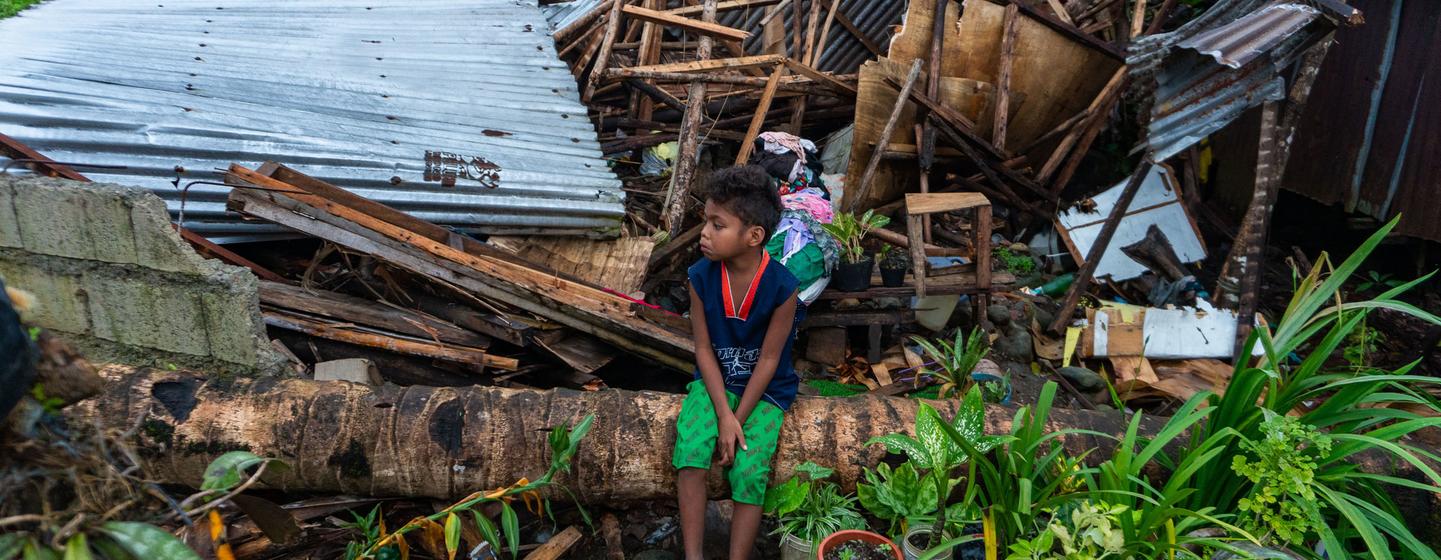
A child from the Badjao Indigenous community in the Philippines sits amid the wreckage left by a typhoon.

Modern problems, ancient solutions

The report calls for a seismic shift in how Indigenous knowledge is understood and respected – reframing it not as “traditional” or folkloric, but as scientific and technical knowledge.

Indigenous knowledge systems, authors argue, are “time-tested, method-driven” and built on direct relationships with ecosystems that have sustained life for millennia.

For example, in Peru, a Quechua community in Ayacucho has revived water sowing and harvesting practices to adapt to shrinking glaciers and drought. These methods, part of ancestral stewardship of hydrological cycles, are now being shared across borders with Costa Rican farmers as a model of South-South climate cooperation.

In Somalia, oral traditions serve as ecological law. The report cites cultural norms such as prohibitions on cutting certain trees (gurmo go’an) as evidence of environmental governance embedded in generational wisdom – passed through proverbs, stories, and taboos rather than policy papers.

Meanwhile, the Comcaac people of Mexico encode ecological and maritime knowledge in their language. Names like Moosni Oofia (where green turtles gather) and Tosni Iti Ihiiquet (where pelicans hatch) act as living data points – “vital  to their survival,” the report emphasises.

© Unsplash/Paul-Alain Hunt

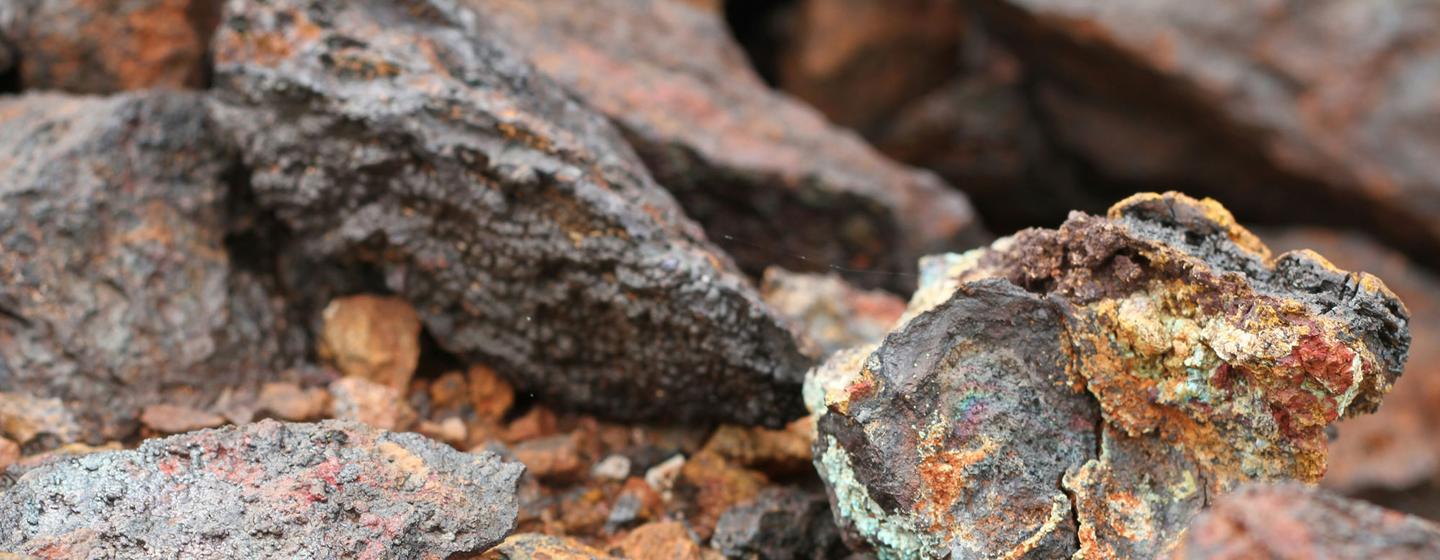
Ore containing copper, cobalt and nickel at a mine.

Green solutions without consultation

The report also looks at how even as the world embraces a renewable energy future, many Indigenous Peoples are finding themselves on the frontlines not as climate partners, but as collateral damage from some of the solutions.

So-called green solutions often pose as much of a threat to Indigenous Peoples as the climate crisis itself,” writes Mr. Ibrahim. From biofuel expansion, carbon offsetting schemes, and mineral extraction for clean energy technologies, the new economy is often being built on old injustices.

For example, in Africa, the report draws attention to how demand for minerals linked to the green energy transition — including lithium and cobalt — has led to extractive activities that proceed without free, prior and informed consent. These projects often result in environmental degradation and displacement, echoing colonial patterns of land exploitation.

In several countries across the Americas, carbon offset projects tied to forest conservation have also been implemented without consultation – often on Indigenous lands – resulting in environmental degradation and exclusion from financial benefits.

Throughout, the report warns that if climate actions continue to be designed and implemented without Indigenous Peoples at the centre, they risk replicating the extractive and exclusionary systems that fuelled the crisis in the first place.

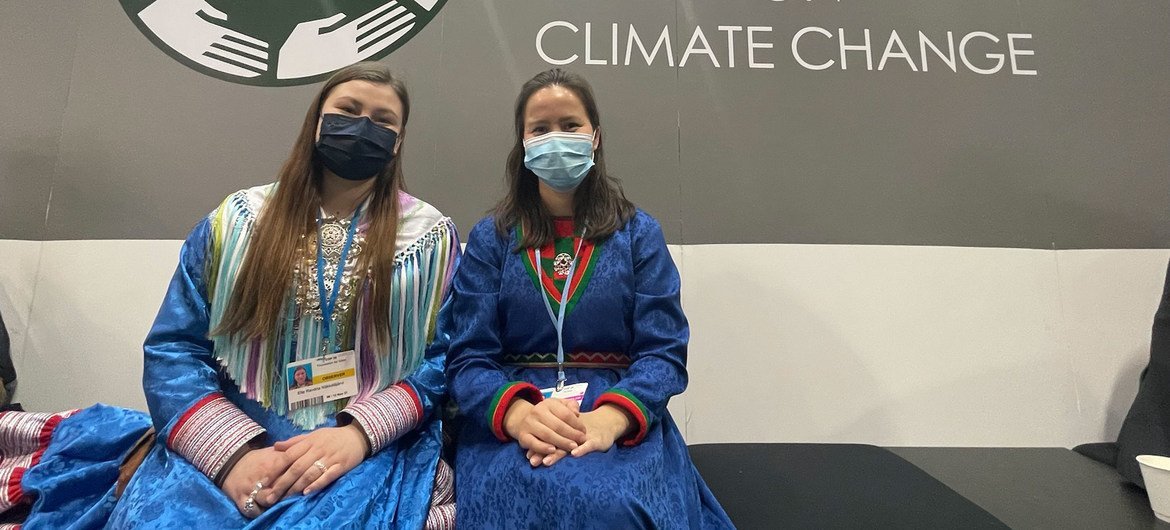
Indigenous young women representatives of the Sami People at the COP26 pavilions.

Climate change is a health crisis

The report also includes a chapter commissioned by WHO that details how climate-related health impacts intersect with the social, cultural, and spiritual lives of Indigenous communities.

In the Arctic, changes in temperature, wildlife migration, and weather patterns are disrupting traditional practices like hunting and harvesting. These disruptions are causing stress and threatening food security.

Indigenous women are particularly affected by the intersection of climate change and health. In East Africa, for example, women are more vulnerable to neglected tropical diseases such as schistosomiasis, leishmaniasis, and soil-transmitted helminthiases.

In the Amazon, climate-induced biodiversity loss has reduced access to traditional foods and medicinal plants, contributing to nutritional deficiencies among pregnant and nursing women, as well as broader community health vulnerabilities.

Despite these challenges, the report emphasises resilience. Communities are implementing locally rooted adaptation strategies, often led by women and elders. These include restoring traditional diets, strengthening intergenerational knowledge sharing, and adapting harvesting calendars to new ecological rhythms.

Participants attend the opening of the 24th Session of the Permanent Forum on Indigenous Issues.

Excluded from the table and the funds

Although Indigenous Peoples are increasingly acknowledged in global environmental frameworks, the report reveals that their role in shaping and implementing climate policy remains severely limited — both in terms of funding and governance.

Indigenous communities continue to face structural barriers that prevent them from accessing international climate finance. While significant resources flow through climate initiatives worldwide, less than 1 per cent reaches Indigenous Peoples directly.

The report calls for a fundamental shift: not just to increase funding, but to change who controls it.

Among its key recommendations are the creation of Indigenous-led financial mechanisms, formal recognition of Indigenous governance systems, and the protection of data sovereignty – ensuring communities control how knowledge about their lands and livelihoods is collected and used.

Unless these systems are transformed, the report warns, climate action risks reproducing the same patterns of exclusion and dispossession that have long undermined both Indigenous rights and global environmental goals.


Source link