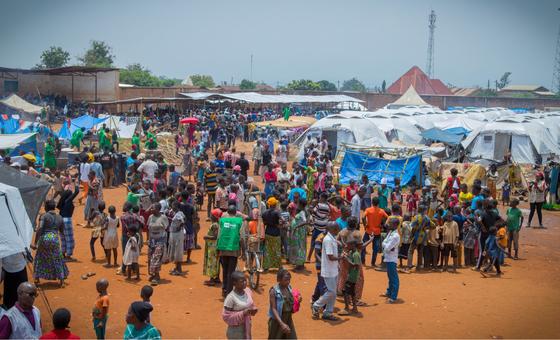
Cyclone Ditwah brings worst flooding in decades to Sri Lanka, killing hundreds

According to the UN relief coordination office, OCHA, 998,918 people across all 25 districts have now been affected, with 212 deaths reported and 218 people missing. More than 180,000 people from over 51,000 families are sheltering in 1,094 government-run safety centres as search and rescue efforts continue.

Cyclone Ditwah made landfall on 28 November before moving back over the Bay of Bengal, triggering some of the most severe flooding Sri Lanka has seen since the early 2000s.

The hardest-hit districts include Gampaha, Colombo, Puttalam and Mannar, as well as Trincomalee and Batticaloa, while deadly landslides in the central hill country have devastated Kandy, Badulla and Matale.

Homes destroyed, infrastructure shattered

Initial assessments indicate that more than 15,000 homes have been destroyed. Over 200 roads remain impassable, at least 10 bridges have been damaged, and sections of the rail network and national power grid affected.

Flooding along the Kelani River, which runs through Colombo and surrounding low-lying areas, continues to hamper access and disrupt information flow from affected communities, complicating rescue and relief operations.

Severe disruption to electricity, mobile and communications, and transport networks are reported in northern districts such as Jaffna, with entire villages isolated

Access to clean water also remains a major concern, with several areas reporting little or no supply.

Health system under strain, food insecurity looms

Sri Lanka’s already fragile health system is under severe pressure, OCHA said. Several district hospitals remain flooded and are receiving only limited supplies, with critically ill patients being airlifted to functioning facilities.

Response is further hindered by recurring landslides and the breach of multiple tank bunds (embankments or barriers), including at Mavilaaru, heightening risks in Trincomalee and Batticaloa.

Authorities have also warned of rising food insecurity, as submerged farmland, damaged storage facilities and severed supply routes threaten shortages and price increases in the weeks ahead.

The World Health Organization (WHO) warned that floods significantly raise the risk of vector-borne, food-borne and water-borne diseases, urging communities to prevent mosquito bites, ensure food safety and use safe drinking water wherever possible.

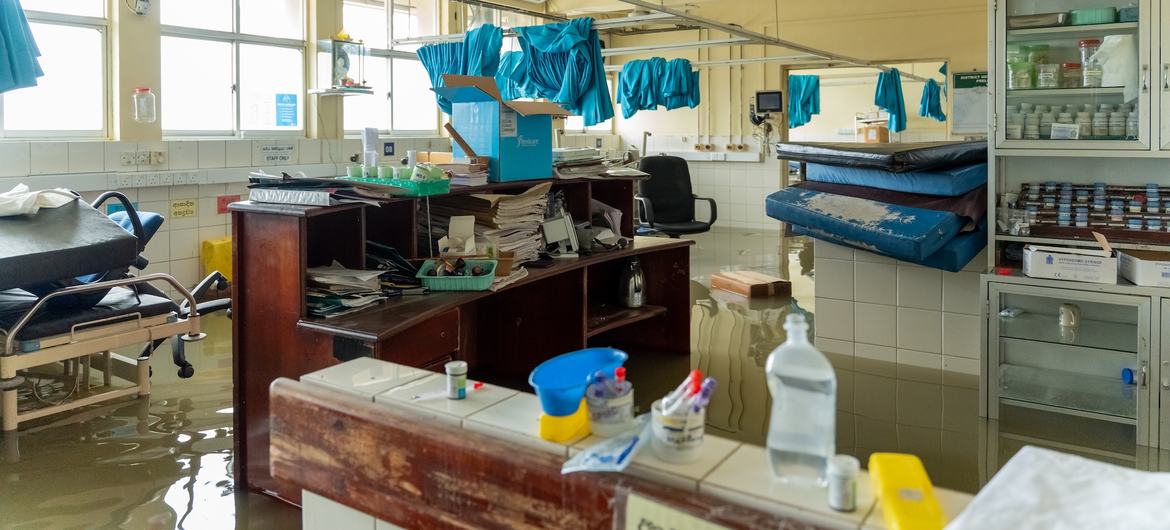
Floodwaters have entered several hospitals across Sri Lanka, further straining the health system.

UN mobilises coordinated response

The United Nations in Sri Lanka activated its emergency coordination system on Sunday to scale up a unified response with government agencies and humanitarian organizations.

Sector coordination has been set up across food security, health, water and sanitation (WASH), education, protection, shelter and early recovery, while a multi-sector needs assessment is under way with disaster management authorities to identify the most urgent gaps.

“The UN in Sri Lanka is mobilising its teams across the system to support national rescue and early recovery efforts, in coordination with authorities. We stand in solidarity with all affected communities,” said UN Resident Coordinator Marc-André Franche.

Despite access challenges, the UN Children’s Fund (UNICEF) has delivered portable water to 25 safety centres in Badulla in the central hills, which had been cut off from the rest of the country by floods and infrastructure damage.

To support government-led efforts, India and Pakistan have deployed emergency teams to work alongside Sri Lanka’s armed forces in the worst-hit districts.

Meanwhile, in the wider Asian region

Severe monsoon flooding continues across Thailand and Malaysia, affecting more than two million people in southern Thailand alone and displacing nearly 25,000 people in Malaysia, according to OCHA. People have been evacuated in several hard-hit Thai provinces, while the rainfall is expected to ease in coming days.

In Indonesia, media reports cite at least 440 deaths from floods and landslides, with more than 400 people missing, particularly in parts of Sumatra, where thousands remain stranded without access to food and water.
High stakes and high flavour: Indigenous chef brings Amazonian soul to COP30

Indigenous chef and activist Tainá Marajoara will serve dishes rooted in ancestral Amazonian traditions, showcasing the biodiversity and spirituality of Brazil’s Indigenous Peoples.

Between rounds of negotiations, delegates will be treated to flavours such as maniçoba, açaí and pirarucu – all prepared with more than 10 tonnes of agroecological ingredients sourced through fair and sustainable food systems.

A taste of ancestral wisdom

“Our kitchen will feature canhapira, an Indigenous Marajoara dish that remains part of local cuisine today,” Ms. Marajoara explained. 


The dish comes from the Marajoara people, an Indigenous group native to Marajó Island, a vast river island where the Amazon meets the Atlantic.

“There will be plenty of açaí. We managed to secure its inclusion despite earlier controversy.

“We’ll also serve maniçoba, a dish made from cassava leaves cooked for seven days with pork, as well as tucupi, jambu, tacacá, and the Amazon’s iconic fish, pirarucu. We plan to buy at least two tonnes of it alone.”

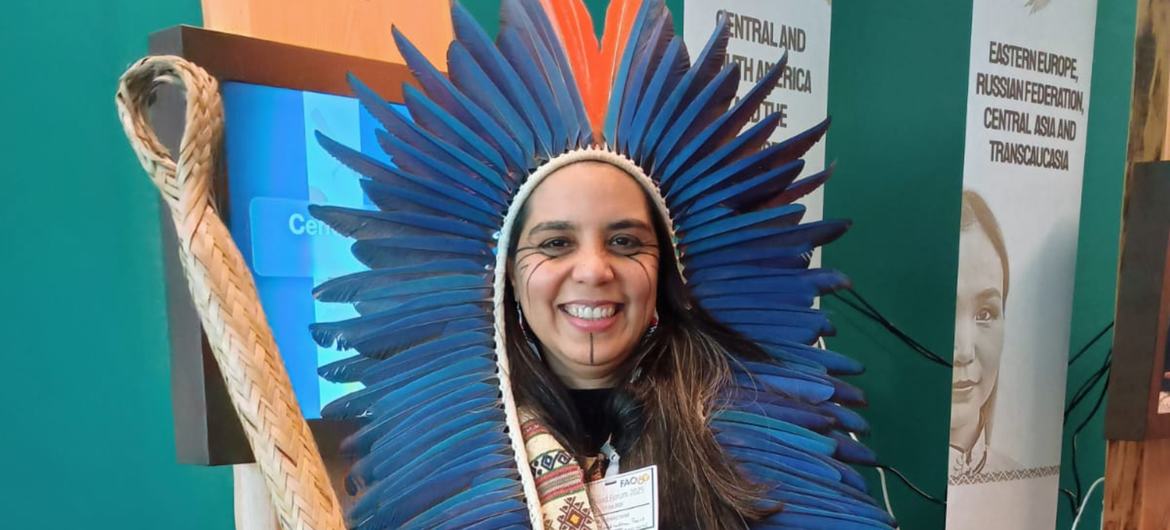
Tainá is the founder of Ponto de Cultura Alimentar Iacitatá, the cultural and culinary collective selected to oversee the COP30 kitchen, which will serve everyone attending – from presidents to porters. 

© Courtesy of Tainá Marajoara

The indigenous activist and chef Tainá Marajoara, from Brazil, at the Food and Agriculture Museum and Network in Rome.

Peace meal

More than just a meal, the ancestral cook sees this culinary effort as a statement. “We want to show that it is possible to live in peace. We need to live in peace,” she said.

“Throughout COP30, we are building a space of ancestral diplomacy, making it clear that recognising the link between Indigenous and local communities and food sovereignty is urgent.

“As long as ancestral lands are violated and violence spreads across forests, rivers, and fields, our people and our culture are being killed.”

Speaking from Rome, where she was attending the World Food Forum at the UN Food and Agriculture Organization (FAO) headquarters, Ms. Marajoara stressed the COP30 kitchen will embody the values of sustainability, justice, and respect for life.

UN News/Felipe de Carvalho

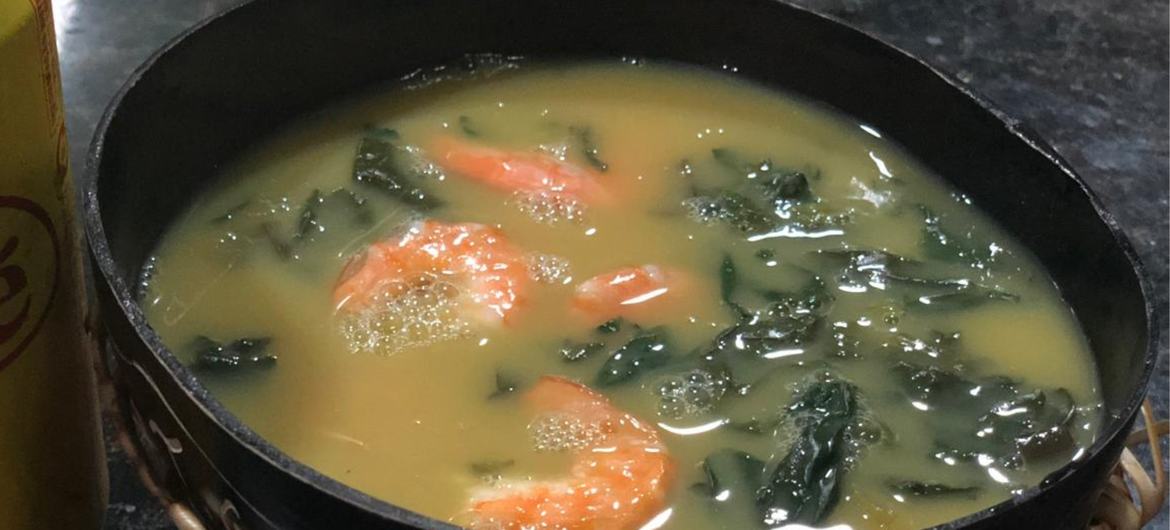
Tucupi is a yellow broth extracted from wild cassava, traditional in Amazonian cuisine.

Rooted in climate justice

For the Chef, Indigenous food systems represent much more than sustenance, they are a living form of environmental stewardship and spiritual connection.

“This knowledge has been invisible for too long,” she said. “Leading the COP30 kitchen is an act of cultural and ancestral diplomacy.”

She hopes the initiative will become a model for future international events. “This will be the first COP to feature a community-based, family-farming kitchen. It proves that it can be done, and it shouldn’t stop here. Let COP30 become a historic milestone, one that inspires similar initiatives across the world.”

Food and conservation

Ms. Marajoara emphasised that food sovereignty and environmental conservation are inseparable.

“The world is in collapse,” she warned. “There is no more time for endless negotiations. Protecting Indigenous and local community territories is a concrete, effective way to safeguard the planet’s climate.”

Syria: Second convoy brings critical aid to Sweida

Deadly sectarian violence has displaced more than 145,000 people in the southern city, some of whom have fled to neighbouring Dar’a and Rural Damascus governorates. 

The convoy carried a range of critical support, including food, wheat flour, fuel, medicines and health supplies. 

OCHA coordinated with the SARC to prepare the convoy, which included supplies from UN agencies.  

Engagement and support

The Office continues to engage with authorities and partners to facilitate an inter-agency UN mission to Sweida as conditions allow.

The UN is also working with partners to deliver a range of assistance to people displaced to Dar’a and Rural Damascus, including food, water, and health and protection services.   

Mobile medical teams have so far provided more than 3,500 consultations, including trauma care, maternal health and psychosocial support while nearly 38,000 people have received food aid. 

Additionally, over 1,000 kits containing non-food items were distributed in Dar’a and Rural Damascus, helping more than 5,000 people. 

OCHA said UN inter-agency missions to assess needs and provide assistance to both governorates are planned for the coming days. 

The first convoy to Sweida arrived on Sunday. The 32 trucks brought food, water, medical supplies and fuel provided by the UN World Food Programme (WFP), the UN Children’s Fund (UNICEF) and other partners. 

Doha agreement brings DR Congo government and M23 rebels a step closer to peace

In a statement released on 19 July, MONUSCO said that the Declaration of Principles, signed in Doha under the mediation of Qatar, “reflects the parties’ resolve to prioritise peaceful means, establish a ceasefire, and set up a joint mechanism to define its practical implementation.”

“This important declaration marks a shift towards easing tensions and protecting civilians seriously affected by the conflict,” declared Mr. Bruno Lemarquis, Deputy Special Representative of the UN Secretary-General in the DRC and Acting Head of MONUSCO. “We commend the commitments made and call for their timely and good-faith implementation.”

These commitments include measures to facilitate the voluntary, safe, and dignified return of internally displaced persons and refugees to their places or countries of origin, and the encouragement of inclusive dialogue, seen as vital to addressing the root causes of the conflict and achieving lasting peace.

Earlier this year, the M23 launched an offensive in North and South Kivu provinces, capturing cities and villages, including provincial capitals Goma and Bukavu. Thousands of civilians were killed, hundreds of thousands more were displaced, and serious human rights violations were committed.

The Declaration of Principles comes less than a month after a peace agreement signed by Congo and Rwanda, long accused by the Congolese Government of supporting the M23.

The Mission’s statement highlighted the Declaration’s emphasis on civilian protection and support for the ceasefire, with assistance from MONUSCO and other partners, and reaffirmed its readiness to support the cessation of hostilities, particularly through the establishment of a credible and jointly agreed verification mechanism.

MONUSCO’s statement concluded by urging all parties to honour their commitments, act in good faith throughout the process, and prioritise human rights, security, and the aspirations of the Congolese people in all decisions. 

Source link