High stakes and high flavour: Indigenous chef brings Amazonian soul to COP30

Indigenous chef and activist Tainá Marajoara will serve dishes rooted in ancestral Amazonian traditions, showcasing the biodiversity and spirituality of Brazil’s Indigenous Peoples.

Between rounds of negotiations, delegates will be treated to flavours such as maniçoba, açaí and pirarucu – all prepared with more than 10 tonnes of agroecological ingredients sourced through fair and sustainable food systems.

A taste of ancestral wisdom

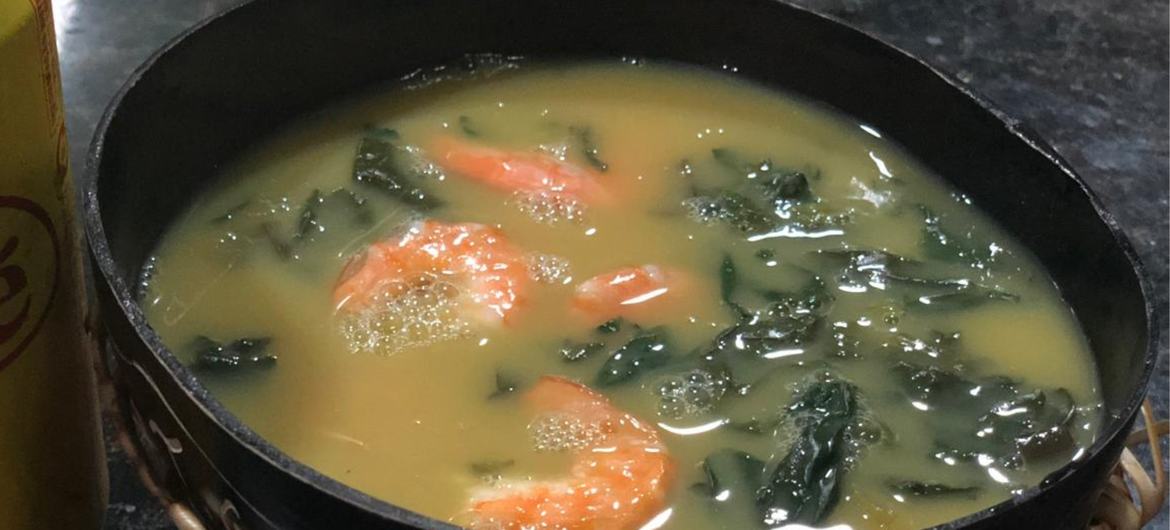
“Our kitchen will feature canhapira, an Indigenous Marajoara dish that remains part of local cuisine today,” Ms. Marajoara explained. 


The dish comes from the Marajoara people, an Indigenous group native to Marajó Island, a vast river island where the Amazon meets the Atlantic.

“There will be plenty of açaí. We managed to secure its inclusion despite earlier controversy.

“We’ll also serve maniçoba, a dish made from cassava leaves cooked for seven days with pork, as well as tucupi, jambu, tacacá, and the Amazon’s iconic fish, pirarucu. We plan to buy at least two tonnes of it alone.”

Tainá is the founder of Ponto de Cultura Alimentar Iacitatá, the cultural and culinary collective selected to oversee the COP30 kitchen, which will serve everyone attending – from presidents to porters. 

© Courtesy of Tainá Marajoara

The indigenous activist and chef Tainá Marajoara, from Brazil, at the Food and Agriculture Museum and Network in Rome.

Peace meal

More than just a meal, the ancestral cook sees this culinary effort as a statement. “We want to show that it is possible to live in peace. We need to live in peace,” she said.

“Throughout COP30, we are building a space of ancestral diplomacy, making it clear that recognising the link between Indigenous and local communities and food sovereignty is urgent.

“As long as ancestral lands are violated and violence spreads across forests, rivers, and fields, our people and our culture are being killed.”

Speaking from Rome, where she was attending the World Food Forum at the UN Food and Agriculture Organization (FAO) headquarters, Ms. Marajoara stressed the COP30 kitchen will embody the values of sustainability, justice, and respect for life.
UN News/Felipe de Carvalho

Tucupi is a yellow broth extracted from wild cassava, traditional in Amazonian cuisine.

Rooted in climate justice

For the Chef, Indigenous food systems represent much more than sustenance, they are a living form of environmental stewardship and spiritual connection.

“This knowledge has been invisible for too long,” she said. “Leading the COP30 kitchen is an act of cultural and ancestral diplomacy.”

She hopes the initiative will become a model for future international events. “This will be the first COP to feature a community-based, family-farming kitchen. It proves that it can be done, and it shouldn’t stop here. Let COP30 become a historic milestone, one that inspires similar initiatives across the world.”

Food and conservation

Ms. Marajoara emphasised that food sovereignty and environmental conservation are inseparable.

“The world is in collapse,” she warned. “There is no more time for endless negotiations. Protecting Indigenous and local community territories is a concrete, effective way to safeguard the planet’s climate.”

OpenAI’s $6.6 Billion Funding Boosts Future Tech Trajectory Avenues Despite Challenges

OpenAI has shattered records by securing a monumental $6.6 billion in funding, a move that could elevate its valuation to an eye-popping $157 billion. This latest round, fueled by a diverse group of investors, positions the AI powerhouse at the forefront of global tech innovation despite undergoing significant internal shifts.

Investor Confidence Amidst Executive Changes

The timing of this funding round is noteworthy, as it comes during a period of organizational restructuring and leadership changes. Notably, the sudden departure of Chief Technology Officer Mira Murati has not dampened investor enthusiasm.

In fact, investor confidence remains robust, with heavyweights such as Thrive Capital, Khosla Ventures, and Microsoft doubling down on their backing. Microsoft’s ongoing support further strengthens its partnership with OpenAI, while Nvidia’s entry as a new investor signals its increasing stake in the future of AI.

The $6.6 billion was raised through convertible notes, with conversion to equity contingent on a structural overhaul. This transformation would shift OpenAI from its original non-profit framework to a for-profit entity, eliminating the cap on investor returns and marking a significant departure from its foundational principles.

Despite these shifts, the appeal of OpenAI’s vision—pioneering artificial general intelligence (AGI)—keeps investors bullish.

Financial Trajectory and Strategic Goals

OpenAI’s financial projections offer insight into why investor confidence remains high. The company anticipates generating $3.6 billion in revenue this year, with expectations of a sharp leap to $11.6 billion in 2025.

While the company currently faces operating losses exceeding $5 billion, these ambitious growth targets suggest that investors are betting on a long-term payoff as OpenAI continues to monetize its technological innovations.

To add further momentum, Thrive Capital has negotiated an additional $1 billion option for 2025, should OpenAI meet its revenue milestones, signaling even more future investment potential.

A Global Investor Lineup

A diverse set of global investors has further bolstered OpenAI’s financial position. SoftBank, Fidelity, and Abu Dhabi’s MGX are all contributing to the company’s future growth. Additionally, OpenAI plans to launch a tender offer to allow employees to sell their shares—an internal move that could increase liquidity, following similar initiatives earlier this year when employees sold shares at an $86 billion valuation.

Apple, a notable tech giant, opted out of this funding round despite early talks. The reasons behind its decision remain unclear, but its absence stands in contrast to the enthusiasm from other tech heavyweights.

Long-Term Vision: AGI and Commercialization

OpenAI’s long-term ambitions center on developing AGI, a form of artificial intelligence that would surpass human cognitive abilities. As the company edges closer to this goal, it is simultaneously scaling its revenue through commercialization, with its signature product, ChatGPT, now boasting 250 million weekly active users. OpenAI’s rapid rise in both valuation—from $14 billion in 2021 to a projected $157 billion—and revenue has outstripped even the most optimistic forecasts.

The next few years will be pivotal as OpenAI navigates its path to profitability while maintaining its bold pursuit of AGI. This dual strategy has resonated with investors, who view the company as a cornerstone of the future AI landscape, capable of reshaping industries from healthcare to finance.

A High-Stakes Future?

OpenAI’s record-breaking funding round marks a significant chapter in its meteoric rise. While internal restructuring and personnel changes raise questions, they have not shaken investor confidence. The substantial capital injection highlights faith in the company’s vision and its ability to lead the AI revolution.

As OpenAI marches toward its ultimate goal of AGI and balances commercialization with groundbreaking research, all eyes will be on how it leverages its newfound funding to secure its place as a transformative force in global technology. The stakes are higher than ever, and OpenAI’s next steps could shape the future of artificial intelligence for years to come.