Scientists stunned as Volcano cleans up after itself by removing methane from the air

When the submarine volcano Hunga Tonga–Hunga Ha’apai in the South Pacific erupted in January 2022, it was not only one of the most violent volcanic eruptions in modern times. The volcano also did something completely unexpected: it helped clean up some of the methane pollution it released. This phenomenon could potentially be key to how humans can slow global warming.

Using advanced satellite measurements, researchers observed unusually high concentrations of formaldehyde in the massive volcanic plume following the eruption. This was crucial evidence: when methane is destroyed in the atmosphere, formaldehyde forms as a short-lived intermediate.

“When we analysed the satellite images, we were surprised to see a cloud with a record-high concentration of formaldehyde. We were able to track the cloud for 10 days, all the way to South America. Because formaldehyde only exists for a few hours, this showed that the cloud must have been destroying methane continuously for more than a week,” explains Dr. Maarten van Herpen from Acacia Impact Innovation BV, first author of the study, which has just been published in Nature Communications.

“It is known that volcanoes emit methane during eruptions, but until now it was not known that volcanic ash is also capable of partially cleaning up this pollution,” he adds.

Satellite image using the VIIRS satellite on 16 January 2022, 13:30 UTC, showing in blue the cloud of formaldehyde measured by TROPOMI. To the left is the Australian coast of Queensland. Source: van Herpen et al. (2026)  Credit: van Herpen et al. (2026)

Salt, sunlight and new chemistry

According to the researchers, everything points to a very special process taking place—one they first discovered in 2023, but in a completely different part of the world.

They found that when dust from the Sahara is blown over the Atlantic Ocean, it mixes with sea salt from sea spray, forming small particles known as iron salt aerosols. When sunlight hits these aerosols, chlorine atoms are produced. These chlorine atoms react with methane and help break it down in the atmosphere. This discovery changed scientific understanding of tropospheric chemistry.

“What is new—and completely surprising—is that the same mechanism appears to occur in a volcanic plume high up in the stratosphere, where the physical conditions are entirely different,” says Professor Matthew Johnson from the Department of Chemistry at the University of Copenhagen, one of the researchers behind both discoveries.

The 2022 eruption hurled enormous amounts of salty seawater into the stratosphere along with volcanic ash. The theory is that when sunlight hit this mixture, highly reactive chlorine was formed, helping to break down the methane released during the eruption. The visible evidence of this methane breakdown was the large amounts of formaldehyde detected in satellite images.

Methane is currently responsible for one third of global warming. Over a 20-year period, methane is about 80 times as potent as CO2. However, methane breaks down relatively quickly in the atmosphere — typically within about 10 years.

This means that if we reduce methane emissions now it could have a noticeable impact on the climate within a decade. For this reason, researchers sometimes refer to methane reduction as an “emergency brake” on climate change—one that may help prevent climate tipping points in the coming decades. However, reducing CO₂ emissions remains essential to stabilise temperatures in the long term.

Inspiration for future solutions

The researchers behind the new study believe their findings could inform a growing field working on solutions to reduce methane emissions by artificially accelerating its breakdown in the atmosphere – similar to how the volcano effectively cleaned up after itself. Various methods are currently under investigation, but a key challenge is measuring and verifying how much methane is actually removed.

“How do you prove that methane has been removed from the atmosphere? How do you know your method works? It’s very difficult. But here we address that problem by showing that methane breakdown can in fact be observed using satellites,” says Dr Jos de Laat from the Royal Netherlands Meteorological Institute, senior author of the study.

The research was conducted with the advanced TROPOMI instrument aboard the European Space Agency’s Sentinel-5P satellite, which monitors air pollution and greenhouse gases worldwide on a daily basis.

“Retrieving formaldehyde from TROPOMI in a stratospheric volcanic plume is far outside the instrument’s standard operating conditions — we had to carefully correct the satellite’s sensitivity for the unusual altitude of the signal and account for interference from the high sulfur dioxide concentrations. Getting these corrections right was essential to confirm that what we were seeing was real.”, said Dr. Isabelle De Smedt, Royal Belgian Institute for Space Aeronomy.

The researchers believe the new findings will inspire engineers in industry:

“It’s an obvious idea for industry to try to replicate this natural phenomenon ­— but only if it can be proven to be safe and effective. Our satellite method could offer a way to help figure out how humans might slow global warming,” concludes Matthew Johnson.


Also Read:

How do giant caldera volcanoes refill magma after massive eruptions

Facing music from volcano eruption? Better listen to it before, says study

Sunlight Turns Plastic Waste Into Clean Fuel, Offering Dual Solution To Pollution And Energy Crisis

Scientists are developing a new approach that could tackle plastic pollution and the global energy challenge at once — by converting discarded plastics into clean fuel using sunlight.


Scientists Develop Smart Oxide That Stores Power And Shows Charge Status

Scientists have developed a new smart oxide that not only stores energy but also visibly indicates how much charge it holds. The material changes colour depending on its charge level—turning blue when charged and becoming transparent as it discharges—offering a simple, real-time visual cue that the device needs recharging.


Primary Breast Tumours Found To Already Contain Cells With Metastatic Potential

Understanding which cells within a tumor will go on to form metastases remains one of the major challenges in cancer research. A study led by the Cell Plasticity in Development and Disease laboratory, headed by Ángela Nieto at the Institute for Neurosciences (IN), a joint center of the Spanish National Research Council (CSIC) and Miguel Hernández University (UMH) of Elche, offers an unexpected answer: the cells that will give rise to metastases can already be identified within the primary tumor.

The study, published in Nature Communications, combines the analysis of a mouse model of breast cancer with patient data. The results show that, at the invasive front of the tumor, there is a specific population of cells capable of both invading and either proliferating or entering a dormant state. This balance determines whether cells that escape the tumor can initiate new tumor growths in distant organs, the feared metastases.

Nieto’s team has been studying the epithelial-to-mesenchymal transition (EMT) for decades, a program that controls cell migration during embryonic development and is reactivated in tumors to enable cancer cells to spread and form metastases. In this new study, the researchers go a step further by showing that metastatic ability does not arise randomly and is not exclusively driven by the microenvironment of the target organ. Instead, metastatic potential is already determined within a subset of cells present in the primary tumor, which adopt a highly metastatic state orchestrated by a key factor: the Prrx1 gene.

Image of a mouse breast tumor showing distinct cellular populations (cancer cells in pink). Advanced spatial biology technologies enable the simultaneous identification of all cell types present in the tissue.
Credit: Instituto de Neurociencias UMH CSIC

A key regulator of metastasis

According to Raúl Jiménez Castaño, first author of the study, the Prrx1 gene acts as a true master regulator of tumor behavior. “We recently discovered that Prrx1 is crucial for cancer dissemination, and thanks to this work, we now know that it not only activates the programs that allow cells to detach from the primary tumor, but also controls their ability to proliferate and form metastases or enter a dormant state that can last for years”, he explains.

“What is most striking is that the levels of Prrx1 determine its effect on cancer cells”, adds Nieto. This finding helps explain a paradox observed in many tumors: highly invasive cells do not always give rise to metastases, and highly proliferative cells also tend not to spread.

“Without Prrx1, cells do not disseminate; at very high levels, they spread massively but lose the ability to seed and grow in other organs. Only at intermediate levels do they achieve an optimal balance between mobility and growth”, explains the researcher. In these conditions, cells combine invasiveness and proliferation, making them the most dangerous from a clinical perspective.

To reach these conclusions, the team combined mouse genetic models, single-cell analyses, chromatin studies, and spatial transcriptomics techniques that allow researchers to observe the organization and behavior of cells directly within the tumor tissue. The processing and analysis of the large datasets generated from thousands of cells was led by bioinformatics expert from Nieto’s team, researcher Nitin Narwade. In addition, in collaboration with Professor Gema Moreno Bueno from the Universidad Autónoma de Madrid and the MD Anderson Cancer Center Spain Foundation, the researchers analyzed breast cancer patient samples and detected similar patterns of Prrx1 expression, suggesting that the mechanism described could have direct relevance for tumor classification and clinical prognosis.

Taken together, the findings provide new insights into the origin of metastatic potential and open the door to developing strategies to prevent tumor cells from reaching this particularly dangerous state. They also provide a framework for improving patient stratification by identifying markers that predict the risk of metastasis.

Also Read:

Study Links High-Fat Diets To More Aggressive Breast Cancer Behavior

How being squeezed contributes to risk of breast cancer cells

Laser Technique Turns Arsenic Trisulfide(As2S3) Into Flexible ‘Photosensitive Clay’ For Nano-Optic Design

Scientists from the XPANCEO Emerging Technologies Research Center, in collaboration with Nobel Laureate Prof. Konstantin Novoselov (University of Manchester and the National University of Singapore), have discovered novel optical properties in arsenic trisulfide (As2S3), a crystalline van der Waals semiconductor. The results of the research reveal that this material can be permanently modified by light and physically sculpted at the nanoscale level using simple continuous-wave (CW) light, entirely bypassing the need for complex, multi-million dollar cleanroom lithography or expensive femtosecond pulsed lasers.

To connect this capability to a familiar concept, consider the refractive index, a key property that measures how much a material causes light to bend or slow down. The higher the index, the better a material is at trapping and guiding light through a device. Photorefractivity refers to a change in refractive index when light interacts with a material, and this response can be triggered in crystalline As2S3 even under low-intensity UV illumination. In the reported study, crystalline As2S3 shows an unusually large light-induced refractive-index change (up to Δn ≈ 0.3), which is higher than values typically cited for classic photorefractive crystals such as BaTiO3 or LiNbO3.

Materials with a strong photorefractive effect are valuable in applications where light can directly “set” an optical function inside a material, rather than manufacturing it through many mechanical steps. In real-world terms, this mechanism enables components that shape and steer light in everyday technology: the tiny optical structures that help route light through telecom hardware, the diffractive elements used in compact sensors and imaging systems, and the hologram-like optics used for security features on products and documents where the optical pattern itself becomes the identifier.

A 532-nm continuous-wave laser “sculpted” microscopic patterns onto a flake of As₂S₃, including a monochromatic portrait of Albert Einstein (700-nm point spacing) and a QR-code-like design (600-nm point spacing). Credit: XPANCEO

In As2S3, this approach extends to a much finer scale. The unusually strong refractive-index modulation helps explain why the material can support extremely fine “optical fingerprints” in a transparent format. Such patterns are difficult to reproduce and can act as identifiers for anti-counterfeiting and traceability, from high-value goods to critical components. To demonstrate this precision, the scientific team used a standard laser to “sculpt” a microscopic monochromatic portrait of Albert Einstein onto a flake of the material using a 700-nanometer spacing between points. In separate tests, the researchers showed that the technique can go even finer (to ~50,000 dots per inch, which corresponds to 500 nanometers between points), with strong optical contrast coming from the light-driven change in refractive index, making the written pattern stand out clearly under optical readout.

“The discovery of new functional materials, particularly within the unique family of van der Waals crystals, is the fundamental engine for moving the entire field of photonics forward. Developing sophisticated optical devices, such as advanced smart contact lenses, is a deeply complex challenge that requires a solid foundation in fundamental materials science. In these systems, the material itself is the key component that determines what is physically possible. By identifying natural crystals with this level of sensitivity, we are effectively providing the essential building blocks for a new generation of technology that is driven entirely by light rather than electricity.” – Valentyn Volkov, Founder and Chief Technology Officer at the XPANCEO Emerging Technologies Research Center

The true potential of As2S3 lies in its multifunctionality for broader optical hardware. Its ability to physically expand by up to 5% under exposure to light allows researchers to “sculpt” optical elements, such as microlenses and gratings, directly into the surface of the material. These properties are fundamental to the creation of the ultra-wide field-of-view waveguides required for immersive augmented reality glasses and smart contact lenses. Beyond wearables, the sensitivity of the material positions it as a candidate for photonic circuits and nanoscale sensors, marking a significant leap in our ability to guide and manipulate light.

Also Read:

Healing the ozone layer: ‘Guided by science, united in action’

Regrowing Human Limbs May Be Possible With Salamander Gene, Study Suggests

Too many cooks, or too many robots?

Researchers at Harvard University found that adding controlled randomness to robot movement improves efficiency in crowded environments. The study, published in the Proceedings of the National Academy of Sciences, shows how swarm systems can avoid congestion by balancing order and unpredictability. Conducted through simulations and lab experiments in the Netherlands, the work outlines how simple local rules can optimize performance in tasks like disaster cleanup and manufacturing.

Key Takeaways:

  • Harvard SEAS researchers show mathematically that when many robots share a space, adding a certain amount of randomness in their paths improves their efficiency.
  • Their study exemplifies how simple local rules can lead to the emergence of complex, self-organized task completion.
  • Their formulas could guide the design of robot swarms or crowded public spaces.

In a crowded workspace, more hands do not always mean faster results. That tension sits at the center of a new study from Harvard researchers, who examined how swarms of robots behave when tasked with completing jobs in confined areas.


Artemis II Update-8, Day 3 : Crew prepares for first correction burn, readies lunar flyby tasks

NASA’s Artemis II crew began Flight Day 3 on April 4 after departing Earth’s orbit earlier in the mission, preparing for their first trajectory correction burn as Orion heads toward the Moon. The four astronauts, currently nearly 100,000 miles from Earth, are also training for lunar observations scheduled during a flyby on April 6. The day’s schedule includes spacecraft operations, medical drills, and communication system tests as the mission advances deeper into space.


Astronomers Spot “Sneezing” Baby Stars Creating Massive Rings In Space

Astronomers in Japan have identified a new phase in early star formation, where young protostars release magnetic energy and form large gas rings. The study, published in The Astrophysical Journal Letters, used observations from the Atacama Large Millimeter/submillimeter Array in Chile to examine a stellar nursery in the Taurus Molecular Cloud. Researchers say the findings help explain how newborn stars shed excess energy and stabilize during their earliest stages.


Artemis II Update-7, Day 2 : Orion completes Translunar Injection burn , crew begins journey to Moon

NASA’s Artemis II crew began their journey to the Moon on April 2 after Orion completed a translunar injection burn lasting nearly six minutes. The maneuver sent astronauts Reid Wiseman, Victor Glover, Christina Koch, and Jeremy Hansen out of Earth orbit for the first time since 1972. The spacecraft is now on a trajectory toward a planned lunar flyby, with scientific observations scheduled in the coming days.

For the first time in more than half a century, humans are no longer orbiting Earth. They are heading for the Moon.

At 7:49 p.m. Eastern Time on April 2, NASA’s Orion spacecraft ignited its engine and began accelerating out of Earth’s gravitational hold. The burn lasted five minutes and 50 seconds. When it ended, Artemis II had crossed a threshold not reached since the Apollo era.

The mission, led by the National Aeronautics and Space Administration, is now on a trajectory that will carry its crew around the Moon and back.

Translunar injection burn performance and Orion trajectory

The translunar injection burn marked the mission’s most consequential maneuver to date. Orion’s main engine, capable of producing up to 6,000 pounds of thrust, fired as planned, pushing the spacecraft onto a path toward the Moon.

At the time of ignition, Orion had a mass of about 58,000 pounds. During the burn, it consumed roughly 1,000 pounds of propellant, according to NASA mission data.

The maneuver required precise timing and alignment. Even small deviations could shift the spacecraft’s trajectory over the distance between Earth and the Moon.

With the burn complete, Orion is no longer bound to low Earth orbit. It is now traveling along a translunar path that will bring the crew into the Moon’s vicinity in the coming days.

The milestone places Artemis II alongside historic missions such as Apollo 17, which marked the last time astronauts traveled beyond Earth orbit.

NASA

Crew operations, exercise systems, and onboard experiments

As Orion moves deeper into space, the crew has begun settling into daily operations designed for long-duration missions.

NASA astronauts Reid Wiseman, Victor Glover, and Christina Koch are joined by Jeremy Hansen of the Canadian Space Agency.

The astronauts are using a compact flywheel exercise device to maintain physical conditioning. The system relies on a cable-based mechanism that provides resistance based on applied force, supporting both aerobic and strength exercises. It can generate loads of up to 400 pounds while weighing only about 30 pounds, a design suited to the mass constraints of deep space missions.

By comparison, exercise equipment aboard the International Space Station weighs several thousand pounds and occupies far more space. Orion’s system is designed to deliver similar benefits in a much smaller footprint.

During exercise sessions, ground teams monitored Orion’s air revitalization system, which regulates oxygen, carbon dioxide, and cabin conditions. Engineers also assessed how crew movement affects spacecraft stability.

The crew has also completed checks on the AVATAR scientific payload, part of the mission’s broader research objectives.

Trajectory for Artemis II, NASA’s first flight with crew aboard SLS, Orion to pave the way for long-term return to the Moon, missions to Mars

Communications glitch resolved and lunar science plan begins

Engineers investigated a brief loss of two-way communication that occurred earlier in the mission. NASA determined the issue stemmed from a ground configuration problem involving the Tracking and Data Relay Satellite system.

The system, which supports communication between spacecraft and Earth, was quickly reconfigured. NASA reported no impact on mission operations.

Attention is now shifting toward the upcoming lunar flyby. A dedicated science team has begun developing a Lunar Targeting Plan, which will guide what the crew observes during a roughly six-hour window near the Moon on April 6.

The plan includes studying surface features such as impact craters, ancient lava plains, and tectonic structures. These observations are intended to support research into the Moon’s formation and the broader history of the solar system.

One planned highlight is a solar eclipse visible from Orion’s vantage point. As the Moon blocks the Sun, the crew will have an opportunity to observe the solar corona, the Sun’s outer atmosphere, and look for flashes caused by meteoroid impacts on the lunar surface.

The sequence of events marks a transition point. Artemis II has moved beyond Earth orbit and into deep space, carrying its crew toward a destinatio:n that has not hosted human visitors in decades.

Also Read:

Artemis II Update-6, Day 2 : Crew, houston poll ‘Go’ for Translunar injection burn, crew prepares for Moon flight

Artemis II Update-5: Perigee raise burn complete, translunar injection burn next

Artemis II Update-6, Day 2 : Crew, houston poll ‘Go’ for Translunar injection burn, crew prepares for Moon flight

NASA approved the translunar injection burn for Artemis II on April 2, clearing the Orion spacecraft to leave Earth orbit at 7:49 p.m. EDT. The burn will send astronauts Reid Wiseman, Victor Glover, Christina Koch, and Jeremy Hansen toward the Moon for the first time since 1972. The decision follows a mission management review confirming spacecraft readiness and system performance.

The call came from Houston after a day of checks and calculations. The answer was simple. Go.

With that, NASA cleared Artemis II to attempt the maneuver that will send its crew beyond Earth orbit. If executed as planned, the burn will place humans on a path toward the Moon for the first time in more than five decades.

The mission marks a major step for the National Aeronautics and Space Administration and its Artemis program, which aims to return astronauts to deep space operations.

Translunar injection burn timing and Orion engine performance

The translunar injection burn is scheduled to begin at 7:49 p.m. Eastern Time. Orion’s main engine will fire for five minutes and 49 seconds, providing the acceleration needed to break free from Earth’s orbit.

The engine, located on the spacecraft’s service module, produces up to 6,000 pounds of thrust. NASA compares that output to accelerating a car from zero to 60 miles per hour in about 2.7 seconds.

The burn must be executed with precise timing and orientation. Even minor deviations can alter the spacecraft’s path over the hundreds of thousands of miles between Earth and the Moon.

Flight controllers will track engine performance, guidance systems, and navigation data in real time to ensure Orion remains aligned with its intended trajectory.

NASA flight directors Rick Henfling (right) and Judd Frieling (left) sit on console in Mission Control’s White Flight Control room during NASA’s Artemis II mission launch on Wednesday, April 1, 2026.
ROBERT MARKOWITZ NASA-JSC

Crew activities and first full day operations in space

Earlier in the day, the Artemis II crew began their first full schedule of in-space operations. NASA astronauts Reid Wiseman, Victor Glover, and Christina Koch were joined by Jeremy Hansen of the Canadian Space Agency.

Mission control woke the crew at 2:35 p.m. Eastern Time with the song “Green Light” by John Legend and Andre 3000, continuing a long-standing NASA tradition of musical wake-up calls.

The astronauts moved into preparations for the burn, reviewing procedures and monitoring spacecraft systems. They also conducted their first exercise session using Orion’s flywheel-based device, designed to help maintain muscle and bone health in microgravity.

Exercise equipment is a standard feature for crewed missions, particularly those that extend beyond low Earth orbit. Maintaining physical conditioning becomes critical as mission duration increases.

The hours leading up to the burn are structured around system checks, communication with ground teams, and final readiness confirmations.

The Artemis II mission is designed as a test flight. Yet the stakes of this maneuver are clear. Once the engine fires, the crew will begin a journey that carries them away from Earth and toward the Moon, retracing a path last taken during the Apollo era.

Also Read:

Artemis II Update-5: perigee raise burn complete, translunar injection burn next

Artemis II Update-4: Crew completes proximity test, perigee raise burn up next

Artemis II Update-5: Perigee raise burn complete, translunar injection burn next

NASA confirmed the Artemis II crew completed the perigee raise burn on April 2, firing Orion’s engine for 43 seconds to refine its orbit around Earth. The maneuver placed the spacecraft into a stable high Earth orbit ahead of a planned translunar injection later the same day. Mission managers will review system performance before approving the burn that would send astronauts toward the Moon for the first time since 1972.

The Artemis II crew woke to music and a tightly timed task. Minutes later, they were watching their spacecraft reshape its path around Earth.

Inside Orion, the capsule named Integrity, astronauts monitored systems as the engine fired for just over 40 seconds. The burn was brief. Its impact on the mission trajectory was not.

The maneuver marked another step in a sequence designed by the National Aeronautics and Space Administration to prepare astronauts for a return to deep space operations.

Perigee raise burn details and Orion orbit adjustment

The perigee raise burn began after a scheduled wake-up at 7:06 a.m. Eastern Time, when mission control in Houston signaled the crew with the song “Sleepyhead” by Young and Sick.

Shortly after, Orion’s service module main engine ignited. It burned for 43 seconds, increasing the spacecraft’s perigee, the lowest point in its orbit around Earth.

This adjustment refined Orion’s trajectory, placing it into a stable high Earth orbit. The new orbit aligns with the spacecraft’s planned path for departure toward the Moon.

Engineers design these burns to test propulsion precision under real mission conditions. Small timing or thrust variations can significantly alter a spacecraft’s trajectory over long distances.

Following the maneuver, astronauts returned to a rest cycle lasting about four and a half hours, part of a schedule structured to balance workload and recovery during the mission’s early phase.

Trajectory for Artemis II, NASA’s first flight with crew aboard SLS, Orion to pave the way for long-term return to the Moon, missions to Mars

Translunar injection burn timing and mission approval process

Attention now shifts to the next and more consequential maneuver, the translunar injection burn.

Mission management teams are scheduled to meet later in the day to assess spacecraft health, propulsion data, and navigation accuracy. Their approval is required before proceeding.

If cleared, the translunar injection burn is set for 7:49 p.m. Eastern Time. The maneuver will last five minutes and 49 seconds and is expected to increase Orion’s velocity by 1,274 feet per second.

That acceleration would push the spacecraft out of Earth orbit and onto a trajectory toward the Moon. It would mark the first time humans leave low Earth orbit since the Apollo era, which concluded with the final Moon mission in 1972.

Flight controllers will monitor engine performance and guidance systems throughout the burn. Navigation data must remain within tight tolerances to ensure Orion stays aligned with its intended path.

The Artemis II mission is designed as a test flight, but each milestone carries operational weight. With the perigee burn complete, the next decision point will determine whether the crew begins its journey beyond Earth orbit.

Also Read:

Artemis II Update-4: Crew completes proximity test, perigee raise burn up next

Artemis II Update-3: Apogee Raise burn complete, Crew prepares critical Proximity Test

Artemis II Crew and Ground Teams Successfully Troubleshoot Orion’s Toilet Glitch

NASA confirmed the Artemis II crew resolved a toilet system fault aboard the Orion spacecraft on April 2 while in Earth orbit. The issue, first detected as a blinking fault light on April 1, was addressed through coordinated troubleshooting with mission control in Houston. The fix comes ahead of a scheduled perigee raise burn, a maneuver that will adjust Orion’s orbit for future deep space operations.

A minor but essential system aboard NASA’s Artemis II spacecraft briefly drew attention this week. It was not propulsion or navigation. It was the toilet.

Astronauts aboard Orion, the capsule named Integrity, reported a blinking fault light tied to the waste management system on April 1. Within hours, engineers on the ground and the crew in orbit worked through the problem together. By the next mission update, the system was back to normal operation.

The episode highlights how even routine spacecraft functions demand precision during crewed missions led by the National Aeronautics and Space Administration.

Orion spacecraft toilet issue and in-flight troubleshooting

The issue first surfaced ahead of a planned apogee raise burn, when the crew noticed a blinking fault indicator linked to Orion’s toilet system. Such warning signals are designed to flag irregularities early, even when the system continues functioning.

NASA’s mission control team at the Johnson Space Center in Houston began reviewing telemetry immediately. Engineers assessed system data while communicating directly with the astronauts to isolate the cause.

The troubleshooting process involved both software diagnostics and procedural checks inside the spacecraft. The agency did not report any hardware damage or safety risk tied to the issue.

By April 2, NASA confirmed that normal functionality had been restored. The resolution ensured that one of the spacecraft’s life-support subsystems remained fully operational as the mission continued.

Waste management systems in microgravity rely on airflow, pressure control, and precise mechanical components. Even minor anomalies require immediate attention, as they can affect crew comfort and long-duration mission readiness.

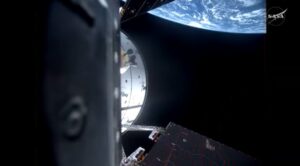
A view of the Earth’s horizon from NASA’s Orion spacecraft as it orbits above the planet during the first hours of the Artemis II test flight. NASA astronauts Commander Reid Wiseman, Pilot Victor Glover, and Mission Specialist Christina Koch, and CSA (Canadian Space Agency) astronaut Mission Specialist Jeremy Hansen, launched at 6:35 p.m. EDT on Wednesday, April 1, 2026, on an approximately 10-day mission around the Moon and back to Earth.
NASA 

Perigee raise burn timing and mission trajectory planning

With the issue resolved, the Artemis II crew is preparing for the next major step in the mission timeline. The perigee raise burn is scheduled after a planned rest period.

Perigee refers to the lowest point of a spacecraft’s orbit around Earth. Raising it changes the orbital shape, making it more stable and better suited for future maneuvers.

This burn follows an earlier apogee raise maneuver, which increased Orion’s highest orbital point. Together, the two burns define the spacecraft’s initial orbit and test its propulsion system under operational conditions.

NASA scheduled a four-hour rest period for the crew before the maneuver. Astronauts are set to wake at 7 a.m. Eastern Time on April 2 to begin preparations. After completing post-burn procedures, they will return to a second sleep cycle later in the morning.

The sequence reflects the structured rhythm of human spaceflight, where operational tasks alternate with carefully timed rest to maintain performance.

The Artemis II mission continues to build toward its broader objective: validating systems for future missions that will carry astronauts beyond Earth orbit and toward the Moon.

Also Read:

Artemis II Mission Launch: NASA Sends Crew on First Moon Flyby in 50 Years

Artemis II Update-1: Orion Completes Proximity Operations, Perigee Burn Next

Artemis II Update-4: Crew completes proximity test, perigee raise burn up next

NASA’s Artemis II crew completed a proximity operations test on April 2, maneuvering the Orion spacecraft near a detached rocket stage in Earth orbit. The demonstration, lasting about 70 minutes, tested manual control systems and gathered data critical for future lunar missions. The crew now prepares for a perigee raise burn, while engineers continue troubleshooting a minor onboard toilet system issue.

The astronauts aboard NASA’s Artemis II mission spent part of April 2 guiding their spacecraft through a tightly choreographed exercise hundreds of miles above Earth.

Inside Orion, the capsule named Integrity, the crew manually steered within close range of a discarded rocket stage, testing how precisely humans can control the spacecraft in space. The task lasted just over an hour. It marked one of the first hands-on demonstrations of Orion’s maneuverability under crew control.

The exercise is part of a broader effort by the National Aeronautics and Space Administration (NASA) to validate systems before sending astronauts farther into deep space, including eventual missions to the Moon under the Artemis program.

The proximity operations demonstration centered on Orion’s ability to approach and move away from another object in orbit. For this test, the crew used the detached interim cryogenic propulsion stage, or ICPS, as a reference target.

The ICPS, a temporary upper stage used during launch, had already separated from the spacecraft. It remained nearby long enough for the astronauts to conduct controlled approach and retreat maneuvers.

During the roughly 70-minute session, the crew adjusted Orion’s position repeatedly, testing navigation, thruster response, and onboard guidance systems. These maneuvers simulate conditions required for future missions that may involve docking or operating near other spacecraft.

At the end of the exercise, Orion executed an automated departure burn, increasing its distance from the ICPS. The stage is scheduled to perform a disposal burn, sending it into Earth’s atmosphere over a remote Pacific region, according to NASA mission updates.

The demonstration provides engineers with real-time data on how Orion performs under manual control, a capability considered essential for complex operations during lunar missions.

Alongside the crewed mission, four small satellites known as CubeSats launched as secondary payloads aboard the Space Launch System (SLS).

CubeSats are compact, shoebox-sized spacecraft designed for targeted scientific experiments. They will deploy after the Orion stage adapter separates from the main spacecraft.

Each satellite carries a distinct research objective:

  • ATENEA, developed by Argentina’s national space agency, focuses on radiation shielding and communication systems in high Earth orbit.
  • Space Weather CubeSat-1, built by the Saudi Space Agency, will measure solar radiation, X-rays, and magnetic field activity.
  • TACHELES, from the German Aerospace Center, is testing electrical systems for future lunar logistics vehicles.
  • K-Rad Cube, developed by the Korea AeroSpace Administration, will study radiation effects across the Van Allen belts, regions of charged particles surrounding Earth.

The CubeSat deployments expand the mission’s scientific output, offering data on space weather and radiation environments that astronauts may encounter during longer missions.

Trajectory for Artemis II, NASA’s first flight with crew aboard SLS, Orion to pave the way for long-term return to the Moon, missions to Mars

Perigee raise burn planned as engineers monitor onboard issue

Attention now shifts to the next key maneuver, the perigee raise burn, scheduled after the crew’s rest period.

Perigee refers to the lowest point in a spacecraft’s orbit around Earth. Raising it adjusts the shape of the orbit and prepares Orion for later phases of the mission, including potential translunar trajectories.

The maneuver follows an earlier apogee raise burn, which increased the spacecraft’s highest orbital point. Together, these burns define Orion’s initial orbital path and test propulsion performance under operational conditions.

Before the next burn, the crew completed routine spacecraft checks. During a systems review, they reported a blinking fault light in the onboard toilet system.

NASA ground teams are analyzing the data and working with the crew to diagnose the issue. No broader system impacts have been reported in official updates.

After a scheduled four-hour rest period, the astronauts are set to wake at 7 a.m. Eastern Time on April 2 to prepare for the maneuver. The timeline includes post-burn activities followed by another sleep cycle later in the morning.

The sequence of tests, adjustments, and troubleshooting reflects the mission’s dual purpose: demonstrating Orion’s readiness for deep space while gathering operational data from a live crewed environment.

Also Read:

Artemis II Mission Launch: NASA Sends Crew on First Moon Flyby in 50 Years

Artemis II Update-2 : Perigee Raise Burn Completed with brief Communications Loss, NASA Probes

Artemis II Update-3: Apogee Raise burn complete, Crew prepares critical Proximity Test

Saturn’s magnetic bubble is lopsided compared to Earth’s

A new study published on April 2026 finds that Saturn has an asymmetrical magnetic field unlike Earth, based on six years of data from the Cassini–Huygens mission. Researchers led by institutions including University College London found that Saturn’s magnetic cusp shifts due to its rapid rotation and plasma from its moon Enceladus. The findings offer new insight into how magnetospheres behave on fast-spinning gas giants and could shape future missions to Saturn.

A region of space where charged particles slip into a planet’s atmosphere has revealed a key difference between Earth and Saturn.

Researchers studying Saturn’s magnetic field found that its protective bubble, known as the magnetosphere, is not evenly shaped. Instead, it appears skewed to one side, a departure from the more symmetrical magnetic structure observed around Earth.

The findings come from a study published in Nature Communications, based on data gathered by the Cassini spacecraft over six years between 2004 and 2010.

Cassini Data Maps Saturn’s Shifted Magnetic Entry Point

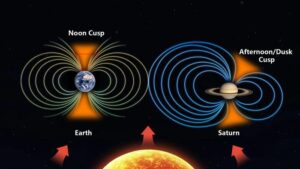
The study focused on Saturn’s “cusp,” the region where magnetic field lines bend and allow solar wind particles to funnel into the planet’s atmosphere.

Using measurements from Cassini’s Magnetometer and Plasma Spectrometer instruments, researchers identified 67 instances where the spacecraft passed through this cusp region.

On Earth, the cusp typically aligns around noon when viewed relative to the Sun. On Saturn, the team found it most frequently appeared between 13:00 and 15:00, indicating a consistent shift to one side.

This displacement suggests that Saturn’s magnetosphere is being pulled in a particular direction rather than remaining evenly balanced.

Fast Rotation And Plasma Drive The Asymmetry

Scientists attribute this asymmetry to two main factors: Saturn’s rapid rotation and the dense plasma environment surrounding the planet.

A day on Saturn lasts about 10.7 hours, significantly faster than Earth’s 24-hour cycle. This rapid spin generates strong rotational forces that influence the planet’s magnetic field.

At the same time, Saturn is surrounded by a cloud of ionised gas, or plasma, much of which originates from its moon Enceladus. The moon releases water vapor through icy plumes, which becomes ionised and contributes to the magnetospheric environment.

Together, the fast rotation and heavy plasma appear to drag the magnetic field lines in one direction, creating the observed lopsided structure. Researchers noted that further simulations are required to confirm this mechanism.

Professor Andrew Coates of University College London’s Mullard Space Science Laboratory said the cusp plays a central role in understanding the system.

“The cusp is the place where the solar wind can slip directly into the magnetosphere. Knowing the location of Saturn’s cusp can help us better understand and map the whole magnetic bubble,” he said.

Implications For Future Missions And Search For Life

The findings come at a time when scientific interest in Saturn and its moons is growing, particularly due to Enceladus.

The icy moon contains a subsurface ocean and emits plumes that have drawn attention as a potential environment for microbial life. It is also a proposed destination for a future mission by the European Space Agency planned for the 2040s.

“A better understanding of Saturn’s environment is especially urgent now as plans for our return to Saturn and its moon Enceladus start to be developed,” Coates said.

“This time we will look for evidence of habitability and for potential signs of life.”

The study also supports a broader theory about how magnetospheres behave on large, fast-spinning planets.

Professor Zhonghua Yao of the University of Hong Kong said differences between Earth and Saturn point to a shared underlying process governing interactions with solar wind across planets.

Lead author Yan Xu of the Southern University of Science and Technology added that combining spacecraft data with simulations helped reveal how rotation and plasma shape the global magnetic structure.

A Broader Pattern Across Gas Giants

The research suggests that Saturn’s magnetosphere may resemble that of Jupiter more closely than Earth’s, despite all three planets being exposed to the same solar wind.

This indicates that internal planetary dynamics, such as rotation speed and plasma sources, can outweigh solar wind in shaping magnetic environments on gas giants.

The results provide a framework for studying other planetary systems, including exoplanets, where similar forces may be at play.

As researchers continue to analyze Cassini’s legacy data, Saturn’s magnetic field is offering a deeper view into how planetary systems function beyond Earth.

Also Read:

Indian scientists convert discarded battery waste into high-value material for cleaner fuel cells

Space Breakthrough: Astronomers confirm rogue planet candidate as a planet for the first time

India Maps Rare Earth Reserves, Pushes Magnet Manufacturing With ₹7,280 Cr Plan

India has identified over 8.5 million tonnes of rare earth oxide resources across coastal and inland regions, the government said on April 2, 2026, in Parliament. While the country holds domestic reserves, it remains dependent on imports for rare earth magnets due to processing and industrial gaps. A ₹7,280 crore incentive scheme aims to build local magnet manufacturing capacity and reduce reliance on foreign supply chains.

A mineral buried in coastal sands and inland deposits has quietly become central to India’s industrial ambitions. Rare earth elements, essential for everything from electric vehicles to defence systems, are now at the center of a policy push to turn geological potential into manufacturing strength.

The Atomic Minerals Directorate for Exploration and Research (AMD), a unit under the Department of Atomic Energy (DAE), has identified significant rare earth reserves across the country, according to a statement presented in the Rajya Sabha on April 2, 2026.

India holds approximately 7.23 million tonnes of in-situ total rare earth oxide equivalent embedded in 13.15 million tonnes of monazite, a mineral rich in thorium and rare earths. These deposits are spread across coastal “teri” sands, beach sands, and inland alluvial regions in states including Andhra Pradesh, Odisha, Tamil Nadu, Kerala, and West Bengal, among others.

In addition, about 1.29 million tonnes of rare earth oxide resources have been identified in hard rock terrains in parts of Gujarat and Rajasthan.

Why India Still Imports Rare Earth Magnets

Despite these reserves, the government acknowledged a critical gap. India is not dependent on other countries for rare earth minerals themselves, but it continues to rely on imports for rare earth magnets and related high-value products.

The reasons are structural and technical.

The ore grade of Indian deposits is relatively low, ranging between 0.056% and 0.058%, which makes extraction economically challenging. The presence of radioactive elements further complicates processing, requiring stricter handling protocols and increasing costs.

Environmental and regulatory constraints also limit mining. Coastal Regulation Zone (CRZ) rules, mangrove protections, forest cover, and habitation patterns have restricted large-scale extraction, effectively capping production volumes.

Equally significant is the absence of a strong midstream industry. India has limited capacity to convert refined rare earth oxides into metals, alloys, and finished magnets. This lack of downstream demand has historically dampened incentives to scale up extraction.

₹7,280 Crore Scheme Targets Full Supply Chain

To address these gaps, the Union Cabinet approved a scheme in November 2025 to promote the domestic manufacturing of sintered rare earth permanent magnets. The policy was formally notified in December 2025.

The scheme aims to establish 6,000 metric tonnes per annum of rare earth permanent magnet production capacity in India.

The total financial outlay stands at ₹7,280 crore. This includes ₹6,450 crore in sales-linked incentives over five years and ₹730 crore as capital subsidy to support the creation of manufacturing facilities.

Rare earth permanent magnets are among the strongest magnets available and are critical components in electric mobility, renewable energy systems such as wind turbines, advanced electronics, aerospace applications, and defence technologies.

The government’s objective is to build an end-to-end ecosystem. This includes processing rare earth oxides, producing metals and alloys, and manufacturing finished magnets within the country.

Strategic Push Includes Corridors and Pilot Plants

Alongside the incentive scheme, the government has initiated supporting infrastructure and pilot manufacturing efforts.

The Department of Atomic Energy has established a rare earth permanent magnet plant in Visakhapatnam, Andhra Pradesh. The facility produces about three tonnes of Samarium Cobalt magnets annually, a category of high-performance magnets used in strategic sectors such as defence and atomic energy.

The Union Budget for 2026–27 has also proposed dedicated Rare Earth Corridors in Odisha, Kerala, Andhra Pradesh, and Tamil Nadu. These corridors are expected to cluster mining, processing, and manufacturing activities to improve efficiency and attract investment.

The policy direction signals a shift from resource identification to industrial scaling.

Global Context and Domestic Stakes

Rare earth magnets sit at the heart of global supply chains for clean energy and advanced manufacturing. Countries with control over processing and magnet production hold significant leverage in sectors such as electric vehicles and defence systems.

India’s approach, as outlined in Parliament, reflects an attempt to bridge the gap between resource availability and industrial capability.

The statement was delivered by Jitendra Singh, Union Minister of State (Independent Charge) for Earth Sciences and Science and Technology, in the Rajya Sabha.

As the government moves to operationalize incentives and infrastructure, the focus now shifts to execution, industry participation, and the pace at which domestic manufacturing capacity can be built.

Also Read:

Artemis II Update-3: Apogee Raise burn complete, Crew prepares critical Proximity Test

NASA confirmed the Artemis II crew completed the apogee raise burn on April 2, increasing Orion’s orbital high point. The mission now transitions toward a proximity operations demonstration that will test manual spacecraft control near another object. Engineers continue to monitor a minor onboard system issue as the crew prepares for the next phase.


Artemis II Update-1: Orion Completes Proximity Operations, Perigee Burn Next

Astronauts aboard NASA’s Artemis II mission completed a key proximity operations test on April 2 while orbiting Earth. The maneuver involved controlled movements around a detached rocket stage to evaluate spacecraft handling. With CubeSat deployments ahead and a minor onboard system issue under review, the crew is now preparing for a perigee raise burn to refine Orion’s orbit.


Artemis II Mission Launch: NASA Sends Crew on First Moon Flyby in 50 Years

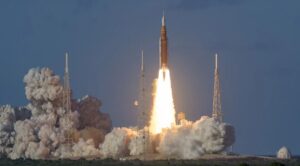
The National Aeronautics and Space Administration launched four astronauts on April 2 from Kennedy Space Center in Florida aboard the Artemis II mission. The crew is set for a 10-day test flight around the Moon, marking the first human lunar flyby since the Apollo era. The mission aims to validate spacecraft systems and pave the way for future Moon landings and Mars exploration.


Indian scientists convert discarded battery waste into high-value material for cleaner fuel cells

Scientists in India have developed a method to reuse graphite from discarded lithium-ion batteries to improve fuel cell efficiency, according to a recent study. The research, conducted by the International Advanced Research Centre for Powder Metallurgy and New Materials, shows that recycled graphite can enhance catalyst performance and durability in fuel cells. The findings, published in ACS Sustainable Resource Management, point to a dual solution for battery waste and clean energy challenges.

A used lithium-ion battery, often discarded after years of service, may hold more value than previously thought.

Scientists have found a way to extract graphite from spent batteries and transform it into a high-performance material that improves how fuel cells operate, offering a potential bridge between waste management and clean energy systems.

The work was carried out by researchers at the International Advanced Research Centre for Powder Metallurgy and New Materials, an autonomous institute under the Department of Science and Technology.

Recycled graphite and the challenge of fuel cell efficiency

Fuel cells, particularly those used in clean energy applications, rely on catalysts to drive chemical reactions that generate electricity. One of the most critical reactions is the oxygen reduction reaction, or ORR, which directly affects efficiency.

Platinum-based catalysts are widely used for this purpose but face two major limitations. They are expensive, and their performance can degrade over time due to poisoning by carbon monoxide and interference from methanol in certain fuel cell systems.

At the same time, the rapid rise in lithium-ion battery usage has created a growing stream of waste, with graphite being a major component of discarded batteries.

Researchers have been exploring whether this waste material could be repurposed to address bottlenecks in fuel cell technology.

How the material was developed and tested

The research team recovered graphite from end-of-life lithium-ion batteries and chemically exfoliated it, a process that increases its surface area and introduces more active sites for chemical interaction.

They then carried out detailed characterization and electrochemical testing to evaluate how the material performed in ORR conditions, including its tolerance to methanol.

Unlike earlier studies that focused mainly on alkaline environments, this work demonstrated effective performance in acidic conditions, which are relevant for many commercial fuel cell systems.

The exfoliated graphite was combined with platinum catalysts to form a conductive network that improved both electron flow and oxygen transport within the system.

Fig: Graphical illustration of the Pt–exfoliated graphite catalyst, with exfoliated graphite forming a conductive network that suppresses methanol crossover and CO poisoning, leading to improved oxygen reduction performance and durability PIB

Performance gains and durability improvements

The study identified an optimal composition of 10 percent exfoliated graphite by weight, which delivered improved performance and stability compared with conventional setups.

The material showed an ability to selectively adsorb methanol molecules, acting as a barrier that prevents unwanted reactions. This reduces methanol oxidation and limits carbon monoxide poisoning of the platinum catalyst.

As a result, the system maintained higher efficiency over longer operating periods.

Researchers said the improvement in methanol tolerance and catalyst protection could address a key challenge in Direct Methanol Fuel Cells, a technology considered promising for portable and stationary energy applications.

Linking battery recycling with clean energy goals

The findings highlight a potential pathway to address two growing concerns: battery waste and the cost and durability of fuel cell technologies.

By converting discarded graphite into a functional material, the approach reduces reliance on expensive catalyst components while creating value from waste.

The work also supports broader efforts to build sustainable energy systems by improving the performance of fuel cells, which produce electricity with lower emissions compared with conventional combustion-based technologies.

Scientists say further research and scaling efforts will be needed to translate laboratory results into commercial applications, but the study establishes a proof of concept for integrating recycling and energy innovation.

The approach reflects a shift toward circular material use, where components from one technology lifecycle are repurposed to enhance another, reducing environmental impact while advancing clean energy solutions.

Also Read:

Space Breakthrough: Astronomers confirm rogue planet candidate as a planet for the first time

An international team led by Peking University confirmed the mass of a rogue planet for the first time using a rare alignment of telescopes in May 2024. The object, detected through microlensing, was found to be about the mass of Saturn, confirming it as a true planet. The findings, published in Science in January 2026, relied on combined data from ground observatories and the Gaia spacecraft. Scientists say the discovery could reshape understanding of free-floating planets across the Milky Way.

In the vast dark between stars, planets drift unseen. For years, astronomers suspected they existed in large numbers, but proving what they were has been far more difficult.

That changed with a brief flicker of light in May 2024.

The signal lasted just two days. It came from a distant star whose brightness momentarily intensified as an unseen object passed in front of it. That phenomenon, known as microlensing, has long been one of the few ways to detect rogue planets.

This time, the data went further.

“For the first time, we have a direct measurement of a rogue planet candidate’s mass and not just a rough statistical estimate,” said Dong Subo, an astronomer at Peking University. “We know for sure it’s a planet.”

Microlensing technique confirms rogue planet mass for first time

Rogue planets, unlike Earth or Jupiter, do not orbit a star. They move independently through space, making them nearly impossible to detect with traditional methods that rely on starlight.

Microlensing offers a workaround. When a planet crosses the line of sight between Earth and a distant star, its gravity bends the star’s light, briefly amplifying it. The effect acts like a natural magnifying glass.

Astronomers have used this method for decades, but it comes with limitations. While it reveals that an object exists, it often cannot precisely determine its mass because distance and gravitational strength are intertwined in the signal.

That ambiguity has left many rogue planet candidates in a gray area.

The new study, published in Science, resolved that uncertainty for one object by combining observations from multiple telescopes across Earth and space. The event, catalogued as KMT-2024-BLG-0792 and OGLE-2024-BLG-0516, was first detected by the Korea Microlensing Telescope Network and the Optical Gravitational Lensing Experiment.

At the same time, the Gaia spacecraft, operated by the European Space Agency, recorded the same event from its position roughly 1.5 million kilometers from Earth.

That overlap proved critical.

Gaia parallax measurement unlocks distance and mass data

The key to the breakthrough lay in measuring what astronomers call the microlens parallax effect. This effect works similarly to human depth perception, where viewing an object from two different positions reveals its distance.

In this case, Gaia’s vantage point in space and Earth-based telescopes provided two perspectives of the same event. The microlensing signal appeared about two hours later from Gaia’s position than from Earth.

That time difference allowed researchers to separate the object’s distance from its gravitational influence, enabling a precise mass calculation.

“We are able to use the same principle to extract the distance information of this rogue planet candidate, finding the mass and distance separately,” Dong said.

The result placed the object at roughly one-fifth the mass of Jupiter, comparable to Saturn. That measurement confirmed it as a planet rather than a more massive object such as a brown dwarf.

Implications for rogue planet population in the Milky Way

The finding carries implications beyond a single object. Astronomers have long theorized that the Milky Way Galaxy may host vast numbers of rogue planets, potentially numbering in the billions or more.

“Our discovery offers further evidence that the Galaxy may be teeming with rogue planets that were likely ejected from their original homes,” Dong said.

These planets are thought to form within star systems before being expelled through gravitational interactions, especially during early stages of planetary formation. Passing stars may also disrupt systems, sending planets into interstellar space.

Some theories suggest that a subset of rogue planets could form independently, collapsing directly from gas clouds without ever orbiting a star.

The new measurement strengthens confidence in microlensing surveys that have hinted at such populations for years.

Future space telescopes to expand rogue planet discoveries

The study also highlights the importance of coordinated observations across multiple platforms. The overlap between Gaia, KMTNet, and OGLE marked the only time in Gaia’s operational lifetime that all three observed the same rogue planet candidate.

Future missions are expected to make such measurements more routine.

NASA plans to launch the Nancy Grace Roman Space Telescope, which will conduct large-scale microlensing surveys capable of detecting hundreds of rogue planets. China is also developing new missions, including the Chinese Space Station Survey Telescope and a proposed Earth 2.0 mission, both of which include microlensing in their scientific goals. [8]

These next-generation observatories will operate above Earth’s atmosphere, improving sensitivity and reducing distortions that affect ground-based observations.

“The new space-based facilities such as Roman, CSST, and Earth 2.0 are going to revolutionize the field of microlensing and the study of free-floating planets,” Dong said.

For now, the confirmed mass of a single rogue planet marks a turning point. It transforms a fleeting signal into a measurable world, offering a clearer view of a population that has long remained in the shadows.

Also Read:

Thousands Of Pico-Satellites Could Redefine Direct Smartphone Connectivity From Space

XRISM finally solves famous star’s 50-year space mystery