Belém COP30 delivers climate finance boost and a pledge to plan fossil fuel transition

  • Climate disinformation: Commitment to promote information integrity and counter false narratives.

The final decision emphasises solidarity and investment, setting ambitious financial targets while leaving energy transition for later discussion. The burning of fossil fuels emits greenhouse gases that are by far the largest contributors to global warming, making this omission a point of concern for many nations, including negotiators from South America and the EU, as well as civil society groups.

Expectations were high that COP30’s final decision would include explicit reference to phasing out fossil fuels. More than 80 countries backed Brazil’s proposal for a formal ‘roadmap.’

A draft text had included it – until the final hours of talks. The adopted outcome refers only to the ‘UAE Consensus’, the COP28 decision calling for “transitioning away from fossil fuels.”

Before the final plenary, Brazilian scientist Carlos Nobre issued a stark warning: fossil fuel use must fall to zero by 2040 – 2045 at the latest to avoid catastrophic temperature rises of up to 2.5°C by mid-century. That trajectory, he said, would spell the near-total loss of coral reefs, the collapse of the Amazon rainforest and an accelerated melt of the Greenland ice sheet.

A closer look

After two weeks of intense negotiations, the adopted text calls for mobilizing at least $1.3 trillion per year by 2035 for climate action, alongside tripling adaptation finance and operationalizing the loss and damage fund agreed at COP28.  

It also launches two major initiatives – the Global Implementation Accelerator and the Belém Mission to 1.5°C – to help countries deliver on their nationally determined contributions (NDCs), or national climate action plans, and adaptation plans.

For the first time, the decision acknowledges the need to tackle climate disinformation, pledging to promote information integrity and counter narratives that undermine science-based action.  

Last week, Brazil’s President, Luiz Inácio Lula da Silva, opened the summit declaring it would be known as “the COP of truth,” and this landmark decision marks a significant step toward safeguarding public trust in climate policy – even as the absence of fossil fuel transition language underscores the complexity of energy negotiations.

Two new roadmaps

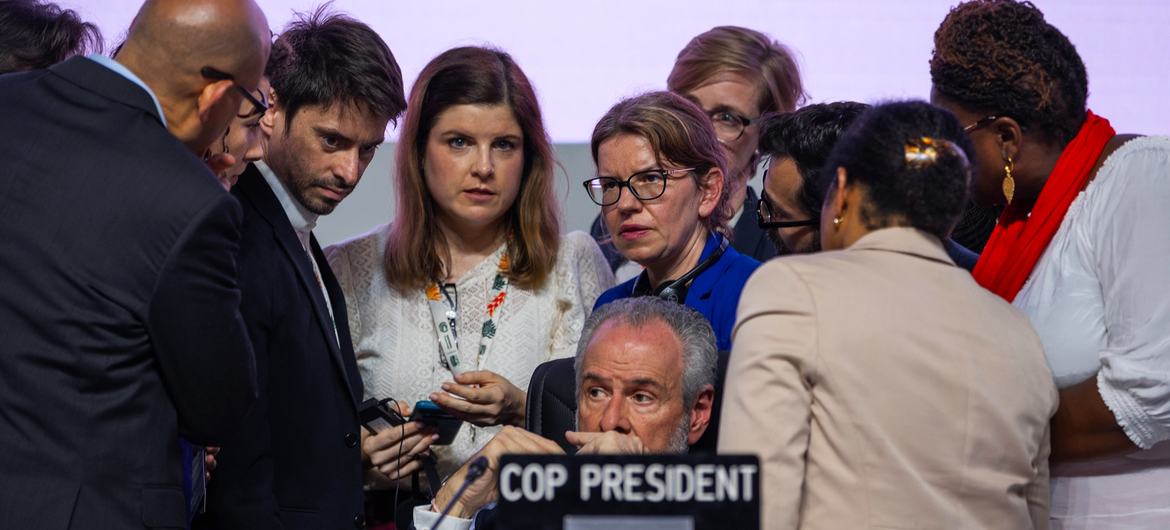
In the closing meeting, COP30 President André Corrêa do Lago acknowledged what was left out of the deal:  

“We know some of you had greater ambitions for some of the issues at hand,” he said, adding, “I know the youth civil society will demand us to do more to fight climate change. I want to reaffirm that I will try not to disappoint you during my presidency.”  

Reflecting on President Lula’s call at the opening of COP30 for ambition, Mr. do Lago announced plans to create two roadmaps: one to halt and reverse deforestation; and another to transition away from fossil fuels in a just, orderly and equitable manner, mobilizing resources for these purposes in a “just and planned manner.”

COP30 President André Corrêa do Lago (centre) confers with his team at the closing of the UN Climate Conference.

The road to consensus

The road to consensus at the latest Conference of the Parties to the UN Framework Convention on Climate Change (UNFCCC), as the annual COPs are formally known, was anything but smooth.  

Late last week, Indigenous groups staged blockades demanding stronger protections for the Amazon, and late Thursday afternoon, a fire at the conference venue disrupted talks during a critical phase. 

Negotiators worked through the night on Friday – to bridge gaps on finance and ambition, with Brazil’s presidency steering discussions toward a politically workable outcome focused on support and implementation of agreements from past COPs.

‘Multilateralism is alive’

From the G20 Summit in Johannesburg, UN Secretary-General António Guterres sent a clear message to COP30: At the gateway of the Amazon, Parties reached an agreement that shows nations can still unite to confront challenges no country can solve alone.  

The UN chief said that COP30 delivered progress, such as the launch of the Global Implementation Accelerator to close ambition gaps and reaffirmed the UAE Consensus, including a just, orderly and equitable transition away from fossil fuels.

“But COPs are consensus-based – and in a period of geopolitical divides, consensus is ever harder to reach. I cannot pretend that COP30 has delivered everything that is needed.” Overshoot of 1.5°C is a stark warning: deep, rapid emission cuts and massive climate finance are essential. “COP30 is over, but the work is not,” he said.  

Mr. Guterres vowed to keep pushing for higher ambition and solidarity, urging all who marched, negotiated and mobilized: “Do not give up. History – and the United Nations – are on your side.

Holding the line at 1.5 in ‘turbulent geopolitical waters’

UN climate chief Simon Stiell pointed to a series of major gains as COP30 closed in Belém: new strategies to accelerate Paris Agreement implementation, a push to triple adaptation finance, and commitments toward a just energy transition.

And despite what he called “turbulent geopolitical waters” – marked by polarization and climate denial – 194 nations stood together, “keeping humanity in the fight for a livable planet, determined to hold the line at 1.5°C.”

At the heart of this momentum is COP30’s flagship outcome: the Mutirão text, a sweeping deal that bundles four contentious negotiation tracks – from mitigation to finance and trade barriers – into a single, consensus-based agreement. Seventeen additional decisions were adopted alongside it.

The final document declares that the global shift toward low-emissions and climate-resilient development is “irreversible and the trend of the future.” It reaffirms that the Paris Agreement is working – and must “go further and faster” – strengthening the role of multilateral climate cooperation.

The text also recognizes the economic and social benefits of climate action, from growth and job creation to improved energy access, security and public health. Mr. Stiell pointed to a decisive trend: investments in renewable energy now outpace fossil fuels two to one – “a political and market signal that cannot be ignored,” he said.

A robust action agenda beyond negotiations

The Brazilian Presidency underscored that COP30’s success extends beyond negotiated agreements, highlighting a wave of voluntary commitments under the Action Agenda.

Among them:

  • Tropical Forests Forever Fund: Raised $5.5 billion and now includes 53 participating countries; at least 20 per cent of resources go directly to Indigenous Peoples and local communities.
  • Belém Health Action Plan: The first global initiative targeting climate-related health threats, launched with $300 million from 35 philanthropic organizations.
  • UNEZA Alliance: Public utility companies pledged $66 billion annually for renewable energy and $82 billion for transmission and storage.
  • Cities, regions and companies: A coalition spanning 25,000 buildings reported cutting over 850,000 tons of CO₂ in 2024.

Climate justice at the forefront

Countries also agreed to develop a just transition mechanism, enhancing cooperation, technical support and capacity-building.


UN’s Guterres declares fossil fuel era fading; presses nations for new climate plans before COP30 summit

In a special address at UN Headquarters in New York, Mr. Guterres cited surging clean energy investment and plunging solar and wind costs that now outcompete fossil fuels.

The energy transition is unstoppable, but the transition is not yet fast enough or fair enough,” he said.

The speech, A Moment of Opportunity: Supercharging the Clean Energy Age – a follow‑up to last year’s Moment of Truth – was delivered alongside a new UN technical report drawing on global energy and finance bodies.

“Just follow the money,” Mr. Guterres said, noting that $2 trillion flowed into clean energy last year, $800 billion more than fossil fuels and up almost 70 per cent in a decade.

Key points from the address

  • Point of no return – The world has irreversibly shifted towards renewables, with fossil fuels entering their decline
  • Clean energy surge – $2 trillion invested in clean energy last year, $800 billion more than fossil fuels
  • Cost revolution – Solar now 41 per cent cheaper and offshore wind 53 per cent cheaper than fossil fuel alternatives.
  • Global challenge – Calls on G20 nations to align new national climate plans with the 1.5°C target of the Paris Agreement
  • Energy security – Renewables ensure “real energy sovereignty”
  • Six opportunity areas – Climate plan ambition, modern grids, sustainable demand, just transition, trade reform, and finance for emerging markets.

A shift in possibility

He noted new data from the International Renewable Energy Agency (IRENA) showing solar, once four times costlier, is now 41 per cent cheaper than fossil fuels.

Similarly, offshore wind is 53 per cent cheaper, with more than 90 per cent of new renewables worldwide beating the cheapest new fossil alternative.

This is not just a shift in power. It is a shift in possibility,” he said.

Renewables nearly match fossil fuels in global installed power capacity, and “almost all the new power capacity built” last year came from renewables, he said, noting that every continent added more clean power than fossil fuels.

Clean energy is unstoppable

Mr. Guterres underscored that a clean energy future “is no longer a promise, it is a fact”. No government, no industry and no special interest can stop it.

Of course, the fossil fuel lobby will try, and we know the lengths to which they will go. But, I have never been more confident that they will fail because we have passed the point of no return.

He urged countries to lock ambition into the next round of national climate plans, or NDCs, due within months. Mr. Guterres called on the G20 countries, which are responsible for 80 per cent of emissions, to submit new plans aligned with the 1.5°C limit and present them at a high‑level event in September.

Targets, he added, must “double energy efficiency and triple renewables capacity by 2030” while accelerating “the transition away from fossil fuels”.

Real energy sovereignty

The Secretary-General also highlighted the geopolitical risks of fossil fuel dependence.

“The greatest threat to energy security today is fossil fuels,” he said, citing price shocks after Russia’s invasion of Ukraine.

There are no price spikes for sunlight, no embargoes on wind. Renewables mean real energy security, real energy sovereignty and real freedom from fossil-fuel volatility.

Six opportunity areas

Mr. Guterres mapped six “opportunity areas” to speed the transition: ambitious NDCs, modern grids and storage, meeting soaring demand sustainably, a just transition for workers and communities, trade reforms to broaden clean‑tech supply chains, and mobilising finance to emerging markets.

Financing, however, is the choke point. Africa, home to 60 per cent of the world’s best solar resources, received just 2 per cent of global clean energy investment last year, he said.

Only one in five clean energy dollars over the past decade went to emerging and developing economies outside China. Flows must rise more than five-fold by 2030 to keep the 1.5-degree limit alive and deliver universal access.

Mr. Guterres urged reform of global finance, stronger multilateral development banks and debt relief, including debt‑for‑climate swaps.

The fossil fuel age is flailing and failing. We are in the dawn of a new energy era,” he said in closing.

That world is within reach, but it won’t happen on its own. Not fast enough. Not fair enough. It is up to us. This is our moment of opportunity.

Source link

No fuel, no aid, no escape: UN agencies warn of looming collapse in Gaza

Fuel is the backbone of survival in Gaza,” said the statement. “Without fuel, these lifelines will vanish for 2.1 million people.”

UN humanitarian workers stressed that fuel powers everything from hospitals and water systems to bakeries and ambulances.

Without a steady supply, “maternity, neonatal and intensive care units are failing, and ambulances can no longer move.” The fuel shortage, they said, has left Gaza’s population – already facing severe food insecurity and the constant threat of violence – on the edge of catastrophe.

They warned that “without adequate fuel, UN agencies responding to this crisis will likely be forced to stop their operations entirely,” meaning “no health services, no clean water, and no capacity to deliver aid.”

Inadequate fuel injection

The agencies noted that for the first time in 130 days, a small quantity of fuel was allowed into Gaza this week. While welcome, the amount – just 75,000 litres over two days – is far from enough to meet the daily needs of the population and vital civilian aid operations.

Speaking at UN Headquarters in New York late Friday, UN Spokesperson Stéphane Dujarric described the overall situation as “dire and worsening by the day.”

Every day without a ceasefire brings more preventable deaths – children dying in pain, and hungry people shot while trying to reach the trickle of aid that is allowed in,” he said.

Life-threatening

Mr. Dujarric also expressed deep concern over continued Israeli restrictions on aid access. “Yesterday, our teams could provide hospitals with some of the fuel that came in – but only in the south. That’s because Israeli authorities denied our attempt to bring fuel to the north,” he said. “Such denials are life-threatening.”

He added that the fuel shortage also affects water treatment, ambulances and waste management. “All of these services are at risk of collapsing,” he said.

Out of 15 humanitarian missions that required coordination with Israeli authorities on Thursday, only six were fully facilitated. Five were denied outright, while four faced obstacles that delayed or prevented delivery.

One mission, to rescue injured people trapped under rubble in Gaza City, was only approved two days after the initial request – too late to save lives. “By the time the mission was finally allowed through yesterday, no one was found alive,” Dujarric said.

On top of this, essential items like tents and shelter materials have been blocked from entering Gaza for over four months, leaving thousands exposed to the elements.

Close call

Aid workers are also at risk. “Five strikes landed just a few hundred metres from where aid workers were operating this week, including UN staff,” Mr. Dujarric said. No injuries were reported, but several Red Crescent workers were shot while attempting to assist an injured colleague.

UN agencies are calling for the immediate and consistent delivery of fuel at scale, and for full, safe access to all parts of Gaza. “The urgency of this moment cannot be overstated,” they said. “Without fuel, Gaza faces a complete collapse of humanitarian efforts.”

Gaza: UN urges Israel to allow fuel into Strip

“Amid ongoing Israeli military operations, scores of people have reportedly been killed and injured, including while waiting for food,” the UN Office for the Coordination of Humanitarian Affairs (OCHA) said.

“Over the weekend, there were numerous reports of attacks hitting homes, as well as schools hosting displaced people,” it added.

Catastrophic hunger

OCHA noted that amid the “heavy constraints” on bringing in supplies and carrying out humanitarian operations across Gaza, people are going hungry.

“The World Food Programme (WFP) reports that one in five people faces catastrophic hunger, and more than 90,000 women and children urgently require treatment for malnutrition,” it said.

WFP has about 130,000 metric tons of food positioned in the region, ready to serve people in Gaza if improved access is granted.

Call for access

OCHA reiterated calls on Israel to facilitate the access and entry of essential supplies into Gaza, through the available crossing points and corridors, to address people’s desperate needs. Fuel, in particular, is urgently needed.

The UN and its partners call on the Israeli authorities, with utmost urgency, to allow the entry of fuel into Gaza. This is critically needed for life-saving operations – including hospitals, water and sanitation equipment, telecommunications, moving cargo from crossings, and operating community kitchens,” it said.

Displacement continues

Mass displacement continues in the war-torn enclave.

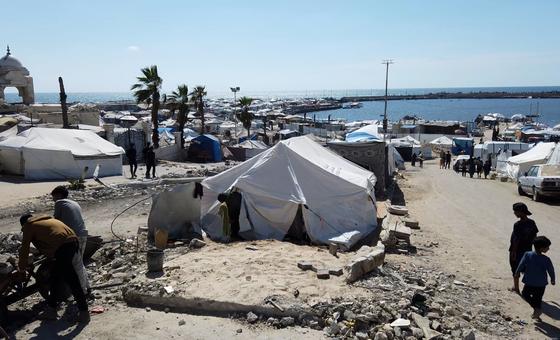
On Sunday, the Israeli military issued new evacuation orders for parts of Jabalya and Gaza City, impacting around 150,000 people. Those forced to flee join thousands already crowded into shelters lacking water, sanitation, and medical care. Shelter materials such as tents and timber have not entered Gaza in 17 weeks.

Most of the territory remains under displacement orders, OCHA said, and Israel, as the occupying power, has a legal obligation to protect civilians.

Search for the missing

Meanwhile, in war-torn Gaza, thousands of families remain trapped in a spiral of anxiety and despair as they search for their missing loved ones.

Among them is Anwar Hawas, a young woman in her twenties, searching desperately for Hadi, her 17-year-old autistic brother who has been missing for weeks.

“Every day I go out in the morning and return in the evening, hoping to find him,” she told UN News.

The Palestinian Central Bureau of Statistics reports that more than 11,000 individuals are missing in Gaza since the war started on 7 October 2023, the majority among them women and children. 

Source link

Gaza: Health system crumbles amid growing desperation over food, fuel

“Definitely, people get shot,” said Gaza-based medic Dr. Luca Pigozzi, WHO Emergency Medical Team Coordinator. “They are victim of blast injuries as well and bodily injuries.”

The WHO official’s comments follow reports of another mass casualty incident on Thursday, this time involving a strike on a market in the central city of Deir al Balah.

More than 20 people were killed and approximately 70 others were injured, said the UN aid wing, OCHA, with victims rushed to Al Aqsa Hospital, Nasser Medical Complex and two other health facilities.

Hundreds killed seeking food

In addition to the latest deadly incident, at least 410 Palestinians have been killed by the Israeli military while trying to fetch aid from controversial non-UN aid hubs supported by Israel and the United States, the UN human rights office, OHCHRsaid on Tuesday.

Providing high-quality medical care is very difficult in the war-torn occupied enclave today, “particularly because we are speaking about a high volume of patients every time”, Dr Pigozzi insisted.

Health needs are widespread and dramatic, with almost 50 per cent of medical stocks completely depleted.

WHO’s first medical shipment into Gaza on Wednesday was its first since 2 March, when Israel imposed a full blockade on the Strip.

In total, nine trucks carrying essential medical supplies entered the enclave with 2,000 units of blood and 1,500 units of plasma; all transited through the Kerem Shalom crossing. It is “only a drop in the ocean” of what is required, Dr Pigozzi said.

Aid obstacles remain

Speaking to journalists from Jerusalem, WHO’s Dr Rik Peeperkorn highlighted renewed difficulties in securing agreement from the Israeli authorities to allow more UN and partner agencies’ supply trucks into Gaza.

“That’s really unfortunate and should not happen, because you don’t want to see those desperate people, and specifically desperate young men, risking their lives to get some food either,” he said, amid reports of a chaotic rush for supplies at non-UN distribution points and of starving Gazans taking goods directly off lorries.

Before the Israeli blockade, the UN and its humanitarian partners demonstrated that their aid delivery system reached those most in need, insisted Dr Peeperkorn, WHO Representative in the occupied Palestinian territory. Today that is not the case because of repeated refusals by Israeli authorities to allow supplies into Gaza.

“Open the routes and make sure that we can get our supplies in,” he said. “The market needs to be flooded with food and non-food items and water, et cetera, et cetera, and including essential medicines in a most cost-effective manner.”

Denied entry

Since March, aid teams have encountered a 44 per cent denial rate, meaning that for every 10 staff requesting entry, “four to five of them are denied per rotation”, WHO’s Dr Pigozzi said.

Echoing that message, WHO spokesperson Christian Lindmeier insisted that people are starving, sick and dying across Gaza every day.

“They have been killed on the way trying to get medical help, they have been killed inside hospitals. Now, additionally, they are being killed on the way to get food items which are scarcely being provided,” he said.

“We have food and medical help minutes away across the border, sitting there and waiting for weeks and months by now. Just open the door.”

‘Fuel for Gaza is a matter of life and death,’ UN warns

“Israeli authorities continue to restrict the delivery of fuel into and throughout the Gaza Strip, effectively choking off life-saving services for deprived and starving people,” UN Spokesperson Stéphane Dujarric said during his regular press briefing in New York.

Conditions in the enclave remain bleak, as Israeli operations continue to have a devastating impact on civilians, with reports of the killing and injury of scores of people, many of whom were just seeking aid.

Pregnant women and babies at risk

Due to the fuel situation, the UN Population Fund (UNFPA) warned that 80 per cent of critical care units, including those used for childbirth, risk shutting down – at a time when 130 women are giving birth every day. 

As UNFPA stressed, fuel for Gaza is a matter of life and death,” said Mr. Dujarric.

He added that community kitchens were able to prepare more than 200,000 meals every day this week. 

However, this represents an 80 per cent reduction compared with the more than one million meals distributed daily at the end of April, calling it “basically a trickle offered to people on the brink of famine.”

In the absence of fuel, cooking gas and electricity, people have resorted to burning plastic waste. 

“When they do so in makeshift tents, you can imagine what happens with the poor ventilation and the tremendous risks that that poses,” he told journalists. 

© UNICEF/Mohammed Nateel

A young boy in Gaza with severe weight loss and malnutrition eats a nutritional supplement.

Allow in more aid

Furthermore, the UN relief coordination office, OCHA, also reminds that to meaningfully address the massive deprivation in Gaza, the Israeli authorities must allow in higher volumes of supplies and more varied types of food, as well as cooking gas, fuel and shelter items.

Mr. Dujarric stressed that to facilitate the orderly distribution of aid, supplies must be channelled daily through multiple crossings and land routes simultaneously. This would ensure people that the flow of essential support is steady, sufficient and reliable.  

He said the UN and partners attempted to coordinate 15 humanitarian movements inside Gaza on Tuesday but only three were fully facilitated by the Israeli authorities, while seven were denied outright.

Four missions were initially approved but then halted on the ground, although one was ultimately accomplished on Wednesday and another was cancelled by the organizers.   

Gaza: As last fuel supplies run out, aid teams warn of catastrophe

Speaking from Gaza City in the north of occupied territory, Olga Cherevko from the UN aid coordination office, OCHA, said that water pumps had stopped at one site for displaced people there on Wednesday “because there’s no fuel”.

“We are really – unless the situation changes – hours away from a catastrophic decline and a shutdown of more facilities if no fuel enters or more fuel isn’t retrieved immediately,” she told UN News.

In its latest update on the emergency, OCHA said that without the immediate entry of fuel or access to reserves, 80 per cent of Gaza’s critical care units essential for births and medical emergencies will shut down.

More killed seeking aid

The development comes as Gaza’s authorities reported that 15 people had been killed near an aid distribution hub in the centre of the Strip on Thursday.

On Tuesday, unverified videos of another incident circulating on social media showed dead bodies lying in the street near a relief facility in the southern city of Khan Younis, reportedly following artillery fire.

Finding food is a daily challenge for increasingly desperate Gazans who are “simply waiting for food and hoping to find something in order not to watch their children starve in front of their eyes”, Ms. Cherevko explained.

She added: “I spoke with a woman a couple of days ago where she told me that she went with a friend of hers who is nine months pregnant in hopes of finding some food.

Of course, they didn’t manage because they were too afraid to enter areas where there could be incidents like the ones that have been reported over the past few days.”

Search for shelter

Back in Gaza City, OCHA’s Ms. Cherenko said that conditions in shelters in Gaza are now “absolutely horrific” and increasingly crowded – “there are people coming from the north constantly,” the veteran aid worker added, while others are also moving back northwards, likely to be closer to the entry points for aid convoys.

The amount of aid entering Gaza today remains extremely limited and far below the 600 trucks a day that used to reach the enclave before the war began in October 2023. In its latest update, OCHA reported that “starvation and a growing likelihood of famine” are ever-present in the enclave. An estimated 55,000 pregnant women now face miscarriage, stillbirth and undernourished newborns as a result of the food shortages.

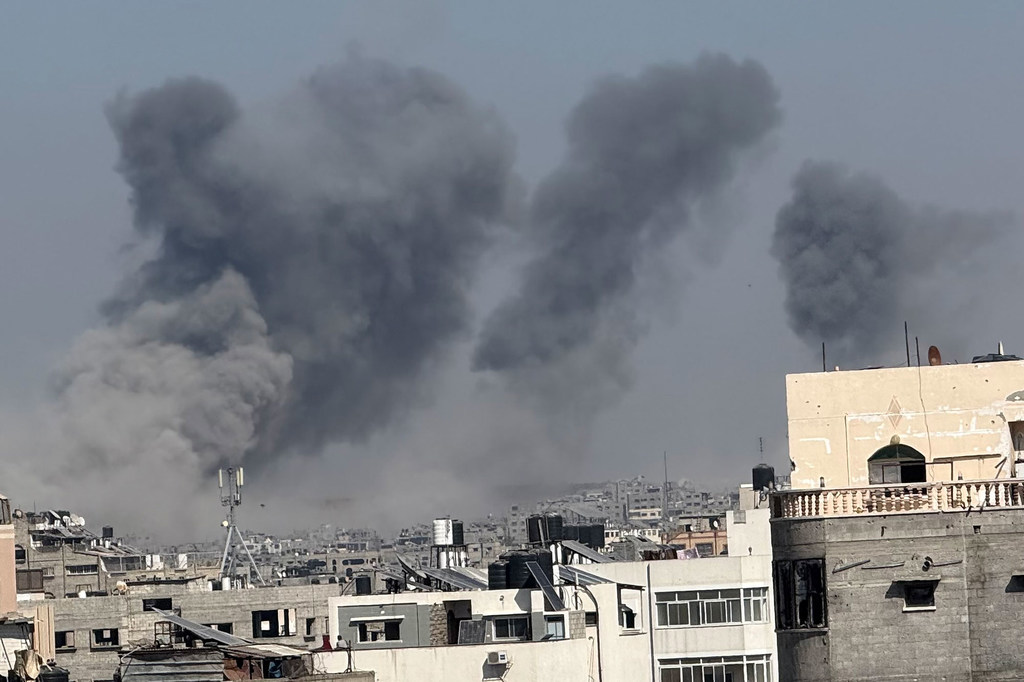
Smoke from explosions rises from the Shujaia neighborhood of Gaza City.

Starvation diet

“With the very limited volume of aid that is entering, everyone continues to face starvation and people are constantly risking their lives to try to find something,” Ms. Cherevko continued.

You eat or [you’re] left with the choice of starving to death.”

After more than 20 months of war, sparked by Hamas-led terror attacks in Israel, 82 per cent of Gaza’s territory is either an Israeli militarized zone or affected by evacuation orders.

Three months since hostilities re-escalated on 18 March, more than 680,000 people have been newly displaced. “With no safe place to go, many people have sought refuge in every available space, including overcrowded displacement sites, makeshift shelters, damaged buildings, streets and open areas,” OCHA said.

Source link

Thousands flee homes in Mozambique as conflict and disasters fuel worsening crisis

The latest displacement brings the total number of people uprooted by violence, cyclones and social unrest in Mozambique to nearly 1.3 million, according to the UN refugee agency, UNHCR.

The situation is particularly dire in Cabo Delgado province, where attacks by non-state armed groups continue to drive displacement, destroy infrastructure and disrupt recovery efforts.

Thousands have lost their homes, many for the second or third time and are seeking safety in already overstretched communities,” Xavier Creach, UNHCR Representative in Mozambique told journalists at a regular news briefing in Geneva on Friday.

A ‘triple crisis’

Mr. Creach warned that the southeast African country is grappling with a “triple crisis” – armed conflict and displacement, recurring extreme weather events, and months of post-electoral unrest.

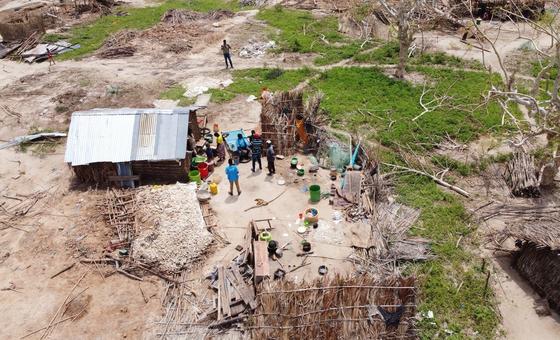
At the same time, extreme weather events – most recently Cyclone Jude in March – have devastated communities already hosting large numbers of displaced families. Food prices have surged by up to 20 per cent in some areas, compounding the strain on households and deepening the economic fragility in one of the world’s poorest countries.

The risks facing displaced people, particularly women and children, are severe. Protection concerns, including gender-based violence, family separation and limited access to documentation, are rising sharply.

According to UNHCR estimates, nearly 5.2 million people across the country require some form of humanitarian assistance.

Dwindling funds

In the challenging environment, UNHCR’s response is constrained by lack of funding with less than one-third of the $42.7 million funding appeal for the year met so far.

The agency warned that unless urgent support is mobilized, vital programmes will be at risk.

The broader UN humanitarian appeal, addressing other critical sectors such as nutrition and food security, health, water and sanitation, and education also faces severe shortages, having received only about 15 per cent of the required $352 million.

A perfect storm is gathering. If we turn away now, the country will face a much larger humanitarian emergency,” Mr. Creach said.

“The crisis is unfolding now. We have a choice. We can act to prevent, support and protect – or we can sit on our hands.

Source link