Cuba: UN warns of possible humanitarian ‘collapse’, as oil supplies dwindle

The United States has threatened to impose tariffs on any country providing oil to Cuba, increasing pressure on the island nation following a decades-long trade embargo and the US seizure of Venezuela’s leader Nicolás Maduro last month.

Venezuela had been the main supplier of oil to Havana but Washington has been ratcheting up pressure on Cuba in recent weeks, including an executive order last Thursday threatening to impose additional tariffs on countries that sell oil to Cuba, including Mexico.

“I can tell you that the Secretary-General is extremely concerned about the humanitarian situation in Cuba, which will worsen, and if not collapse, if its oil needs go unmet,” said UN Spokesperson Stéphane Dujarric. 

The UN chief noted that the General Assembly has been calling for an end to the US embargo for more than three decades: “The Secretary-General urges all parties to pursue dialogue and respect for international law.”

Fuel crisis

The fuel crisis has pushed up food prices for Cubans, led to severe fuel shortages and major power cuts throughout the country.

“Clearly what we see now, especially after the recent events in Venezuela, is a combination of emotions,” said Francisco Pichon, the most senior United Nations official in Cuba, describing “a mix of resilience, but also grief, sorrow and indignation, and some concern about the regional developments.” 

Thirty-two Cubans were killed in Venezuela on 3 January in the US operation to capture Mr. Maduro. 

The UN’s humanitarian work in Cuba

Mr. Pichon spoke to UN News from Havana last month, where the power had just gone out in his office. The UN team said that the vast majority of Cubans are being hit by rolling blackouts, at a time when the number of people in vulnerable situations has increased significantly. 

Even before the latest regional developments, the UN has been working with the Cuban Government to incubate ideas and support development, including ways to diversify the Cuban economy. 

The energy transition is a major priority due to reduced access to fuel and infrastructure challenges,” Mr. Pichon said, noting that investment needs remain a bottleneck.

Urgent changes needed

“The last two years have been quite tough,” he added, stressing that urgent changes are needed to sustain Cuba’s social model “in the midst of the severe economic, financial and trade sanctions”.

Cuba’s economy, which has historically relied on tourism as a key source of hard currency, was severely disrupted in the COVID pandemic and remains well under 2018 levels. 

As the Cuban economy has deteriorated, the country’s social indicators – such as universal healthcare, universal education, and extensive social safety nets like subsidised healthcare and food rations – are under strain. 

“All of this is happening in the context of the US embargo against Cuba,” said Mr. Pichon, noting that Cuba has also been relisted by the United States as a state sponsor of terrorism.

“From the UN perspective, our guiding principles remain unchanged: To be present. To support. To act based on cooperation, respected for international law, and the UN values.” 

Mr. Pichon, as UN Resident Coordinator, oversees the work of 23 UN agencies, funds and programmes. Here is a snapshot of some of the work underway.

Hurricane Melissa

Hurricane Melissa tore through Cuba as a Category 3 storm on 29 October. For the first time in the country, anticipatory action was taken through the release of funds from the UN Central Emergency Response Fund (CERF), enabling supplies, such as water purification units, food, hygiene kits, generators, medicines, medical and shelter supplies to be pre‑positioned.

The UN launched a $74 million Plan of Action to support national recovery and assist more than 2.2 million people affected by the storm’s destruction. So far, about $23 million has been mobilised targeting the one million most vulnerable. 

“No lives were lost directly due to the hurricane,” Mr. Pichon said, owing to the solid capabilities of Cuba’s civil defence, although recovery needs remain enormous, including rebuilding tens of thousands of homes.

Cooperation Framework

The UN’s long‑term engagement in Cuba is undergirded by a cooperation framework aligned with Cuba’s National Development Plan and the 2030 Agenda for Sustainable Development. This framework has four key pillars:

  • Institutional: The UN supported the development of around 30 laws following the 2019 constitutional reform, advancing equity, inclusion and rights for women, children, LGBTQ+ persons, people of African descent and persons with disabilities. 
  • Economic: Focuses on productive transformation and access to financing amid ongoing sanctions and the US listing of Cuba as a state sponsor of terrorism. Utilizing the Joint SDG Fund, which helps countries pay for projects related to the Sustainable Development Goals.
  • Environmental: Disaster risk management and climate resilience are central, especially given Cuba’s exposure to hurricanes, such as Melissa. UN support in anticipation and response seeks to protect lives and livelihoods.
  • Social: Social protection systems and attention to differentiated needs with a focus on leaving no one behind, including vulnerable groups vulnerable groups such as people living with AIDS, the LGBTI community, children, adolescents, women, and the elderly, who are a very relevant sector in an aging society.

Source link

Gaza: Hospitals rationing critical supplies, ambulances stalling

What little fuel remains is powering essential operations, but it is running out fast, and there are virtually no additional accessible stocks left, UN Spokesperson Stéphane Dujarric said, citing reports from the UN relief coordination office, OCHA.  

“Hospitals are rationing. Ambulances are stalling. Water systems are on the brink. And the deaths this is likely to cause could soon rise sharply unless the Israeli authorities allow new fuel to get in,” said Mr. Dujarric.

“We need fuel urgently and we need it in large quantities to power the most essential parts, notably water desalination, hospitals and telecommunications,” he added, noting fuel has not entered the enclave in the last few months.

Khan Younis displacement

Meanwhile Israeli forces continue to attack civilian infrastructure in Gaza and issue new displacement orders.

On Tuesday, such orders were issued for parts of Khan Younis, specifically ordering those staying in tents to move, Mr. Dujarric reported.

The map published alongside the order indicates that some areas included had not been subject to displacement orders since before the March ceasefire, he said.

“The issuance of a displacement order does not relieve any party from the imperative to spare civilians, including those who are unable or unwilling to move.”  

Safeguard hospitals

Mr. Dujarric also reiterated the UN World Health Organization’s (WHO) call to protect the Nasser Medical Complex in Khan Younis, warning that the hospital is overwhelmed with trauma injuries at double its capacity.  

In a video message sent from the hospital on Monday, Rik Peeperkorn, WHO representative in the Occupied Palestinian Territory, said the facility is running critically low on trauma supplies, essential medicines, equipment and fuel, and that staff are exhausted.

Humanitarian movements

Meanwhile, OCHA reported that humanitarian movements inside Gaza remain heavily restricted: only four out of 12 attempts on Monday to coordinate movements with the Israeli security authorities were fully facilitated, and just one delivered supplies.

Four more attempts were rejected by Israeli authorities, halting efforts to evacuate patients, retrieve disabled trucks or clear debris.  

Although the remaining four were initially approved, ground-level impediments ultimately undermined the ability to carry out the missions.

Source link

Gaza: As last fuel supplies run out, aid teams warn of catastrophe

Speaking from Gaza City in the north of occupied territory, Olga Cherevko from the UN aid coordination office, OCHA, said that water pumps had stopped at one site for displaced people there on Wednesday “because there’s no fuel”.

“We are really – unless the situation changes – hours away from a catastrophic decline and a shutdown of more facilities if no fuel enters or more fuel isn’t retrieved immediately,” she told UN News.

In its latest update on the emergency, OCHA said that without the immediate entry of fuel or access to reserves, 80 per cent of Gaza’s critical care units essential for births and medical emergencies will shut down.

More killed seeking aid

The development comes as Gaza’s authorities reported that 15 people had been killed near an aid distribution hub in the centre of the Strip on Thursday.

On Tuesday, unverified videos of another incident circulating on social media showed dead bodies lying in the street near a relief facility in the southern city of Khan Younis, reportedly following artillery fire.

Finding food is a daily challenge for increasingly desperate Gazans who are “simply waiting for food and hoping to find something in order not to watch their children starve in front of their eyes”, Ms. Cherevko explained.

She added: “I spoke with a woman a couple of days ago where she told me that she went with a friend of hers who is nine months pregnant in hopes of finding some food.

Of course, they didn’t manage because they were too afraid to enter areas where there could be incidents like the ones that have been reported over the past few days.”

Search for shelter

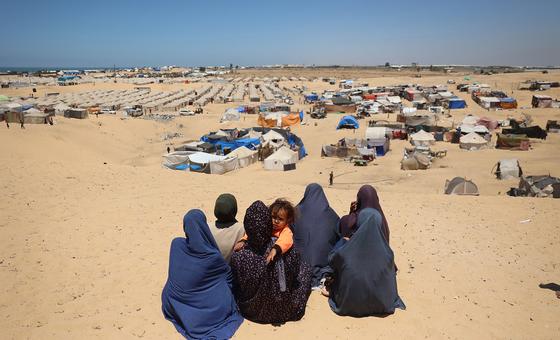
Back in Gaza City, OCHA’s Ms. Cherenko said that conditions in shelters in Gaza are now “absolutely horrific” and increasingly crowded – “there are people coming from the north constantly,” the veteran aid worker added, while others are also moving back northwards, likely to be closer to the entry points for aid convoys.

The amount of aid entering Gaza today remains extremely limited and far below the 600 trucks a day that used to reach the enclave before the war began in October 2023. In its latest update, OCHA reported that “starvation and a growing likelihood of famine” are ever-present in the enclave. An estimated 55,000 pregnant women now face miscarriage, stillbirth and undernourished newborns as a result of the food shortages.

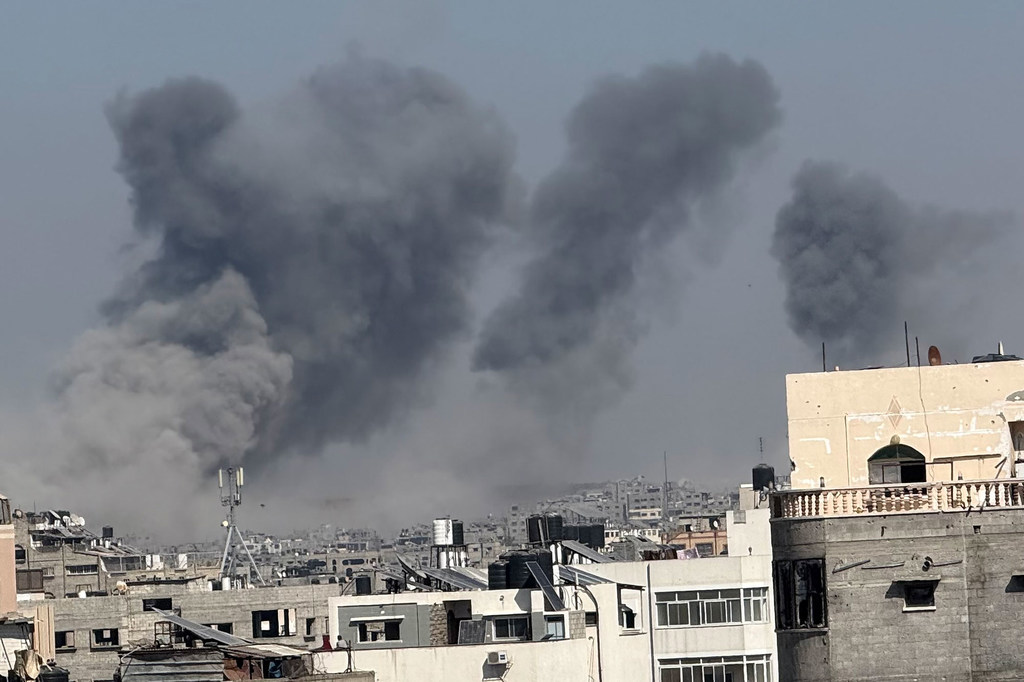
Smoke from explosions rises from the Shujaia neighborhood of Gaza City.

Starvation diet

“With the very limited volume of aid that is entering, everyone continues to face starvation and people are constantly risking their lives to try to find something,” Ms. Cherevko continued.

You eat or [you’re] left with the choice of starving to death.”

After more than 20 months of war, sparked by Hamas-led terror attacks in Israel, 82 per cent of Gaza’s territory is either an Israeli militarized zone or affected by evacuation orders.

Three months since hostilities re-escalated on 18 March, more than 680,000 people have been newly displaced. “With no safe place to go, many people have sought refuge in every available space, including overcrowded displacement sites, makeshift shelters, damaged buildings, streets and open areas,” OCHA said.

Source link

Rising hunger in Gaza highlights urgent need for ‘unfettered’ aid supplies

Only around 6,000 tonnes of wheat flour have entered the war-torn enclave since Israel began to allow limited supplies back in last month.  

However, 10,000 tonnes are urgently needed in the face of rising malnutrition, according to the UN aid coordination office OCHA.

The only way to address the situation on the ground is by re-opening additional crossings,” said OCHA’s Olga Cherevko, speaking to UN News from Khan Younis.

Beyond food aid

She also stressed the need to allow “unlimited and unfettered supply of aid to enter,” which includes items that go beyond food such as shelter materials, fuel, cooking gas, “and other necessary elements to sustain life in Gaza.”

Ms. Cherevko urged the Israeli authorities to make the task of delivering aid easier by “providing a safe and enabling environment,” reducing waiting times for humanitarian missions and ensuring access to people in need. 

People in Gaza are suffering from harsh living conditions. Since March, Israeli restrictions on border crossings have tightened, making it even more difficult for Gaza’s population – more than two million people – to access food. 

Senior UN officials, including Secretary-General António Guterres and Humanitarian Affairs chief Tom Fletcher, have described the aid that has entered as merely  “a trickle” or a  “a drop in the ocean”.

Difficult decisions

Although markets are crowded with people, they lack two essential elements: liquidity and goods.

Most residents thus face three bitter choices: either seek food aid from the newly established US and Israel-backed distribution mechanism, which has already claimed dozens of lives in recent days; watch their children starve; or pay dearly for what’s left of the goods and looted humanitarian aid in markets.

“Prices are unnatural, much higher than in Europe,” civil servant Akram Yousef recently told our UN News correspondent in Gaza.

“The situation is very difficult, and we have been like this for two years. In addition to displacement, homelessness, bombing, destruction, and devastation, traders are raising prices, and citizens are unable to bear this burden. What can we do?”

More than 20 months of conflict have made living conditions in the Gaza Strip unbearable, and the cost of living is now among the highest in the world. 

Ahmed Al-Bahri, who was displaced from Beit Lahia with his family, said a loaf of bread now sells for seven shekels, or roughly $2.

There is no flour, no milk, no diapers for children, or anything to eat,” he said. “We live in a state of constant hunger. Where can I get seven shekels to buy a loaf of bread for my child? What is this child’s sin?”

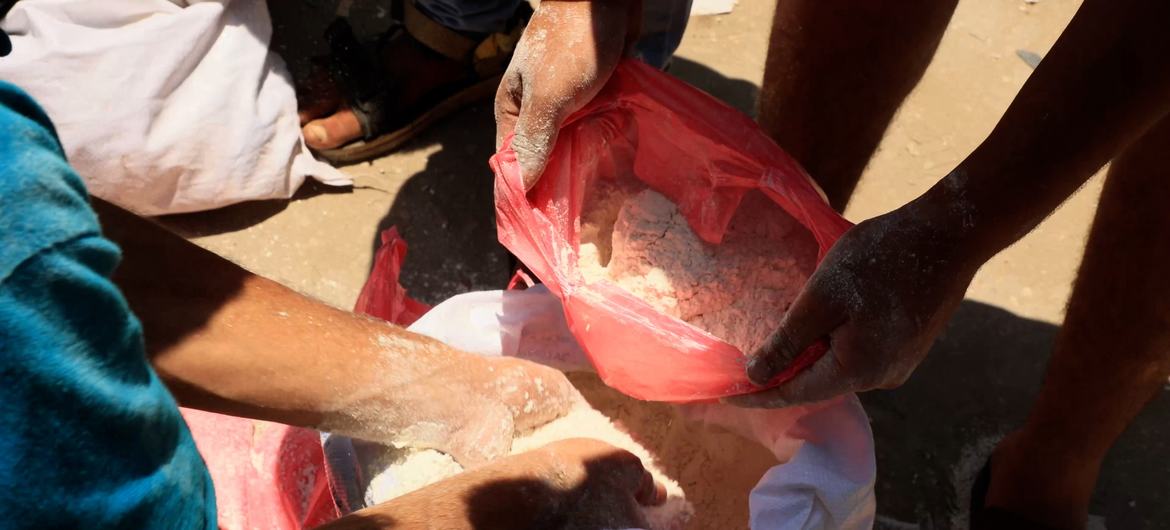
A flour seller in Gaza.

Exorbitant fees 

The cessation of Palestinian banks’ operations since the start of the war in October 2023 has exacerbated the suffering. 

People are forced to use phone apps to withdraw money from their bank accounts and to access their pensions through local merchants who charge exorbitant commissions.

Mr. Youssef, the civil servant, said the commission for withdrawing his salary was 20 per cent, but over time it has increased to nearly 50 per cent.

‘We have become envious of the dead’

Several residents told UN News that the price of one kilogramme of flour is now 100 shekels, equivalent to roughly $29.

“If a salary is 2,000 shekels, it becomes 1,000 shekels after commission,” another man, Ashraf Al-Deiri, explained.

“The daily expenses of an average or small family are no less than 500 shekels (roughly $143). So, we are experiencing great suffering and need someone to have mercy on us and stand by us.”

A young man called Raed Tafesh expressed shock over the high prices, especially since most of his peers are unemployed and lack any source of income. 

We don’t earn a single shekel. We are not employed, and we don’t have jobs. We are dying slowly. We have become envious of the dead,” he said.

The tragic conditions are reflected in the eyes of mothers and fathers who see their children starving, such as Nimir Ghazal.  She said her salary is not even enough to buy fruits, vegetables or any healthy food for her children.

“Sometimes I cry when my hungry children ask for a piece of bread. A kilo of flour costs 100 shekels, and lentils cost 50. One kilo is not enough for my family, but I buy it and share it among them,” she said.

UN efforts continue

On Monday, UN teams were able to collect some supplies, mainly flour, from the Kerem Shalom border crossing.  The aid was bound for Gaza City when hungry and desperate people snatched it directly from the trucks.

There have also been previous instances of looting and attacks on truck drivers which the UN categorically rejects. 

OCHA has emphasized that Israel, as the occupying power, bears responsibility for maintaining public order and safety in Gaza. This should include allowing more essential supplies to enter through multiple crossings and roads to meet humanitarian needs and help curb looting. 

Source link

DR Congo aid operation reaches Beni with food supplies for thousands

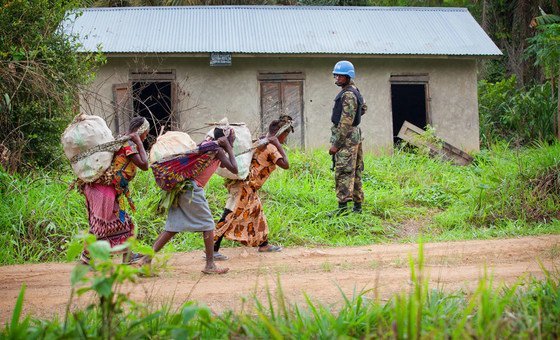
The UN World Food Programme (WFP) said that trucks packed with cereals, beans and cooking oil reached the city of Beni in North Kivu province from neighbouring Uganda, amid clashes between Rwanda-backed M23 rebel fighters and Congolese forces.

Aid for 140,000

WFP said that it intends to use the thousands of tonnes of relief supplies transported to warehouses in Beni to help around 140,000 people living in Lubero territory, south of the city of Butembo.

Violence escalated on 2 May across Lubero territory, uprooting some 30,000 people, according to the UN aid coordination office, OCHA.

The development comes amid ongoing peace talks in Qatar between the DRC Government and the M23 rebels. At previous talks in April, both sides pledged to work towards peace.

Amid rampant insecurity caused by proliferating armed groups, the Rwandan-backed M23 rebels have been at war for years with the Congolese army and allied forces in the mineral-rich region. In 2021, negotiations between the group and Kinshasa collapsed.

January offensive

Hostilities ramped up in January this year when M23 fighters captured Goma, the capital of North Kivu Province. A month later they seized Bukavu, the capital of South Kivu and threatened to take Kinshasa, on the other side of the huge country.

Since then, ongoing fighting has caused mass displacement, killed more than 7,000 people and fuelled fears of regional conflict.

A total of 21 million people need humanitarian assistance in DRC today. UN aid teams and partners remain on the ground to help and have condemned the looting of aid warehouses by armed groups which have destroyed food and medicine.

Source link