Sudan: You can run – but we will find you, militias warn terrified civilians

“People told me multiple times that when they were fleeing from Zamzam [displacement camp], armed people would threaten them while they were in flight, saying sure, ‘Flee, go to that place, run here, run there, we will follow you, we will find you’,” said Jocelyn Elizabeth Knight, a Protection Officer for the UN refugee agency, UNHCR.

Briefing journalists in Geneva, Ms. Knight described speaking to one traumatized child at a UNHCR shelter, whose experience mirrors that of countless other youngsters across the nation.

“A tiny boy told me, ‘You know, during the day things are okay here, but I’m afraid to go to sleep at night in case the place where we’re living is attacked again’.

UNHCR’s Jocelyn Knight speaks with UN News on the situation on the ground.

Forced into squalor

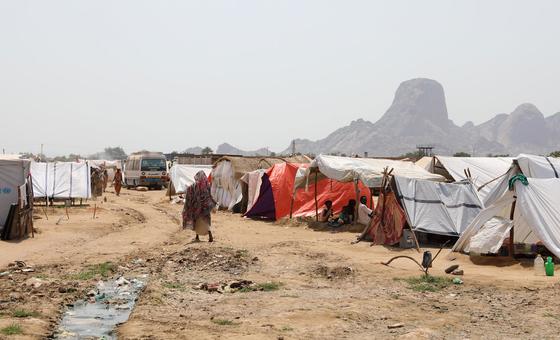
In Darfur in western Sudan, many people uprooted by violence gather in disused public buildings with few essentials to water and sanitation.  

Meanwhile, new displacement and attacks on civilians continue within Darfur and neighbouring Kordofan region, UNHCR warned, in communities “that are already devastated and have been subjected to unspeakable atrocities”.

The ongoing fighting has also severely constrained humanitarian access and disrupted aid delivery for over two years. With seasonal rains underway, many roads will be impassable for months, further complicating the delivery of aid, the UN agency noted.  

The persistent insecurity has also impeded farming, deepening deprivation in areas at risk of famine or already experiencing famine-like conditions.

Latest UNHCR data indicates that more than 873,000 Sudanese refugees have fled Darfur and crossed into Chad, which now hosts the largest number of registered Sudanese refugees since the start of the conflict. One in three people in eastern Chad is now a refugee.

Deadly disease

In addition to heavy fighting between the Sudanese Armed Forces (SAF) and their former allies-turned opponents – the Rapid Support Forces (RSF) paramilitaries – that began in April 2023, civilians now face a fast-spreading and deadly cholera outbreak.

Cholera has swept across Sudan with all the states reporting outbreaks,” said Dr. Ilham Nour, Senior Emergency Officer with the UN World Health Organization (WHO).

She noted that since last July, nearly 100,000 cases have been reported.

Lives on the line

The highly contagious disease spreads rapidly in unsanitary conditions. As of early August, 264 cases and 12 deaths have been identified at Dougui refugee settlement in eastern Chad hosting Sudanese arrivals from Darfur.

Surrounding villages have also reported suspected cases, while others have emerged in Treguine settlement, one of many UNHCR camps in eastern Chad that host Sudanese refugees.

Help to contain the disease is urgent, insisted UNHCR’s Dossou Patrice Ahouansou, Principal Situation Coordinator for Eastern Chad.

“We still have more than 230,000 refugees at the border in very difficult situation,” he said. “Without urgent action including enhancing access to medical treatment, to clean water, to sanitation, to hygiene and most important, relocation from the border, many more lives are on the line.

As part of the response and to prevent new cases, the UN agency has suspended the relocation of refugees from border points.

UNHCR is seeking $130 million in flexible funding to provide life-saving aid to an estimated 800,000 people in Darfur. In addition, the UN agency will respond to the cholera outbreak and relocate 239,000 Sudanese refugees from the Chad-Sudan border.

Unexploded weapons alert

Meanwhile, the UN Mine Action Service (UNMAS) confirmed fears that unexploded ordnance from ongoing battles are killing and maiming non-combatants who are unaware of the extent of the danger.

The sad reality of this ongoing conflict is it is not happening in rural areas, it’s mainly happening in urban areas, in the areas which are highly populated,” said Mohammad Sediq Rashid, Chief of UNMAS Sudan.

Last week, six minefields were confirmed in Khartoum and three of them contained anti-personnel landmines – the first time this has been reported – he told journalists in Geneva.

Contamination is on the roads, in homes, in schools and airstrips, medical facilities, humanitarian bases,” the UNMAS official continued.

This is a population [that] is largely unaware of the dangers that are waiting for them…this problem is only growing every day.

Source link

Eighty years on, UN Charter marked by reflection, resolve – and a run

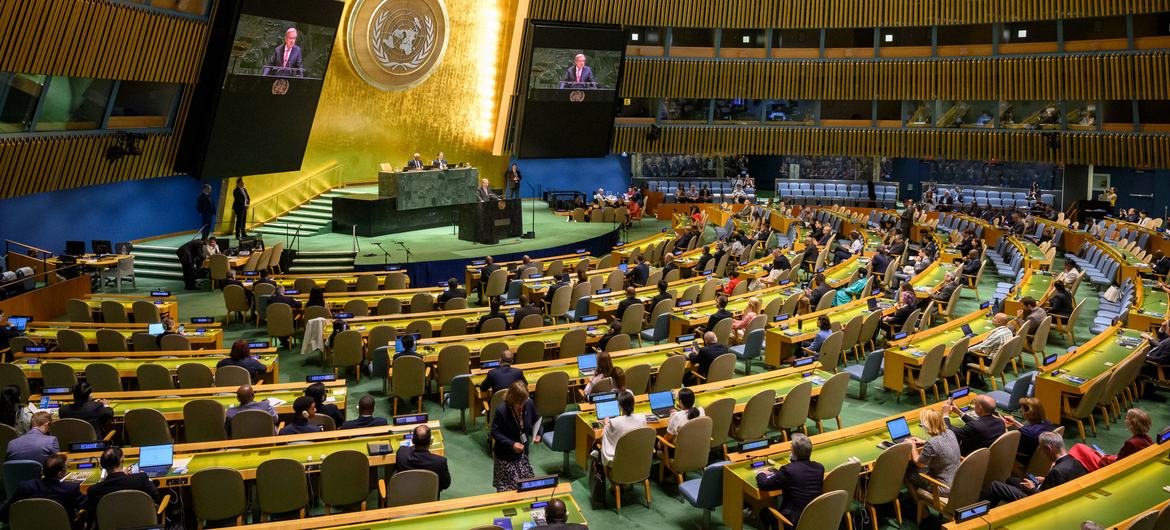
Under cooler skies after days of intense heat, the run ended where it all began, at the original UN Charter – the document that launched the Organization and reshaped the modern international order – now on display at UN Headquarters.

Inside the General Assembly Hall, delegates gathered to commemorate the 80th anniversary of its signing.

They reflected on the past eight decades in which the UN helped rebuild countries after the Second World War, supported former colonies’ independence, fostered peace, delivered aid, advanced human rights and development, and tackling emerging threats like climate change.

To save succeeding generations from the scourge of war

General Assembly President Philémon Yang described the moment as “symbolic” but somber, noting ongoing conflicts in Gaza, Ukraine and Sudan, and the growing challenges to multilateralism.

He urged nations to choose diplomacy over force and uphold the Charter’s vision of peace and human dignity: “We must seize the moment and choose dialogue and diplomacy instead of destructive wars.”

Secretary-General António Guterres echoed this call, warning that the Charter’s principles are increasingly under threat and must be defended as the bedrock of international relations.

The Charter of the United Nations is not optional. It is not an à la carte menu. It is the bedrock of international relations,” he said, stressing the need to recommit to its promises “for peace, for justice, for progress, for we the peoples.”

Carolyn Rodrigues-Birkett, Security Council President for June, emphasized the urgency of renewed collective action to address emerging global threats.

Let this 80th anniversary of the Charter be not just an occasion for reflection, but also a call to action,” she urged.

General Assembly commemorates 80th anniversary of the signing of UN Charter.

To unite our strength to maintain international peace and security

Eighty years ago, on 26 June 1945, delegates from 50 countries gathered in San Francisco to sign a document that would change the course of history.

Forged in the aftermath of the Second World War, by a generation scarred by the Great Depression and the Holocaust and having learnt the painful lessons of the League of Nations’ collapse, the Charter of the United Nations represented a new global pact.

Its preamble – “We the peoples of the United Nations” – echoed the determination to prevent future conflict, reaffirm faith in human rights, and promote peace and social progress.

That very document, preserved by the United States National Archives and Records Administration, has returned – for the first time in decades – to the heart of the institution it founded.

Now on public display at UN Headquarters through September, the original Charter stands as a powerful symbol: not just of a past promise, but of an enduring commitment to multilateralism, peace and shared purpose.

Video: UN Charter returns to UN Headquarters

To promote social progress and better standards of life

More voices – from the presidents of the Economic and Social Council (ECOSOC) and the International Court of Justice (ICJ) – also took the floor, reaffirming the enduring relevance of the Charter and the need to defend it.

Bob Rae, ECOSOC President, drew an arc through human history to underscore the UN’s relative youth – just eight decades old in a global context of millennia.

“We currently have the advantage of being able to lucidly look at what we have accomplished, while also recognizing our successes and failures,” he said, holding up a copy of the Charter once used by his father.

The United Nations is not a government and the Charter is not perfect,” he said, “but it was founded with great aspirations and hope.

ICJ President Judge Yuji Iwasawa reflected on the progress since 1945 and the challenges still facing the global community.

“In the 80 years since the drafters of the Charter set down their pens, the international community has achieved remarkable progress. However, it also faces many challenges,” he said. “The vision of the Charter’s drafters to uphold the rule of law for the maintenance of international peace and security, remains not only relevant but indispensable today.

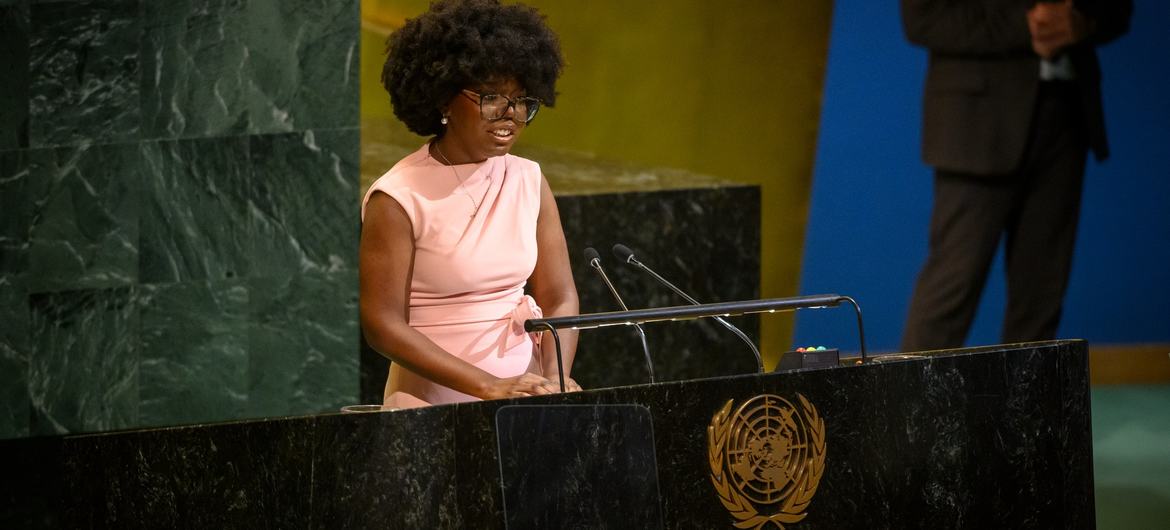
Jordan Sanchez, a young poet, speaks at the General Assembly during the commemoration of the 80th anniversary of the signing of the UN Charter.

To reaffirm faith in fundamental human rights

In a powerful reminder that the Charter speaks not only to the past but to future generations, Jordan Sanchez, a young poet took the stage.

Her spoken word piece, Let the Light Fall, evoked not declarations, but feelings of hope and vision for a better world.

“Let the light fall,” she began, “on fallen faces hidden in the shadow of scorn…where may the children run towards the light of your face, towards the warmth of your presence and the stillness of your peace.”

“There is no fear, only abundance, of safety, of security, of knowing there will always be enough light for me” she said, describing a dreamscape of Eden restored – not a paradise lost, but glimpsed in justice, fairness and shared humanity.

Let us be bold enough to look down and take it, humble enough to kneel down and bathe in it, loving enough to collect and share it, and childish enough to truly, truly believe in it.

The equal rights of men and women

As the world marks 80 years of the UN Charter, it’s worth remembering that its promise of equal rights for men and women was hard-won from the very start.

In 1945, just four women were among the 850 delegates who gathered in San Francisco to sign the document, and only 30 of the represented countries granted women the right to vote.

In a 2018 UN News podcast, researchers spotlighted these overlooked trailblazers – and asked why the women who helped shape the UN’s founding vision are so often left out of its story.

Listen to the podcast here.


Note: The subheads in this article are taken directly from the Preamble of the United Nations Charter, whose enduring language continues to guide the Organization’s mission.

Source link

Gaza: As last fuel supplies run out, aid teams warn of catastrophe

Speaking from Gaza City in the north of occupied territory, Olga Cherevko from the UN aid coordination office, OCHA, said that water pumps had stopped at one site for displaced people there on Wednesday “because there’s no fuel”.

“We are really – unless the situation changes – hours away from a catastrophic decline and a shutdown of more facilities if no fuel enters or more fuel isn’t retrieved immediately,” she told UN News.

In its latest update on the emergency, OCHA said that without the immediate entry of fuel or access to reserves, 80 per cent of Gaza’s critical care units essential for births and medical emergencies will shut down.

More killed seeking aid

The development comes as Gaza’s authorities reported that 15 people had been killed near an aid distribution hub in the centre of the Strip on Thursday.

On Tuesday, unverified videos of another incident circulating on social media showed dead bodies lying in the street near a relief facility in the southern city of Khan Younis, reportedly following artillery fire.

Finding food is a daily challenge for increasingly desperate Gazans who are “simply waiting for food and hoping to find something in order not to watch their children starve in front of their eyes”, Ms. Cherevko explained.

She added: “I spoke with a woman a couple of days ago where she told me that she went with a friend of hers who is nine months pregnant in hopes of finding some food.

Of course, they didn’t manage because they were too afraid to enter areas where there could be incidents like the ones that have been reported over the past few days.”

Search for shelter

Back in Gaza City, OCHA’s Ms. Cherenko said that conditions in shelters in Gaza are now “absolutely horrific” and increasingly crowded – “there are people coming from the north constantly,” the veteran aid worker added, while others are also moving back northwards, likely to be closer to the entry points for aid convoys.

The amount of aid entering Gaza today remains extremely limited and far below the 600 trucks a day that used to reach the enclave before the war began in October 2023. In its latest update, OCHA reported that “starvation and a growing likelihood of famine” are ever-present in the enclave. An estimated 55,000 pregnant women now face miscarriage, stillbirth and undernourished newborns as a result of the food shortages.

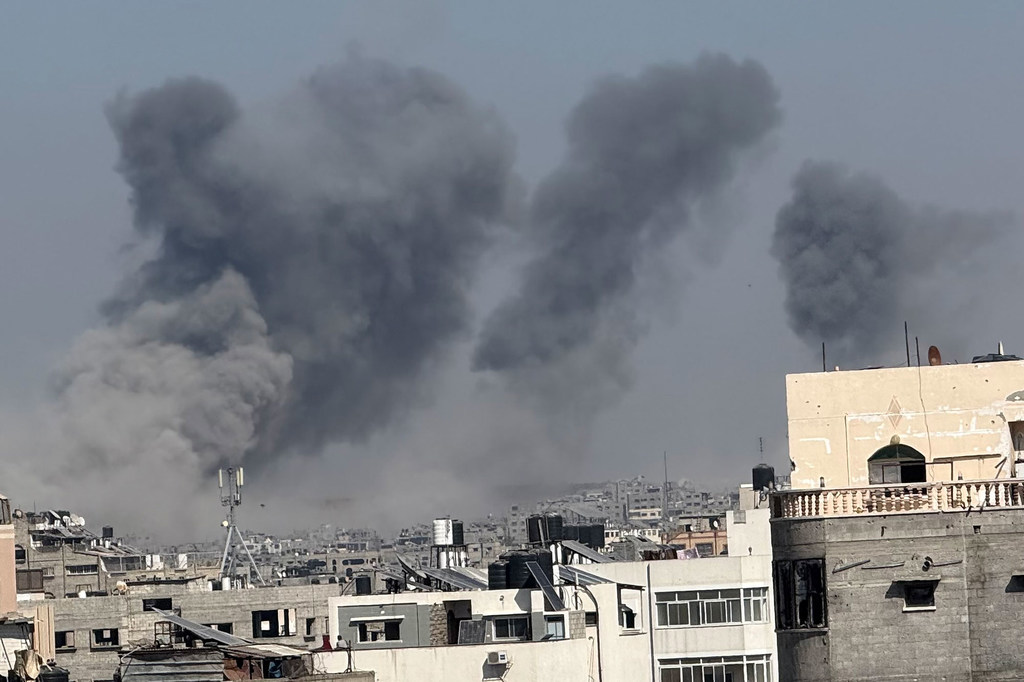
Smoke from explosions rises from the Shujaia neighborhood of Gaza City.

Starvation diet

“With the very limited volume of aid that is entering, everyone continues to face starvation and people are constantly risking their lives to try to find something,” Ms. Cherevko continued.

You eat or [you’re] left with the choice of starving to death.”

After more than 20 months of war, sparked by Hamas-led terror attacks in Israel, 82 per cent of Gaza’s territory is either an Israeli militarized zone or affected by evacuation orders.

Three months since hostilities re-escalated on 18 March, more than 680,000 people have been newly displaced. “With no safe place to go, many people have sought refuge in every available space, including overcrowded displacement sites, makeshift shelters, damaged buildings, streets and open areas,” OCHA said.

Source link