South Sudan: UN and rights experts warn against risk of mass violence in Jonglei

UNMISS expressed grave concern following reports that a senior military leader is urging troops to inflict discriminate violence against civilians, with more than 180,000 people fleeing their homes.  

Inflammatory rhetoric calling for violence against civilians, including the most vulnerable, is utterly abhorrent and must stop now,” Graham Maitland, Officer in Charge, said on Sunday. 

Ongoing hostilities 

South Sudan – the world’s youngest country – gained independence in July 2011 but soon slid into civil war with fighting between forces loyal to either President Salva Kiir or the main opposition leader, First Vice President Riek Machar. 

Despite a 2018 peace agreement and the establishment of a transitional unity government, clashes and tensions persist. 

UNMISS said communities in Jonglei and other locations are suffering immense harm from the escalating conflict, including direct military confrontations between forces. 

Put people first 

Although South Sudan’s leaders continue to underline their commitment to peace, hostilities and violations of the ceasefire continue unabated. 

The Mission urged leaders to put the interests of the people first by stopping the fighting and upholding their commitments under the peace agreement. 

“This includes returning to consensus-based decision-making, adhering to power-sharing arrangements, and agreeing on a path to peacefully end the transitional period through inclusive dialogue,” said Mr. Maitland. 

‘Risk of mass violence’ 

The UN Commission on Human Rights in South Sudan expressed grave alarm over the situation in Jonglei, saying the inflammatory rhetoric by senior military figures and reports of force mobilisation “significantly heighten the risk of mass violence against civilians and further erode the peace agreement.” 

Members noted that under international law, military and civilian leaders who incite crimes or who exercise effective control over forces may be held criminally responsible.   

Furthermore, those who fail to prevent or punish crimes they knew about – or should have known were being committed – are equally criminally liable.  

Dangerous words 

“Language that calls for the killing of those who are hors de combat (no longer participating in hostilities) and civilians, including the elderly – with assertions that ‘no one should be spared’ – is not only shocking, it is profoundly dangerous,” said Yasmin Sooka, Chair of the Commission. 

“In South Sudan’s past, such rhetoric has preceded mass atrocities. When such language is issued or tolerated by those in positions of command, it signals permission to commit violence and removes any expectation of restraint.”  

The current escalation is not an isolated incident, but part of a wider political breakdown, the Commission said. This is being driven by sustained violations of the peace deal and the erosion of command discipline in an already volatile and ethnically fractured environment. 

Appeal for de-escalation 

“When senior figures issue reckless or violent rhetoric, or fail to counter it decisively, they lower the threshold for abuses and send a signal that restraint no longer applies,” Commissioner Barney Afako said. 

“The mobilisation of forces in this context, coupled with ethnicised messaging, risks triggering a spiral of retaliatory violence that could rapidly escalate beyond control.” 

The Commission called for all parties to immediately cease inflammatory rhetoric and force mobilisation to de-escalate tensions. 

Furthermore, as Commander-in-Chief, President Kiir bears a heightened duty to exercise effective control over forces. Other senior officials such as the Chief of Defence Forces and the Minister of Defence also share in this duty. 

Avert a catastrophe 

The Commission also called on South Sudan’s regional and international partners to urgently re-engage to preserve the peace deal and press leaders to return to the political path. 

Failure to do so risks an all-out ethnic conflict and another preventable tragedy, they said. 

“This crisis is not inevitable,” Ms. Sooka insisted. “Leadership, restraint and accountability can still avert catastrophe. But deliberate incitement and the abuse of command authority will have consequences, and the window to act is closing fast.” 

About the Commission 

The Commission on Human Rights in South Sudan was first established by the UN Human Rights Council in March 2016, and its mandate has been renewed annually. 

The three commissioners who serve are not UN staff and do not receive a salary for their work. 

Source link

Asia: Lives upended by cyclones, ‘extreme’ rainfall on the rise, warn UN agencies

World Meteorological Organization (WMO) spokesperson Clare Nullis told reporters in Geneva that Indonesia, the Philippines, Sri Lanka, Thailand and Viet Nam are among the countries most affected by what she described as “a combination of monsoon-related rainfall and tropical cyclone activity”.

UN Secretary-General António Guterres expressed his deep sadness over the tragic loss of life across the region.

In a statement released by his Spokesperson he conveyed condolences to the families of the victims and expresses his solidarity with all those impacted.

UN ready to support all relief efforts

The United Nations is in close contact with authorities in all four countries and stands ready to support relief and response efforts. UN Country Teams remain at the disposal of Governments to provide necessary assistance.”

“Asia is very, very vulnerable to floods,” WMO’s Ms. Nullis said, explaining that flooding consistently tops the list of climate hazards in the region, according to WMO’s annual State Of The Climate reports.

However, she said that tropical cyclones such as Senyar, which last week brought “torrential rainfall and widespread flooding and landslides” across northern Sumatra in Indonesia, peninsular Malaysia and southern Thailand, are rare so close to the Equator.

“It’s not something that we see very often and it means the impacts are magnified because local communities… have got no experience in this,” she stressed.

Hundreds killed

The UN weather agency spokesperson quoted Tuesday’s figures from the Indonesian National Disaster Office indicating 604 fatalities, 464 people missing and 2,600 injured. In total, some 1.5 million people have been affected in Indonesia and more than 570,000 have been displaced.

Turning to Viet Nam, Ms. Nullis said that the south Asian nation has been “battered now for weeks” and is “bracing for yet more heavy rainfall”.

“Exceptional rains in the past few weeks have flooded historic sites, popular tourist resorts and caused massive damages,” she said.

1.79 metres of rain in a day

In late October, one meteorological station in central Viet Nam recorded a national 24-hour rainfall record of 1,739 millimetres, which Ms. Nullis described as “really enormous”.

“It’s the second-highest known total anywhere in the world for 24-hour rainfall,” she said.

This exceptionally high value is currently subject to a formal WMO extremes evaluation committee. According to the agency, a value above 1,700 mm would constitute a record for the Northern Hemisphere and Asia.

Ricardo Pires, spokesperson for the UN Children’s Fund (UNICEF), described what he called a “fast-moving humanitarian emergency” in Sri Lanka, after Cyclone Ditwah made landfall on the country’s east coast last week, affecting some 1.4 million people including 275,000 children.

“With communications down and roads blocked, the true number of children impacted is likely even higher,” Mr. Pires warned. “Homes have been swept away, entire communities isolated, and the essential services children rely on, such as water, healthcare and schooling have been severely disrupted.”

The UNICEF spokesperson stressed that displacement has forced families into unsafe and overcrowded shelters, while the flooding and damaged water systems are increasing disease outbreak risks.

“The needs far outweigh the available resources right now,” he insisted, in an appeal for additional humanitarian funding and support for the most vulnerable.

Commenting on the intensity of the devastating weather events WMO’s Ms. Nullis explained that rising temperatures “increase the potential risk of more extreme rainfall because a warmer atmosphere holds more moisture”.

“That’s the law of physics…we are seeing more extreme rainfall and we will continue to do so in the future,” she concluded.
‘A war of atrocities’ – UN human rights investigators warn Sudanese civilians are paying the highest price

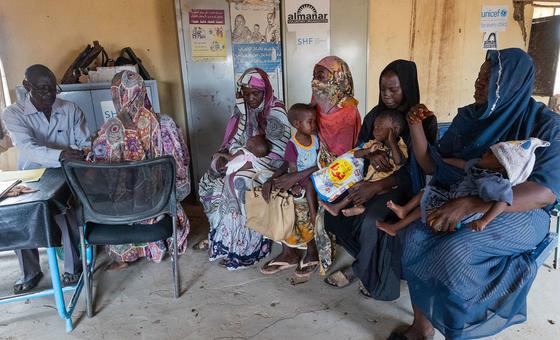
“They burned everything,” said one witness of a shelling attack in the Zamzam displacement camp in war-torn Darfur. “They claimed they only wanted to fight soldiers, but they punished the whole community.”

The war crimes and human rights violations perpetrated by all parties to the conflict between the military government and Rapid Support Forces (RSF) militia are documented in the latest report to the UN Human Rights Council, published by the UN’s investigative body probing violations in Sudan, known as the Independent International Fact-Finding Mission (FFM). 

The report, ‘A War of Atrocities” found that both the Sudanese army (SAF) and the RSF have directed large-scale attacks against civilians and vital infrastructure including medical centres, constituting serious violations of international law.

Systematic human rights abuses

Our findings leave no room for doubt: civilians are paying the highest price in this war,” said Mohamed Chande Othman, chair of the FFM.

According to the report, civilians are being targeted by both sides for their real or perceived affiliation with the opposing side. Executions, torture, and rape have become a daily horror for many communities in the war-torn country.

The RSF intentionally directed attacks against non-Arab communities in the besieged Darfuri city of El Fasher and the surrounding region, increasing the toll on what the UN refugee agency, UNHCR, calls the world’s fastest-growing displacement crisis.

Around 12.1 million people have fallen victim to forced displacement as of July. More civilians were killed or fled after the SAF targeted the state of Gezira.

Violence against women

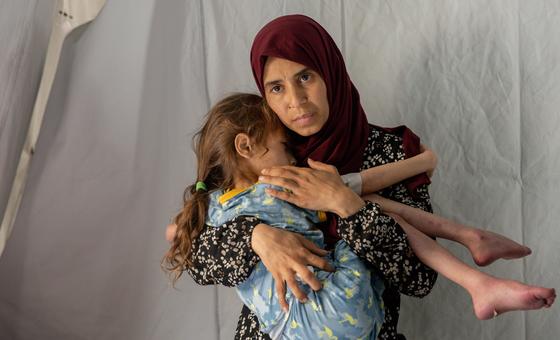
Many civilians interviewed for the report said that they had suffered sexual assault. One witness said that she, along with other women and underaged girls, was subjected to rape in an abandoned building.

Victims – especially women and children, who bear the greatest burden – deserve justice and reparations,” said Joy Ngozi Ezeilo, one of the independent investigators.

For women and girls in Sudan, receiving psychological or medical support is nearly impossible both because of the fear of retaliation from reporting violence and because of regular RSF and SAF attacks on hospitals.

Risk for humanitarian workers

Over 84 Sudanese humanitarian workers were killed, and more were arbitrarily detained between the start of war in April 2023 and April this year after intentional attacks and kidnappings.

The FFM is also conducting an ongoing investigation on a drone attack against a joint World Food Programme and UNICEF convoy in June. Five humanitarian workers died in the attack while several others were injured.

Meanwhile, humanitarian aid continues to be delayed or obstructed.

A ‘roadmap for justice’

Our report not only exposes atrocities, it also lays out a roadmap for justice,” said FFM expert Mona Rishmawi.

The warring parties, mediators, and civil society can all play a role in ending the conflict, as outlined in the report.

Civil society initiatives, such as the Sudanese youth-led initiative “emergency rooms”, are some of the ways in which local communities can begin to repair the fabric of basic human rights law across Sudan.

The report also calls on the international community to enforce an arms embargo, back the International Criminal Court (ICC), and stop cooperating with any combatants or civilians suspected of war crimes, among other recommendations.

The international community has the tools to act. Failure to do so would not only betray the Sudanese people – it would betray the very foundations of international law,” said Mr. Othman.

Source link

The descent into ‘a massive famine’ in Gaza has begun, relief agencies warn

Although the private aid platform run by the US and Israeli-backed Gaza Humanitarian Foundation continues to receive its own supplies, “we are on a descent into a massive famine”, insisted Jens Laerke, spokesperson for the UN aid coordination office, OCHA, on Friday.

Referring to the latest catastrophic assessment of food insecurity in Gaza from the UN-backed IPC group of experts, Mr. Laerke noted that 500,000 people are in the worst possible situation today, with another 160,000 expected to be added to that number in the coming weeks.

Everyone lacks food

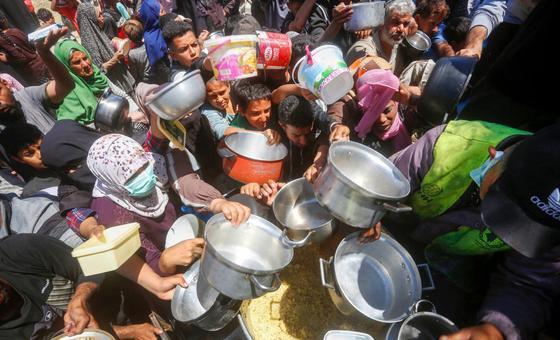
“They all need food,” he told journalists in Geneva. The entire Gaza Strip needs food. There would not have been declared famine had there been sufficient amounts of food.”

In a related development, the UN World Health Organization (WHO) highlighted the growing risk of communicable diseases in Gaza, with 94 suspected cases of Guillain-Barré Syndrome now reported.

The disease can cause paralysis and is treatable in hospital with intravenous immunoglobulin or plasma exchange, according to WHO. “But these two [treatments] are at zero stock, as are anti-inflammatories,” said WHO spokesperson Christian Lindmeier, referencing ongoing Israeli aid restrictions impacting humanitarian relief supplies entering Gaza. “These deliveries must be urgently expedited as much as surveillance and testing capabilities.”

Between 20 and 26 August, out of 89 attempts to coordinate relief missions with Israeli authorities across Gaza, 53 were facilitated, 23 were initially approved but then impeded on the ground, seven were denied and six had to be withdrawn by the organizers, OCHA said in an update.

More to come on this developing story…

Source link

UN agencies warn of rising heat stress risks for workers worldwide

The new joint report, Climate change and workplace heat stress, underscores the mounting risks as climate change fuels longer, more extreme, and more frequent heatwaves.

Stressing that workers in agriculture, construction, and fisheries are already suffering the impacts of dangerous temperatures, the report points out that vulnerable groups in developing countries – including children, older adults, and low-income communities – face increasing dangers.

Heat stress is already harming the health and livelihoods of billions of workers, especially in the most vulnerable communities,” said Dr. Jeremy Farrar, WHO Assistant Director-General for Health Promotion, Disease Prevention and Care.

This new guidance offers practical, evidence-based solutions to protect lives, reduce inequality, and build more resilient workforces in a warming world”, he added.

Drawing on five decades of research, the report highlights how rising temperatures are hitting both health and productivity.

WMO confirmed that 2024 was the hottest year on record, at 1.55 degrees Celsius above pre-industrial temperatures, and with daytime highs above 40 °C becoming commonplace – and in some areas, even exceeding 50 °C. 

Occupational heat stress has become a global societal challenge, which is no longer confined to countries located close to the equator – as highlighted by the recent heatwave in Europe,” said Ko Barrett, WMO Deputy Secretary-General. “Protection of workers from extreme heat is not just a health imperative but an economic necessity.”

Alarming findings

The report details how extreme heat is reshaping the world of work. It finds that worker productivity drops by 2 to 3 per cent for every degree above 20°C.

The health consequences are wide-ranging, including heatstroke, dehydration, kidney dysfunction, and neurological disorders. Overall, nearly half of the world’s population is now experiencing negative effects from high temperatures.

Path forward

Calling for urgent occupational heat action plans tailored to industries and regions, WHO and WMO guidance includes several recommendations:

  • Develop targeted occupational heat-health policies based on local weather and workforce vulnerabilities.
  • Prioritize protections for middle-aged and older workers, those with chronic health conditions, and individuals with lower physical fitness.
  • Train health professionals, employers, and workers to recognize and treat heat stress, which is often misdiagnosed.
  • Involve workers, unions, and local authorities in shaping heat-health strategies.
  • Promote affordable, sustainable, and scalable solutions, alongside innovation and new technologies.
  • Strengthen research and monitoring to ensure measures remain effective.

The guidance builds on International Labour Organization (ILO) findings that more than 2.4 billion workers are exposed to excessive heat globally, resulting in over 22.85 million occupational injuries each year.

‘Critical milestone’

“This report represents a critical milestone in our collective response to the growing threat of extreme heat in the world of work,” said Joaquim Pintado Nunes, ILO Chief of Occupational Safety and Health and the Working Environment.

“Aligned with the ILO’s mandate to promote safe and healthy working environments as a fundamental right, it offers robust, evidence-based guidance to help governments, employers and workers confront the escalating risks of climate change.”

A call to action

Both UN agencies stress that addressing heat stress is central to safeguarding lives, livelihoods, and economies. The guidance supports the UN Sustainable Development Goals (SDGs), urging decisive action to protect vulnerable workers, reduce poverty, and promote sustainable growth.

Urgent and coordinated action is no longer optional – it is essential, the report says.

Sudan: You can run – but we will find you, militias warn terrified civilians

“People told me multiple times that when they were fleeing from Zamzam [displacement camp], armed people would threaten them while they were in flight, saying sure, ‘Flee, go to that place, run here, run there, we will follow you, we will find you’,” said Jocelyn Elizabeth Knight, a Protection Officer for the UN refugee agency, UNHCR.

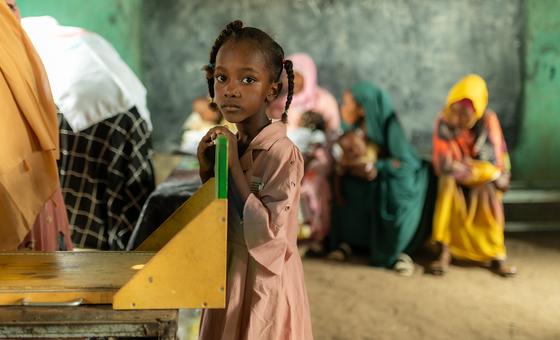
Briefing journalists in Geneva, Ms. Knight described speaking to one traumatized child at a UNHCR shelter, whose experience mirrors that of countless other youngsters across the nation.

“A tiny boy told me, ‘You know, during the day things are okay here, but I’m afraid to go to sleep at night in case the place where we’re living is attacked again’.

UNHCR’s Jocelyn Knight speaks with UN News on the situation on the ground.

Forced into squalor

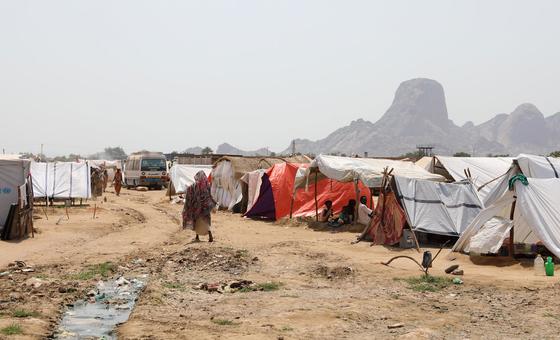
In Darfur in western Sudan, many people uprooted by violence gather in disused public buildings with few essentials to water and sanitation.  

Meanwhile, new displacement and attacks on civilians continue within Darfur and neighbouring Kordofan region, UNHCR warned, in communities “that are already devastated and have been subjected to unspeakable atrocities”.

The ongoing fighting has also severely constrained humanitarian access and disrupted aid delivery for over two years. With seasonal rains underway, many roads will be impassable for months, further complicating the delivery of aid, the UN agency noted.  

The persistent insecurity has also impeded farming, deepening deprivation in areas at risk of famine or already experiencing famine-like conditions.

Latest UNHCR data indicates that more than 873,000 Sudanese refugees have fled Darfur and crossed into Chad, which now hosts the largest number of registered Sudanese refugees since the start of the conflict. One in three people in eastern Chad is now a refugee.

Deadly disease

In addition to heavy fighting between the Sudanese Armed Forces (SAF) and their former allies-turned opponents – the Rapid Support Forces (RSF) paramilitaries – that began in April 2023, civilians now face a fast-spreading and deadly cholera outbreak.

Cholera has swept across Sudan with all the states reporting outbreaks,” said Dr. Ilham Nour, Senior Emergency Officer with the UN World Health Organization (WHO).

She noted that since last July, nearly 100,000 cases have been reported.

Lives on the line

The highly contagious disease spreads rapidly in unsanitary conditions. As of early August, 264 cases and 12 deaths have been identified at Dougui refugee settlement in eastern Chad hosting Sudanese arrivals from Darfur.

Surrounding villages have also reported suspected cases, while others have emerged in Treguine settlement, one of many UNHCR camps in eastern Chad that host Sudanese refugees.

Help to contain the disease is urgent, insisted UNHCR’s Dossou Patrice Ahouansou, Principal Situation Coordinator for Eastern Chad.

“We still have more than 230,000 refugees at the border in very difficult situation,” he said. “Without urgent action including enhancing access to medical treatment, to clean water, to sanitation, to hygiene and most important, relocation from the border, many more lives are on the line.

As part of the response and to prevent new cases, the UN agency has suspended the relocation of refugees from border points.

UNHCR is seeking $130 million in flexible funding to provide life-saving aid to an estimated 800,000 people in Darfur. In addition, the UN agency will respond to the cholera outbreak and relocate 239,000 Sudanese refugees from the Chad-Sudan border.

Unexploded weapons alert

Meanwhile, the UN Mine Action Service (UNMAS) confirmed fears that unexploded ordnance from ongoing battles are killing and maiming non-combatants who are unaware of the extent of the danger.

The sad reality of this ongoing conflict is it is not happening in rural areas, it’s mainly happening in urban areas, in the areas which are highly populated,” said Mohammad Sediq Rashid, Chief of UNMAS Sudan.

Last week, six minefields were confirmed in Khartoum and three of them contained anti-personnel landmines – the first time this has been reported – he told journalists in Geneva.

Contamination is on the roads, in homes, in schools and airstrips, medical facilities, humanitarian bases,” the UNMAS official continued.

This is a population [that] is largely unaware of the dangers that are waiting for them…this problem is only growing every day.

Source link

UN officials warn of starvation amid ‘gender emergency’ in war-torn Sudan

Particularly hard hit is El Fasher, where hunger is growing, with the Office for the Coordination of Humanitarian Affairs (OCHA) warning of a deteriorating situation that is putting even more civilians’ lives at risk.

OCHA’s Director of Operations and Advocacy, Edem Wosornu, who is currently in the country, said the suffering is immense, with people trapped, displaced or returning to face communities in ruins. She called for unimpeded access and urgent support to reach those on the frontlines of hardship.

Briefing reporters at UN Headquarters in New York, UN Deputy Spokesperson Farhan Haq said “with increasingly alarming food shortages and spiraling prices, people in El Fasher are reported to be resorting to eating animal feed in what is an increasingly catastrophic situation.”                       

Thousands face starvation, cholera threat

El Fasher has the highest cost of basic goods nationwide at nearly $1,000 per household per month, which is far beyond the reach of most families. This includes more than $700 for food alone – more than eight times the cost of basic food items in other parts of the country, Mr. Haq said.

These steep costs, coupled with the siege and lack of aid delivery by road for over a year, have left thousands facing starvation,” he added, noting that engagement around the calls from the Secretary-General and the UN Emergency Relief Coordinator for a pause in the area is “more important than ever.

In an effort to curb public health risks in North Darfur, UN humanitarian partners and local authorities launched a sanitation campaign on 5 August targeting 11,000 people in the localities of El Fasher and Dar As Salam with a goal of preventing disease outbreaks in overcrowded displacement sites during the ongoing rainy season.

They are also scaling up efforts to respond to a cholera outbreak in the locality of Tawila, which has absorbed 330,000 displaced people fleeing conflict in Zamzam and El Fasher since April.

In Blue Nile State, cholera cases have surged to nearly 2,800 since late June, with over 40 new infections recorded yesterday alone, with 14 deaths have been reported, the UN Deputy Spokesperson said.

‘Gender emergency’

Warnings also came from gender equality agency, UN Women.

“This crisis is a gender emergency,” said Salvator Nkurunziza, the agency’s representative in Sudan, told UN News.

Displaced women and girls can be subject to the risks of exploitation and abuse, especially during the delivery of aid, where protection mechanisms are weak or absent in some locations,” he said.

According to the agency’s Unit for Combating Violence Against Women in Sudan, as of March 2025, there have been 1,138 cases of rape recorded since April 2023, including 193 children, most of whom were in conflict-affected areas, he said.

“The actual number may be higher as fear of stigma and other social and security reasons prevent accurate reporting of gender-based violence crimes,” he warned.

Women, girls ‘most affected’ by food insecurity

“Certainly, these crimes including rape and harassment can prevent women and girls from access food assistance,” he said.

Unreported gender-based violence crimes in besieged areas can be higher than shown in recent statistics, he continued, emphasising that women and girls are the most affected by food insecurity in those areas, and the situations there indicate a looming hunger crisis.

“Women are central to the survival of their households, especially in displacement settings, but their ability to access food assistance is deeply compromised,” Mr. Nkurunziza said. “Female-headed households, already three times more likely to be food insecure, are now the hungriest group in the country.”

Source link

Gaza Strip: Humanitarians warn of worsening famine conditions, attacks on civilians

Of the 154 malnutrition-related deaths since October 2023 (including 89 children) reported by Gazan health authorities, the World Health Organization (WHO) said 63 occurred in July alone.

These deaths follow a steep drop in food consumption: 81 per cent of households reported poor food consumption in July (up from 33 per cent in April), and 24 per cent experienced severe hunger (up from 4 per cent), crossing the famine threshold, according to the humanitarian update issued by the UN Office for the Coordination of Humanitarian Affairs (OCHA) on Wednesday.

Acute malnutrition rates also surpassed famine thresholds in Khan Younis, Deir al Balah and Gaza City.

Given these recent figures, IPC food security experts warned that the worst-case famine scenario is unfolding. However, they added that while the third famine threshold of starvation-related deaths is rising, collecting data remains a challenge. 

UN agencies caution that time is running out for a full-scale humanitarian response. 22 per cent of the analyzed population is facing “catastrophic” level of food insecurity, and a further 54 per cent is at “emergency” level. 

At the same time, less than 15 per cent of essential nutrition services remain functional.

Attacks on civilians

Of the over 60,000 Palestinians reported killed since October 2023, nearly 9,000 died after hostilities reignited in March, and 640 between 23 and 30 July.

Civilian casualties while seeking food are also rising, with 1,239 killed and over 8,152 injured since 27 May.

OCHA further noted that displacement figures since 18 March have surpassed 767,800, though no new evacuation orders were issued by Israeli authorities since 20 July. The 20 July order affecting a humanitarian hub in Deir al Balah has since been rescinded.

Amid ongoing displacement, overcrowding in shelters, lack of privacy and worsening hunger has elevated the risk of gender-based violence (GBV) for women and girls.  

The conditions are especially dire in southern Gaza, where there are no longer any safe shelters for GBV survivors.

Humanitarian measures

Between 23 and 29 July, only 47 per cent of 92 coordinated aid movements were fully facilitated by Israeli authorities. About 16 per cent were denied, 26 per cent impeded after initial approval and 11 per cent withdrawn by organizers.

The Israeli military announced a daily 10-hour pause in military activity, beginning 27 July, in Al Mawasi, Deir al Balah and Gaza City “to increase the scale of humanitarian aid entering Gaza.”

They also announced measures including airdrops of flour, sugar and canned food; the reconnection of the power line from Israel to the southern Gaza desalination plant; the removal of customs barriers on food, medicine, and fuel from Egypt; and the designation of secure routes for UN humanitarian convoys.

However, humanitarian partners warned that airdrops could endanger civilians, lead to unequal distribution and fall short of needs.

Working with limited funding

In addition, lack of sufficient funding is also hampering response efforts.

As of 30 July, only about 21 per cent of the $4 billion requested for the 2025 urgent humanitarian appeal for the region has been secured, leaving critical gaps. 

Source link

Gaza war: UN officials warn of unspeakable conditions as children bear the brunt

Tom Fletcher, the UN Emergency Relief Coordinator, said there was no “vocabulary” left to adequately describe conditions on the ground.

Food is running out. Those seeking it risk being shot. People are dying trying to feed their families. Field hospitals receive dead bodies, and medical workers hear stories firsthand from the injured – day after day after day,” he said.

Starvation rates among children reached their highest levels in June, with more than 5,800 girls and boys diagnosed as acutely malnourished.

“Last week, amid this hunger crisis, children and women were killed in a strike while waiting for the food supplements to keep them alive.”

UN Emergency Relief Coordinator Tom Fletcher briefs the Security Council

A classroom full of children, lost every day

UNICEF’s Executive Director Catherine Russell told ambassadors that an average of 28 children are killed in Gaza every day – “the equivalent of an entire classroom.”

Over the past 21 months, more than 17,000 children have been killed and 33,000 injured across Gaza.

Many of those children, she said, were struck “as they line up for lifesaving humanitarian aid – further proof that there is no safe place for civilians anywhere in Gaza.”

Children are not political actors. They do not start conflicts, and they are powerless to stop them. But they suffer greatly, and they wonder why the world has failed them,” she added.

“And make no mistake, we have failed them.”

Critical infrastructure collapse

Gaza’s health system “is shattered,” Mr. Fletcher reported – only 17 of 36 hospitals and 63 of 170 primary health centres are even partially functioning; shortages mean up to five babies share one incubator.

Seventy per cent of essential medicines are out of stock, half of all medical equipment is damaged, pregnant women are giving birth without care, women and girls manage their periods without basic supplies.

Meanwhile, water production capacity has plummeted leaving the entire enclave (95 per cent) facing water insecurity.

With clean water increasingly difficult to access, children have little choice but to drink contaminated water,” Ms. Russell said, noting that this is increasing the risk of disease outbreaks.

UNICEF Executive Director Catherine Russell briefs the Security Council

Aid impeded, fuel at trickle levels

Mr. Fletcher further described the scale of challenges to moving something as simple as a bag of flour into Gaza.

He noted multiple layers of approvals that Israel requires, scanning, re‑loading, multiple handoffs, damaged roads, delays at holding points, insecurity and desperate civilians grabbing supplies off trucks.

Last week – after almost 130 days – some fuel entered Gaza, as Israeli authorities agreed to allow two trucks in per day, five days a week. However, petrol – fuel for ambulances and other critical services – has not been permitted.

Between 19 May and 14 July, just 1,633 aid trucks – about 62 per cent of loads submitted for clearance – entered Gaza, far below the average of 630 daily truckloads moved during the previous ceasefire, Mr. Fletcher said.

Appeals to Israel, Hamas – and the Council

Both officials pressed for immediate, safe, sustained, demilitarised humanitarian access through all available crossings, consistent fuel flows, protection of civilians at distribution points, and restoration of the UN‑led aid pipeline that briefly functioned during earlier pauses in fighting.

They also reiterated the UN’s call for the immediate and unconditional release of all hostages held in Gaza and called on all parties – including Hamas and other armed groups – to respect international humanitarian law.

Mr. Fletcher asked the Security Council to assess whether Israel, as the occupying power, is meeting its obligations to ensure food and medical supplies reach civilians.

“We hold all parties to the standards of international law in this conflict. We don’t have to choose – and in fact, we must not choose – between demanding the end to the starvation of civilians in Gaza and demanding the unconditional release of all the hostages,” he said.

“We must reject antisemitism – we must fight it with every fibre of our DNA. But we must also hold Israel to the same principles and laws as all other States.”

No fuel, no aid, no escape: UN agencies warn of looming collapse in Gaza

Fuel is the backbone of survival in Gaza,” said the statement. “Without fuel, these lifelines will vanish for 2.1 million people.”

UN humanitarian workers stressed that fuel powers everything from hospitals and water systems to bakeries and ambulances.

Without a steady supply, “maternity, neonatal and intensive care units are failing, and ambulances can no longer move.” The fuel shortage, they said, has left Gaza’s population – already facing severe food insecurity and the constant threat of violence – on the edge of catastrophe.

They warned that “without adequate fuel, UN agencies responding to this crisis will likely be forced to stop their operations entirely,” meaning “no health services, no clean water, and no capacity to deliver aid.”

Inadequate fuel injection

The agencies noted that for the first time in 130 days, a small quantity of fuel was allowed into Gaza this week. While welcome, the amount – just 75,000 litres over two days – is far from enough to meet the daily needs of the population and vital civilian aid operations.

Speaking at UN Headquarters in New York late Friday, UN Spokesperson Stéphane Dujarric described the overall situation as “dire and worsening by the day.”

Every day without a ceasefire brings more preventable deaths – children dying in pain, and hungry people shot while trying to reach the trickle of aid that is allowed in,” he said.

Life-threatening

Mr. Dujarric also expressed deep concern over continued Israeli restrictions on aid access. “Yesterday, our teams could provide hospitals with some of the fuel that came in – but only in the south. That’s because Israeli authorities denied our attempt to bring fuel to the north,” he said. “Such denials are life-threatening.”

He added that the fuel shortage also affects water treatment, ambulances and waste management. “All of these services are at risk of collapsing,” he said.

Out of 15 humanitarian missions that required coordination with Israeli authorities on Thursday, only six were fully facilitated. Five were denied outright, while four faced obstacles that delayed or prevented delivery.

One mission, to rescue injured people trapped under rubble in Gaza City, was only approved two days after the initial request – too late to save lives. “By the time the mission was finally allowed through yesterday, no one was found alive,” Dujarric said.

On top of this, essential items like tents and shelter materials have been blocked from entering Gaza for over four months, leaving thousands exposed to the elements.

Close call

Aid workers are also at risk. “Five strikes landed just a few hundred metres from where aid workers were operating this week, including UN staff,” Mr. Dujarric said. No injuries were reported, but several Red Crescent workers were shot while attempting to assist an injured colleague.

UN agencies are calling for the immediate and consistent delivery of fuel at scale, and for full, safe access to all parts of Gaza. “The urgency of this moment cannot be overstated,” they said. “Without fuel, Gaza faces a complete collapse of humanitarian efforts.”

Gaza: Families deprived of the means for survival, humanitarians warn

“As humanitarian assistance and basic services dwindle, people in Gaza have been increasingly deprived of the means for their survival,” UN Spokesperson Stéphane Dujarric told reporters at the UN Headquarters in New York.

It has been 17 weeks since any fuel has entered Gaza, according to Mr. Dujarric – a critical shortage that forced the Al-Shifa Medical Complex to suspend its kidney dialysis services and restrict its intensive care unit services to just a few hours per day.

Other hospitals, including Al-Aqsa in Deir al-Balah, have also come under attack, with the World Health Organization (WHO) reporting a strike on a tent sheltering displaced civilians in its courtyard.

Over the past 48 hours, five school buildings sheltering displaced families  were also hit, reportedly causing deaths and injuries, while a new evacuation order issued on Sudan displaced 1,500 families from northern Gaza.  

Living in terror

Olga Cherevko, an official at the UN Office for the Coordination of Humanitarian Affairs (OCHA), described conditions for families in Gaza as “living in terror.”

“The only thing that is on their minds right now is a ceasefire and peace at last,” she said.  

Ms. Cherevko called for Israel to open all border crossings and allow a steady and sufficient flow humanitarian aid.

“The thing that needs to happen for us…to address the emergency on the ground, is to reopen additional crossings, to allow supplies to enter through multiple corridors and remove the constraints that are in place for us to deliver supplies to people in need,” she said.  

She warned that unless conditions change quickly, essential services will continue to shut down — and the broader humanitarian response could stall entirely.

“If the situation doesn’t change very, very urgently, more such services will continue shutting down,” Ms. Cherevko said.

“And if the situation doesn’t change going forward, the entire humanitarian operation could grind to a halt.” 

Source link

Afghanistan: Surging returns from Iran overwhelm fragile support systems, UN agencies warn

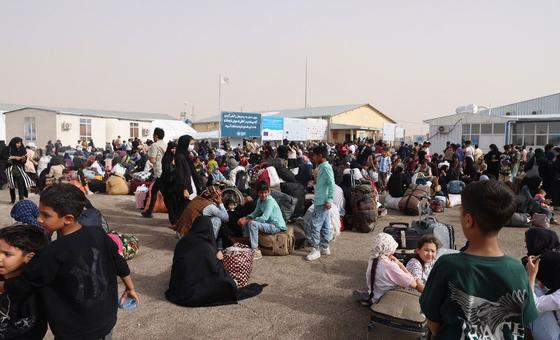
Ninety-nine per cent of the returnees were undocumented, and 70 per cent were forcibly returned, with a steep rise in families being deported – a shift from earlier months, when most returnees were single young men, according to the UN agency.

The rise follows a March decision by the Iranian Government requiring all undocumented Afghans to leave the country.

Conditions deteriorated further after the recent 12-day conflict between Iran and Israel, which caused the daily refugees crossings to skyrocket from about 5,000 to nearly 30,000, according to Arafat Jamal, the UN refugee agency (UNHCR) representative in Afghanistan.

“They are coming in buses and sometimes five buses arrive at one time with families and others and the people are let out of the bus and they are simply bewildered, disoriented, and tired and hungry as well,” he told UN News, describing the scene at a border crossing.

“This has been exacerbated by the war, but I must say it has been part of an underlying trend that we have seen of returns from Iran, some of which are voluntary, but a large portion were also deportations.” 

Strain on aid efforts

Afghanistan, already grappling with economic collapse and chronic humanitarian crisis, is unprepared to absorb such large-scale returns.

The 2025 Humanitarian Needs and Response Plan calls for $2.42 billion in funding, but only 22.2 per cent has been secured to date.

The scale of returns is deeply alarming and demands a stronger and more immediate international response,” said IOM Director General Amy Pope, “Afghanistan cannot manage this alone.”

Meanwhile, UNHCR alongside partners is working to address the urgent needs of those arriving – food, water, shelter, protection. However its programmes are also under severe strain due to limited funding. 

The agency had to drastically reduce its cash assistance to returnee families at the border from $2,000 per family to just $156.

We are not able to help enough women, and we are also hurting local communities,” added Mr. Jamal.

Some relief, but not enough

In response to growing crisis, the UN Central Emergency Response Fund (CERF) has allocated $1.7 million to the World Food Programme (WFP) to support drought-affected families in Faryab Province.

The funds will provide cash assistance to some 8,000 families in the region, where over a third of the rural population is already facing crisis or emergency levels of acute food insecurity.

“Acting ahead of predicted hazards to prevent or reduce humanitarian impacts on communities is more important than ever,” said Isabelle Moussard Carlsen, Head of OCHA Afghanistan, adding “when humanitarian action globally and in Afghanistan is underfunded…we must make the most of every dollar.” 

Source link

Gaza: As last fuel supplies run out, aid teams warn of catastrophe

Speaking from Gaza City in the north of occupied territory, Olga Cherevko from the UN aid coordination office, OCHA, said that water pumps had stopped at one site for displaced people there on Wednesday “because there’s no fuel”.

“We are really – unless the situation changes – hours away from a catastrophic decline and a shutdown of more facilities if no fuel enters or more fuel isn’t retrieved immediately,” she told UN News.

In its latest update on the emergency, OCHA said that without the immediate entry of fuel or access to reserves, 80 per cent of Gaza’s critical care units essential for births and medical emergencies will shut down.

More killed seeking aid

The development comes as Gaza’s authorities reported that 15 people had been killed near an aid distribution hub in the centre of the Strip on Thursday.

On Tuesday, unverified videos of another incident circulating on social media showed dead bodies lying in the street near a relief facility in the southern city of Khan Younis, reportedly following artillery fire.

Finding food is a daily challenge for increasingly desperate Gazans who are “simply waiting for food and hoping to find something in order not to watch their children starve in front of their eyes”, Ms. Cherevko explained.

She added: “I spoke with a woman a couple of days ago where she told me that she went with a friend of hers who is nine months pregnant in hopes of finding some food.

Of course, they didn’t manage because they were too afraid to enter areas where there could be incidents like the ones that have been reported over the past few days.”

Search for shelter

Back in Gaza City, OCHA’s Ms. Cherenko said that conditions in shelters in Gaza are now “absolutely horrific” and increasingly crowded – “there are people coming from the north constantly,” the veteran aid worker added, while others are also moving back northwards, likely to be closer to the entry points for aid convoys.

The amount of aid entering Gaza today remains extremely limited and far below the 600 trucks a day that used to reach the enclave before the war began in October 2023. In its latest update, OCHA reported that “starvation and a growing likelihood of famine” are ever-present in the enclave. An estimated 55,000 pregnant women now face miscarriage, stillbirth and undernourished newborns as a result of the food shortages.

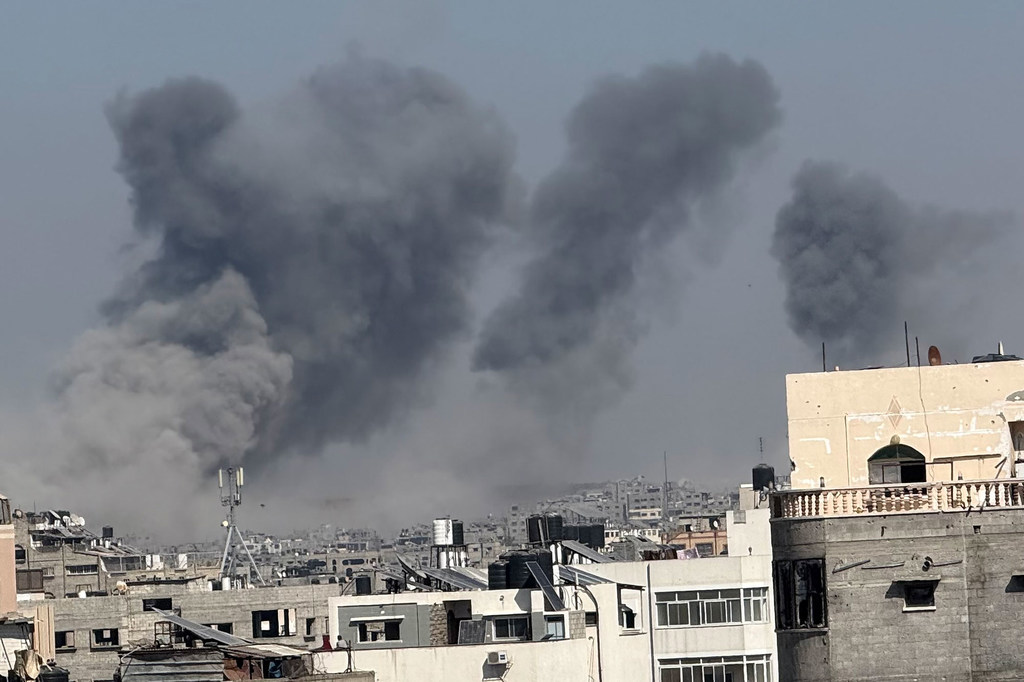
Smoke from explosions rises from the Shujaia neighborhood of Gaza City.

Starvation diet

“With the very limited volume of aid that is entering, everyone continues to face starvation and people are constantly risking their lives to try to find something,” Ms. Cherevko continued.

You eat or [you’re] left with the choice of starving to death.”

After more than 20 months of war, sparked by Hamas-led terror attacks in Israel, 82 per cent of Gaza’s territory is either an Israeli militarized zone or affected by evacuation orders.

Three months since hostilities re-escalated on 18 March, more than 680,000 people have been newly displaced. “With no safe place to go, many people have sought refuge in every available space, including overcrowded displacement sites, makeshift shelters, damaged buildings, streets and open areas,” OCHA said.

Source link

Scam centres are a ‘human rights crisis’, independent experts warn

It’s believed that hundreds of thousands of trafficked individuals of various nationalities are forced to carry out fraud in the centres located across Cambodia, Myanmar, Laos, the Philippines and Malaysia.

The situation has reached the level of a humanitarian and human rights crisis,” said right experts Tomoya Obokata, Siobhán Mullally and Vitit Muntarbhorn. They stressed that thousands of released victims remain stranded in inhumane conditions at the Myanmar-Thailand border.

The underground operations are often linked to criminal networks that recruit victims globally, putting them to work in facilities principally in Cambodia, Myanmar, Laos, the Philippines and Malaysia.  

Many victims are kidnapped and sold to other fraudulent operations, said the rights experts who are known as Special Rapporteurs, reporting to the Human Rights Council. They are not UN staff and work in an independent capacity.

They noted that workers are not freed unless a ransom is paid by their families and that if they try to escape, they are often tortured or killed with total impunity and with corrupt government officials complicit.  

“Once trafficked, victims are deprived of their liberty and subjected to torture, ill treatment, severe violence and abuse including beatings, electrocution, solitary confinement and sexual violence,” the Special Rapporteurs said.

‘Address the drivers of cyber-criminality’

The rights experts added that access to food and clean water is limited and that living conditions are often cramped and unsanitary.

The experts urged Southeast Asian countries, as well as the countries of origin of the trafficked workers, to provide help more quickly and increase efforts to protect victims and prevent the scams from taking place.  

This should include efforts that “go beyond surface-level public awareness campaigns” and which address the drivers of forced cyber-criminality – poverty, lack of access to reasonable work conditions, education and healthcare.

Other recommendations to governments included addressing the insufficient regular migration options that push people into the arms of people traffickers.

Tomoya Obokata, Special Rapporteur on contemporary forms of slavery, including its causes and consequences; Siobhán Mullally, Special Rapporteur on trafficking in persons, and Vitit Muntarbhorn, Special Rapporteur on the situation of human rights in Cambodia, are neither staff members of the UN nor paid by the global organization. 

Proliferation of scam farms post-pandemic

The dark inner workings of scam farms were revealed in a UN News investigation last year which found that they had proliferated following the COVID-19 pandemic.

“Southeast Asia is the ground zero for the global scamming industry,” said Benedikt Hofmann, from the UN agency to combat drugs and crime, UNODC

“Transnational organised criminal groups that are based in this region are masterminding these operations and profiting most from them,” said Mr. Hofmann, Deputy Regional Representative for Southeast Asia and the Pacific, at a Philippines scam farm that was shut down by the authorities in March 2024. 

When UN News gained access to the compound, it was found to have housed 700 workers who were “basically fenced off from the outside world,” Mr. Hofmann explained.

“All their daily necessities are met. There are restaurants, dormitories, barbershops and even a karaoke bar. So, people don’t actually have to leave and can stay here for months.” 

Escaping was a near-impossible task and came at a hefty price.

“Some have been tortured and been subjected to unimaginable violence on a daily basis as punishment for wanting to leave or for failing to reach their daily quota in terms of money scammed from victims,” the UNODC official insisted.

“There are multiple types of victims, the people who are being scammed around the world, but also the people who are trafficked here held against their will and who are exposed to violence.” 

Source link