
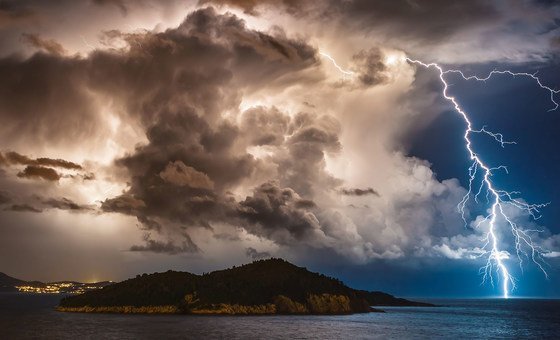
Asia: Lives upended by cyclones, ‘extreme’ rainfall on the rise, warn UN agencies

World Meteorological Organization (WMO) spokesperson Clare Nullis told reporters in Geneva that Indonesia, the Philippines, Sri Lanka, Thailand and Viet Nam are among the countries most affected by what she described as “a combination of monsoon-related rainfall and tropical cyclone activity”.

UN Secretary-General António Guterres expressed his deep sadness over the tragic loss of life across the region.

In a statement released by his Spokesperson he conveyed condolences to the families of the victims and expresses his solidarity with all those impacted.

UN ready to support all relief efforts

The United Nations is in close contact with authorities in all four countries and stands ready to support relief and response efforts. UN Country Teams remain at the disposal of Governments to provide necessary assistance.”

“Asia is very, very vulnerable to floods,” WMO’s Ms. Nullis said, explaining that flooding consistently tops the list of climate hazards in the region, according to WMO’s annual State Of The Climate reports.

However, she said that tropical cyclones such as Senyar, which last week brought “torrential rainfall and widespread flooding and landslides” across northern Sumatra in Indonesia, peninsular Malaysia and southern Thailand, are rare so close to the Equator.

“It’s not something that we see very often and it means the impacts are magnified because local communities… have got no experience in this,” she stressed.

Hundreds killed

The UN weather agency spokesperson quoted Tuesday’s figures from the Indonesian National Disaster Office indicating 604 fatalities, 464 people missing and 2,600 injured. In total, some 1.5 million people have been affected in Indonesia and more than 570,000 have been displaced.

Turning to Viet Nam, Ms. Nullis said that the south Asian nation has been “battered now for weeks” and is “bracing for yet more heavy rainfall”.

“Exceptional rains in the past few weeks have flooded historic sites, popular tourist resorts and caused massive damages,” she said.

1.79 metres of rain in a day

In late October, one meteorological station in central Viet Nam recorded a national 24-hour rainfall record of 1,739 millimetres, which Ms. Nullis described as “really enormous”.

“It’s the second-highest known total anywhere in the world for 24-hour rainfall,” she said.

This exceptionally high value is currently subject to a formal WMO extremes evaluation committee. According to the agency, a value above 1,700 mm would constitute a record for the Northern Hemisphere and Asia.

Ricardo Pires, spokesperson for the UN Children’s Fund (UNICEF), described what he called a “fast-moving humanitarian emergency” in Sri Lanka, after Cyclone Ditwah made landfall on the country’s east coast last week, affecting some 1.4 million people including 275,000 children.

“With communications down and roads blocked, the true number of children impacted is likely even higher,” Mr. Pires warned. “Homes have been swept away, entire communities isolated, and the essential services children rely on, such as water, healthcare and schooling have been severely disrupted.”

The UNICEF spokesperson stressed that displacement has forced families into unsafe and overcrowded shelters, while the flooding and damaged water systems are increasing disease outbreak risks.

“The needs far outweigh the available resources right now,” he insisted, in an appeal for additional humanitarian funding and support for the most vulnerable.

Commenting on the intensity of the devastating weather events WMO’s Ms. Nullis explained that rising temperatures “increase the potential risk of more extreme rainfall because a warmer atmosphere holds more moisture”.

“That’s the law of physics…we are seeing more extreme rainfall and we will continue to do so in the future,” she concluded.
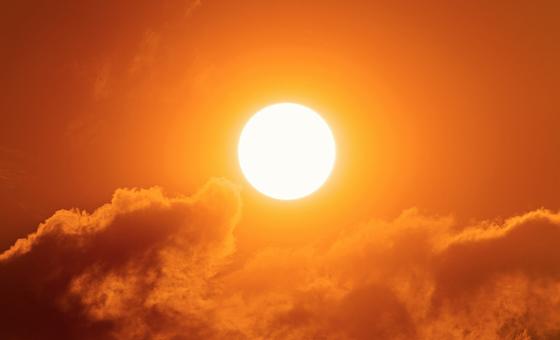

Extreme heat is breaking records worldwide: UN weather agency

Extreme temperatures caused approximately 489,000 heat-related deaths annually between 2000 and 2019, with 36 per cent occurring in Europe and 45 per cent in Asia.

The health impacts of heat are especially severe in cities due to the so-called ‘urban heat island effect’ – the over-heating of dense city areas compared with their rural surroundings – which is magnifying problems as urbanisation continues.  

Amid rising 21st-century temperatures, the WMO underscored that July 2025 was the third-warmest July ever recorded, behind those in 2023 and 2024.  

European heat streak

In this record-breaking July, heatwaves especially impacted Sweden and Finland, which experienced unusually long spells of temperatures above 30 degrees Celsius (86 degrees Fahrenheit).

Southeast Europe also faced heatwaves and wildfire activity, with Türkiye recording an extreme new national high of 50.5 degrees Celsius (122.9 degrees Fahrenheit).

Asia, North Africa, United States

In Asia, temperatures soared above average the most across the Himalayas, China and Japan in July, with extreme heat continuing into August.

In the week leading up to 5 August, temperatures surpassed 42 degrees Celsius (107 degrees Fahrenheit) across West Asia, southern Central Asia, the southwestern US, much of North Africa and southern Pakistan – with some areas exceeding 45 degrees Celsius (114 degrees Fahrenheit).

Parts of southwestern Iran and eastern Iraq saw particularly severe temperatures above 50 degrees Celsius (122 degrees Fahrenheit), disrupting electricity and water supplies, education and labor.

For the week of 4 August, Morocco issued heat warnings for temperatures up to 47 degrees Celsius (116 degrees Fahrenheit).

Korea also issued widespread heat warnings, as station temperature records were broken across parts of China.

In Japan, a new national temperature record of 41.8 degrees Celsius (107.2 degrees Fahrenheit) was set on 5 August, breaking the previous record of 41.2 degrees Celsius set a week prior.

Looking ahead

Looking to next week, the World Meteorological Centre in Beijing forecasts that heatwaves will persist across the same regions as well as the Iberian Peninsula and northern Mexico.

These regions are expected to see maximum temperatures between 38 and 40 degrees Celsius (100.4 to 104 degrees Fahrenheit), with parts of Saudi Arabia, Iraq, Iran, North Africa and the southwestern U.S. likely to exceed 45 degrees Celsius (113 degrees Fahrenheit).

Canadian wildfires

As Canada experiences one of its worst wildfire seasons on record, with 6.6 million hectares burned, smoke has polluted skies and caused poor air quality across several provinces and northern states of the US in late July and early August.

Twice this summer, smoke from Canadian fires crossed the Atlantic, affecting skies over Western Europe from 5–7 August and over Central and Southern Europe in late June.

Elsewhere, Cyprus, Greece and Türkiye have battled wildfires that forced evacuations and caused fatalities. In the US, a wildfire in Arizona’s Grand Canyon National Park disrupted tourism at the iconic site.

‘No longer an excuse’

Extreme heat is sometimes called the silent killer, but with today’s science, data and technologies, silence is no longer an excuse. Every single death from extreme heat is preventable,” said WMO Deputy Secretary-General Ko Barrett.  

The WMO is working to strengthen heat early warning systems under the Early Warnings for All initiative. In collaboration with global and local partners, it is also helping countries develop heat-health action plans and ensure at-risk populations receive timely alerts.

WMO is also one of ten UN agencies supporting the Secretary-General’s Call to Action on Extreme Heat, which aims to boost global cooperation to reduce heat impacts through economic and social policy. A key focus is limiting global warming to 1.5 degrees Celsius above pre-industrial levels, in line with the 2015 Paris Agreement.

According to estimates from WMO and the World Health Organization (WHO), scaling up heat-health warning systems in 57 countries alone could save nearly 100,000 lives annually.

Our Network is connecting science, policy, and action so that no community is left behind in the race to adapt to climate change that will continue to worsen extreme heat for years to come,” said Joy Shumake-Guillemot, lead of the WHO-WMO Climate and Health Joint Programme and co-lead of the Global Heat-Health Information Network (GHHIN).

“This is not just a climate issue, it’s a public health emergency,” she concluded. 

Climate change takes increasingly extreme toll on African countries

Extreme weather and climate change impacts are hitting every single aspect of socio-economic development in Africa and exacerbating hunger, insecurity and displacement,” the UN World Meteorological Organization (WMO) said on Monday.

WMO said that average surface temperature across Africa in 2024 was approximately 0.86°C above the 1991–2020 average.

North Africa recorded the highest temperature – 1.28°C above the 1991-2020 average; it is the fastest-warming sub-region of Africa.

Marine heat spike

Sea surface temperatures were also the highest on record. “Particularly large increases in sea surface temperatures have been observed in the Atlantic Ocean and Mediterranean Sea,” WMO said.
Data shows that almost the entire ocean area around Africa was affected by marine heatwaves of strong, severe or extreme intensity last year and especially the tropical Atlantic.

Head of WMO, Celeste Saulo, warned that climate change is an urgent and escalating problem across the African continent “with some countries grappling with exceptional flooding caused by excessive rainfall and others enduring persistent droughts and water scarcity”.

El Niño influence

Highlighting Africa’s particular vulnerability to our warming planet – caused mainly by rich nations burning fossil fuels – the UN agency said that floods, heatwaves and droughts forced 700,000 people out of their homes across the continent last year.

WMO also noted that the El Niño phenomenon was active from 2023 into early 2024 and “played major roles in rainfall patterns” across Africa.

In northern Nigeria alone, 230 people died in floods last September that swept across the capital of Borno state, Maiduguri, displacing 600,000, severely damaging hospitals and contaminating water in displacement camps.

Regionally, rising waters caused by torrential rains ravaged West Africa and impacted a staggering four million people. 

Conversely, Malawi, Zambia and Zimbabwe suffered the worst drought in at least two decades, with cereal harvests in Zambia and Zimbabwe 43 per cent and 50 per cent below the five-year average, respectively.

Heat shock

Heatwaves are also a growing threat to health and development and Africa, WMO said, noting that the past decade has also been the warmest on record. Depending on the dataset, 2024 was the warmest or second-warmest year.

Blistering temperatures already impact children’s education, with schools closing in March 2024 in South Sudan as temperatures reached 45°C. Worldwide, at least 242 million pupils missed school because of extreme weather in 2024, many of them in sub-Saharan Africa, according to the UN Children’s Fund, UNICEF.

Beyond education, rising temperatures across the continent are making Africa more water-scarce and food-insecure, with North African countries the hardest-hit.

South Sudan focus

Erratic weather patterns across Africa are also hindering farming, driving food insecurity and displacing people who have already had to flee war already, WMO explained.

Last October, for example, flooding affected 300,000 people in South Sudan – a hefty figure for a nation of 13 million, scarred by years of civil strife and where infrastructure is poor.

The disaster wiped out cattle, adding up to between 30 and 34 million farm animals – roughly two per inhabitant – and stagnant water fuelled diseases. Families who had been self-sufficient had to seek help once again.

“When someone slides back into being fed, it affects their dignity,” said Meshack Malo, South Sudan Country Representative for the UN Food and Agriculture Organization (FAO).

At the forefront of climate change, the troubled East African country is already dealing with a crippling economic crisis, mass displacement made worse by the war in neighbouring Sudan, as well as escalating tensions at home and pervasive violence.

Fighting in Sudan has derailed the South Sudanese economy, which relies on oil exports for 90 per cent of its national revenue, reports indicate.

Destructive cycle

When South Sudan is not hit by floods, it is plagued by drought.

“This cyclic change between floods and drought, makes the country affected almost a good part of the year,” said Mr. Malo.  

Flooding has worsened and become more intense and frequent in recent years.

“That means that any short rain then can easily trigger the flooding, because water and the soil remain quite saturated,” Mr. Malo added. “So that intensity and frequency makes this situation worse.”

With road access disrupted for aid trucks, UN agencies such as the World Food Programme (WFP) must airlift food assistance – a costly, impractical solution, as humanitarian funding dwindles.

Pushing back  

In the South Sudanese town of Kapoeta, the FAO has helped to reduce the number of dry months from six to two, by harvesting and storing water to protect crops at risk from climate change.  

“The impact of drought is no longer felt as much,” FAO’s Mr. Malo said, speaking to UN News from the capital, Juba.

Worth its salt

In countries that lack water resources for crop irrigation, climate resilience and adaptation are critical, Dr. Ernest Afiesimama of the WMO Regional Office for Africa in Addis Ababa, told journalists.

And while desalination – the process of removing salt from seawater – may be a solution for some, for many African nations it is not viable.

Rather than turning to desalination as a panacea, investing in adaptation measures including early warning systems for action and preparedness is urgently needed, environmental scientists say.  “Considering the challenges in sub-Saharan Africa, [desalination] presents a complex economic, environmental and social challenge, and there is a question about its long-term sustainability and equity,” said Dr. Dawit Solomon, Contributor at Accelerating Impacts of CGIAR Climate Research for Africa (AICCRA).  

“Africa is facing a high climate change bill. Imagine the continent which is struggling economically and then facing this additional risk multiplier,” Dr. Salomon added.

Source link