Measles cases drop in 2025 across Europe and Central Asia, but outbreak risks remain

While cases have reduced, the conditions that led to the resurgence of this deadly disease in recent years remain and must be addressed,” said Regina De Dominicis, the UN Children Fund (UNICEF) regional director for Europe and Central Asia.

Fifty-three countries in Europe and Central Asia reported 33,998 measles cases in 2025, down from 127,412 in 2024.

The overall decreasing trend in cases reflects both outbreak response measures and the gradual decline in the number of people susceptible to measles infection as the virus made its way through under-vaccinated communities, according to UN agencies.

Tackling deadly misinformation

However, many cases could have been prevented with higher routine vaccination coverage at community level and more timely response to outbreaks, UN agencies said.

“Until all children are reached with vaccination, and hesitancy fuelled by the spread of misinformation is addressed, children will remain at risk of death or serious illness from measles and other vaccine-preventable diseases,” she warned.

Hans Henri P. Kluge, WHO regional director for Europe, said eliminating measles is essential for national and regional health security, stressing that “in today’s environment of rampant fake news, it’s also crucial that people rely on verified health information from reliable sources such as WHO, UNICEF and national health agencies.”

Measles still present

The number of cases in 2025 still exceeded what has been reported for most years since 2000, and some countries reported more cases in 2025 than in 2024. Measles cases continue to be detected in 2026 in the region, according to WHO.

“Over 200,000 people in our region fell ill with measles in the past three years,” Dr. Kluge said.

“Unless every community reaches 95 per cent vaccination coverage, closes immunity gaps across all ages, strengthens disease surveillance and ensures timely outbreak response, this highly contagious virus will keep spreading.”

Highly contagious

Measles is one of the most contagious viruses affecting people. For every one person who has measles, up to 18 other unvaccinated people will be infected.

This makes measles around 12 times more contagious than influenza. As well as hospitalisation and death, the virus can cause long-term, debilitating health complications.

It can also damage the immune system by “erasing” its memory of how to fight infections for months to even years, leaving measles survivors vulnerable to other diseases and death.

Two doses of measles-containing vaccine provide up to 97 per cent life-long protection against measles

A vaccination rate of 95 per cent with two doses of the measles vaccine in every community each year is needed to prevent measles outbreaks and achieve herd immunity, which protects infants too young for measles vaccination and other people for whom it is not recommended due to medical conditions, like those who are immunocompromised.

Public health priorities

Outbreak preparedness and response alongside the target of measles elimination, remain public health priorities.

UNICEF and WHO work together with governments and with the support of partners, including Gavi, the Vaccine Alliance, and the European Union, to prevent and respond to measles outbreaks by, among other things:

  • engaging with communities
  • training health care workers
  • strengthening immunisation programmes and disease surveillance systems
  • initiating measles vaccination catch-up campaigns

Source link

Asia: Lives upended by cyclones, ‘extreme’ rainfall on the rise, warn UN agencies

World Meteorological Organization (WMO) spokesperson Clare Nullis told reporters in Geneva that Indonesia, the Philippines, Sri Lanka, Thailand and Viet Nam are among the countries most affected by what she described as “a combination of monsoon-related rainfall and tropical cyclone activity”.

UN Secretary-General António Guterres expressed his deep sadness over the tragic loss of life across the region.

In a statement released by his Spokesperson he conveyed condolences to the families of the victims and expresses his solidarity with all those impacted.

UN ready to support all relief efforts

The United Nations is in close contact with authorities in all four countries and stands ready to support relief and response efforts. UN Country Teams remain at the disposal of Governments to provide necessary assistance.”

“Asia is very, very vulnerable to floods,” WMO’s Ms. Nullis said, explaining that flooding consistently tops the list of climate hazards in the region, according to WMO’s annual State Of The Climate reports.

However, she said that tropical cyclones such as Senyar, which last week brought “torrential rainfall and widespread flooding and landslides” across northern Sumatra in Indonesia, peninsular Malaysia and southern Thailand, are rare so close to the Equator.

“It’s not something that we see very often and it means the impacts are magnified because local communities… have got no experience in this,” she stressed.

Hundreds killed

The UN weather agency spokesperson quoted Tuesday’s figures from the Indonesian National Disaster Office indicating 604 fatalities, 464 people missing and 2,600 injured. In total, some 1.5 million people have been affected in Indonesia and more than 570,000 have been displaced.

Turning to Viet Nam, Ms. Nullis said that the south Asian nation has been “battered now for weeks” and is “bracing for yet more heavy rainfall”.

“Exceptional rains in the past few weeks have flooded historic sites, popular tourist resorts and caused massive damages,” she said.

1.79 metres of rain in a day

In late October, one meteorological station in central Viet Nam recorded a national 24-hour rainfall record of 1,739 millimetres, which Ms. Nullis described as “really enormous”.

“It’s the second-highest known total anywhere in the world for 24-hour rainfall,” she said.

This exceptionally high value is currently subject to a formal WMO extremes evaluation committee. According to the agency, a value above 1,700 mm would constitute a record for the Northern Hemisphere and Asia.

Ricardo Pires, spokesperson for the UN Children’s Fund (UNICEF), described what he called a “fast-moving humanitarian emergency” in Sri Lanka, after Cyclone Ditwah made landfall on the country’s east coast last week, affecting some 1.4 million people including 275,000 children.

“With communications down and roads blocked, the true number of children impacted is likely even higher,” Mr. Pires warned. “Homes have been swept away, entire communities isolated, and the essential services children rely on, such as water, healthcare and schooling have been severely disrupted.”

The UNICEF spokesperson stressed that displacement has forced families into unsafe and overcrowded shelters, while the flooding and damaged water systems are increasing disease outbreak risks.

“The needs far outweigh the available resources right now,” he insisted, in an appeal for additional humanitarian funding and support for the most vulnerable.

Commenting on the intensity of the devastating weather events WMO’s Ms. Nullis explained that rising temperatures “increase the potential risk of more extreme rainfall because a warmer atmosphere holds more moisture”.

“That’s the law of physics…we are seeing more extreme rainfall and we will continue to do so in the future,” she concluded.

Deadly storms sweep South and Southeast Asia, leaving over 1,600 dead

Since mid-November, overlapping tropical storms and intensified monsoon systems have triggered catastrophic flooding and landslides across Sri Lanka, Indonesia, Thailand, Malaysia and Viet Nam.

UN teams across the region are supporting government-led emergency operations with food, health, water and sanitation aid, medical deployments and early recovery assessments, as heavy rains continue and fears grow that the crisis could deepen.

“We continue to closely monitor the situation and remain in close contact with national authorities,” UN Spokesperson Stéphane Dujarric told reporters in New York on Thursday.

The UN stands ready to support any ongoing efforts.

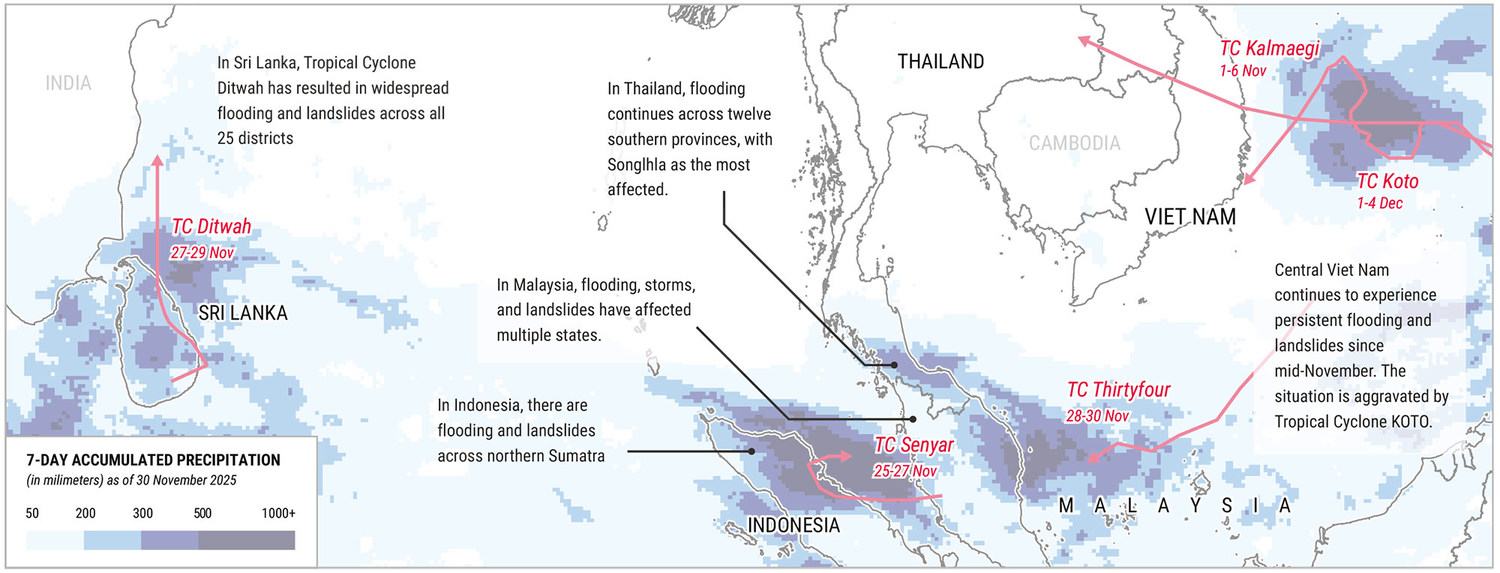
Storms and cyclones across south and southeast Asia from 17 November to 3 December.

Overlapping storms

Experts say the disasters were driven by an unusual convergence of powerful weather systems, including Cyclones Ditwah and Senyar, alongside a strengthened northeast monsoon.

Warm ocean temperatures and shifting storm tracks have produced extreme rainfall in areas that historically faced lower cyclone risk.

Across the region, nearly 11 million people have been affected, including about 1.2 million forced from their homes into shelters, while roads, utilities and farmlands have been washed away.

Heavy toll on children

Children are bearing a devastating share of the storms, with millions cut off from schools, clean water and basic services. More than 4.1 million children across the region have had their education disrupted since late November alone, according to the UN Children’s Fund (UNICEF).

Some three million students in Viet Nam have been unable to attend class, while nearly one million were affected in the Philippines, and hundreds of thousands more in Indonesia, Thailand and Malaysia.
Many children are now living in overcrowded evacuation shelters, exposed to disease, malnutrition and heightened protection risks.

Children are sitting at the frontline of the climate crisis, experiencing firsthand what it means when extreme weather becomes more frequent, more intense, and less predictable,” UNICEF Deputy Spokesperson Ricardo Pires said, calling for urgent action to protect them and their futures.

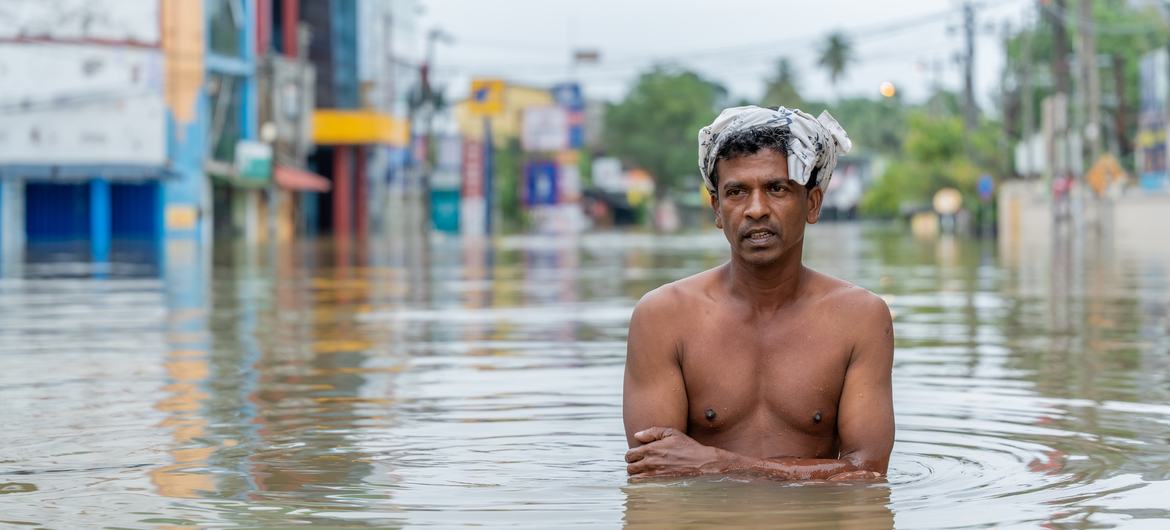
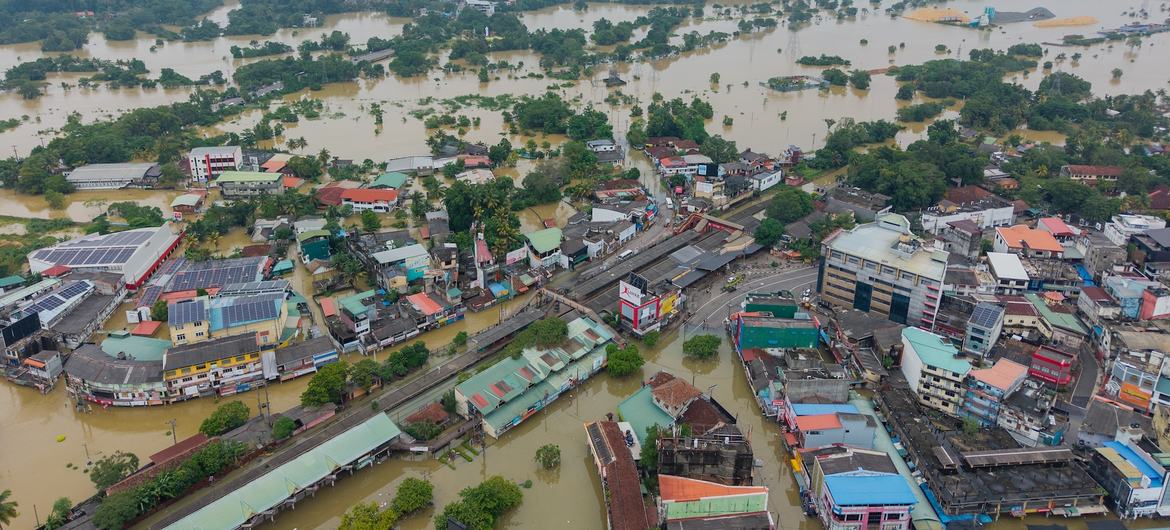
A man stands in over three feet of floodwaters in Gampaha, Sri Lanka.

Sri Lanka: Nationwide devastation

Sri Lanka bore some of the worst impacts after Cyclone Ditwah made landfall on 28 November, triggering floods and landslides across nearly the entire island.

The highest death tolls were reported in the hill districts of Kandy, Nuwara Eliya and Badulla, where landslides swept through plantation communities. Severe flooding also inundated western and north-western districts – including Colombo’s outer suburbs – disrupting markets, transport and water supplies.

Early assessments point to heightened gender-specific risks in the aftermath of the disaster.

With livelihoods disrupted and thousands sheltering in overcrowded centres, women and girls face increased exposure to gender-based violence, economic insecurity and interruptions to sexual and reproductive health services, particularly in rural and plantation communities already grappling with poverty and limited access to care.

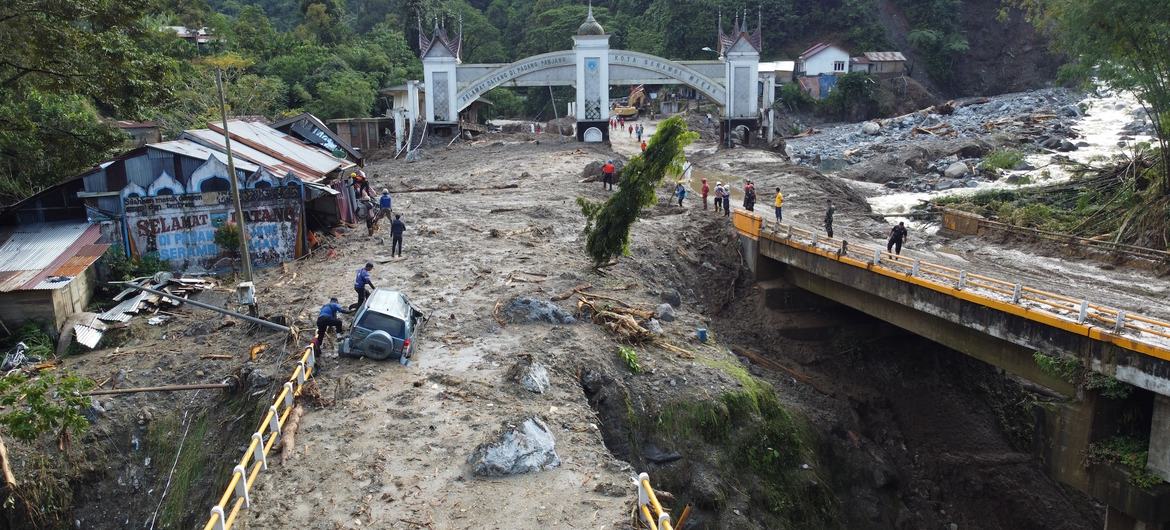
Bridges and access roads swept away by a landslide in West Sumatra, Indonesia.

Indonesia: Flash floods and landslides

In Indonesia, relentless downpours between 22 and 25 November triggered deadly floods and landslides across Aceh, West Sumatra and North Sumatra, devastating dozens of districts.

Official figures indicate more than 830 deaths, with at least 500 people still missing, and more than 880,000 displaced. In total, over three million people have been affected by floodwaters, collapsed hillsides and destroyed infrastructure.

Entire villages have been submerged, bridges washed away and roads cut off, isolating communities and slowing rescue efforts. Emergency teams are relying on helicopters and boats to deliver aid to areas unreachable by land.

“We are working closely with the government on water, sanitation and hygiene (WASH), logistics, and coordination with local partners,” UN Spokesperson Dujarric said.

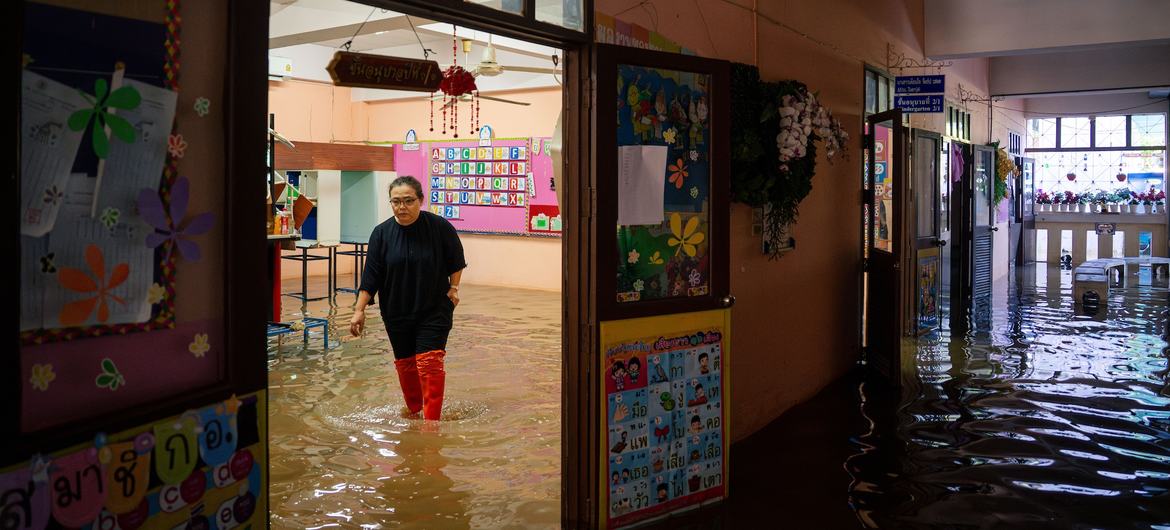
A teacher inspects the damage in a kindergarten classroom at a school in Thailand.

Thailand and Malaysia: Mass evacuations

Moving east, intensified monsoon rains have battered southern Thailand, where 12 provinces have been affected.

At least 185 people have died, with 367 missing and over four million people impacted. More than 219,000 residents have been displaced as rivers burst their banks and low-lying coastal areas flooded.

In neighbouring Malaysia, flooding across eight northern and central states has displaced around 37,000 people. Authorities continue to issue evacuation orders and weather warnings as rain persists.

A UNICEF staff member hands ready to eat food to a family in Tuyên Quang, Viet Nam.

Viet Nam: A relentless typhoon season

Viet Nam is confronting the cumulative toll of one of its harshest typhoon seasons in years. Since October, a succession of storms has flooded and damaged large swathes of the country, particularly in northern and central provinces.

Persistent downpours since mid-November, compounded by Tropical Cyclone Koto, have triggered new landslides and prolonged displacement. A national joint response plan is under way to address food insecurity, health risks and damaged infrastructure.

To support the response, $2.6 million has been allocated from the UN Central Emergency Response Fund (CERF).

Gampaha (pictured), a district on Colombo’s outskirts, has been among the areas hardest hit by flooding after Cyclone Ditwah.

Disasters supercharged by climate change

UN agencies say the storms reflect a broader shift toward more intense and unpredictable weather across the Asia-Pacific. Cyclone Ditwah tracked unusually far south along Sri Lanka’s coast, while Cyclone Senyar formed near the equator in the Strait of Malacca – a rare occurrence.

The UN Economic and Social Commission for Asia and the Pacific (ESCAP), in its latest report issued last week, warned that rising temperatures are fundamentally reshaping the region’s risk landscape.

Warmer ocean waters are increasing the potential for extreme rainfall, while rapid urban growth, deforestation and wetland loss are magnifying flood impacts. Even where early warnings were issued, fast-rising waters overwhelmed evacuation routes in some locations.

In Southeast Asia, Guterres presses the case for climate action

Addressing a joint summit between the UN and Southeast Asian nations in Kuala Lumpur on Monday, Secretary-General António Guterres described the region as “a beacon of cooperation” and a vital pillar of global stability.

With Timor-Leste’s accession, he said, the collective spirit of the regional organization known as ASEAN had “grown stronger,” making the bloc an essential partner in shaping “a more balanced and interlinked world.”

The Association of Southeast Asian Nations now has 11 full members, alongside partners which include China, India, the European Union, Russia and Australia.

The UN, for its part, has a comprehensive partnership framework with the bloc as well as plans for joint action.

Peace, Myanmar and regional stability

Mr. Guterres outlined four areas of deepening collaboration – peace and prevention; sustainable development and financial justice; climate action and digital transformation.

He commended ASEAN countries for their strong contributions to peacekeeping and regional mediation efforts.

The UN chief praised Malaysia for helping to facilitate a ceasefire between Cambodia and Thailand, and reiterated the importance of dialogue and restraint in the South China Sea to uphold international law and freedom of navigation.

Turning to Myanmar, the Secretary-General condemned ongoing violence, describing the humanitarian situation as “appalling.”

“Thousands are dead. Millions displaced. Humanitarian needs are soaring,” he said, calling for an immediate halt to hostilities, protection of civilians, and “the release of those arbitrarily detained, including democratically elected leaders.”

He reaffirmed the UN’s support for ASEAN’s 2021 Five-Point Consensus to resolve Myanmar’s protracted conflict following the coup – and the Security Council resolution demanding a ceasefire that same year.

A fairer financial system

The Secretary-General also made a strong call for overhauling what he described as an “outdated and unfair” global financial architecture that leaves developing nations “locked out of prosperity.”

“It is high time for reform,” he said, noting that ASEAN economies remain underrepresented in global financial institutions despite their growing economic weight.

Climate change target ‘on life support’

In his keynote address, the Secretary-General warned that the target on limiting global warming to 1.5 degrees Celsius above pre-industrial levels “is on life support,” urging both developed and developing nations to step up climate ambition ahead of COP30 in Brazil next month.

On digital transformation, he underscored the UN’s commitment to ensuring artificial intelligence serves humanity.

Standing together

At a press conference following the Summit, Mr. Guterres said ASEAN “offers a vision of hope” amid global uncertainty.

“The United Nations is proud to be ASEAN’s partner,” he said, “as we work to ensure a better, more peaceful future for people across the southeast Asian region and around the world.”

In South Asia, anaemia threatens women’s health and economic futures

The warning, issued jointly by UN agencies and the regional socio-economic bloc SAARC on Wednesday, underscores South Asia’s status as the “global epicentre” of anaemia among adolescent girls and women.

An estimated 259 million already suffer from the condition, which impairs the body’s ability to carry oxygen, contributing to chronic fatigue, poor maternal outcomes, and reduced educational and economic participation.

This is a clarion call for action,” said Sanjay Wijesekera, Regional Director for the UN Children’s Fund (UNICEF), which together with the UN World Health Organization (WHO) and SAARC prepared the analysis.

When half of all adolescent girls and women in South Asia are anaemic, it is not only a health issue – it is a signal that systems are failing them.

A far-reaching but preventable condition

Anaemia doesn’t just affect women and girls – it contributes to 40% of the world’s low birth weight cases and affects child growth and learning, particularly in poorer households.

The economic toll is staggering: anaemia costs South Asia an estimated $32.5 billion annually, perpetuating cycles of poverty and poor health.

Yet, the condition is preventable and treatable. Proven solutions include iron and folic acid supplementation, iron- and vitamin-rich diets, better sanitation and infection control, and stronger maternal health services.

Experts stress that multi-sector collaboration is critical for sustained progress.

A nurse speaks to women about nutritious food in western India’s Sabarkantha district, were many women and girls suffer from iron deficiency.

Integrated efforts crucial

In nearly every country, progress hinges on strengthening health systems, expanding nutrition programmes, and reaching adolescent girls and women in marginalised communities.

Sri Lanka, where 18.5 per cent of women of reproductive age are anaemic, is scaling up its national nutrition initiative, focusing on the most affected districts.

India and Pakistan are also seeing encouraging signs. In India, high-burden states are integrating iron supplementation into school and maternal care programmes. Pakistan has piloted community-based nutrition initiatives linked to reproductive health services, enabling early detection and follow-up care.

In Bangladesh, school-based health initiatives are reaching adolescents with fortified meals and health education, coordinated across health, education, and agriculture ministries.

Community-driven action works

The Maldives and Bhutan are prioritising early prevention through childhood nutrition, food fortification, and public awareness campaigns. Though smaller in population, both are investing in anaemia surveillance and inter-ministerial collaboration.

Nepal stands out for its equitable results: since 2016, the country has cut anaemia among women of reproductive age by 7 per cent, with larger declines in poorer areas. Its female community health volunteers are key, providing counselling and referrals in remote regions and linking vulnerable households to public services.

Man Kumari Gurung, a public health nurse in Karnali Province, credits the achievements to a range of community-driven efforts.

“Pregnant women receive eggs, chicken and nutritious food through programmes like Sutkeri Poshan Koseli (Nutrition Gift for New Mothers),” she said. “Cash grants also help with transport to hospitals, supporting safer births and better nutrition.”

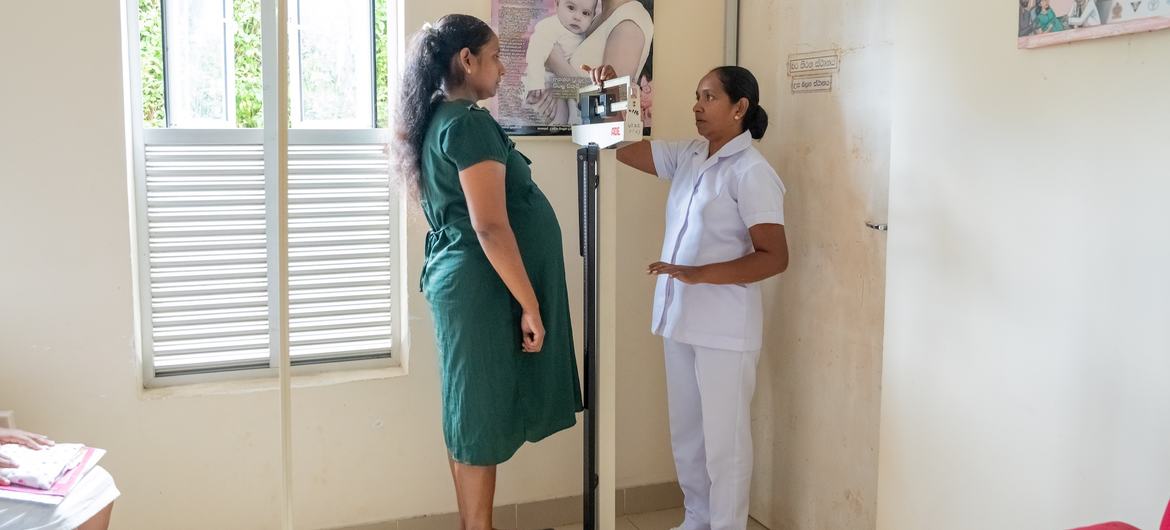
A nurse checks a pregnant woman’s weight and vital signs at a clinic in Galigamuwa, Sri Lanka.

Everyone has a role

Ending anaemia requires leadership and teamwork. Governments must lead, but communities, health workers, schools, and families all play a part.

Stronger health systems, better data, and coordinated action across sectors can help girls and women reach their full potential – building healthier communities and stronger economies.

Young people and mothers are at the heart of South Asia’s development goals. Ensuring that they are healthy, nourished and empowered is not just a moral imperative, it is a strategic investment in the future of our societies,” said Md. Golam Sarwar, Secretary General of SAARC.

Asia is warming twice as fast as the rest of the world

While there are records which exist to be broken – Olympic ones, for example -these monthly temperature extremes are not medal worthy. And yet, China was not the only Asian country to set a flurry of new highs in 2024.

The continent is warming twice as fast as the global average, according to a report released Monday by the World Meteorological Organization (WMO). This rate of warming – which shows no signs of stopping – is leading to devastating consequences for lives and livelihoods across the region, and no country is exempt from the consequences.

Extreme weather is already exacting an unacceptably high toll,” said WMO Secretary-General Celeste Saulo on Monday.

Large landmass, warmer temperatures

The WMO report said that Asia is warming twice as fast as global averages because of its large landmass, explaining that temperatures over land increase more quickly than those over sea.

Variations in surface temperature have a large impact on natural systems and on human beings,” the report said.

The oceans around Asia are also experiencing temperature increases with surface temperatures in the Indian and Pacific Oceans reaching record levels in 2024.

Moreover, prolonged heat waves, both on land and sea, wreaked havoc across the region, leading to melting glaciers and rising sea levels. 

Too much and too little water

Some countries and communities in Asia were ravaged by record rainfall. Northern Kerala in India, for example, experienced a fatal landslide which killed over 350 people.

Record rainfall coupled with snow melt in Kazakhstan, which is home to thousands of glaciers, led to the worst flooding in 70 years.

Others were ravaged by the exact opposite problem – not enough rainfall. A summer long drought in China, for example, affected over 4.76 million people and damaged hundreds of thousands of hectares of crops.

WMO emphasized in the report that the only way to adapt to these increasingly polar weather patterns is to install more comprehensive early warning systems which are coupled with capacity building measures that enable communities to be more resilient.

Nepal: A case study in preparedness

The WMO report lauded the success that Nepal has had in installing early warning systems which monitor flooding risks, among other things, even as it said that more comprehensive action was necessary.

Between 26 and 28 September 2024, Nepal experienced extreme rainfall which created landslides and flooding across large swaths of the country. 246 people were killed, 178 injured and over 200 missing in the wake of the climate emergency.

While the impact of the crisis was extreme, early flood warning systems enabled communities to prepare for evacuation in addition to crisis responders to reach the worst hit regions quickly.

This is the first time in 65 years that the flooding was this bad. We had zero casualties thanks to preparedness and rescue measures, but the damage was extensive,” said Ramesh karki, Mayor of Barahakshetra, an affected municipality in Eastern Nepal.

Moreover, comprehensive national protocols on emergency funding ensured that funding for humanitarian and rebuilding needs was quickly dispersed throughout the country.

WMO said that they are working with the Nepalese government and other partners to continue improving upon these systems.

“The work of National Meteorological and Hydrological Services and their partners is more important than ever to save lives and livelihoods,” Ms. Saulo said. 

Source link