World Entrepreneurs and Investment Forum put women at the heart of economic transformation


That was the central message of the Manama Declaration, issued at the close of the World Entrepreneurs and Investment Forum (WEIF) held this week in Bahrain.

The declaration places women at the heart of economic transformation, underscoring that empowering them within business and innovation ecosystems is essential to achieving inclusive and sustainable growth.

It also calls for strengthening women’s presence across emerging sectors, including the green, blue and orange economies which respectively promote environmental responsibility, sustainable use of ocean resources and creativity.

Organized by the UN Industrial Development Organization’s (UNIDO) Investment and Technology Promotion Office in Bahrain, the forum convened leaders, investors and entrepreneurs from around the world to shape a more resilient global economy and unlock new opportunities for women-led enterprises.

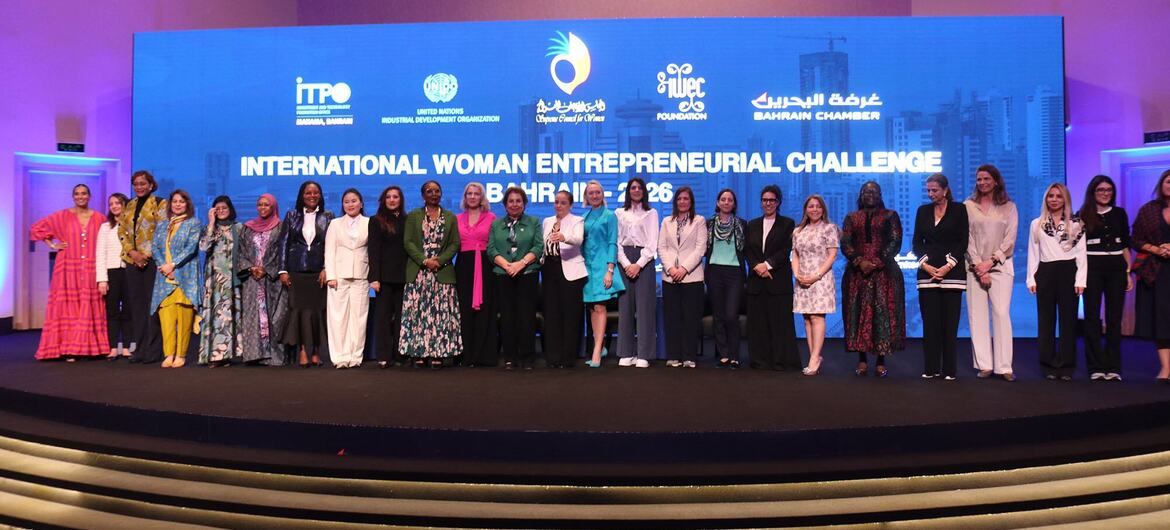
 

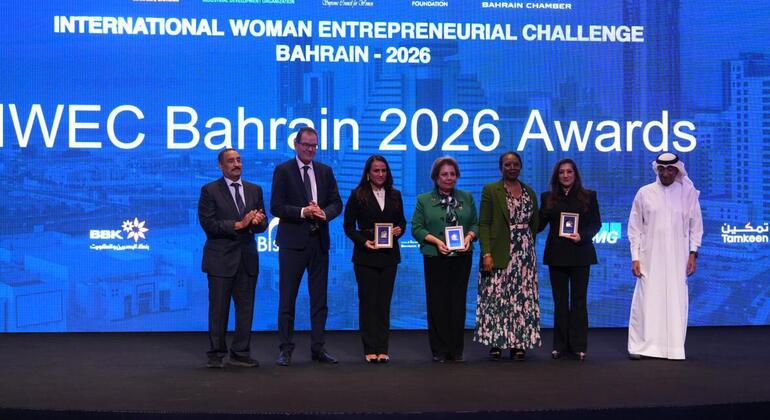
Women entrepreneurs gather on stage at the International Woman Entrepreneurial Challenge 2026 in Manama, Bahrain.

“An amazing opportunity”

For many participants, the forum delivered tangible results.

Doris Martin, CEO of DMartin Consultancy in Bahrain, attended in search of meaningful collaboration and found it.

Through business-to-business (B2B) meetings facilitated during the event, she established partnerships with companies in the United Arab Emirates and Morocco.

“This forum has been effective for me,” she told UN News. “I’ve had B2B collaboration with regional companies through Bahrain and through UNIDO.”

Tosin Arwejulo, CEO of Leadership Excel Consultancy and a Nigerian-American entrepreneur based in Bahrain, described the forum as a “powerful networking platform.”

“I’ve had the opportunity to talk to people from literally every continent,” she said. “It has been an amazing opportunity to connect with like-minded leaders.”

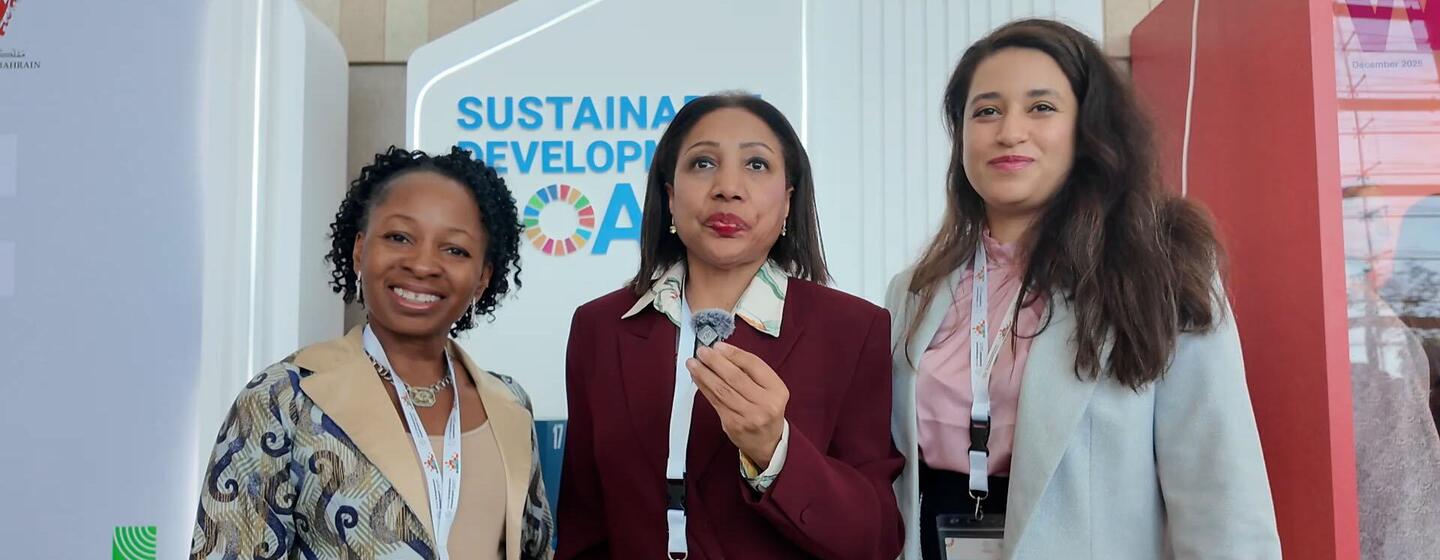
 

From left to right: Tosin Arwejulo, CEO of Leadership Excel Consultancy and a Nigerian-American entrepreneur based in Bahrain, and Doris Martin, CEO of DMartin Consultancy in Bahrain(In the middle).

Shared challenges, shared solutions

The forum’s impact extended beyond the Arab region.

Ayanthi Gurusinghe, President of the Ceylon Chamber of Women Entrepreneurs in Sri Lanka and representative of the South Asian Women Development Forum, attended alongside delegates from India, Nepal, Bangladesh and Pakistan.

She said participants exchanged valuable lessons, particularly around access to finance, a challenge faced by women entrepreneurs across regions.

“It was a good opportunity for networking, to come together, share views, learn and exchange experiences,” she said, expressing appreciation to UNIDO for creating a space where global connections could flourish.

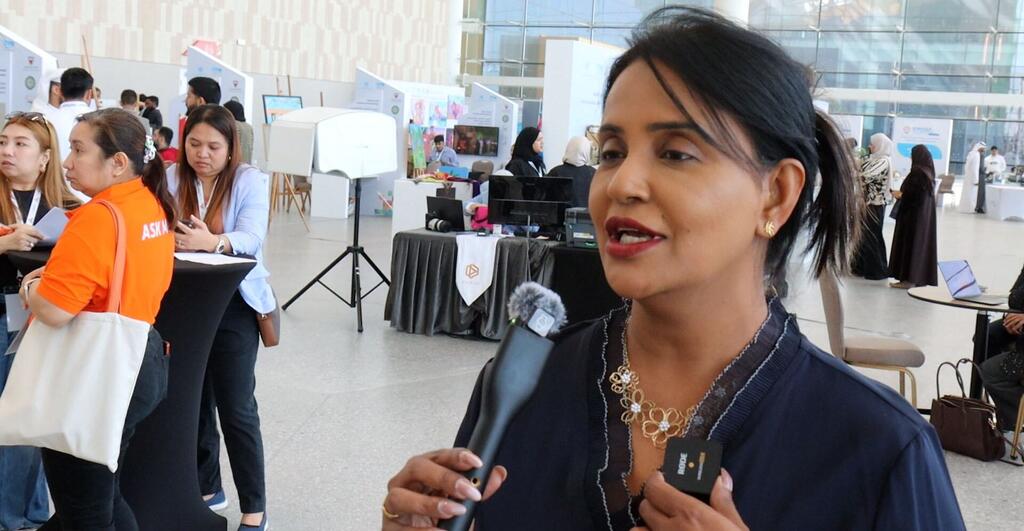
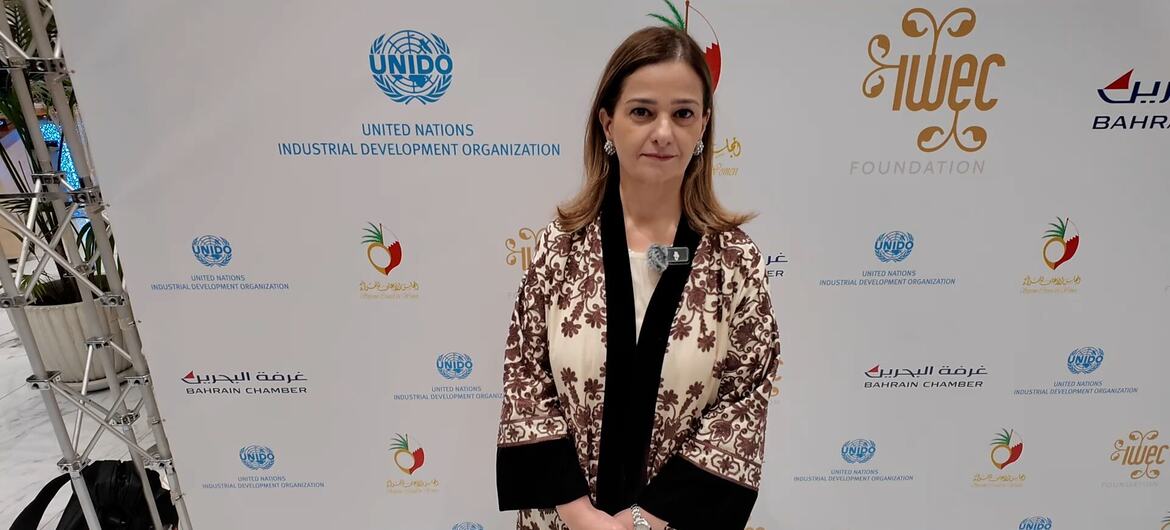
Ayanthi Gurusinghe, President of the Ceylon Chamber of Women Entrepreneurs in Sri Lanka and representative of the South Asian Women Development Forum, at WEIF 2026 in Bahrain.

Special focus on artists with disabilities

Beyond panel discussions and networking sessions, the forum also spotlighted inclusive entrepreneurship through three exhibitions including on “Determined Creative Entrepreneur.”

Among the exhibitors was Nisreen Samour of Micro Art Center in Bahrain, which specializes in training and developing artistic talent, with a special focus on artists with disabilities.

“Today, we have about nine students participating, each specializing in an artistic field that aligns with their interests and abilities,” she said.

“I personally train them, and we are currently working on developing their skills and empowering them to produce professional artwork that will help them effectively enter the art market and the job market, thus contributing to increased productivity and the center’s overall performance” she told UN News.

The centre also works with orphans, helping them develop artistic skills and showcase their work publicly — fostering independence and self-reliance through creativity.
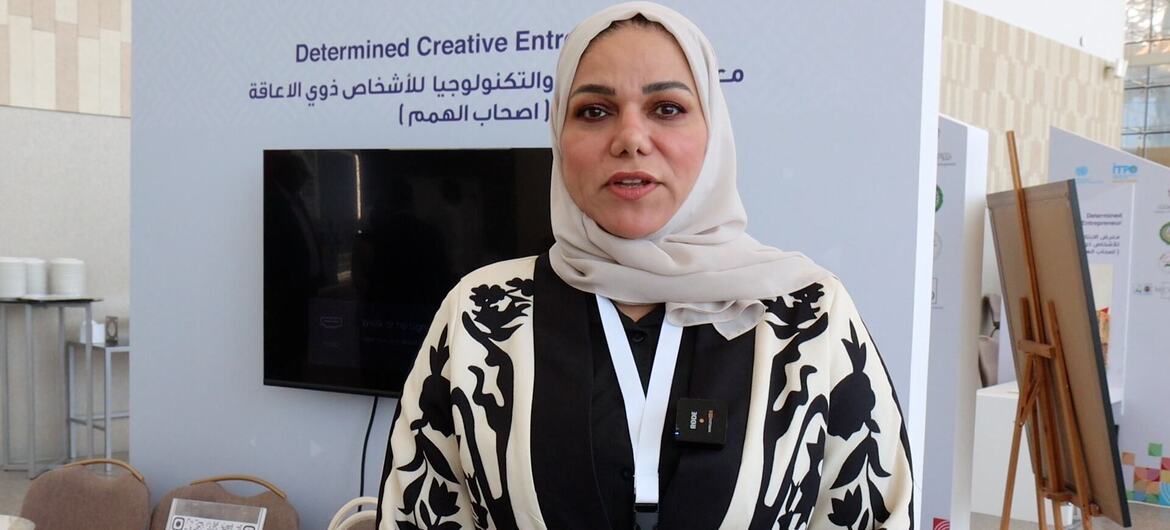
 

Nisreen Samour of Micro Art Center in Bahrain, which specializes in training and developing artistic talent, with a special focus on artists with disabilities.

The role of academia

One recurring theme was the role of higher education in preparing young women to enter the world of entrepreneurship.

In an interview with UN News, Dr. Nihal Al-Najjar, professor at the Royal University for Women in Bahrain, highlighted the need to embed entrepreneurship deeply within academic systems.

“Our academic role is to integrate entrepreneurship not just as a subject, but as a methodology,” she said, explaining that experiential learning and practical application are key. “We encourage students to think, innovate and identify gaps in society, and then work to find solutions.”

She added that universities must go beyond classroom teaching by connecting students to the wider entrepreneurial ecosystem, guiding them towards mentorship, funding opportunities and professional networks when they are ready to launch their own ventures.
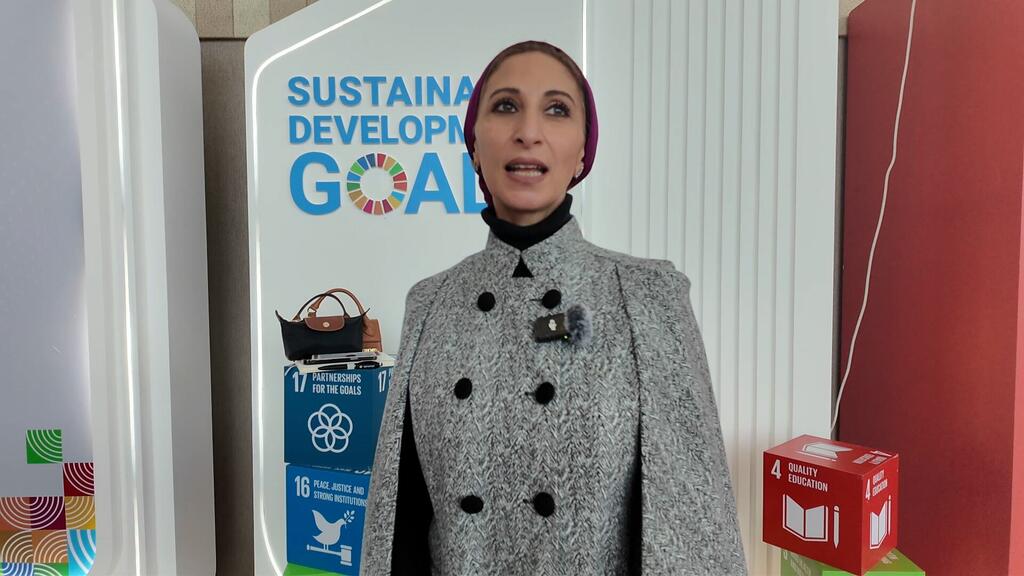
Dina Najar at WEIF2026 in Manama, Bahrain, covering Sustainable Development Goals.

A driving force for sustainable development

The World Entrepreneurs and Investment Forum (WEIF) was preceded by the annual conference of the International Women Entrepreneurial Challenge (IWEC)—a New York-based NGO that helps women-owned businesses to grow.

Speaking at the conference, UNIDO Director General Gerd Müller described women’s entrepreneurship as a driving force for sustainable development, global innovation and economic inclusion.

We must ensure that women everywhere have a level playing field and are given the opportunity to unlock their full potential,” he stated, highlighting persistent barriers to finance, technology, and higher-skilled roles for women globally.

Reaffirming UNIDO’s commitment, he added that “empowering women is essential to achieving the Sustainable Development Goals.”  The 17 SDGs, adopted by governments in 2015, provide a blueprint for a more just and equitable future for all people and the planet.

Mr. Müller praised Bahrain’s leadership in supporting entrepreneurship and women’s economic participation and outlined UNIDO’s ongoing work in crisis-affected countries, noting, “UNIDO has just started working to set up recovery programmes in Syria, Sudan, and Palestine… mostly the women there are affected, and they need our support.”
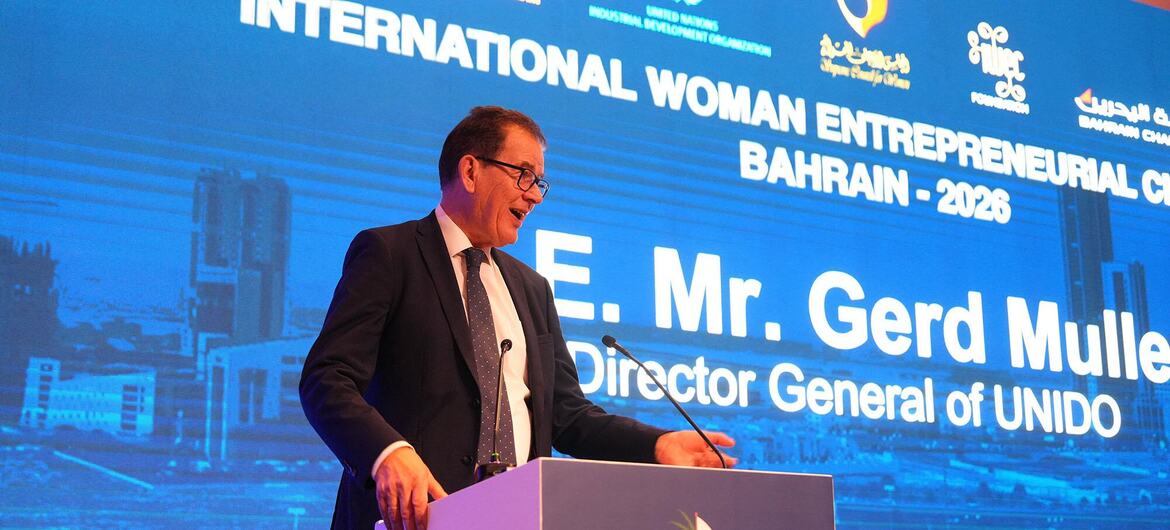
 

Gerd Müller, Director General of UNIDO, speaking at the International Woman Entrepreneurial Conference in Bahrain 2026.

Women as engines of business

In her opening remarks, IWEC Chair Ibukun Awosika highlighted women’s transformative role as engines of business, leadership, and national progress.

She emphasized that women constitute half of the world’s productive assets and, when empowered, become game changers in corporate and political leadership. Drawing on her own journey, Ms. Awosika recalled building a manufacturing group over 36 years before becoming the first and only woman chair of sub-Saharan Africa’s oldest financial institution, First Bank of Nigeria.

“What women represent to the world is 50 per cent of its assets — productive, constructive assets that are game changers when fully deployed,” she said.

Every nation that has enough wisdom to invest and to actualize the talent that is in 50 per cent of its population is a country that is set to win.”
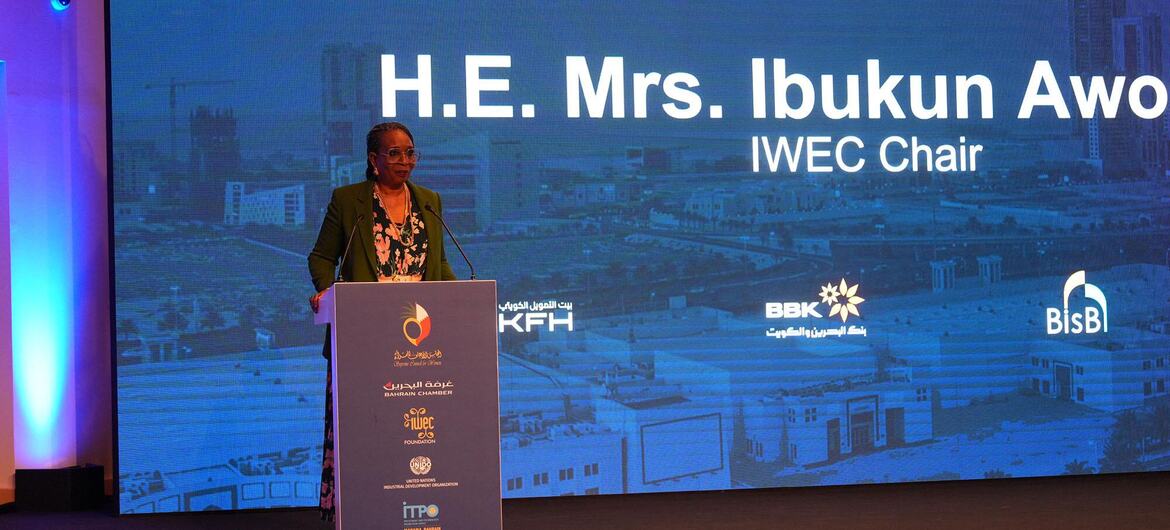
 

H.E. Mrs. Ibukun Awo, IWECC Chair, speaking at WEIF2026 in Bahrain.

Success Stories from Bahrain and Nigeria

According to its website, the International Women Entrepreneurial Challenge (IWEC) has recognized 575 distinguished awardees globally, honoured annually at its conferences and nominated by partner organizations, representing women-owned businesses from across the world.

In Bahrain, IWEC recognized a new cohort of awardees from the Middle East and Africa.

Among them was Sonia Mohamed Janahi, founder of Maya La Chocolaterie, who highlighted UNIDO’s role in advancing women’s entrepreneurship.

With UNIDO’s support, Janahi expanded her Bahraini chocolate brand into Africa, establishing a cocoa processing plant in Côte d’Ivoire, creating jobs, promoting ethical supply chains, and ensuring global recognition for African-produced chocolate.
 

Official event photo from WEIF2026 in Manama, Bahrain.

“UNIDO has played a very vital role in my progression. They have taken my project and opened opportunities for me,” she told UN News, underscoring UNIDO’s commitment to recognizing women entrepreneurs across Bahrain, the Middle East, and Africa.

“This event represents women globally and investments over $6 billion that bring women globally together. It awards women who have not just started a business but have sustained a business and scaled up a business and have had an impact on the economy and on the society.”

Also honoured was Nigerian entrepreneur Oluwakelemi, who discussed her gifting and lifestyle retail business, which employs women and supports household incomes across Nigeria while preparing to expand internationally.

“I am passionate about building scalable African businesses with global reach,” she told UN News. “Not less than 5,000 people have been able to benefit from our business, from our work.”



Rising hunger and displacement pose growing economic risk, UN tells Davos

The UN World Food Programme (WFP) has reported that an estimated 318 million people worldwide now face crisis levels of hunger or worse, with hundreds of thousands already experiencing famine-like conditions.

It cautioned that deep funding shortfalls are forcing it to cut rations and scale back assistance at a time of surging needs.

Current forecasts put WFP’s funding at just under half of its required $13 billion budget for 2026, leaving the agency able to reach about 110 million people – a third of those in need.

Combatting hunger yields dividends

“Hunger drives displacement, conflict, and instability and these not only threaten lives, but disrupt the very markets that businesses depend on,” said Rania Dagash-Kamara, WFP Assistant Executive Director for Partnerships and Innovation.

“The world cannot build stable markets on a foundation of 318 million hungry people.”

Ms. Dagash-Kamara, who is attending the forum, said the private sector has a direct stake in addressing food insecurity, calling on companies to invest in supply chains, technology and innovation that can help stabilize fragile markets and protect workforces.

WFP is urging business leaders in Davos to keep hunger and food security among their top priorities, invest in supply chain systems that strengthen fragile markets, and support food-related technologies that improve efficiency and resilience.

Displaced families in South Kivu, Democratic Republic of the Congo, receive food aid. (file photo)

Migration powers growth and development

The UN International Organization for Migration (IOM) is also taking its case to the annual forum in Switzerland, calling on political and business leaders to rethink migration as a driver of growth rather than a burden.

Migration is one of the most powerful drivers of development when managed responsibly,said IOM Director General Amy Pope.

“Mobility can unlock economic potential, help communities thrive independently, and provide lasting solutions to displacement, while respecting national sovereignty and human rights.”

Partnerships and innovation

IOM said partnerships with private companies and foundations are already helping realise that approach.  

This includes using artificial intelligence to improve health screening and labour market policies, and programmes that support vocational training, entrepreneurship and durable solutions for displaced people.

At Davos, the agency is also highlighting the role of diaspora communities as investors and innovators.

“By using remittances and diaspora capital to support business creation and digital financial access, IOM aims to open new markets and create jobs, while helping communities become more self-reliant,” the agency said.

Other senior UN officials attending the forum include President of the General Assembly Annalena Baerbock; WHO chief Tedros Adhanom Ghebreyesus; Alexander De Croo, Administrator of the UN Development Programme; UN High Commissioner for Refugees Barham Salih; and Rafael Mariano Grossi, Director-General of the International Atomic Energy Agency.

Source link

In South Asia, anaemia threatens women’s health and economic futures

The warning, issued jointly by UN agencies and the regional socio-economic bloc SAARC on Wednesday, underscores South Asia’s status as the “global epicentre” of anaemia among adolescent girls and women.

An estimated 259 million already suffer from the condition, which impairs the body’s ability to carry oxygen, contributing to chronic fatigue, poor maternal outcomes, and reduced educational and economic participation.

This is a clarion call for action,” said Sanjay Wijesekera, Regional Director for the UN Children’s Fund (UNICEF), which together with the UN World Health Organization (WHO) and SAARC prepared the analysis.

When half of all adolescent girls and women in South Asia are anaemic, it is not only a health issue – it is a signal that systems are failing them.

A far-reaching but preventable condition

Anaemia doesn’t just affect women and girls – it contributes to 40% of the world’s low birth weight cases and affects child growth and learning, particularly in poorer households.

The economic toll is staggering: anaemia costs South Asia an estimated $32.5 billion annually, perpetuating cycles of poverty and poor health.

Yet, the condition is preventable and treatable. Proven solutions include iron and folic acid supplementation, iron- and vitamin-rich diets, better sanitation and infection control, and stronger maternal health services.

Experts stress that multi-sector collaboration is critical for sustained progress.

A nurse speaks to women about nutritious food in western India’s Sabarkantha district, were many women and girls suffer from iron deficiency.

Integrated efforts crucial

In nearly every country, progress hinges on strengthening health systems, expanding nutrition programmes, and reaching adolescent girls and women in marginalised communities.

Sri Lanka, where 18.5 per cent of women of reproductive age are anaemic, is scaling up its national nutrition initiative, focusing on the most affected districts.

India and Pakistan are also seeing encouraging signs. In India, high-burden states are integrating iron supplementation into school and maternal care programmes. Pakistan has piloted community-based nutrition initiatives linked to reproductive health services, enabling early detection and follow-up care.

In Bangladesh, school-based health initiatives are reaching adolescents with fortified meals and health education, coordinated across health, education, and agriculture ministries.

Community-driven action works

The Maldives and Bhutan are prioritising early prevention through childhood nutrition, food fortification, and public awareness campaigns. Though smaller in population, both are investing in anaemia surveillance and inter-ministerial collaboration.

Nepal stands out for its equitable results: since 2016, the country has cut anaemia among women of reproductive age by 7 per cent, with larger declines in poorer areas. Its female community health volunteers are key, providing counselling and referrals in remote regions and linking vulnerable households to public services.

Man Kumari Gurung, a public health nurse in Karnali Province, credits the achievements to a range of community-driven efforts.

“Pregnant women receive eggs, chicken and nutritious food through programmes like Sutkeri Poshan Koseli (Nutrition Gift for New Mothers),” she said. “Cash grants also help with transport to hospitals, supporting safer births and better nutrition.”

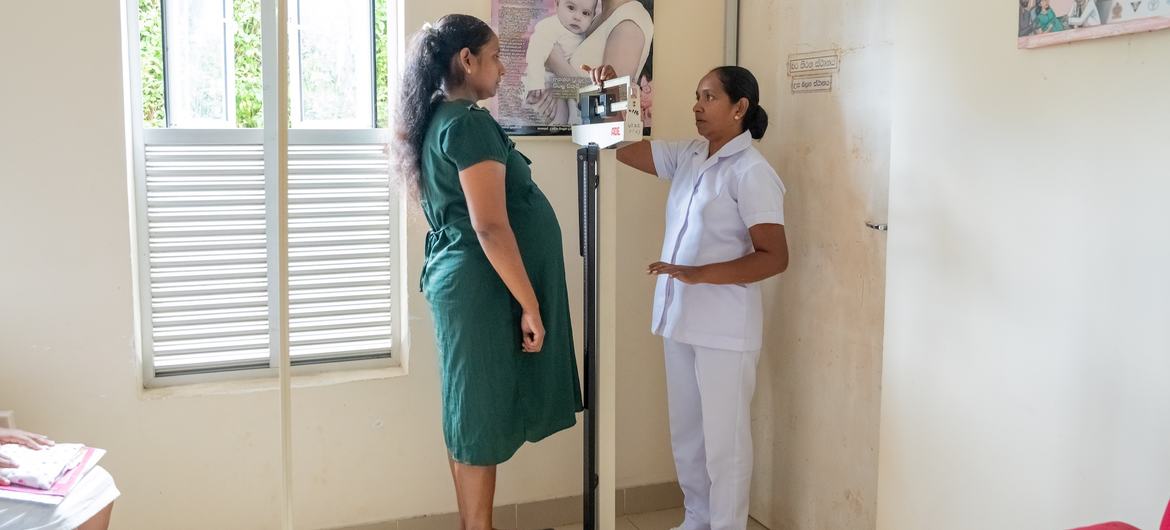
A nurse checks a pregnant woman’s weight and vital signs at a clinic in Galigamuwa, Sri Lanka.

Everyone has a role

Ending anaemia requires leadership and teamwork. Governments must lead, but communities, health workers, schools, and families all play a part.

Stronger health systems, better data, and coordinated action across sectors can help girls and women reach their full potential – building healthier communities and stronger economies.

Young people and mothers are at the heart of South Asia’s development goals. Ensuring that they are healthy, nourished and empowered is not just a moral imperative, it is a strategic investment in the future of our societies,” said Md. Golam Sarwar, Secretary General of SAARC.

Afghan women face near total social, economic and political exclusion

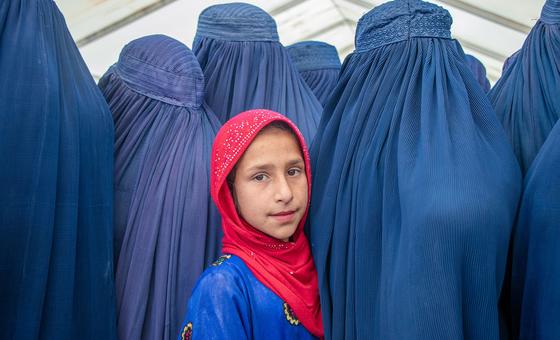
But recently, the level of participation has reached a new low – zero.

Zero women in national or local decision-making bodies.

Zero girls projected to be in secondary education following a December 2024 ban.

These numbers are part of the index released Tuesday by gender equality agency UN Women which is the most comprehensive study on gender inequality in Afghanistan since the Taliban resumed de facto control in 2021.

It paints a sobering picture of the state of gender equality in Afghanistan.

“Since [2021], we have witnessed a deliberate and unprecedented assault on the rights, dignity and very existence of Afghan women and girls. And yet, despite near-total restrictions on their lives, Afghan women persevere,” said Sofia Calltorp, UN Women chief of humanitarian action, at a briefing in Geneva.

Second-widest gender gap in the world

The report released by UN Women noted that while the Taliban regime has presided over “unparalleled” gender inequality, disparities existed long before 2021.

“The issue of gender inequality in Afghanistan didn’t start with the Taliban. Their institutionalised discrimination is layered on top of deep-rooted barriers that also hold women back,” Ms. Calltorp said. 

According to the index, Afghanistan currently has the second-worst gender gap in the world, with a 76 per cent disparity between women’s and men’s achievements in health, education, financial inclusion and decision-making.

Afghan women are currently realizing only 17 per cent of their potential, and recent policies by the de facto government — including the December 2024 ban on women in secondary education and the increasingly stringent restrictions on women’s movement — will perpetuate and perhaps worsen this under-realized potential.

Systematic exclusion and social effects

This sort of systematic exclusion of women from society at all levels not only impedes progress on the Sustainable Development Goals (SDGs) and gender equality but also exacerbates poverty and instability more broadly, making it harder for the economy to diversify labour sources.

“Afghanistan’s greatest resource is its women and girls. Their potential continues to be untapped,” said UN Women Executive Director Sima Bahous.

Right now, only 24 per cent of women are part of the labour force, compared to 89 per cent of men. Continued protracted economic strife has led to the number of women in the workforce increasing.

“Overlapping economic, political, and humanitarian crises — all with women’s rights at their core — have pushed many households to the brink. In response – often out of sheer necessity — more women are entering the workforce,” Ms. Calltorp said.

Nevertheless, women are still predominantly working in lower-paid and less secure positions and are overwhelmingly responsible for all unpaid domestic work.

Ms. Calltorp noted that despite the “devastating” daily constraints that Afghan women face, they continue to advocate for themselves and their rights.

“[Afghan women] continue to find ways to run businesses and advocate for their rights – and the rights of all Afghans…Their courage and resilience spans generations,” Ms. Calltorp said.

Stark choices

Alongside a deteriorating gender equality landscape, the aid outlook in Afghanistan is increasingly bleak with only 18 per cent of the 2025 humanitarian response plan for Afghanistan funded.

This is having tangible impacts on the ground, leading UN agencies and partners to call for action and funds.

“Time and time again in Afghanistan, we have seen how donor support can be the difference between life and death…We make an urgent appeal to donors to increase flexible, timely and predictable funding,” they said.

Women, girls and other vulnerable groups are particularly impacted by these funding shortages — 300 nutrition sites for malnourished mothers and children have shut and 216 gender-based violence points have suspended work impacting over one million women and girls.

“The choices we make now will reveal what we stand for as a global community. If the world tolerates the erasure of Afghan women and girls, it sends a message that the rights of women and girls everywhere are fragile and expendable,” Ms. Calltorp said.

“Afghan women and girls haven’t given up, and we will not give up on them.”

Source link

Social and economic barriers, not choice, driving global fertility crisis: UNFPA

The UN Population Fund (UNFPA) unveiled its flagship State of World Population report on Tuesday, warning that a rising number of people are being denied the freedom to start families due to skyrocketing living costs, persistent gender inequality, and deepening uncertainty about the future.

Titled The real fertility crisis: The pursuit of reproductive agency in a changing world, the report argues that what’s really under threat is people’s ability to choose freely when – and whether – to have children.

The report draws on a recent UNFPA/YouGov survey covering 14 countries that together represent 37 per cent of the global population.

Money worries

Economic barriers were the top factor, with 39 per cent of respondents citing financial limitations as the main reason for having fewer children than they would like.

Fear for the future – from climate change to war – and job insecurity followed, cited by 19 per cent and 21 per cent of respondents, respectively.

Thirteen per cent of women and eight per cent of men pointed to the unequal division of domestic labour as a factor in having fewer children than desired.

The survey also revealed that one in three adults have experienced an unintended pregnancy, one in four felt unable to have a child at their preferred time and one in five reported being pressured to have children they did not want.


Solutions to the fertility crisis

The report warns against simplistic and coercive responses to falling birth rates, such as baby bonuses or fertility targets, which are often ineffective and risk violating human rights.

Instead, UNFPA urges governments to expand choices by removing barriers to parenthood identified by their populations.

Recommended actions include making parenthood more affordable through investments in housing, decent work, paid parental leave and access to comprehensive reproductive health services.

Immigration factor

The agency also encourages governments to view immigration as a key strategy to address labour shortages and maintain economic productivity amid declining fertility.

Regarding gender inequality, the report calls for addressing stigma against involved fathers, workplace norms that push mothers out of the workforce, restrictions on reproductive rights, and widening gender gaps in attitudes among younger generations that are contributing to rising singlehood.

UN warns of ‘catastrophic’ human rights crisis in Myanmar as violence and economic collapse deepen

Published ahead of the Human Rights Council’s upcoming session, the report highlighted the worsening situation since the military coup in 2021, which derailed Myanmar’s democratic transition and ignited widespread armed resistance.

In the years since, military forces have targeted civilian populations with airstrikes, artillery bombardments and other forms of violence, while anti-military armed groups have gained ground, particularly in Rakhine state.

The country has endured an increasingly catastrophic human rights crisis marked by unabated violence and atrocities that have affected every single aspect of life,” said UN High Commissioner for Human Rights Volker Türk.

Grim toll

The report documents a grim toll: military operations killed more civilians in 2024 than in any previous year since the coup.

In Rakhine, the Arakan Army seized control of most of the state, displacing tens of thousands, while Rohingya civilians were caught between warring factions, facing killings, torture, arbitrary arrests and widespread destruction of villages.

Some Rohingya armed groups have also been drawn into the conflict, according to reports.

Economic crisis deepening

The escalating violence has had a cascading effect on Myanmar’s economy, worsening already dire humanitarian conditions.

Myanmar’s economy has lost an estimated $93.9 billion since the coup, with the gross domestic product (GDP) not expected to recover to pre-pandemic levels before 2028.

Inflation has surged, the kyat has lost 40 per cent of its value, and over half the population now lives below the poverty line, facing food insecurity and soaring prices.

The March earthquakes further exacerbated the crisis, leaving thousands more displaced, homeless and without basic services.

Military control of revenue

Meanwhile, the military continues to control key revenue sources, including the central bank and state-owned enterprises, particularly in the extractive sector.

While targeted international sanctions slowed some revenue streams, the junta has maintained its financial lifelines through forced currency conversion, import restrictions, and a crackdown on informal money transfers.

Myanmar has also become the world’s largest producer of opium and synthetic drugs, with transnational criminal networks thriving under military rule.

Multifaceted approach needed

The report urged a multifaceted response to the crisis, including urgent humanitarian support, cross-border aid for displaced populations and increased political engagement with Myanmar’s democratic forces and emerging governance structures.

It also emphasised the need for accountability through international justice mechanisms, including a referral of the situation to the International Criminal Court (ICC).

The report also identified key “constituents for change” in the country’s future – women, youth, ethnic minorities, civil society and pro-democracy actors – and highlighted the work of communities who have established local institutions and forms of governance, often with increased participation from women.

Buildings lie in ruins in Mandalay region, central Myanmar, following the devastating 7.7 magnitude earthquake that struck in March.

Hopes for a peaceful future

The report underscored the importance of planning for the day-after, ensuring human rights are central to a future Myanmar – from rebuilding systems to restoring fundamental freedoms.

There are strong, resourceful and principled individuals and groups rallying and creating the conditions for an inclusive and democratic future,” High Commissioner Türk said. “They are a shining example of hope for a peaceful future.

The report will be formally presented to the UN Human Rights Council in Geneva on 1 July.

90 days to economic collapse: UN and experts sound alarm over security at sea

Addressing a high-level debate of the Security Council, António Guterres said that oceans and seas are “sending a clear SOS,” as maritime spaces face escalating pressure from both traditional threats and new dangers – including piracy, armed robbery, trafficking, terrorism, cyberattacks and territorial disputes.

“From time immemorial, maritime routes have bound the world together,” he said.

“But maritime spaces are increasingly under strain…and without maritime security, there can be no global security.

Spike in piracy, attacks

The Secretary-General pointed to a sharp spike in piracy and armed robbery at sea in early 2025, citing International Maritime Organization (IMO) figures showing a 47.5 per cent increase in reported incidents compared to the same period last year.

The rise was most pronounced in Asia, especially in the busy Straits of Malacca and Singapore.

He also highlighted continued attacks on shipping in the Red Sea and Gulf of Aden by Houthi forces, disruptions in the Black Sea, and growing criminal networks trafficking drugs and people across the Gulf of Guinea, the Mediterranean and the Atlantic.

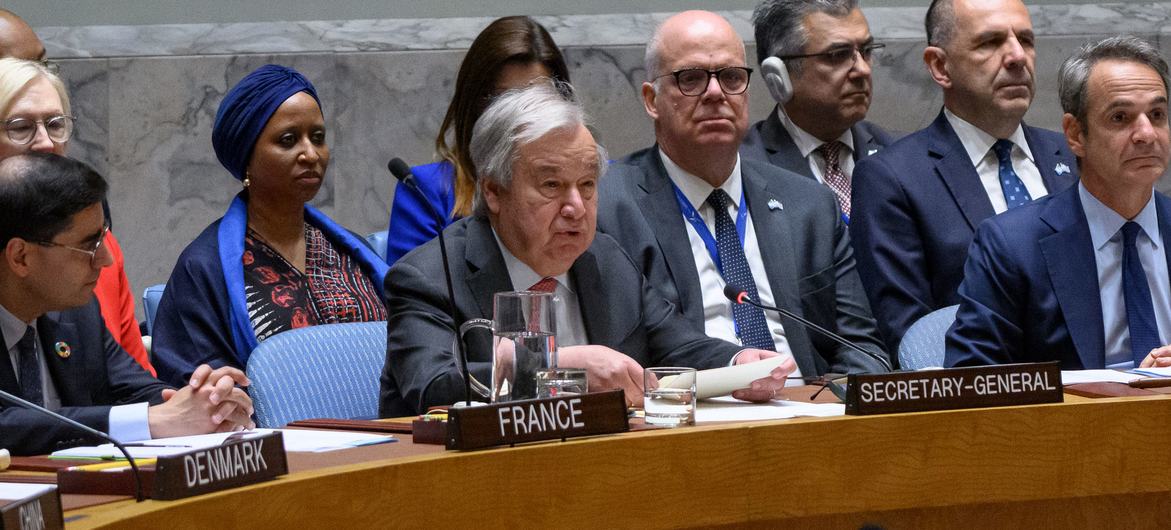
The debate was a signature event of the Greek presidency of the Council. Prime Minister Kyriakos Mitsotakis held the gavel, and several ministers were in the chamber.

A 90-day countdown to collapse

Melina Travlos, President of the Union of Greek Shipowners, delivered a stark warning to Council members: if the global shipping system grinds to a halt, the world economy will collapse in just 90 days.

She described shipping as “the silent guardian of global welfare,” noting that 90 per cent of international trade and more than 12 billion tonnes of goods depend on maritime transport each year.

Shipping unites the world, not occasionally, but consistently,” she said, calling for greater protection of seafarers and maritime infrastructure amid increasing and more complex threats.

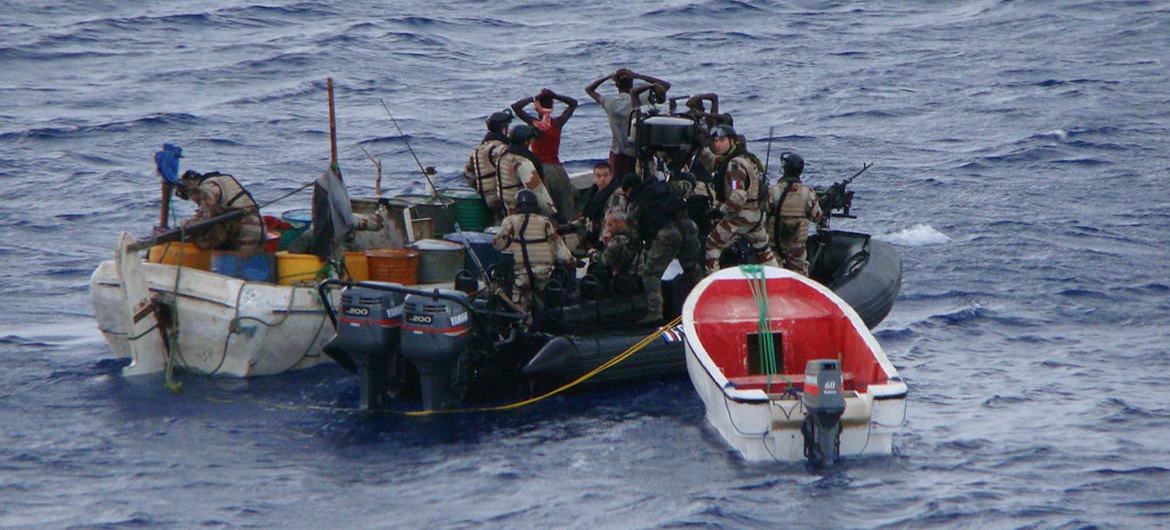
Security forces board a boat suspected of piracy in the Gulf of Guinea. (file)

One ship, six days, billions lost

Christian Bueger, a professor of international relations at the University of Copenhagen, reminded ambassadors that in 2021, a single ship – the Ever Given – blocked the Suez Canal for six days, costing the global economy billions.

Never before in history have we been as dependent on the sea as we are today,” he said, citing a 300 per cent rise in maritime trade since the 1990s.

Mr. Bueger urged Member States to adopt a more systematic, evidence-based approach to maritime security, urging a global response that is as interconnected as the threats it faces.

Uphold law of the sea

In his remarks, Secretary-General Guterres laid out a three-pronged strategy to strengthen maritime security – highlighting that decisive, coordinated global action is needed regardless of individual flashpoints or shipping disruptions.

These include upholding international law, tackling the root causes of maritime insecurity, and strengthening global partnerships.

He called on all nations to uphold international law, especially the UN Convention on the Law of the Sea (UNCLOS), the international treaty that sets the legal framework for all maritime activities and regulates the use of ocean and its resources.

This framework is only as strong as States’ commitment to full and effective implementation,” he said.

“All States must live up to their obligations.”

Secretary-General António Guterres (centre) addresses the UN Security Council meeting on strengthening maritime security through international cooperation for global stability under maintenance of international peace and security.

Prioritise investment

On root causes, he urged investment in coastal communities, judicial reform and building maritime capacity in developing countries — from surveillance to port security.

Alongside this, weak governance, rising poverty and lack of opportunities must be addressed.

The UN chief stressed that lasting solutions would require cooperation from governments, regional bodies, the private sector and civil society – including women and girls, who are disproportionately affected by maritime crime.

Collectively, we must do more to reduce the likelihood that desperate people will turn to crime and other activities that threaten maritime security and degrade our ocean environment,” he said.

“The United Nations system stands ready to support Member States to ensure peaceful, secure, and prosperous maritime spaces for generations to come.”

Source link