Political violence against MPs rising worldwide

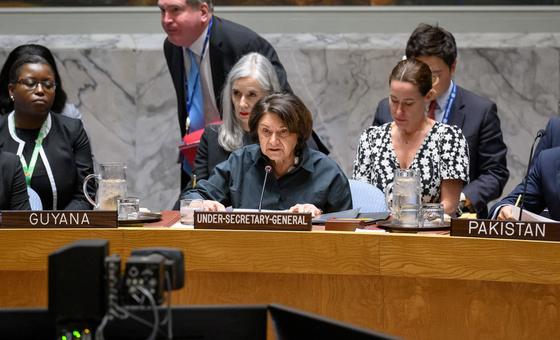
Head of the IPU, Martin Chungong, told a UN conference in New York on Wednesday that “if the phenomenon goes uncontrolled, there will be major implications for democracies, parliaments and human rights worldwide”.

In an interview with UN News, Valentina Grippo, an Italian MP with the European Delegation to the IPU – which partners with the UN – emphasised the difficulties MP’s have just doing their job today: “If you say something that is not perfectly in line with what your audience wants to hear, then you have multiple attacks.”

The report titled When the public turns hostile: Political violence against parliamentarians, includes responses from parliamentarians across 85 countries, with in-depth case studies in Argentina, Benin, Italy, Malaysia and the Netherlands to reflect diverse political and regional contexts.

Key Findings

  1. Violence is heavily concentrated online with between 65 and 77 percent of MPs across the five-case studies report experiencing abuse online. 
  2. Most common forms of intimidation:
    – Insults and degrading language
    – Spread of false or misleading information
    – Direct threats 
  3. A majority of respondents say the situation is worsening. In Argentina and the Netherlands, eight out of 10 MPs report an increase in violence over the past five years. 
  4. Online violence frequently increases around:
    – National or local elections
    – High-profile legislative debates
    – Polarizing political or cultural issues 
  5. Gender gap:
    – 76 per cent of women MPs report exposure to violence
    – 68 per cent of men MPs report exposure 
  6. Gendered abuse: Women are disproportionately targeted with gendered and sexualized violence, particularly online. 
  7. Impact of emerging technologies: Abuse is increasingly amplified by AI-generated content and deepfakes. 
  8. MPs from minority or disadvantaged groups, including racial minorities, people with disabilities, and LGBTQIA+ communities, face heightened levels of online violence.

Why the increase?

The IPU report highlights several factors driving the increase in public hostility, including rising political polarization, economic and social pressures that contribute to public frustration, the amplification of anger through social media, and declining trust in public institutions

Ms Grippo emphasised that “you no more have the confrontation between ideas, which is normal, which is part of politics, but you really have a fight between identities.”

Who is committing the violence?

Violence against Members of Parliament is most often carried out by individuals rather than organised groups.

Online, anonymous users are identified as the main perpetrators by nearly nine in 10 MPs in Argentina, Italy, Malaysia and the Netherlands (89–93 per cent).

“Those we surveyed consistently told us that sustained online abuse affected their offline behaviour including their willingness to engage publicly and their sense of personal safety,” Mr Chungong said.

Impact on democracy

The IPU warns that public intimidation of Members of Parliament can have serious consequences for democracy.

As hostility increases, many MPs report censoring themselves, avoiding certain public appearances, and experiencing negative impacts on their family members.

Some also choose to step down or not seek re-election. Over time, the report warns, these trends can erode democratic representation, discourage diversity, and weaken parliaments as democratic institutions.

“It makes it more difficult to somehow be able to deliver a message without fearing that it is misunderstood.” Ms Gruppo added that “we always have to remember that there are big parts of the world where you cannot say what you think without fearing for your safety.”

The report calls on political and parliamentary leadership to set boundaries when it comes to acceptable public discourse and to ensure that intimidation does not succeed in silencing dissenting and minority voices.

The IPU is the global organization of national parliaments. It was founded in 1889 as the first multilateral political organization in the world, encouraging cooperation and dialogue between all nations. 

Today, the IPU comprises 183 national Member Parliaments and 15 regional parliamentary bodies. It promotes peace, democracy and sustainable development. 

It helps parliaments become stronger, younger, greener and more gender-balanced. It also defends the human rights of parliamentarians through a dedicated committee made up of MPs from around the world.

Source link

UN envoy urges renewed political push as Yemen tensions rise

Hans Grundberg also warned that rising regional tensions risk dragging Yemen back into broader confrontation. 

I ask this Council to remain united in supporting a credible path back to a political process, and I urge regional actors to align around the same purpose and to use their influence in a coordinated way to steer Yemenis toward engagement,” he said. 

A ‘fragile’ situation 

Since 2014, Yemeni government forces, who are backed by a Saudi-led coalition, and Houthi rebels have been fighting for full control of the fractured country.  

The internationally recognised authorities are largely based in the southern city of Aden while the Houthis, officially known as Ansar Allah, control the capital Sana’a and large areas of the north and west.  

In recent months, forces affiliated with a separatist group in the south have advanced on more territory.  

Mr. Grundberg briefed from the Saudi capital Riyadh, where he held talks with Yemen’s newly appointed Prime Minister Shaya al-Zindani and members of the Presidential Leadership Council. 

He highlighted early positive signs in government areas, including improvements in the provision of electricity and payment of public sector salaries, and commended the appointment of three women cabinet ministers. 

“However, continued tensions, recent security incidents and demonstrations, where in some cases violence and loss of life has been reported, underscore the fragility of the situation,” he said. 

‘Protect recent gains’ 

He told the Council that the new cabinet “can protect recent gains by anchoring them in strengthened institutions and economic reforms”. 

Furthermore, a planned southern dialogue offers an opportunity to begin addressing long-standing grievances and build consensus on issues important to the region’s people and all Yemenis.  

Mr. Grundberg said that stabilisation in any part of the country will not be durable if the broader conflict is not addressed comprehensively. 

“It is high time to take decisive steps in that regard,” he said. “Without a wider negotiated political settlement to the conflict, gains will continue to remain vulnerable to reversal.” 

The way forward 

The UN envoy has been engaging with the warring parties, regional actors and the international community to explore ways to restart an inclusive political process in Yemen.  

His office has also held consultations with a diverse group of Yemenis, leading to three takeaways. 

The first calls for acknowledging what more than a decade of war has done to Yemen. Although the conflict has become more complex, the common objective has remained steady and firm. 

Yemen needs an inclusive political process under UN auspices to reach a negotiated political settlement that can sustainably end the conflict, but getting there requires that the parties adopt a forward-looking approach,” he said. 

Restarting a political process will require engagement across political, economic and security issues in tandem “without making engagement in one track contingent on progress in another”, he added. 

The third point calls for a credible process that enables near-term agreements that reduce suffering and demonstrate progress. At the same time, space must be created for negotiations on longer-term issues, including the future shape of the State, security arrangements and principles of governance. 

Free detained staff 

The Special Envoy also used the briefing to reiterate his call for the unconditional release of scores of UN personnel who have been arbitrarily detained by the Houthis. 

Currently, 73 staff are locked up, along with representatives from civil society and diplomatic missions. 

“Many have been held incommunicado, with serious concerns about their conditions and wellbeing. Some have been referred to Ansar Allah’s special criminal court, which is proceeding with trials that fall far short of basic due process,” he said. 

He noted that this week marked a year since a staff member with the World Food Progamme (WFP) died while being held and no investigation has taken place. 

Houthis storm UN offices 

A senior official with the UN aid coordination office, OCHA, updated the Council on the humanitarian situation in Yemen. 

“As we have said in this Council before, these detentions of humanitarian workers are having a profound impact on operations,” Lisa Doughten, director of OCHA’s financing and outreach division, told ambassadors. 

She reported that the Houthi de facto authorities entered multiple UN offices in Sana’a on 29 January “without permission, commandeering equipment and vehicles”.  

They also continue to withhold clearances for UN Humanitarian Air Service (UNHAS) flights to Marib, though flights to Sana’a resumed over the weekend following a month-long suspension.  

Millions in need 

The “interference and impediments” are happening when 22.3 million people – half the population – need humanitarian assistance this year, or nearly three million more than in 2025.  

Around 18 million face food insecurity, making Yemen the region’s most severe hunger crisis. It is also the country with the largest number of people experiencing emergency food security conditions, some 5.5 million. 

Source link

Proposed amnesty law offers political prisoners in Venezuela an ‘opportunity’

The amnesty is aimed at promoting peace, democratic coexistence and national reconciliation as the South American country enters a new era following the seizure of former President Nicolas Maduro by the United States. 

It passed unanimously on 5 February by Venezuelan legislators in the first of two readings.

The amnesty “offers an opportunity to provide justice and alleviate the suffering of the many people who have been unlawfully detained for political reasons in Venezuela,” said Alex Neve, a member of the UN Independent International Fact-Finding Mission for Venezuela.

“This law has the potential to contribute to restoring rights and repairing Venezuela’s social fabric, but the voices of the countless Venezuelans whose rights have been violated in the country’s prisons, as well as the civil society organizations who have assisted and defended them, must be at the centre of this process,” Mr. Neve said.

The broader picture 

Following years of political violence in Venezuela, many politicians, activists and journalists have been charged with crimes such as terrorism or treason – according to human rights groups

According to media reports over 300 political prisoners have been released since 8 January but many political prisoners remain in detention

Transparency essential

The UN human rights experts have raised concerns about how the amnesty will be enacted, stating that its “legitimacy and impact depend on a transparent and inclusive process that is fully grounded in international human rights law.” 

In a statement released by the United Nations Human Rights Council, the investigators warned of the “absence of informed, inclusive, and safe public consultations” and emphasised the need for ‘a transparent process, with meaningful participation from victims, their families and civil society.” 

Calls for participation 

Fact-Finding Mission expert Maria Quintero, stated that it was “advisable for the judicial verification procedure to include the participation of victims and their families, their representatives, and human rights organizations, in order to prevent the law from being instrumentalized or applied in a manner incompatible with international standards.” 

She added, “we must not forget accountability.”

Whilst the draft legislation is debated within Venezuela’s government, UN experts have reiterated their call for the “unconditional” release of all political prisoners, stating that “it is critical that the process of releasing prisoners, already underway, continues without interruption.” 

The Human Rights Council-appointed Independent International Fact-Finding Mission was established to assess alleged human rights violations committed since 2014. 

Source link

Gender Equality: UN Women Body Calls For Political Will and Accelerated Global Action

The world is retreating from gender equality, and the cost is being counted in lives, rights, and opportunities. Five years from the Sustainable Development Goals (SDGs) deadline in 2030, none of the gender equality targets are on track.

That’s according to this year’s SDG Gender Snapshot report launched on Monday by UN Women and the UN Department of Economic and Social Affairs, which draws on more than 100 data sources to track progress across all 17 Goals.

2025 marks three major milestones for women and girls: the 30th anniversary of the Beijing Declaration and Platform for Action, the 25th anniversary of United Nations Security Council resolution 1325 on women, peace and security, and the 80th anniversary of the United Nations, but with the new sobering data, it is urgent to accelerate action and investment.

Other findings in the report reveal that female poverty has barely shifted in half a decade, stuck at around 10 per cent since 2020. Most of those affected live in sub-Saharan Africa and Central and Southern Asia.

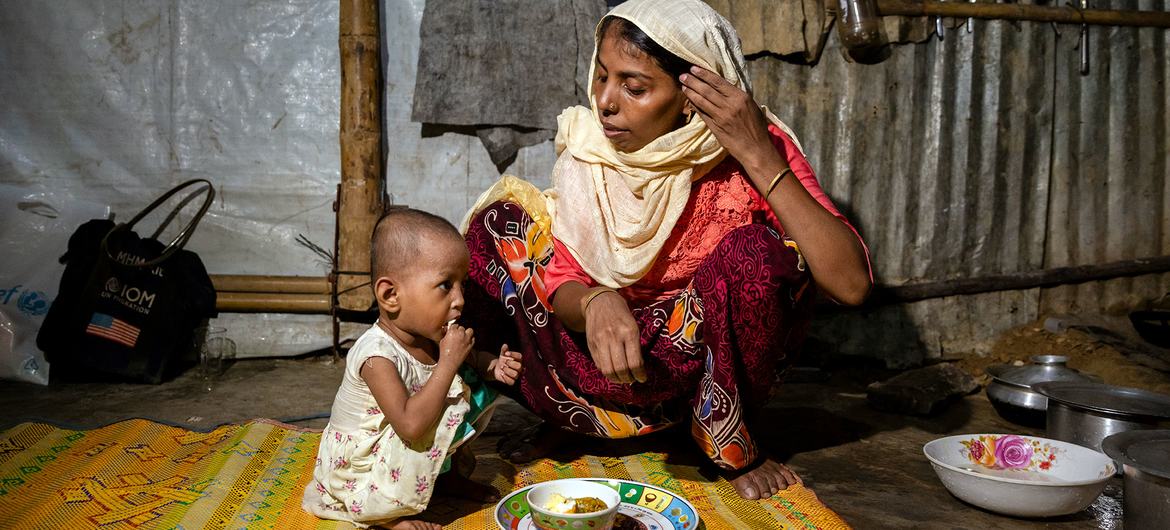
A two-year-old girl suffering from malnutrition is fed by her mother at their shelter in Cox’s Bazar, Bangladesh / © UNICEF/Ilvy Njiokiktjien

In 2024 alone, 676 million women and girls lived within reach of deadly conflict, the highest number since the 1990s. For those caught in war zones, the consequences extend far beyond displacement. Food insecurity, health risks, and violence rise sharply, the report notes.

Violence against women and girls remains one of the most pervasive threats. More than one in eight women worldwide experienced physical or sexual violence at the hands of a partner in the past year, while nearly one in five young women was married before the age of 18. Each year, an estimated four million girls undergo female genital mutilation, with over half cut before their fifth birthday.

Prioritizing gender equality

Yet, amid the grim statistics, the report highlights what is possible when countries prioritize gender equality. Maternal mortality has dropped nearly 40 per cent since 2000, and girls are now more likely than ever to finish school.

Speaking to UN News, Sarah Hendriks, Director of the Policy Division at UN Women, said that when she first moved to Zimbabwe in 1997, “giving birth was actually a matter of life and death”.

“Today, that’s no longer the reality. And that’s an incredible level of progress in a short 25, 30 years”, she added.

Technology, too, holds promise. Today, 70 per cent of men are online compared to 65 per cent of women. Closing that gap, the report estimates, could benefit 343.5 million women and girls by 2050, lifting 30 million out of poverty and adding $1.5 trillion to the global economy by 2030.

“Where gender equality has been prioritized, it has propelled societies and economies forward,” said Sima Bahous, Executive Director of UN Women. “Targeted investments in gender equality have the power to transform societies and economies.”

At the same time, an unprecedented backlash on women’s rights, shrinking civic space, and growing defunding of gender equality initiatives is threatening hard-won gains.

According to UN Women, without action women remain “invisible” in data and policymaking, with 25 per cent less gender data available now due to survey funding cuts.

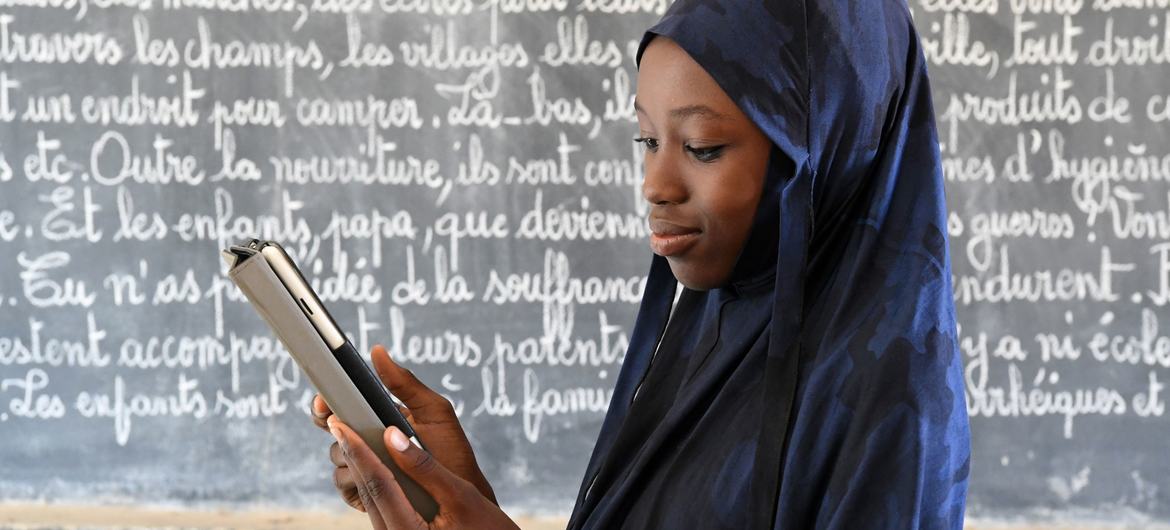
A girl uses a tablet during class at her school in Safi, South Niger.

“The Gender Snapshot 2025 shows that the costs of failure are immense but so are the gains from gender equality,” said Li Junhua, United Nations Under-Secretary-General for Economic and Social Affairs.

“Accelerated action and interventions focused on care, education, the green economy, labour markets and social protection could reduce the number of women and girls in extreme poverty by 110 million by 2050, unlocking an estimated $342 trillion in cumulative economic returns.”

But progress remains uneven, and often painfully slow.  Women hold just 27.2 per cent of parliamentary seats worldwide, and their representation in local governments has stalled at 35.5 per cent. In management, women occupy only 30 per cent of roles, and at this pace, true parity is nearly a century away.

Marking 30 years since the Beijing Platform for Action, the report frames 2025 as a moment of reckoning. “Gender equality is not an ideology,” it warns. “It is foundational for peace, development, and human rights.” Ahead of the UN high-level week, the Gender Snapshot report makes clear that the choice is urgent: invest in women and girls now, or risk losing another generation of progress.

Ms. Hendriks shared UN Women’s message for world leaders: “Change is absolutely possible, and a different pathway is before us, but it is not inevitable, and it requires the political will, as well as the determined resolve of governments right around the world to make gender equality, women’s rights and their empowerment a reality once and for all”.

Anchored in the Beijing+30 Action Agenda, the report identifies six priority areas where urgent, accelerated action is needed to achieve gender equality for all women and girls by 2030, which include a digital revolution, freedom from poverty, zero violence, full and equal decision-making power, peace and security and climate justice.


Nepal crisis: Army deployed as death toll rises amid political turmoil

The unrest began Monday as a self-styled “Gen Z protest” against corruption, nepotism and restrictions on social media. It quickly escalated after security forces opened fire on the crowds.

By Tuesday, protesters had stormed and torched parliament, the Supreme Court and multiple government offices, including Singha Durbar – the central administrative complex. Homes of political leaders were attacked, police stations overrun, and Tribhuvan International Airport briefly closed.

In addition, media outlets and schools were set on fire, while the Ministry of Health and Population was also destroyed, including the National Health Emergency Operation Centre.

UN chief urges dialogue

UN Secretary-General António Guterres said he was “deeply saddened by the loss of life” and urged restraint, dialogue, and a thorough investigation into the violence.

“I call on the authorities to comply with human rights law,” he posted on social media late on Tuesday (New York time).

“Protests must take place in a peaceful manner, respecting life and property.”

Volatile security situation

According to media reports, the updated toll includes both protesters and police, as well as people killed in fires during the demonstrations. Many remain unaccounted for, with hospitals reporting critically injured patients.

The turmoil also triggered jailbreaks in several locations, with some inmates still at large.

Some accounts suggest demonstrations may have been infiltrated by outside actors, further complicating the volatile security environment.

Efforts to restore order

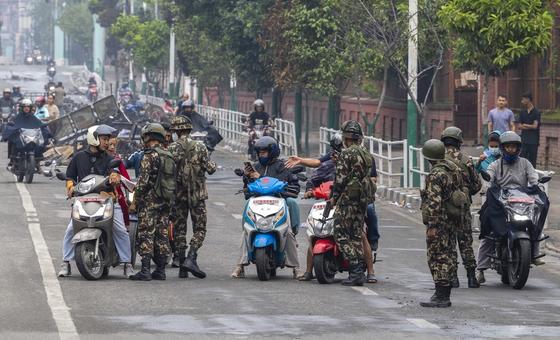
The army assumed control of nationwide security late Tuesday local time, deploying troops across the Kathmandu Valley and imposing movement restrictions to stabilise the situation.

Checkpoints were established, and people have been urged to stay home except for essential travel.

Media also reported the army recovering some of the weapons looted from police personnel, while youth groups helped apprehend escaped prisoners and return firearms. Some inmates voluntarily surrendered.

Tribhuvan International Airport has since reopened, and some police stations are back in operation.

Country at a crossroads

Even amid the chaos, some youth groups were seen clearing debris from their neighbourhoods.

Behind the immediate turmoil, talks are reportedly underway on the possible formation of an interim government to steer the country through the crisis. Discussions also include the dissolution of parliament, investigations into illegally acquired assets, and reform of key institutions.

Source link

Syria: Political transition on ‘a knife-edge’ amid military skirmishes

Geir Pedersen told ambassadors that in Sweida governate, where sectarian violence in July also spurred conflict in the capital Damascus, the 19 July ceasefire has come under strain, but the conflict has not resumed so far.

However, “we are still seeing dangerous hostilities and skirmishes on the margins of Sweida, and violence could resume at any moment,” he said.

In northeast Syria, efforts to implement the 10 March agreement between the interim security forces and the mostly-Kurdish Syrian Democratic Forces (SDF) continue. Just this month, there have been spikes in violence between the two militaries in the Aleppo governorate.

While attempts to convene the two sides outside of the country have been unsuccessful, Mr. Pedersen welcomed reports of contacts between officials.

Despite these security incidents, Mr. Pedersen stressed that the situation has been relatively calm this month, applauding the efforts of those who have worked to tamp down hostilities.

However, in terms of the political situation, “the country remains deeply fragile and the transition remains on a knife-edge.

Political transition?

After 13 years of civil war, Mr. Pedersen underscored the need for an inclusive, Syrian-led political transition that enables the Syrian people determine their own future peacefully, independently and democratically.

Syrians need to feel that this transition is not a series of ad hoc arrangements and isolated institutions, but a clear and comprehensive path, based on inclusion and transparency, to implement the principles of resolution 2254,” he said.

To encourage the voluntary, safe return of refugees and internally displaced persons, Mr. Pedersen stressed the need for coordinated support to repair Syria’s depleted infrastructure.

The best way to secure such support is through a genuine political transition that lays the path for long-term stability and sustainable governance. Indeed, without credible reforms, stronger institutions, and a firm commitment to the rule of law, international support risks being squandered or misdirected,” he stressed.

Humanitarian situation still dire

Amid the precarious military and political situation, 16 million Syrians across the country need humanitarian aid, according to Emergency Relief Coordinator Tom Fletcher.

Additionally, over 185,000 people have been displaced across Sweida, Dar’a, Rural Damascus and beyond.

The overall situation is dire. We need to sustain urgent delivery of food, health, shelter, clean water, fuel, restoration of water and electricity infrastructure, education. In some areas, those arriving now outnumber the existing population. Services are overwhelmed,” said Mr. Fletcher.

Teams from the UN humanitarian aid coordination office (OCHA) have visited Sweida and other towns, delivering aid and assessing needs.

OCHA has also provided emergency food packages, flour and essential household items to tens of thousands of people.

However, insecurity and road closures have disrupted the supply of aid from the UN, NGO partners and the Syrian Arab Red Crescent.

“We need better humanitarian and commercial access. And most of all, we need safety,” Mr. Fletcher stressed, particularly referring to attacks on aid convoys, health facilities, medics and ambulances.

Drastic cuts

Nevertheless, “despite funding and security challenges, the UN and partners are delivering as much lifesaving support as we can with the resources we have,” reaching 3.5 million people on average each month, a noticeable increase from last year.

But with the 2025 humanitarian appeal in the country only 14 per cent funded, ongoing aid cuts in many Western capitals are projected to lead to reduced staffing of at least 40 per cent across the humanitarian community inside Syria.

The UN relief chief emphasised that without more funding, “we won’t be able to sustain these vital efforts, let alone expand them to more people who need them.”

Furthermore, while he urged humanitarian support, he also stressed that long-term development investment is needed in Syria “to reduce and ultimately end reliance on humanitarian aid.”

Source link

UN peacekeeping can work in a fractured world if there is political will

Under-Secretary-General Jean-Pierre Lacroix and Assistant Secretary-General Marta Pobee briefed the Council on priorities for adapting UN peace operations to foster political solutions.

They emphasised the urgent need for the Council and the broader UN membership to overcome divisions and strengthen support for peace operations as unique platforms for advancing diplomacy in conflict zones.

Peacekeeping missions often operate in highly volatile environments, where political processes are stalled, trust among conflict parties is low and humanitarian conditions dire,” Mr. Lacroix said.

Progress is incremental, fragile and uneven. A breakthrough in one moment may be followed by setbacks the next. Yet, even modest gains can be critical in preventing a relapse into widespread violence and saving lives.

He pointed to missions that have made measurable contributions to peace processes, such as MINUSCA in the Central African Republic (CAR), which helped broker the 2019 Political Agreement and launched disarmament efforts, or MONUSCO in the Democratic Republic of the Congo (DRC), which contributed to reduced violence during the 2023 elections.

Security Council unity crucial

Mr. Lacroix stressed that political coherence and unity among Security Council members are essential for missions to realise their potential.

Without “strong, united political support”, he warned, peace operations are limited to managing conflicts and protecting civilians rather than supporting durable peace agreements.

The Council’s role, he added, must extend beyond mandate authorisation to sustained political engagement. He cited the unanimous adoption of resolution 2773 in February 2025 on the DRC as an example of Council unity reinforcing diplomatic efforts on the ground.

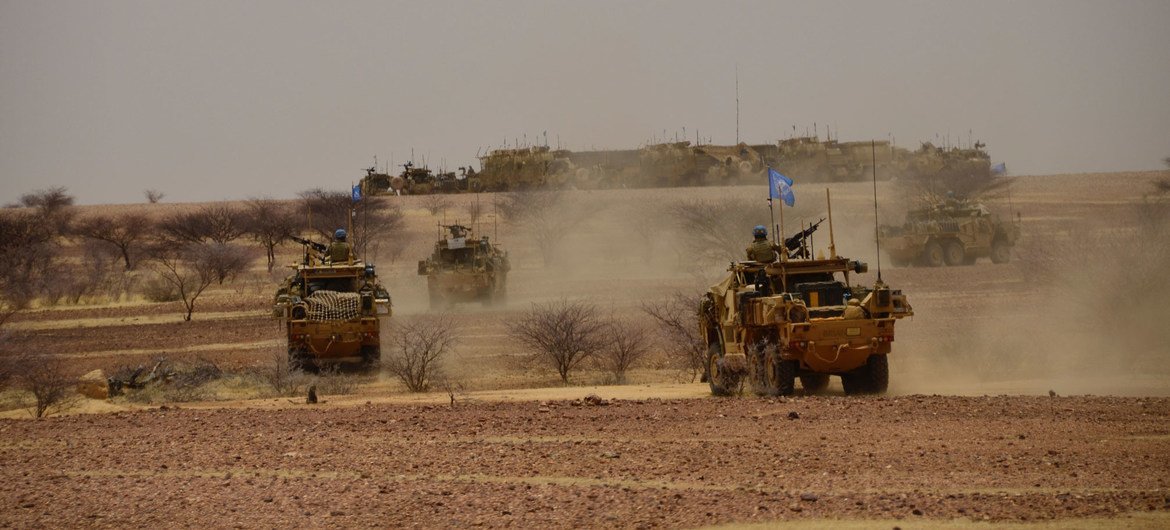
UN peacekeeping missions, such as the one in Mali (MINUSMA, 2013-23), have had to adapt to complex challenges, including harsh environment and myriad armed groups.

Field leadership and flexibility

Mr. Lacroix also highlighted the importance of dynamic mission leadership, calling on senior officials to serve as “steadfast ambassadors for peace” who maintain trust with host governments and conflict actors while adapting to shifting political contexts.

He underscored the importance of regional partnerships, particularly with the African Union (AU). Resolution 2719 (2023), which allows assessed contributions for AU-led operations, was described as a “historic milestone” in UN-AU collaboration.

“Leveraging the investments of troop- and police-contributing countries more purposefully is critical,” he added, noting the example of Pakistan’s dual role as a major troop contributor and elected Security Council member.

Lessons from the cold war

Ms. Pobee’s briefing reinforced these themes while offering historical perspective.

She recalled how during the cold war, despite global tensions, UN special political missions facilitated peaceful dispute resolution, such as diplomatic efforts in Equatorial Guinea in 1969, Bahrain in 1970 and the border dispute between Iraq and Iran in 1974.

She identified several key elements behind those successes: clearly focused, timebound mandates; the pro-active use of the Secretary-General’s good offices; discreet diplomacy and crucially, consent from host governments and conflict parties.

This foundation of trust, she noted, is increasingly absent today, representing a “trust deficit” that complicates peace efforts.

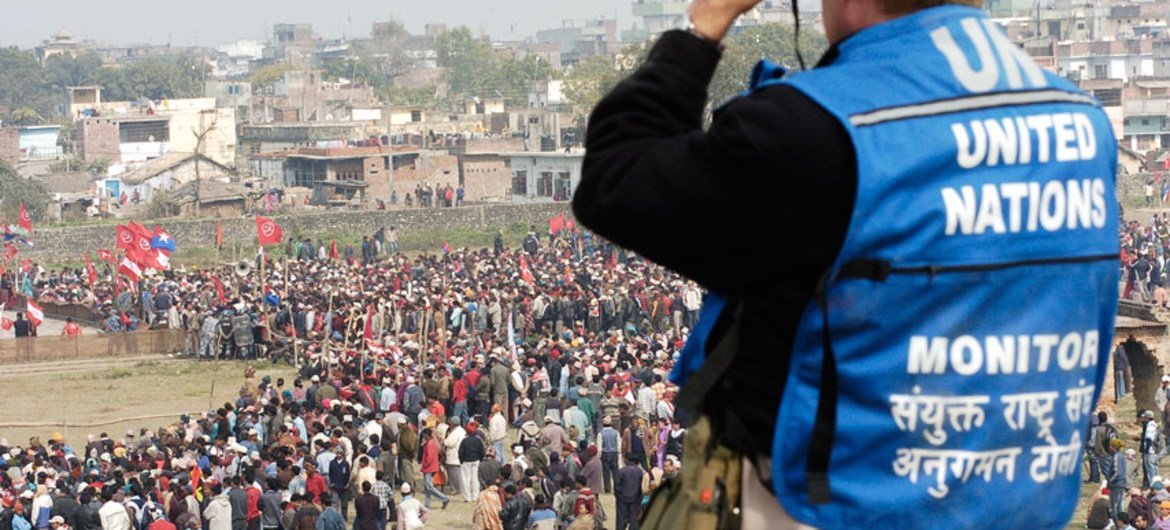
UN special political missions in post‑conflict settings, such as the mission in Nepal (UNMIN, 2007-11) help maintain stability, dialogue and support democratic processes.

A unique tool

Both briefers acknowledged the difficult global context, with deepening Security Council divisions, eroding norms and increasingly complex conflicts involving non-State actors, organized crime and climate-driven risks.

Nonetheless, peace operations, with their combination of civilian and uniformed capabilities, remain indispensable for stabilising fragile settings and enabling political dialogue, they maintained. The longstanding mission in Cyprus was cited as an example of how sustained UN presence can prevent escalation, even amid persistent deadlock.

Mr. Lacroix also urged Member States to pay assessed contributions on time, warning that insufficient resources undermine missions’ ability to fulfil their mandates.

Ms. Pobee added that the UN has repeatedly navigated polarised eras before.

We have been there…but, one clear lesson is that amid acute geopolitical tensions, peace operations have helped Member States mount tailored responses to challenges to international peace and security,” she said.

Source link

DR Congo: Despite efforts towards a political solution, violence still rages in the east

Since January, the region has seen a new escalation of violence as the Rwanda-backed M23 armed group launched an offensive in North and South Kivu provinces.

While tensions persist in the DRC, both frontlines and negotiation positions are shifting, paving the way for peace, the Security Council heard this Friday.

The path to lasting peace in the DRC requires “collective action,” said Bintou Keita, Head of the UN peacekeeping mission in the country, MONUSCO.

“Priority must be given to dialogue over division, and national cohesion must be actively preserved,” she said.

Yet, while diplomatic efforts focus on ways to address the current crisis, the situation in other regions within MONUSCO’s area of operations also demands urgent attention.

Humanitarian situation

With seven million people currently displaced across the country, 27.8 million people facing food insecurity and almost 1.4 million children in acute malnutrition, the humanitarian situation is dire. 

The security crisis in the east of the country has worsened the humanitarian situation, yet due to funding cuts, MONUSCO does not have sufficient means to respond to it accordingly. 

The suspension of funding from MONUSCO’s main donor, which covered 70 per cent of the humanitarian response in 2024, is “forcing humanitarian actors to focus solely on life-saving emergencies,” said Ms. Keita. 

“We are at the end of July, and the humanitarian response plan is only 11 per cent funded,” she added. 

Insecurity, sexual violence and abductions

Violence in the east of the country continues to disproportionately affect women, boys, and girls, notably as rape and other forms of sexual violence are still being systematically used as weapons of war.

Men and boys accused of links with opposing forces are at risk of abduction, while women and girls who have survived sexual violence face severely limited access to healthcare, as healthcare facilities are often targeted by attacks. 

In 2025, over 290 schools were destroyed, with ongoing cycles of violence keeping 1.3 million children out of the education system in Ituri, in the east of the country.  

Source link

SECURITY COUNCIL LIVE: Political Affairs chief hails Iran-Israel ceasefire as ‘significant achievement’


The Security Council is meeting over the future of the Joint Comprehensive Plan of Action put in place in 2015 to prevent Iran from weaponising its ambitious nuclear programme, which has been in effective limbo since the US withdrawal in 2018 and Iran’s rejection of parts of the deal. UN political affairs chief Rosemary DiCarlo described the US-brokered ceasefire overnight between Israel and Iran as a “significant achievement” and “an opportunity to avoid a catastrophic escalation and achieve a peaceful resolution of the Iran nuclear issue.” Follow our Meetings Coverage Section live coverage below and UN News app users can follow here.

Source link

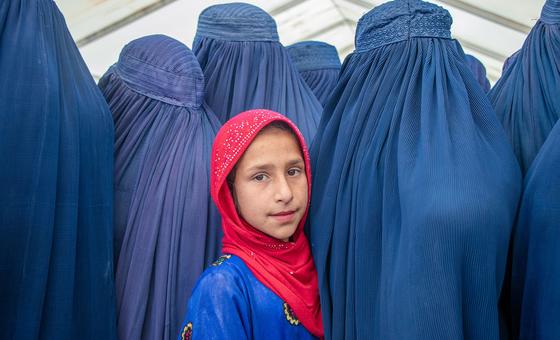
Afghan women face near total social, economic and political exclusion

But recently, the level of participation has reached a new low – zero.

Zero women in national or local decision-making bodies.

Zero girls projected to be in secondary education following a December 2024 ban.

These numbers are part of the index released Tuesday by gender equality agency UN Women which is the most comprehensive study on gender inequality in Afghanistan since the Taliban resumed de facto control in 2021.

It paints a sobering picture of the state of gender equality in Afghanistan.

“Since [2021], we have witnessed a deliberate and unprecedented assault on the rights, dignity and very existence of Afghan women and girls. And yet, despite near-total restrictions on their lives, Afghan women persevere,” said Sofia Calltorp, UN Women chief of humanitarian action, at a briefing in Geneva.

Second-widest gender gap in the world

The report released by UN Women noted that while the Taliban regime has presided over “unparalleled” gender inequality, disparities existed long before 2021.

“The issue of gender inequality in Afghanistan didn’t start with the Taliban. Their institutionalised discrimination is layered on top of deep-rooted barriers that also hold women back,” Ms. Calltorp said. 

According to the index, Afghanistan currently has the second-worst gender gap in the world, with a 76 per cent disparity between women’s and men’s achievements in health, education, financial inclusion and decision-making.

Afghan women are currently realizing only 17 per cent of their potential, and recent policies by the de facto government — including the December 2024 ban on women in secondary education and the increasingly stringent restrictions on women’s movement — will perpetuate and perhaps worsen this under-realized potential.

Systematic exclusion and social effects

This sort of systematic exclusion of women from society at all levels not only impedes progress on the Sustainable Development Goals (SDGs) and gender equality but also exacerbates poverty and instability more broadly, making it harder for the economy to diversify labour sources.

“Afghanistan’s greatest resource is its women and girls. Their potential continues to be untapped,” said UN Women Executive Director Sima Bahous.

Right now, only 24 per cent of women are part of the labour force, compared to 89 per cent of men. Continued protracted economic strife has led to the number of women in the workforce increasing.

“Overlapping economic, political, and humanitarian crises — all with women’s rights at their core — have pushed many households to the brink. In response – often out of sheer necessity — more women are entering the workforce,” Ms. Calltorp said.

Nevertheless, women are still predominantly working in lower-paid and less secure positions and are overwhelmingly responsible for all unpaid domestic work.

Ms. Calltorp noted that despite the “devastating” daily constraints that Afghan women face, they continue to advocate for themselves and their rights.

“[Afghan women] continue to find ways to run businesses and advocate for their rights – and the rights of all Afghans…Their courage and resilience spans generations,” Ms. Calltorp said.

Stark choices

Alongside a deteriorating gender equality landscape, the aid outlook in Afghanistan is increasingly bleak with only 18 per cent of the 2025 humanitarian response plan for Afghanistan funded.

This is having tangible impacts on the ground, leading UN agencies and partners to call for action and funds.

“Time and time again in Afghanistan, we have seen how donor support can be the difference between life and death…We make an urgent appeal to donors to increase flexible, timely and predictable funding,” they said.

Women, girls and other vulnerable groups are particularly impacted by these funding shortages — 300 nutrition sites for malnourished mothers and children have shut and 216 gender-based violence points have suspended work impacting over one million women and girls.

“The choices we make now will reveal what we stand for as a global community. If the world tolerates the erasure of Afghan women and girls, it sends a message that the rights of women and girls everywhere are fragile and expendable,” Ms. Calltorp said.

“Afghan women and girls haven’t given up, and we will not give up on them.”

Source link