Flanked by the country’s Prime Minister, James Marape, Mr. Guterres echoed comments he made during a speech in the national parliament on Wednesday, in which he described Papua New Guineans as “champions of multilateralism and international solutions.”
The Secretary-General noted that, in a world where “we see democratic values being put into question,” the country – where some 800 languages are spoken – retains a preference for solving problems peaceably through dialogue.
Ryan Hawk/Woodland Park Zoo
Papua New Guinea’s rainforest (file)
Time for climate justice…
The climate crisis has been high on the agenda throughout the visit, with Mr. Guterres leaving the capital to visit a rainforest region and discuss the problems caused by the changing climate with civil society representatives.
Addressing the media in Port Moresby, the UN chief expressed gratitude and solidarity with Papua New Guineans, for how they are addressing an existential challenge not of their own making.
“Papua New Guinea does not contribute to climate change,” he pointed out. “Papua New Guinea has a negative emissions record, due to an enormous carbon sink: the admirable forests of this country and the ocean.”
He said it was time for the international community to recognise that countries like Papua New Guinea deserve climate justice and support to build resilience against the “devastating impact of climate change.”
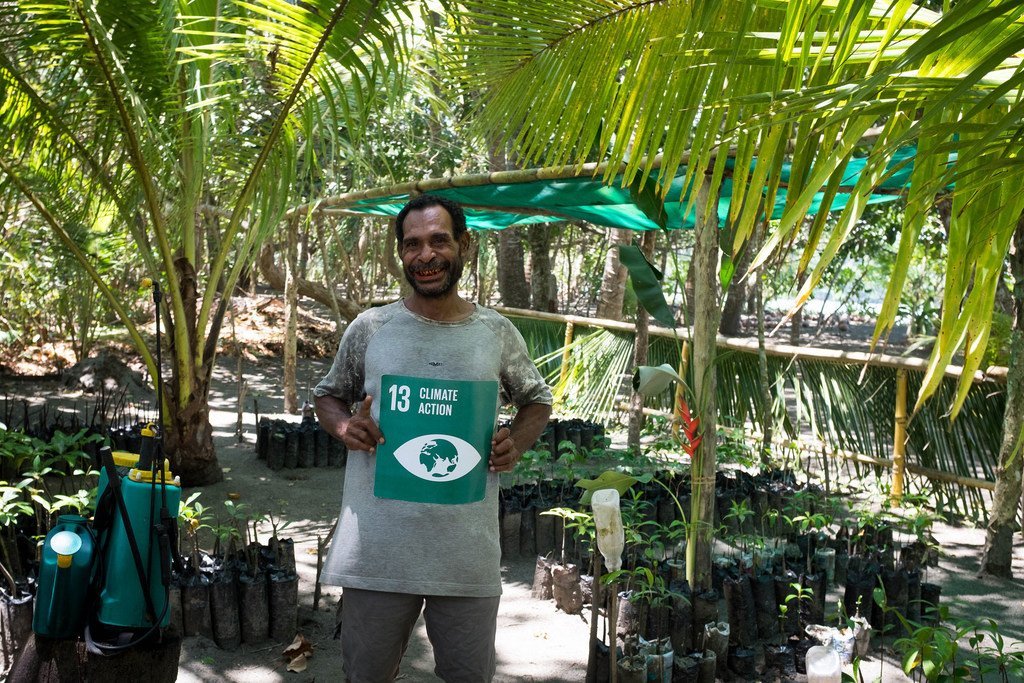
Papuan conservationist Alfred Masul is replanting mangrove trees to build resilience against climate change (file)
…And economic justice
The country’s ability to adapt to the increasingly volatile climate and develop its economy is also hampered, declared Mr. Guterres, by its designation as a middle-income country – which means that it does not have access to the kinds of concessional funding, such as grants, low interest loans and debt relief, that are available to low-income nations.
This, he said, is “an injustice that must be corrected.”
Part of the issue, according to the Secretary-General, is the outdated nature of the international financial architecture (a recurrent theme during his mandate). The institutions created over 75 years ago, need to be reformed “in order for developing countries like Papua New Guinea to have a much stronger voice and a much stronger influence in the way decisions are taken,” he argued, “and a much higher access to the resources that are essential for the development of the country.”
Flanked by the country’s Prime Minister, James Marape, Mr. Guterres echoed comments he made during a speech in the national parliament on Wednesday, in which he described Papua New Guineans as “champions of multilateralism and international solutions.”
The Secretary-General noted that, in a world where “we see democratic values being put into question,” the country – where some 800 languages are spoken – retains a preference for solving problems peaceably through dialogue.
Ryan Hawk/Woodland Park Zoo
Papua New Guinea’s rare cloud forests are a high elevation rainforest characterised by low-level cloud cover. (14 June 2011)
Time for climate justice…
The climate crisis has been high on the agenda throughout the visit, with Mr. Guterres leaving the capital to visit a rainforest region and discuss the problems caused by the changing climate with civil society representatives.
Addressing the media in Port Moresby, the UN chief expressed gratitude and solidarity with Papua New Guineans, for how they are addressing an existential challenge not of their own making.
“Papua New Guinea does not contribute to climate change,” he pointed out. “Papua New Guinea has a negative emissions record, due to an enormous carbon sink: the admirable forests of this country and the ocean.”
He said it was time for the international community to recognise that countries like Papua New Guinea deserve climate justice and support to build resilience against the “devastating impact of climate change.”
Local conservationist Alfred Masul is replanting mangrove trees in Papua New Guinea to build resilience against climate change.
…And economic justice
The country’s ability to adapt to the increasingly volatile climate and develop its economy is also hampered, declared Mr. Guterres, by its designation as a middle-income country – which means that it does not have access to the kinds of concessional funding, such as grants, low interest loans and debt relief, that are available to low-income nations.
This, he said, is “an injustice that must be corrected.”
Part of the issue, according to the Secretary-General, is the outdated nature of the international financial architecture (a recurrent theme during his mandate). The institutions created over 75 years ago, need to be reformed “in order for developing countries like Papua New Guinea to have a much stronger voice and a much stronger influence in the way decisions are taken,” he argued, “and a much higher access to the resources that are essential for the development of the country.”
António Guterres is the first serving UN Secretary-General to visit the country, which is celebrating 50 years of independence.
He praised its tremendous diversity, with over 800 languages spoken and countless traditions.
Commitment to peace, dignity and progress
“And yet, you have a shared commitment to speak with one voice – to having ‘one talk’ – for peace, for dignity and for progress,” he said.
“You are champions of multilateralism and international solutions. And that spirit is urgently needed in our world today.”
He said that “Papua New Guinea offers a number of powerful lessons to the world”, with the first being forging consensus through dialogue.
The country has spent the past half century working to build “a single nation out of many traditions, many islands, many tongues”, which has not been easy.
Last Saturday, 30 August, marked 24 years since the signing of the Bougainville Peace Agreement. The accord between the Government and separatists ended a decade of conflict and established the autonomous Bougainville region.
Mr. Guterres said that while the conflict left deep scars, Papua New Guinea and Bougainville have stayed the course of peace for more than two decades.
“You have shown the world the path of healing through dialogue, perseverance and mutual respect,” he said, adding that people in Bougainville will go to the polls on Thursday in the fifth autonomous election since the agreement.
Leadership in climate action
Another lesson from Papua New Guinea has been bold climate action.
This was the Secretary-General’s first visit to the Pacific region since the International Court of Justice (ICJ), the UN’s highest judicial body, issued a landmark advisory opinion affirming that addressing the climate crisis is a legal obligation under international law.
As Pacific countries played a central role, the advisory opinion “is a testament to the leadership of Papua New Guinea, Melanesia and the wider Pacific region, particularly your young people, who make up 60 per cent of your population”, he said.
A crucial voice
“Your voice will be integral again during the annual UN climate conference in Belem, Brazil,” he said, warning that efforts to limit global temperature rise to 1.5 degrees Celsius are in jeopardy.
He urged countries to submit new national climate plans that align with this goal, cover all emissions across their economies and accelerate the transition from fossil fuels.
Mr. Guterres also called for action on climate finance, including stepping up contributions to the loss and damage fund, while richer countries must honour their promise to double adaptation finance and deliver $300 billion each year over the next decade.
Furthermore, as many developing countries are “drowning in unsustainable debt”, reform of the current international financial architecture is needed to make it fairer and more representative. The same applies to the UN Security Council and other international institutions.
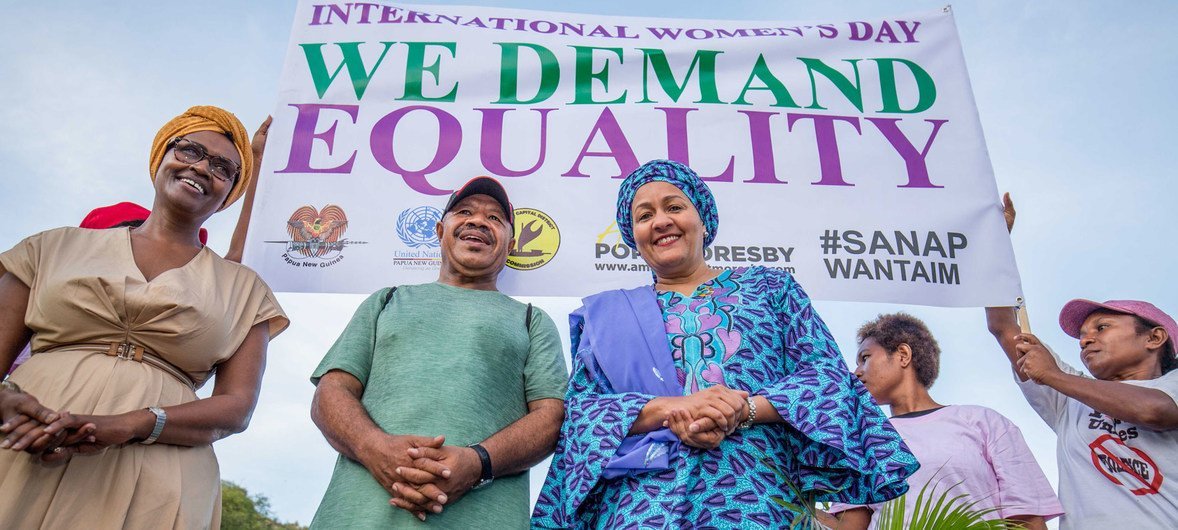
The UN Deputy Secretary-General, Amina Mohammed (centre right) joined a march in support of International Women’s Day in Port Moresby, Papua New Guinea, in March 2020.
Representation of women
The UN chief noted that Papua New Guinea once hosted peacekeepers, but today is a champion of peacebuilding and sustainable development.
He stressed, however, that “no story of peace or progress is complete without fully including half of the population”, highlighting another area where the country can set an example.
He recalled that UN Deputy Secretary-General Amina Mohammed was there five years ago for the national launch of the Spotlight Initiative — part of the world’s largest effort to end all forms of violence against women and girls, a challenge that exists in all societies.
In March, parliament devoted an entire day to testimonies on gender-based violence, marking a vital step.
“Ensuring greater voice and representation of women is not only a matter of justice — it is a matter of national strength,” he said.
“Families thrive. Communities grow stronger. And institutions become more responsive when we uphold the rights of all.”
Paulo Sérgio Pinheiro highlighted the establishment of the National Transitional Authority and the National Authority for Missing Persons which are expected to help reveal the fate of the more than 100,000 Syrians estimated to have been forcibly disappeared or gone missing.
They are also expected to expose the truth about systematic violations like arbitrary detention, torture and ill-treatment, and about widespread attacks which killed hundreds of thousands of civilians and maimed millions during hostilities.
Syria continues along the path to transition following the overthrow of the Assad regime last December.
Wave of retaliatory attacks
Mr. Pinheiro said the security vacuum left after the dismissal of the armed forces and security services, together with a lack of clarity on the new framework for justice, contributed to an atmosphere where victims of past crimes and violations attempted to take the law into their own hands and settle scores.
Retaliatory attacks that took place in coastal areas in March, and on a smaller scale in other parts of the country, were “in part a response to five decades of systematic crimes perpetrated by security forces with impunity which affected all Syrians,” he said.
“More recently, sectarian fault lines have also been fuelled by widespread hate speech and incitement against Alawis, off and online, including posts with false information reportedly often originating from abroad.”
Eyewitness accounts
The Commission conducted its latest visit to Syria last week and travelled to several locations on the coast where killings and looting had occurred. The team met with several civil and security authorities, as well as eyewitnesses and victims’ families.
“First-hand accounts by survivors of these events…revealed in detail how residential areas were raided by large groups of armed men, many of them members of factions now affiliated with the State. They told us how the assailants detained, ill-treated and executed Alawis,” he said.
He acknowledged the interim authorities’ establishment of a National Inquiry to investigate the violations as well as an additional High-Level Committee to Maintain Civil Peace. Furthermore, dozens of alleged perpetrators have been arrested.
“Protection of civilians is essential to prevent further violations and crimes,” he said.
“We welcome the commitment of President (Ahmed) al-Sharaa to hold those responsible accountable to restore confidence for State institutions amongst the affected communities.”
He also pointed to a deadly attack on a Greek Orthodox church in Damascus last Sunday, saying the authorities must ensure the protection of places of worship and threatened communities, and perpetrators and enablers must be held accountable.
Foreign intervention
Mr. Pinheiro told the Council that “the Syrian conflict has had no shortage of internal challenges and grievances, many of which were made worse by foreign interventions.”
In recent weeks, Israel has carried out a wave of airstrikes in and around Damascus, including near the presidential palace. Military bases and weapons depots in Daraa, Hama, Tartous and Latakia have also been targeted as part of its sustained military campaign in Syria. Several civilians were killed.
Civilian casualties were also reported in the context of Israeli operations in the buffer zone in Quneitra and southwestern Daraa monitored by the UN Disengagement Observer Force (UNDOF)
“These actions raise serious concerns of violations of international human rights and humanitarian law as UN Secretary-General (António) Guterres further stated recently,” he said.
Millions in need
Mr. Pinheiro reported that more than two million Syrians have returned home since December, including nearly 600,000 from neighbouring countries and just under 1.5 million internally displaced persons (IDPs).
“For many of the over seven million Syrians who remain displaced, massive property-related challenges will need to be tackled in the wake of industrial-scale destruction, pillage and confiscation of homes and lands,” he said.
Moreover, he noted that “despite the recent encouraging steps towards lifting of sectoral sanctions and opening the country to new investments, nearly 16.5 million Syrians remain in need of humanitarian assistance.” Among them are nearly three million people facing severe food insecurity.
Mr. Pinheiro concluded his remarks, saying “the interim authorities’ repeated commitments to protect the rights of everyone and all communities in Syria without discrimination of any kind are encouraging” and “should be met with the necessary support from the international community.”
Amid this relative calm, the United Nations has renewed its call for a diplomatic solution to the Iran nuclear issue, warning that the objectives of the Joint Comprehensive Plan of Action (JCPOA) – and the resolution that endorsed it – remain unmet.
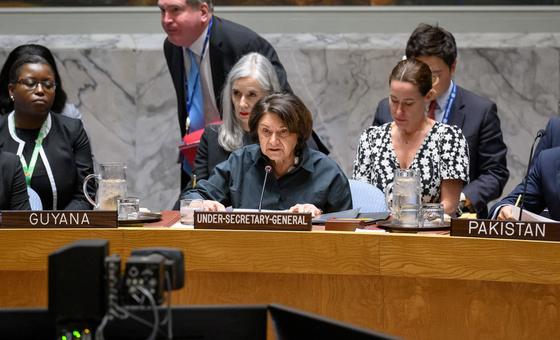
Addressing a planned Security Council meeting on Tuesday to try and revive the deal amid the dramatic military escalation of the past 12 days, UN political affairs chief Rosemary DiCarlo said the fragile ceasefire announced by Donald Trump overnight provided “an opportunity to avoid a catastrophic escalation and achieve a peaceful resolution of the Iran nuclear issue.”
The 2015 Iran nuclear deal – more formally known as the JCPOA and backed by the Security Council – offered Tehran sanctions relief in exchange for strict limits on uranium enrichment, stockpile levels and centrifuge use, alongside robust monitoring and verification by the International Atomic Energy Agency (IAEA).
But the accord has remained in limbo since the United States withdrew in 2018, followed by Iran’s rollbacks of its nuclear-related commitments.
With key provisions under resolution 2231 set to expire on 18 October – unless the Council decides otherwise – the UN’s top political official has warned that the window for reviving diplomacy is narrowing.
With less than four months before resolution’s remaining nuclear-related restrictions are set to expire on 18 October – unless extended by the Council – the UN’s top political official warned that the agreement’s key aims remain elusive.
Diplomacy kneecapped?
Ms. DiCarlo told ambassadors the recent surge in violence had significantly undermined diplomatic momentum.
“The military escalation between Israel and Iran since 13 June and United States air strikes on Iran’s nuclear facilities on 21 June complicated prospects for achieving full implementation of resolution 2231,” Ms. DiCarlo said.
“Iran’s strikes yesterday on a base in Qatar further exacerbated insecurity in an already tense region.”
Despite five rounds of bilateral talks between Iran and the US, facilitated by Oman in recent months, Ms. DiCarlo noted that efforts “did not produce a way forward” to restore full JCPOA implementation.
A sixth round of talks was called off due to the outbreak of hostilities.
Meanwhile, the toll from the recent conflict has been sobering. According to Iranian authorities, at least 606 people were killed and more than 5,300 injured since hostilities erupted on 13 June. Israeli officials reported 28 deaths and nearly 1,500 injuries.
Time running out
While divisions persist, Ms. DiCarlo said JCPOA participants – China, France, Germany, Iran, Russia, and the United Kingdom – had all reiterated their commitment to finding a diplomatic solution.
In a joint statement shared with the Secretary-General in March, China, Iran and Russia stressed the importance of resolution 2231’s provisions and timelines. China separately proposed a “step-by-step and reciprocal approach” to settle the nuclear issue.
“Diplomacy, dialogue and verification remain the best option to ensure the exclusively peaceful nature of Iran’s nuclear programme,” Ms. DiCarlo said.
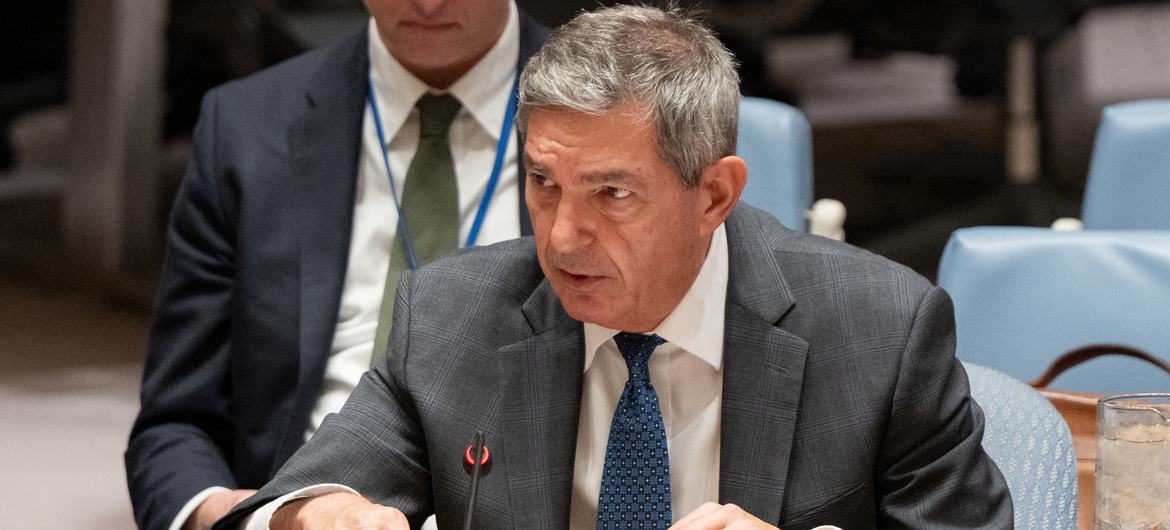
EU Ambassador Stavros Lambrinidis briefs the Security Council as the Coordinator of the Joint Commission established by the JCPOA.
Deal, not force, key to resolution: European Union
Echoing UN appeals for dialogue, the European Union stressed that “a lasting solution to the Iranian nuclear issue can only be through a negotiated deal, not military action.”
Briefing the Council on behalf of EU High Representative Kaja Kallas, Ambassador Stavros Lambrinidis underscored the urgent need “to come back to a diplomatic solution.”
Ensuring that Iran does not acquire or develop a nuclear weapon remains a key security priority for the EU, he said.
He added that Iran’s accelerating nuclear activities and the absence of IAEA oversight – compounded by the economic fallout from US sanctions – have severely undermined the JCPOA, despite sustained EU efforts to preserve it through diplomacy.
Mr. Lambrinidis reaffirmed that diplomacy must prevail, with the IAEA remaining central to monitoring and verification efforts going forward.
US urges Iran to return to talks
Ambassador Dorothea Shea, Acting US Representative, said Iran’s increase in nuclear activity lacked “any credible civilian justification.”
Even after the IAEA Board of Governors found it noncompliant with nuclear safeguards, she noted, “it is regrettable that certain members of this Council have opted to turn a blind eye to, if not encourage, Iranian noncompliance.”
The US “will not turn a blind eye to Iran’s noncompliance and ongoing threat to regional stability,” she continued.
Ambassador Shea said the 21 June “precision operation effectively fulfilled our narrow objective – to degrade Iran’s capacity to produce a nuclear weapon,” after which President Trump coordinated a ceasefire between Iran and Israel.
“In this critical moment,” she concluded, “we must all urge Iran to seize this opportunity for peace and prosperity and abide by its international obligations.”
UK calls ceasefire a first step
UK Ambassador Barbara Woodward welcomed the ceasefire brokered by President Trump but warned that “the situation remains extremely fragile.”
Expressing that “now is the time for a return to diplomacy,” she urged Iran to engage in talks without delay, warning that its nuclear programme has exceeded “any credible civilian justification.”
She said all diplomatic levers will be deployed for a negotiated outcome and to “ensure Iran does not develop a nuclear weapon.”
Iran: Diplomacy can and must resolve differences
Iran’s Ambassador, Amir Saeid Iravani, said that his country “never initiated this war” and that “once the aggressors stopped their attacks, Iran stopped its lawful military response as well”.
Mr. Saeid also expressed his country’s strong commitment to diplomacy as the path through which differences can and should be resolved.
“Iran continues to believe that a diplomatic resolution to nuclear and sanction issues is possible,” Mr. Saeid said.
He called on the Security Council to condemn Israel’s and the United States’ attacks on Iran and their IAEA-protected nuclear facilities and work to ensure that they never happen again.
Ambassador Iravani added that Iran upheld Council resolution 2231 and the JCPOA, and that remedial measures were “fully consistent” with these two instruments.
Israel warns diplomacy with Iran has failed
Israeli Ambassador Danny Danon defended his country’s military operation against Iran, describing it as a necessary move to neutralise a “double existential threat” from Tehran’s nuclear and missile programmes.
He said Israel achieved complete air superiority and removed key regime targets, acting in coordination with the US.
Ambassador Danon accused Iran of deceiving the world for years, using diplomacy as cover to advance its nuclear weapons programme.
“There is still time,” he said, “to take meaningful and decisive action to ensure that the threat of a nuclear Iran does not return stronger than before.”
“We are often told that diplomacy must be given a chance – it was given every chance, every round, every channel, every deadline – but so far it has failed, the regime in Tehran never had any intention of complying.”
The Security Council is meeting over the future of the Joint Comprehensive Plan of Action put in place in 2015 to prevent Iran from weaponising its ambitious nuclear programme, which has been in effective limbo since the US withdrawal in 2018 and Iran’s rejection of parts of the deal. UN political affairs chief Rosemary DiCarlo described the US-brokered ceasefire overnight between Israel and Iran as a “significant achievement” and “an opportunity to avoid a catastrophic escalation and achieve a peaceful resolution of the Iran nuclear issue.” Follow our Meetings Coverage Section live coverage below and UN News app users can follow here.
Edan Alexander, a 21-year-old American-Israeli national and soldier with the Israel Defense Forces (IDF), had been held by Hamas since the brutal 7 October 2023 attacks on Israel in which roughly 1,200 people were killed and another 250 taken hostage.
He is believed to be the last living American held by militants in Gaza, according to media reports.
Free all remaining hostages
The Secretary-General “is profoundly relieved that Mr. Alexander has been freed and is now returning to his family and loved ones after this harrowing ordeal,” said UN Spokesperson Stéphane Dujarric in a statement.
The UN chief renewed his urgent call for an immediate, permanent ceasefire and the immediate and unconditional release of all remaining hostages, he added, stressing that hostages must be treated humanely and with dignity.
“He calls on all parties to immediately ensure rapid, unhindered, and safe humanitarian relief, including the delivery of critical services, for all civilians in need. Aid is not negotiable,” Mr. Dujarric said.
End the hostilities
The Secretary-General also commended the sustained mediation efforts of Egypt, Qatar, and the United States to bring an end to the fighting.
He urged “all parties to build on today’s release to reach a comprehensive agreement that will ensure the release of all hostages, an end to the hostilities, the provision of humanitarian aid and the long-overdue alleviation of the human suffering in Gaza,” the statement concluded.
Food security experts warned on Monday that Gaza’s entire population, more than two million people, remains “at critical risk of famine” due to the war and Israel’s blockade on aid entry, effective since 2 March.