UN envoy urges renewed political push as Yemen tensions rise

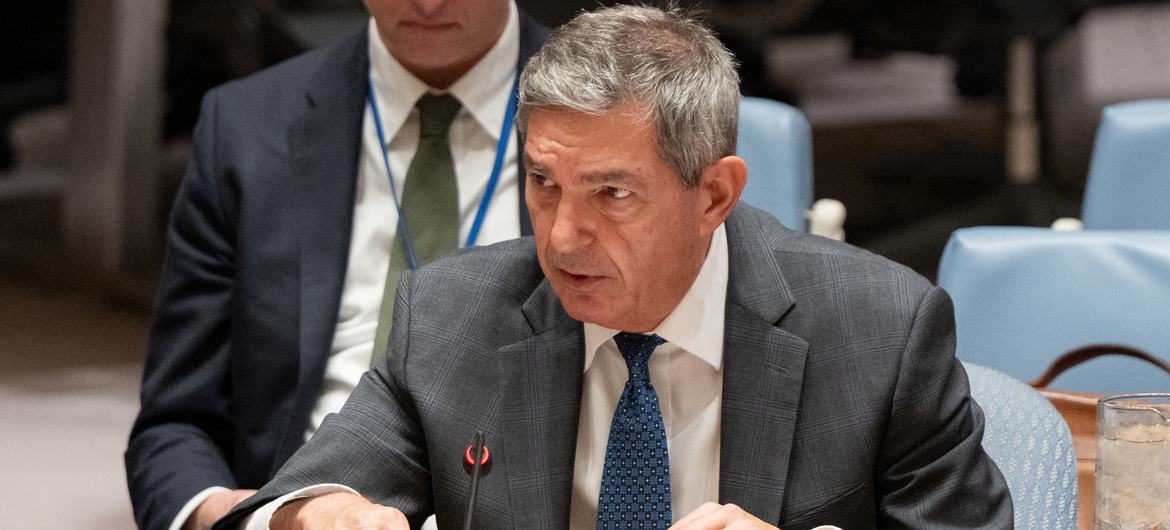
Hans Grundberg also warned that rising regional tensions risk dragging Yemen back into broader confrontation. 

I ask this Council to remain united in supporting a credible path back to a political process, and I urge regional actors to align around the same purpose and to use their influence in a coordinated way to steer Yemenis toward engagement,” he said. 

A ‘fragile’ situation 

Since 2014, Yemeni government forces, who are backed by a Saudi-led coalition, and Houthi rebels have been fighting for full control of the fractured country.  

The internationally recognised authorities are largely based in the southern city of Aden while the Houthis, officially known as Ansar Allah, control the capital Sana’a and large areas of the north and west.  

In recent months, forces affiliated with a separatist group in the south have advanced on more territory.  

Mr. Grundberg briefed from the Saudi capital Riyadh, where he held talks with Yemen’s newly appointed Prime Minister Shaya al-Zindani and members of the Presidential Leadership Council. 

He highlighted early positive signs in government areas, including improvements in the provision of electricity and payment of public sector salaries, and commended the appointment of three women cabinet ministers. 

“However, continued tensions, recent security incidents and demonstrations, where in some cases violence and loss of life has been reported, underscore the fragility of the situation,” he said. 

‘Protect recent gains’ 

He told the Council that the new cabinet “can protect recent gains by anchoring them in strengthened institutions and economic reforms”. 

Furthermore, a planned southern dialogue offers an opportunity to begin addressing long-standing grievances and build consensus on issues important to the region’s people and all Yemenis.  

Mr. Grundberg said that stabilisation in any part of the country will not be durable if the broader conflict is not addressed comprehensively. 

“It is high time to take decisive steps in that regard,” he said. “Without a wider negotiated political settlement to the conflict, gains will continue to remain vulnerable to reversal.” 

The way forward 

The UN envoy has been engaging with the warring parties, regional actors and the international community to explore ways to restart an inclusive political process in Yemen.  

His office has also held consultations with a diverse group of Yemenis, leading to three takeaways. 

The first calls for acknowledging what more than a decade of war has done to Yemen. Although the conflict has become more complex, the common objective has remained steady and firm. 

Yemen needs an inclusive political process under UN auspices to reach a negotiated political settlement that can sustainably end the conflict, but getting there requires that the parties adopt a forward-looking approach,” he said. 

Restarting a political process will require engagement across political, economic and security issues in tandem “without making engagement in one track contingent on progress in another”, he added. 

The third point calls for a credible process that enables near-term agreements that reduce suffering and demonstrate progress. At the same time, space must be created for negotiations on longer-term issues, including the future shape of the State, security arrangements and principles of governance. 

Free detained staff 

The Special Envoy also used the briefing to reiterate his call for the unconditional release of scores of UN personnel who have been arbitrarily detained by the Houthis. 

Currently, 73 staff are locked up, along with representatives from civil society and diplomatic missions. 

“Many have been held incommunicado, with serious concerns about their conditions and wellbeing. Some have been referred to Ansar Allah’s special criminal court, which is proceeding with trials that fall far short of basic due process,” he said. 

He noted that this week marked a year since a staff member with the World Food Progamme (WFP) died while being held and no investigation has taken place. 

Houthis storm UN offices 

A senior official with the UN aid coordination office, OCHA, updated the Council on the humanitarian situation in Yemen. 

“As we have said in this Council before, these detentions of humanitarian workers are having a profound impact on operations,” Lisa Doughten, director of OCHA’s financing and outreach division, told ambassadors. 

She reported that the Houthi de facto authorities entered multiple UN offices in Sana’a on 29 January “without permission, commandeering equipment and vehicles”.  

They also continue to withhold clearances for UN Humanitarian Air Service (UNHAS) flights to Marib, though flights to Sana’a resumed over the weekend following a month-long suspension.  

Millions in need 

The “interference and impediments” are happening when 22.3 million people – half the population – need humanitarian assistance this year, or nearly three million more than in 2025.  

Around 18 million face food insecurity, making Yemen the region’s most severe hunger crisis. It is also the country with the largest number of people experiencing emergency food security conditions, some 5.5 million. 

Source link

Ethiopia: Türk fears new crisis in Tigray amid renewed fighting

“The situation remains highly volatile and we fear it will further deteriorate, worsening the region’s already precarious human rights and humanitarian situation,” Mr. Türk said, following clashes in recent days between the Ethiopian army and regional forces.

The development comes against a backdrop of deadly conflict in Tigray from 2020 to 2022 between Government troops and separatist Tigray forces, following rising tensions between national and regional authorities.

That conflict – in which Eritrean soldiers reportedly participated – is believed to have killed tens of thousands and uprooted more than two million civilians, of whom one million remain internally displaced today.

Intensifying fighting  

According to the UN human rights office (OHCHR), the latest escalation saw clashes between the Ethiopian National Defence Forces (ENDF) and the regional Tigray Security Forces (TSF) intensify on 26 January, close to the Amhara border. The TSF withdrew from the Tselemti area on 1 February, OHCHR said.

“Drones, artillery and other powerful weapons were used by both sides,” Mr. Türk said in a statement. “Civilians are once again caught between escalating tensions, with both TSF and ENDF reportedly carrying out arrests for perceived affiliation with the opposing side. This must stop,” he insisted.

Meanwhile, in Tigray’s south and southeast near the Afar border, clashes between the TSF and the “Tigray Peace Forces”, a rival faction, continue unabated, the High Commissioner noted.

Both sides must step back from the brink and work to resolve their differences through political means,” he said. “Alleged serious violations or abuses must be promptly and independently investigated, irrespective of the perpetrators.”

Dire consequences

Briefing journalists in Geneva, the High Commissioner’s spokesperson, Ravina Shamdasani warned that new clashes could erupt “at any point” with dire consequences for civilians. She highlighted his call to all parties to recommit to the Pretoria Agreement calling for an end to hostilities, signed in 2022. 

The hostile parties should also ensure the return of internally displaced people to their homes, among other confidence-building measures, Ms. Shamdasani continued.

“This is something that was part of the agreement, but it hasn’t proceeded as smoothly as it should,” she noted.

The High Commissioner also warned that recent tensions between Ethiopia and neighbouring Eritrea risked worsening the already serious human rights and humanitarian challenges in both countries and across the wider Horn of Africa.

There have been reports regarding the presence of Eritrean troops and heightened tensions between those two countries,” Ms. Shamdasani said, pointing to “disagreements…particularly regarding the situation in Tigray”. 

She added: “We’re calling for these disagreements to be resolved through political dialogue and not resort to violence. We all saw what happened in 2020, 2021, when there was a full-blown conflict in the Tigray region, which led to we still don’t know how many deaths…We cannot afford a return to that.”

Source link

Syria: Renewed clashes risk derailing fragile transition

They urged swift implementation of recent agreements to prevent renewed fighting, protect civilians and preserve fragile gains made during the country’s transition.

A country still on edge

One year into Syria’s post-Assad transition, nearly three million refugees and internally displaced people have returned home, a sign of cautious progress.

But UN officials cautioned that the country remains extremely fragile after more than a decade of war.

The ISIL/Da’esh terrorist group continues to pose a persistent threat, sectarian and ethnic tensions remain unresolved, and the presence of foreign fighters and unsecured detention facilities raises serious security concerns.

At the same time, humanitarian needs remain acute, with only about a quarter of the funding required for winter assistance secured, leaving millions without adequate support amid extreme cold.

Regional dynamics are adding further strain. UN officials warned that continued incursions by Israel in southern Syria undermine the country’s sovereignty and territorial integrity, and risk further destabilizing an already volatile environment.

Against this fragile backdrop, the situation in northern and northeastern Syria has deteriorated sharply in recent weeks.

Talks stall, fighting resumes

Repeated attempts at dialogue and mediation between the Syrian government and the Syrian Democratic Forces (SDF) have failed to prevent renewed violence, Khaled Khiari, UN Assistant Secretary-General for Political Affairs, told ambassadors.

A further round of talks earlier this month did not advance implementation of a March 2025 agreement aimed at integrating the SDF into state institutions, UN officials said. Shortly afterward, clashes erupted in SDF-controlled neighbourhoods of Aleppo, forcing tens of thousands of civilians to flee.

“Following several days of intense fighting…tens of thousands fled, most of whom have started to return, dozens were killed, hundreds were wounded, and persons are still missing,” he said.

Although a ceasefire and “full integration agreement” was announced on 18 January with mediation by the United States and other partners, implementation quickly faltered.

Fighting resumed after talks broke down the following day, and clashes were still being reported in parts of Al-Hasakeh governorate and around Ayn al-Arab, also known as Kobane.

ASG Khiari briefs the Security Council.

We strongly appeal for both sides to immediately adhere to a ceasefire…and engage in fleshing out and implementing the details of this latest understanding swiftly and in a spirit of compromise,” Mr. Khiari said, warning of an “alarming humanitarian and protection crisis” if the violence continues.

He said recent government decrees recognizing the linguistic, cultural and citizenship rights of Syrian Kurds were “encouraging initiatives” but stressed that they must be followed by inclusive political processes to build trust and national cohesion.

Fragile gains, deep needs

The political tensions are unfolding against a backdrop of immense humanitarian strain.

Edem Wosornu, Director of Crisis Response at the UN Office for the Coordination of Humanitarian Affairs (OCHA), said recent fighting had once again exposed how vulnerable Syria remains after 14 years of war.

Clashes this month forced tens of thousands from their homes in Aleppo and triggered new displacement across Ar-Raqqa, Deir ez-Zor and Al-Hasakeh governorates.

As of 18 January, more than 13,000 people had fled Ar-Raqqa alone, many seeking refuge in overcrowded collective centres.

The fighting has cut people off from clean water, some hospitals have been forced to close, and many children cannot attend school,” Ms. Wosornu said, adding that damaged roads, unexploded ordnance and winter storms were hampering aid deliveries.

OCHA Director Wosornu briefs the Security Council.

Displaced families are facing “bitter winter conditions,” she said, with urgent needs for shelter, food and heating. Heavy snow and extreme cold have affected nearly 160,000 people living in camps, damaging shelters and contributing to the deaths of two infants.

Despite access challenges, UN agencies and partners continue to deliver aid, including food, shelter, medical supplies and protection services. Emergency funding has been released to support displaced families, and reception centres have been established in Al-Hasakeh and Qamishli.

Syria can make further progress,” Ms. Wosornu said, but this hinges on sustained humanitarian funding, increased investment in recovery and development, and active diplomacy to prevent further violence and protect civilians.

UN teams blocked from accessing Al Hol amid unrest

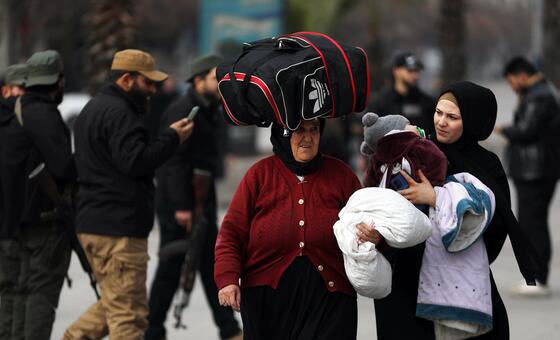
UN teams attempting to assess conditions at Al Hol camp in Syria’s northeast were unable to enter the site this week following its takeover by Syrian authorities, amid reports of looting and fires that left the situation tense and volatile.

Staff from UNHCR and UNICEF reached the camp on Tuesday and again on Wednesday but were prevented from accessing it due to security concerns. The teams nevertheless held constructive discussions with Syrian government representatives on site.

The Syrian authorities have indicated their willingness to provide security and other support to UNHCR and humanitarian partners to allow life-saving operations to continue.

The UN also stressed the need for any transfer of detention facilities holding suspected ISIL members from SDF control to the Syrian government to be carried out in an orderly manner and in line with international standards.

Al Hol camp, located in Hasakeh governorate, has for years housed tens of thousands of people — many of them women and children — including family members of suspected ISIL fighters, and has long been plagued by insecurity, humanitarian needs and limited access for aid agencies.
Source link

Prison breaks and renewed clashes raise alarm in northeast Syria

Secretary-General António Guterres is following the continuing violence “with great concern,” Deputy UN Spokesperson Farhan Haq said on Tuesday in New York. 

The Secretary-General called for full respect for international law and the protection of civilians while also stressing the importance of securing detention facilities. 

He urged the parties to continue dialogue, move forward in good faith, and work together to secure the implementation of all agreements. 

Fearing for families 

The UN human rights office, OHCHR, was “concerned about reports of renewed fighting between the Syrian Army and the SDF, despite the 18 January ceasefire agreement,” Spokesperson Ravina Shamdasani said earlier in Geneva. 

Rolando Gómez of the UN Information Service (UNIS) there described the overall situation as “worrying, in particular the damage to critical infrastructure.”   

He expressed concern for families unable to leave conflict areas and those who have been newly displaced.  

A fragile transition 

Syria remains on a fragile path to political transition following the fall of the Assad regime in December 2024 and nearly 14 years of civil war.   

The transitional government has been taking back territory in the northeast under Kurdish control and fighting has occurred in Aleppo, Raqqa, Deir-ez-Zor and Al Hassakeh governorates. 

Speaking in New York, Syria’s UN ambassador Ibrahim Olabi told journalists that the government and the SDF had reached “a common understanding” on several issues regarding the future of Al Hassakeh governorate. 

The SDF will be granted “a four-day period for internal consultations to develop a detailed plan for the practical mechanisms for integrating the area,” he said during a media stakeout at UN Headquarters. 

Syrian troops will not enter Al Hassakeh and Qamishli cities and will remain on their outskirts until a plan is finalised.

ISIL detention camps 

Northeast Syria is home to several prisons holding thousands of ISIL fighters. The terrorist group, also known as Daesh, once controlled large swaths of the country and neighbouring Iraq in its attempt to establish an Islamist caliphate, committing mass executions, rape, forced recruitment and other atrocities along the way. 

Tens of thousands of civilians with suspected ties to the militants, mainly women and children, are housed in separate detention camps such as notorious Al-Hol camp – home to over 30,000 people.   

Ceasefire and clashes 

The ceasefire announced on Sunday followed weeks of deadly fighting.  The truce calls for the authorities to take over SDF-controlled areas and for its forces to be integrated into the national army, among other points. 

Clashes resumed a day later during which roughly 120 ISIL fighters escaped from the prison in Al-Shaddadi city, according to media reports, though most have been captured. 

Ms. Shamdasani recalled that OHCHR has long stated that any integration of security forces into Syrian State institutions, particularly SDF forces, “must take place within a proper human rights-based vetting process to ensure that any individuals involved in human rights violations or abuses are not integrated.”   

Humanitarian support 

Meanwhile, humanitarians have been providing assistance in the four affected governorates, incluidng trauma care, water and hygiene support, and psychosocial support, the UN aid coordination office OCHA reported on Monday. 

Public services have been suspended in Deir-ez-Zor city and key transport routes temporarily closed, leaving civilians cut off from education and healthcare. 

Furthermore, damage to critical infrastructure in Raqqa city has curtailed access between neighbourhoods and disrupted the main water supply. 

OCHA noted that people continue to flee Raqqa and Tabqa cities, as well as Thawra town, and are heading towards Al Hassakeh and Qamishli governorates.  

Hundreds of families remain unable to leave Tabqa and are sheltering in public facilities. 

Assessments are underway to determine people’s needs as humanitarians continue to call for sustained, safe access to the population. 

Source link

UN urges renewed solidarity eight years after forced exodus of Rohingya

More than 700,000 of them fled to neighbouring Bangladesh after armed attacks by a militant group against Myanmar security forces sparked a brutal military crackdown that began on 25 August 2017.

They joined thousands of others who had escaped earlier waves of violence and discrimination now living in refugee camps just across the border in the Cox’s Bazar district.

Violence and funding cuts

In a statement to mark the anniversary, UN Spokesman Stéphane Dujarric noted that the Rohingya people both in and outside Myanmar are facing a further deterioration of their already dire circumstances.

“In Rakhine State, Rohingya and other civilians are caught in the crossfire between the Myanmar military and the Arakan Army and subjected to forced recruitment, human rights violations and other abuse,” he said.

The ongoing violence has forced more Rohingya to flee, including to Bangladesh which is already hosting more than one million refugees from Myanmar. 

A military coup forced Myanmar’s democratically elected Government from power in 2021, fuelling armed insurgencies throughout Myanmar following a brutal military crackdown on protests.

Mr. Dujarric said reports of pushbacks, removals and deportations across the region raise serious concerns over potential violations of the principle of non-refoulement and shrinking asylum space.

This is happening amid funding cuts which are severely curtailing education, food assistance, healthcare, livelihood opportunities and protection services.

Protect all civilians

The Spokesman said UN Secretary-General António Guterres has repeated his call for the protection of all civilians in accordance with applicable obligations under international law. 

The Secretary-General also recalled his visit to Cox’s Bazar, Bangladesh, where he witnessed the resilience of Rohingya communities.

He stressed the urgent need for strengthened international solidarity and increased support, in parallel to efforts toward a comprehensive political solution that meaningfully includes the Rohingya and addresses their displacement and the root causes of the protracted crisis.

Hopes for upcoming conference

“The Secretary-General is hopeful that the 30 September High–level Conference on Rohingya and other minorities in New York, as mandated by the United Nations General Assembly, will draw renewed international attention to the urgency of finding durable solutions,” said Mr. Dujarric.

He added that the Special Envoy of the Secretary-General on Myanmar continues to engage all stakeholders towards ending the brutal civil conflict and supporting a viable Myanmar-led political process.

This should also lead to the voluntary, safe, dignified, and sustainable return of the Rohingya to Myanmar. 

Source link

150,000 Rohingya flee to Bangladesh amid renewed Myanmar violence

As armed clashes intensify and conditions worsen inside Myanmar, thousands continue to cross the border seeking safety in the overcrowded camps of Cox’s Bazar, where nearly one million Rohingya refugees already live in densely populated camps.

This is the largest movement of Rohingya refugees into Bangladesh since 2017,” said Babar Baloch, spokesperson for the UN refugee agency, UNHCR, briefing journalists in Geneva on Friday.  

He clarified that unlike the mass influx in 2017, when some 750,000 Rohingya fled deadly violence in Rakhine state, this uptick in refugees has unfolded more gradually.

Advocating for asylum

UNHCR is working closely with local authorities to respond to urgent humanitarian needs.  

“As the conflict in Myanmar continues unabated, we are advocating with the Bangladeshi authorities to provide managed access to safety and asylum for civilians fleeing the conflict,” he said.

Bangladesh has long provided refuge to the Rohingya, a mostly Muslim minority community in Myanmar, which is mainly Buddhist. 

The country currently hosts nearly one million people in the refugee camps and the recent arrivals – many of them women and children – are placing further strain on resources. Many are relying heavily on local solidarity and sharing limited resources with those already living in the camps.

Appeal for support

By the end of June, nearly 121,000 newly arrived refugees had been biometrically registered, although many more are believed to be residing informally in the camps. Access to adequate shelter remains a major concern as facilities struggle to absorb the new population.

“These new arrivals join another nearly one million Rohingya refugees crammed into just 24 square kilometres,” said Mr. Baloch. “More humanitarian support is urgently required.”

Aid partners have been able to provide basic services including food, medical care, education, and essential relief items. However, the response is now under serious threat due to a lack of funding.

UNHCR warned that the 2024 humanitarian appeal for $255 million is only 35 per cent funded. Without immediate financial support, the entire operation could face systemic collapse.

Action needed now

Unless additional funds are secured, health services will be severely disrupted by September and essential cooking fuel — liquefied petroleum gas (LPG) – will run out by December. Food assistance will stop and education for some 230,000 Rohingya children, including 63,000 new arrivals, is in danger of being discontinued.

Despite a strictly controlled and officially closed border, the Government of Bangladesh has allowed new arrivals to access emergency services in the camps. The UN agency expressed deep appreciation for this humanitarian gesture under highly challenging conditions.

“We don’t have the resources to take care of the new arrivals and also those who were there before them,” said Mr. Baloch. “Everything will be impacted.”

As displacement from Rakhine state continues, UNHCR and its partners are urging the international community to act swiftly. Without immediate and sustained support, the already fragile humanitarian response in Cox’s Bazar could begin to unravel  – with devastating consequences for more than one million people who rely on it for survival. 

Source link

Libya: UN urges restraint as military buildup threatens renewed violence in Tripoli

In a statement late on Wednesday (local time), the UN Support Mission in Libya (UNSMIL) expressed deep concern over continued reports of armed group mobilisation in densely populated areas, urging all parties to refrain from the use of force and inflammatory rhetoric.

The Mission strongly urges all parties to avoid any actions or political rhetoric that could trigger escalation or lead to renewed clashes,” it said.

UNSMIL stressed that protection of civilian lives and property under international law remains a binding obligation for all political and security actors.

Those responsible for attacks against civilians will be held accountable,” the Mission said.

Pursue dialogue, not violence

The Mission reiterated its support for the implementation of security arrangements developed by the Truce and Security and Military Arrangements Committees, emphasising that “forces recently deployed in Tripoli must withdraw without delay.

It also underscored that dialogue – not violence – remains the only viable path to achieving sustainable peace and stability in Tripoli and across Libya.

The appeal comes amid reports of military movements in the capital and renewed clashes between armed groups, reflecting the persistent volatility that has plagued Libya since the fall of former leader Muammar Gaddafi in 2011.

Political stalemate

The country remains divided between rival administrations in the east and west, with unity efforts repeatedly stalled.

A UN-brokered ceasefire signed in 2020 raised hopes for national elections, but progress has been hampered by political deadlock and sporadic outbreaks of violence – particularly in Tripoli.

In May, clashes erupted in several districts of the capital, reportedly triggered by the killing of a prominent militia leader. The fighting, which involved heavy weaponry in densely populated areas, forced hundreds of families to flee and further strained the city’s already fragile infrastructure.

Source link

UN urges renewed diplomacy on Iran nuclear deal, hails Tehran-Tel Aviv ceasefire as ‘significant achievement’

Amid this relative calm, the United Nations has renewed its call for a diplomatic solution to the Iran nuclear issue, warning that the objectives of the Joint Comprehensive Plan of Action (JCPOA) – and the resolution that endorsed it – remain unmet.

Addressing a planned Security Council meeting on Tuesday to try and revive the deal amid the dramatic military escalation of the past 12 days, UN political affairs chief Rosemary DiCarlo said the fragile ceasefire announced by Donald Trump overnight provided “an opportunity to avoid a catastrophic escalation and achieve a peaceful resolution of the Iran nuclear issue.

The 2015 Iran nuclear deal – more formally known as the JCPOA and backed by the Security Council – offered Tehran sanctions relief in exchange for strict limits on uranium enrichment, stockpile levels and centrifuge use, alongside robust monitoring and verification by the International Atomic Energy Agency (IAEA).

But the accord has remained in limbo since the United States withdrew in 2018, followed by Iran’s rollbacks of its nuclear-related commitments.

With key provisions under resolution 2231 set to expire on 18 October – unless the Council decides otherwise – the UN’s top political official has warned that the window for reviving diplomacy is narrowing.

With less than four months before resolution’s remaining nuclear-related restrictions are set to expire on 18 October – unless extended by the Council – the UN’s top political official warned that the agreement’s key aims remain elusive.

Diplomacy kneecapped?

Ms. DiCarlo told ambassadors the recent surge in violence had significantly undermined diplomatic momentum.

The military escalation between Israel and Iran since 13 June and United States air strikes on Iran’s nuclear facilities on 21 June complicated prospects for achieving full implementation of resolution 2231,” Ms. DiCarlo said.

Iran’s strikes yesterday on a base in Qatar further exacerbated insecurity in an already tense region.

Despite five rounds of bilateral talks between Iran and the US, facilitated by Oman in recent months, Ms. DiCarlo noted that efforts “did not produce a way forward” to restore full JCPOA implementation.

A sixth round of talks was called off due to the outbreak of hostilities.

Meanwhile, the toll from the recent conflict has been sobering. According to Iranian authorities, at least 606 people were killed and more than 5,300 injured since hostilities erupted on 13 June. Israeli officials reported 28 deaths and nearly 1,500 injuries.

Time running out

While divisions persist, Ms. DiCarlo said JCPOA participants – China, France, Germany, Iran, Russia, and the United Kingdom – had all reiterated their commitment to finding a diplomatic solution.

In a joint statement shared with the Secretary-General in March, China, Iran and Russia stressed the importance of resolution 2231’s provisions and timelines. China separately proposed a “step-by-step and reciprocal approach” to settle the nuclear issue.

“Diplomacy, dialogue and verification remain the best option to ensure the exclusively peaceful nature of Iran’s nuclear programme,” Ms. DiCarlo said.

EU Ambassador Stavros Lambrinidis briefs the Security Council as the Coordinator of the Joint Commission established by the JCPOA.

Deal, not force, key to resolution: European Union

Echoing UN appeals for dialogue, the European Union stressed that “a lasting solution to the Iranian nuclear issue can only be through a negotiated deal, not military action.

Briefing the Council on behalf of EU High Representative Kaja Kallas, Ambassador Stavros Lambrinidis underscored the urgent need “to come back to a diplomatic solution.”

Ensuring that Iran does not acquire or develop a nuclear weapon remains a key security priority for the EU, he said.

He added that Iran’s accelerating nuclear activities and the absence of IAEA oversight – compounded by the economic fallout from US sanctions – have severely undermined the JCPOA, despite sustained EU efforts to preserve it through diplomacy.

Mr. Lambrinidis reaffirmed that diplomacy must prevail, with the IAEA remaining central to monitoring and verification efforts going forward.

US urges Iran to return to talks

Ambassador Dorothea Shea, Acting US Representative, said Iran’s increase in nuclear activity lacked “any credible civilian justification.”

Even after the IAEA Board of Governors found it noncompliant with nuclear safeguards, she noted, “it is regrettable that certain members of this Council have opted to turn a blind eye to, if not encourage, Iranian noncompliance.”

The US “will not turn a blind eye to Iran’s noncompliance and ongoing threat to regional stability,” she continued.

Ambassador Shea said the 21 June “precision operation effectively fulfilled our narrow objective – to degrade Iran’s capacity to produce a nuclear weapon,” after which President Trump coordinated a ceasefire between Iran and Israel.

“In this critical moment,” she concluded, “we must all urge Iran to seize this opportunity for peace and prosperity and abide by its international obligations.”

UK calls ceasefire a first step

UK Ambassador Barbara Woodward welcomed the ceasefire brokered by President Trump but warned that “the situation remains extremely fragile.”

Expressing that “now is the time for a return to diplomacy,” she urged Iran to engage in talks without delay, warning that its nuclear programme has exceeded “any credible civilian justification.”

She said all diplomatic levers will be deployed for a negotiated outcome and to “ensure Iran does not develop a nuclear weapon.”

Iran: Diplomacy can and must resolve differences

Iran’s Ambassador, Amir Saeid Iravani, said that his country “never initiated this war” and that “once the aggressors stopped their attacks, Iran stopped its lawful military response as well”.

Mr. Saeid also expressed his country’s strong commitment to diplomacy as the path through which differences can and should be resolved.

“Iran continues to believe that a diplomatic resolution to nuclear and sanction issues is possible,” Mr. Saeid said.

He called on the Security Council to condemn Israel’s and the United States’ attacks on Iran and their IAEA-protected nuclear facilities and work to ensure that they never happen again.

Ambassador Iravani added that Iran upheld Council resolution 2231 and the JCPOA, and that remedial measures were “fully consistent” with these two instruments.

Israel warns diplomacy with Iran has failed

Israeli Ambassador Danny Danon defended his country’s military operation against Iran, describing it as a necessary move to neutralise a “double existential threat” from Tehran’s nuclear and missile programmes.  

He said Israel achieved complete air superiority and removed key regime targets, acting in coordination with the US.

Ambassador Danon accused Iran of deceiving the world for years, using diplomacy as cover to advance its nuclear weapons programme.

“There is still time,” he said, “to take meaningful and decisive action to ensure that the threat of a nuclear Iran does not return stronger than before.”

“We are often told that diplomacy must be given a chance – it was given every chance, every round, every channel, every deadline – but so far it has failed, the regime in Tehran never had any intention of complying.”

Video feed of the Security Council meeting.

Source link

UN rights chief calls on South Sudan’s warring parties to end renewed fighting

At least 75 civilians have been killed in hostilities between the national army (SSPDF) and the Sudan People’s Liberation Army-In Opposition (SPLA-IO) – which is both a political party and militia group loyal to First Vice President Riek Machar – and their respective allied armed groups, said UN human rights office, OHCHR, in a press release.

Thousands have been displaced from their homes.

South Sudan was plunged into civil war in 2013 between supporters of the President Salva Kiir and his rival Mr. Machar but a 2018 peace accord led to a fragile power-sharing agreement.

Escalating hostilities “portend a real risk of further exacerbating the already dire human rights and humanitarian situation,” said Volker Türk, head of the UN human rights office (OHCHR), urging all parties to the conflict to “urgently pull back from the brink.”

Intensifying hostilities

The latest armed violence erupted in February when a militia group identified as the White Army reportedly launched a series of attacks in Upper Nile State, OHCHR said.

Hostilities intensified between 3 May and 20 May with reports of indiscriminate aerial bombardments and river and ground offensives by the SSPDF on SPLA-IO positions in the states of Jonglei and Upper Nile.

Civilian displacement further increased on 21 May because of the SPLA-IO and allies’ counter-offensive in Jonglei State.

I urge all parties to uphold the 2018 peace agreement,” said the UN human rights chief, calling for the warring parties to “ensure protection of civilians and civilian objects,” and facilitating “humanitarian access in line with their obligations under international law.”

Concern of arbitrary detention

Between 5 and 26 March, at least 55 high-ranking government officials affiliated with the SPLM-IP, among them civilians, have been arrested across the country. Notably, South Sudan’s first vice-president, ministers, members of parliament and military officers were among the dozens of politicians who have been detained.

“I am concerned that many of the detentions are arbitrary in nature,” Mr Türk said, as these arrests were conducted without warrant or due process.”

Mr Türk called for the immediate and unconditional release of those arbitrarily detained, as he urged for authorities to grant the UN Mission in South Sudan (UNMISS) access to National Security Service detention sites to assess the welfare of those detained there.

Finally, the UN also urged the authorities to take “prompt, effective and meaningful” steps to halt the spread of hate speech in the country.

Source link