Iran: UN urges ‘maximum restraint’ to avert more death, wider escalation

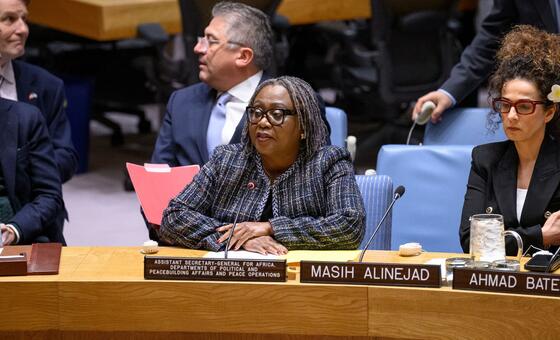
Assistant Secretary-General Martha Pobee briefed an emergency meeting of the Security Council in New York called by the United States to address the crisis.

Ms. Pobee described the situation in Iran as “fluid and deeply concerning”, noting that “protests continue, albeit reportedly at a smaller scale than last week.”

Against military strikes

She voiced alarm, however, over public statements suggesting possible military strikes on the country.

This external dimension adds volatility to an already combustible situation. All efforts must be undertaken to prevent any further deterioration,” she said.

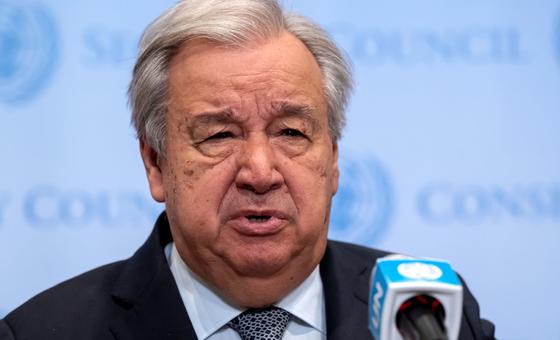
Moreover, UN Secretary-General António Guterres “remains convinced that all concerns regarding Iran, including those related to the nuclear issue and ongoing protests, are best addressed through diplomacy and dialogue.”

He also “urges maximum restraint at this sensitive moment and calls on all actors to refrain from any actions that could lead to further loss of life or ignite a wider regional escalation.”

Largest protests in recent years

The protests erupted on 28 December after shopkeepers in the Iranian capital Tehran took to the streets to rail against the collapse of the national currency, soaring inflation and worsening living conditions.

Demonstrations quickly spread across the country, turning into mass anti-government protests – the largest since the movement sparked by the September 2022 death in custody of Kurdish woman Jina Amini who was arrested for allegedly violating hijab laws.

Authorities imposed a near-total communications blackout that is still largely in place.  Hundreds and even possibly thousands of protestors and bystanders have been killed, and more than 18,000 people are estimated to be detained, though the UN has not been able to verify these figures.

‘Terrorists’ and ‘rioters’ blamed

“The Government of Iran has stated that it was compelled to act after what it deemed ‘organized terrorists’ and ‘rioters’ infiltrated the protests and opened fire on both security forces and demonstrators, aiming to provoke foreign military intervention,” said Ms. Pobee.

“It has also blamed these elements for the killing of hundreds of civilians and members of the security forces.”

In a recent statement, the UN Secretary-General expressed deep concern over the reported excessive use of force by the authorities and upheld the rights to freedom of expression, association and peaceful assembly.

Civil society voices

Iranian journalist and political dissident Masih Alinejad was one of two civil society representatives invited to brief the Council.

“What is needed now to bring justice to those who order massacres in Iran is real and concrete action,” she said.

Iranian-American human rights activist and journalist Ahmad Batebi spoke about how he was arrested for protesting while a student and sentenced to death.

Mr. Batebi said that he was held in solitary confinement for two years, tortured, and forced to admit that he was a paid American spy.

US warns of wider repercussions

US Ambassador Mike Waltz stated that “the level of violence, the level of repression that the Iranian regime has unleashed on its own citizens…has repercussions for international peace and security.”

The Iranian people “are demanding their freedom like never before in the Islamic Republic’s brutal history,” he said, and underscored that President Donald Trump and the United States “stands by the brave people of Iran”.

He stressed that “the regime is solely responsible for the economic misery of the Iranian people and the repression of their freedom” and will be held accountable.

US ‘steering unrest’ in Iran, ambassador claims

Iran’s Deputy Permanent Representative Gholamhossein Darzi began his remarks by denouncing the two civil society briefers, saying they “represent the political agenda of the United States and Israeli regimes.”

Turning to the situation in Iran, the ambassador said that he was speaking on behalf of a “nation in mourning”.

“It is deeply regrettable that the representative of the United States regime, which requested this meeting, has today resorted to lies, distortions of facts and deliberate disinformation to conceal his country’s direct involvement in steering unrest in Iran towards violence,” he said.
Source link

Angola protests: UN urges restraint, investigations into deaths

The Office of the UN High Commissioner for Human Rights (OHCHR) on Thursday urged Angolan authorities to conduct prompt, thorough and independent investigations into the deaths as well as the reported use of excessive force during the demonstrations.

Unverified footage suggests that security forces used live ammunition and tear gas to disperse protesters, which points to an unnecessary and disproportionate use of force,” OHCHR spokesperson Thameen Al-Kheetan said.

He added that while some demonstrators resorted to violence and looting, any force used by authorities must comply with international human rights standards.

Any individuals who may have been arbitrarily detained must be immediately released.

Rapid escalation in situation

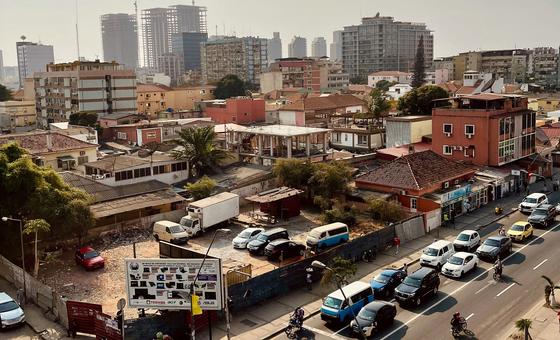
The protests began on Monday as a strike by minibus taxi drivers over a one-third rise in diesel prices, part of a government effort to reduce fuel subsidies. According to media reports, the demonstrations quickly spread, becoming one of Angola’s most disruptive protest waves in recent years.

Government officials reported that at least one police officer was among those killed. Nearly 200 people are said to have been injured and shops and vehicles reportedly vandalised, mostly in the capital, Luanda.

Sporadic gunfire was also reported in parts of the city earlier in the week, and emergency services were overwhelmed. Many businesses remained shuttered Thursday, and hospitals reportedly struggled to cope with the number of casualties.

Ensure rights protection

OHCHR emphasised that while authorities have a responsibility to maintain public order, they must do so in a way that protects human rights.

All protesters taking to the streets to express their opinions should do so peacefully,” said Mr. Al-Kheetan. “All human rights violations must be investigated and those responsible held accountable.

The UN rights office also reiterated the importance of safeguarding fundamental freedoms, including the rights to life, expression and peaceful assembly, in any law enforcement response.

Source link

UN urges restraint as Thailand-Cambodia clashes displace thousands; Security Council meets

The clashes, which began on 24 July, reportedly involved exchanges of gunfire, artillery shelling and rocket fire, with Thailand having conducted airstrikes inside Cambodian territory.

UN humanitarian officials confirmed civilian casualties, including children.

More than 131,000 people in Thailand and over 4,000 in Cambodia have been displaced, according to relief partners. Temporary shelters, including schools and temples, are overcrowded, and food, shelter and medical assistance are urgently needed.

The United Nations stands ready to support humanitarian efforts if requested, spokesperson Stephanie Tremblay said at a regular briefing in New York.

Protect children at all times

The UN Children’s Fund (UNICEF) also appealed for “maximum restraint”.

June Kunugi, Regional Director for East Asia and the Pacific – based in Bangkok – urged both countries to protect children and the critical services they depend on, in line with their obligations under international law, including the Convention on the Rights of the Child.

Children must be protected at all times and their safety and wellbeing must be prioritised, while schools must remain safe spaces for learning,” she said.

Security Council private meeting

At UN Headquarters in New York, ambassadors convened for an emergency private meeting of the Security Council to discuss the situation.

Representatives of Thailand and Cambodia were said to be in attendance, with Khaled Khiari, Assistant Secretary-General for the Asia and the Pacific at the UN Department of Political Affairs (DPPA), briefing.

Private meetings of the Security Council are closed to the public, but considered a formal meeting.

A longstanding dispute

The last major flare-up between the two countries occurred in 2011, when days of border fighting near the historic Preah Vihear temple – a UNESCO World Heritage Site – left multiple casualties on both sides.

Then-Secretary-General Ban Ki-moon had called for an immediate, verifiable ceasefire and urged both countries to resolve their dispute through dialogue, not military means.

That escalation followed a 2008 troop build-up around the 11th-century Hindu temple, which sits on the Cambodian side of the border.

Source link

Libya: UN urges restraint as military buildup threatens renewed violence in Tripoli

In a statement late on Wednesday (local time), the UN Support Mission in Libya (UNSMIL) expressed deep concern over continued reports of armed group mobilisation in densely populated areas, urging all parties to refrain from the use of force and inflammatory rhetoric.

The Mission strongly urges all parties to avoid any actions or political rhetoric that could trigger escalation or lead to renewed clashes,” it said.

UNSMIL stressed that protection of civilian lives and property under international law remains a binding obligation for all political and security actors.

Those responsible for attacks against civilians will be held accountable,” the Mission said.

Pursue dialogue, not violence

The Mission reiterated its support for the implementation of security arrangements developed by the Truce and Security and Military Arrangements Committees, emphasising that “forces recently deployed in Tripoli must withdraw without delay.

It also underscored that dialogue – not violence – remains the only viable path to achieving sustainable peace and stability in Tripoli and across Libya.

The appeal comes amid reports of military movements in the capital and renewed clashes between armed groups, reflecting the persistent volatility that has plagued Libya since the fall of former leader Muammar Gaddafi in 2011.

Political stalemate

The country remains divided between rival administrations in the east and west, with unity efforts repeatedly stalled.

A UN-brokered ceasefire signed in 2020 raised hopes for national elections, but progress has been hampered by political deadlock and sporadic outbreaks of violence – particularly in Tripoli.

In May, clashes erupted in several districts of the capital, reportedly triggered by the killing of a prominent militia leader. The fighting, which involved heavy weaponry in densely populated areas, forced hundreds of families to flee and further strained the city’s already fragile infrastructure.

Source link

UN rights office urges restraint in Kenya as fresh protests turn deadly

Office spokesperson Ravina Shamdasani cited Kenyan police reports of at least 11 deaths, 52 injured police officers, and 567 arrests. The Kenya National Commission on Human Rights reported slightly different figures: at least 10 fatalities, 29 injuries, 37 arrests, and two abductions.

Protests erupted in 16 counties, with police reportedly using live ammunition, rubber bullets, tear gas and water cannons.

Ms. Shamdasani also noted reports of looting and destruction of public and private property in several locations.

Crisis escalation

This week’s violence follows the deaths of 15 protesters and hundreds of injuries during demonstrations on 25 June in Nairobi and elsewhere.

Those protests were initially triggered by the anniversary of last year’s anti-tax demonstrations, which left at least 60 deaths and dozens allegedly abducted by the police.

The protests on Monday marked the 35th anniversary of the 1990 Saba Saba protests, which paved the way to multi-party democracy in Kenya.

Call for accountability

Ms. Shamdasani said that UN High Commissioner for Human Rights Volker Türk, “repeats his call for all reported killings and other alleged violations and abuses of international human rights law, including with respect to use of force, to be promptly, thoroughly, independently and transparently investigated.

She noted that Kenyan police announcement of an investigation into the 25 June incidents and added that the UN human rights office stands ready to support national authorities in their efforts, including on the investigations.

She stressed that under international law, law enforcement may only use lethal force when strictly necessary to protect life from an imminent threat.

High Commissioner Türk also renewed his call for calm, restraint, and full respect for the rights to freedom of expression, association, and peaceful assembly.

It is essential that legitimate grievances at the root of these protests are addressed,” Ms. Shamdasani said.

Source link

UN calls for restraint after deadly Kenya protests

At least 400 people were injured, including police officers, according to media reports. The official death toll has not been confirmed, with estimates ranging from eight to 16. 

The demonstrations marked the anniversary of last year’s anti-tax protests, when 60 people were reportedly killed and dozens abducted by police.

This year, anger intensified following the death of blogger Albert Ojwan, 31, who died in police custody earlier this month.

The demonstrators reportedly targeted government and police offices, chanted for the occupation of the presidential residence and attacked, looted and burned shops and businesses in Nairobi.

At a press conference, Kenyan Interior Minister Kipchumba Murkomen accused protestors of attempting to unconstitutionally enact “regime change.”

He also said nine police stations were attacked, dozens of vehicles destroyed, and five guns were stolen. 

UN Human Rights response

On Thursday, as smoke still rose from torched buildings in Nairobi, the UN human rights office, OHCHR, released a statement expressing concern.

Alarmed by reports that protesters had been wounded or killed by gunfire, OHCHR stressed that under international human rights law, law enforcement should only use lethal force when strictly necessary to protect life or prevent serious injury from an imminent threat.

The office welcomed the announcement that Kenya’s Independent Policing Oversight Authority will investigate the incidents and underlined the need for “prompt, thorough, independent and transparent investigations to bring those responsible to justice” and prevent recurrence. 

OHCHR also called for calm and restraint.

UN Spokesperson Stéphane Dujarric echoed these concerns at the daily press briefing in New York, saying: “We are obviously concerned about the violence we have seen in Kenya. We are closely monitoring the situation. We are very saddened by the loss of life.”

He also reiterated concerns over the reported gunshot wounds and welcomed plans for oversight investigations.

Source link

UN Secretary-General urges military restraint from India, Pakistan

In a note to correspondents issued by his spokesperson on Tuesday, Secretary-General António Guterres called for military restraint from both countries.

The world cannot afford a military confrontation between India and Pakistan,” the note said.

On Monday, the Secretary-General had warned that the tensions between the two South Asian neighbours had reached “their highest in years.”

He offered his good offices to both governments to help defuse tensions and promote diplomacy, stressing that “a military solution is no solution.”

Source link