Syria: Renewed clashes risk derailing fragile transition

They urged swift implementation of recent agreements to prevent renewed fighting, protect civilians and preserve fragile gains made during the country’s transition.

A country still on edge

One year into Syria’s post-Assad transition, nearly three million refugees and internally displaced people have returned home, a sign of cautious progress.

But UN officials cautioned that the country remains extremely fragile after more than a decade of war.

The ISIL/Da’esh terrorist group continues to pose a persistent threat, sectarian and ethnic tensions remain unresolved, and the presence of foreign fighters and unsecured detention facilities raises serious security concerns.

At the same time, humanitarian needs remain acute, with only about a quarter of the funding required for winter assistance secured, leaving millions without adequate support amid extreme cold.

Regional dynamics are adding further strain. UN officials warned that continued incursions by Israel in southern Syria undermine the country’s sovereignty and territorial integrity, and risk further destabilizing an already volatile environment.

Against this fragile backdrop, the situation in northern and northeastern Syria has deteriorated sharply in recent weeks.

Talks stall, fighting resumes

Repeated attempts at dialogue and mediation between the Syrian government and the Syrian Democratic Forces (SDF) have failed to prevent renewed violence, Khaled Khiari, UN Assistant Secretary-General for Political Affairs, told ambassadors.

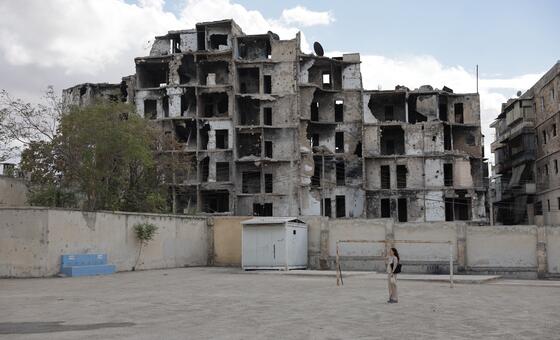
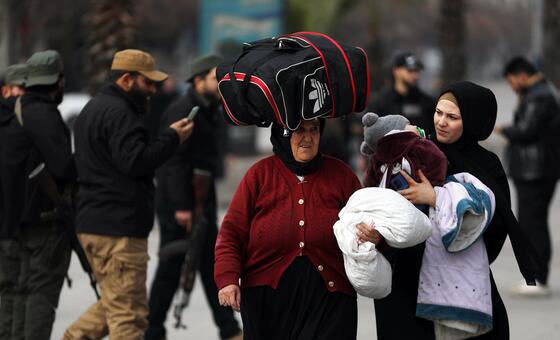
A further round of talks earlier this month did not advance implementation of a March 2025 agreement aimed at integrating the SDF into state institutions, UN officials said. Shortly afterward, clashes erupted in SDF-controlled neighbourhoods of Aleppo, forcing tens of thousands of civilians to flee.

“Following several days of intense fighting…tens of thousands fled, most of whom have started to return, dozens were killed, hundreds were wounded, and persons are still missing,” he said.

Although a ceasefire and “full integration agreement” was announced on 18 January with mediation by the United States and other partners, implementation quickly faltered.

Fighting resumed after talks broke down the following day, and clashes were still being reported in parts of Al-Hasakeh governorate and around Ayn al-Arab, also known as Kobane.

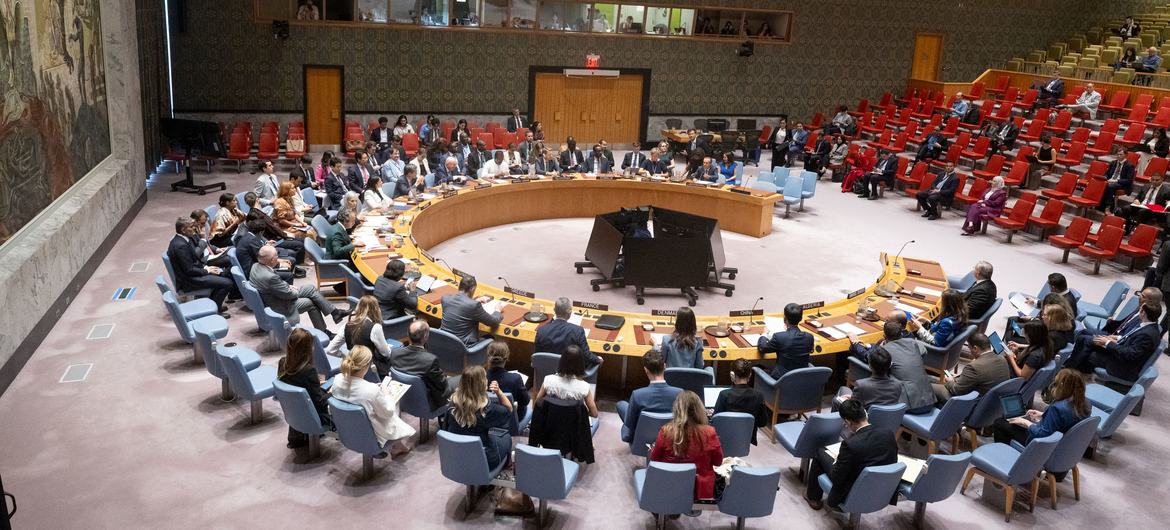
ASG Khiari briefs the Security Council.

We strongly appeal for both sides to immediately adhere to a ceasefire…and engage in fleshing out and implementing the details of this latest understanding swiftly and in a spirit of compromise,” Mr. Khiari said, warning of an “alarming humanitarian and protection crisis” if the violence continues.

He said recent government decrees recognizing the linguistic, cultural and citizenship rights of Syrian Kurds were “encouraging initiatives” but stressed that they must be followed by inclusive political processes to build trust and national cohesion.

Fragile gains, deep needs

The political tensions are unfolding against a backdrop of immense humanitarian strain.

Edem Wosornu, Director of Crisis Response at the UN Office for the Coordination of Humanitarian Affairs (OCHA), said recent fighting had once again exposed how vulnerable Syria remains after 14 years of war.

Clashes this month forced tens of thousands from their homes in Aleppo and triggered new displacement across Ar-Raqqa, Deir ez-Zor and Al-Hasakeh governorates.

As of 18 January, more than 13,000 people had fled Ar-Raqqa alone, many seeking refuge in overcrowded collective centres.

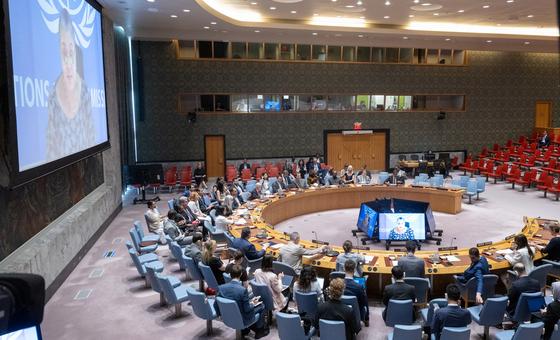
The fighting has cut people off from clean water, some hospitals have been forced to close, and many children cannot attend school,” Ms. Wosornu said, adding that damaged roads, unexploded ordnance and winter storms were hampering aid deliveries.

OCHA Director Wosornu briefs the Security Council.

Displaced families are facing “bitter winter conditions,” she said, with urgent needs for shelter, food and heating. Heavy snow and extreme cold have affected nearly 160,000 people living in camps, damaging shelters and contributing to the deaths of two infants.

Despite access challenges, UN agencies and partners continue to deliver aid, including food, shelter, medical supplies and protection services. Emergency funding has been released to support displaced families, and reception centres have been established in Al-Hasakeh and Qamishli.

Syria can make further progress,” Ms. Wosornu said, but this hinges on sustained humanitarian funding, increased investment in recovery and development, and active diplomacy to prevent further violence and protect civilians.

UN teams blocked from accessing Al Hol amid unrest

UN teams attempting to assess conditions at Al Hol camp in Syria’s northeast were unable to enter the site this week following its takeover by Syrian authorities, amid reports of looting and fires that left the situation tense and volatile.

Staff from UNHCR and UNICEF reached the camp on Tuesday and again on Wednesday but were prevented from accessing it due to security concerns. The teams nevertheless held constructive discussions with Syrian government representatives on site.

The Syrian authorities have indicated their willingness to provide security and other support to UNHCR and humanitarian partners to allow life-saving operations to continue.

The UN also stressed the need for any transfer of detention facilities holding suspected ISIL members from SDF control to the Syrian government to be carried out in an orderly manner and in line with international standards.

Al Hol camp, located in Hasakeh governorate, has for years housed tens of thousands of people — many of them women and children — including family members of suspected ISIL fighters, and has long been plagued by insecurity, humanitarian needs and limited access for aid agencies.
Source link

Prison breaks and renewed clashes raise alarm in northeast Syria

Secretary-General António Guterres is following the continuing violence “with great concern,” Deputy UN Spokesperson Farhan Haq said on Tuesday in New York. 

The Secretary-General called for full respect for international law and the protection of civilians while also stressing the importance of securing detention facilities. 

He urged the parties to continue dialogue, move forward in good faith, and work together to secure the implementation of all agreements. 

Fearing for families 

The UN human rights office, OHCHR, was “concerned about reports of renewed fighting between the Syrian Army and the SDF, despite the 18 January ceasefire agreement,” Spokesperson Ravina Shamdasani said earlier in Geneva. 

Rolando Gómez of the UN Information Service (UNIS) there described the overall situation as “worrying, in particular the damage to critical infrastructure.”   

He expressed concern for families unable to leave conflict areas and those who have been newly displaced.  

A fragile transition 

Syria remains on a fragile path to political transition following the fall of the Assad regime in December 2024 and nearly 14 years of civil war.   

The transitional government has been taking back territory in the northeast under Kurdish control and fighting has occurred in Aleppo, Raqqa, Deir-ez-Zor and Al Hassakeh governorates. 

Speaking in New York, Syria’s UN ambassador Ibrahim Olabi told journalists that the government and the SDF had reached “a common understanding” on several issues regarding the future of Al Hassakeh governorate. 

The SDF will be granted “a four-day period for internal consultations to develop a detailed plan for the practical mechanisms for integrating the area,” he said during a media stakeout at UN Headquarters. 

Syrian troops will not enter Al Hassakeh and Qamishli cities and will remain on their outskirts until a plan is finalised.

ISIL detention camps 

Northeast Syria is home to several prisons holding thousands of ISIL fighters. The terrorist group, also known as Daesh, once controlled large swaths of the country and neighbouring Iraq in its attempt to establish an Islamist caliphate, committing mass executions, rape, forced recruitment and other atrocities along the way. 

Tens of thousands of civilians with suspected ties to the militants, mainly women and children, are housed in separate detention camps such as notorious Al-Hol camp – home to over 30,000 people.   

Ceasefire and clashes 

The ceasefire announced on Sunday followed weeks of deadly fighting.  The truce calls for the authorities to take over SDF-controlled areas and for its forces to be integrated into the national army, among other points. 

Clashes resumed a day later during which roughly 120 ISIL fighters escaped from the prison in Al-Shaddadi city, according to media reports, though most have been captured. 

Ms. Shamdasani recalled that OHCHR has long stated that any integration of security forces into Syrian State institutions, particularly SDF forces, “must take place within a proper human rights-based vetting process to ensure that any individuals involved in human rights violations or abuses are not integrated.”   

Humanitarian support 

Meanwhile, humanitarians have been providing assistance in the four affected governorates, incluidng trauma care, water and hygiene support, and psychosocial support, the UN aid coordination office OCHA reported on Monday. 

Public services have been suspended in Deir-ez-Zor city and key transport routes temporarily closed, leaving civilians cut off from education and healthcare. 

Furthermore, damage to critical infrastructure in Raqqa city has curtailed access between neighbourhoods and disrupted the main water supply. 

OCHA noted that people continue to flee Raqqa and Tabqa cities, as well as Thawra town, and are heading towards Al Hassakeh and Qamishli governorates.  

Hundreds of families remain unable to leave Tabqa and are sheltering in public facilities. 

Assessments are underway to determine people’s needs as humanitarians continue to call for sustained, safe access to the population. 

Source link

UN urges restraint as Thailand-Cambodia clashes displace thousands; Security Council meets

The clashes, which began on 24 July, reportedly involved exchanges of gunfire, artillery shelling and rocket fire, with Thailand having conducted airstrikes inside Cambodian territory.

UN humanitarian officials confirmed civilian casualties, including children.

More than 131,000 people in Thailand and over 4,000 in Cambodia have been displaced, according to relief partners. Temporary shelters, including schools and temples, are overcrowded, and food, shelter and medical assistance are urgently needed.

The United Nations stands ready to support humanitarian efforts if requested, spokesperson Stephanie Tremblay said at a regular briefing in New York.

Protect children at all times

The UN Children’s Fund (UNICEF) also appealed for “maximum restraint”.

June Kunugi, Regional Director for East Asia and the Pacific – based in Bangkok – urged both countries to protect children and the critical services they depend on, in line with their obligations under international law, including the Convention on the Rights of the Child.

Children must be protected at all times and their safety and wellbeing must be prioritised, while schools must remain safe spaces for learning,” she said.

Security Council private meeting

At UN Headquarters in New York, ambassadors convened for an emergency private meeting of the Security Council to discuss the situation.

Representatives of Thailand and Cambodia were said to be in attendance, with Khaled Khiari, Assistant Secretary-General for the Asia and the Pacific at the UN Department of Political Affairs (DPPA), briefing.

Private meetings of the Security Council are closed to the public, but considered a formal meeting.

A longstanding dispute

The last major flare-up between the two countries occurred in 2011, when days of border fighting near the historic Preah Vihear temple – a UNESCO World Heritage Site – left multiple casualties on both sides.

Then-Secretary-General Ban Ki-moon had called for an immediate, verifiable ceasefire and urged both countries to resolve their dispute through dialogue, not military means.

That escalation followed a 2008 troop build-up around the 11th-century Hindu temple, which sits on the Cambodian side of the border.

Source link

UN sounds alarm over Syria as sectarian clashes and Israeli strikes escalate

The Druze-majority Sweida governorate, long relatively insulated from earlier phases of Syria’s 14‑year conflict, has now become a flashpoint.

Briefing an emergency meeting of the Security Council, UN Assistant Secretary‑General Khaled Khiari painted a grim picture: hundreds of casualties among soldiers and civilians –including women, children and the elderly – alongside reports of mass displacement, attacks on infrastructure, and hospitals “at or near capacity” amid power and water cuts.

There were further alarming reports of civilians, religious figures and detainees being subjected to extrajudicial executions and humiliating and degrading treatment,” he said.

Violent reprisals and looting have devastated communities, with graphic footage circulating widely on social media amplifying fear and anger.

He urged all parties to protect civilians and civilian infrastructure.

Timeline of escalation

12 July: Series of mutual kidnappings in Sweida escalate into armed clashes between Bedouin tribes and Druze armed groups.

14 July: Syrian security forces deploy to “halt clashes” and “restore order”. At least 10 personnel reportedly killed by Druze armed groups, others abducted. Reports surface of the abuses against civilians as forces enter Sweida.

Clashes intensify, leaving hundreds dead or wounded among security forces and Druze fighters, casualties also reported among Druze and Bedouin civilians, including women, children and the elderly. Sectarian rhetoric surges on social media.

15-16 July: Hundreds of Druze from the occupied Syrian Golan and Syria gather on both sides of the ceasefire line, in the presence of the Israel Defense Forces (IDF), expressing solidarity with the Druze community in Sweida.

Israeli airstrikes compound crisis

Against this backdrop, Israel, “pledging to protect” the Druze community launched “escalatory” strikes on Syrian territory, Mr. Khiari said.

Between 12 and 16 July, air raids targeted Damascus authorities’ forces and official buildings, military installations and the vicinity of the Presidential Palace.

In addition to violating Syria’s sovereignty and territorial integrity, Israel’s actions undermine efforts to build a new Syria at peace with itself and the region, and further destabilise Syria at a sensitive time,” Mr. Khiari said.

He urged both Israel and Syria to uphold the 1974 Disengagement of Forces Agreement and “refrain from any action that would further undermine it and the stability on the Golan.”

A wide view of the UN Security Council meeting on the situation in Syria.

Humanitarian fallout

According to the UN Office for the Coordination of Humanitarian Affairs (OCHA) there are severe disruption to supply routes, with insecurity and road closures blocking aid deliveries. The UN World Health Organization (WHO) dispatched trauma care supplies to Daraa, but Sweida remains inaccessible.

Mr. Khiari stressed the need for humanitarian access and called on Damascus to ensure any investigations into alleged abuses are “transparent and in line with international standards.”

Call for genuine reconciliation

Reaffirming the Security Council’s March call for an inclusive, Syrian-owned political process under resolution 2254, Mr. Khiari warned: “Security and stability in Sweida, and indeed in post-Assad Syria can only be achieved through genuine reconciliation and with the participation of all components of Syria’s diverse society.

He urged all Syrian stakeholders to commit to dialogue and emphasised the UN’s support for an inclusive and credible political transition that ensures accountability, fosters national healing and lays the foundation for Syria’s long-term recovery and prosperity.

Only then, can Syria truly emerge from the legacy of conflict and embrace a peaceful future,” he concluded.

ASG Khiari briefs the Security Council.

Source link

Aftermath of Tripoli clashes puts Libya’s fragile stability to the test

Nearly 15 years after Gaddafi’s fall, Libya remains split between the internationally recognised Government of National Unity in Tripoli, and the rival Government of National Stability in Benghazi.

Although a truce was reached on 14 May, the outbreak of fighting last month in the capital “temporarily disrupted UN development and humanitarian operations,” said top UN envoy Hanna Tetteh.

Fragile Truce

On 18 May, with support from the UN Support Mission in Libya (UNSMIL), the Presidential Council established a Truce Committee.

Composed of key security actors, the body has been mandated to monitor the upholding of the ceasefire, facilitate a permanent end to the fighting and ensure the protection of civilians.

As UNSMIL works to ease tensions and prevent further clashes, the Presidential Council has also set up a temporary Security and Military Arrangement Committee, tasked with sustaining peace and reorganising security forces in the capital.

The truce, however, remains fragile, and the overall security situation unpredictable,” said Ms. Tetteh.

Alleged grave violations

The armed clashes that erupted in May resulted in civilian deaths and injuries, as well as damage to critical civilian infrastructure, underscoring the shortcomings of State security forces in adhering to international humanitarian and human rights law, she continued.

Ms. Tetteh expressed alarm over mass graves found in Abu Slim, citing emerging evidence of serious human rights violations – including extrajudicial killings, torture, and enforced disappearances – allegedly by State security forces.

“The presence of charred remains, unidentified bodies in morgues, and a suspected unofficial detention site at Abu Salim Zoo underscores the scale and gravity of these abuses,” she said.

Demand for change

Many Libyans are deeply disillusioned with the prolonged transitional period and have lost confidence in the current institutions and leadership,” said Ms. Tetteh.

As civilians increasingly doubt the current leadership’s willingness to put national interests above their own, there is strong demand for a political process that allows public participation, enables elections, and delivers a democratic government with a clear mandate for real change.

UNSMIL intends to present a time-bound and politically pragmatic roadmap – with the goal of reaching the end of the transitional process – by the time of her next briefing, Ms. Tetteh told ambassadors.

I urge all parties to engage in good faith and to be ready to forge consensus on this roadmap,” she said.

Source link

Libya’s fragile peace tested again as new clashes roil Tripoli

Clashes broke out earlier in the week across several districts of the Libyan capital, reportedly triggered by the killing of a prominent militia leader.

The fighting, which involved heavy weaponry in densely populated areas, forced hundreds of families to flee and placed severe strain on local hospitals.

UN Secretary-General António Guterres urged all parties to take urgent steps to consolidate the ceasefire announced on Wednesday.

“The rapid nature of the escalation, which drew armed groups from outside the city and subjected heavily populated neighbourhoods to heavy artillery fire, was alarming,” his spokesperson said in a statement on Thursday.

The Secretary-General reminds all parties of their obligation to protect civilians and calls on them to engage in serious dialogue in good faith to address the root causes of the conflict.”

Alarms raised

The UN Support Mission in Libya (UNSMIL) issued successive warnings throughout the week, calling the situation “deeply alarming” and urging an “immediate, unconditional ceasefire.”

“Attacking and damaging civilian infrastructure, physically harming civilians, and jeopardizing the lives and safety of the population may constitute crimes under international law,” the mission said on Wednesday, praising mediation efforts by elders and civil society leaders.

Years of fragmentation

Nearly 15 years after the fall of Muammar Gaddafi and the emergence of rival administrations in 2014, the country remains divided, with the internationally recognised Government of National Unity (GNU) based in Tripoli in the northwest and the Government of National Stability (GNS) in Benghazi in the east.

Competition over Libya’s vast oil wealth further complicates the situation. Though the country produces more than a million barrels a day, the living conditions of ordinary Libyans have seen little improvement.

Accountability for atrocities

In New York on Thursday the Prosecutor of the International Criminal Court (ICC) announced that its investigation into alleged war crimes in Libya has entered a new phase, following increased cooperation by authorities there.

Briefing the UN Security Council from The Hague, ICC Prosecutor Karim Khan described “an unprecedented six months of dynamism,” citing the January arrest of Osama Elmasry Najim, a commander in the now-dissolved Special Deterrence Force (RADA), and his controversial return to Libya.

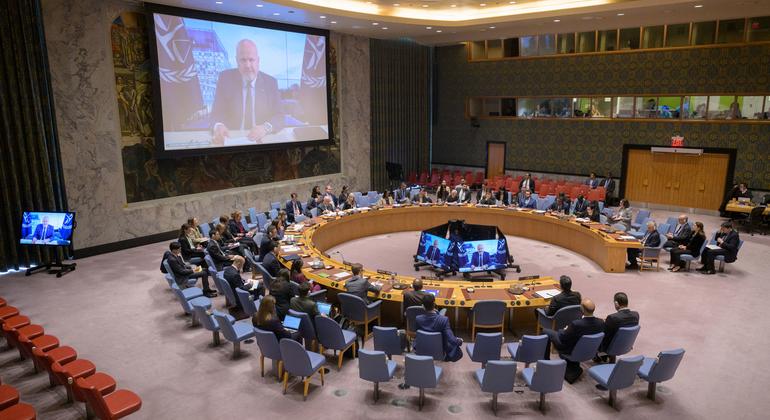
Mr. Khan briefed Ambassadors via videolink after the United States imposed punitive sanctions on the court including senior personnel, which threaten the prosecutor and others with arrest if they travel to the US. The US made the order in response to the ICC issuing arrest warrants for the Israeli Prime Minister and former defence minister, last November.

Mr. Najim was arrested by Italian authorities based on an ICC warrant on charges of war crimes and crimes against humanity linked to abuses at Metiga Prison.

However, his return was a matter of deep concern, said Mr. Khan.

New ‘rule of law’ promises accountability

There was real dismay and disappointment among victims that Mr. Njeem was returned to the scene of the alleged crimes,” Mr. Khan said.

Despite that setback, he said that the arrest warrant had sent “shockwaves” through Libyan militias and alleged perpetrators in Libya, signalling a growing awareness that “the rule of law has entered the territory of Libya.”

He confirmed that more arrest warrants are being pursued, and that the ICC has responded to a request for assistance from the National Crime Agency of the United Kingdom as part of its own investigation into Mr. Njeem.

There is a black box of suffering in Libya,” he told ambassadors. “We will manage to break it open.”

The Security Council meeting on the situation in Libya.

Libya grants ICC jurisdiction

In another major development, Libya formally submitted a declaration to the ICC under Article 12(3) of the Rome Statute, granting the court jurisdiction over crimes committed on Libyan soil from 2011 to 2027.

Mr. Khan described this as a “new chapter” in accountability efforts and confirmed that the investigation phase is expected to conclude by early 2026.

About the ICC

The International Criminal Court (ICC) is an independent judicial body established under the Rome Statute, adopted in 1998 and in force since 2002.

Although not part of the United Nations, the ICC works closely with it under a cooperative framework. The situation in Libya was first referred to the ICC by the UN Security Council in 2011 through resolution 1970.

Source link