India carried out final user trial of 3rd generation Anti Tank Guided Missile (ATGM) NAG on Thursday, 22 Oct 2020 at 0645 hrs from Pokhran range. The missile was integrated with the actual warhead and a tank target was kept at designated range. This was launched from NAG Missile Carrier NAMICA. The missile hit the target accurately defeating the armour.
ATGM NAG has been developed by DRDO to engage highly fortified enemy tanks in day and night conditions. The missile has “Fire & Forget” “Top Attack” capabilities with passive homing guidance to defeat all MBTs equipped with composite and reactive armour.
The NAG missile carrier NAMICA is a BMP II based system with amphibious capability. With this final user trial, NAG will enter into production phase. The missile will be produced by Defence PSU Bharat Dynamics Limited (BDL), whereas Ordnance Factory Medak will produce the NAMICA.
Union Defence Minister Rajnath Singh congratulated DRDO and Indian Army for the successful trial of NAG Missile. Secretary DDR&D & Chairman DRDO, Dr G Satheesh Reddy appreciated the efforts of DRDO, Indian Army and Industry in bringing the missile up to the production phase.
The missile will be inducted soon in the India Army. In 2008, Ministry of Defence approved procurement of 300 Nag missiles and 25 missile carriers for Army. The missile was integrated with the actual warhead and a tank target was kept at designated range. This was launched from Nag Missile Carrier NAMICA.
The missile hit the target accurately defeating the armour. The NAG missile carrier NAMICA is an Infantry Combat Vehicle BMP2 II based system with amphibious capability. With this final user trial, NAG will enter into production phase.
The missile will be produced by Defence PSU Bharat Dynamics Limited (BDL), whereas Ordinance Factory Medak will produce the NAMICA.
India has unveiled the Draft Space Based Communication Policy 2020 (Spacecom Policy-2020) with draft Norms, Guidelines and Procedures for implementation of Spacecom NGP-2020.
Under the policy guidelines, Indian private sector players wanting to provide communication service inside and outside India using a space-based asset are liable for damages caused to other space objects in outer space and its environment.
Releasing the draft, the Department of Space (DOS) said private players can provide communication services using space based assets within and outside India but any damages that may occur to other space objects in the outer space the private service providers are liable for financial damages and they have to take care of that by providing financial guarantee or insurance cover.
The extent of financial guarantee or the insurance cover will be determined by the Indian authorising/licensing body taking into account the risks involved. The DOS has called for comments on the draft policy by 4.11.2020.
Space Asset Authorisation
Under the draft Spacecom Policy-2020, any communication service within the Indian territory from space can be carried out only with an authorised space asset and only Indian entities are eligible for obtaining space asset authorisation and any Indian entity can seek authorisation for use of space asset for communication within Indian territory. This authorisation extends to use of Indian orbital resource, non-Indian orbital resource, use of owned or leased space asset.
The draft policy requires Indian companies to establish ground system within Indian territory for monitoring and controlling space asset, while the use of outer space for peaceful purposes is governed by the UN treaties and international conventions, use of orbital resources is governed by radio regulations of the specialised UN agency, the International Telecommunication Union (ITU). Government of India as member of such UN bodies has responsibilities and obligations towards use of outer space as a common asset of humans.
It states that the use of space based communication in any frequency of electromagnetic spectrum, to or from Indian territory, be permitted through a process of authorisation under the provisions of Spacecom Policy-2020. Indian entities can establish and operate satellite systems to provide capacity for communication services with authorisations.
Own Satellites
Indian entities can undertake design, development and realisation of satellites and associated communication systems. They can establish satellite system through their own built satellite or procured satellite and establish telemetry, tracking and command (TT&C) earth stations and satellite control centre (SCC) in or outside India. They can offer the capacity to commercial and societal communications within India as well as outside India. They can also supply their systems and solutions to international markets.
“The authorization requires a satisfactory commitment by the applicant through an appropriate arrangement with the concerned foreign administration which has the priority for the use of the proposed orbital resources. In case of a leased space asset, apart from the applicant, the operator of such asset shall also agree and commit for the arrangement of bringing the orbital resources eventually under Indian administration,” the draft policy stated.
The Spacecom Policy-2020 Highlights:
Monitor and authorise use of space assets for communication to or from Indian territory.
Ensure protection of space assets already put in place and adopt measures to bring in more space assets under the administrative control for enhancing ability to utilize space based communication for national needs.
Promote increased participation of commercial Indian industry to provide space based communications both within the country and outside.
Concentrate on realisation of space based communication systems for addressing the requirements that cannot be effectively, affordably and reliably satisfied by commercial Indian industry either because of national security concerns or economic factors.
Provide a timely and responsive regulatory environment for the commercial Indian industry to establish and operate space based communication systems.
The Ministry of Home Affairs (MHA) has extended the gradual relaxation of visa rules for more categories of foreign nationals and Indian nationals who wish to enter or leave India with immediate effect with their existing visas except electronic visa, tourist visa and medical visa.
Foreign nationals intending to visit India for medical treatment can now apply for a medical visa, including for their medical attendants and foreign nationals can come to India for various purposes such as business, conferences, employment, studies, research and medical purposes.
“Therefore, this decision will enable foreign nationals to come to India for various purposes such as business, conferences, employment, studies, research, medical purposes etc.,” said the ministry in a statement. The decision will ease the sectors affected due to pandemic as restrictions were imposed on the visit of foreigners.
In view of the situation arising out of the Covid-19 pandemic, the Ministry had taken a series of steps to curtail the inward and outward movement of international passengers since February this year. Therefore, the MHA — a nodal Ministry which has the authority to give visa and foreign travel approvals — has now decided to permit all Overseas Citizenship Of India (OCI) and Person of Indian Origin (PIO) card holders and all other foreign nationals intending to visit India for any purpose, except on a tourist visa to enter by air or water routes through authorised airports and seaport immigration check posts.
The relaxation includes flights operated under the Vande Bharat Mission, Air Transport Bubble arrangements or by any non scheduled commercial flights as allowed by the Ministry of Civil Aviation. All such travellers will have to strictly adhere to the guidelines of the Ministry of Health and Family Welfare (MoHF) regarding quarantine and other health and Covid-19 matters.
If the validity of such visas has expired, fresh visas of appropriate categories can be obtained from the Indian Missions or Posts concerned, the Ministry said.
When Prime Minister Narendra Modi greeted his predecessor Dr Manmohan Singh on his birthday on Sept 26, 2020, the Twitterati woke up to the need of the hour for an academic who changed the course of battered Indian economy from socialism to market-driven economy, albeit, gradually.
No wonder, #HappyBirthdayDrMMSingh trended on Twitter for about 15 hours, with over 150,000 tweets and the hashtag topped the chart as the economist turned 88. Reminiscent of what he said just ahead of the run-up to the 2014 general election, the praise for him was universal without any political undercurrents. “I honestly believe that history will be kinder to me than the contemporary media, or for that matter, the Opposition parties in Parliament,” said Dr Manmohan Singh in January 2014.
Ironic but the country failed to see his selfless achievements for the country in a silent but graceful manner that rivals only a few prime ministers in history. Despite the brouhaha around his birthday online, he himself spent the day mourning the passing of Isher Judge Ahluwalia, an economist, author and wife of Montek Singh Ahluwalia who had helped him during his term as the former finance minister to initiate reforms that changed India forever.
Japan’s recognition
Soon after serving as finance minister, the coalition governments followed and he was pushed to sidelines. But not for some nations which have seen the mettle in such men of great vision and recognised them even when they were not in public glare.
Japan in 1997 conferred upon him the Nikkei Asia Prize meant for regional growth. Not many bothered why Japan woke up to honour him when he was Leader of Opposition in Rajya Sabha. But, Japan saw the future potential Prime Ministerial candidate in him that many failed to recognise in his own country. It came true seven years later in 2004 when he was chosen as Prime Minister.
Late Realisation
Here are some tweets which speak for themselves to depict his term in comparison to those before and after him:
“Those were the days when the Prime Minister focused on work, not on camera.”
“Happy birthday to a Prime Minister who gave 10.8% GDP growth, faced press conferences and knew the spelling of strength.”
“He spoke less but not lies.”
“He showed us the difference between talk and work.”
“The tragedy is you don’t know the value of a Dr Manmohan Singh until you get a Narendra Modi,”
Finally, Rahul Gandhi summed it up when he tweeted: “India feels the absence of a PM with the depth of Dr Manmohan Singh. His honesty, decency and dedication are a source of inspiration for us all. ”
His associate in the Congress and former finance minister P. Chidambaram even advocated the Bharat Ratna for Manmohan Singh but the truth is that he is above all those honours and awards. His commitment to work and bring change is what we need. And hopefully, Japan may recognise such personality again.
The World Food Programme, the world’s largest humanitarian organisation addressing hunger and promoting food security, was awarded 2020 Nobel Prize for Peace.
In 2019, the WFP provided assistance to close to 100 million people in 88 countries who are victims of acute food insecurity and hunger. In 2015, eradicating hunger was adopted as one of the UN’s Sustainable Development Goals. The WFP is the UN’s primary instrument for realising this goal. In recent years, the situation has taken a negative turn. In 2019, 135 million people suffered from acute hunger, the highest number in many years. Most of the increase was caused by war and armed conflict.
The coronavirus pandemic has contributed to a strong upsurge in the number of victims of hunger in the world. In countries such as Yemen, the Democratic Republic of Congo, Nigeria, South Sudan and Burkina Faso, the combination of violent conflict and the pandemic has led to a dramatic rise in the number of people living on the brink of starvation. In the face of the pandemic, the World Food Programme has demonstrated an impressive ability to intensify its efforts. As the organisation itself has stated, “Until the day we have a medical vaccine, food is the best vaccine against chaos.”
“We will never achieve the goal of zero hunger unless we also put an end to war and armed conflict,” said the citation. The Norwegian Nobel Committee said it wishes to emphasize that providing assistance to increase food security not only prevents hunger, but can also help to improve prospects for stability and peace.
The World Food Programme has taken the lead in combining humanitarian work with peace efforts through pioneering projects in South America, Africa and Asia. The World Food Programme was an active participant in the diplomatic process that culminated in May 2018 in the UN Security Council’s unanimous adoption of Resolution 2417, which for the first time explicitly addressed the link between conflict and hunger.
The Security Council also underscored UN Member States’ obligation to help ensure that food assistance reaches those in need, and condemned the use of starvation as a method of warfare.
With this year’s award, the Norwegian Nobel Committee wishes to turn the eyes of the world towards the millions of people who suffer from or face the threat of hunger. The World Food Programme plays a key role in multilateral cooperation on making food security an instrument of peace, and has made a strong contribution towards mobilising UN Member States to combat the use of hunger as a weapon of war and conflict.
The organisation contributes daily to advancing the fraternity of nations referred to in Alfred Nobel’s will. As the UN’s largest specialised agency, the World Food Programme is a modern version of the peace congresses that the Nobel Peace Prize is intended to promote.
The work of the World Food Programme to the benefit of humankind is an endeavour that all the nations of the world should be able to endorse and support.
US President Donald Trump is diagnosed with Coronavirus just a month before the US Presidential election denting his chances further to an easy win. Similar to the Spanish Flu that had wreaked havoc from 1918 to 1920 in the US, the startling political developments have raised many eye brows to the fact that history repeats itself.
What Happened 100 Years Ago
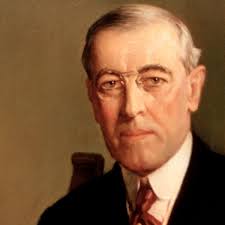
In 1919, then US President Woodrow Wilson was affected by the global pandemic Spanish flu and more than 675,000 Americans died from the contagious disease.
Even in 1918, Wilson’s personal secretary was affected by the influenza, along with his eldest daughter, while many Secret Service members also caught the virus, including sheep grazing on the White House lawn.
Woodrow Wilson was a victim of the Spanish fluin 1920 while Donald Trump is facing similar fate now in 2020
Woodrow Wilson was in France for the Paris Peace Conference negotiating with the French at the end of World War I and after flu, he reportedly “yielded to several French demands that he had previously said were nonnegotiable.”
Wilson fell ill on April 3, 1919 and according to A. Scott Berg’s 2013 biography, “Wilson,” the president excused himself from a meeting with the Council of Four and returned to his room. His doctor, Cary T. Grayson, found the president suffering from severe pains in his back and head, severe coughing spells and a temperature of 103 degrees, Berg wrote.
Wilson’s condition deteriorated so quickly that Grayson even thought the president had been poisoned. In his mail to President’s chief of staff in Washington, Grayson wrote:”I was able to control the spasms of coughing but his condition looked very serious.” However, he told reporters that the president was suffering from a cold caused by the “chilly and rainy weather” in Paris.
Though Wilson had a full recovery, he suffered a collapse on Sept. 25, 1919, in Pueblo, Colorado, while speaking on his idea of the United States joining the League of Nations. Wilson returned to the White House, where he suffered a severe stroke on Oct. 2, 1919. His wife Edith apparently steered the government until Warren G. Harding took over formally as President in 1921.
What’s Happening Now
Hundred Years after, in March 2020 When the novel coronavirus gripped the world, US President Donald Trump brushed it aside as another flu outbreak that would go away once the summer sets in. When it reached an uncontrollable pandemic proportion, his disdain for a mask prompted his staff in the White House refrain from wearing a mask despite pleas to contrary by the CDC.
As in the case of Wilson, Trump’s close aide Hope Hicks tested positive for the coronavirus after spending time in close proximity to the president in the entire week preceding the diagnosis. Soon, President Donald Trump tweeted confirming that he and first lady Melania Trump tested positive for Covid-19.
Unlike in 1920 when President Wilson was not in Presidential race due to his illness, Trump is very much in the hectic campaign finishing the first round of Presidential Debates just a week before the diagnosis on October 2, that may defer the second debate slated for October 15, 2020.
Return to Normalcy
Though many world leaders have successfully returned to duties after suffering from the bouts of Covid-19 infection, Trump’s age has pushed him into the most vulnerable age group at 74 years. According to the US Centers for Disease Control and Prevention (CDC) advisory issued on Sept. 11, 2020, “people in their 60s or 70s are, in general, at higher risk for severe illness than people in their 50s.”
In June 2020, Trump weighed 244 pounds. For his height at 6 feet 3 inches, with a body mass index of 30.5, he is technically obese and as per the CDC, obese individuals are three times more likely than others to suffer severe symptoms of Covid-19. However, Trump does not have prominently high blood pressure, nor any cancer, kidney disease, or diabetes.
If Trump returns to normal health and wins the election, he may have rewritten the history of pandemic deja vu in the history of US or else, it would be a lesson for all the future presidents to learn and make the nation prepared for any pandemic.
Citing a hardware breakdown, the Tokyo Stock Exchange halted trading for the entire day Thursday, Oct. 1, 2020 with serious rippling effect on exchanges in Sapporo, Nagoya, and Fukuoka as well. Japan Exchange Group Inc., which operates the TSE, said it would announce any updates on resumption of trade on Friday later. All buying and selling has been frozen on the first day of the new quarter.
The impact is likely to stem the positive investor sentiment created following a buoyant U.S. stock market performance overnight and closures in other major markets in the region, including China, Hong Kong, South Korea and Taiwan.
Moreover, the shutdown of stock exchange will dent the investor confidence in the Japanese markets system. Chief Cabinet Secretary Katsunobu Kato, the top Japanese government spokesman, said the disruption was “extremely regrettable.”
3rd Largest stock Exchange
There were no indications that the outage was related to hacking, said the operator of the $6.15 trillion stock market that is the third-largest in the world behind the U.S. and China. Its daily turnover has averaged about $22 billion over the past year.
But glitches are common to Tokyo stock exchange since 2000. Its president resigned in mid-2000s over such computer issues and eventually the faster Arrowhead system, developed by Fujitsu was introduced in 2010. However, a glitch halted trading in 241 securities in 2012 and another a year later.
As of now, Fujitsu spokesman Takeo Tanaka made no comment on details of the present glitch though he denied that it was a cyberattack. The glitch has raised many eyebrows since a cyber attack in New Zealand spurred trading halts for over four days in August.