Ajay Devgn-starrer Drishyam: The Conclusion has crossed the ₹400 crore mark at the worldwide box office, collecting ₹409.43 crore since its theatrical release on October 2, the makers announced on Saturday. The latest milestone strengthens the film’s position among the biggest box-office successes of 2026.
Directed by Abhishek Pathak, the crime thriller recorded a strong opening weekend and crossed ₹300 crore worldwide within four days of its release. The film earned ₹24.86 crore on its eighth day, Friday, taking its cumulative global collection to ₹409.43 crore, according to the makers.
“Drishyam: The Conclusion has officially stormed past the 400 crore worldwide mark at the box office earning a total of Rs 409.43 crore! With a collection of Rs 24.86 crore on Day 8 (Friday), the film continues its phenomenal run, cementing its position among the biggest blockbusters of 2026,” the makers said in a statement.
Ajay Devgn Returns as Vijay Salgaonkar
The film marks the final instalment in the Drishyam crime thriller franchise, with Devgn reprising his role as Vijay Salgaonkar, a cable operator who goes to extraordinary lengths to protect his family after his daughter becomes involved in a crime.
The story revolves around a tense cat-and-mouse game between Salgaonkar and law enforcement officials as investigators attempt to uncover the truth behind the case.
Alongside Devgn, the film features returning cast members Tabu, Shriya Saran, Rajat Kapoor, Ishita Dutta and Mrunal Jadhav. Jaideep Ahlawat joins the franchise as Rajveer Singh Tomar, a crime branch officer pursuing the case, while Prakash Raj plays an advocate.
Drishyam Franchise Reaches Its Final Chapter
The franchise is adapted from the Malayalam film Drishyam, starring Mohanlal. It began with the 2015 Hindi film directed by the late Nishikant Kamat, followed by Drishyam 2, which was released in 2022.
Drishyam: The Conclusion is produced by Panorama Studios and presented by Star Studio18. The screenplay has been written by Abhishek Pathak, Aamil Keeyan Khan and Parveez Shaikh.
With its worldwide collection crossing ₹400 crore within eight days, the film has delivered a strong commercial performance for the franchise’s concluding chapter. Its continued box-office run will determine how far the latest instalment climbs among the year’s biggest theatrical releases.
The Government of India, through a notification issued by the Ministry of Information and Broadcasting dated May 6, 2026, has appointed Shri Shashi Shekhar Vempati as the Chairperson of the Central Board of Film Certification (CBFC). He shall hold office for a period of three years from the date of joining.
Consequent upon the elevation of Shri Prasoon Joshi as Chairman of Prasar Bharati, he has stepped down from the position of Chairperson, Central Board of Film Certification (CBFC), leading to the present appointment.
Shri Shashi Shekhar Vempati brings with him extensive experience in media, broadcasting, and public communication. His appointment is expected to further strengthen the functioning of the CBFC.
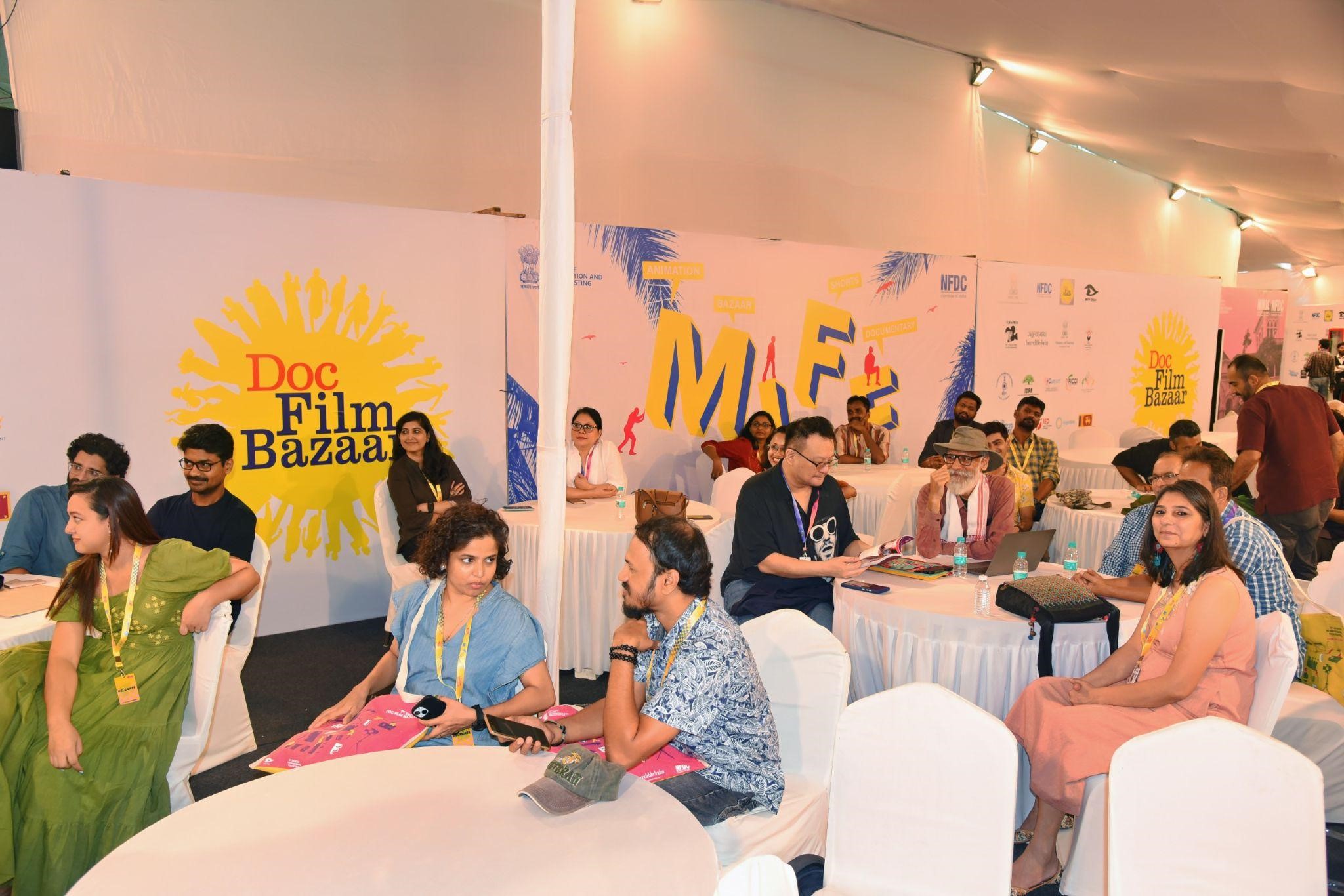
The 2nd edition of WAVES Doc Bazaar will return from June 16 to 18, 2026, alongside the 19th Mumbai International Film Festival (MIFF), at the NFDC Complex, Mumbai.
WAVES Doc Bazaar is a premier one-stop platform designed to nurture and accelerate the journey of documentary, animation and short filmmakers by creating opportunities for collaboration, mentorship, market access and global visibility. Returning with its second edition, the platform aims to bring together established professionals and emerging talent from across the audiovisual industry. Further, the Bazaar will serve as a vibrant hub for creators, producers, distributors, broadcasters, funders and technology partners, supporting various stages of production and distribution while empowering exceptional storytelling and helping filmmakers reach global audiences. Participants will gain valuable insights into current industry trends, market demands, distribution strategies and audience preferences through direct engagement with experts and experienced practitioners.
Among the key segments of WAVES Doc Bazaar is the Viewing Room (VR), where documentary, short and animation films that are recently completed or in post-production will be showcased to a curated audience of registered delegates. Designed as a secure platform accessible only to selected buyers, programmers, distributors and investors, it offers filmmakers opportunities to secure distribution deals, connect with co-producers and world sales agents, explore film festival prospects, and access finishing funds. Through a specially designed system, buyers can browse films based on language, duration, stage of completion and other details, while selected titles will also be featured in the Viewing Room catalogue to be shared with all registered delegates and made available online ahead of the event.
The Work-In-Progress Lab (WIP) is specially designed for documentary and animation films in the rough-cut stage. Conducted in a closed-door setting, the lab enables selected participants to receive valuable feedback, guidance and mentorship from experienced filmmakers, editors and international mentors, helping them refine their projects for wider audiences.
Immersive Market to Premiere at WAVES Doc Bazaar with Focus on VR, AR and XR
For the first time, WAVES Doc Bazaar will also introduce the Immersive Market, a dedicated platform for immersive content creators, producers and technology partners. Focused on VR, AR, XR and interactive experiences, the market will provide a space to showcase innovative projects, explore new storytelling formats and foster meaningful collaborations.
With its dynamic programming and industry-focused initiatives, WAVES Doc Bazaar stands poised to strengthen the ecosystem for documentaries, animation and short films, while opening new pathways for creative excellence and international outreach.
Entries Open for Viewing Room and WIP Lab at WAVES Doc Bazaar 2026
Entries are now open for the Viewing Room and Work-in-Progress (WIP) Lab at WAVES Doc Bazaar 2026, a global platform that connects documentary and animation filmmakers with leading industry professionals. Interested participants may submit their applications until May 15, 2026, by 11:59 PM IST.
PIB File Photos of the inaugural edition of Doc Film Bazaar held in 2024.
Eligibility
The program is open to documentary and animation films from across the globe. Short, mid-length, and feature-length films are eligible to be showcased in the WAVES Doc Bazaar 2026. Films must be completed or in post-production, with most of the shooting already finished. Projects in development or pre-production are not eligible. Filmmakers with projects seeking festivals, sales, distribution, or finishing funds are especially encouraged to apply. Films with limited or no international exposure are welcome.
Submission Process
In the first stage, applicants must submit a password protected screener link of the full film or a rough cut for review. If selected, filmmakers must submit at least 10 minutes of footage for the Viewing Room. Submitting the full film is strongly encouraged. Final files will be securely uploaded and made accessible only to authorized participants.
Filmmakers are invited to take advantage of this opportunity to showcase their work on an international stage and connect with key decision-makers in the documentary and animation industry.
Interested candidates can submit their applications by clicking on the link below.
The Promotion and Regulation of Online Gaming (PROG) Act, 2025 was enacted by Parliament in August 2025 as a landmark legislation to safeguard citizens from the growing menace of online money games while creating an enabling framework for e-sports and online social games. The Act reflects the Government’s resolve, articulated by Prime Minister Narendra Modi, to position India as a global hub for gaming, innovation and creativity, and at the same time protect society from the financial, psychological and social distress caused by predatory online money gaming platforms.
Section 19 of the Act empowers the Central Government to make rules to carry out its provisions. The Ministry of Electronics and Information Technology (MeitY), as the nodal Ministry, has accordingly prepared the Promotion and Regulation of Online Gaming Rules, 2026 (“the Rules”), which will come into force on 1st May, 2026. The Rules have been finalised after extensive inter-Ministerial consultations and vetting by the Department of Legal Affairs.
Purpose of the Rules
The Rules are the operational architecture of the parent Act. Their purpose is to:
provide a clear, transparent and time-bound mechanism to determine whether an online game is an online money game (and therefore prohibited) or a permissible online social game or e-sport;
establish the Online Gaming Authority of India as a unified, digital-first regulator for the sector;
create a statutory registration regime for e-sports and such categories of online social games as may be notified;
prescribe mandatory user safety features, grievance redressal and transparency obligations for online game service providers;
lay down the procedure for inquiry and imposition of civil penalties under section 12 of the Act; and
provide an appellate mechanism to ensure accountability, fairness and observance of the principles of natural justice.
Guiding Policy Objectives
Protecting citizens, especially children and vulnerable users, from the harms of online money gaming, addictive design and misleading promises of quick wealth;
Ensuring regulatory certainty for the industry through clear criteria for determination, predictable timelines and a digital-first process;
Safeguarding the financial system by preventing banks, payment systems and financial institutions from facilitating transactions linked to prohibited online money games;
Enabling coordinated enforcement between the Authority, financial regulators, law enforcement agencies and State Governments; and
Upholding user rights through a functional, two-tier grievance redressal mechanism and a statutory right of appeal.
The Regulatory Framework at a Glance
The Rules are organised into 6 Parts and 26 Rules covering the following pillars of the regulatory framework:
1. Online Gaming Authority of India (Part II, Rules 3–7)
The Online Gaming Authority of India is constituted as an attached office of MeitYwith its head office at the NCT of Delhi.
It is structured as a compact, multi-sectoral body chaired by the Additional Secretary, MeitY (ex officio), with JS-level representatives from the MHA, Finance (Department of Financial Services), MIB, Youth Affairs and Sports, and Law and Justice (Department of Legal Affairs).
The Authority is designed to function, as far as practicable, as a digital office.
Functions include: maintaining and publishing the list of online money games, inquiring into complaints, issuing directions, orders and codes of practice, entertaining appeals against decisions of service providers on grievances, and coordinating with financial institutions and law-enforcement agencies for effective enforcement.
2. Determination of an Online Game (Part III, Rules 8–11)
The Rules prescribe a determination test to classify whether an online game constitutes an online money game. Determination is triggered in three situations:
suo motu action by the Authority;
an application by a service provider offering the game as an e-sport;
or a notification by the Central Government requiring a category of social games to be determined.
Rule 9 lists objective factors for determination — payment of fees or stakes, expectation of monetary winnings, the structure of the revenue model, and the manner in which rewards or in-game assets are redeemed or monetised outside the game.
Determination shall, as far as practicable, be completed within 90 days of a complete application or of notice issued in a suo motu proceeding (Rule 10).
The outcome is recorded in a determination order, which is specific to the particular game and provider.
3. Registration of Online Games (Part IV, Rules 12–19)
Registration is requiredONLY where the Central Government so notifies — having regard to risk to users (including children), scale of participation, financial transactions and country of origin — and for every online game intended to be offered as an e-sport.
On successful determination and registration, the Authority issues a digital Certificate of Registration with a unique registration number, valid for a period of up to 10 years.
An online money game shall not be eligible for recognition or registration as an e-sport under the National Sports Governance Act, 2025.
Registered service providers are required to prominently display the details of determination or registration on the interface through which the game is offered, designate a point of contact, comply with data retention directions, and observe directions issued in relation to facilitation of payments.
4. User Safety Features
Rule 2(1)(i) introduces the concept of user safety features — technical, procedural, operational, behavioural or system-related safeguards appropriate to the risk profile of the game.
These include age verification and age-gating, time restrictions, parental controls, user reporting tools, counselling support, and fair-play and integrity monitoring. Service providers are required to disclose their user safety features and internal grievance mechanisms at the time of application for determination or registration (Rule 23).
5. Two-Tier Grievance Redressal and Appellate Mechanism (Rules 7 and 20)
Every online game service provider offering an online social game or e-sport must establish and maintain a functional grievance redressal mechanism.
A user dissatisfied with the provider’s resolution (or in case of non-redressal) may approach the Authority within 30 days, which shall endeavour to dispose of the appeal within a further 30 days.
A second appeal lies before the Appellate Authority i.e.,the Secretary, MeitY who shall dispose of appeals, as far as possible, within 30 days of receipt.
6. Penalties and Enforcement (Part V, Rules 21–22)
Proceedings are to be conducted in digital mode unless physical presence is deemed necessary, and concluded within 90 days of receipt of a complaint.
Penalties are to be proportionate, with the Authority required to consider factors such as gain from non-compliance, loss caused to users, recurrence, gravity and mitigation efforts.
For details, please refer to the Gazette of India CG-DL-E-22042026-271974 dated 22 April 2026.
Mukta Arts Film Studios has issued an open call inviting writers to submit original story plots and character ideas for potential production. The studio is seeking concise two-page concepts across formats, including small-budget high-concept films, Hindi OTT series in music, drama, or suspense genres, animated features of about an hour, and mid-budget commercial films.
Submissions must be registered with the Screenwriters Association (SWA), and interested creators can pitch their ideas via email to pitch@muktaarts.com. The initiative signals Mukta Arts’ continued push to discover fresh storytelling talent across diverse formats.
Sony Pictures Classics has announced that I Swear, written and directed by BAFTA nominee Kirk Jones, will open in theatres across the United States on April 24, 2026.
The film, which had its world premiere at the Toronto International Film Festival 2025, received strong critical acclaim and currently holds a 100% rating on Rotten Tomatoes. It has also delivered a solid run at the UK box office, alongside major awards recognition. Lead actor Robert Aramayo secured the Best Lead Performance honour at the British Independent Film Awards, where the film also won for Best Casting. It has further earned multiple BAFTA nominations, including Outstanding British Film and Best Original Screenplay.
Inspired by the life of Tourette’s Syndrome campaigner John Davidson, the film stars Aramayo alongside a strong supporting cast featuring Maxine Peake, Shirley Henderson and Peter Mullan.
imdb
Spanning five decades from the 1980s to present-day Britain, the story traces Davidson’s diagnosis at the age of 15 and follows his journey through adolescence and adulthood, highlighting the challenges of living with a widely misunderstood condition. The film also worked closely with the Tourette’s community, incorporating individuals with lived experience and consulting relevant charities to ensure authenticity.
I Swear is produced by Kirk Jones, Georgia Bayliff and Piers Tempest under One Story High and Tempo Productions, with Cindy Jones and John Davidson serving as executive producers.
Sony Pictures Classics has acquired worldwide rights to Gail Daughtry and the Celebrity Sex Pass, a comedy directed by David Wain. The film premiered at the Sundance Film Festival 2026 and features an ensemble cast led by Zoey Deutch and Jon Hamm. The acquisition marks one of Sony Pictures Classics’ key deals from this year’s festival.
A small-town story with a Hollywood twist has landed a major distribution deal.
Sony Pictures Classics announced it has acquired worldwide rights to Gail Daughtry and the Celebrity Sex Pass, an independent comedy that premiered at the 2026 Sundance Film Festival. The deal marks the company’s fourth acquisition from this year’s event.
Directed by David Wain and co-written with longtime collaborator Ken Marino, the film builds on Wain’s track record of character-driven comedies.
Gail Daughtry film plot and Sundance reception
The film follows Gail Daughtry, a small-town hairdresser whose life unravels after her fiancé acts on a so-called “celebrity pass.”
Gail’s fiancé, Tom, betrays her after meeting his celebrity pass
She travels to Los Angeles with her friend Otto
A psychic convinces her to pursue her own celebrity encounter
The journey turns into a chaotic search involving celebrities and unexpected dangers
The narrative unfolds as Gail navigates Hollywood in search of actor Jon Hamm, encountering industry figures and a group of pursuing assassins along the way.
The film premiered to strong audience response at Sundance, according to Sony Pictures Classics.
Cast and production details of Gail Daughtry film
The film features a wide-ranging ensemble cast.
Zoey Deutch plays Gail Daughtry
Jon Hamm appears as himself
John Slattery and Ken Marino take supporting roles
Additional cast includes Miles Gutierrez-Riley, Ben Wang, Joe Lo Truglio, and Sabrina Impacciatore
Behind the camera, the film brings together several experienced creatives.
Cinematography by Kevin Atkinson
Editing by John Daigle
Production design by Justin Lieb
Music composed by Craig Wedren
The film was shot entirely on location in Los Angeles.
Sony Pictures Classics strategy and filmmaker response
Sony Pictures Classics described the film as a standout comedy from the festival lineup.
“GAIL DAUGHTRY AND THE CELEBRITY SEX PASS is the most hilarious comedy we have seen in ages,” the company said in a statement.
Wain said the film aims to deliver theatrical comedy at a time when audiences are seeking light-hearted entertainment.
“I think we’re all hungry to have more movies in theaters that are designed to provide laughter and joy,” he said.
Producer Crystine Zhang said partnering with Sony Pictures Classics was significant for the project’s release.
The acquisition deal was negotiated between Sony Pictures Classics and WME Independent on behalf of the filmmakers.
The National Film Development Corporation Ltd. has announced the nationwide release of Malayalam feature film Achappa’s Album on April 24, 2026. Directed by Deepti Pillay Sivan, the film blends family drama, fantasy, and comedy through a time-travel narrative. The project, backed by the Ministry of Information and Broadcasting, explores generational relationships through a father-son role reversal.
Key Takeaways
Achappa’s Album will release nationwide on April 24, 2026.
The film combines time travel with a father-son role reversal narrative.
It features a mix of veteran and contemporary actors.
NFDC continues to support diverse storytelling in Indian cinema.
A Malayalam-language film built around memory, time, and family relationships is set for a nationwide release later this month.
The National Film Development Corporation Ltd. (NFDC), a government-backed body under India’s Ministry of Information and Broadcasting, announced that Achappa’s Album will release in theatres on April 24.
The film brings together elements of fantasy, humor, and emotional storytelling, centered on a premise that explores what it means to step into another generation’s life.
Achappa’s Album story and time-travel concept explained
Directed by Deepti Pillay Sivan and written by Sanjeev Sivan, Anirban Bhattacharya, and Umesh Nair, the film follows a father and son whose lives unexpectedly intertwine through a time-travel twist.
The narrative places both characters in each other’s roles, creating a situation where generational differences come into focus.
A father and son begin living each other’s lives after an unexpected event
The story explores generational perspectives and personal choices
Themes include family bonds, memory, and emotional understanding
Director Deepti Pillay Sivan said the film uses a simple premise to explore deeper human connections.
“The film explores deep human relationships through a simple yet engaging time-travel narrative,” she said, according to NFDC.
Achappa’s Album cast and technical team details
The film features a mix of established and emerging actors.
Mohan Agashe leads the ensemble cast
Supporting roles include Anjana Appukuttan, Aadinath Kothare, Priyanka Nair, and Sidhanshu Sanjeev Sivan
The technical team includes cinematographer Manoj Pillai and editor Sreekar Prasad, a National Award winner. Music for the film is composed by Gulraj Singh.
NFDC role in Indian cinema and film promotion
NFDC Managing Director Prakash Magdum said the project reflects the organization’s focus on supporting distinctive storytelling.
“This film reflects our commitment to nurturing unique voices in Indian cinema,” he said. “By combining an imaginative concept with emotional depth, Achappa’s Album has the potential to resonate with audiences across all generations.”
Established in 1975, NFDC has played a role in supporting film production, distribution, and preservation across multiple Indian languages.
The teaser for Achappa’s Album has been released on NFDC’s official platforms, with the full trailer expected in the coming days.
Veteran playback singer Asha Bhosle passed away on April 12, 2026, following a brief illness, marking the end of an era in Indian music. She was 92.
Her last rites will be held at Shivaji Park on Monday afternoon with full state honours, reflecting her immense contribution to Indian cinema and music. Family members, close associates from the film and music industry, and admirers gathering to pay their final respects.
Several leading personalities, including members of the Mangeshkar family and prominent figures from Bollywood, attended the ceremony, while fans across the country mourned her loss and remembered her timeless voice.
Your voice will live in our hearts forever. #AshaTai
A heartfelt tribute to Asha Bhosle Ji, a true legend.
Om Shanti 🙏 pic.twitter.com/g0pwrkxPbV
Ashalata Dinanath Mangeshkar was born in the small hamlet of Goar in Sangli, then part of the princely state of Sangli (now in Maharashtra), into a musically rich family. Her father, Pandit Deenanath Mangeshkar, of Marathi and Konkani heritage, was a noted classical singer and stage actor, while her mother Shevanti was of Gujarati origin. Tragedy struck early when her father passed away while she was just nine years old. Following his death, the family relocated from Pune to Kolhapur and eventually to Mumbai in search of livelihood. Alongside her elder sister Lata Mangeshkar, she began singing and acting in films to support the family. Her first recorded film song, “Chala Chala Nav Bala,” was for the Marathi film Majha Bal (1943).
Career
During the late 1940s and early 1950s, playback singing for leading actresses in Hindi cinema was largely dominated by voices like Geeta Dutt, Shamshad Begum, and Lata Mangeshkar. Despite this, Asha Bhosle steadily carved her own space and, by the 1950s, was recording more songs than many of her contemporaries.
Composer O. P. Nayyar played a pivotal role in shaping her early career between 1952 and 1956. However, her major breakthrough came with B. R. Chopra’s Naya Daur (1957), with music composed by Nayyar. Her duets with Mohammed Rafi—such as “Maang Ke Saath Tumhara,” “Saathi Haath Badhana,” and “Uden Jab Jab Zulfein Teri,” written by Sahir Ludhianvi—brought her widespread acclaim and recognition.
Over the years, she delivered numerous iconic songs, including “Piya Tu Ab To Aaja” from Caravan and “Yeh Mera Dil” from Don, among many others that remain timeless classics.
In 2013, at the age of 79, Bhosle made her acting debut in the film Mai, playing the titular role. She portrayed a 65-year-old mother suffering from Alzheimer’s disease who is abandoned by her children, earning praise from critics for her performance.
In May 2020, she expanded her digital presence by launching her YouTube channel, “Asha Bhosle Official.”
Personal Life:
At the age of 16, Asha married Ganpatrao Bhosle against her family’s wishes. The marriage, however, ended in separation in 1960, after which she returned to her maternal home with her children.
She later married music composer Rahul Dev Burman in 1980.
Awards:
Asha Bhosle won numerous awards. Some of them are :
Filmfare Best Female Playback Award
1967: “Garibon ki Suno” (Dus Lakh, 1966)
1969: “Parde Mein Rehne Do” (Shikar, 1968)
1972: “Piya Tu Ab To Aaja” (Caravan, 1971)
1973: “Dum Maro Dum” (Hare Rama Hare Krishna, (1971)
1974: “Hone Lagi Hai Raat” (Naina, 1973)
1975: “Chain Se Humko Kabhi” (Pran Jaye Par Vachan Na Jaye, 1974)
1979: “Yeh Mera Dil” (Don, 1978)
National Film Awards
Bhosle won the National Film Award for Best Female Playback Singer twice:
1981: Dil Cheez Kya Hai (Umrao Jaan)
1986: Mera Kuch Samaan (Ijaazat)
IIFA Awards
IIFA Award for Best Female Playback
2002: “Radha Kaisa Na Jale” (Lagaan)
Grammys
Bhosle is one of the very few Indian artists who have been nominated at the Grammy Awards.
39th Grammy Awards – 1997
– Grammy Award for Best Global Music Album – Ali Akbar Khan’s Legacy (nominated)
48th Grammy Awards – 2006
– Grammy Award for Best Contemporary World Music Album – You’ve Stolen My Heart (nominated)
Honours and recognitions
In 1997, Bhosle became the first Indian singer to be nominated for the Grammy Award, for Legacy, an album with Ustad Ali Akbar Khan.
She received seventeen Maharashtra State Awards.
She received the Dadasaheb Phalke Award in 2000 for her outstanding contribution to Indian cinema.
In 2011 the Guinness Book of World Records officially acknowledged Bhosle, at The Asian Awards, as the most recorded artist in the history of music. She was awarded a certificate for “the most studio recordings (singles) from Sebastian Coe for recording up to 11,000 solo, duet and chorus-backed songs and in over 20 Indian languages since 1947”. At the event she was also awarded the Lifetime Achievement Award.
Following an acclaimed journey across international film festivals, award winning film Mercy is now set to come closer to home. The official trailer unveiled digitally on April 10, offering a deeply moving glimpse into a story that has quietly stayed with audiences long after the credits roll.
Set in Mumbai on Christmas Eve — a night of warmth, togetherness, and reflection — Mercy unfolds as an intimate portrait of a family navigating an unexpected emotional crossroads. At its heart is Shekhar (Raj Vasudeva), whose world is suddenly altered, leaving him caught between love, responsibility, and an unspoken question that has no easy answers. What follows is a deeply personal journey through silence, strength, and the quiet weight of choice.
Rather than seeking to explain or define, Mercy gently opens up space for reflection — on dignity, compassion, and what it truly means to hold on, and to let.
Priyanka Chopra Jonas returned to the Academy Awards stage for the first time in a decade on Sunday, only to find herself at the center of a social media debate, not for anything she said, but for how she appeared to react when her co-presenter said it.
At the 98th Academy Awards, Priyanka Chopra Jonas took the stage alongside Spanish actor Javier Bardem to present the Best International Feature Film award, which went to Norway’s Sentimental Value, directed by Joachim Trier. Before announcing the nominees, Bardem said, “No to war and Free Palestine,” while wearing a “No to War” pin on his tuxedo. His statement drew loud applause from inside the Dolby Theatre. Chopra Jonas stood beside him, nodded, and proceeded with the presentation. She has not publicly commented on the moment.
Clips of the exchange circulated rapidly across platforms, with users fixating on Priyanka Chopra Jonas’ expression during Bardem’s remarks. Interpretations ranged widely — some read discomfort into her body language, others pushed back against that characterization entirely. The disagreement itself became the story.
Indian content creator and political commentator Dhruv Rathee escalated the conversation days later when he posted a video on Instagram publicly criticizing Chopra Jonas, accusing her of maintaining “privileged neutrality” and suggesting that Bollywood figures are broadly reluctant to take moral stands on international human rights issues. Rathee also directed criticism at the wider Bollywood community, contrasting Indian celebrities with Hollywood stars who have more openly addressed the Gaza conflict. As of the time of publication, neither Chopra Jonas nor her representatives had issued a public response.
Attends Major Hollywood Events
The controversy arrived at a moment otherwise meant to mark a career milestone. Her 2026 appearance was her first time presenting at the Oscars since 2016, when she shared the stage with Liev Schreiber to present the Best Film Editing award. Over the years, Priyanka Chopra Jonas has established herself as one of the few Indian actors with a consistent presence at major Hollywood industry events. On the professional front, she was most recently seen in The Bluff, currently streaming on Prime Video, and is attached to SS Rajamouli’s upcoming production Varanasi, opposite Mahesh Babu.
The evening brought a separate wave of headlines as well. Reports emerged that Priyanka Chopra Jonas and husband Nick Jonas were forced to switch to a golf cart after their vehicle was denied clearance near the venue, and that the cart nearly tipped over on a sharp corner while they were en route to make her presentation slot on time.
A separate controversy resurfaced in the days following the ceremony when a 2017 video began recirculating online appearing to show the same two individuals approaching Priyanka Chopra Jonas for autographs on two separate occasions at LAX, prompting accusations that the encounters were staged for publicity. Neither Chopra Jonas nor her team addressed the claim.
Further noise was added when a fabricated tweet, falsely attributed to Indian actress Swara Bhasker, began spreading in connection with the Oscars moment. Bhasker denied authorship of the post on X, calling it fake and attributing it to politically motivated bad actors.
The backlash directed at Priyanka Chopra Jonas reflects a recurring tension in global celebrity culture, the expectation that high-profile figures take explicit positions on geopolitical conflicts, weighed against the professional and personal consequences of doing so. For South Asian stars navigating both Bollywood and Hollywood simultaneously, that calculus is often more complicated than the discourse around it tends to acknowledge.
This year, Paul Thomas Anderson took the best picture at the 98th Academy Awards with his drama of a faded away revolutionary fighting his old enemies to keep his daughter safe. Overall, it got six awards, among which it received the best supporting actor, best adapted screenplay and best director. It is also the first movie to win the Oscar award in the category of best casting.
But neither film really lost.
The period vampire thriller, Fruit of the Earth, by Ryan Coogler, the film that glorified the origins of the Blues music and the southern Black culture, won four awards including a historical first category award in the best cinematography categories and a highly praised best actor award in the same category to Michael B. Jordan. Both movies are also created and distributed by the same company, Warner Bros. Pictures, which is a part of CNN parent company, Warner Bros. Discovery. here’s the full list:
Best picture
“Frankenstein”
“Hamnet”
“Marty Supreme”
“One Battle After Another” – *WINNER
“Sinners”
“Train Dreams”
“F1”
“Bugonia”
“Sentimental Value”
“The Secret Agent”
Best director
Chloé Zhao, “Hamnet”
Josh Safdie, “Marty Supreme”
Paul Thomas Anderson, “One Battle After Another” – *WINNER
Joachim Trier, “Sentimental Value”
Ryan Coogler, “Sinners”
Best actress in a leading role
Jessie Buckley, “Hamnet” – *WINNER
Rose Byrne, “If I Had Legs I’d Kick You”
Kate Hudson, “Song Sung Blue”
Renate Reinsve, “Sentimental Value”
Emma Stone, “Bugonia”
Best actor in a leading role
Timothée Chalamet, “Marty Supreme”
Leonardo DiCaprio, “One Battle After Another”
Ethan Hawke, “Blue Moon”
Michael B. Jordan, “Sinners” – *WINNER
Wagner Moura, “The Secret Agent”
Best actress in a supporting role
Elle Fanning, “Sentimental Value”
Inga Ibsdotter Lilleaas, “Sentimental Value”
Amy Madigan, “Weapons” – *WINNER
Wunmi Mosaku, “Sinners”
Teyana Taylor, “One Battle After Another”
Best actor in a supporting role
Benicio del Toro, “One Battle After Another”
Jacob Elordi, “Frankenstein”
Delroy Lindo, “Sinners”
Sean Penn, “One Battle After Another” – *WINNER
Stellan Skarsgård, “Sentimental Value”
Best adapted screenplay
Will Tracy, “Bugonia”
Guillermo del Toro, “Frankenstein”
Chloé Zhao and Maggie O’Farrell, “Hamnet”
Paul Thomas Anderson, “One Battle After Another” – *WINNER
Clint Bentley and Greg Kwedar, “Train Dreams”
Best original screenplay
Robert Kaplow, “Blue Moon”
Jafar Panahi, “It Was Just an Accident”
Ronald Bronstein & Josh Safdie, “Marty Supreme”
Eskil Vogt and Joachim Trier, “Sentimental Value”
Ryan Coogler, “Sinners” – *WINNER
Best casting
Nina Gold, “Hamnet”
Jennifer Venditti, “Marty Supreme”
Cassandra Kulukundis, “One Battle After Another” – *WINNER
Gabriel Domingues, “The Secret Agent”
Francine Maisler, “Sinners”
Best original song
Diane Warren for “Dear Me” from “Diane Warren: Relentless”
EJAE, Mark Sonnenblick, Joong Gyu Kwak, Yu Han Lee, Hee Dong Nam, Jeong Hoon Seon and Teddy Park for “Golden” from “KPop Demon Hunters” – *WINNER
Raphael Saadiq and Ludwig Göransson for “I Lied to You” from “Sinners”
Nicholas Pike for Sweet Dreams of Joy from “Viva Verdi!”
Nick Cave and Bryce Dessner for “Train Dreams” from “Train Dreams”
Best original score
Alexandre Desplat, “Frankenstein”
Jerskin Fendrix, “Bugonia”
Max Richter, “Hamnet”
Jonny Greenwood, “One Battle After Another”
Ludwig Göransson, “Sinners” – *WINNER
Best cinematography
Dan Laustsen, “Frankenstein”
Darius Khondji, “Marty Supreme”
Michael Bauman, “One Battle After Another”
Autumn Durald Arkapaw, “Sinners” – *WINNER
Adolpho Veloso, “Train Dreams”
Best editing
Stephen Mirrione, “F1”
Ronald Bronstein and Josh Safdie, “Marty Supreme”
Andy Jurgensen, “One Battle After Another” – *WINNER
Olivier Bugge Coutté, “Sentimental Value”
Michael P. Shawver, “Sinners”
Best international feature film
“The Secret Agent”
“It Was Just an Accident”
“Sentimental Value” – *WINNER
“Sirât”
“The Voice of Hind Rajab”
Best animated feature film
“Arco”
“Elio”
“KPop Demon Hunters” – *WINNER
“Little Amélie or the Character of Rain”
“Zootopia 2”
Best documentary feature film
“The Alabama Solution”
“Come See Me in the Good Light”
“Cutting Through Rocks”
“Mr Nobody Against Putin” – *WINNER
“The Perfect Neighbor”
Best makeup and hairstyling
Mike Hill, Jordan Samuel and Cliona Furey, “Frankenstein” – *WINNER
Kyoko Toyokawa, Naomi Hibino and Tadashi Nishimatsu, “Kokuho”
Ken Diaz and Mike Fontaine, “Sinners”
Kazu Hiro, Glen Griffin and Bjoern Rehbein, “The Smashing Machine”
Thomas Foldberg and Cathrine Sauerberg, “The Ugly Stepsister”
Best sound
Gareth John, Al Nelson, Gwendolyn Yates Whittle, Gary A. Rizzo and Juan Peralta, “F1” – *WINNER
Greg Chapman, Nathan Robitaille, Nelson Ferreira, Christian Cooke and Brad Zoern, “Frankenstein”
José Antonio Garcia, Christopher Scarabosio and Tony Villaflor, “One Battle After Another”
Chris Welcker, Benjamin A. Burtt, Felipe Pacheco, Brandon Proctor and Steve Boeddeker, “Sinners”
Amanda Villavieja, Iaia Casanovas and Yasmina Praderas, “Sirât”
Best visual effects
Joe Letteri, Richard Baneham, Eric Saindon and Daniel Barrett, “Avatar: Fire and Ash” – *WINNER
Ryan Tudhope, Nicolas Chevallier, Robert Harrington and Keith Dawson, “F1”
David Vickery, Stephen Aplin, Charmaine Chan and Neil Corbould, “Jurassic World Rebirth”
Charlie Noble, David Zaretti, Russell Bowen and Brandon K. McLaughlin, “The Lost Bus”
Michael Ralla, Espen Nordahl, Guido Wolter and Donnie Dean, “Sinners”
Best costume design
Deborah L. Scott, “Avatar: Fire and Ash”
Kate Hawley, “Frankenstein” – *WINNER
Malgosia Turzanska, “Hamnet”
Miyako Bellizzi, “Marty Supreme”
Ruth E. Carter, “Sinners”
Best production design
Tamara Deverell and Shane Vieau, “Frankenstein” – *WINNER
Fiona Crombie and Alice Felton, “Hamnet”
Jack Fisk and Adam Willis, “Marty Supreme”
Florencia Martin and Anthony Carlino, “One Battle After Another”
Hannah Beachler and Monique Champagne, “Sinners”
Best documentary short
“All the Empty Rooms” – *WINNER
“Armed Only with a Camera: The Life and Death of Brent Renaud”
Filmmaker Steven Spielberg has reignited debate about extraterrestrial life after suggesting that humanity may not be alone in the universe. His remarks come at a time when discussion about unidentified flying objects (UFOs) and unexplained aerial phenomena is spreading rapidly across the internet and popular culture.
Speaking at the SXSW Film and TV Festival in Austin while promoting his upcoming science-fiction film Disclosure Day, Spielberg told audiences that although he does not have definitive answers about alien life, the possibility cannot be dismissed.
“I don’t know any more than any of you do,” Spielberg said during a live podcast session at the festival. “But I have a very strong suspicion that we are not alone here on Earth right now.”
The comments quickly gained traction online, where speculation about extraterrestrial encounters and government secrecy has grown sharply in recent years.
Spielberg’s upcoming film taps directly into that fascination. Disclosure Day, scheduled for theatrical release in June 2026, imagines the global consequences if governments were suddenly to confirm that alien intelligence had been interacting with Earth for decades. The film stars Emily Blunt, Josh O’Connor and Colin Firth and marks Spielberg’s return to large-scale extraterrestrial storytelling.
During the SXSW discussion, the director suggested that the idea of “disclosure”—a moment when authorities reveal hidden knowledge about alien contact—has increasingly captured the public imagination.
Interest in UFOs has surged globally over the past decade. Reports about unexplained aerial encounters involving U.S. Navy pilots and subsequent discussions in the U.S. Congress have brought the subject into mainstream political and scientific debate. Governments and defence agencies now commonly use the term “unidentified aerial phenomena” (UAP) when referring to mysterious objects spotted in the sky.
Triggers Online Debate on Aliens
Online communities discussing UFO sightings and possible alien technology have expanded significantly. Videos of unexplained aerial objects regularly trend on social media platforms, while documentaries and podcasts exploring the subject attract millions of viewers worldwide.
Spielberg has long been associated with extraterrestrial storytelling. His 1977 film Close Encounters of the Third Kind became one of Hollywood’s most influential science-fiction movies, portraying ordinary people encountering mysterious spacecraft. The film helped shape modern pop-culture imagery surrounding UFOs and alien contact.
Despite his long fascination with the subject, Spielberg joked that he has never personally experienced anything resembling a UFO encounter.
“I made Close Encounters of the Third Kind,” he told the SXSW audience. “I haven’t even had a close encounter of the first or second kind.”
The filmmaker also suggested that confirmed contact with extraterrestrial intelligence could challenge deeply held beliefs. According to Spielberg, such a revelation might disrupt “a lot of belief systems,” although he added that the change would not necessarily be destructive.
His comments arrive as curiosity about UFOs moves further into mainstream discourse. Once largely confined to science fiction and conspiracy circles, the question of alien life is now being discussed by scientists, policymakers and filmmakers alike.
For Spielberg, whose films have often explored humanity’s place in the universe, the renewed interest provides a timely backdrop. With Disclosure Day, the veteran director appears to be capturing a moment when speculation about extraterrestrial life has shifted from the fringes of culture to the centre of global conversation.
TikTok is built for people to create and share their own content, so dance music and indie artists fill the platform’s Top 100. On Spotify, love songs and music from major record labels dominate its top charts. On both platforms, people’s preferences only partly explain what songs become hits.
A new University of California, Davis, study examined how the data-driven business models of TikTok and Spotify shape both the music artists make, and the songs people listen to. The study was published Feb. 27 in the journal Information, Communication & Society, and co-authored by researchers from Renmin University of China, Chinese University of Hong Kong and Tsinghua University.
“Hit song charts represent both user feedback and selections curated by the platforms’ algorithms that also influence users’ choices,” said Cuihua (Cindy) Shen, a UC Davis professor of communication and the study’s corresponding author. “By publishing hit song charts, platforms are declaring what songs are visible and dominant.”
How hits happen
TikTok is a global leader in user-generated short videos, frequently featuring remixes and clips of popular songs. Spotify is a major player in distributing full-length albums. With TikTok’s roughly 1.6 billion monthly active users and Spotify’s 675 million, both platforms serve massive and truly global audiences.
In analyzing differences between the platforms and 2020-22 data from their respective Top 100 hit song charts, researchers found significant differences in what makes a hit.
On TikTok, popularity was driven more by dance genres that suit the platform’s emphasis on user engagement and its popular “dance challenges,” which promotes user videos featuring specific songs and dance moves.
On Spotify, songs about relationships were popular, while songs about politics were unpopular. Spotify had more hit songs produced by major labels and songs in the pop and hip-hop/rap/trap genres. It had a lower proportion of songs from R&B/soul and dance genres.
In the study, TikTok’s Top 100 charts — during the two years analyzed — had 321 songs compared to 1,707 on Spotify. Only 68 hit songs appeared on both platforms within the two-year study period, and a majority entered and exited Spotify’s daily Top 100 charts more quickly than on TikTok.
Different platforms, different hits
TikTok and Spotify differ from traditional media such as radio and even MTV. On both apps, user data, such as clicks and subscriptions, are fed into the platforms’ algorithms and influence the music that artists create to meet demand.
This study highlights how the differences between the two platforms affect what makes a Top 100 hit. Spotify focuses on streaming full-length music and provides detailed metadata, including lyrics. TikTok features clipped snippets of songs that serve as background to users’ video content.
“Our study suggests that Spotify acts as a primary distribution channel while TikTok serves as a space for creative re-interpretation,” said Shen.
Actor-singer Prashant Tamang, who recently appeared as an assassin in the second season of the acclaimed streaming series Paatal Lok, has passed away at the age of 43. He is reported to have suffered a cardiac arrest.
Tamang rose to national prominence after winning Indian Idol Season 3 in 2007, a victory that marked one of the most decisive audience-driven moments in the history of Indian reality television. His triumph, achieved with a record number of votes, came after a closely watched finale against fellow contestant Amit Paul.
Before stepping into the limelight, Tamang served in the Kolkata Police, a detail that became central to his public narrative during the competition. Hailing from a Nepali-speaking Gorkha family, he drew extraordinary grassroots support from the Gorkha community across India and abroad. His appeal lay less in technical virtuosity and more in a restrained, heartfelt singing style that resonated widely with viewers.
Following his win, Tamang released his debut album Dhanyavaad in 2007, featuring tracks in Hindi and Nepali. The album found significant acceptance in eastern India and Nepal. While he went on to record playback songs for Hindi and regional films, his presence in mainstream Bollywood remained limited. In later years, he increasingly focused on Nepali-language music, where he built a steady career and a loyal listener base.
Tamang also explored acting, appearing in several Nepali films, including Gorkha Paltan, a project rooted in the historical legacy of the Gorkha military tradition. More recently, his appearance in Paatal Lok Season 2 marked a notable return to wider public attention.
Reacting to the news, Amit Paul shared an emotional tribute on Instagram, posting a throwback photograph of Tamang and writing that he was struggling to process the loss of “my brother, my friend, my dosti.”
Though he may not have remained a constant fixture in national pop culture, Prashant Tamang’s legacy endures. He is widely remembered as one of the earliest reality-show winners whose success was powered by regional identity, collective mobilisation, and audience voting strength—often cited as a turning point in how popular participation reshaped Indian television talent shows.
Los Angeles, Sept 14: The 77th Primetime Emmy Awards turned into a night of surprises, historic wins and emotional moments as Adolescence, The Studio, The Pitt, and The Late Show With Stephen Colbert emerged as the biggest winners.
The limited series Adolescence led the tally with six awards, including Best Limited or Anthology Series. Stephen Graham won Best Actor, while young star Owen Cooper made history as the youngest-ever male Emmy winner with his supporting role. Erin Doherty also bagged Best Supporting Actress, with Philip Barantini and Graham-Jack Thorne duo recognized for directing and writing respectively.
Comedy belonged to Seth Rogen’s The Studio, which won Best Comedy Series, alongside trophies for Best Actor, Best Directing, and Best Writing. Jean Smart further solidified her legacy with Best Actress in a Comedy Series for Hacks, while her co-star Hannah Einbinder earned Best Supporting Actress. In a major upset, Jeff Hiller claimed Best Supporting Actor in a Comedy for Somebody Somewhere, beating veteran nominee Harrison Ford.
Drama gold went to The Pitt, crowned Best Drama Series, with Noah Wyle winning Best Actor and Katherine LaNasa scoring a surprise victory for Best Supporting Actress. Severance also celebrated, with Britt Lower taking Best Actress and Tramell Tillman making history as the first Black man to win Supporting Actor in a Drama. Adam Randall won directing honors for Slow Horses.
In variety and talk categories, Stephen Colbert’s recently canceled The Late Show won Best Talk Series, receiving a thunderous standing ovation. John Oliver’s Last Week Tonight outshone SNL to claim Best Scripted Variety Series and Best Writing for a Variety Series, though SNL50: The Anniversary Special secured the Best Live Variety Special.
Cristin Milioti won Best Actress in a Limited Series for The Penguin, while The Traitors triumphed as Best Reality Competition Program. The ceremony also featured reunions, tributes, and an In Memoriam led by Phylicia Rashad.
Hosted by Nate Bargatze at LA’s Peacock Theater, the show celebrated both fresh talent and industry veterans, leaving audiences with memorable firsts and farewells in Emmy history.
Emmy Awards 2025- Complete List of Winners:
Best Drama Series – The Pitt Best Comedy Series – The Studio Best Limited or Anthology Series – Adolescence Best Reality Competition Program – The Traitors Best Talk Series – The Late Show With Stephen Colbert Best Scripted Variety Series – Last Week Tonight With John Oliver Best Variety Special (Live) – SNL50: The Anniversary Special
Best Actor in a Drama Series – Noah Wyle, The Pitt Best Actress in a Drama Series – Britt Lower, Severance Best Supporting Actor in a Drama Series – Tramell Tillman, Severance Best Supporting Actress in a Drama Series – Katherine LaNasa, The Pitt
Best Actor in a Comedy Series – Seth Rogen, The Studio Best Actress in a Comedy Series – Jean Smart, Hacks Best Supporting Actor in a Comedy Series – Jeff Hiller, Somebody Somewhere Best Supporting Actress in a Comedy Series – Hannah Einbinder, Hacks
Best Actor in a Limited or Anthology Series or Movie – Stephen Graham, Adolescence Best Actress in a Limited or Anthology Series or Movie – Cristin Milioti, The Penguin Best Supporting Actor in a Limited or Anthology Series or Movie – Owen Cooper, Adolescence Best Supporting Actress in a Limited or Anthology Series or Movie – Erin Doherty, Adolescence
Best Writing for a Drama Series – Dan Gilroy, Andor Best Writing for a Comedy Series – Seth Rogen, Evan Goldberg & team, The Studio Best Writing for a Limited or Anthology Series or Movie – Jack Thorne & Stephen Graham, Adolescence Best Writing for a Variety Series – Last Week Tonight With John Oliver
Best Directing for a Drama Series – Adam Randall, Slow Horses Best Directing for a Comedy Series – Seth Rogen, The Studio Best Directing for a Limited or Anthology Series or Movie – Philip Barantini, Adolescence
Bollywood’s recent weekend offerings highlight a striking divergence in audience response and box office performance. Among them, Param Sundari, starring popular actors and backed by significant promotion, has struggled to maintain momentum in its second and third weeks. The film’s performance underscores the unpredictable nature of Bollywood’s domestic market, where star power and marketing do not always guarantee sustained commercial success.
Param Sundari arrived with considerable expectations, driven by its vibrant marketing campaign and a cast that included established stars and rising talent. The film’s music, energetic dance sequences, and glossy production design were positioned as key selling points to attract younger demographics and multiplex audiences.
However, despite these efforts, initial audience feedback pointed to mixed reviews regarding narrative coherence and character arcs. Critics praised the film’s visual appeal and choreography but noted pacing issues and a predictable storyline, elements that often affect repeat viewership and word-of-mouth momentum.
Weekend Box Office Performance
Industry trackers report that Param Sundari collected modest figures during its latest weekend, reflecting a significant drop from its opening week. While precise totals vary, estimates suggest weekend collections hovered in the range of ₹3–5 crore, a notable decline compared to expectations. This contrasts sharply with other Bollywood releases, which, despite competing for attention, fared better due to stronger narratives or novelty appeal.
The occupancy trends indicate that urban multiplexes in metros such as Mumbai, Delhi, and Bengaluru saw moderate attendance, while single-screen theatres in smaller cities and towns reported even lower footfalls. Analysts attribute this disparity to both competition from regional hits and changing audience preferences favoring pan-India or globally themed narratives.
Param Sundari released alongside The Bengal Files and ongoing runs of regional blockbusters like Madharaasi and Lokah: Chapter 1 – Chandra. The latter titles, with their strong word-of-mouth and fan engagement, captured a significant share of audience attention, leaving less room for Param Sundari to perform.
Param Sundari
Additionally, the Bollywood landscape is experiencing a paradigm shift. Films that rely primarily on star power are facing challenges from content-driven releases and regional cinema with pan-India appeal. The success of films like The Kashmir Files and Gangubai Kathiawadi in recent years demonstrates that compelling storytelling often outweighs celebrity presence alone.
Social media reactions for Param Sundari have been mixed. While the film’s music tracks and dance numbers garnered appreciation, discussions around plot, character development, and engagement levels reflected disappointment among certain segments of the audience. Viral memes and humorous critiques have dominated online discourse, sometimes inadvertently keeping the film in public attention, though not translating into box office gains.
Viewer demographics indicate that younger audiences, who initially formed a strong part of the opening week crowd, were less inclined to return for repeat viewings. Critics highlight that the film’s core appeal, while visually rich, lacked narrative depth, reducing long-term engagement.
Param Sundari’s marketing campaign was robust, leveraging digital promotions, influencer partnerships, and music video launches to build pre-release anticipation. Distribution focused on maximizing screen presence in metropolitan cities and premium multiplex chains, aiming to target urban youth demographics.
However, the reliance on metro-centric strategies may have limited rural penetration, which, for Bollywood releases, often constitutes a substantial portion of total collections. In contrast, regional films such as Madharaasi and Lokah achieved broader reach across both urban and semi-urban markets, amplifying their box office resilience.
Critical Insights
The underperformance of Param Sundari highlights several key insights for Bollywood stakeholders:
Narrative Weight Matters: A strong storyline with emotional resonance is crucial for sustaining box office momentum beyond the opening weekend.
Competition With Regional Films: Regional cinema’s rising pan-India appeal requires Bollywood to compete not just with fellow Hindi films but also with high-quality regional releases.
Marketing Beyond Hype: Pre-release buzz is insufficient; sustained engagement through content and audience connect is critical for extended theatrical runs.
Audience Fragmentation: Urban multiplex audiences are increasingly discerning, while rural and smaller-city markets may respond differently, requiring a nuanced release strategy.
When compared to Baaghi 4 and The Bengal Files, Param Sundari illustrates the challenges Bollywood faces in balancing star-driven appeal with compelling content. While Baaghi 4 saw a drop in occupancy but benefited from franchise recognition, The Bengal Files leveraged topical storytelling to maintain steady collections. Param Sundari, despite high production values, struggled to achieve similar traction.
Future Bollywood Releases
The performance of Param Sundari may influence how studios approach mid-budget Bollywood projects. The reliance on aesthetics and dance-centric marketing alone appears insufficient. Audience expectations are shifting toward stronger scripts, character-driven narratives, and experiences that resonate emotionally or thematically.
For actors and producers, this signals the need to innovate within conventional Bollywood frameworks. Incorporating elements that offer novelty or align with current societal interests may prove decisive in future box office outcomes.
Param Sundari’s weekend performance serves as both a reality check and a learning opportunity for Bollywood. While its music, visuals, and star cast contributed to initial interest, the film’s inability to sustain momentum underscores the importance of content-driven appeal in today’s market.
In a landscape increasingly dominated by pan-India hits, regional cinema, and global releases, Bollywood must adapt strategies to align with evolving audience preferences. Param Sundari, despite underwhelming numbers, remains a talking point for industry analysis, providing insights into the changing dynamics of box office success in India.
Tamil cinema continues to assert itself as a powerhouse within India’s film ecosystem, with big-budget action entertainers driving both regional and pan-India revenue. The latest example is Madharaasi, starring Sivakarthikeyan and featuring Vidyut Jammwal in a pivotal antagonist role. In just a few days, the film has amassed nearly ₹50 crore, with analysts predicting it will soon cross the coveted ₹100 crore mark.
Over the past decade, Tamil cinema has demonstrated the ability to generate massive commercial returns without relying solely on Bollywood-style formulas. Films like Master, Leo, and Vikram have showcased the appeal of high-octane narratives combined with strong star power. Madharaasi continues this trajectory, delivering a blend of adrenaline-pumping action, engaging storytelling, and mass-appeal elements that cater to both metro and tier-2 audiences.
Industry trackers report that Madharaasi collected approximately ₹25 crore on its opening day, making it one of the highest openings for a Sivakarthikeyan-starrer. Strong word of mouth, coupled with strategic scheduling across multiplexes and single-screen theatres, has ensured steady collections. By the end of its first weekend, the film had already crossed ₹50 crore, cementing its status as a commercial hit.
The momentum is expected to continue in the following weeks, particularly as overseas collections from markets such as Singapore, Malaysia, and the UAE contribute significantly to the total. These regions, with large Tamil-speaking populations, often act as crucial revenue boosters for Tamil cinema’s big releases.
Star Power And Audience Appeal
Sivakarthikeyan, known for his charisma and mass appeal, anchors the film effectively, drawing audiences across demographics. Vidyut Jammwal’s inclusion as a formidable antagonist adds an edge to the narrative, bringing action credibility that resonates with thrill-seeking audiences.
The film also employs high-octane sequences, visually striking choreography, and a tightly woven screenplay that keeps viewers engaged. Its action-driven narrative ensures repeat viewing, a common feature of blockbuster Tamil films where audiences flock back to witness stunts and climactic showdowns.
Madharaasi exemplifies the increasing professionalism and scale of Tamil cinema. From elaborate sets to cutting-edge VFX sequences, the production quality rivals larger pan-India films. The promotional campaign has leveraged social media extensively, with teaser releases, behind-the-scenes content, and influencer-driven marketing fueling anticipation ahead of the premiere.
Madharaasi box office
Music has also played a pivotal role. The film’s soundtrack, released ahead of the movie, gained traction on streaming platforms, creating pre-release hype and helping draw audiences to theatres. Songs featuring Sivakarthikeyan and Jammwal’s on-screen confrontations became viral, amplifying the film’s visibility.
Timing has been a crucial factor in Madharaasi’s success. It avoided clashing with major Bollywood releases, focusing on maximizing occupancy across Tamil Nadu and Kerala. Its release coincided with school and college holidays, further boosting footfalls among younger demographics.
Regional And Pan-India Impact
While primarily a Tamil release, Madharaasi’s appeal extends beyond regional boundaries. Dubbed versions in Telugu, Kannada, and Malayalam are contributing to cumulative box office figures. Analysts suggest that Tamil films with universal action themes are increasingly able to compete with Hindi and Telugu blockbusters in non-Tamil-speaking regions.
This strategy of multi-lingual releases is reminiscent of the pan-India approach pioneered by Telugu cinema, and it reflects a larger trend where regional films are no longer confined by linguistic barriers.
With production costs reported at approximately ₹60 crore, Madharaasi’s rapid revenue generation ensures a high return on investment. The ₹100 crore benchmark is both a symbolic and financial milestone, underscoring the commercial viability of high-budget regional films. For distributors and exhibitors, the film has reinforced the profitability of Tamil action entertainers, encouraging further investment in large-scale projects.
Audience response has been overwhelmingly positive, particularly on social media platforms where discussions about stunts, dialogues, and performances have trended widely. Memes, reaction videos, and fan edits have contributed to a sustained marketing effect, ensuring the film remains in public discourse well beyond the opening weekend.
Critics have praised the film for balancing high-octane entertainment with a coherent narrative, a combination that ensures both commercial and critical appeal. While some noted predictable plot elements, the performances and production scale have mitigated potential criticism.
Madharaasi’s success exemplifies the growing trend of Tamil cinema exporting its content to wider Indian and international markets. With strategic multi-lingual releases, strong star power, and high-quality production, Tamil films are increasingly challenging the dominance of Bollywood and Telugu films in multiple regions.
The performance also highlights the potential of mid-to-high budget films in regional industries to deliver blockbuster returns, encouraging producers to invest in ambitious projects that balance storytelling with commercial appeal.
Tamil Cinema On The Rise
Despite its early success, challenges remain. Sustaining box office momentum beyond the first two weeks is critical. The arrival of other regional releases and potential Bollywood competition could impact long-term collections. Additionally, maintaining consistent quality in pan-India releases will be crucial for Tamil films seeking broader appeal.
Nevertheless, industry experts remain optimistic. The combination of star appeal, production scale, and audience engagement suggests that Madharaasi will comfortably cross ₹100 crore, further strengthening Tamil cinema’s standing in the Indian box office hierarchy.
Madharaasi is more than just another action entertainer, it is a testament to Tamil cinema’s evolving landscape. By nearing ₹100 crore in just a few days, it has showcased the market’s appetite for high-quality, action-driven films with universal appeal. For producers, distributors, and exhibitors, the film serves as both inspiration and blueprint for future pan-India successes.
Tamil audiences, meanwhile, have responded enthusiastically, proving that regional films with scale, star power, and compelling narratives can achieve blockbuster status, rivaling even the most dominant Bollywood and Telugu offerings.
The Malayalam film industry has long been admired for its storytelling finesse, sharp writing, and grounded realism. But when it comes to box office scale, it often found itself overshadowed by the pan-India juggernauts of Telugu and Tamil cinema. That perception is now changing. Lokah: Chapter 1 – Chandra has stormed past the ₹112 crore mark, cementing its position as one of the biggest Malayalam blockbusters of all time and underlining the industry’s evolution into a formidable commercial force.
Historically, Malayalam cinema has thrived on modest budgets and urban narratives. Its strength lay in critical acclaim rather than commercial clout. The emergence of directors experimenting with high-scale spectacles has shifted that balance. Lokah: Chapter 1 – Chandra epitomizes this shift, merging Malayalam cinema’s storytelling depth with the spectacle-driven appeal of pan-India productions.
Crossing ₹112 crore is no small feat for a regional film primarily driven by Kerala’s domestic market. The film’s success signals that Malayalam cinema can now consistently produce titles with nationwide, and even overseas, pull.
Box Office Trajectory: From Regional To National
Released in late August, Lokah: Chapter 1 – Chandra opened to packed theatres across Kerala. Within its first week, it had already grossed over ₹40 crore. Strong word of mouth and positive reviews ensured sustained momentum. As it expanded into Tamil Nadu, Karnataka, and the Gulf states—where the Malayali diaspora is significant—the collections accelerated.
Lokah Chapter 1: Chandra’ movie box office figures
By week three, the film had breached the ₹100 crore mark, becoming one of the fastest Malayalam titles to achieve that milestone. Its current tally of ₹112 crore underscores both its universal appeal and smart distribution strategy.
Why The Film Clicked
Several factors contributed to the film’s runaway success:
Star Power: The lead actor’s magnetic performance resonated with audiences, elevating the film from regional hit to national sensation.
Pan-India Storytelling: While deeply rooted in Malayalam culture, the narrative explored universal themes of power, betrayal, and resilience.
Visual Grandeur: High production values, elaborate sets, and cutting-edge visual effects rivaled those of Tamil and Telugu big-budget spectacles.
Music And Emotion: A powerful soundtrack, combined with emotional arcs, gave the film mass appeal across demographics.
To understand the significance of Lokah: Chapter 1 – Chandra, one must compare it with earlier milestones. Films like Drishyam and Lucifer were turning points, proving Malayalam films could compete at the box office. But Chandra has gone further, crossing revenue thresholds previously thought unattainable.
Where Lucifer stopped at around ₹125 crore worldwide, Chandra is on track to surpass it with its continued run in overseas markets. Trade experts predict a final tally near ₹140–150 crore, putting it firmly in pan-India blockbuster territory.
The Overseas Factor
The Gulf region has always been a stronghold for Malayalam cinema. Lokah: Chapter 1 – Chandra capitalized on this by launching aggressively in UAE, Qatar, and Oman, with multiple shows daily. The diaspora turned out in droves, making it one of the highest-grossing Malayalam films overseas.
Interestingly, the film has also done well in non-traditional markets like North America and Australia, aided by the rising curiosity around South Indian cinema post-RRR and KGF. This crossover appeal highlights Malayalam cinema’s growing recognition on the global stage.
While commercial performance has been stellar, critics have also lauded the film’s balance of scale and substance. Reviews praised its intricate screenplay, layered characters, and ability to weave grandeur without losing emotional depth.
On social media, the film has trended consistently, with fan edits, viral dialogues, and music reels amplifying its reach. The buzz has particularly resonated with younger audiences, who are increasingly engaging with South Indian cinema as “cooler” alternatives to Bollywood offerings.
The Pan-India Template
The film’s success underscores a larger industry trend: the “pan-India” model is no longer limited to Telugu and Kannada blockbusters. Malayalam cinema, once seen as too niche or arthouse for national expansion, is now firmly part of the conversation.
Producers are recognizing the need to balance authenticity with universal storytelling. Lokah: Chapter 1 – Chandra achieves this balance, presenting Kerala’s ethos while packaging it in a format digestible to audiences across India.
For the Malayalam industry, Chandra’s ₹112 crore haul is both validation and inspiration. It signals that investing in big-scale productions is viable, provided the content retains Malayalam cinema’s storytelling DNA. This could encourage more studios to experiment with higher budgets, advanced VFX, and broader distribution networks.
The film also raises expectations for its sequels. Being Chapter 1, the franchise model promises more to come, potentially creating a Malayalam cinematic universe that can rival its Telugu and Tamil counterparts.
Despite its success, challenges remain. Scaling consistently requires strong infrastructure, marketing muscle, and risk appetite. Malayalam cinema, known for its modest production ecosystem, must adapt to the logistical demands of pan-India blockbusters.
Another hurdle is linguistic accessibility. While dubbed versions have worked in Tamil Nadu and Karnataka, penetration in Hindi-speaking states remains limited. Building Hindi-market appeal will be crucial for future growth.
A New Dawn For Malayalam Cinema
Lokah: Chapter 1 – Chandra is more than a blockbuster; it is a statement of intent. By crossing ₹112 crore, it has demonstrated that Malayalam cinema can deliver not just critical gems but also mass-market spectacles. Its success contributes to what many are calling Malayalam cinema’s golden year, alongside other hits that have found both acclaim and box office validation.
As audiences across India embrace diverse storytelling, the barriers that once confined Malayalam cinema are fading. Chandra stands as a symbol of this transformation—a film that carries Kerala’s cinematic legacy into a bold new era of commercial dominance.
Horror has always been a niche genre in India, oscillating between cult classics and low-budget thrillers. Yet, the sustained success of The Conjuring franchise has rewritten that narrative, making supernatural horror a reliable box office draw. With The Conjuring: Last Rites crossing the ₹70 crore mark in India, the film has reaffirmed both the franchise’s popularity and the Indian audience’s growing comfort with global horror.
When The Conjuring debuted in 2013, few expected it to break through cultural barriers in India, where family dramas and star-driven vehicles ruled the roost. But James Wan’s taut storytelling and the chillingly authentic Ed and Lorraine Warren mythology struck a chord. Every installment since, Annabelle, The Nun, and The Conjuring sequels, has grown its fan base.
For Indian audiences, the blend of Hollywood-grade production with universal themes of fear, faith, and family protection made The Conjuring films resonate more than gore-heavy Western horror franchises. Last Rites is the latest example of this enduring formula.
Industry trackers reveal that Last Rites opened strong, with an opening weekend collection of nearly ₹30 crore. Multiplexes in Delhi, Mumbai, Bengaluru, and Hyderabad reported full houses, with late-night shows selling out, a rarity in the horror genre.
After three weeks in theatres, the film has now crossed ₹70 crore in India, placing it among the most successful Hollywood horror releases in the country. Globally, the film is inching towards the US$400 million mark, with India contributing a significant slice to its overseas revenues.
For context, this is more than many mid-tier Bollywood films this year, highlighting the widening gap between local star power and Hollywood franchises.
Why Indian Audiences Love The Conjuring
The appeal of The Conjuring franchise in India goes beyond jump scares. Experts cite several factors:
Brand Recall: The Warren family narrative has become as recognizable in India as the Fast & Furious ensemble. Each installment builds familiarity.
Word of Mouth: Horror thrives on community viewing, and Indian audiences relish collective theatre experiences, screams, laughs, and nervous chatter.
Faith Factor: The films’ religious undertones, exorcisms, priests, and demonic possession, find cultural echoes in India’s own myths and beliefs.
Youth Appeal: Gen Z audiences are leading the horror wave, often drawn by viral TikTok/Instagram reactions that amplify the scare factor.
Compared to other superhero blockbusters, horror films operate on modest budgets. Last Rites reportedly cost under US$40 million to make, yet its Indian box office alone has yielded nearly a quarter of that figure. The ROI makes horror an attractive genre for distributors and theatres, particularly in markets like India, where horror enjoys a communal pull.
The genre also benefits from repeat value. Fans often revisit screenings to watch friends’ reactions or relive scare sequences, boosting footfalls. OTT releases, when they arrive, sustain the hype, ensuring longevity of the franchise.
Last Rites enjoyed a relatively clean run in India with no major Bollywood releases clashing during its opening. This gap allowed the film to dominate multiplex schedules. Its release ahead of Halloween also positioned it well for extended traction, as horror films traditionally peak during festival seasons globally.
Meanwhile, regional releases like Lokah: Chapter 1 – Chandra and Madharaasi catered to different markets, allowing Last Rites to consolidate pan-India collections.
The film’s success also highlights Hollywood’s uneven year in India. While superhero tentpoles like Deadpool & Wolverine broke records, dramas and family titles underperformed. Horror, however, has been consistent, with films like The Nun II and Annabelle Comes Home doing solid business. Last Rites has built on that track record, positioning horror as Hollywood’s reliable weapon in India.
Audience Reactions And Cultural Fit
Social media reactions from Indian audiences underline how well Last Rites has connected. From memes about sleepless nights to viral clips of people screaming in theatres, the community-driven marketing has boosted its run.
Interestingly, cultural familiarity with ghost stories has helped. India has its own folklore of spirits, possessions, and haunted houses. This backdrop makes The Conjuring’s demonic universe more accessible, unlike Western slashers that often rely on niche tropes.
The ₹70 crore success of Last Rites raises tough questions for Bollywood. Despite mega budgets and big stars, many Hindi films have struggled to cross that benchmark this year. Hollywood horror, by contrast, is doing it with less noise, fewer stars, and relatively modest costs.
Some Indian filmmakers are now experimenting with horror-thrillers, recent examples include Stree and Bhediya, which mixed comedy with scares. But Hollywood’s slick production and global branding keep the bar high.
Distributors expect more horror franchises to capitalize on India’s appetite. The Nun III and rumored Annabelle spin-offs are already anticipated. At the same time, Netflix and Amazon Prime are pushing horror originals, hoping to capture the same audience on streaming.
For exhibitors, the lesson is clear: horror is no longer a niche weekend filler. It is a bankable genre that can deliver blockbuster returns with relatively lower investment.
Conclusion: Fear Is Profitable
The Conjuring: Last Rites is more than a box office hit—it is proof that horror has cemented its place in India’s mainstream entertainment. With ₹70 crore and counting, the franchise continues to defy odds, reminding us that fear, when packaged well, can be just as profitable as love stories or action spectacles.
For Indian audiences, the appeal lies in shared screams and heart-pounding nights. For Hollywood and theatres, it’s about steady revenue and expanding cultural dominance. And for Bollywood, it’s a wake-up call: perhaps the scariest competition comes not from rivals at home, but from ghosts abroad.