
‘Deadly floods’ displace over 100,000 in South Sudan

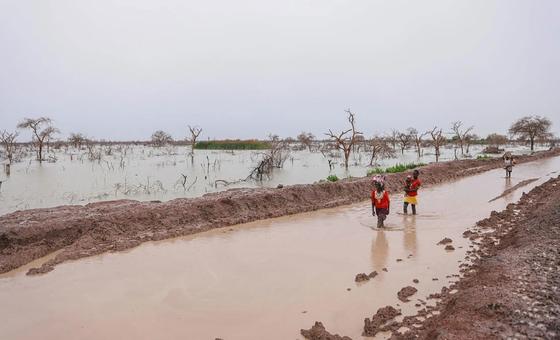
In recent weeks, widespread flooding has engulfed large parts of Jonglei, Upper Nile and Unity states in the north of the country.

The agency’s representative in South Sudan, Marie-Helene Verney, said that “if the flooding continues, up to 400,000 people are likely to be displaced by the end of the year, exceeding flood displacement levels seen in 2024.”

The situation is expected to be at its worst between September and October and threatens to “cut off entire communities, exacerbate hunger and heighten protection risks, particularly for women and girls,” Ms. Verney added.

For several years, South Sudan has faced an ongoing humanitarian crisis due to underdevelopment, disasters and conflict that has displaced many communities. Recurrent floods have exacerbated this displacement, destroyed homes, and threatened livelihoods across the nation.

“Homes, schools, health facilities, farmlands, and pastures have been flooded,” said the UNHCR representative, “devastating livestock and inundating safe water sources and latrines, which have worsened sanitation and heightened health risks.”

Stagnant water, combined with limited access to safe drinking water, is raising the threat of further disease outbreaks on top of the ongoing cholera crisis, which had already affected over 12,000 internally displaced persons (IDPs) and 3,100 refugees by the end of August.

UN continues providing aid

In 2025, UNHCR, in collaboration with the South Sudanese authorities and UN partners, has continued to provide life-saving aid, including cash, emergency shelters, and plastic sheeting to 150,000 of the most vulnerable flood-affected individuals.

Over the past five years work has been carried out to mitigate flood impacts by reinforcing dykes, prepositioning supplies, supporting livelihoods, and assisting displaced communities, including IDPs.

UNHCR has appealed for more funds to carry out its life-saving work. As of 31 July, it had only received a third of the nearly $300 million required to protect and assist displaced people and local host communities in the country.

In Unity state, which is 70 per cent underwater, UNHCR has significantly scaled down operations due to the funding shortfall, leaving thousands of people in a more precarious situation.

Supporting climate resilience

To mitigate the ongoing crisis in South Sudan, the United Nations Office for Project Services (UNOPS) recently signed a $9.9 million Climate Resilience Project in South Sudan with the Ministry of Water Resources.

UNOPS continues to support efforts to strengthen climate resilience and assist flood-affected and refugee-hosting communities in South Sudan.

 

UN urges restraint as Thailand-Cambodia clashes displace thousands; Security Council meets

The clashes, which began on 24 July, reportedly involved exchanges of gunfire, artillery shelling and rocket fire, with Thailand having conducted airstrikes inside Cambodian territory.

UN humanitarian officials confirmed civilian casualties, including children.

More than 131,000 people in Thailand and over 4,000 in Cambodia have been displaced, according to relief partners. Temporary shelters, including schools and temples, are overcrowded, and food, shelter and medical assistance are urgently needed.

The United Nations stands ready to support humanitarian efforts if requested, spokesperson Stephanie Tremblay said at a regular briefing in New York.

Protect children at all times

The UN Children’s Fund (UNICEF) also appealed for “maximum restraint”.

June Kunugi, Regional Director for East Asia and the Pacific – based in Bangkok – urged both countries to protect children and the critical services they depend on, in line with their obligations under international law, including the Convention on the Rights of the Child.

Children must be protected at all times and their safety and wellbeing must be prioritised, while schools must remain safe spaces for learning,” she said.

Security Council private meeting

At UN Headquarters in New York, ambassadors convened for an emergency private meeting of the Security Council to discuss the situation.

Representatives of Thailand and Cambodia were said to be in attendance, with Khaled Khiari, Assistant Secretary-General for the Asia and the Pacific at the UN Department of Political Affairs (DPPA), briefing.

Private meetings of the Security Council are closed to the public, but considered a formal meeting.

A longstanding dispute

The last major flare-up between the two countries occurred in 2011, when days of border fighting near the historic Preah Vihear temple – a UNESCO World Heritage Site – left multiple casualties on both sides.

Then-Secretary-General Ban Ki-moon had called for an immediate, verifiable ceasefire and urged both countries to resolve their dispute through dialogue, not military means.

That escalation followed a 2008 troop build-up around the 11th-century Hindu temple, which sits on the Cambodian side of the border.

Source link

Ukraine: Increasing hostilities displace civilians, limit humanitarian access

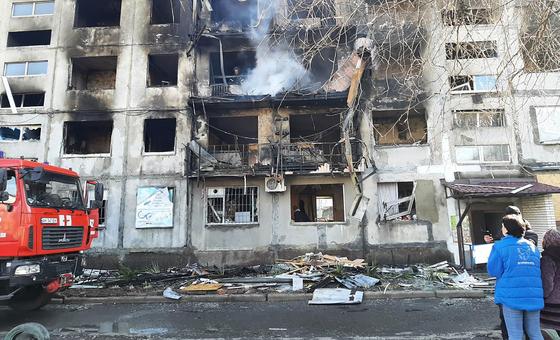
Donetsk, Kherson and Sumy regions sustained the most damage, with several civilians reportedly killed, and many displaced, UN Spokesperson Stéphane Dujarric told reporters at a regular news briefing on Thursday.

“Our humanitarian colleagues tell us that food insecurity remains a concern in front-line and border regions,” he added.

According to a recent assessment by the UN World Food Programme (WFP) and the Food and Agriculture Organization (FAO), the conflict has devastated livelihoods and quadrupled poverty levels, leaving the most vulnerable – particularly displaced people – at greatest risk.

Food insecurity on the front-line

WFP Executive Director Cindy McCain described the challenges.

“This frontline stretches 700 miles and countless towns and villages are still without the basics for survival,” she said. 

This has made the work of humanitarians even more vital, with over 400,000 people in Donetsk and Kherson receiving food and agricultural support in addition to cash-based assistance.

In total, over 130 humanitarian organizations have distributed food and livelihood assistance to over 1.8 million people across the country.  

Aid challenges

But with hostilities becoming increasingly deadly, humanitarian access remains limited. Since the start of the year, there has been a 50 per cent increase in civilian deaths when compared to the same period last year.  

Authorities continue to urge the 10,000 people who remain in the front-line region to evacuate for their own safety.  

“For those who stayed or those who came back, there are no jobs, no income and no opportunity,” Ms. McCain said. 

Source link