Gaza ceasefire improves aid access, but children still face deadly conditions

That’s the assessment of two senior officials from the UN Children’s Fund (UNICEF) and the World Food Programme (WFP), speaking on Monday to journalists in New York following a week-long visit to the enclave and the occupied West Bank.

The two agencies have brought more than 10,000 trucks of aid into Gaza since the 10 October truce between Israel and Hamas, representing some 80 per cent of all humanitarian cargo.

Three months later, “the food security situation has improved and famine has been reversed,” said Ted Chaiban, UNICEF Deputy Executive Director, Humanitarian Action and Supply Operations.

Carl Skau, WFP Deputy Executive Director, added that most families he met “were eating at least once a day” – sometimes twice.

Commercial goods have reappeared in Gaza’s markets, including vegetables, fruits, chicken and eggs. Recreational kits to help children heal from the stress and trauma of two years of war are now in their hands.

‘These gains matter’

UNICEF and partners have provided more than 1.6 million people with clean drinking water and distributed blankets and winter clothes to 700,000.  They have also restored essential life-saving paediatric intensive care services at embattled Al Shifa Hospital in Gaza City.

The second round of a Gaza-wide “catch-up campaign” for routine childhood vaccinations is currently underway, while another 72 UNICEF-supported nutrition facilities have been established, bringing the total to 196.

“These gains matter,” said Mr. Chaiban. “They show what is possible when the fighting pauses, political commitments are sustained and humanitarian access opens.”

Hot meals and school snacks

WFP has also scaled up massively over the past 100 days, said Mr. Skau, speaking from Rome. Teams have reached more than a million people every month with full rations for the first time since the war began.

They are “serving 400,000 hot meals every day and delivering school snacks to some 230,000 children in 250 temporary learning centres,” in addition to operating hundreds of distribution points and some 20 warehouses.

Other humanitarian organizations are bringing in tents, blankets, mattresses and other essentials thanks to WFP’s shared logistics services.

The agency is also helping to facilitate more regular aid convoys and is expanding common storage facilities so that more aid can be positioned closer to the population. It has also ramped up cash support to roughly 60,000 households.

Although more aid is entering Gaza, quantities are not yet sufficient to meet the immense needs. Furthermore, “the situation also remains extremely precarious and deadly for many children,” said Mr. Chaiban.

“More than 100 children have been reported killed in Gaza since the ceasefire of early October.    Despite the progress with food security,100,000 children remain acutely malnourished and require long term care.  1.3 million people, many of them children, are in urgent need of proper shelter.”

Families are shivering in fabric tents and bombed-out buildings amid freezing temperatures that have killed at least 10 children this winter season.

Mr. Sklau met a young woman with a 10-day-old baby who “was sitting on a wet mattress in this cold tent on the beach,” describing their plight as “just absolutely brutal.”

Hopes for a brighter future

Yet hope blossoms in the Gaza Strip. UNICEF and partners are supporting over 250,000 children to resume learning – a critical element to mental health and psychosocial support for more than 700,000 students who have been out of school for two years.

Mr. Skau recalled a conversation with young girls at a temporary learning space who “were happy to be back learning and eating more regularly,” he said.  “They could see a future again as nurses or engineers or restaurant owners, and they seemed impressively confident and determined to build a future for themselves.”

Humanitarians need essential items – such as water and sanitation provision, as well as educational supplies – to be allowed to enter Gaza which can help jump start recovery and reconstruction.

Mr. Chaiban said WFP and UNICEF are ready to scale up operations.

“The children of Gaza and the State of Palestine including the West Bank, which is also experiencing a wave of violence do not need sympathy. They need decisions now that give them warmth, safety, food, education, and a future,” he said.   “We have an opportunity, a window, to change the trajectory for these children. We can’t waste it.”

Limited access restored to Syria’s Al Hol camp amid security concerns

Briefing reporters in New York, Farhan Haq said the UN refugee agency, UNHCR, was able to access the camp on Friday together with Syrian Government officials and establish contact with some residents. Essential supplies have also resumed.

Al Hol is one of the region’s largest displacement sites, housing tens of thousands of people, mostly women and children, many with alleged family links to ISIL terrorist fighters.

UN agencies have long warned of dire humanitarian conditions there, including overcrowding, poor access to healthcare, water and sanitation, and persistent protection and security risks, while repeatedly urging durable solutions, including safe returns, reintegration and repatriation in line with international law.

“Trucks carrying bread entered the camp today, facilitated by UNHCR, following a three-day interruption caused by the volatile security situation inside the camp,” Mr. Haq said, adding that water trucks reached the camp on Thursday, helping to partially restore access to basic services for the camp population.

Al Hol camp, located in Syria’s northeast, hosts tens of thousands of people, including internally displaced Syrians and family members of suspected former fighters.

UN agencies have long warned that insecurity, overcrowding and limited services leave residents – many of them women and children – in extremely vulnerable conditions.

UN agencies and aid partners reaffirmed their commitment to supporting the Syrian authorities in delivering humanitarian assistance, while underscoring the critical need to ensure security inside the camp.

They also highlighted the importance of facilitating the movement of personnel and supplies between Al-Hasakeh and Qamishli.

Concerns in Aleppo

Beyond Al Hol, the situation in Kobani, in Aleppo Governorate, remains concerning.

According to the UN relief coordination office, OCHA, all roads connecting to the city are currently closed, while disruptions to electricity, water and internet services are hampering access to basic needs.

Partners have begun reporting shortages of food, essential items and medicines, although health facilities remain operational, Mr. Haq said.

Source link

One in four still lacks access to safe drinking water and sanitation

The report from the World Health Organization (WHO) and children’s agency (UNICEF) issued as World Water Week gets underway, highlights persistent gaps in access, with vulnerable communities facing the greatest disparities.

Some 2.1 billion people still lack access to safely managed drinking water, while 106 million worldwide are forced to rely on untreated surface sources.

Water, sanitation and hygiene are not privileges, they are basic human rights,” said Ruediger Krech, Director of WHO’s Environment, Climate Change and Health Department.

Clear disparities

The report finds that people in least developed countries are more than twice as likely as people in other countries to lack basic drinking water and sanitation services, and over three times as likely to go without basic hygiene.

“These inequalities are especially stark for girls who often bear the burden of water collection and face additional barriers during menstruation,” said Cecilia Scharp, UNICEF’s head of water, sanitation and hygiene services.

Data from 70 countries reveal that while most women and adolescent girls have menstrual materials and a private place to change, many still lack sufficient supplies to manage their needs safely and with dignity.

‘We must act faster’

Some 1.7 billion people still lack basic hygiene services at home, including 611 million with no facilities at all.

“We must accelerate action, especially for the most marginalised communities, if we are to keep our promise to reach the Sustainable Development Goals,” said Mr. Krech.

“At the current pace, the promise of safe water and sanitation for every child is slipping further from reach – reminding us that we must act faster and more boldly to reach those who need it most,” said Ms. Scharp.

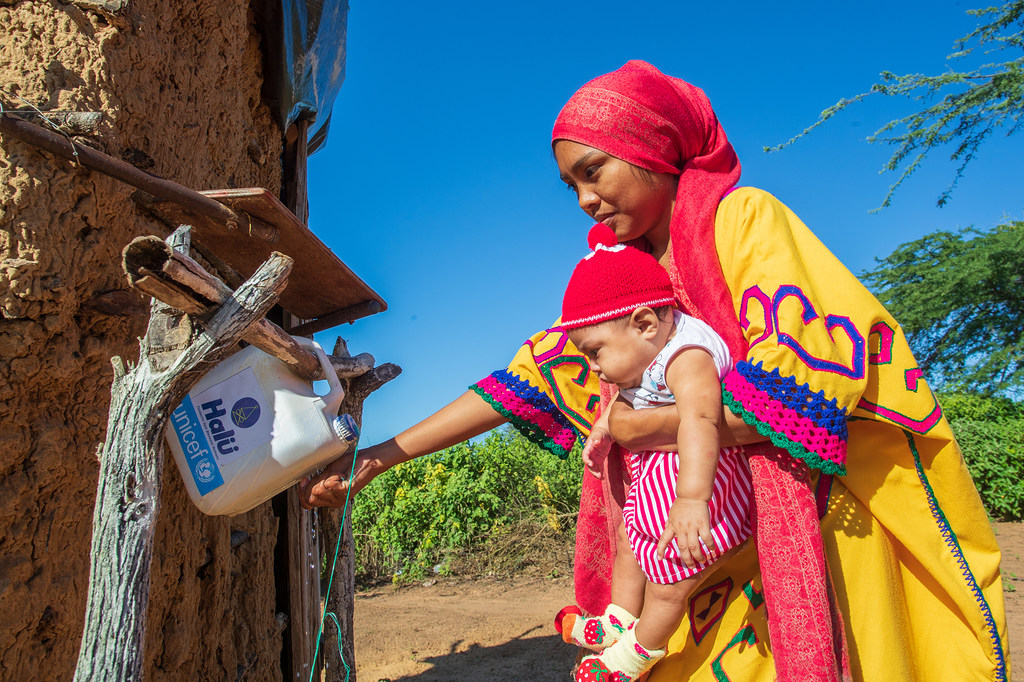
In the municipality of Manaure in La Guajira, Colombia, a woman washes her hands at an installation of hand-washing point known as tippy taps.

Source link

Syria: UNICEF calls for safe access to children in Sweida as needs mount

Deadly sectarian clashes erupted in the southern governorate, also known as As-Sweida, in July and early August and children and families continue to feel the impact.

At least 22 children reportedly were killed and another 21 injured in the violence, which caused significant damage to civilian infrastructure.  More than 190,000 people, mainly women and children, were forced to flee their homes.

Essential services also were disrupted. At least five health centres were reportedly struck, with two doctors killed, while ambulances were obstructed or attacked.

‘A welcome step’

UNICEF Syria Deputy Representative Zeinab Adam described the situation as “tragic and deeply alarming.” 

“Given the ongoing needs of children and families affected, the increased efforts by the interim authorities to facilitate access to those in need have been a welcome step,” she said.

UNICEF was part of the UN’s first inter-agency convoy to Sweida which arrived at the end of July.  

Ms. Adam said the agency “delivered life-saving supplies and carried out a rapid on-the-ground assessment to ensure a faster, stronger response to the growing crisis.” said.

Food and medicine shortages

The fighting caused critical damage to vital infrastructure, water, electricity and fuel.  Furthermore, food, medicine and other essentials remain scarce due to continued insecurity and access constraints.

In response, UNICEF has deployed 14 mobile health and nutrition teams.  Teams have also provided life-saving health and nutrition supplies to more than 4,000 children and women, as well as safe drinking water and fuel for water pumping stations benefiting more than 30,000 people.

Appeal for access

To ensure an effective response, it is critical that both humanitarian actors and commercial goods have unhindered access to the most affected communities,” said Ms. Adam.

“This will enable the immediate provision of basic social services, including food, water, and other essential supplies, to those in urgent need.”

She added that “facilitating this access is not only vital for life-saving interventions but also for restoring a minimum level of stability and protection in these communities.”

Meanwhile, UNICEF remains on the ground in Sweida and will continue to advocate for children there and across Syria. 

Syria: Ceasefire under strain as violence and aid access issues persist in Sweida

The 19 July truce followed weeks of sectarian clashes, Israeli airstrikes and grave human rights violations in the southern governorate, also known as As-Sweida.

As a result, more than 190,000 people have been displaced there and in neighbouring Dar’a and Rural Damascus governorates.

The fighting also caused severe damage to infrastructure and to livelihoods.  Electricity networks, water production assets including wells, and key public facilities were impacted.

Volatility, surveillance and demonstrations

Between 1 and 5 August, the security situation in Sweida and surrounding areas remained volatile, with clashes reported in three places, according to the OCHA flash update.

“Additionally, aerial surveillance activity attributed to the Israeli Defence Forces (IDF) has been observed over multiple locations in Dar’a and As-Sweida, contributing to regional tension,” the agency said.

During the same period, public demonstrations occurred across multiple locations in Sweida, reiterating calls for improved humanitarian access and protection.

Parallel demonstrations also took place in Dar’a and Damascus governorates which emphasised the importance of national unity. 

Aid efforts continue

Humanitarian access remains constrained, OCHA said, as the UN and partners continue to support response efforts.  

The main highway between Sweida and the capital, Damascus, has been inaccessible since 12 July due to security concerns. 

Furthermore, the southern corridor via Busra Esh-Sham in eastern Dar’a was temporarily closed for 24 hours but reopened on Monday, affecting aid delivery.

“Humanitarian actors scaled up response efforts, including fuel and food deliveries to As-Sweida and Dar’a, commercial convoy facilitation, and shelter support for displaced populations,” OCHA said.

Inter-agency mission

Since the escalation of hostilities, humanitarians have provided bread assistance to nearly 1.5 million people.

OCHA also led an inter-agency mission to Dar’a to assess shelter conditions and to discuss medium-term housing options for displaced people.

Meanwhile, restoration of essential services is ongoing in Sweida, with partial electricity restored through emergency repairs.  

However widespread telecommunication and internet outages persist across the governorate, and maintenance of water and power networks continues in rural areas. 

Source link

Gaza: Access to key water facility in Khan Younis disrupted, UN reports

According to the UN Office for the Coordination of Humanitarian Affairs (OCHA), Israeli authorities issued displacement orders overnight for two neighbourhoods in Khan Younis, where up to 80,000 people had been living.

The Al Satar reservoir – a critical hub for distributing piped water from Israel – has become inaccessible as a result.

Grave warnings

“Any damage to the reservoir could lead to a collapse of the city’s main distribution of the water system, with grave humanitarian consequences,” UN spokesperson Stéphane Dujarric told reporters at a daily news briefing in New York.

Al Satar’s disruption comes as Gaza’s infrastructure buckles under relentless displacement, strained services and critical shortages of fuel and supplies.

Approximately 85 per cent of Gaza’s territory is currently either under displacement orders or located within military zones – severely hampering people’s access to essential aid and the ability of humanitarians to reach those in need, OCHA reported.

Displacement continues

Since the collapse of a temporary ceasefire in March, nearly 714,000 Palestinians have been displaced again, including 29,000 in the 24 hours between Sunday and Monday. Existing shelters are overwhelmed, and aid partners report deteriorating health conditions driven by insufficient water, sanitation and hygiene services.

Health teams report that rates of acute watery diarrhoea have reached 39 per cent among patients receiving health consultations. Khan Younis and Gaza governorates are hardest hit, with densely overcrowded shelters and little access to clean water exacerbating the spread of disease.

Adding to the crisis, no shelter materials have entered Gaza in over four months, despite the hundreds of thousands of newly displaced people. UN partners reported that in 97 per cent of surveyed sites, displaced families are sleeping in the open, exposed to heat, disease and trauma.

Fuel shortages

Meanwhile, fuel shortages are jeopardising the humanitarian response. A shipment of diesel intended for northern Gaza was denied on Wednesday by Israeli authorities, just a day after a successful but limited delivery to Al Shifa Hospital in Gaza City.

If the fuel crisis is not urgently addressed, Mr. Dujarric warned that relief efforts could grind to a halt.

“If the fuel crisis isn’t addressed soon, humanitarian responders could be left without the systems and the tools that are necessary to operate safely, manage logistics and distribute humanitarian assistance,” he said.

“This would obviously endanger aid workers and escalate an already dire humanitarian crisis.”

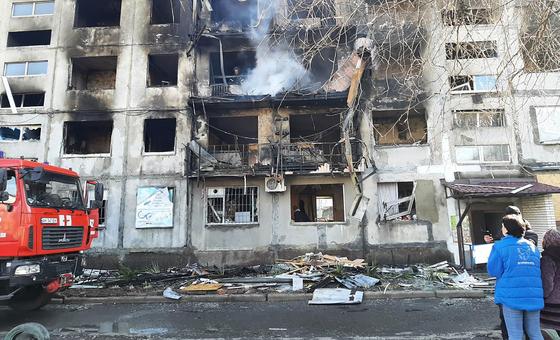
Ukraine: Increasing hostilities displace civilians, limit humanitarian access

Donetsk, Kherson and Sumy regions sustained the most damage, with several civilians reportedly killed, and many displaced, UN Spokesperson Stéphane Dujarric told reporters at a regular news briefing on Thursday.

“Our humanitarian colleagues tell us that food insecurity remains a concern in front-line and border regions,” he added.

According to a recent assessment by the UN World Food Programme (WFP) and the Food and Agriculture Organization (FAO), the conflict has devastated livelihoods and quadrupled poverty levels, leaving the most vulnerable – particularly displaced people – at greatest risk.

Food insecurity on the front-line

WFP Executive Director Cindy McCain described the challenges.

“This frontline stretches 700 miles and countless towns and villages are still without the basics for survival,” she said. 

This has made the work of humanitarians even more vital, with over 400,000 people in Donetsk and Kherson receiving food and agricultural support in addition to cash-based assistance.

In total, over 130 humanitarian organizations have distributed food and livelihood assistance to over 1.8 million people across the country.  

Aid challenges

But with hostilities becoming increasingly deadly, humanitarian access remains limited. Since the start of the year, there has been a 50 per cent increase in civilian deaths when compared to the same period last year.  

Authorities continue to urge the 10,000 people who remain in the front-line region to evacuate for their own safety.  

“For those who stayed or those who came back, there are no jobs, no income and no opportunity,” Ms. McCain said. 

Source link

Energy access has improved, but more funding is needed to address disparities: WHO

While the rate of basic access to energy has increased since 2022, the current pace is insufficient to reach universal access by 2030, one of the UN’s Sustainable Development Goals (SDGs), according to a report published by the WHO and partners this Wednesday.

The report highlights the role of cost-effective distributed renewable energy — a combination of mini-grid and off-grid solar systems — in accelerating energy access, particularly as the populations who remain unconnected mostly live in remote, lower-income, and fragile areas.

Regional disparities

“Despite progress in some parts of the world, the expansion of electricity and clean cooking access remains disappointingly slow, especially in Africa,” said Fatih Birol, Executive Director of the International Energy Agency (IEA), as 85 per cent of the global population without electricity access reside in sub-Saharan Africa.

In the region, renewables deployment has rapidly expanded; however, on average, it remains limited to 40 watts of installed capacity per capita — only one eighth of the average in other developing countries.

Clean cooking

As regional disparities persist, an estimated 1.5 billion people residing in rural areas still lack access to clean cooking, while over two billion people remain dependent on polluting and hazardous fuels such as firewood and charcoal for their cooking needs.

Yet, the use of off-grid clean technologies, such as household biogas plants and mini-grids that enable electric cooking, can offer solutions that reduce the health impacts caused by household air pollution.

“The same pollutants that are poisoning our planet are also poisoning people, contributing to millions of deaths each year from cardiovascular and respiratory diseases, particularly among the most vulnerable, including women and children,” said Tedros Ghebreyesus, WHO Director-General.

Lack of financing

The report identified the lack of sufficient and affordable financing as a key reason for regional inequalities and slow progress.

While international public financial flows to developing countries in support of clean energy have increased since 2022, the developing world received significantly fewer flows in 2023 than in 2016.

“This year’s report shows that now is the time to come together to build on existing achievements and scale up our efforts,” said Stefan Schweinfest, Director of the UN Statistics Division, as the report called for strengthened international cooperation between the public and private sectors to scale up financial support for developing countries, especially in sub-Saharan Africa. 

Iran-Israel crisis: IAEA chief urges access to damaged nuclear sites

Rafael Grossi, head of the International Atomic Energy Agency (IAEA), was addressing the agency’s Board of Governors, amid fresh reports of new Israeli missile strikes on Iranian military sites in Tehran and elsewhere earlier on Monday. Iranian weapons fire has also been reported across Israel. 

Mr. Grossi – who also addressed an emergency meeting of the UN Security Council on Sunday – insisted that the agency’s weapons inspectors should return to Iran’s nuclear sites and account for their stockpiles.

There is particular concern about 400 kilogrammes of uranium enriched to 60 per cent by Iran.

Under the terms of a 2015 nuclear deal with the international community, Iran is permitted to enrich the naturally occurring radioactive material to less than four per cent.

“Craters are now visible at the Fordow site, Iran’s main location for enriching uranium at 60 per cent, indicating the use of ground-penetrating munitions; this is consistent with statements from the United States,” he told the IAEA Board of Governors. “At this time, no one including the IAEA, is in a position to have fully assessed the underground damage at Fordow.”

Mr. Grossi said that taking into account the highly explosive payload used in the US attacks, “very significant damage is expected to have occurred” to the highly sensitive centrifuge machinery used to enrich uranium at Fordow.

Several sites hit

Fordow is one of several nuclear-related sites across Iran that are known to have been damaged in the strikes by the United States, including those in Esfahan, Arak and Tehran.

In comments to the UN Security Council in New York on Sunday, the IAEA chief said that although radiation levels remained normal outside these nuclear facilities, deep concerns remained about Iran’s operational nuclear plant at Bushehr.

Any strike on Bushehr could trigger a massive radiation release across the region –  “the risk is real”, Mr. Grossi said.

Eleven days after Israel launched air and missile strikes at Iranian military and nuclear sites, some 430 people are believed to have been killed in Iran, most of them civilians.

According to Israeli reports, 25 people have been killed and more than 1,300 injured by Iranian missile strikes.

UN aid teams plead for access amid reports Gazans shot collecting food

Unverified footage from Rafah where the privately-run but Israeli military-supported Gaza Humanitarian Foundation is based showed scenes of panic with crowds of people rushing in different directions, while others carried away boxes of supplies.

The UN human rights office, OHCHR, said that it had received information that at least 47 people had been hurt on Tuesday trying to collect aid.

Those numbers could increase as information on the incident is still being gathered, said Ajith Sunghay, Head of OHCHR in the Occupied Palestinian Territory, speaking to journalists in Geneva on Wednesday.

From January to March 2024, our office has documented 26 incidents where the Israel Defense Forces fired shots while people were collecting humanitarian aid, causing casualties at Al Kuwaiti roundabout and Al Naburasi roundabout,” Mr. Sunghay told UN News.

Renewed appeal for aid access

Meanwhile, UN aid teams have continued to appeal to Israel for access to Gaza to deliver and distribute thousands of tonnes of food, medicine and other basic items waiting just outside Gaza.

Jens Laerke from the UN agency OCHA insisted that the its staff have “everything needed to get aid to civilians safely: the people, the networks and the trust” of Gazans.

Right now, nearly 180,000 pallets of food and other life-saving aid stand ready to enter Gaza, the hungriest place on earth,” he told UN News.

“The supplies have already been paid for by the world’s donors. It is cleared for customs, approved and ready to move. We can get the aid in – immediately, at scale and for as long as necessary.”

50,000 kids killed or injured

In a related development, UNICEF announced that the war in Gaza has killed or injured more than 50,000 children in less than 600 days.

UNICEF spokesperson Tess Ingram said that since the ceasefire ended on 18 March, approximately 1,300 children have been killed and 3,700 injured alone.

That number is enough children to fill more than 1,600 classrooms, Ms. Ingram told UN News: “Every one of these children is in life. A child with a family, with hopes for the future,” she said. “And yet we continue to count their deaths and live stream their suffering to the world. This must end immediately. 

She added: “The children of Gaza desperately need protection from these ongoing bombardments, as well as food, water, medicine and other basic supplies that they need to survive. The blockade must end. Aid must flow freely and at scale, and more than anything else, we need a ceasefire we need collective action to stop these atrocities and to protect children.”

The UNICEF official’s comments follow an attack on a home last weekend that reportedly killed nine out of 10 siblings of one family, the Al-Najars; all the victims were 12 years old or younger.