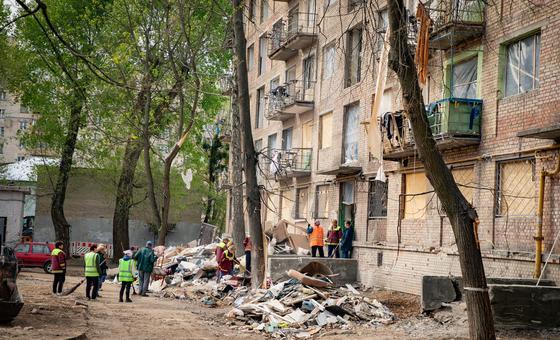
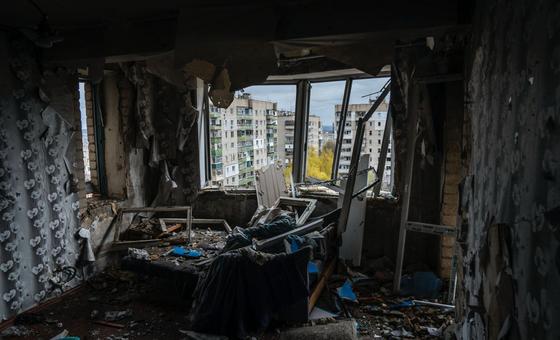
Ukraine: UN aid convoy reaches frontlines in Dnipro

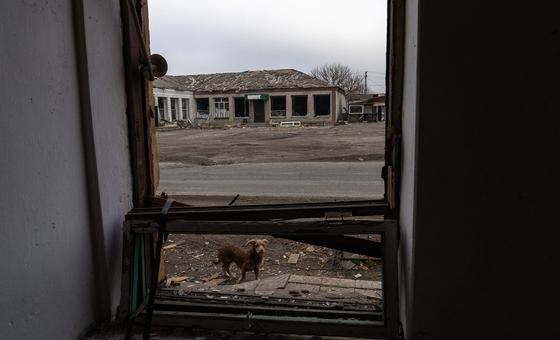
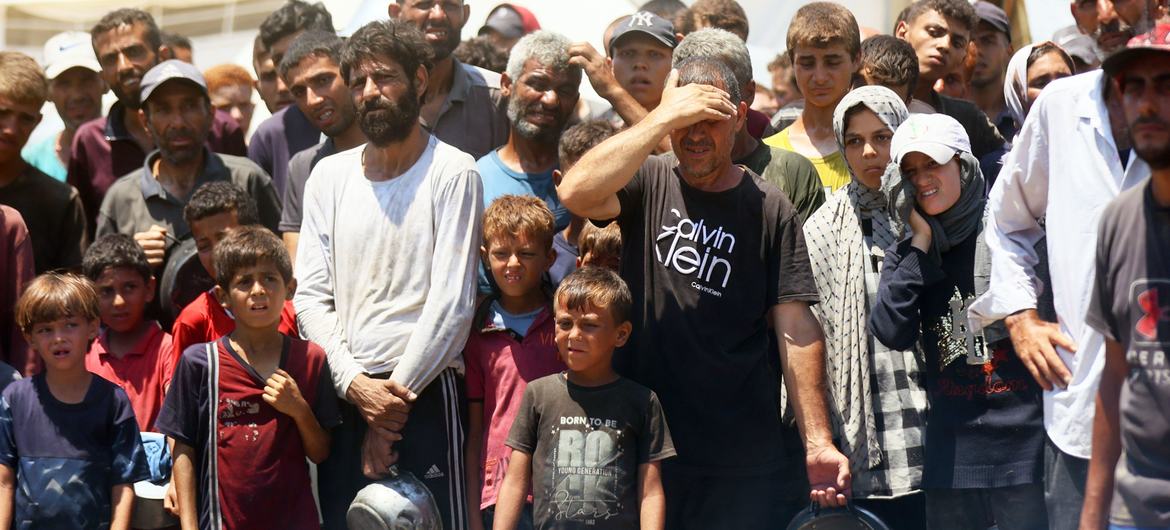
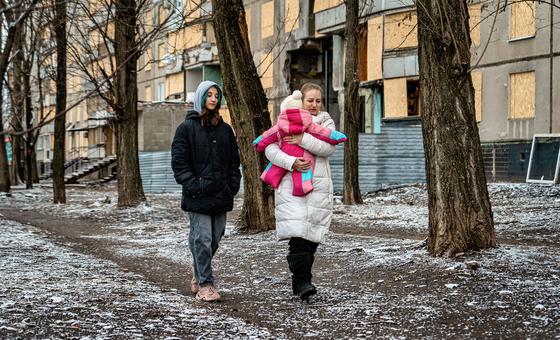
UN Spokesperson Stéphane Dujarric told reporters that access to the town had been “extremely difficult due to the continued fighting.” Of the 10,000 people who lived there before the full-scale invasion in February 2022, only about 500 remain, “most of them older people and people with disabilities.”

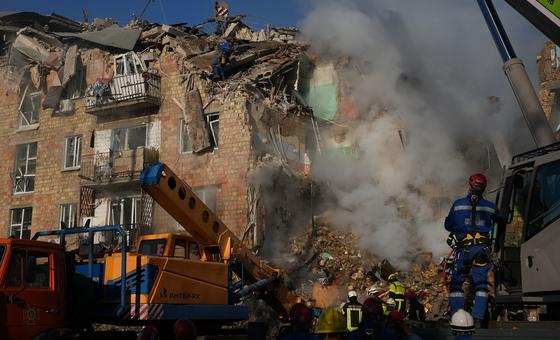
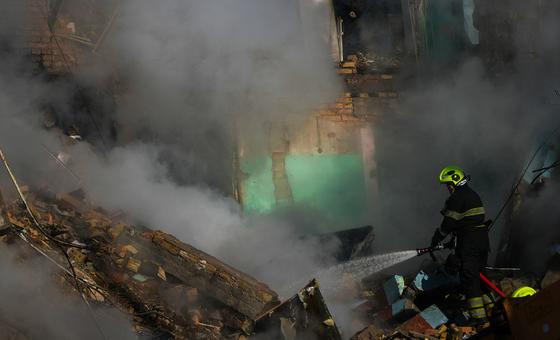
According to Ukrainian authorities, hostilities between Tuesday and Wednesday morning caused several civilian deaths and injuries, including children. The regions of Donetsk, Dnipro, Sumy and Kherson were reported to be the hardest hit.

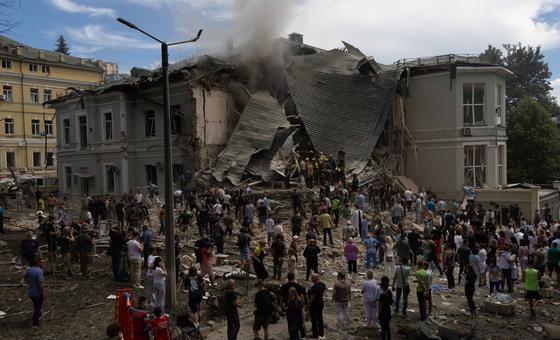
In Zaporizhzhia region, a hospital and a pre-school were damaged, and thousands of people were left without heating following an attack, underscoring the strain on essential services as winter conditions persist.

Drone strike devastates family

Meanwhile, a Russian drone strike killed a father and three young children and left a pregnant woman critically injured in the town of Bohodukhiv in the Kharkiv region, humanitarian workers said on Wednesday.

The attack occurred around midnight Tuesday into Wednesday, completely destroying the family home, according to Olena Labzeva of the Humanitarian Mission Proliska.

The father, who had a disability, and the couple’s three children – including toddlers aged one and two – were killed.

A neighbour who heard the explosion pulled the injured woman from the burning rubble. She remains in an extremely serious physical and psychological condition in hospital.

Damage costs exceed $176 billion

Amid the ongoing violence, UN agencies are also supporting longer-term recovery efforts.

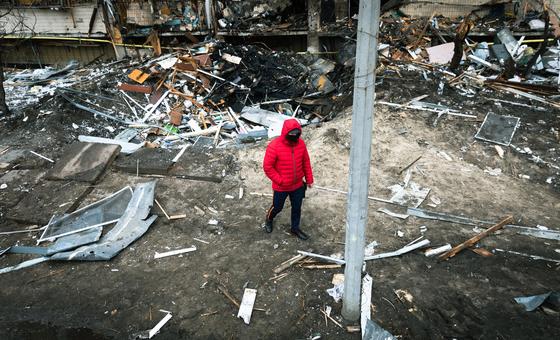
The UN Development Programme (UNDP) said it has now helped clear one million tonnes of debris since the start of the full-scale invasion, restoring safe access to more than 200 public locations and enabling reconstruction at over 1,600 heavily damaged sites – including homes, schools and hospitals.

Direct damage to Ukraine’s buildings and infrastructure was estimated at $176 billion by the end of 2024, with debris posing a major obstacle to rebuilding and the return of residents.

Health system under severe strain

At the same time, the war’s devastation is placing additional pressure on the health system.

Repeated strikes on energy facilities have disrupted electricity, heating and water supplies, complicating care for pregnant women and newborns, particularly during freezing winter temperatures.

According to the UN reproductive health agency, UNFPA, doctors and nurses have reported power outages during complex surgical procedures.

They are also seeing more potentially life-threatening obstetric emergencies, including hypertension and uterine rupture, signalling a maternal health system under severe strain.

Just under 12 per cent of babies are born preterm in frontline areas – nearly double the national rate.

UNFPA is supplying maternity hospitals with back-up energy systems and life-saving reproductive health supplies, while calling for sustained international support.

Source link

Ukraine war keeps nuclear safety on a knife-edge, UN watchdog warns

Russian forces have been carrying out strikes on critical infrastructure amid freezing winter temperatures as their full-scale invasion approaches the four-year mark next month. 

IAEA Director-General Rafael Grossi said the electrical grid was again the target of military activity this past weekend, leading to significant impacts to several regions and nuclear power plant operations. 

Power lines down 

The fighting caused power lines linking Ukraine with neighbouring countries to be disconnected, which in turn knocked out supplies inside Ukraine.  

As a result, a unit at one nuclear power plant disconnected from the grid due to fluctuations and automatically shut down, while other units at other plants were forced to reduce power. 

The Chornobyl site – where the world’s worst nuclear disaster occurred in 1986 – experienced a complete loss of offsite power and relied on its emergency diesel generators for roughly an hour. 

‘Ever-present risks’ 

“This latest grid event in Ukraine is a stark reminder of the ever-present risks to nuclear safety and security arising from deteriorating grid conditions,” said Mr. Grossi. 

He stressed that extensive repairs are needed to improve the reliability of power supply to nuclear power plants and strengthen their resilience. 

“Once again, I call for maximum military restraint, as well as full observance of the Seven Indispensable Pillars to enable these essential repairs to take place.” 

Seven safety principles 

The IAEA developed the seven pillars for nuclear safety in Ukraine in March 2022, just weeks after the war began – the first time ever that armed conflict has occurred amid the facilities of a major nuclear power programme. 

Measures include maintaining the physical integrity of facilities, ensuring offsite power supply from the energy grid, and implementing effective radiation monitoring systems. 

Operating staff must also be able to fulfill their safety and security duties and to make decisions without any undue pressure. 

Vital inspections 

As military activity increases impacting the electricity grid in Ukraine, three IAEA teams are conducting a two-week mission visiting 10 substations critical to nuclear safety and security.  

The objective is to assess the continuing damage to the grid, review repair efforts and identify practical steps to strengthen the resilience of off-site power supplies to nuclear power plants.  

This marks the second IAEA mission in as many months.  A mission this past December confirmed the effects of cumulative impacts on nuclear power plant operations and staff conditions. 

Source link

Ukraine: Civilians injured, miners killed, in separate Russian attacks

Matthias Schmale was “appalled” by the attacks in Dnipro, Kharkiv and Kyiv, noting that many more people in several regions – including Dnipro, Odesa and Vinnitsya – are facing power outages. 

“Systematic attacks by the Russian Federation Armed Forces on critical infrastructure affect the daily lives of millions and cause life-threatening conditions for the most vulnerable, including older people and children,” he said in a statement posted on social media. 

He recalled that international humanitarian law prohibits attacks on civilian infrastructure. 

Keeping families warm 

In the face of the “incessant attacks” on Ukraine’s energy infrastructure, the UN children’s agency (UNICEF) is scaling up efforts to help keep critical services running amid freezing temperatures. 

Since November, UNICEF has delivered 106 mid- and large-capacity generators across the country to support water utilities and district heating companies.  

An additional 149 generators will be released over the coming weeks to further boost operations and strengthen back-up power solutions. 

“Across the country, vital services for children and families are strained and parents are struggling to keep their children warm, prepare hot food, and access regular running water,” said Munir Mammadzade, UNICEF Representative to Ukraine. 

These generators will help the brave technicians on the ground to keep systems running to keep the heating on, hospitals open and water flowing.”  

Miners killed in drone attack 

Meanwhile, UN human rights monitors confirmed that a Russian drone attack on Sunday in the Dnipropetrovsk region near the frontline in eastern Ukraine killed and injured coal mine workers commuting home after completing their shift. 

The attack occurred in the city of Ternivka, and 12 civilians were killed and 16 wounded, according to local authorities. 

“This incident highlights the dangers civilians face when hostilities extend into areas of everyday life, even well beyond the active fighting zone,” said Danielle Bell, Head of the UN Human Rights Monitoring Mission in Ukraine (HRMMU). 

Deadly explosion 

The mine employees were travelling by bus on a regular commuter route through Ternivka, approximately 65 kilometres from the frontline, when multiple Russian drones struck the road near the vehicle over several minutes. 

The bus windows were blown out in the explosion, killing and injuring passengers. Other civilians driving nearby, as well as people who rushed to help, were also reportedly among the casualties. 

Simply trying to return home 

UN rights monitors visited the scene on Monday and interviewed witnesses.  They observed two craters, in front of and behind the destroyed bus, along with remnants of the drones used in the attack. 

One of the injured coal miners described climbing out of a bus window after the first explosion.  He heard screams from inside the bus, and then a second explosion shortly afterwards. 

He told the UN team that “this is all wrong” adding that “we are ordinary coal mine workers. People were simply returning to their homes, to their families.” 

Source link

UN watchdog warns Ukraine war remains world’s biggest threat to nuclear safety

Addressing the International Atomic Energy Agency (IAEA) Board of Governors, Director General Rafael Grossi said the agency remains focused on preventing a nuclear accident as fighting continues to endanger critical infrastructure.

“The conflict in Ukraine is about to enter its fifth year,” Mr. Grossi said. “It continues to pose the world’s biggest threat to nuclear safety.

IAEA teams remain deployed at all nuclear power plants affected by the conflict and publish regular updates on nuclear safety and security conditions.

The Board of Governors is the IAEA’s main decision-making body, bringing together representatives of 35 countries to oversee nuclear safety, security and safeguards, and to guide the work of the UN nuclear watchdog. Its current membership includes, among others Russia, the United States, United Kingdom, and France.

Off-site power a critical safety lifeline

Mr. Grossi stressed that a central safety requirement is reliable off-site power – the electricity a plant receives from the national grid. Without it, nuclear sites must rely on backup systems to run cooling and other essential safety functions.

“There must be secure off-site power supply from the grid for all nuclear sites,” he said, pointing to the IAEA’s “Seven Pillars” guidance for nuclear safety during armed conflict, where off-site power is pillar number four.

He also cited Principle 3 of the IAEA’s Five Principles for protecting the Zaporizhzhya Nuclear Power Plant (ZNPP) that “all efforts should be made to ensure off-site power remains available and secure at all times.”

Mr. Grossi said both sets of guidance have broad international support, including from the parties directly involved, and that he has repeatedly called for adherence to them, including at the UN Security Council.

Progress at Zaporizhzhya amid ongoing risks

He reported recent progress at ZNPP, where Europe’s biggest plant was reconnected on 19 January to its last remaining 330-kilovolt backup power line after repairs were carried out under a temporary ceasefire negotiated with Ukrainian and Russian counterparts.  

The line had been damaged and disconnected since 2 January, reportedly due to military activity.

Until the reconnection, ZNPP relied on its last remaining 750-kilovolt main line to provide off-site power for safety systems needed to cool its six shutdown reactors and spent fuel pools. IAEA teams are also monitoring the plant’s ability to manage winter conditions, including keeping water in cooling and sprinkler ponds from freezing.

Beyond the plants themselves, Mr. Grossi warned that Ukraine’s electrical substations are also crucial to nuclear safety. “Damage to them undermines nuclear safety and must be avoided,” he said. An IAEA expert mission is now assessing 10 substations vital to nuclear safety amid ongoing strikes on the country’s power infrastructure.

Other nuclear sites also affected

IAEA teams have also reported military activity near other nuclear facilities, including the Chornobyl site, where damage to a critical substation disrupted multiple power lines and forced temporary reliance on emergency diesel generators. The affected lines have since been reconnected.

Mr. Grossi said the IAEA has shown how international institutions can help reduce risks and provide predictability in a volatile war. But, he added, technical measures have limits.

“The best way to ensure nuclear safety and security,” he said, “is to bring this conflict to an end.

Source link

‘Cycle of attacks must end’: Lead UN official in Ukraine

The attacks on some of Ukraine’s most important population centres, which reportedly involved almost 400 drones, also left thousands without electricity, heating and water.

Temperatures in the country have dropped to -20° Celsius, and the attacks on energy infrastructure have left families in freezing conditions. Many older persons and people with disabilities are often stuck in their homes in high-rise apartment buildings, without electricity and heating, unable to cook hot meals or recharge their devices to stay connected. 

The latest attacks took place during ongoing peace talks in the United Arab Emirates, involving delegates from Russia, Ukraine and the United States

In Kharkiv, a dormitory housing displaced persons who fled the fighting on the front line came under fire. A hospital and residential buildings were also damaged.

In the capital, Kyiv, thousands of apartment buildings which were gradually being reconnected to basic utilities after the previous wave of attacks on January 9 and 20, were again left without electricity in sub-zero temperatures.

The entire city of Chernihiv and hundreds of thousands of families in the surrounding region were left without electricity.

Repair crews and humanitarian workers continue to work in low temperatures to help the victims.

According to media reports, more than one million people are without power across the country, around 800,000 of whom are in Kyiv.

“This systematic cycle of attacks on energy infrastructure violates international humanitarian law and must stop,” said Mr. Schmale, the Humanitarian Coordinator said in a statement. Ukrainian civilians, he said, should live in their homes in safety and warmth, and not in fear of the next round of destruction.

Source link

Keeping people warm amid hostilities and harsh winter weather in Ukraine

Russian forces continue to attack Ukraine’s energy grid, leaving families without electricity and heating as temperatures plummet to -20° Celsius. 

Since 2022, the Government has established so-called “Invincibility Points” – located in tents or public buildings such as schools and libraries – where people can go to escape the cold, charge electronic devices and receive basic support.  

Additional initiatives have also been launched, including mobile heating points operated by the State Emergency Services and Ukraine Red Cross Society. Humanitarian partners have supported these efforts with equipment, hot meals and technical assistance. 

A ‘very tough’ winter 

A UN team led by the Humanitarian Coordinator in Ukraine, Matthias Schmale, recently visited various heating points and mobile kitchens in Boryspil, a town in the Kyiv region. 

They met residents, authorities, first responders, as well as aid organizations, at an Invincibility Point in a tent. 

“This winter has been very tough for us,” said Kateryna, a mother of two young children who lives on the outskirts of the town.  

“We have no electricity at home. We came here to warm up, charge our phones and the children’s devices. It was very cold in our house.” 

© UNOCHA/Ximena Borrazas

UN Humanitarian Coordinator in Ukraine Matthias Schmale (left) meets with staff and volunteers of the Ukrainian Red Cross.

Food, warmth and support 

A large food truck was set up near the tent where the NGO Food Without Borders prepared hot meals in a mobile kitchen so that people affected by the cold and power outages could get something to eat.  

The group provided similar services after attacks last November in Shostka, located in the Sumy region. 

“This is one of many remarkable initiatives supporting people across Ukraine during this harsh winter,” said Mr. Schmale.  

“As attacks on energy infrastructure continue, many people face prolonged outages of electricity, heating and water, as well as limited ability to prepare hot food.” 

Falling temperatures 

Mr. Schmale also visited a heating point set up by the Ukrainian Red Cross in Boryspil town. Viktor, a volunteer at the site, described the harsh conditions many people there are facing.  

“In some apartments, the temperature drops to as low as five degrees Celsius,” he said. 

“People spend long hours in our warm tent, especially in the evenings, when temperatures fall even further at night.” 

© UNOCHA/Viktoriia Andriievska

A woman helps herself to a hot meal in a heated tent in Boryspil.

Families left freezing 

Humanitarians are also carrying out activities under a winter response plan launched last year which aims to reach 1.7 million people across Ukraine between October and March.  

Despite these efforts, the rapidly evolving situation – including large-scale and sustained attacks on energy infrastructure – has caused service disruptions that far exceed the scenarios the plan anticipates. 

Frequent power disruptions leave many families in freezing conditions. Many older persons and people with disabilities are often stuck in their homes, in high-rise apartment buildings, without electricity and heating, unable to cook hot meals or recharge their devices to stay connected. 

Families with children are also left wondering how to keep them safe and healthy. 

The UN and partners are seeking $2.3 million to help 4.1 million of the most vulnerable people in Ukraine this year. 

For families contending with the harsh winter weather, having a place where you can warm up, eat a hot meal and recharge a phone can mean the difference between coping and serious health risks. 

Source link

World News in Brief: Winter attacks in Ukraine, looming food aid cuts in Nigeria, drought in Kenya

They include attacks in Odesa region on Wednesday that killed a 17-year-old boy, according to UN child rights agency UNICEF which called for an “end to attacks on civilian areas and the infrastructure children rely on.” 

The UN Office for the Coordination of Humanitarian Affairs (OCHA) reported that attacks on the southeastern city of Kryvyi Rih on Wednesday had recommenced on Thursday. 

Aid deliveries 

“Teams delivered shelter materials to cover damaged homes and provided protection services to the affected residents,” OCHA said in a tweet, stressing that “the cold weather is worsening the needs, requiring urgent aid.” 

Russia continues to target energy infrastructure in Ukraine, knocking  out heat, electricity and water supply, UN human rights chief Volker Türk said on Tuesday. 

“Civilians are bearing the brunt of these attacks. They can only be described as cruel. They must stop,” he said. 

Nigeria: Looming food aid cuts put one million at risk 

More than a million people in northeast Nigeria could lose emergency food and nutrition assistance unless funding can be found “within weeks”, the World Food Programme (WFPwarned on Thursday. 

Nigeria is facing one of the worst hunger crises in recent times, with nearly 35 million people projected to face acute and severe food insecurity during the lean season. 

They include roughly 15,000 people in Borno state who risk falling into catastrophic hunger, which is one step away from famine. These are the worst levels of hunger recorded in a decade, WFP said.  

The crisis is unfolding amid renewed violence in the north which has devastated rural communities, displaced families and destroyed food reserves. 

‘Catastrophic’ consequences 

“Now is not the time to stop food assistance,” said David Stevenson, WFP’s Nigeria Country Director.  

He warned of “catastrophic humanitarian, security and economic consequences” for Nigeria’s most vulnerable people, who had been forced to flee their homes in search of food and shelter.   

WFP is urgently seeking $129 million to sustain its operations in the northeast over the next six months, warning that this work could shut down unless funds are received.   

People living in Turkana in northern Kenya are dealing with the impact of drought.

Kenya drought impacts over two million people 

More than two million people in Kenya are facing worsening food insecurity in the wake of the October to December 2025 rainy season – among the driest on record, the World Health Organization (WHOsaid on Thursday. 

The prolonged drought has led to rising malnutrition rates, increased risk of disease outbreaks and disrupted access to essential health services. 

Regional drought 

The impacts are also being felt in neighbouring Somalia, Tanzania and Uganda, where millions more people are at risk due to similar weather patterns and water shortages. 

In Kenya, 10 counties are currently experiencing drought conditions, one of which is in the “alarm” phase. Furthermore, another 13 counties in the Arid and Semi-Arid Lands (ASAL) regions are showing signs of drought stress. 

While severe, the emergency was part of a known seasonal risk, WHO said.  The UN agency has supported the Kenyan authorities including by providing cholera kits, pneumonia kits and essential supplies, as well as pre-positioning equipment in high-risk counties before the drought intensified. 

WHO stressed the need to mobilize urgently to ensure both people and livestock have access to adequate food supply and safe water, and to prevent the situation from worsening. 


Source link

World News in Brief: Pandemic Treaty Update, DR Congo Ebola Response, More Casualties in Ukraine

Pandemic Treaty

Tedros Adhanom Ghebreyesus called the world’s first pandemic trety “a generational accomplishment”, while speaking at the start of a meeting of the Intergovernmental Working Group on the WHO Pandemic Agreement, taking place in Geneva through Friday. It comes four months after countries adopted the pact.

Tedros said the next step “is to bring this historic achievement to fruition” by finalizing the Pathogen Access and Benefit-Sharing (PABS) system. He urged countries to use this week to pave the way to developing the platform, with the ultimate goal of adoption next year.

“It is in every country’s interest that this process is not delayed any further. Because, as we are all aware, the next pandemic or major global health emergency is not a question of if, but when,” he said.

DR Congo: UN and partners support Ebola response in Kasai province

The Democratic Republic of the Congo (DRC) is facing an Ebola outbreak in Kasai province, located in the southwest, with 35 confirmed cases including 27 deaths.

The UN and partners are supporting the Government in the response, the Spokesperson for the Secretary-General said on Monday in New York. Stéphane Dujarric told reporters that partners working in health have facilitated the delivery of over 350 doses of the Ebola vaccine to the Bulape health zone, the epicentre of the outbreak.

“We have also mobilized rapid response teams focusing on case detection and surveillance, clinical case management, infection and prevention control, and risk communication and community engagement,” he added.

Meanwhile, health partners are mobilizing to contain the outbreak. He warned, however, that gaps in medical supplies and logistical capacity are hindering the response, and urgent funding is needed.

Ukraine: Dozens of casualties reported in weekend hostilities

Hostilities continued over the weekend in Ukraine, with the Donetsk region particularly affected, the UN Office for the Coordination of Humanitarian Affairs (OCHA) reported on Monday.

Several civilians have been killed and 40 injured in the region since Friday, while local authorities also documented damage to nearly 190 civilian facilities, including homes, schools, a hospital and a pharmacy.

Other parts of Ukraine also experienced hostilities which damaged homes, farmland and other civilian infrastructure. Nearly 5,000 people remain without electricity in the Zaporizhzhia region.

OCHA said the continuing violence has forced more than 2,700 people, including roughly 340 children, to flee their homes between 12 and 14 September.

Ukraine Records Highest Toll From Cluster Munitions for Third Year Running

The latest Cluster Munitions Monitor reports that over 1,200 people have been killed or injured in Ukraine since Russia’s full-scale invasion in February 2022. The actual toll is likely far higher, but it may take years to establish, said Loren Persi, team lead for the report.

Drawing parallels with conflicts in Syria and Yemen, where casualty figures emerged only years later, Persi told journalists in Geneva that a similar pattern could unfold in Ukraine.

Lao legacy

Equally, in Lao People’s Democratic Republic, which Mr. Persi described as the most contaminated country by cluster munitions, “it took decades” before surveys confirmed estimates that many thousands of people had been killed or injured by strikes from cluster munitions, which are generally understood to be a container from which submunitions are scattered.

The civil society publication, backed by UN disarmament research agency UNIDIR, notes Israeli allegations that cluster munitions were used in a ballistic missile attack by Iran in June 2025, and of reported but unverified use of the weapons in Gaza and southern Lebanon.

The report’s other findings note that the de facto forces in Myanmar have used “domestically produced”, air-delivered cluster bombs since around 2022, amid the ongoing civil war.

“Schools have been among the targets in rebel-held areas,” said the Monitor research specialist Michael Hart, highlighting their use in Chin state, Rakhine state, the Saigon region and Kachin state, among others.

Mistaken for toys

Submunitions – or bomblets, as they are also known – cause casualties and damage through blast impact, their incendiary effect and fragmentation. According to UNIDIR, a single attack can involve thousands of individual explosive units which are usually spread over hundreds of square metres.

“These munitions can be air-delivered or surface-launched, and can be used against armour, materiel and personnel,” UNIDIR explained, although it is “very clear…that civilians continue to bear the brunt” of suffering from the cluster emission remnants, Mr. Persi insisted.

As in previous years, children accounted for a high proportion (42 per cent) of casualties from the weapons in 2024, “which they often find interesting, think are toys or come across in play or on the way to school or when working in fields”, Mr. Persi continued.

Funding cuts impact

Funding cuts for humanitarian work have had a negative impact on countries impacted by the explosive weapons.

These include Afghanistan, Iraq and Lebanon, which had “made good progress” in clearing contaminated land, but who now “really struggle with funding…to get the clearance done, hence they slow down”, said Katrin Atkins, senior researcher at Cluster Munitions Monitor.

“Whole programmes” supported by USAID in the past including one in Lau have been discontinued, Mr. Persi noted.

“For decades, [the programme] was essential in providing both first aid in remote areas where there are cluster mine victims, which was clearly there to address the legacy of the bombings of the 60s and 70s,” he explained. “But also, the entire rehabilitation programme, including prosthetics… that was cut and as far as we know, not reestablished in any way.”

In the last 15 years since the Convention on Cluster Munitions, just 10 countries have used the weapons and “all of those are States not party to the international accord”, the Cluster Munition Monitor states.

A total of 18 countries have now ceased production of cluster munitions. All former producers are now States Parties to the Convention, aside from Argentina.

The report notes that 17 countries still produce cluster munitions or reserve the right to do so and none is a State Party to the Convention. They are: Brazil, China, Egypt, Greece, India, Iran, Israel, Myanmar, North Korea, Pakistan, Poland, Romania, Russia, Singapore, South Korea, Türkiye and the United States.

Ukraine: Guterres greatly concerned over reported Russian incursion into Polish airspace

Speaking at the regular news briefing in New York, UN Spokesperson Stéphane Dujarric said António Guterres is following the ensuing diplomatic fallout across the NATO military alliance “with great concern” the incident, which reportedly occurred amid a large-scale Russian drone and missile attack on Ukraine.

There is an urgent need for a full, immediate and unconditional ceasefire and for a just, comprehensive and sustainable peace in Ukraine – one that fully upholds Ukraine’s sovereignty, its independence and its territorial integrity, in line with the Charter of the United Nations, international law and relevant UN resolutions,” Mr. Dujarric said.

Multiple drones shot down

According to media reports, Polish authorities, with the support of NATO allies, shot down multiple Russian drones that crossed into the country overnight – the first time Russian drones have been downed over NATO territory.

Poland’s Prime Minster Donald Tusk warned that it put his nation at its closest point to open conflict since World War Two.

Poland joined the North Atlantic Treaty Organization, NATO, in 1999 along with Hungary and the Czech Republic as part of the military alliance’s first expansion into Central and Eastern Europe.

While some violations of Polish airspace have been reported since Russia’s full-scale invasion of Ukraine in 2022, the overnight incident highlights the conflict’s growing regional impact.

Media also reported Russia’s Defense Ministry stating that the strikes targeted Ukraine’s military-industrial sites in its western regions and that there were no intended targets in Poland.

The Secretary-General and the UN continue to urge all parties to respect international law.

Mr. Dujarric noted that the situation “again underlines the regional impact and real risk of expansion of this devastating conflict,” reiterating the UN’s call for protection of civilians and adherence to humanitarian norms.

Source link

Ukraine: Russian strike on village kills over 20, mostly pensioners

The attack on Yarova injured nearly 20 others. Many elderly civilians have decided to stay at home in frontline communities, despite the escalating danger from Russia’s continuing offensive, said Assistant Secretary-General Matthias Schmale, the UN’s top humanitarian official in the country.

“This lasting violence continues to tear lives apart. In recent days, the Donetsk region has seen a rise in civilian casualties and damage as hostilities have intensified,” he said in a statement.

“On behalf of the United Nations and the humanitarian community, we stand with all families grieving their loved ones and with all those injured. Attacks affecting civilians as they go about their daily lives are unconscionable.”

‘Relentless’ attacks on healthcare

Ambulances attacked, chronically ill patients lacking care and no peace in sight: for millions of Ukrainians, the run-up to another winter of war is just the latest life-or-death challenge they face, the UN health agency (WHO) said on Tuesday.

Speaking from Kyiv in the wake of deadly strikes on the Ukrainian capital by Russia on Sunday, WHO’s representative in the country, Dr. Jarno Habicht, told reporters in Geneva that more than 800 drones and missiles were involved in the latest attack, making it one of the biggest since the start of the war in February 2022.

“This is a reality [which] many aid workers, humanitarians, but most importantly, millions of Ukrainians are living day and night,” he said.

Mission to the frontline

Dr. Habicht described his recent mission to the frontline Zaporizhzhia region which he said had suffered “relentless” attacks, including on healthcare.

The strikes are continuous,” he insisted, explaining that WHO is constantly delivering medical kits to the facilities where patients with trauma injuries receive care. “We have daily injuries, unfortunately, across Ukraine,” he said.

The WHO official pointed to a concerning 12 per cent year-on-year increase in attacks affecting health infrastructure in the country. One in four attacks is against an ambulance, he said.

“If we think about non-war environments, when anybody calls an ambulance, this is for a reason…This is for a reason of life and death,” he said. “But in Ukraine, the ambulances are under attack.”

According to UN humanitarian affairs coordination office, OCHA, on Monday, casualties from the latest attacks were reported in a number of other cities including Odesa, Chernihiv, Kharkiv, Kremenchuk, Kryvyi Rih and Kherson. Strikes also targeted energy infrastructure, disrupting power and water supplies ahead of the winter season, OCHA said.

“We need to prepare for a winter in war because we don’t see peace in sight,” Dr. Habicht insisted.

Following his Zaporizhzhia visit and discussion with the authorities and health workers there, he highlighted the need to keep heating stations open as the cold season approaches and ensure that clean water is available in healthcare facilities.

Dr. Habicht also underscored the magnitude of the mental health burden of the conflict, which will “stay for generations”.

Urgent needs

According to WHO’s latest Health Needs Assessment conducted in Ukraine in April, seven in 10 people reported mental health issues, anxiety, depression and severe stress over the last 12 months, “directly linked to attacks on civilian infrastructure”.

The WHO representative added that as he visited hospital wards on Monday in Zaporizhzhia he saw a number of men and women over 60 needing rehabilitation support after suffering a stroke. “All the other diseases are continuing at the time of war,” he said, stressing that “recovery cannot wait” for patients with chronic diseases such as cancer and heart conditions.

Increased funding is needed for the humanitarian response in Ukraine and to support recovery and restoration efforts. But only 35.5 per cent of the required resources (around $46 million) have been made available for humanitarian partners, allowing WHO and its partners to reach one million people out of its three million target.

Source link

World News in Brief: UN chief condemns Russian attacks on Ukraine, Gaza crisis continues, protecting civilians in DR Congo

Secretary-General António Guterres said it marked a “further escalation” of the conflict.

Authorities reported more than 80 civilian casualties, including a national non-governmental organization (NGO) worker and her two-month-old son in Kyiv.

Other affected cities included Zaporizhzhia, Odesa, Chernihiv, Kharkiv, Kremenchuk, Kryvyi Rih and Kherson. Energy infrastructure was also hit, causing temporary power and water outages ahead of winter, with repair crews working to restore services.

“Attacks against civilians and civilian infrastructure violate international humanitarian law. They are unacceptable and must end immediately,” UN Spokesperson Stéphane Dujarric said Monday at the regular news briefing in New York.

“The Secretary-General reiterates his call for a full, immediate and unconditional ceasefire as a first step towards a just, comprehensive and sustainable peace in Ukraine, one that fully upholds Ukraine’s sovereignty, independence and territorial integrity, in line with the UN Charter, international law and relevant UN resolutions,” he added.

Meanwhile, humanitarian support continues. On 5 September, UN agencies and partners delivered medical kits and hygiene supplies to roughly 1,000 people in several Donetsk villages, marking the tenth convoy to the region this year.

People seek food at a community kitchen in western Gaza City.

Gaza: Civilian toll continues to climb

Civilians in Gaza continue to face mounting deaths, displacement and famine as hostilities continue, with UN agencies warning that the window to prevent widespread starvation is closing.

According to local health authorities, some 67 people were killed and 320 injured in the past 24 hours, Mr. Dujarric said, adding that since the end of the ceasefire in mid-March nearly 12,000 people have died amid repeated displacement and attacks.

“We continue to condemn all killings of civilians,” he said.

The humanitarian situation remains dire. The UN aid coordination office, OCHA, noted urgent needs for food, water and shelter.

“Our colleagues remind us that over 80 per cent of Gaza is either under displacement orders or within militarized areas,” Mr. Dujarric added.

The Gaza Ministry of Health reported that over 100 people, a quarter of them children, have died from malnutrition since famine was confirmed in Gaza governorate.

Humanitarian operations remain heavily constrained.

Only 11 of 24 coordinated missions were facilitated on Sunday, including fuel collection at crossings, while others were denied or cancelled. Humanitarians were able to distribute water in northern Gaza and collect food shipments from Kerem Shalom, Karem Abu Salem and Zikim crossings.

UN peacekeepers in DR Congo continue to protect population against ‘grave danger’

Hundreds of thousands of people fleeing conflict in the eastern Democratic Republic of the Congo (DRC) continue to be protected against “grave danger” by United Nations peacekeepers, according to the head of UN Peace Operations.

Jean-Pierre Lacroix was speaking at the end of a mission to the DRC, where he visited the troubled Ituri and North Kivu regions.

Mr. Lacroix emphasised that hundreds of thousands of Congolese people, including displaced people, rely on the UN peacekeeping mission, MONUSCO for daily protection, particularly in the areas of Fataki and Beni, in North Kivu, where joint operations with the Congolese armed forces continue against armed groups.

USG Lacroix on the role of MONUSCO

Dire situation continues

The security situation in the eastern DRC remains dire, despite diplomatic efforts to bring lasting peace to the country.

The DRC is currently facing one of the most acute humanitarian emergencies in the world, with food insecurity on the rise and 5.9 million Congolese currently internally displaced.

“People are protected here by our MONUSCO colleagues, and they are provided with humanitarian support and protection”, said Mr. Lacroix adding that the UN remains committed to supporting government efforts towards peace and stability in the country.

Source link

UN provides urgent support after ‘massive’ Russian attack across Ukraine

More than 800 drones were launched in waves designed to overwhelm Ukrainian air defences, according to news reports, and a Government building was hit in the capital Kyiv for the first time.

Ukrainian authorities reported that four had been killed, with 44 injured. Air-raid sirens continued for 11 hours straight across the capital and although a majority were shot down more than 50 drones and nine missiles hit their targets.

“Yet again, attacks impacted homes, a government building, a kindergarten and other civilian infrastructure in Kyiv and Chernihiv, Kharkiv, Kremenchuk, Kryvyi Rih, Odesa, Sumy region, Zaporizhzhia – leaving behind loss, destruction and grief,” said UN Humanitarian Coordinator for Ukraine, Matthias Schmale, in a post on social media.

The top aid official said that together with authorities, the UN and humanitarian partners had mobilised to provide urgent support to civilians and civilian areas where damage was sustained.

Civilians should never be a target

“Civilians and civilian infrastructure are protected under international humanitarian law – they are not a target,” he continued.

The UN Children’s Fund, UNICEF, said that the news of a baby being killed along with their young mother in an attack on an apartment building in Kyiv was “devastating”. At least one other child was injured during the attacks on Sumy.

“Ukraine endured another terrifying night of attacks that impacted multiple cities. More young lives brutally cut short,” the agency tweeted.

The attacks came following weeks of high profile diplomacy from Western allies of the Ukrainian Government to broker a lasting peace deal between Kyiv and Moscow.

President Volodymyr Zelenskyy said in a social media post following the attacks that “such killings now, when real diplomacy could have already begun long ago, are a deliberate crime and a prolongation of the war.”

Source link

Ukraine: ‘Diplomatic momentum’ at risk amid large-scale Russian strikes

Miroslav Jenča, Assistant Secretary-General for Europe, Central Asia and the Americas, was speaking a day after the latest wave of Russian airstrikes across the country, with at least 23 people killed in the capital, Kyiv.

“The mounting death toll and devastation caused by the intensifying fighting over the summer, run counter to the significant efforts over the past few months to give diplomacy a chance,” he said.

Young lives lost

According to Ukrainian officials, Russia launched 598 drones and 31 missiles across Ukraine overnight between 27 and 28 August. 

Four children aged between two and 17 were among those killed in Kyiv and 64 people were injured. Several buildings were damaged in 33 locations across all 10 districts of the city.

“Most of the fatalities occurred in the Darnytskyi district of Kyiv, where a missile reportedly struck a five-story residential building, demolishing it from the first to the fifth floor,” he said.

Civilian casualties also were reported in five other regions – Chernihiv, Kharkiv, Zaporizhzhia, Donetsk and Kherson – and a train depot in Vinnytsia region was reportedly hit.

Dangerous escalation

Mr. Jenča said these strikes “are only the latest in the brutal escalation of country-wide aerial attacks.”

The full-scale Russian invasion of Ukraine began in February 2022.  In July, the UN human rights office, OHCHR, recorded rising civilian casualties across 18 regions and the capital.

Last month “set a new, tragic record for monthly casualties”, with 286 killed and 1,388 injured – the highest number since May 2022, the top UN official said.

The impact of the conflict has also been felt by civilians in Russia. Local authorities have reported casualties there, including in the border regions of Belgorod, Kursk and Bryansk.

Russian officials also reported that a fire broke out after a Ukrainian drone was shot down near the Kursk Nuclear Power Plant.

Although the UN is unable to verify these reports, the growing impact of the conflict on civilians in Russia is of concern, he said, reiterating UN condemnation of attacks against civilians and civilian infrastructure.

Winter support

“We are also concerned about the impact of the expanding and escalating fighting on the humanitarian situation in Ukraine as we are entering the fourth winter of the full-scale war,” he continued.

He underlined the UN’s full commitment to supporting civilians, adding that targeted winter support preparations are underway for 1.7 million people, though more donor funding is urgently needed.

Diplomatic efforts welcomed

On the diplomatic front, he said the Secretary-General has welcomed recent efforts led by the United States President. This includes separate meetings this month between Donald Trump and Vladimir Putin, in Alaska, and another between the Presidents of the US and Ukraine and European leaders in Washington.

The UN has also welcomed earlier rounds of direct talks between senior Ukrainian and Russian officials held in Istanbul between May and July, and commended prisoner exchanges that have continued to take place as a result.

Appeal for de-escalation

“However, as large-scale attacks against civilians persist and civilian casualties rise, the current diplomatic momentum is at risk of rapidly fading if the focus on the need to end the violence and engage in genuine peace talks is not maintained,” he said.

“We therefore urge all concerned to urgently de-escalate the situation and to redouble efforts to create conditions for inclusive diplomatic efforts towards a cessation of hostilities and a just peace.” 

Mr. Jenča concluded his remarks by renewing the Secretary-General’s appeal for a full, immediate and unconditional ceasefire. 

Source link

SECURITY COUNCIL LIVE: Push for peace in Ukraine could rapidly fade if large-scale Russian attacks continue

The UN Security Council met in emergency session in New York on Friday afternoon following overnight strikes early on Thursday by Russia on Ukrainian cities including the capital, which left at least 23 dead, including four children. Assistant Secretary-General Miroslav Jenča told ambassadors that diplomatic momentum towards a possible peace deal was “at risk of rapidly fading” if large-scale attacks by Moscow continue. Follow our live meetings coverage below. 

Source link

Ukraine: Toddler among four children killed in Russia’s attacks on Kyiv

The youngest victim of the bombing raid was two-and-a-half years old, according to the UN Children’s Fund, UNICEF, which released video footage showing smoke billowing from a Kyiv apartment block with a massive hole where its roof had been.

Leading condemnation of the attacks, the UN Secretary-General said that targeting civilians and civilian infrastructure violated international humanitarian law. [They] are “unacceptable and must end immediately”, followed by a ceasefire resulting in a “just, comprehensive, and sustainable peace in Ukraine”, he insisted, in a statement issued by his Spokesperson. 

Eyewitness testimony

Speaking to UN News after visiting the shattered building and its residents, UNICEF Representative, Munir Mammadzade, insisted that nowhere in Ukraine is safe today. The air-raid alert in Kyiv lasted almost 12 hours, he noted.

The senior UN official also condemned the “continuous attacks” reportedly involving ballistic missiles and drones by Russia, which launched a full-scale invasion of Ukraine in February 2022.

“I’m just back from one of the sites that were impacted, severely…and still, the search and rescue operation is continuing,” he said. “Across the city, there were four kids confirmed killed and more than 10 injured; most likely these numbers will go up.”

Media reports indicated further damage to civilian infrastructure including Ukraine’s railways. Russian attacks have also continued closer to the front line, targeting key energy infrastructure ahead of winter, Mr. Mammadzade warned.

Winter is main threat

In Kyiv and in frontline areas, plummeting temperatures are “the biggest challenge”, the UNICEF senior official insisted, in an appeal to donors and partners to support the UN agency’s winterization plan by contributing more to its Ukraine humanitarian fund, which faces a 40 per cent funding shortfall.

People within 10 kilometres (around six miles) of the front line “require immediate support”, the UNICEF official said, so that “families and children can survive and most importantly, have their livelihoods protected”.

Back to school

The development comes as the country’s children prepare to return to school against a backdrop of ever-present air-raid sirens that are “becoming kind of a norm”, even if the impact of the war on many youngsters’ mental health is as serious as it is common.

“We know that even if war ends today, [it] will be for generations to come,” Mr. Mammadzade explained, pointing to sudden mood swings linked to post-traumatic stress and feelings of hopelessness among children he has met in frontline areas including Donetsk, Sumy and Kharkiv.

“What they basically fear the most is about their lives and unfortunately, quite often, they mention to us that they don’t have dreams or any hopes,” he continued. “What they only need is peace – and this peace to happen as soon as possible – so that they can go back to normalcy.”

In his renewed call for a ceasefire, the Secretary-General insisted that it should fully uphold Ukraine’s “sovereignty, independence and territorial integrity, within its internationally recognized borders, in line with the UN Charter, international law and relevant UN resolutions”.

Source link

World News in Brief: More deaths in Ukraine, lengthy detentions in Egypt, AI governance, US postal tariffs

Since Friday, 11 civilians have been killed and more than 90 wounded, according to the authorities. Schools and energy infrastructure also were damaged.

The Donetsk region in eastern Ukraine was the most affected, with the town of Kostiantynivka particularly hard hit. 

Six other regions – Sumy, Kharkiv, Kherson, Mykolaiv, Dnipro and Zaporizhzhia – were also impacted, with homes, schools, ambulances and power infrastructure in front-line areas sustaining damage.

In response, aid organizations have distributed repair materials, hot meals and drinks, in addition to providing psychological support.

Families on the run

Meanwhile, humanitarians continue to support people fleeing hostilities in the Donetsk and Dnipro regions.

OCHA said over 2,000 people, many of them children, were evacuated from Donetsk between Friday and Monday. 

“With growing pressure on the transit site in the town of Pavlohrad, authorities and aid organizations opened new facilities in the village of Voloske, Dnipro region, and the town of Lozova, Kharkiv region,” the agency said.

Evacuees receive medical and psychosocial support, hot meals, water and hygiene supplies, and can register for cash assistance before moving on to safer areas. 

At the same time, humanitarians are also supporting arrivals in other parts of Ukraine.

Egypt urged to end ‘rotation’ detention practice targeting Government critics

The UN human rights office, OHCHR, called on Tuesday for Egypt to end a practice known as “rotation” which allows Government critics to be held arbitrarily and for prolonged periods even after serving their sentences or completing maximum pre-trial detention.

Human rights defenders, activists, lawyers, journalists, peaceful protesters and political opponents are among those who have been targeted.

The latest case concerns poet Galal El-Behairy, who was arbitrarily detained after completing a prison term on 31 July 2021 for writing songs and poetry critical of the Government. 

He has since faced similar charges in two different cases under the counter-terrorism law and the penal code. The latest charges were brought on 19 August 2025, extending his detention for at least 15 more days.

Suppressing critical voices

Rotation “has become a tool by which the Egyptian Government represses those perceived to be critical of its policies,” OHCHR Spokesman Thameen Al-Kheetan told journalists in Geneva.

“Most of those targeted by ‘rotation’ should not have been detained or jailed in the first place, as the charges brought against them are often related to the exercise of their legitimate rights to freedom of expression and peaceful assembly,” he said.

OHCHR urged the Egyptian authorities to immediately end the practice and release all those who have been subjected to it. 

UN announces two new mechanisms to promote cooperation on AI governance

The UN Secretary-General welcomed the General Assembly’s decision on Tuesday to establish two new mechanisms to promote international cooperation on the governance of artificial intelligence (AI).

The establishment of the UN Independent International Scientific Panel on AI and the Global Dialogue on AI Governance marks a significant step forward in global efforts to harness the benefits of the technology while addressing its risks.  

The development underlines commitment by Member States to build on the Global Digital Compact adopted as part of the Pact for the Future last September, UN Spokesperson Stéphane Dujarric told journalists in New York.

Fostering inclusion, informing decision-making

He said the Global Dialogue will provide an inclusive platform within the UN for States and stakeholders to discuss the critical issues concerning AI facing humanity today.

The Scientific Panel will serve as a crucial bridge between cutting-edge AI research and policymaking, he added.

“By providing rigorous, independent scientific assessments, it will help the international community to anticipate emerging challenges and make informed decisions about how we govern this transformative technology,” he explained.

The Secretary-General will soon launch an open call for nominations for the Scientific Panel, which will present its annual reports at the Global Dialogue on AI Governance to take place in July 2026 in Geneva and 2027 in New York.

In the interim, all stakeholders are urged “to support this historic initiative and contribute to building a future where artificial intelligence serves the common good of all humanity.”

This post office was officially opened on 4 September 1981 in Karagwe District, Kagera Region in Tanzania

UN postal agency striving to keep packages moving ahead of US duty-free deadline

The UN postal agency says it is taking all possible measures to keep packages flowing to the United States after dozens of countries suspended service. 

“Maintaining the trust of the billions of people served by the postal network is our top priority,” said Universal Postal Union (UPU) Director General Masahiko Metoki. 

Starting on 29 August, the US announced that it will suspend duty-free “de minimis” measures for low-value packages.  

That means packages worth less than $800 will no longer be exempt from customs duties and may require new processing requirements. There is no impact on letters. 

A big change

The UPU noted that while each country has the sovereign right to adopt its own customs policies, the change “will entail considerable operational changes for postal operators around the world” – given the short notice. 

Postal services in at least 25 countries have suspended their outbound postal services to the US, citing uncertainties related to transit, according to the UPU. 

The UN agency says it is working to help countries adjust to new customs duty collection and remittance process and is in contact with the US Government to develop practical solutions.   

Source link

UN upholds readiness to support peace efforts in Ukraine

Stéphane Dujarric was responding to a journalist’s question about the meeting held the previous day between Ukrainian President Volodymyr Zelensky, his American counterpart Donald Trump, and several European leaders at the White House.

It followed talks last week between President Trump and Russian President Vladimir Putin at a summit in Alaska.

Engagement and dialogue

“It’s very important that all involved continue to stay actively engaged in what we want to see as an inclusive dialogue to sustain the important momentum that was created to bring an immediate ceasefire and sustainable peace in Ukraine,” he said.

Nearly four years have passed since Russia launched its full-scale invasion of Ukraine and more than 13,000 civilians have been killed, UN human rights monitors in the country have reported.  

Mr. Dujarric was asked if the Secretary-General had any comment on the possibility of a meeting between the Russian and Ukrainian Presidents.

While noting that there is much discussion around “potential dialogues or formats, location”, he said “it is obviously important that those parties who are directly involved in this conflict be able to speak to each other directly.”

Asked what role the UN could play in this process, he said the global body will be “supportive and ready to engage in a role that may or may not be given to us based on the principles that the Secretary-General has often reiterated.”

When pressed about whether UN peacekeepers could be deployed to Ukraine, Mr. Dujarric stressed that “any peacekeeping mission anywhere would have to go through the Security Council.” 

Source link

More young lives lost and devastated in Russia attacks on Ukraine: UNICEF

The development came as Ukrainian President Volodymyr Zelensky and a group of European leaders arrived in Washington to meet President Donald Trump, who held talks on a possible peace deal to end the war with President Vladimir Putin of Russia last Friday.

“More young lives lost and devastated in brutal attacks in Ukraine,” UNICEF said in an online post condemning the attacks. “End attacks on populated areas. Protect children.”

Destruction in Kharkiv

Footage released by the Ukrainian authorities showed an apartment complex in Kharkiv with a massive hole in the shattered roof and upper floors, where fires had been extinguished.

Kharkiv is located in the northeast of the country and just 30 kilometres (18.6 miles) from the Russian border. Ukraine’s second city has suffered heavy destruction and repeated shelling since Russia’s full-scale invasion began on 24 February 2022.

Meanwhile, a separate Russian attack on the southern city of Zaporizhzhia left three dead and approximately 20 injured, according to the Ukrainian authorities, who said they had shot down 88 drones and missiles launched overnight.

A recent update from UN human rights monitors in Ukraine noted that July saw the highest number of civilian casualties in the country since May 2022, with 286 killed and 1,388 injured.

“Aerial bombs caused the biggest rise [and] short-range drones made up 24 per cent of casualties,” said the Human Rights Monitoring Mission in Ukraine (HRMMU).

Russian troops’ push

The increase in the number of civilian casualties between June and July 2025 mainly took place in areas controlled by the Ukrainian Government along frontlines. This indicated the “intensive military efforts by Russian armed forces to capture territory”, the UN monitors explained.

And although long-range missile strikes and other munitions caused about 20 per cent fewer casualties in July compared with June, they were responsible for almost 40 per cent of all non-combatant deaths and injuries, including in the cities of Dnipro, Kharkiv and Kyiv.

Short-range drones were the second leading cause of civilian casualties, accounting for nearly one in four death and injuries (64 killed and 337 injured)said HRMMU.

As in June, nearly all civilian casualties (98 per cent) occurred in areas controlled by the Ukrainian authorities. Civilian casualties were recorded across 18 regions of Ukraine and the city of Kyiv.

Source link

UN highlights need for peaceful resolution, as Trump and Putin prepare to meet on Ukraine

The UN is stressing that any peace effort or deal must be consistent with the principles of the UN Charter, including respect for Ukraine’s sovereignty and territorial integrity.

Speaking to reporters on Thursday, UN Spokesperson Stéphane Dujarric welcomed “dialogue at the highest level” between the two permanent members of the Security Council.

The meeting is scheduled to take place in Alaska at 11 AM local time (3 PM in New York). The northern US state is separated from the mainland by Canada, while Russia lies just to the west across the Bering Strait and the International Date Line.

Mr. Dujarric reaffirmed that the “[UN’s] position regarding the war in Ukraine remains the same.”

We want an immediate, full and unconditional ceasefire as a first step towards finding a just and sustainable and comprehensive peace, one that upholds Ukraine’s sovereignty, its territorial integrity and independence within internationally recognized border and in line with UN Charter, international law and all relevant UN resolutions,” he said.

Asked about reports that the United States and Russia would meet without Ukraine at the table, Mr. Dujarric recalled the UN’s principled view that, to reach a durable settlement, “it’s helpful to have all the parties of the conflict at the table, the same table.”

“We’ll obviously be watching what happens, and we’re watching what comes out of it.”

The summit takes place against a backdrop of worsening humanitarian conditions. According to the UN relief coordination office, OCHA, hostilities continue to exact a heavy civilian toll, destroying homes and infrastructure, forcing thousands more to flee.

Between Monday and Wednesday alone, over 6,000 people evacuated their high-risk communities near frontlines in the Donetsk region, either through organized evacuations or of their own volition.

The UN Human Rights Monitoring Mission in Ukraine reported this week that July saw the highest monthly civilian casualty toll since May 2022, with 286 people killed and 1,388 injured.

Since Russia launched its full-scale invasion of Ukraine, the rights mission has documented the deaths of at least 13,883 civilians, including 726 children, and 35,548 injured, including 2,234 children.

Source link