Israeli strike in Doha marks ‘alarming escalation’, warns top UN official, in call to uphold diplomatic norms

Rosemary DiCarlo described Tuesday’s strike in a residential area of the Qatari capital – which targeted Hamas’s political leadership killing several affiliates along with a Qatari security officer – as potentially opening a “new and perilous chapter in this devastating conflict, seriously threatening regional peace and stability.

The attack occurred on 9 September in residential compounds reportedly housing members of the Hamas’ political bureau, including the son of its chief negotiator, Khalil al-Hayya.

While Hamas leaders survived, the organization said, the incident disrupted ongoing negotiations over a US-mediated ceasefire and hostage release agreement to end the war in Gaza.

Respect sovereignty

The sovereignty and territorial integrity of any country, including Qatar – a valued partner in advancing peacemaking and conflict resolution – must be respected,” Ms. DiCarlo told ambassadors.

She urged all parties to exercise restraint and reaffirmed the need to preserve negotiation and mediation channels to prevent further suffering in Gaza and the wider region.

Israel claimed responsibility for the strike, with Prime Minister Benjamin Netanyahu describing it as “a wholly independent operation” following a deadly attack on civilians in Jerusalem on 8 September, which Hamas said it carried out.

Qatar, the Gulf Cooperation Council, the League of Arab States, and the Organization of Islamic Cooperation condemned the action and expressed concern over further escalation.

Confidence undermined

Ms. DiCarlo told ambassadors that Israel’s strike came “at the height of ongoing consultations.”

Any action that undermines the work of mediation and dialogue weakens confidence in the very mechanisms we depend on for conflict resolution,” she said, stressing that durable solutions in the Middle East cannot be achieved through further violence.

She called for renewed commitment to diplomacy, warning that the urgency of a ceasefire and hostage release has never been greater.

I call on all stakeholders to exercise utmost restraint at this sensitive time and recommit to diplomacy. The urgency of a ceasefire and hostage release deal in Gaza has never been greater. Strike a deal. Free the hostages. End the suffering of the people of Gaza.”

Gaza crisis spiralling

Meanwhile, the humanitarian and security situation in Gaza and the occupied West Bank remains critical.

Since the conflict in Gaza erupted in October 2023 – following attacks by Hamas and other Palestinian armed groups on communities in southern Israel, tens of thousands have died – mostly civilians – infrastructure and basic services are largely destroyed, and the enclave lies in ruins while a new offensive to take Gaza City is ongoing.

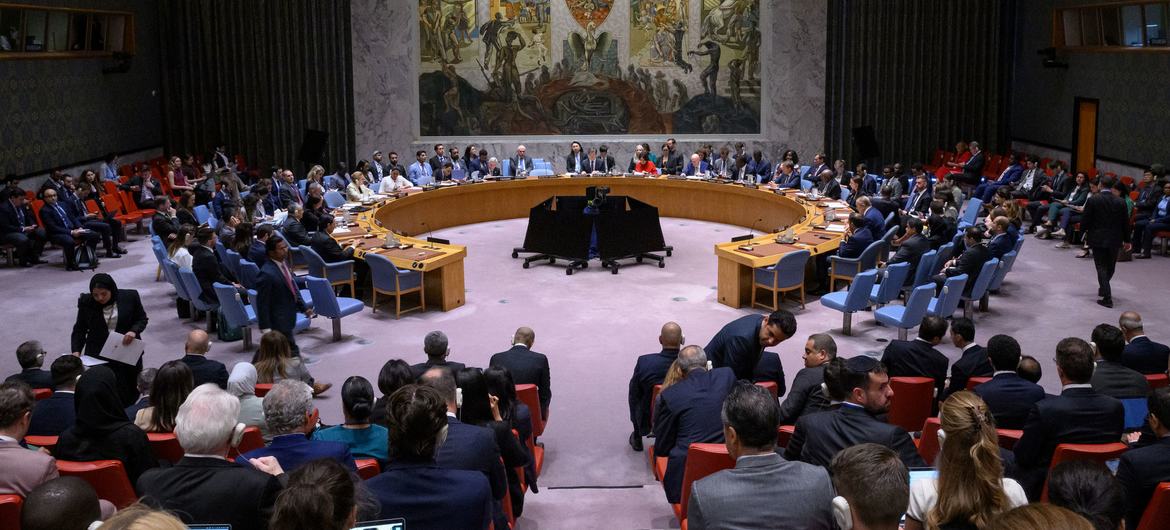
The UN Security Council meets to discuss the situation in the Middle East in the aftermath of an Israeli strike in Doha, the capital of Qatar..

Security Council press statement

Ahead of Thursday’s session, the Security Council issued a press statement expressing condemnation of the strikes in Doha and deep regret over the loss of civilian life.

The statement reaffirmed support for Qatar’s sovereignty and territorial integrity and acknowledges the country’s key role in mediation efforts to end the devastating war, alongside Egypt and the United States.

It emphasised that releasing hostages – including those killed by Hamas – ending hostilities, and ensuring civilian protection in Gaza, remain the Council’s highest priorities.

It also on all parties to seize ongoing diplomatic opportunities for peace.

Source link

Ukraine: ‘Diplomatic momentum’ at risk amid large-scale Russian strikes

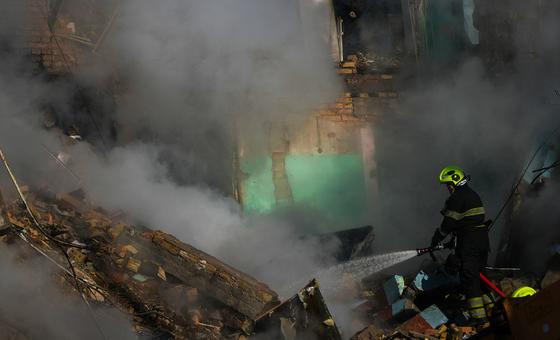
Miroslav Jenča, Assistant Secretary-General for Europe, Central Asia and the Americas, was speaking a day after the latest wave of Russian airstrikes across the country, with at least 23 people killed in the capital, Kyiv.

“The mounting death toll and devastation caused by the intensifying fighting over the summer, run counter to the significant efforts over the past few months to give diplomacy a chance,” he said.

Young lives lost

According to Ukrainian officials, Russia launched 598 drones and 31 missiles across Ukraine overnight between 27 and 28 August. 

Four children aged between two and 17 were among those killed in Kyiv and 64 people were injured. Several buildings were damaged in 33 locations across all 10 districts of the city.

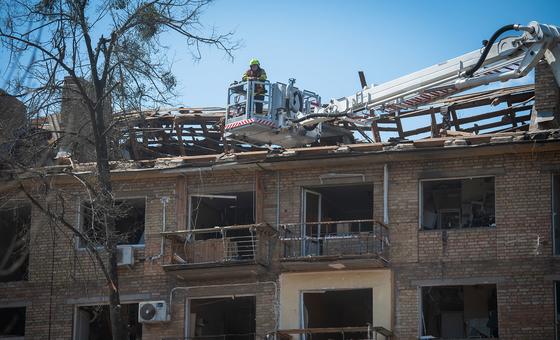
“Most of the fatalities occurred in the Darnytskyi district of Kyiv, where a missile reportedly struck a five-story residential building, demolishing it from the first to the fifth floor,” he said.

Civilian casualties also were reported in five other regions – Chernihiv, Kharkiv, Zaporizhzhia, Donetsk and Kherson – and a train depot in Vinnytsia region was reportedly hit.

Dangerous escalation

Mr. Jenča said these strikes “are only the latest in the brutal escalation of country-wide aerial attacks.”

The full-scale Russian invasion of Ukraine began in February 2022.  In July, the UN human rights office, OHCHR, recorded rising civilian casualties across 18 regions and the capital.

Last month “set a new, tragic record for monthly casualties”, with 286 killed and 1,388 injured – the highest number since May 2022, the top UN official said.

The impact of the conflict has also been felt by civilians in Russia. Local authorities have reported casualties there, including in the border regions of Belgorod, Kursk and Bryansk.

Russian officials also reported that a fire broke out after a Ukrainian drone was shot down near the Kursk Nuclear Power Plant.

Although the UN is unable to verify these reports, the growing impact of the conflict on civilians in Russia is of concern, he said, reiterating UN condemnation of attacks against civilians and civilian infrastructure.

Winter support

“We are also concerned about the impact of the expanding and escalating fighting on the humanitarian situation in Ukraine as we are entering the fourth winter of the full-scale war,” he continued.

He underlined the UN’s full commitment to supporting civilians, adding that targeted winter support preparations are underway for 1.7 million people, though more donor funding is urgently needed.

Diplomatic efforts welcomed

On the diplomatic front, he said the Secretary-General has welcomed recent efforts led by the United States President. This includes separate meetings this month between Donald Trump and Vladimir Putin, in Alaska, and another between the Presidents of the US and Ukraine and European leaders in Washington.

The UN has also welcomed earlier rounds of direct talks between senior Ukrainian and Russian officials held in Istanbul between May and July, and commended prisoner exchanges that have continued to take place as a result.

Appeal for de-escalation

“However, as large-scale attacks against civilians persist and civilian casualties rise, the current diplomatic momentum is at risk of rapidly fading if the focus on the need to end the violence and engage in genuine peace talks is not maintained,” he said.

“We therefore urge all concerned to urgently de-escalate the situation and to redouble efforts to create conditions for inclusive diplomatic efforts towards a cessation of hostilities and a just peace.” 

Mr. Jenča concluded his remarks by renewing the Secretary-General’s appeal for a full, immediate and unconditional ceasefire. 

Source link

DR Congo: Rising insecurity in the east impedes diplomatic progress, Security Council hears

Despite diplomatic progress in recent months, with the United States brokering a peace agreement between the DRC and Rwanda, and Qatar facilitating a Declaration of Principles between the Congolese Government and M23 rebels, tensions remain high in the eastern DRC – where multiple armed groups operate.  

The Security Council has also sought to promote peace in the restive region, notably through its adoption of resolution 2773 in February 2025 calling upon all parties to refrain from violence against civilians. Still, casualties continue to rise in the east of the country.

“In North Kivu, the situation has escalated significantly since April,” Martha Ama Akyaa Pobee, Assistant Secretary-General for Africa in the Departments of Political and Peacebuilding Affairs and Peace Operations told ambassadors.  

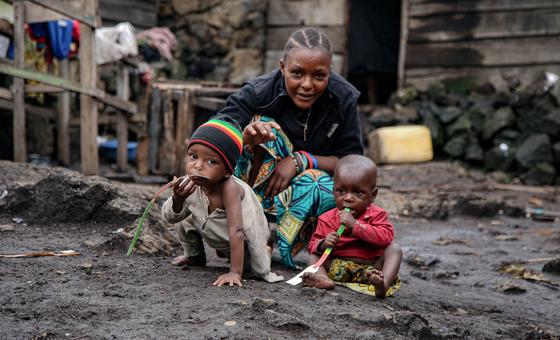
The DRC is currently facing one of the most acute humanitarian emergencies in the world, with food insecurity on the rise and 5.9 million Congolese currently internally displaced.  

Significant escalation

Regrettably, the evolution of the security situation on the ground has not matched the progress achieved on the diplomatic front,” said Ms Pobee.  

Recent attacks carried out by the M23 and Congo River Alliance (AFC) armed groups, as well as assaults by the Allied Democratic Forces – a militia associated with the terrorist group ISIL – have dramatically increased civilian casualties.

Meanwhile, humanitarian workers continue to risk their lives to provide limited assistance to populations in need.  

Amid general indifference, conflict-related sexual violence persists, as does the forced recruitment of children. 

‘Critical juncture’

We cannot and must not accept the extreme suffering and recurrent horrors that are commonplace in eastern DRC,” said Ms Pobee.  

To protect civilians, restore law and order, and address the profound humanitarian needs of the population, the parties must cease hostilities.  

“At this critical juncture for the DRC and the region, it is crucial that this Council place its full weight behind current peace efforts, alongside exerting its influence to ensure respect for and compliance with resolution 2773”, she told the Security Council.  

While the situation on the ground remains dire, genuine engagement by the parties, together with concerted support from the international community, will help lay the groundwork for a durable peace, the top official underlined. 

Source link

Ukraine: Security Council hears of escalating attacks, diplomatic developments

“As we are facing renewed escalation on the ground and crisis elsewhere, it is critical to maintain focused attention on the urgent need for peace in Ukraine,” said UN Assistant Secretary-General Miroslav Jenča – one of two senior officials briefing the ambassadors.

In the three weeks since the Council last met on Ukraine, Russia has carried out unrelenting large-scale attacks on cities and towns, resulting in a significant rise in civilian casualties.

Deadly Kyiv attack 

A combined drone and missile attack on the capital Kyiv overnight on 16-17 June was one of the deadliest there in a year. At least 28 civilians were killed and more than 130 injured. Many others are still reported missing under the rubble of the 35 apartments destroyed that night.

Attacks also reportedly occurred in Odesa, Zaporizhzhia, Chernihiv, Zhytomyr, Kirovohrad, Mykolaiv and Kyiv provinces that same night, with two civilians reportedly killed and scores injured in Odesa. 

“These levels of death and destruction risk dimming hope for an immediate ceasefire and threaten to undermine prospects for a lasting peace,” he said. 

‘Dramatic increase’ in casualties

Data from the UN human rights office, OHCHR, reveals that at least 13,438 civilians, including 713 children, have been killed since Russia launched its full-scale invasion of Ukraine in February 2022. Another 33,270 civilians have been injured, including over 2,000 children.

The number of civilian casualties in the first five months of this year alone totaled 5,144 – nearly 50 per cent higher than in the same period in 2024. Of this number, 859 were killed and 4,285 injured. 

“This dramatic increase is a result of intensified use of long-range weapons, both missiles and loitering munitions, against cities across Ukraine,” said Mr. Jenča. 

Ukrainian authorities report that between 1 and 17 June, Russian forces launched at least 3,340 long-range drones, including loitering munitions and decoy drones, and 135 missiles into the country. This compares to 544 long-range munitions launched during the whole of June 2024.

Attacks reported in Russia 

Escalating violence also continues to be reported in Russian regions that border Ukraine, though at a far lower level.  

In the Kursk region, a woman died in hospital a day after being injured in a Ukrainian drone attack while a man was killed, and five others injured, in a strike on a recreational centre. The UN was not able to verify these reports. 

“Let me once again unequivocally state – attacks against civilians and civilian infrastructure are strictly prohibited under international humanitarian law, wherever they occur,” said Mr. Jenča, reiterating the UN’s condemnation.

Diplomatic developments welcomed 

Meanwhile, “important diplomatic developments have taken place on the challenging path towards a lasting peace in Ukraine.”  

Ukrainian and Russian delegations held their second face-to-face meeting in Istanbul on 2 June.  They reportedly exchanged written memoranda outlining their respective visions for a ceasefire and parameters for a future peace settlement. 

The sides also reached agreement for the large-scale exchange of prisoners of war, mortal remains and civilian detainees. Swaps have been carried out since then, with the latest round taking place earlier on Friday. The mortal remains of 6,057 Ukrainian and 78 Russian servicepersons also have been returned as of 16 June.

“We welcome the continuation of all meaningful diplomatic efforts, including the recent talks in Istanbul. We urge the sides to make tangible progress towards a ceasefire and a lasting settlement through continued talks,” said Mr. Jenča.

In the face of escalation, he called for redoubling efforts “to ensure that the fragile diplomatic process is not only sustained but becomes irreversible.”

Civilians bear the brunt

In the meantime, civilians continue to bear the severe consequences of the war, said Edem Wosornu, Director of Operations at the UN Office for the Coordination of Humanitarian Affairs (OCHA).

“As the war continues, millions of lives are impacted every day. Essential  services are disrupted, and vulnerabilities are deepening for nearly 13 million people in need of assistance,” she said.

Roughly 3.7 million people are displaced inside Ukraine, including 60,000 newly displaced from frontline regions since January alone. Almost six million citizens are now refugees, mainly in Europe.

Amid the intensifying hostilities, the Government continues to order the mandatory evacuation of families with children from front-line villages, she said.  However, for some people in these locations “attacks are so frequent  that evacuations themselves become a risky prospect.”

Humanitarians at risk

Ms. Wosornu noted that humanitarians also face growing threats. This year, two aid workers have been killed and 24 injured while delivering assistance, and some 68 incidents of violence impacting relief personnel, assets and facilities have been recorded. 

She said that “despite an operating environment beset by multiple risks and challenges,” humanitarians remain committed and engaged, and their operations continue. Between January and May, they reached some 3.4 million people with life-saving aid, including food, water, medicines, health services and livelihood support.

Humanitarians are seeking $2.6 billion for Ukraine this year, and $816 million, has been secured, she said, stressing the importance importance of “timely financial support”.

End the war

Ms. Wosornu concluded her remarks by renewing earlier calls for the Council to take urgent, collective action in three areas, including protecting civilians and ensuring safe humanitarian access to all in need.  

Ambassadors were also urged to ensure sustained financial support as “declining funding trends” threaten aid efforts.

Her final request was an appeal to “end this war, and until then, ensure that humanitarian concerns are a central part of discussions on a pause in fighting or longer-term agreement.” 

Source link