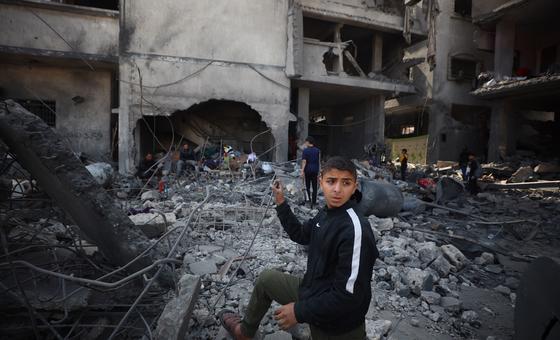
A new blow for UNRWA as headquarters in East Jerusalem ‘set on fire’

It comes after Israeli authorities “stormed and demolished” buildings in the compound last week, UNRWA Commissioner-General Philippe Lazzarini said.

“Allowing this unprecedented destruction is the latest attack on the UN in the ongoing attempt to dismantle the status of Palestine Refugees in the Occupied Palestinian Territory and erase their history,” Mr. Lazzarini said.

In a short statement, the senior UN official added that there were “no limits to the defiance of the United Nations” and international law in the Occupied Palestinian Territory.

Last Tuesday’s move by Israeli authorities to send bulldozers into the Sheikh Jarrah compound where they tore down UNRWA structures prompted swift condemnation from senior UN officials including Secretary-General António Guterres and UN High Commissioner for Human Rights, Volker Türk.

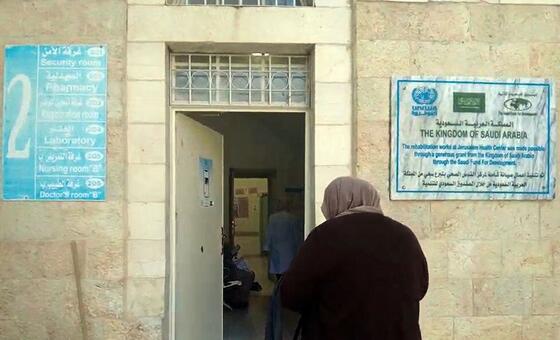
Ahead of that dramatic development, on 14 January, Israeli forces entered an UNRWA health centre in East Jerusalem and ordered it to close. The agency reported that its workers were “terrified” and that the deteriorating situation was a direct result of legislation passed by the Israeli parliament in December, stepping up existing anti-UNRWA laws adopted in 2024.

UNRWA premises have also been targeted by arsonists amid a “large-scale disinformation campaign” against it by Israel, the agency’s Commissioner-General has previously maintained.

This was despite a ruling last October by the UN’s top court, the International Court of Justice, which restated that Israel was obliged “to facilitate UNRWA’s operations, not hinder or prevent them. The court also stressed that Israel has no jurisdiction over East Jerusalem,” Mr. Lazzarini noted.

UNRWA headquarters bulldozed in East Jerusalem

Responding to the dramatic development, head of the UN agency for Palestine refugees Philippe Lazzarini described it as an “unprecedented attack” against the UN, whose premises are protected under international law.

The move represents “a new level of open and deliberate defiance of international law, including of the privileges and immunities of the United Nations, by the State of Israel”, the UNRWA Commissioner-General said on X.

The same thing could happen to any other organization or diplomatic mission “anywhere around the world”, Mr. Lazzarini warned. “This must be a wake-up call,” he stressed.   

Human rights chief’s ‘outrage’

Echoing those concerns, UN High Commissioner for Human Rights Volker Türk expressed his “outrage” at the incident, which marks a sharp escalation of tensions between the Israeli authorities and UNRWA.

“It compounds what we’ve been seeing for a while; attacking aid groups and UN actors who are trying to help,” said Ravina Shamdasani, spokesperson for the High Commissioner.

On 14 January, Israeli forces entered an UNRWA health centre in East Jerusalem and ordered it to close. At the time of the incident, the agency said its workers were “terrified”. In the coming weeks, water and power supplies to UNRWA facilities are scheduled to be cut, including to buildings used for health care and education.

“This is a direct result of legislation passed by the Israeli parliament in December, which stepped up existing anti-UNRWA laws adopted in 2024,” Mr. Lazzarini said.

Previously, UNRWA premises have been targeted by arsonists amid a “large-scale disinformation campaign” against it by Israel, the agency’s Commissioner-General maintained.

This was despite a ruling last October by the UN’s top court, the International Court of Justice, which restated that Israel was obliged “to facilitate UNRWA’s operations, not hinder or prevent them. The court also stressed that Israel has no jurisdiction over East Jerusalem,” Mr. Lazzarini noted.

“What happens today to UNRWA will happen tomorrow to any other international organisation or diplomatic mission, whether in the Occupied Palestinian Territory or anywhere around the world,” he continued. “International law has come under increasing attack for too long and is risking irrelevancy in the absence of response by Member States.”

Source link

Peacekeeping: Lacroix warns of rising threats to ‘blue helmets’ in Middle East

Briefing journalists by video link from Jeddah following an extensive visit to the region, Jean-Pierre Lacroix, said there has been an uptick in dangerous incidents involving peacekeepers and the fragile environment in which missions are operating.

He added that UN missions are continuing to deliver on their mandates despite increasingly challenging conditions on the ground.

“There is no pre-drawdown mandate,” Mr. Lacroix said of the UN Interim Force in Lebanon (UNIFIL), stressing that the mission will continue to operate under its current authorisation until the end of December 2026.

UNIFIL, he said, remains focused on supporting the Lebanese Armed Forces (LAF) and advancing implementation of Security Council resolution 1701, which brought an end to hostilities between Israeli forces and Hezbollah in 2006.

Mr. Lacroix said cooperation with Lebanese authorities and the LAF remained “excellent,” and welcomed recent statements by the Government regarding progress in establishing operational control in the south, while acknowledging that “a number of things remain to be done.”

Increasing danger

At the same time, he expressed grave concern over a growing number of hostile incidents affecting UN peacekeepers, particularly those involving the Israeli Defense Forces.

“The frequency of these incidents has been quite high – it has been increasing,” he said, warning that several encounters “could have had very tragic consequences” for peacekeepers.

He said he had raised the issue with Israeli counterparts, stressing that “it is in no one’s interest to put the lives of peacekeepers at risk,” and reminded all parties of their responsibility to ensure the safety and security of UN personnel.

Mr. Lacroix also described widespread devastation in southern Lebanon, where entire villages and civilians remain unable to return to their homes, undermining prospects for recovery and reconstruction.

Beyond security risks, Mr. Lacroix highlighted the impact of funding shortfalls on peacekeeping operations, noting that UNIFIL and other missions have had to implement savings plans due to delayed or incomplete contributions by some Member States.

He praised peacekeepers for adapting under pressure, saying they had “succeeded in mitigating the impact” of financial constraints through innovation and operational adjustments.

Syria and regional dynamics

Turning to Syria, Mr. Lacroix said the UN Disengagement Observer Force (UNDOF) continues to carry out its mandate with strong backing from both the Security Council and Syrian authorities.

However, he noted that conditions on the ground have changed significantly since Israeli forces established positions inside the area of separation defined by the 1974 disengagement agreement.

Established in May 1974, following the Yom Kippur War, UNDOF is mandated to maintain the ceasefire between Israel and Syria, and supervise the areas of separation as provided in the 1974 agreement.

What we would want is a return to the situation where UNDOF would be the only military presence in the area of separation,” Mr. Lacroix said, describing recent talks between Israel and Syria, mediated by the United States, as “positive.”

UN Photo/Wolfgang Grebien

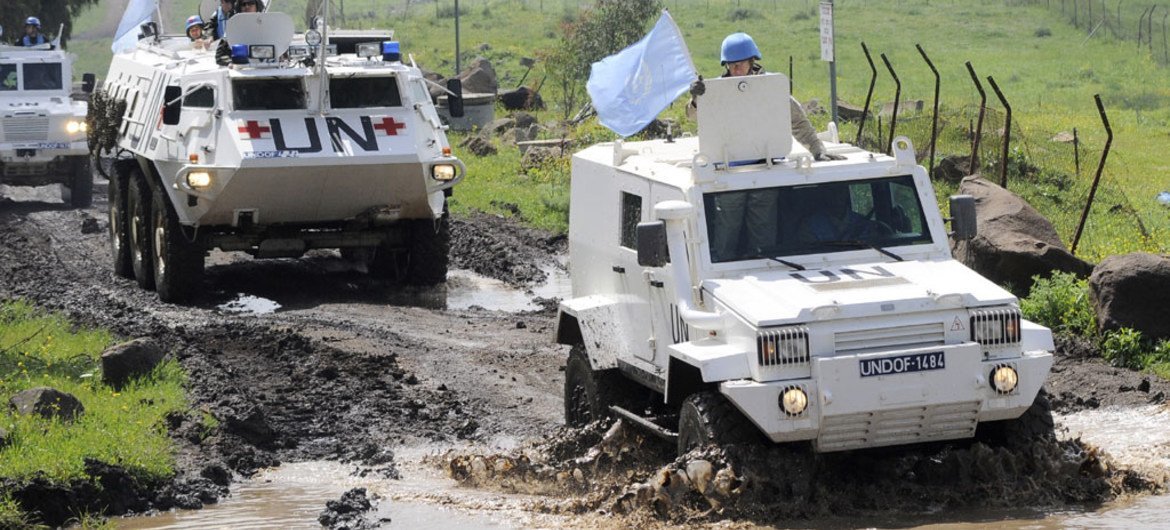
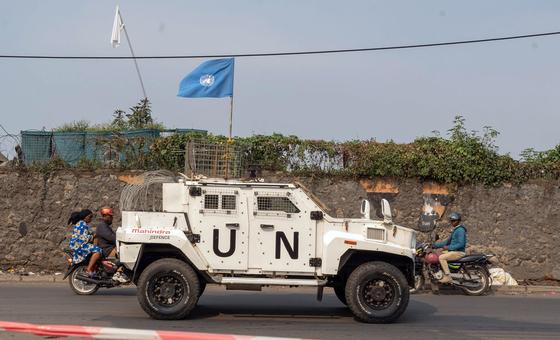
UNDOF peacekeepers on patrol in the Golan Heights.

Mine action and wider needs

He also underscored the growing importance of UN mine action efforts in Lebanon, Syria, Gaza and the Occupied Palestinian Territory overall, saying needs were “huge” and urging greater donor support.

We are willing to do more,” Mr. Lacroix said, stressing that additional resources would be critical to protect civilians and support recovery in conflict-affected areas.

MIDDLE EAST LIVE: Israeli attack on Hamas leaders in Doha ‘potentially opens a new and perilous chapter’

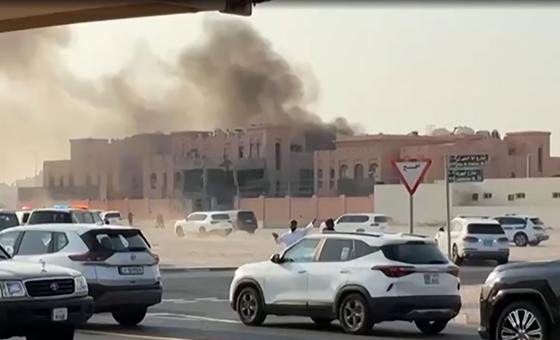
The UN Secretary-General has condemned an Israeli strike targeting Hamas leaders in Doha, the capital of Qatar, on Tuesday, while highlighting the “very positive role” played by the country in achieving a ceasefire in Gaza and securing the release of hostages.

Source link

DR Congo: Rising insecurity in the east impedes diplomatic progress, Security Council hears

Despite diplomatic progress in recent months, with the United States brokering a peace agreement between the DRC and Rwanda, and Qatar facilitating a Declaration of Principles between the Congolese Government and M23 rebels, tensions remain high in the eastern DRC – where multiple armed groups operate.  

The Security Council has also sought to promote peace in the restive region, notably through its adoption of resolution 2773 in February 2025 calling upon all parties to refrain from violence against civilians. Still, casualties continue to rise in the east of the country.

“In North Kivu, the situation has escalated significantly since April,” Martha Ama Akyaa Pobee, Assistant Secretary-General for Africa in the Departments of Political and Peacebuilding Affairs and Peace Operations told ambassadors.  

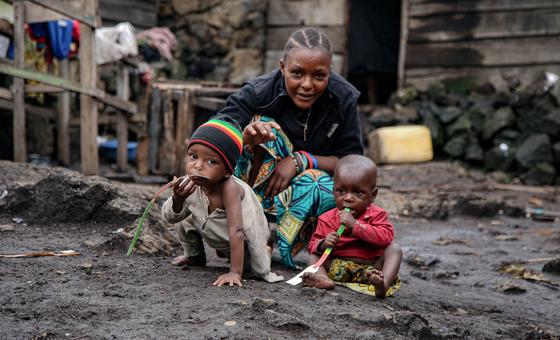
The DRC is currently facing one of the most acute humanitarian emergencies in the world, with food insecurity on the rise and 5.9 million Congolese currently internally displaced.  

Significant escalation

Regrettably, the evolution of the security situation on the ground has not matched the progress achieved on the diplomatic front,” said Ms Pobee.  

Recent attacks carried out by the M23 and Congo River Alliance (AFC) armed groups, as well as assaults by the Allied Democratic Forces – a militia associated with the terrorist group ISIL – have dramatically increased civilian casualties.

Meanwhile, humanitarian workers continue to risk their lives to provide limited assistance to populations in need.  

Amid general indifference, conflict-related sexual violence persists, as does the forced recruitment of children. 

‘Critical juncture’

We cannot and must not accept the extreme suffering and recurrent horrors that are commonplace in eastern DRC,” said Ms Pobee.  

To protect civilians, restore law and order, and address the profound humanitarian needs of the population, the parties must cease hostilities.  

“At this critical juncture for the DRC and the region, it is crucial that this Council place its full weight behind current peace efforts, alongside exerting its influence to ensure respect for and compliance with resolution 2773”, she told the Security Council.  

While the situation on the ground remains dire, genuine engagement by the parties, together with concerted support from the international community, will help lay the groundwork for a durable peace, the top official underlined. 

Source link

DR Congo: UN deplores deadly attacks in the east of the country

The attacks, which took place between 9 and 16 August in the localities of Beni and Lubero territories, claimed the lives of at least 52 civilians, including eight women and two children, but peacekeepers on the ground say the death toll may very well rise.  

“These attacks targeting civilians, which add to the atrocities committed during the night of 26 to 27 July in Komanda (Ituri territory, Ituri), are intolerable and constitute serious violations of international humanitarian law and human rights,” said Binto Keita, Head of the UN Mission in the DRC, known as MONUSCO.  

Appeal to armed groups

The violent attacks were accompanied by abductions, looting, and the burning of homes, vehicles, and motorcycles, as well as the destruction of property belonging to the population already facing dire humanitarian conditions.  

MONUSCO issued a statement calling for foreign armed groups, such as the ADF, to lay down their arms unconditionally and return to their countries of origin.  

The Mission also urged “the Congolese authorities to conduct thorough investigations to identify those responsible for the massacre of civilians and bring them to justice.”  

Stronger military presence

In response to this new wave of violence, the peacekeeping mission reinforced its military presence and support to Congolese authorities.

For instance, on 13 and 14 August during incidents in Mayi-Moya in North Kivu, MONUSCO provided physical protection to 206 civilians, including 93 children and 70 women, who had sought refuge at the mission’s military base.  

“MONUSCO remains fully committed to supporting Congolese authorities and local communities in preventing further violence, protecting civilians, reducing tensions and contributing to the stabilisation of areas affected by armed conflict,” it said.   

Source link

SECURITY COUNCIL LIVE: Debate on the situation in the Middle East

The Security Council meets today for its quarterly open debate on the situation in the Middle East, with a focus on the worsening crisis in Gaza. UN Assistant Secretary-General Khaled Khiari is expected to brief on the situation in the war-ravaged enclave where food entry and distribution remain severely restricted, malnutrition is rising, and fuel and shelter supplies are critically scarce. UN News, in coordination with UN Meetings Coverage, brings you live updates from today’s discussions. UN News App users can follow here.

Children’s lives ‘turned upside down’ by wars across Middle East, North Africa, warns UNICEF

Alarmingly, 110 million children in the region live in countries affected by war, with homes, schools and health facilities damaged or destroyed in fighting.

“A child’s life is being turned upside down the equivalent of every five seconds due to the conflicts in the region,” said Edouard Beigbeder, UNICEF Regional Director for the Middle East and North Africa, on Tuesday.

UNICEF estimates indicate that 45 million children across the region will require humanitarian assistance in 2025, a 41 per cent increase since 2020.  

Funding shortfalls  

However, funding gaps are affecting vital programmes across the region.

For instance, as of May, Syria faced a 78 per cent funding gap and the State of Palestine a 68 per cent gap for their 2025 appeals. UNICEF’s regional programmes are also under increasing financial strain.

The outlook for 2026 also remains bleak, UNICEF said, noting that its funding for Middle East and North Africa is projected to decline by 20 to 25 per cent, potentially resulting in shortfalls of up to $370 million.

Conflicts must stop  

This would jeopardize lifesaving programmes across the region, including treatment for severe malnutrition, safe water production in conflict zones and vaccinations against deadly diseases.

“As the plight of children in the region worsens, the resources to respond are becoming sparser,” said Mr. Beigbeder.

“Conflicts must stop. International advocacy to resolve these crises must intensify. And support for vulnerable children must increase, not decline.” 

DR Congo: Despite efforts towards a political solution, violence still rages in the east

Since January, the region has seen a new escalation of violence as the Rwanda-backed M23 armed group launched an offensive in North and South Kivu provinces.

While tensions persist in the DRC, both frontlines and negotiation positions are shifting, paving the way for peace, the Security Council heard this Friday.

The path to lasting peace in the DRC requires “collective action,” said Bintou Keita, Head of the UN peacekeeping mission in the country, MONUSCO.

“Priority must be given to dialogue over division, and national cohesion must be actively preserved,” she said.

Yet, while diplomatic efforts focus on ways to address the current crisis, the situation in other regions within MONUSCO’s area of operations also demands urgent attention.

Humanitarian situation

With seven million people currently displaced across the country, 27.8 million people facing food insecurity and almost 1.4 million children in acute malnutrition, the humanitarian situation is dire. 

The security crisis in the east of the country has worsened the humanitarian situation, yet due to funding cuts, MONUSCO does not have sufficient means to respond to it accordingly. 

The suspension of funding from MONUSCO’s main donor, which covered 70 per cent of the humanitarian response in 2024, is “forcing humanitarian actors to focus solely on life-saving emergencies,” said Ms. Keita. 

“We are at the end of July, and the humanitarian response plan is only 11 per cent funded,” she added. 

Insecurity, sexual violence and abductions

Violence in the east of the country continues to disproportionately affect women, boys, and girls, notably as rape and other forms of sexual violence are still being systematically used as weapons of war.

Men and boys accused of links with opposing forces are at risk of abduction, while women and girls who have survived sexual violence face severely limited access to healthcare, as healthcare facilities are often targeted by attacks. 

In 2025, over 290 schools were destroyed, with ongoing cycles of violence keeping 1.3 million children out of the education system in Ituri, in the east of the country.  

Source link

MIDDLE EAST CRISIS: Live updates for 20 June


One week since the Israel-Iran conflict erupted, diplomatic efforts to end the war are ramping up in Geneva today as foreign ministers from France, Germany, the UK and the European Union prepare to meet their Iranian counterpart. In New York, meanwhile, the UN Security Council is also set to discuss this latest worrying escalation, against the backdrop of the ongoing emergency in Gaza. We’ll be covering these developments and more across the UN system today. UN News app users can follow here.

Source link

Middle East crisis: Live updates for 16 June

After a weekend of massive strikes and counter-strikes between Tel Aviv and Tehran, the UN’s human rights chief, Volker Türk on Monday condemned the violence and echoed wider calls for a negotiated end to the attacks. Meanwhile in Gaza, aid workers report that mobile communications networks continue to be cut in the shattered enclave. We’ll be covering these developments and more across the UN system and beyond today, thanks for joining us. UN News app users can follow our live coverage here.

Source link

UNRWA condemns ‘storming’ of schools in East Jerusalem

According to the agency, heavily armed personnel entered the schools in Shu’fat refugee camp on Thursday while classes were in session, forcing more than 550 Palestinian girls and boys – some as young as six – out of their classrooms.

One UNRWA staff member was detained, and all of the agency-run schools in East Jerusalem were subsequently evacuated as a precaution.

‘Assault on children’

This is an assault on children. An assault on education,” UNRWA Commissioner-General Philippe Lazzarini said in a statement.

Storming schools and forcing them shut is a blatant disregard of international law.

He added that by enforcing the closure orders issued against UNRWA schools in April, Israeli authorities are denying Palestinian children their basic right to learn.

These schools are inviolable premises of the United Nations. UNRWA schools must continue to be open to safeguard an entire generation of children,” Mr. Lazzarini said.

Immediate risk

Roland Friedrich, Director for UNRWA Affairs in the West Bank, warned the Palestine refugee children are at an “immediate risk” of losing their access to education.

“Israel’s actions today are a grave violation of its obligations as a UN Member State under international law,” he said in a social media post.

He called on the international community to uphold UNRWA’s mandate and humanitarian space in the West Bank.

Gaza: Water, sanitation crisis deepens

Meanwhile, the humanitarian crisis in Gaza continues unabated, with more than three-quarters of households reporting reduced access to water, ten weeks into Israel’s aid blockade.

A survey conducted by humanitarians in April found that 90 per cent of families faced critical water shortages, often having to choose between basic hygiene and cooking. They also reported an increase in reliance on private vendors for drinking water – with public infrastructure in ruins.

Fuel shortages and limited access to repair equipment, have further complicated the situation. The southern Gaza desalination plant remains offline due to a severed power line, while key water pipes damaged earlier this year have yet to be repaired.

Overflowing waste and rodent infestation

The UN aid coordination office, OCHA, also reported widespread sanitation issues, including a lack of functioning latrines, soap shortages and sewage overflows in hard-hit areas like Jabalia and Nazla.

Overcrowded shelters are facing rodent and insect infestations, further raising fears of disease outbreaks amid strained medical services, OCHA said, warning of a looming public health disaster if the crisis continues unchecked.

UNRWA warns against closure of six schools in East Jerusalem

It’s a grave threat to the right of those children to education,” Roland Friedrich, Director of UNRWA Affairs for the West Bank, told UN News.

The development follows two Israeli laws that went into effect in late January which ban UNRWA from operating in its territory and prohibit Israeli authorities from having any contact with the agency.

UNRWA is the largest provider of healthcare, education and other services for nearly six million Palestine refugees across the Middle East, including in war-torn Gaza.

This week the International Court of Justice – the UN’s highest court – began hearings to examine Israel’s restrictions on the work of the UN and other international organizations in Gaza and the Occupied Palestinian Territories.

Mr. Friedrich spoke about how the affected students are anxious over the prospect of being shut out of the classroom.  He also underlined UNRWA’s commitment to continue to deliver in East Jerusalem “as long as we can.”

This interview has been edited for clarity and length.

Roland Friedrich: Roughly four weeks ago we received notifications from the Israeli Ministry of Education that the three schools we operate in Shu’fat refugee camp and another three schools we operate inside East Jerusalem shall be closed. 

We have 800 students in these schools and these children have no adequate access to education beyond these schools. This is very concerning for the children, for their families, and it comes while the school year is still ongoing. So, this is unprecedented. It’s a grave threat to the rights of those children to education and it’s very concerning particularly because these closure orders are supposed to come into effect on 8 May, which is less than a week from now.

UN News: What other UNRWA programmes are at risk in the West Bank?

Roland Friedrich: I think we have to make a distinction between our work in occupied East Jerusalem, which according to the Israeli legislation is banned, and our work in the rest of the West Bank where, according to Israel, all our work is not banned. 

In East Jerusalem we operate, in addition to the six schools with 800 children, two health centres – one in the Old City and another in Shu’fat refugee camp – with  roughly 60,000 patients: vulnerable patients who have no adequate access to other health facilities, patients with non-communicable diseases, patients who have West Bank ID who have no access to alternative health facilities, and low-income patients. 

We are also responsible for garbage collection in Shu’fat refugee camp, which is on the Palestinian side of the so-called separation barrier. 

In addition to that, we also operate a vocational training centre in the north of Jerusalem, also on the Palestinian side of the barrier, with 350 trainees, all from the West Bank. 

Our main headquarters in occupied East Jerusalem is in the Sheikh Jarah neighbourhood. We currently cannot operate from it because of continuing security threats: threats to the safety and security of our staff, ongoing attacks against the compound. 

We again had an arson attack against these facilities three weeks ago, and continuous destruction of the fence, of cameras, of security infrastructure with high material damage. 

So that’s a place that’s not safe for our staff to work despite the fact that it is a facility protected by the privileges and immunities of the United Nations. 

When it comes to the West Bank overall, our operations there largely continue. That means our 90 schools, our 41 health centres, our microfinance installations, continue to operate. 

But we do have a severe humanitarian crisis in the northern West Bank due to an ongoing Israeli security forces operation that started in late January and that has led to the displacement of more than 40,000 Palestinian refugees from three refugee camps.  

UN News: What messages did you hear from students, parents and teachers during your latest visit to Shu’fat camp? How is the community coping with this uncertainty?

Roland Friedrich: There is anxiety among children. They are worried that they can’t continue the school year, which runs until the end of June. They’re worried that they will be separated from their friends. 

They’re worried that they will lose access to education. They are worried that they will have to be placed in education facilities that are maybe very far away or not available at all.

These are free schools, and we teach from grades one to nine. A lot of them are young girls who feel safe there in an appropriate learning environment that they will possibly lose.

Parents are also concerned. UNRWA has been delivering services in that refugee camp since the 1960s, predating Israeli occupation of East Jerusalem, so there’s a history of UNRWA teaching in that place and an appreciation for the quality of the services we deliver. 

Given the fact that all international UN staff have not received visas from the Israeli authorities since late January, it’s our local staff on the ground who are taking high risks in continuing to serve their communities.

UN News: In this challenging environment, what steps is UNRWA considering to support the continuity of its services in East Jerusalem?

Roland Friedrich: We’ve been very clear since these laws against UNRWA entered into effect on 29 January. We’ve been seeking to live up to our humanitarian commitment, to our mandate to continue to deliver these services to communities in East Jerusalem.

There have been legal efforts by Israeli civil society organizations before the courts against these laws and against these disclosure orders. Some of these proceedings are still pending.

We clearly call upon all actors to respect the obligations under international law, particularly to respect the inviolability of the premises of the United Nations in East Jerusalem. 

We are providing these services based on a mandate by the General Assembly.

UNRWA clearly enjoys full privileges and immunities like any other UN agency, and our staff there are taking grave personal risks.

We are assessing the situation on a daily basis. Is it still safe for our staff to operate or not? As a matter of principle, we will be there as long as we can. 


Source link

MIDDLE EAST LIVE: Security Council meets on Gaza crisis as starvation threat grows

The Security Council will meet on Tuesday to discuss the situation in the Middle East, with French Foreign Minister Jean-Noël Barrot presiding. The UN Secretary-General is expected to brief ambassadors as the humanitarian crisis in Gaza deepens, with reports from the UN Palestine refugee relief agency (UNRWA) this morning that children are “going to bed starving” amid the two-month Israeli aid blockade and continuing bombardment. App users can follow coverage here.

Source link