A new blow for UNRWA as headquarters in East Jerusalem ‘set on fire’

It comes after Israeli authorities “stormed and demolished” buildings in the compound last week, UNRWA Commissioner-General Philippe Lazzarini said.

“Allowing this unprecedented destruction is the latest attack on the UN in the ongoing attempt to dismantle the status of Palestine Refugees in the Occupied Palestinian Territory and erase their history,” Mr. Lazzarini said.

In a short statement, the senior UN official added that there were “no limits to the defiance of the United Nations” and international law in the Occupied Palestinian Territory.

Last Tuesday’s move by Israeli authorities to send bulldozers into the Sheikh Jarrah compound where they tore down UNRWA structures prompted swift condemnation from senior UN officials including Secretary-General António Guterres and UN High Commissioner for Human Rights, Volker Türk.

Ahead of that dramatic development, on 14 January, Israeli forces entered an UNRWA health centre in East Jerusalem and ordered it to close. The agency reported that its workers were “terrified” and that the deteriorating situation was a direct result of legislation passed by the Israeli parliament in December, stepping up existing anti-UNRWA laws adopted in 2024.

UNRWA premises have also been targeted by arsonists amid a “large-scale disinformation campaign” against it by Israel, the agency’s Commissioner-General has previously maintained.

This was despite a ruling last October by the UN’s top court, the International Court of Justice, which restated that Israel was obliged “to facilitate UNRWA’s operations, not hinder or prevent them. The court also stressed that Israel has no jurisdiction over East Jerusalem,” Mr. Lazzarini noted.

Cooling La Niña could be back, but global temperatures set to rise: WMO

Latest data shared by the World Meteorological Organization (WMO) indicates a 55 per cent likelihood that sea surface temperatures in the equatorial Pacific will cool to La Niña levels from September to November.

About 90 per cent of the excess heat from global warming is stored in the ocean, making ocean heat content a critical indicator of climate change. 

“For October to December 2025, the probability of La Niña conditions slightly increases to about 60 per cent. There is little chance of El Niño developing during September to December,” WMO said in an update.

According to the UN agency, there is a smaller chance (45 per cent) that Pacific temperatures will stay as they have for the past six months, when neither the cooling La Niña nor its opposite number, the warming El Niño, caused unusual spikes or dips in sea surface temperatures.

Lifesaving insight

The UN agency’s forecast for the El Niño Southern Oscillation phenomenon is an important climate intelligence tool which could “save thousands of lives when used to guide preparedness and response actions”, insisted WMO Secretary-General, Celeste Saulo.

The information could also translate into millions of dollars of savings in agriculture, energy, health and transport, she said.

Important as La Niña and El Niño are in shaping our climate by altering ocean surface temperatures and impacting changes in winds, pressure and rainfall patterns, human-induced climate change is still “increasing global temperatures, exacerbating extreme weather, and impacting seasonal rainfall and temperature patterns”, WMO noted.

Each year of the past decade has been the top 10 warmest on record, the UN agency warned earlier this year, with 2024 the hottest yet, with “exceptional land and sea surface temperatures and ocean heat”.

Citing six international datasets, WMO said that global average surface temperature was 1.55 °C (34.79F) above the 1850-1900 average.

“Blazing temperatures in 2024 require trail-blazing climate action in 2025,” said UN Secretary-General Antóno Guterres at the time. “There’s still time to avoid the worst of climate catastrophe. But leaders must act – now,” he insisted.

Other key climate phenomena that influence global temperature include the North Atlantic Oscillation, the Arctic Oscillation and the Indian Ocean Dipole. Their impact on surface temperatures and rainfall are monitored by WMO and published in regular Global Seasonal Climate Updates (GSCU).

The latest Update indicates that for September to November, temperatures are expected to be above normal in much of the Northern hemisphere and large parts of the southern hemisphere.

Rainfall predictions are expected to be similar to those typically observed during a moderate La Niña, the WMO assessment noted.

Monsoon floods kill more than 700 in Pakistan, with heavy rains set to continue

The National Disaster Management Authority has also reported 978 injuries and the destruction or damage of more than 2,400 houses, while over 1,000 livestock have been lost as of Thursday, 21 August.

Severe weather is forecast to continue into early September, raising the risk of further flooding, landslides and crop losses, according to the UN Office for the Coordination of Humanitarian Affairs (OCHA).

Khyber Pakhtunkhwa hit hardest

The northwestern province of Khyber Pakhtunkhwa has borne the brunt of the disaster. 

Authorities declared a state of emergency in nine districts, including Buner, Shangla and Mansehra, after torrential rains between 15 and 19 August left 368 people dead, 182 injured and damaged more than 1,300 homes. Nearly 100 schools were also destroyed.

The international charity CARE said its teams found widespread devastation in Buner, where families reported homes and livelihoods swept away within minutes by torrents of floodwater carrying boulders and debris.

Children most affected

The toll on children has been particularly severe, with displacement, loss of schooling and limited access to safe water putting their health and well-being at grave risk. 

According to the UN Children’s Fund (UNJCEF), at least 21 children were among those killed in Khyber Pakhtunkhwa since 15 August.

Many schools have been destroyed or are now being used as temporary shelters, further restricting access to education and safe spaces.

Urban flooding in Karachi

In Sindh province, heavy rains on 19 August triggered urban flooding in Karachi – Pakistan’s largest city – where at least six people were killed in wall collapses and electrocutions. Rainfall reached up to 145 millimetres (about 5.75 inches) in parts of the city, inundating roads and leaving many neighbourhoods without power for hours.

The province of Punjab also suffered extensive flooding along the Indus and Chenab rivers, which has displaced more than 2,300 families and damaged cash crops across thousands of acres.

Scaling up support

Federal and provincial authorities are leading the response, having mobilized over 2,000 personnel for rescue and evacuation. In coordination with the UN and partners, they have dispatched key relief items, including food, tents and medical supplies to affected areas.

OCHA said it has deployed field coordinators to the hardest-hit districts and activated emergency mechanisms, including the release of funds from its regional humanitarian envelope for Pakistan – prioritising life-saving assistance in health, water, food security and shelter.

For its part, UNICEF has dispatched essential medicines and hygiene kits to affected districts. Each kit includes soap, water containers and other hygiene supplies to help prevent disease outbreaks.

Worrying trend

Pakistan has endured devastating monsoon seasons in recent years. In 2022, unprecedented floods killed more than 1,700 people, displaced millions, and caused an estimated $40 billion in economic losses.

Erratic and intensified rainfall patterns, amplified by climate change, are compounding the country’s vulnerability, threatening lives, livelihoods and long-term recovery across southern Asia. 

Source link

Once-in-a-decade push for the ‘locked out’: Global leaders set for landmark UN conference in Turkmenistan

Backed by the new Awaza Programme of Action, the Third UN Conference on Landlocked Developing Countries or LLDC3 will push for freer transit, smarter trade corridors, stronger economic resilience and fresh financing to lift development prospects for the 570 million people living in those countries.

For landlocked nations, geography has long dictated destiny.  

Trade costs are up to 74 per cent higher than the global average and it can take twice as long to move goods across borders compared to coastal countries. As a result, landlocked nations are left with just 1.2 per cent of world trade.

UN Video | What to expect from LLDC3 in Awaza, Turkmenistan

And amid global economic shifts, these countries face the huge risk of being left behind.

LLDC3 is a pivotal opportunity to reverse this trajectory,” said Rabab Fatima, UN High Representative for Landlocked Developing Countries.

At its heart, this conference is about people – it is about the millions of children who lack internet or digital tools, the farmers who cannot get their goods to market because of poor roads, and the entrepreneurs whose dreams are held back by border delays and limited access to funding.

Broad engagement

The four-day event, from 5 to 8, August will feature plenary sessions, five high-level roundtables, and a Private Sector Forum focused on building partnerships and boosting investment.  

Dedicated forums with parliamentarians, women leaders, civil society and youth will bring voices from across society into the heart of the discussions.

UN Secretary-General António Guterres is expected to attend, underlining the urgency of the agenda.

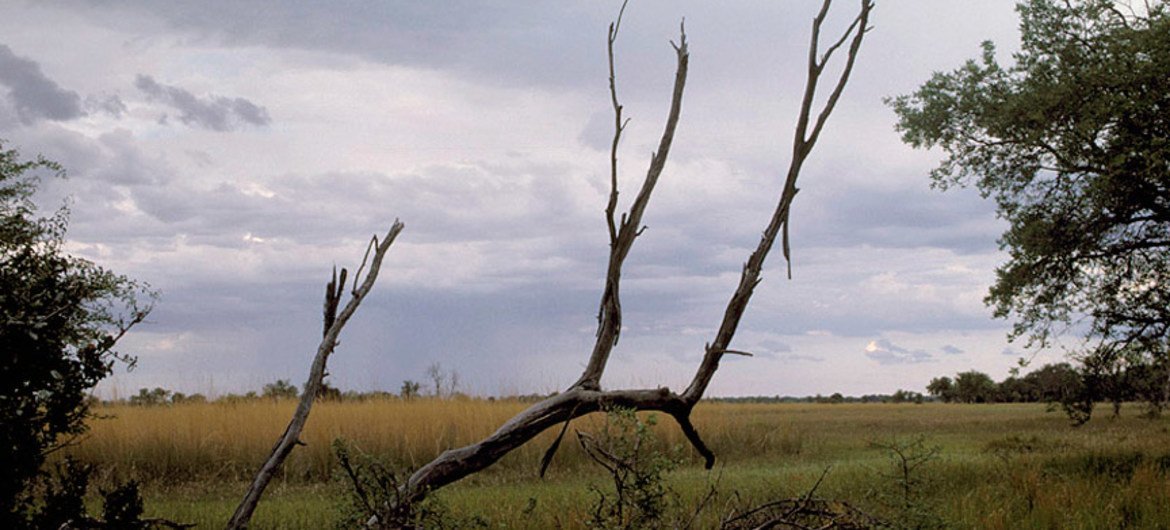
World Bank/Curt Carnemark

Many landlocked countries, such as Botswana (pictured) are also on the frontlines of the impact of climate change, highlighting their vulnerability.

The Awaza Programme of Action

Central to the conference is the Awaza Programme of Action for 2024-2034, adopted by the UN General Assembly in December.  

It lays out five priority areas – structural transformation, infrastructure and connectivity, trade facilitation, regional integration, and resilience building – supported by five flagship initiatives.  

These include:

  • A global infrastructure investment facility to close financing gaps.
  • Regional agricultural research hubs to boost food security.
  • A high-level UN panel on freedom of transit, ensuring smoother cross-border flows.
  • Digital connectivity initiatives to bridge the digital divide.
  • A dedicated landlocked developing countries trade work programme at the WTO.

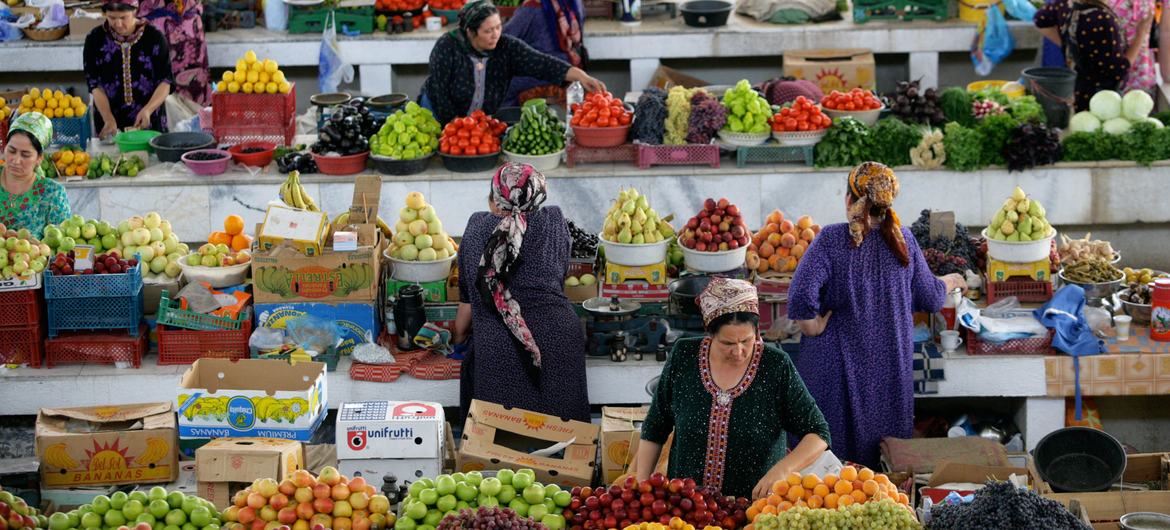
© UNICEF/Giacomo Pirozzi

Women shop at a vegetable market in Ashgabat, the capital of Turkmenistan. Boosting food security is one of the priority areas of the Awaza Programme of Action.

Turkmenistan

For Turkmenistan, hosting LLDC3 is both a diplomatic milestone and a statement of intent.

We are proud to host it on the Caspian Sea coast in Turkmenistan,” said Aksoltan Ataeva, Ambassador and Permanent Representative to the UN.

We look forward to welcoming [everyone] to Awaza for a transformative, action-oriented conference that puts landlocked countries at the heart of global partnerships.

Organizers promise state-of-the-art facilities, cultural showcases and networking spaces designed to spur collaboration. Delegates will also experience Turkmen heritage firsthand, from local art to Caspian cuisine.

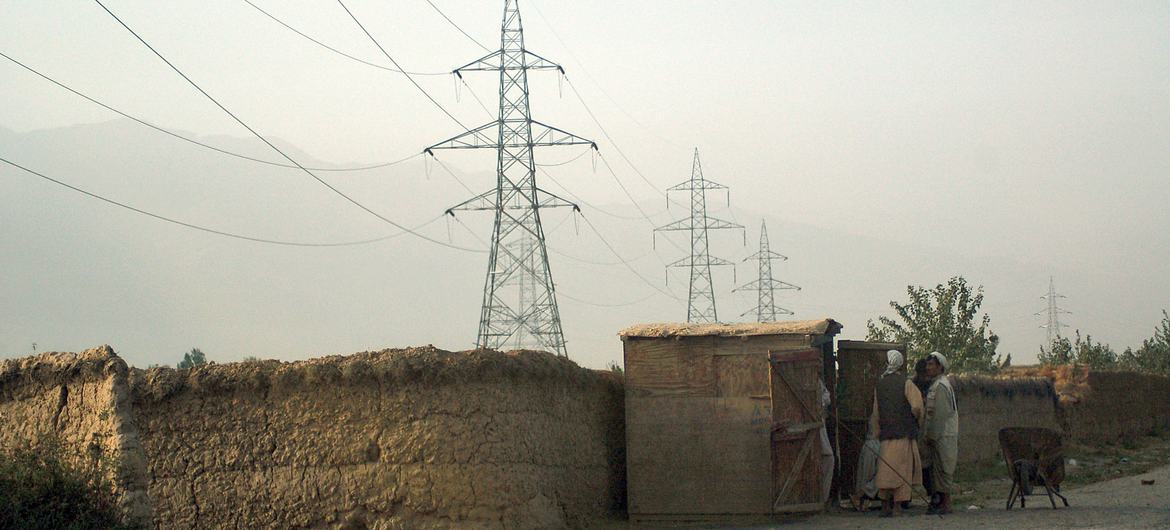
Cross-border infrastructure, such as these power lines, are crucial connections linking LLDCs with the regional and global electric grids.

The bigger picture

For the landlocked developing countries, the stakes are existential.  

These countries are among the most climate-vulnerable, least connected and furthest from global value chains. Without bold action, progress on the 2030 Agenda for Sustainable Development will remain out of reach.

The destiny of humanity is inseparably linked to the destiny of these countries,” said Diego Pacheco, Ambassador of Bolivia, who currently chairs the LLDC Group at the UN.

Together, we can unlock the potential of landlocked developing countries – not just for the benefit of our nations, but for the shared future of all humanity and the Mother Earth.

As the countdown to Awaza begins, expectations are high – not about whether geography matters (it does), but whether global solidarity can transcend its limits.

LLDC3 aims to prove that it can.

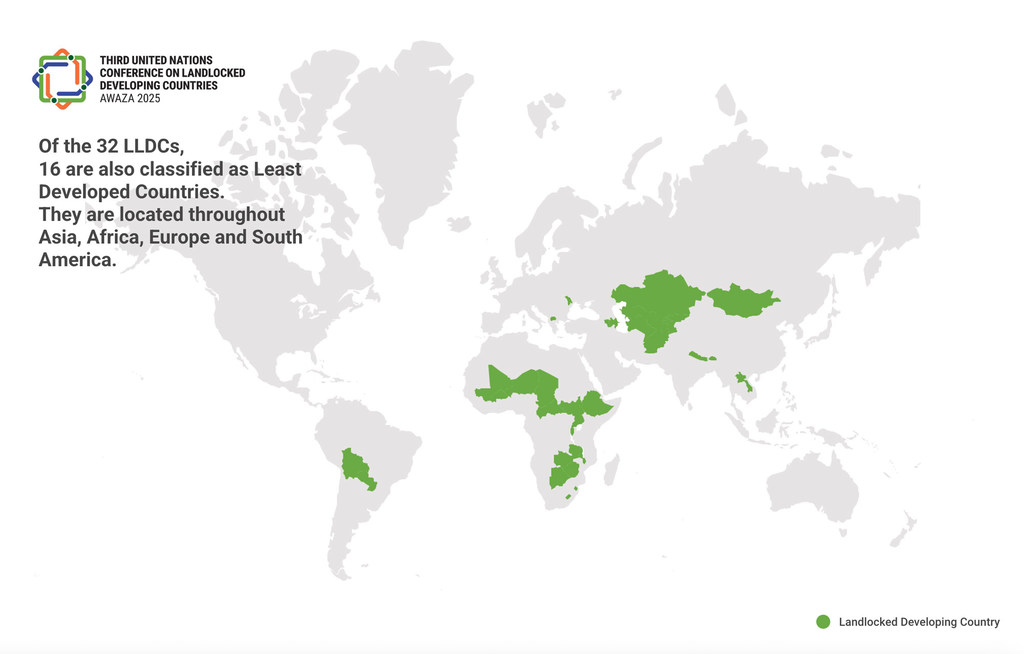
There are 32 landlocked developing countries, of which 16 are also least developed.

Source link

Global demand for meat and dairy set to rise, but climate and nutrition gaps remain

However, persistent nutritional gaps and mounting environmental pressures reveal a complex path ahead, according to a new study by the UN Food and Agriculture Organization (FAO) and the Organisation for Economic Cooperation and Development (OECD) – an influential international policy forum.

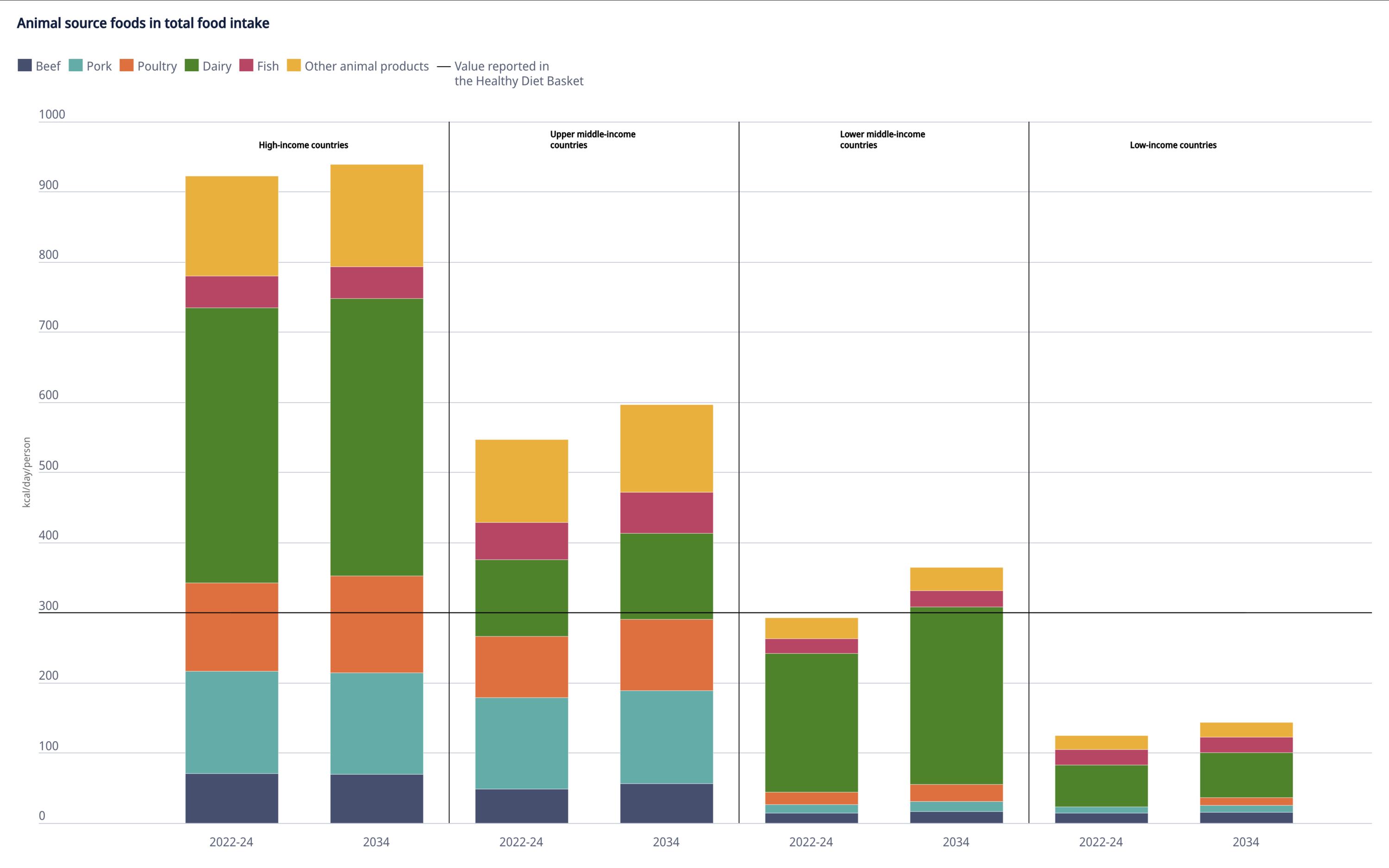
The Agricultural Outlook 2025-2034, released on Tuesday, projects a six per cent increase in global per capita consumption of animal-source foods by 2034 – beef, pork, poultry, fish, dairy and other animal products.  

The trend is most pronounced in lower middle-income countries, where intake is expected to rise by 24 per cent, far outpacing the global average.  

These projections point to better nutrition for many people in developing countries,” said Qu Dongyu, Director-General of the FAO.

Agricultural Outlook 2025‑2034

Increased incomes, better diets – but not for all

The surge in consumption in middle-income economies is attributed largely to rising disposable incomes, changing dietary preferences and urbanisation. In these countries, daily per capita intake of animal-sourced foods is projected to reach 364 kilocalories, surpassing the 300 kcal benchmark.

At the same time, consumption in low-income countries will remain low – reaching just 143 kcal per day, less than half the amount deemed necessary for a healthy diet – highlighting stark inequalities in access to nutrient-rich diets and the challenges ahead to ensure everyone is food secure.

Mr. Qu urged greater efforts to ensure people in the lowest-income countries also benefit from improved nutrition and food security.

Production expanding but emissions rising

To meet rising demand, global agricultural and fish production is projected to increase by 14 per cent over the next decade, largely driven by productivity gains in middle-income nations.

Output of meat, dairy and eggs is expected to grow by 17 per cent, while total livestock inventories are projected to expand by seven per cent.

However, these gains come at an environmental cost: direct greenhouse gas (GHG) emissions from agriculture are set to rise by six per cent by 2034, despite improvements in emissions intensity.

As production becomes more efficient, the emissions generated per unit of output will decline, but the overall footprint will still grow unless additional measures are taken.

Agricultural Outlook 2025‑2034

Other key findings

  • Cereal yields to grow 0.9 per cent annually, with harvested area expanding just 0.14 per cent per year – half the pace of the last decade
  • By 2034, 40 per cent of cereals will go directly to human consumption, 33 per cent to animal feed, and the rest to biofuels and industry
  • Biofuel demand set to rise 0.9 per cent annually, led by Brazil, India and Indonesia
  • Sub-Saharan Africa’s beef herd projected to grow 15 per cent, though productivity remains just one-tenth of North America’s
  • India and Southeast Asia will drive 39 per cent of global consumption growth by 2034; China’s share falling to 13 per cent from 32 per cent
  • High-income countries to see drop in per capita fats and sweeteners intake due to health trends and policy shifts

A win-win: More nourishment, fewer emissions

The report outlines a scenario in which nourishment improves for all, and agricultural emissions are reduced by as much as seven per cent below current levels by 2034.

Achieving this dual outcome would require major investments to improve productivity, alongside widespread adoption of existing low-emission technologies such as precision farming, improved livestock feed and prioritising nutritional production.

Future progress will depend on a blend of policy coordination, technological innovation and targeted investments – especially in countries where the gap between demand and nutritional value is stark.

We have the tools to end hunger and boost global food security,” said Mathias Cormann, Secretary-General of the OECD.

“Well-coordinated policies are needed to keep global food markets open, while fostering long-term productivity improvements and sustainability in the agriculture sector.”

Pivotal role for global trade

The Outlook also reiterates the importance of trade, given that 22 per cent of all calories eaten will have crossed international borders by 2034.

International trade will remain indispensable to the global agri-food sector,” the report stressed.

Multilateral cooperation and a rules-based agricultural trade are essential to facilitating these trade flows, balancing food deficits and surpluses across countries, stabilising prices and enhancing food security, nutrition and environmental sustainability.”

Source link

Without urgent funding, global hunger hotspots are set to grow, UN warns

But hunger has followed them. Over 57 per cent of the population in the world’s youngest country to the south is already facing high levels of acute food insecurity.

Sudan and South Sudan are among five global hunger hotspots of “highest concern”, trapped in a worsening cycle of conflict, climate shocks and economic decline.

Continued fighting in Sudan, anticipated flooding impacting its southern neighbour and deteriorating economic conditions in both countries are set to intensify hunger in the coming months.

A new report released on Monday by the World Food Programme (WFP) and the Food and Agriculture Organization (FAO) also identified Palestine, Mali and Haiti as the other top-priority hunger hotspots, with a further seven countries likely to see worsening food security over the next five months.

The report, which analyses existing data to project the nature of food insecurity, emphasised that without immediate humanitarian assistance, people living in these hotspots will face severe food conditions and high risks of starvation and death.  

“This report makes it very clear: hunger today is not a distant threat  – it is a daily emergency for millions. We must act now and act together to save lives and safeguard livelihoods,” said FAO Director General QU Dongyu.  

Conflict-driven hunger

The report identified that the main driver of hunger is conflict which is often compounded by climate and economic shocks.  

“There’s an on-going famine in Sudan and also a risk of famine in the case of Gaza. And all of those are driven by conflict and lack of access for humanitarians,” said Jean-Martin Baucer, FAO food security analysis director.

In Gaza, the entire population of 2.1 million people is projected to experience crisis levels of food insecurity in the next months as a result of protracted military operations, with almost 500,000 projected to face catastrophic levels of food insecurity.  

Sawsan was an artist in Gaza before the conflict began. Since then, she and her four children have been displaced, losing everything that they owned. They do not have enough to eat: Sawsan described to WFP that she now reduced to crushing macaroni to make bread for her children.  

The report also noted that climate shocks and conflict often cause protracted economic declines, diminishing the purchasing power and self-sustaining capacity of households and communities.

Window closing fast 

In recent months, humanitarian food operations have faced significant food shortages and have been geographically impeded by security crises which make the delivery of aid simply dangerous.  

WFP and FAO are calling for the international community to drastically step up funding for food and nutrition related humanitarian aid in the coming months and advocate for an end to the fighting.  

“Urgent, sustained investment in food assistance and recovery support is crucial as the window to avert yet more devastating hunger is closing fast,” said WFP executive director Cindy McCain.

‘Red alert’

In May, the food aid sector estimated that it would need $12.2 billion, but only nine per cent of this was funded.  

The report also underlined the importance of moving towards longer-term humanitarian strategies which equip communities with self-sustaining capabilities and are less expensive.

“This report is a red alert. We know where hunger is rising and we know who is at risk. We have the tools and experience to respond but without funding and access, we cannot save lives,” said Ms. McCain.   

No green without blue: Young ocean explorers set sail for a sustainable future

In the old town of Nice, the 98-meter-long, three-masted barque arrived last week at Port Lympia, where UNOC3 is now under way. Built in 1914 and owned by Norway since 1921, the Statsraad Lehmkuhl – named for former Norwegian minister Kristofer Lehmkuhl – was refitted last year with state-of-the-art ocean science instruments, transforming it into a floating university.

Now, more than a century after its construction, the vessel has become a cutting-edge research platform, bringing together scientists, students, and explorers to unravel the ocean’s secrets.

This transformation is central to the ship’s second One Ocean Expedition, launched on April 11 from Bergen, Norway, with a mission to bridge ocean science, education, and sustainability. The expedition aims to raise awareness and share knowledge about the ocean’s crucial role in a sustainable future for all. It is expected to return to Bergen a year from now.

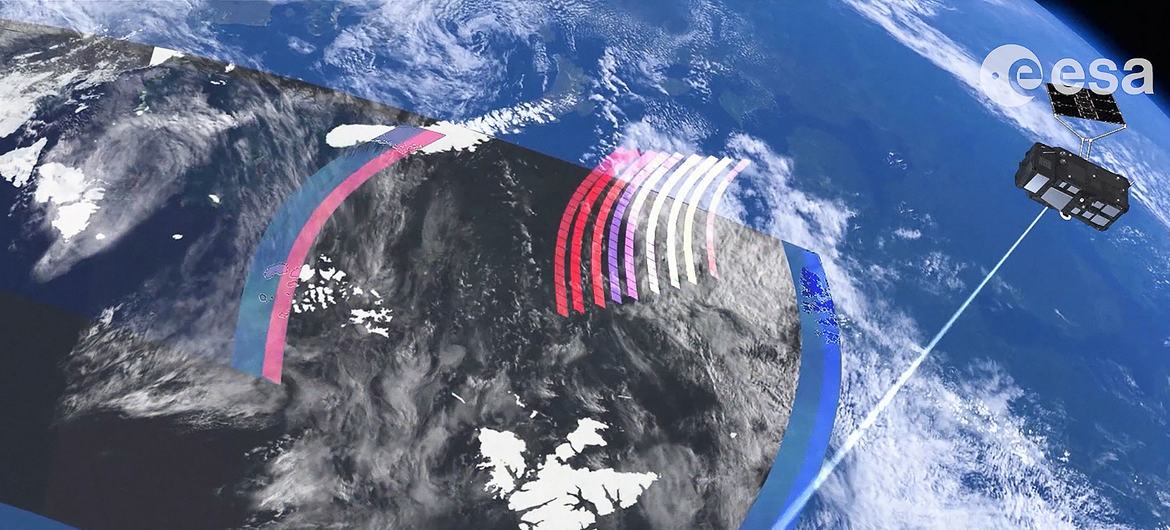
As part of the UN Decade of Ocean Science for Sustainable Development, a global initiative aimed at reversing the decline in ocean health, this expedition partnered with the ESA Advanced Training Course on ocean synergy remote sensing. Together, they assembled young talent from 28 countries to cross-reference ocean observations from space and sea, bridging the gap between satellite data and in-situ research.

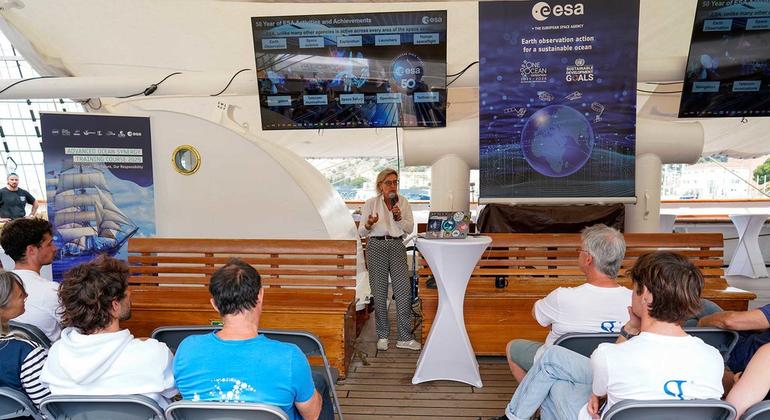
Demonstration of ESA satellite remote sensing.

Space-ocean synergy

“Marrying … the science, oceanographic and sailing traditions is the best way to get inside the ocean from the surface,” said Craig Donlon, the ESA ocean scientist who led the expedition. He also told UN News that real-time satellite data is used to guide on-board research and point students towards areas that need more and better measurement.

Each day, the ESA transmits space-collected data to the ship, delivering it approximately three and a half hours after processing. “Then we come to the captain, and we upset him by saying, we’ve just discovered this new thing, can please we move here?” laughs Mr. Donlon.

Student’s hard work bearing fruit

Mr. Donlon said that cutting-edge oceanographic instruments, including an acoustic Doppler current profiler (ADCP) to measure water movement, hydrophone arrays to capture underwater soundscapes, and Conductivity, Temperature, Depth (CTD) sensors to analyze seawater properties, work together to decode the ocean’s hidden dynamics.

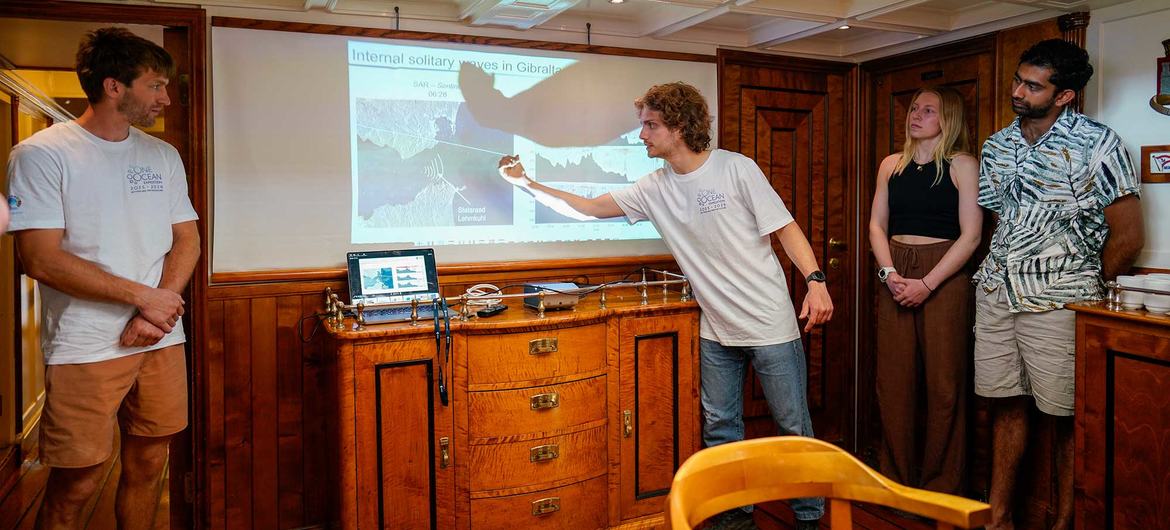
Leveraging these, the students can cross-pollinate between their findings in physics, biology, and air-sea interaction, working individually or in groups on projects including internal solitary waves, drifter trajectories and ocean biodiversity studies.

“It’s quite tough, because they have to work eight hours a day on deck, and the remaining time they have to eat and sleep, but they also find ways to work together,” Mr. Dolon explained. “They made a huge number of measurements […] it’s an amazing journey that they’ve made. We have nearly 15 terabytes of in-situ observations taken aboard this scientific vessel.”

He also spoke highly of the value of these works as evidence-based tools that can ensure the data sets sensibly underpin policies and promote ratification.

“It’s our one Ocean, and we must learn to live in harmony with its majesty because it’s beautiful but fragile. It’s not a global dumping ground. Our future ocean ambassadors, the students aboard this ship, will lead this endeavor,” he insisted.

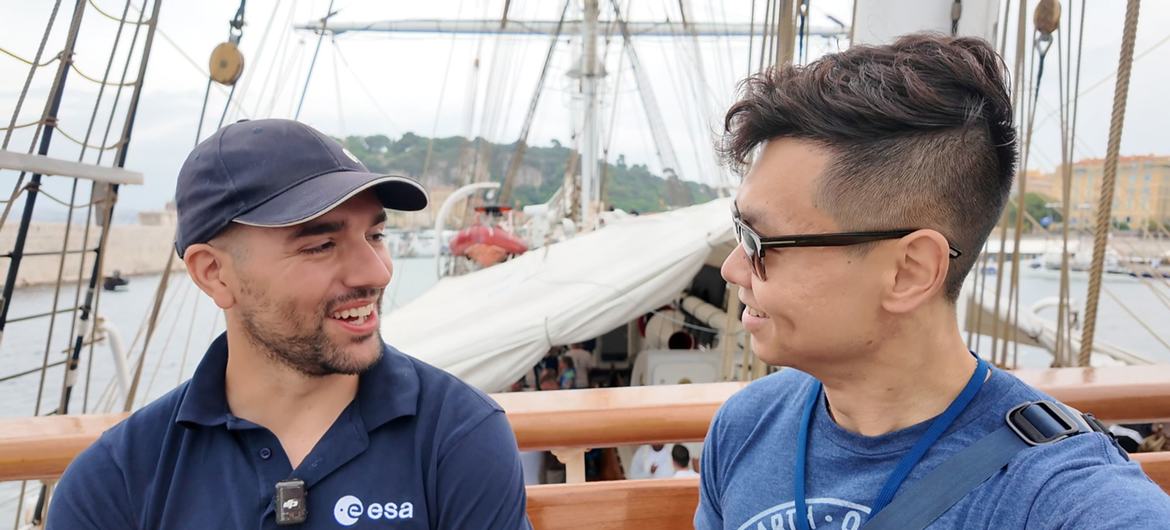
Pablo Álvarez, an ESA training astronaut, talks to UN News.

An astronaut’s blue ambition

Among these young explorers is Pablo Álvarez, an ESA training astronaut set to join the International Space Station before 2030. Before launching into orbit, he’s honing his skills and deepening his knowledge aboard this tall ship – trading the vastness of space for the mysteries of the sea.

He specializes in remote sensing of the ocean’s surface. By analyzing satellite imagery, such as patterns formed by sunlight reflecting off waves, known as ‘sun glitter’, he uncovers insights into surface roughness, wind behavior, and ocean dynamics. These key data points aid both marine scientists and astronauts studying Earth from afar, offering valuable clues that may help predict the ocean’s movement.

“In both fields [Ocean Science and Earth System Science] you’re moving the human knowledge a bit farther with everything you do,” added Mr. Álvarez, “I think it’s in our DNA to explore and to learn more about our environment, and the universe where we are living.” 

Lena Schaffeld (second from the right) is among students presenting their studies on board.

Women improve scientific study

Among the students aboard, Lena Schaffeld, from Germany, found the expedition particularly inspiring. She felt empowered knowing that female students outnumbered their male peers – a rare and meaningful shift in a field often dominated by men.

“I think we need a lot of women in science, especially ocean science. So, it’s quite nice to be one of them,” Ms. Schaffeld said proudly.

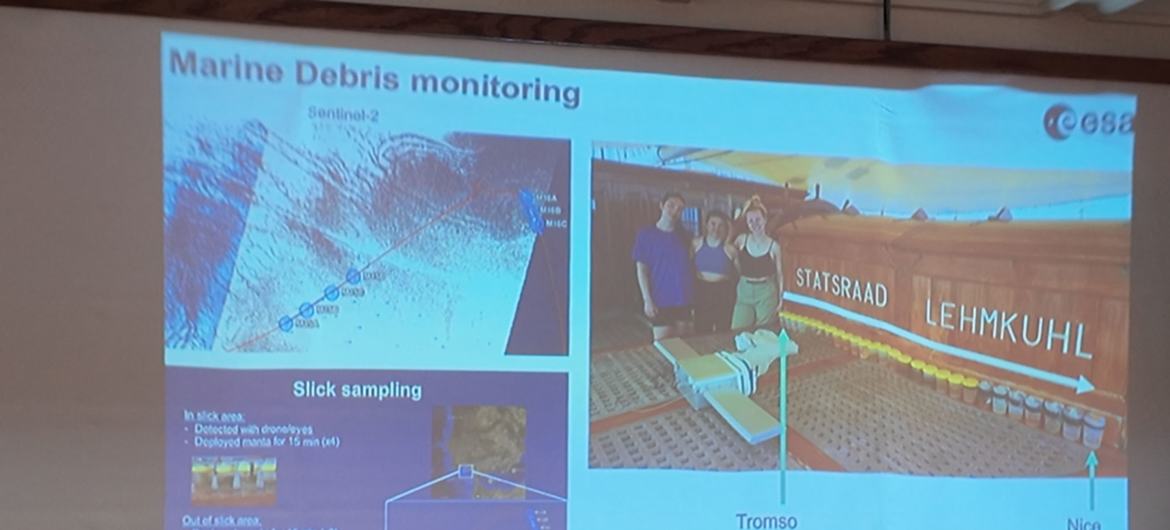
Focused on the increasing abundance and distribution of microplastic pollution in the ocean, Ms. Schaffeld went on to tell UN News that the journey has benefitted her studies as well. “We’ve been passing different seas. We’ve come from the Norwegian Sea and the Arctic Sea, towards the open Atlantic Ocean, and now into the Mediterranean,” she said.

The marine debris monitoring project is conducted by Lena Schaffeld with other two students.

Collecting data along the way, she said she has found more visible plastics in samples taken from the Mediterranean.

“Microplastics are pieces of plastic that are smaller than 5 millimeters, and most of them are invisible,” explained Ms. Schaffeld, who stressed that her work is just beginning and it’s too soon to draw any conclusions.

“Only after [the filtration process] and when I look under the microscope, which is going to happen at the end of this voyage, will we know how much plastic there actually is.”

Looking forward to further studying these samples, she said she will also try to explore ways to use satellite data to detect microplastics in the water, and to lay out a bigger picture about how plastic moves with the currents.

“The water is always moving and plastic on the surface moves along with these currents. So, we’re also going to be applying some numerical modeling to predict or even backtrack [to] where that plastic came from. It’s going to interesting,” she noted with hope.

‘A sustainable ocean is a necessity’

Many students on board the Statsraad Lehmkuhl expressed their gratitude to take part in the training course and to be able to share their stories and experiences as part of UNOC3.

“Bringing the ocean to the people is a job that we’ve tasked our students with,” stressed Mr. Donlon. “They’ve engaged with Peter Thomson, the United Nations Special Envoy (for the ocean). He gave us a mandate to run this course, and we’ve followed that mandate.”

In Mr. Donlon’s eyes, “the UNOC3 is the place where we come together. We discuss the most relevant topics, and we bring a ministerial element to that, to ratify evidence-based decisions”.

He said that he is convinced that the science-based decisions and discussions taking place at the Conference “will make lives and societies stronger”, while at the same time help to protect the environment for future generations. “A sustainable ocean is not a luxury; it is an absolute necessity. There can be no green unless we have a blue thriving ocean,” he reiterated.


Source link

Countries set to adopt ‘vital’ pandemic preparedness accord

The stakes are high for this year’s World Health Assembly, the UN’s premier health forum, where officials will tackle a sweeping agenda – from pandemic readiness and climate-related health risks to mental health, maternal care, and environmental justice. But with geopolitical tensions running high, international collaboration on these and other vital issues will be tested.

Here are some of the key areas set to dominate discussion:

1. ‘Cautious optimism’: Signing off on a pandemic accord

The COVID-19 pandemic showed that there are stark inequities in access to diagnostics, treatments, and vaccines, both within and between countries. Healthcare services were overwhelmed, economies were severely disrupted and nearly seven million lives were lost.

This was the motivation for countries to come together to work on an accord to ensure that the world handles the next pandemic in a fairer and more efficient way. When the delegates arrive in Geneva on Monday 19 May, they will thrash out the text of the agreement, which Tedros Adhanom Ghebreyesus, the head of the World Health Organization (WHO), described as “vital for future generations.”

If the agreement is adopted, it will be a major breakthrough in the way the world handles pandemics and health crises. Negotiations, though, remain politically delicate: several nations, including the United States, have raised concerns about national sovereignty and intellectual property rights. Still, in recent weeks, Dr. Tedros has expressed “cautious optimism” that consensus can be reached.

A woman wearing a mask, Malawi.

2. Climate Change: An existential threat

The climate crisis isn’t just about rising temperatures – it’s putting lives at risk. Extreme weather and disease outbreaks are on the rise, threatening the health of millions. An action plan created by WHO calls for climate and health policies to work together, strengthens resilience, and ensures funding to safeguard vulnerable communities.

A draft version of the plan was released following a resolution adopted at the 2024 conference and, this year, delegates are expected to finalise the draft, which includes strategies to adapt to and mitigate climate-related health risks.

3. Health for all: Getting universal health care back on track

Ensuring that all people have affordable access to the full range of quality health services they need is one of the Sustainable Development Goals (SDGs), which all UN Member States signed up to in 2015. However, the health target is way off track: in fact, improvements to health services have stagnated over the last ten years.

Nevertheless, universal health care (UHC) will be a top priority at the Assembly, where delegates will discuss strategies to strengthen primary healthcare systems, secure sustainable financing and provide care for vulnerable populations.

© WHO/Panos/Eduardo Martino

4. Healthy Beginnings: Maternal and newborn health

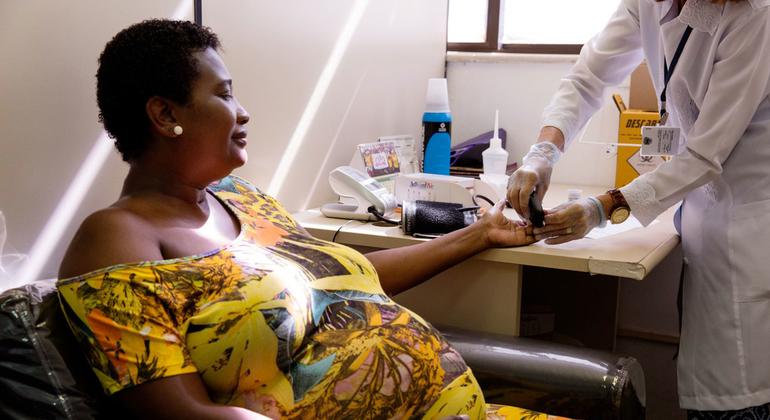
Close to 300,000 women lose their life due to pregnancy or childbirth each year, while over two million babies die in their first month of life In April, WHO launched a year-long campaign to end preventable maternal and newborn deaths.

Titled “Healthy beginnings, hopeful futures,” it will urge governments and the health community to ramp up efforts to end preventable maternal and newborn deaths, and to prioritize women’s longer-term health and well-being.

Expect new targets and renewed commitments to end preventable deaths to be announced at the Assembly.

5. Closing the gaps: Noncommunicable diseases

Noncommunicable diseases (NCDs), such as heart disease, cancer, and diabetes, kill tens of millions of people each year. Around three-quarters of those deaths are in low and middle-income countries.

Many lives could be saved if more countries had strong national responses, providing detection, screening and treatment, as well as palliative care.

In preparation for a WHO meeting on NCDs and mental health in September, delegates will review the way the UN health agency collaborates with governments, civil society, and the private sector to prevent and control these diseases, and address ways to improve access to essential medicines and health technologies.

6. Getting the finances in order

This year has been described as one of the most challenging ever at the UN, which is being buffeted by extreme pressures on its finances. The US, a major donor announced that it would be leaving WHO in January, and other countries have also cut development and aid funding.

This year’s Assembly will see Member States negotiating a 50 per cent increase in the base budget, something that has been in the works since the 2022 meeting. If a funding boost is approved, it will provide a vital boost to at a challenging time.  WHO is also seeking additional voluntary contributions, and additional pledges are anticipated from member states and philanthropic organisations.

Follow the sessions at the World Health Assembly here