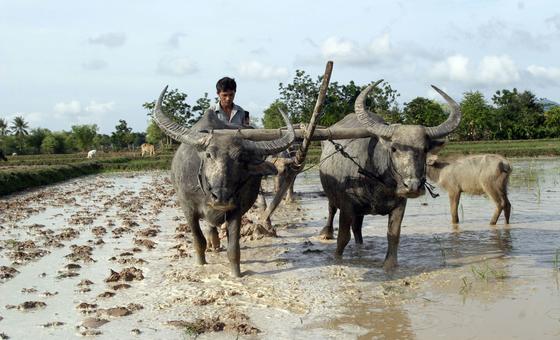
Backed by the new Awaza Programme of Action, the Third UN Conference on Landlocked Developing Countries or LLDC3 will push for freer transit, smarter trade corridors, stronger economic resilience and fresh financing to lift development prospects for the 570 million people living in those countries.
For landlocked nations, geography has long dictated destiny.
Trade costs are up to 74 per cent higher than the global average and it can take twice as long to move goods across borders compared to coastal countries. As a result, landlocked nations are left with just 1.2 per cent of world trade.

And amid global economic shifts, these countries face the huge risk of being left behind.
“LLDC3 is a pivotal opportunity to reverse this trajectory,” said Rabab Fatima, UN High Representative for Landlocked Developing Countries.
“At its heart, this conference is about people – it is about the millions of children who lack internet or digital tools, the farmers who cannot get their goods to market because of poor roads, and the entrepreneurs whose dreams are held back by border delays and limited access to funding.”
Broad engagement
The four-day event, from 5 to 8, August will feature plenary sessions, five high-level roundtables, and a Private Sector Forum focused on building partnerships and boosting investment.
Dedicated forums with parliamentarians, women leaders, civil society and youth will bring voices from across society into the heart of the discussions.
UN Secretary-General António Guterres is expected to attend, underlining the urgency of the agenda.

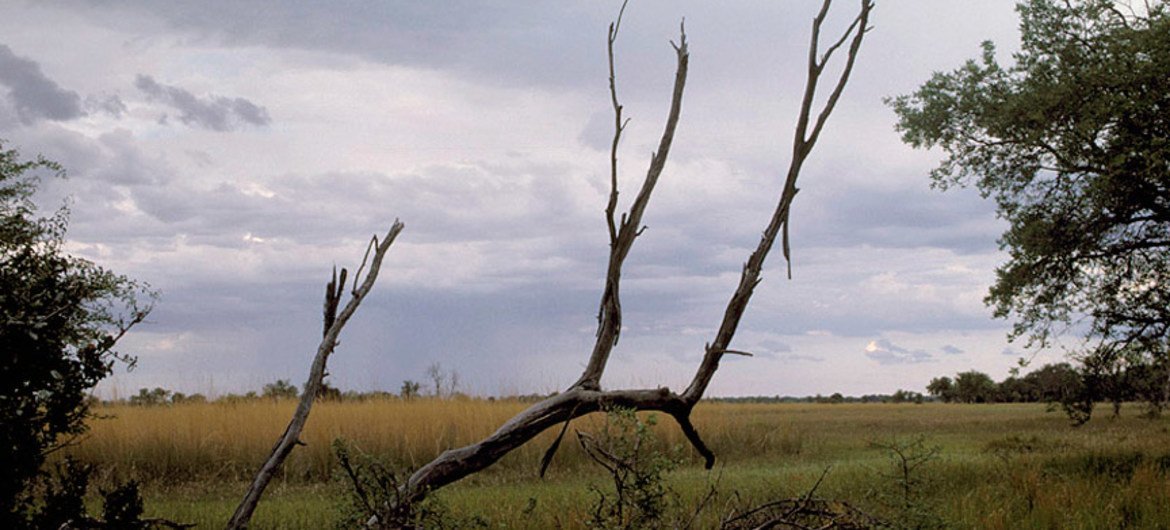
Many landlocked countries, such as Botswana (pictured) are also on the frontlines of the impact of climate change, highlighting their vulnerability.
The Awaza Programme of Action
Central to the conference is the Awaza Programme of Action for 2024-2034, adopted by the UN General Assembly in December.
It lays out five priority areas – structural transformation, infrastructure and connectivity, trade facilitation, regional integration, and resilience building – supported by five flagship initiatives.
These include:
- A global infrastructure investment facility to close financing gaps.
- Regional agricultural research hubs to boost food security.
- A high-level UN panel on freedom of transit, ensuring smoother cross-border flows.
- Digital connectivity initiatives to bridge the digital divide.
- A dedicated landlocked developing countries trade work programme at the WTO.
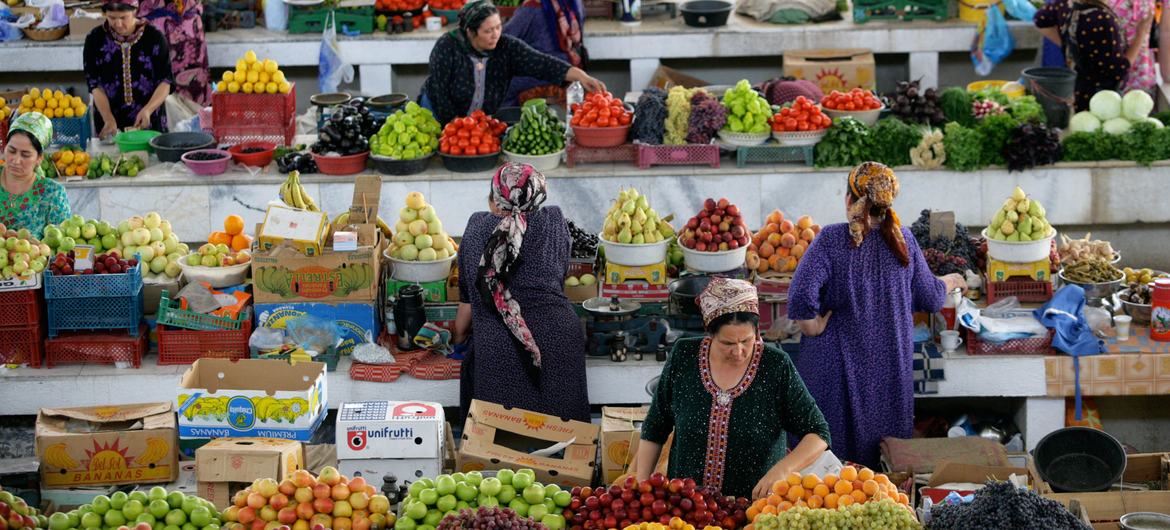
Women shop at a vegetable market in Ashgabat, the capital of Turkmenistan. Boosting food security is one of the priority areas of the Awaza Programme of Action.
Turkmenistan
For Turkmenistan, hosting LLDC3 is both a diplomatic milestone and a statement of intent.
“We are proud to host it on the Caspian Sea coast in Turkmenistan,” said Aksoltan Ataeva, Ambassador and Permanent Representative to the UN.
“We look forward to welcoming [everyone] to Awaza for a transformative, action-oriented conference that puts landlocked countries at the heart of global partnerships.”
Organizers promise state-of-the-art facilities, cultural showcases and networking spaces designed to spur collaboration. Delegates will also experience Turkmen heritage firsthand, from local art to Caspian cuisine.
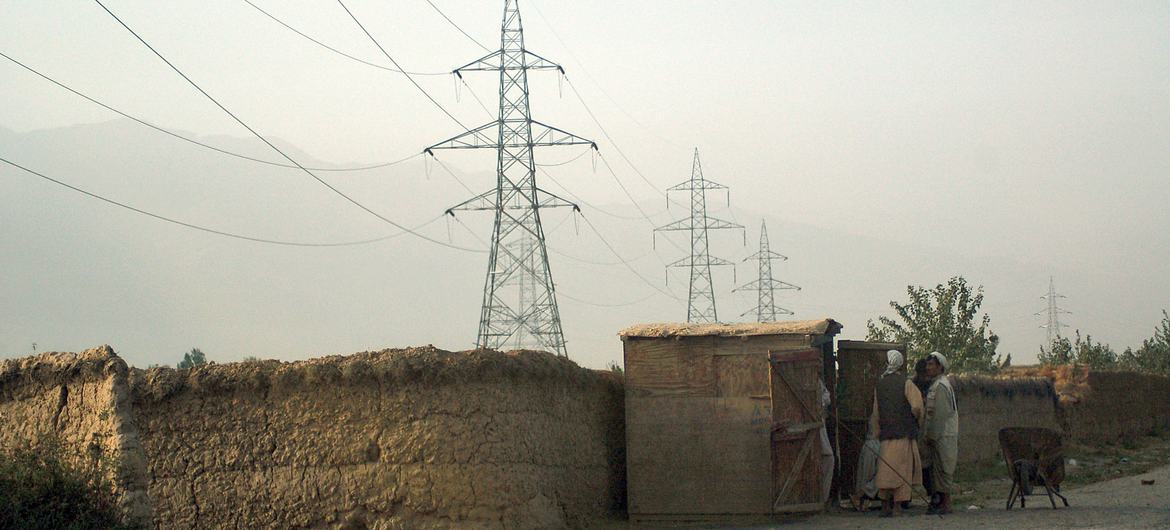
Cross-border infrastructure, such as these power lines, are crucial connections linking LLDCs with the regional and global electric grids.
The bigger picture
For the landlocked developing countries, the stakes are existential.
These countries are among the most climate-vulnerable, least connected and furthest from global value chains. Without bold action, progress on the 2030 Agenda for Sustainable Development will remain out of reach.
“The destiny of humanity is inseparably linked to the destiny of these countries,” said Diego Pacheco, Ambassador of Bolivia, who currently chairs the LLDC Group at the UN.
“Together, we can unlock the potential of landlocked developing countries – not just for the benefit of our nations, but for the shared future of all humanity and the Mother Earth.”
As the countdown to Awaza begins, expectations are high – not about whether geography matters (it does), but whether global solidarity can transcend its limits.
LLDC3 aims to prove that it can.

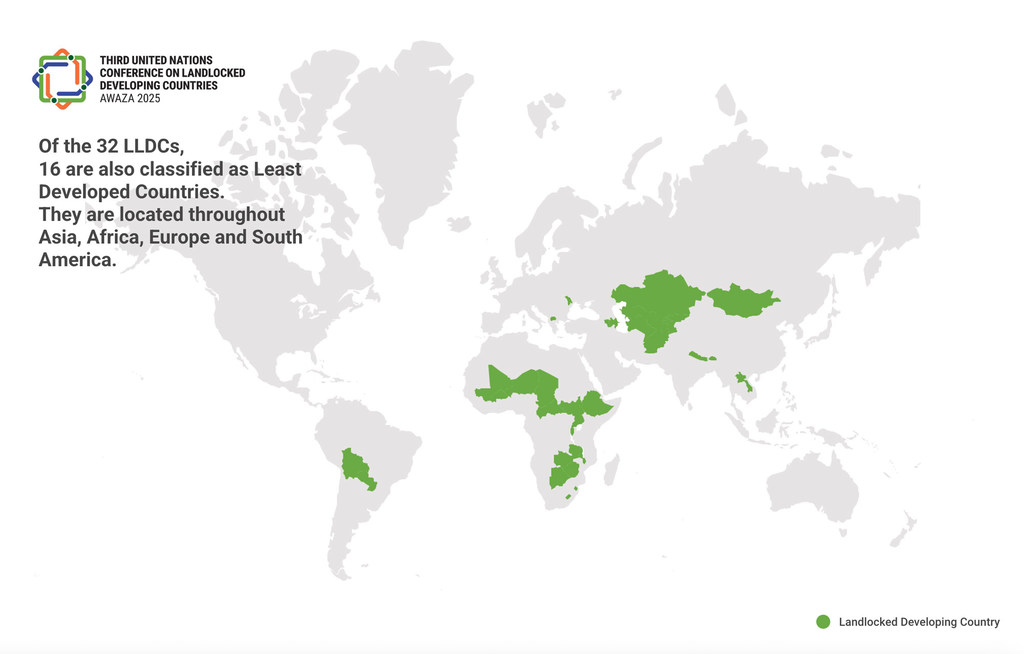
There are 32 landlocked developing countries, of which 16 are also least developed.