Communities struggle to rebuild following Pakistan’s worst floods

As communities struggle to rebuild, many have little time to grieve the immense losses they have suffered.  

Since June, over six million people in Pakistan have been affected by what have been described as “unusually heavy monsoon rains” which have claimed nearly 1,000 lives, including about 250 children.

Residents are still recovering from flash floods that turned streams into roaring rivers of mud, with many displaced still sheltering in Government-run camps or with host families who are already stretched to their limit.

In the Buner district of northern Pakistan, dozens perished in Bishnoi village under boulders and debris when flash floods came crashing down the slopes, sweeping away homes and lives in a matter of minutes.

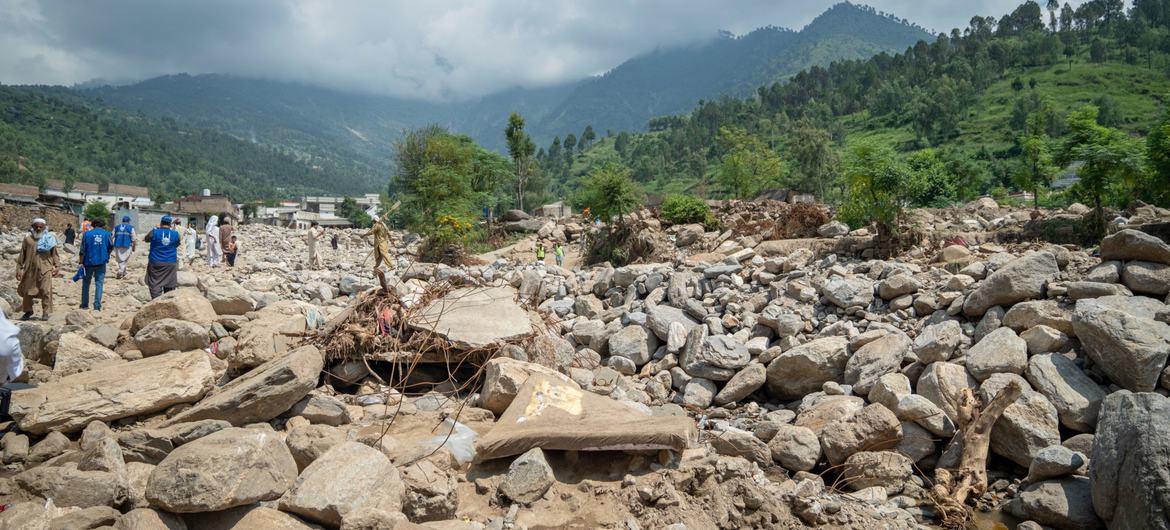
In Buner, northern Pakistan, flash floods turned mountain streams into fields of boulders, with iron rods protruding like rusted crops.

“We had never seen anything like this,” said 35-year-old Habib-un-Nabi, a teacher from Bishnoi village.  

His simple words carry the weight of grief and disbelief. Habib lost eighteen family members in a single day, including his parents and brother.

Those who survived barely had time to mourn. “We were too busy trying to dig out others, to help whoever we could,” recalled Habib.  

IOM support  

The International Organization for Migration (IOM) in Pakistan began humanitarian operations in the northern flood-affected areas, where hundreds of lives were lost and thousands were left homeless.  

In Punjab – Pakistan’s most populous province and the hardest hit in terms of infrastructure damage during the 2025 floods – IOM worked with partners and through the Common Pipeline, a shared humanitarian logistics system that stores and delivers emergency goods.  

Between August and September 2025, the UN migration agency distributed nearly 14,000 family relief kits tailored to local needs across all four provinces under a single project.

These interventions are part of broader efforts to help communities adapt to a climate crisis that is increasingly human-driven, fuelled by deforestation, rapid urbanisation, and the degradation of natural drainage systems.  

In Naseer Khan Lolai, a village in Kashmore, 65-year-old Ali Gohar has lived through many floods, yet none has been as devastating as this one.  

Entire homes collapsed, cattle were swept away, and the land – owned by local landlords – left farmers like him with little control over their recovery.  

As floods and heatwaves intensify across Pakistan, communities are showing that adaptation is not only possible but essential, turning the human cost of climate change into a call for shared responsibility and stronger action.  

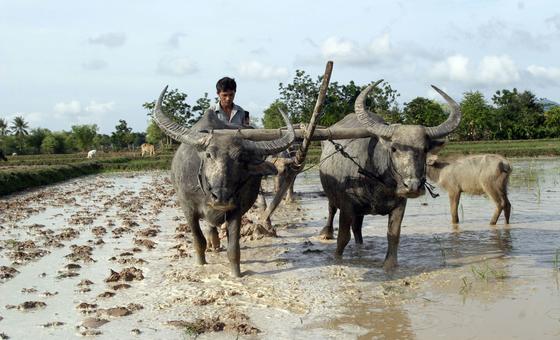
Landless and locked out: Young farmers struggle for a future

However, this creates challenges by limiting land access for the next generation and diminishing their voice in agricultural policymaking. Without land assets, young people struggle to secure the resources needed to become agricultural producers themselves.

Between 2005 and 2021, the number of youth employed in agrifood jobs declined by 10 per cent, prompting concerns for food production worldwide.  

This is the challenge, examined by the UN Food and Agriculture Organization (FAO)’s inaugural report on youth in agrifood systems examines. Released on Thursday, the report offers insights into the status of youth producers and the challenges they face.  

“Because youth are the next generation of producers, consumers, processors of food, service providers, it is really important to understand how they can benefit from and contribute to agrifood systems,” said Lauren Phillips, deputy director of rural transformation and gender equality at FAO.  

Key agents of change

With over 1.3 billion people worldwide between the ages of 15-24 – and 46 per cent of them living in rural areas – youth can be “key agents of change” for the agrifood sector, which is responsible for producing, processing and transporting the food that sustains the world.  

Agrifood systems currently employ 44 per cent of working youth, especially in low- and lower-middle income countries where 85 per cent of the world’s youth in that age range reside.  

However, over 20 per cent of youth are not in formal employment, education or training, meaning that their potential contribution agrifood and other economic sectors is underutilized.  

Ending worldwide unemployment for these young people could generate $1.5 trillion for the global GDP, $670 billion of which would come from the agrifood sector alone.  

“Young people can drive economic transformation and global prosperity,” said QU Dongyu, Director-General of FAO.  

Vulnerable jobs with low wages

While youth are “key agents of change” for the agrifood sector and the global economy writ large according to the report, they also face many challenges in realizing this potential. 

The next generation of agrifood producers will confront a growing global population requiring more food and increasing climate shocks threatening food supplies.

FAO estimates that 395 million youth live in rural areas expected to see declines in agricultural productivity due to climate impacts.

Despite large numbers employed in agrifood, most youth work in vulnerable jobs: 91 per cent of young women and 83 per cent of young men hold positions that often offer few benefits and are seasonal.

Give youth a reason to pick agrifood

Low wages and hazardous conditions discourage continued employment and drive migration to urban centers.

“Policies really need to make sure that they invest in preparing young people with skills and education so that they can have decent jobs in agrifood systems,” Ms. Phillips said.  

One major barrier for youth aspiring to become producers is lack of social and financial capital – policy makers often overlook youth voices, and young people struggle to access loans, banking services, and land deeds.

Youth involvement in policymaking can sometimes feel “tokenistic.” The report highlights that collective action—whether through informal networks or formal unions and cooperatives—can amplify youth voices.

It also calls for expanded training and restructuring financial systems to improve access for young people.

“FAO is unconditionally committed to stepping up its work with and for youth to ensure their voices are heard and that their participation in and contribution to sustainable and inclusive agrifood systems are fully harnessed,” FAO Director-General QU said.  

Source link

Gaza: Women and girls struggle to manage their periods amid crisis

Globally, 1.8 billion people menstruate, yet for many, especially in crises zones, it’s far more than an inconvenience.

In war-torn Gaza, around 700,000 women and girls of menstruating age, including thousands experiencing their first period, face this challenge under relentless bombardment and in cramped, unsanitary conditions with little privacy.

A human rights issue

The United Nations’ sexual and reproductive health agency, UNFPAwarns that the lack of access to menstrual products, clean water, and soap makes it nearly impossible for women and girls to manage their periods with dignity.

Since March, Israel’s aid blockade has depleted hygiene supplies in Gaza, including sanitary pads. The authorities temporarily lifted the ban last month and UN agencies were able to bring in limited amounts of items such as flour and medicine.

Since the end of May, aid is now being distributed through a system backed by the United States and Israel, bypassing the UN and other humanitarian agencies, but it falls far short of what is needed.

Nearly 90 per cent of the territory’s water and sanitation infrastructure has been damaged or destroyed, and fuel for water pumping is no longer available.

Women stand in a damaged displacement settlement in Khan Younis, Gaza.

“I sat in silence crying”

Speaking to UNFPA, a young girl recalled getting her period while sheltering in a crowded displacement camp.

“I only had one pad, so I wrapped it in toilet paper to make it last. I couldn’t wash, and the pain was horrible. I sat in silence crying until the end of the day.”

As nine in 10 households face extreme water shortages, the lack of clean water, soap, and privacy has turned menstruation into a source of anxiety, isolation, and shame. “Sometimes I need pads and soap more than I need food,” said Aisha*, a displaced girl.

Desperate measures, dangerous consequences

With less than a quarter of the over 10 million sanitary pads needed each month available, women and girls are forced to improvise. Many use torn clothes, sponges, or old rags, often without proper cleaning.

“I tore my only shirt into pieces so my daughters could use them instead of pads,” shared a father of four displaced from Jabalia.

These makeshift solutions are not only painful and undignified, but they can also cause infections and long-term reproductive health issues. With the health system on the brink of collapse, thousands of women may go untreated.

The psychological burden is equally severe. “Every time my period comes, I wish I weren’t a girl,” said one of the girls.

Stripping away dignity

Speaking from a health care perspective, but also as a woman, a doctor in Gaza described treating women coping with menstruation, pregnancy, and childbirth under horrifying conditions.

“These should be natural experiences, not sources of distress and pain. I see strength in women’s eyes, but I also see deep pain and the stripping away of dignity,” she said.

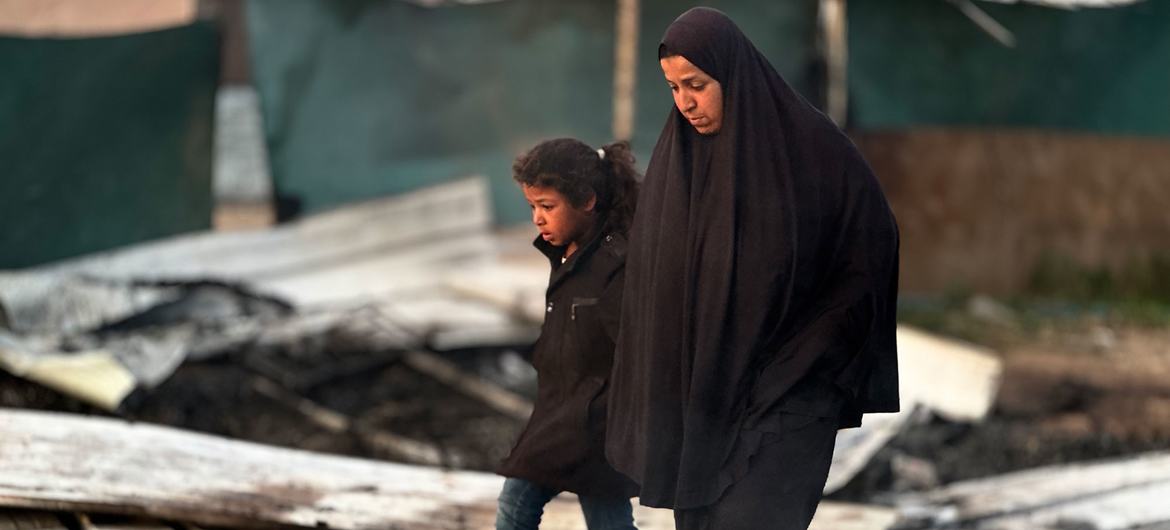
A woman and child walk through the rubble of Gaza.

In emergencies, women and girls are among the most vulnerable. According to UN agencies, they face heightened risks due to displacement and the breakdown of normal protection structures and support. They also face increased care-related tasks such as providing food and water.

“Food keeps us alive, but pads, soap, and privacy let us live with dignity,” said Maysa*, a displaced woman in Khan Younis. “When we receive hygiene kits, it feels like someone finally sees us.”

How UNFPA is responding

As a frontline responder, UNFPA is working to ensure menstrual health is integrated across humanitarian efforts in Gaza. Since October 2023, the agency has provided more than 300,000 women and girls with two-month supplies of disposable menstrual pads and distributed postpartum kits to over 12,000 new mothers.

Yet, three months into a total aid blockade, stocks were nearly exhausted. With border crossings closed, hygiene kits are no longer reaching those in need. The recent entry of some aid distributed by the Gaza Humanitarian Foundation included food, flour, medicine and nutrition support according to media reports.

The UN continues to call for urgent support for women and girls caught in some of the world’s most neglected crises.

*Names have been changed for protection.

Ukraine’s frontline families struggle to cultivate mined fields amid conflict

According to the UN, many frontline Ukrainian families are at risk of missing critical planting and harvesting windows.

“Agriculture is a fabric of rural society. It’s not just a way to make a living – it’s a way of being. And vulnerable rural families are holding on. They need support not just to survive, but to thrive and rebuild,” said Rein Paulsen, Director of Emergencies and Resilience at the UN Food and Agriculture Organization (FAO) during a recent visit to Ukraine.

Rural households across Ukraine – many headed by an elderly relative or woman – depend on agriculture for survival, often tending a single cow or a small flock of chickens.

But these families are among the most vulnerable and least supported, especially those living near the frontlines.

Hardship growing

As the war provoked by Russia’s invasion of Ukraine enters its fourth year, these households face growing challenges cultivating their land due to anti-personnel mines, land contamination, labour shortages, lack of inputs, shelling and frequent electricity cuts.

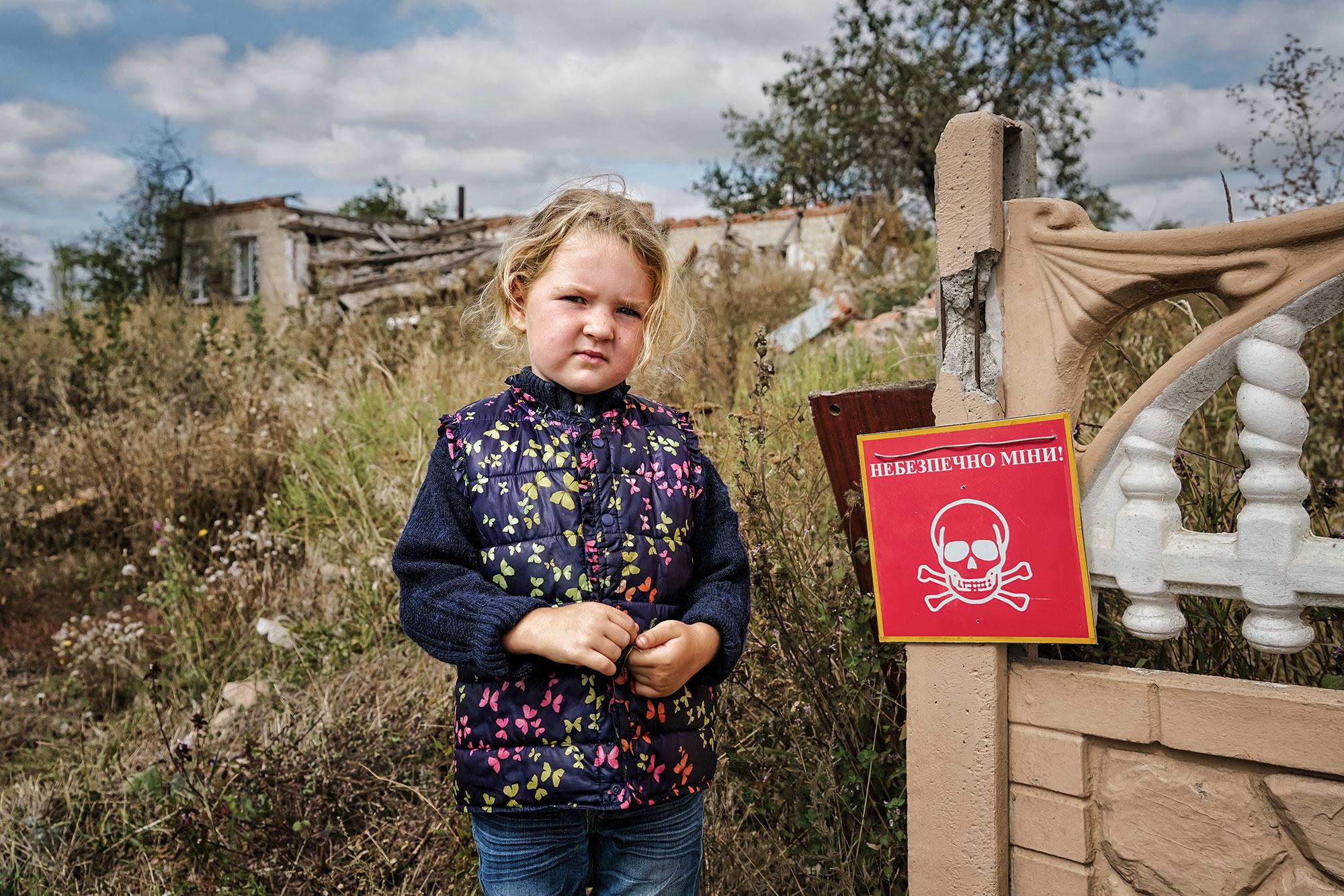
Veronika, 4, stands near a sign that reads “Danger of Mines”. Chistovodivka, Kharkiv region, Ukraine (file, May 2025)

According to the Fourth Rapid Damage and Needs Assessment, Ukraine’s agriculture sector has suffered $83.9 billion in damages and losses since the war began, with an additional $1.6 billion in the irrigation sector. A significant portion of this burden falls on rural households.

Call for support

On Monday, the FAO warned that without urgent and sustained support, thousands of rural households may be unable to plant or harvest on time, jeopardising national food security and rural livelihoods. 

Since the start of the war, FAO has supported more than 250,000 rural families with vegetable seeds, animal feed, day-old chicks, cash and vouchers. Over 15,000 farmers have also received crop seeds, temporary storage, and financial assistance.

In addition, the FAO and partners have worked to survey mined areas, restore access to farmland, and support national systems for monitoring and recovery.

But this assistance is not enough, especially as funding shortfalls limit the full implementation of the FAO’s Emergency and Early Recovery Response Plan for 2025–2026 in Ukraine.

The organization is calling for urgent support to help rural households safely access their land and secure essential resources such as seeds, fertiliser, storage and reliable energy.

This requires more than emergency funds alone – a sustained and coordinated response is needed to meet long-term needs.

Without increased support, these families’ ability to plant, harvest and recover remains under serious threat.

Source link