World News in Brief: Floods in Syria, relief operations in Cuba at risk, ending child labour

According to the relief coordination office, OCHA, rainfall since Saturday caused widespread flooding across parts of Idleb and northern Latakia, damaging around 1,800 tents and destroying at least 150 in camps housing displaced families.

A local hospital was also forced to suspend operations, with patients having been evacuated and mobile medical teams deployed. Authorities have opened shelters and prepared additional housing for families in need.

Humanitarian partners are relocating displaced families, repairing damaged shelters and delivering emergency assistance, including food and non-food items, OCHA said.

In a separate incident linked to the response, a Syrian Arab Red Crescent staff member was killed and five others injured when their vehicle crashed while assisting flood-affected communities.

Displacement still widespread

The flooding comes as displacement persists in other parts of the country.

While fighting has subsided in the governorates of Aleppo, Al-Hasakeh and Ar-Raqqa following a 30 January accord, nearly 160,000 people remain displaced as of 3 February.

Humanitarian access has improved in some areas, but major challenges remain. Electricity outages continue to disrupt water systems, telecommunications are intermittent, food supplies are limited, explosive ordnance is still a threat and schools remain suspended.

Hurricane Melissa struck Cuba in late October 2025, causing massive devastation across the island nation.

Cuba: UN urges funding as fuel shortages strain essential services

The United Nations is calling for urgent funding to support humanitarian operations in Cuba, where fuel shortages following the suspension of supplies from Venezuela are disrupting essential services and hampering recovery efforts following last year’s Hurricane Melissa.

“The UN continues to monitor the situation in the country and is working with the Government to provide more support, including food, water and sanitation, and healthcare,” UN Spokesperson Stéphane Dujarric said at a regular news briefing in New York.

“We are concerned about the growing fuel shortages and their impact on people,” he added, noting that disruptions to the delivery of clean water, medical care, food and other critical aid.

UN action plan

In November 2025, the UN in Cuba launched a Plan of Action to support the national response to Hurricane Melissa, which affected more than two million people – roughly one in five residents nationwide.

The plan focuses on helping families recover and restoring essential services, while supporting longer-term recovery efforts led by national authorities.

The Plan of Action seeks $74 million but is currently only 23 per cent funded.

Global conference seeks renewed push to end child labour

An international effort to accelerate the elimination of child labour will get underway later this week in Morocco, as governments and partners meet to confront a crisis still affecting 138 million children worldwide.

From 11 to 13 February, Morocco will host the sixth Global Conference on the Elimination of Child Labour, led by the UN International Labour Organization (ILO) and bringing together governments, employers’ and workers’ organizations, civil society, the private sector and international partners.

The meeting comes at a critical moment.

According to UN estimates, 138 million children remain in child labour globally, including around 54 million engaged in hazardous work that threatens their health, safety and development. Africa accounts for 87 million of those children.

Agriculture remains the largest driver, accounting for 61 per cent of child labour globally, particularly in smallholder farming.

Child’s place is in school

ILO Director-General Gilbert Houngbo underscored the link between decent work and child protection, saying: “Children belong in school, not in labour. Parents must themselves be supported and have access to decent work so that they can afford to ensure that their children are in classrooms.”

While progress has been made – child labour has nearly halved since 2000 and declined by more than 20 million since 2020 – the world missed the Sustainable Development Goal target to eliminate child labour in all its forms by 2025.

Source link

Mozambique floods heighten disease, malnutrition risks – UN agencies

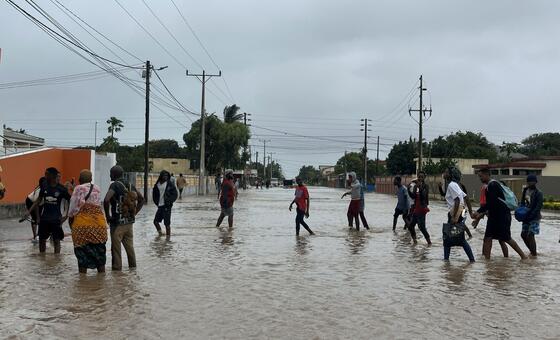
The head of aid coordination office, OCHA, in the country, Paola Emerson, told reporters in Geneva that more than half a million people have been impacted by the floods, triggered by heavy rains in the first weeks of the new year.

“The numbers keep rising as extensive flooding continues and dams keep releasing water to avoid bursting,” she said.

Mozambique’s Gaza province is most affected along with Maputo and Sofala provinces.

‘Melting’ houses

Speaking from Xai-Xai, Gaza’s capital city, Ms. Emerson stressed that 90 per cent of the country’s people live in adobe houses, which are earth-based structures “that basically melt after a few days’ rains”.

Health facilities, roads and critical infrastructure are also heavily impacted. Ms. Emerson said that some 5,000 kilometres of roads have been damaged across nine provinces, including the main road linking the capital Maputo to the rest of the country, which is currently inaccessible, resulting in major supply chain disruptions.

Meanwhile, dams continue to release water even as heavy rains subside.

“From just one dam, up to 10,000 cubic metres-worth of water were being discharged. That is approximately 25 times the amount of water that could be held in the press briefing room you are in today, every second,” Ms. Emerson told journalists, seated in a room with capacity for more than 100 people.

You cannot imagine the strength of this water and the impact it has on people and the infrastructure.

National emergency

The Government of Mozambique has declared a national emergency and has established an emergency operations centre in Gaza province. Xai-Xai, which is near the Limpopo River, has been inundated, prompting evacuations. Ms. Emerson said that authorities have issued alerts for downtown Xai-Xai, “including warnings of crocodile risks in flooded areas”.

“River levels are rising and are reaching urban areas or heavily populated areas,” she said. “The crocodiles that are in the Limpopo River…are able to get into urban or populated areas that are now submerged underwater.

Also speaking from Xai-Xai, the UN Children’s Fund (UNICEF)’s Chief of Communication in Mozambique, Guy Taylor, warned that flooding is “turning unsafe water, disease outbreaks and malnutrition into a deadly threat for children”.

Lethal combination

The combination of waterborne diseases and malnutrition “can often prove lethal,” he said, stressing that even before the floods, four out of every 10 children in Mozambique experienced chronic malnutrition.

“This renewed disruption to food supplies, to health services and to care practices threatens to push the most vulnerable children into a dangerous spiral,” he insisted.

Mr. Taylor added that Mozambique is now entering into its annual cyclone season, creating the risk of a double crisis. “We can prevent disease, deaths and irreversible losses to children, but we need to act fast,” he said.

The UNICEF spokesperson described Mozambique as “a country of children and young people”, with an average age of 17.

“When floods and cyclones strike, as they have repeatedly and with increasing frequency over recent years, it’s the youngest and children who are hit hardest,” he concluded.

Source link

Communities struggle to rebuild following Pakistan’s worst floods

As communities struggle to rebuild, many have little time to grieve the immense losses they have suffered.  

Since June, over six million people in Pakistan have been affected by what have been described as “unusually heavy monsoon rains” which have claimed nearly 1,000 lives, including about 250 children.

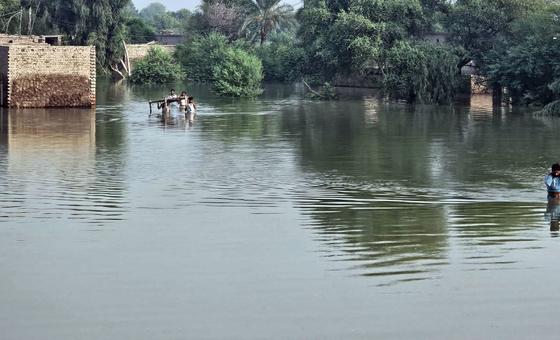
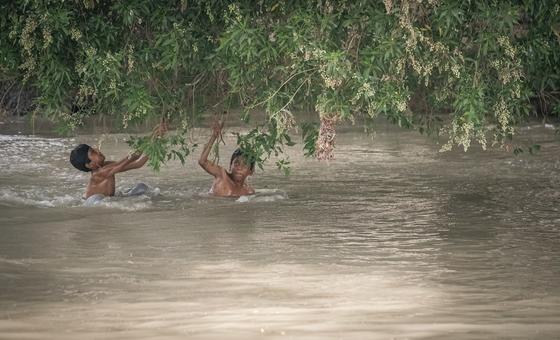
Residents are still recovering from flash floods that turned streams into roaring rivers of mud, with many displaced still sheltering in Government-run camps or with host families who are already stretched to their limit.

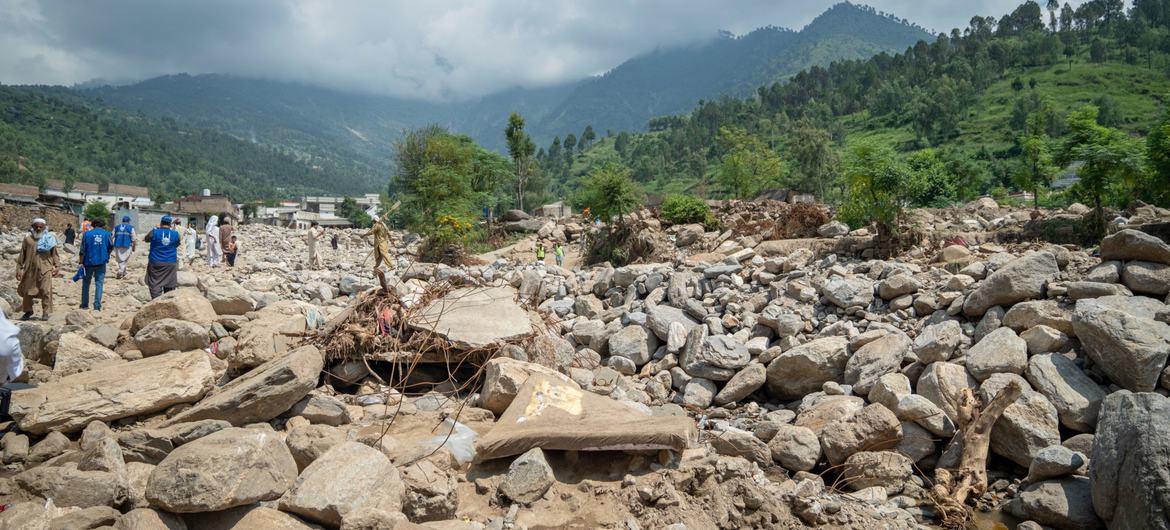
In the Buner district of northern Pakistan, dozens perished in Bishnoi village under boulders and debris when flash floods came crashing down the slopes, sweeping away homes and lives in a matter of minutes.

In Buner, northern Pakistan, flash floods turned mountain streams into fields of boulders, with iron rods protruding like rusted crops.

“We had never seen anything like this,” said 35-year-old Habib-un-Nabi, a teacher from Bishnoi village.  

His simple words carry the weight of grief and disbelief. Habib lost eighteen family members in a single day, including his parents and brother.

Those who survived barely had time to mourn. “We were too busy trying to dig out others, to help whoever we could,” recalled Habib.  

IOM support  

The International Organization for Migration (IOM) in Pakistan began humanitarian operations in the northern flood-affected areas, where hundreds of lives were lost and thousands were left homeless.  

In Punjab – Pakistan’s most populous province and the hardest hit in terms of infrastructure damage during the 2025 floods – IOM worked with partners and through the Common Pipeline, a shared humanitarian logistics system that stores and delivers emergency goods.  

Between August and September 2025, the UN migration agency distributed nearly 14,000 family relief kits tailored to local needs across all four provinces under a single project.

These interventions are part of broader efforts to help communities adapt to a climate crisis that is increasingly human-driven, fuelled by deforestation, rapid urbanisation, and the degradation of natural drainage systems.  

In Naseer Khan Lolai, a village in Kashmore, 65-year-old Ali Gohar has lived through many floods, yet none has been as devastating as this one.  

Entire homes collapsed, cattle were swept away, and the land – owned by local landlords – left farmers like him with little control over their recovery.  

As floods and heatwaves intensify across Pakistan, communities are showing that adaptation is not only possible but essential, turning the human cost of climate change into a call for shared responsibility and stronger action.  

‘No end’ expected to floods and storms as global heating continues

Water-related hazards continue to cause major devastation this year,” said Celeste Saulo, WMO Secretary-General. “The latest examples are the devastating monsoon flooding in Pakistan, floods in South Sudan and the deadly flash floods in the Indonesian island of Bali. And unfortunately, we see no end to this trend.”

Ms. Saulo highlighted that these emergencies have been happening amid increasingly warm air temperatures, which allow more water to be held in the atmosphere leading to heavier rainfall.

Her comments coincided with the publication of a new WMO report on the state of the world’s waterways, snow and ice which notes that 2024 was the hottest in 175 years of observation, with the annual mean surface temperature reaching 1.55 °C above the pre-industrial baseline from 1850 to 1900.

Storm Boris legacy

Against this backdrop in September 2024, central and eastern Europe experienced devastating flash-floods caused by deadly Storm Boris which uprooted tens of thousands of people. Similar disasters are likely to happen more often, even though they should – in theory – be extremely rare.

In the Czech Republic, several rivers flooded in an extreme fashion “that actually statistically should only occur every 100 years,” said Stefan Uhlenbrook, WMO Director of Hydrology, Water and Cryosphere Division.

A ‘century event’ happened…unfortunately, statistics show that these extreme events might become even more frequent,” he said, his comments echoing uncertainty over global water security, linked to the WMO report’s findings that only one-third of the world’s river basins have been at “normal” levels. 

Himalayan deluge

Another example of the increasingly erratic behaviour of the world’s water cycle is the extremely heavy rainfall that has affected parts of Himachal Pradesh or Jammu and Kashmir.

The region saw extremely heavy rainfall when it was not expected; the monsoon came early,” said Sulagna Mishra, WMO Scientific Officer. “So, this is what we are talking about as the unpredictability of the system is growing, more and more.”

Turning to the impact of last year’s pronounced El Niño weather phenomenon, WMO’s report indicates that it contributed to severe drought in the Amazon basin last year.

Equally, northwest Mexico and the northern part of North America saw below-average rainfall, as did southern and southeastern Africa.

“El Niño at the start of 2024 played a role,” explained Ms. Saulo, “but scientific evidence shows that our changing climate and rising temperatures lead to more extreme events, both droughts and floods.”

Our connected world

The WMO report’s other findings confirm wetter-than-normal conditions over central-western Africa, Lake Victoria in Africa, Kazakhstan and southern Russia, central Europe, Pakistan and northern India, southern Iran and north-eastern China in 2024.

One of the key messages of the UN agency report is that what happens to the water cycle in one part of the world has a direct bearing on another.

Melting glaciers continue to be a major concern for meteorologists because of the speed at which they are disappearing and their existential threat to communities downstream and in coastal areas.

“2024 was the third straight year with widespread glacial loss across all regions,” Ms. Saulo said. “Glaciers lost 450 gigatonnes, this is the equivalent of a huge block of ice seven kilometres in height, seven kilometres wide and seven kilometres deep, or 180 million Olympic swimming pools, enough to add about 1.2 millimetres to global sea level, increasing the risk of floods for hundreds of millions of people on the coasts.”

The report also highlights the critical need for improved data-sharing on streamflow, groundwater, soil moisture and water quality, which remain heavily under-monitored.  

‘Deadly floods’ displace over 100,000 in South Sudan

In recent weeks, widespread flooding has engulfed large parts of Jonglei, Upper Nile and Unity states in the north of the country.

The agency’s representative in South Sudan, Marie-Helene Verney, said that “if the flooding continues, up to 400,000 people are likely to be displaced by the end of the year, exceeding flood displacement levels seen in 2024.”

The situation is expected to be at its worst between September and October and threatens to “cut off entire communities, exacerbate hunger and heighten protection risks, particularly for women and girls,” Ms. Verney added.

For several years, South Sudan has faced an ongoing humanitarian crisis due to underdevelopment, disasters and conflict that has displaced many communities. Recurrent floods have exacerbated this displacement, destroyed homes, and threatened livelihoods across the nation.

“Homes, schools, health facilities, farmlands, and pastures have been flooded,” said the UNHCR representative, “devastating livestock and inundating safe water sources and latrines, which have worsened sanitation and heightened health risks.”

Stagnant water, combined with limited access to safe drinking water, is raising the threat of further disease outbreaks on top of the ongoing cholera crisis, which had already affected over 12,000 internally displaced persons (IDPs) and 3,100 refugees by the end of August.

UN continues providing aid

In 2025, UNHCR, in collaboration with the South Sudanese authorities and UN partners, has continued to provide life-saving aid, including cash, emergency shelters, and plastic sheeting to 150,000 of the most vulnerable flood-affected individuals.

Over the past five years work has been carried out to mitigate flood impacts by reinforcing dykes, prepositioning supplies, supporting livelihoods, and assisting displaced communities, including IDPs.

UNHCR has appealed for more funds to carry out its life-saving work. As of 31 July, it had only received a third of the nearly $300 million required to protect and assist displaced people and local host communities in the country.

In Unity state, which is 70 per cent underwater, UNHCR has significantly scaled down operations due to the funding shortfall, leaving thousands of people in a more precarious situation.

Supporting climate resilience

To mitigate the ongoing crisis in South Sudan, the United Nations Office for Project Services (UNOPS) recently signed a $9.9 million Climate Resilience Project in South Sudan with the Ministry of Water Resources.

UNOPS continues to support efforts to strengthen climate resilience and assist flood-affected and refugee-hosting communities in South Sudan.


World News in Brief: Pakistan floods, countries lag on climate reporting, concern over attack on peacekeepers in south Lebanon, cuts hit human rights investigations

In a statement released by his Spokesperson, the UN chief noted that the disaster driven by severe monsoon conditions had been exacerbated by climate change, impacting around 1.5 million people.

Hundreds of thousands of people need humanitarian aid while more than 3,000 homes, over 400 schools and some 40 health facilities have suffered some level of damage.

Solidarity with the people

“The Secretary-General commends Pakistani authorities for relocating more than one million people in Punjab. He expresses his solidarity with the Government and people of Pakistan, extends his heartfelt condolences to the families of those who have lost their lives, and wishes a swift recovery to those who have been injured.”

The UN and other humanitarian organizations are working closely with the Pakistani authorities to assess the full impact of the floods on communities, identify further needs and also address any gaps in the response.

The UN’s Emergency Relief Coordinator, Tom Fletcher, has released $600,000 from the Regional Humanitarian Pooled Fund for relief and recovery efforts, and discussions are underway with the Government on a specific response plan.

Dozens of countries lag on climate reporting, warns UN climate chief

UN Climate Change Executive Secretary Simon Stiell has warned that 37 countries have yet to submit one or more mandatory reports under the Paris Agreement’s transparency framework, stressing that “no country can be left behind.”

Speaking at the Global Transparency Forum in Songdo, Republic of Korea, the UNFCCC chief said the Enhanced Transparency Framework (ETF) is not just technical bookkeeping but “a vital enabling tool” for stronger climate action.

It helps governments attract investment, design more ambitious policies and accelerate progress on clean energy and resilience, he added.

‘Smart investment’

To date, more than 100 nations have submitted their first Biennial Transparency Reports (BTRs), which Mr Stiell called a “smart investment” bringing economic and social benefits.

Over 10,000 experts from 140 developing countries have received training on the ETF, with 1,200 certified reviewers and 1,400 officials now using its tools.

The first global synthesis of BTRs will be published ahead of November’s COP30 climate change conference in Brazil, offering an early snapshot of progress on mitigation, adaptation and support. Mr Stiell said the findings would guide the next Global Stocktake.

“What is measured can be acted upon. What is reported helps build trust. And what is shared becomes a force for change,” he stressed.

Lebanon: UN voices serious concern over Israeli attack on peacekeepers

The UN has expressed serious concern over an Israeli attack on peacekeepers clearing roadblocks in southern Lebanon on Tuesday.

Briefing reporters in New York on Wednesday, UN Spokesperson Stéphane Dujarric said Israeli military drones had dropped grenades in the vicinity of peacekeepers serving with the UN mission, UNIFIL, “who were carrying out mandated tasks in support of implementation of Security Council resolution 1701.”

That’s the resolution which authorises peacekeepers to monitor the cessation of hostilities agreement between Israel and Hezbollah of 2006 and support the Lebanese armed forces as Israel withdrew from southern Lebanon. UNIFIL patrols the Blue Line of separation.

In a statement on social media, UNIFIL described the drone attack as one of the most serious on its personnel since the cessation of hostilities agreement between the two sides last November. The mission stressed that Israeli forces had been informed in advance of the road clearance work.

Drones crossed into Israel

“One grenade impacted within 20 metres and three within approximately 100 metres of UN personnel and vehicles,” said the UN Spokesperson.

“The drones were then observed returning south of the Blue Line. Thankfully, none of our colleagues were injured.”

The Secretary-General stresses that any acts which endanger peacekeepers’ lives are “completely unacceptable”, Mr. Dujarric continued.

UN chief António Guterres is also demanding that the parties uphold their responsibilities “to ensure the safety and security of the peacekeepers and inviolability of UN premises.”

Funding cuts hampering the work of the Human Rights Council, says President

The Human Rights Council is set to meet on Monday in Geneva – an opportunity for UN Member States to discuss action to address conflicts around the world, as well as other issues of global importance, from climate change to disability rights.

Important as this work is, it’s feared that cost-cutting measures that are already affecting UN agencies and bodies like the Council could limit its reach, President Jürg Lauber told journalists on Wednesday.

This includes independent rights investigators known as Special Rapporteurs, he said: “When the Council decides to have an investigative mechanism or a special rapporteur or an issue, they need resources,” he said.

Research, travel impacted

“They need they get support from the Secretariat to do research, to write reports. They need to travel to a country to see the situation. There’s also less money available, which means they don’t get necessarily all the research and assistance they need to do their work,” he continued.

Mr. Lauber said it was “very clear” that dwindling financial resources were impacting meetings during Council sessions and the basic implementations of investigative mandates.

He added that the funding cuts could also prevent people or groups in countries of concern from sharing their testimonies with investigators.

And he noted that reduced funding could also limit how much technical support and advice the Council is able to give to governments seeking to promote and protect human rights.

Source link

World News In Brief: Iran sanctions, Yemen floods appeal, new SDG advocates

“I can tell you that the Secretary-General is aware that today, the Security Council received this joint letter from the three countries,” UN Spokesperson Stéphane Dujarric told journalists.

The three European nations were signatories to the 2015 Joint Comprehensive Plan of Action (JCPOA), an agreement that granted Iran sanctions relief in exchange for strict limits on uranium enrichment, stockpile levels and centrifuge use, alongside robust monitoring and verification by the International Atomic Energy Agency (IAEA).

Snapback clause

The agreement includes a so-called “snapback mechanism” that allows for the reinstatement of sanctions within 30 days if Iran is found to be non-compliant. 

“The Secretary-General urges the JCPOA participants and the Security Council to continue negotiations to find a diplomatic solution that ensures the peaceful nature of the Iranian nuclear programme and brings about economic benefits to the people of Iran,” Mr. Dujarric said.

He said the coming weeks offer “a window of opportunity” to deescalate tensions and pursue a peaceful resolution.

The Secretary-General also underscored the urgency of avoiding a renewed military conflict, and prioritising dialogue. 

In Yemen, IOM appeals for support amid deadly flooding

The UN migration agency, IOM, appealed on Thursday for international support for war-ravaged Yemen, after violent storms devastated communities, destroying homes and sweeping away livelihoods.

Latest assessments by the International Organization for Migration across 73 displacement sites indicate that well over 46,000 people have been affected.

Yemen has been in crisis since Houthi rebels took up arms against the internationally-recognised Government, seizing control of the capital Sanna’a in 2014.

An uneasy truce largely holds but clashes continue internally, together with Houthi attacks on Red Sea shipping and exchanges of airstrikes with Israel rooted in the Gaza conflict.

‘Another devastating blow’

“The floods in Yemen are another devastating blow for families who have already lost so much,” said Abdusattor Esoev, IOM’s Chief of Mission in Yemen.

The governorates of Ibb, Sana’a, Ma’rib, Al Hodeidah, and Ta’iz are among the worst hit, with floods damaging homes, farmland, and public infrastructure.

The latest crisis in Yemen mirrors last year’s devastating floods, which caused widespread damage and loss of life.

This year’s storms have been even more intense and demonstrate how climate change is deepening vulnerabilities across the country and pushing communities further into crisis, IOM said.

UN chief welcomes two new sustainability advocates

The UN chief welcomed two new Sustainable Development Goals (SDGs) advocates on Thursday: Masai Ujiri, Co-Founder of Giants of Africa and former Vice-Chairman and President of the Toronto Raptors; and Muniba Mazari – an award-winning advocate for disability rights, inclusion, and gender equality.

“The SDG Advocates play a vital role in inspiring global action and ambition to achieve the Sustainable Development Goals,” said Secretary-General António Guterres.

Through his non-profit Giants of Africa, Mr Ujiri uses basketball as a transformative tool to create opportunities for youth across Africa and beyond.

“Sport doesn’t just unite people – it breaks down barriers, builds hope and transforms entire communities,” he said.

Pakistan’s ‘Iron Lady’

Ms Mazari, known as the “Iron Lady of Pakistan” has inspired millions through her personal story and her commitment to championing marginalised communities after a spinal cord injury left her using a wheelchair.

“Inclusion is not a privilege; it is a right. I am proud to be an SDG Advocate and to elevate the voices of those who are often unheard,” she said.

Mr Ujiri and Ms Mazari join a global cohort of leaders committed to accelerating progress and inspiring action across all 17 SDGs.

Source link

Pakistan floods leave villages cut off as monsoon devastation continues

Aid agencies are continuing to work tirelessly to reach the hardest-hit areas.

The National Disaster Management Authority (NDMA) said nearly 800 people have died since late June – almost three times the toll during the same period last year.

Khyber Pakhtunkhwa province has been hardest hit, where flash floods and landslides swept away homes and schools in mountainous districts, cutting off entire villages and communities.

Punjab – the country’s most populous province – is also on high alert as rising waters on the Sutlej, Ravi and Chenab rivers threaten downstream communities. Authorities fear that upstream water levels and near-full reservoirs could trigger further flooding in the coming days.

Glacier outbursts compound crisis

In Gilgit-Baltistan, so-called glacier lake outburst floods (GLOFs) have added another layer of devastation – destroying homes, water systems and power infrastructure in remote valleys.

These floods occur when heavy rains or rising temperatures cause glacial lakes to burst through natural barriers, suddenly releasing vast amounts of water and debris. With little warning, they are often catastrophic.

Experts warn that climate change is accelerating glacial melt in the Himalaya–Hindu Kush region, increasing the number and size of unstable lakes and heightening risks of such disasters.

Over a million affected

The humanitarian toll is widespread, with more than one million people affected nationwide.

Many families are sheltering with host communities rather than in relief camps, citing concerns over livestock and schooling. Health workers are reporting surges in malaria, fever and skin infections, stretching fragile health services.

Despite major efforts led by federal and provincial authorities, supported by the UN and humanitarian partners, critical gaps remain.

Communities cut off

The most acute needs are in remote mountain areas, where landslides block access and residents face worsening disease, hunger and water shortages, according to the UN aid coordination office, OCHA.

The UN Children’s Fund (UNICEF) said children face heightened risks, with schools damaged, safe water scarce and protection needs rising. The agency has dispatched hygiene kits and helped restore key water supplies.

The World Health Organization (WHO), for its part, is leading disease surveillance and control operations, in a bid to contain outbreaks.

Monsoon floods kill more than 700 in Pakistan, with heavy rains set to continue

The National Disaster Management Authority has also reported 978 injuries and the destruction or damage of more than 2,400 houses, while over 1,000 livestock have been lost as of Thursday, 21 August.

Severe weather is forecast to continue into early September, raising the risk of further flooding, landslides and crop losses, according to the UN Office for the Coordination of Humanitarian Affairs (OCHA).

Khyber Pakhtunkhwa hit hardest

The northwestern province of Khyber Pakhtunkhwa has borne the brunt of the disaster. 

Authorities declared a state of emergency in nine districts, including Buner, Shangla and Mansehra, after torrential rains between 15 and 19 August left 368 people dead, 182 injured and damaged more than 1,300 homes. Nearly 100 schools were also destroyed.

The international charity CARE said its teams found widespread devastation in Buner, where families reported homes and livelihoods swept away within minutes by torrents of floodwater carrying boulders and debris.

Children most affected

The toll on children has been particularly severe, with displacement, loss of schooling and limited access to safe water putting their health and well-being at grave risk. 

According to the UN Children’s Fund (UNJCEF), at least 21 children were among those killed in Khyber Pakhtunkhwa since 15 August.

Many schools have been destroyed or are now being used as temporary shelters, further restricting access to education and safe spaces.

Urban flooding in Karachi

In Sindh province, heavy rains on 19 August triggered urban flooding in Karachi – Pakistan’s largest city – where at least six people were killed in wall collapses and electrocutions. Rainfall reached up to 145 millimetres (about 5.75 inches) in parts of the city, inundating roads and leaving many neighbourhoods without power for hours.

The province of Punjab also suffered extensive flooding along the Indus and Chenab rivers, which has displaced more than 2,300 families and damaged cash crops across thousands of acres.

Scaling up support

Federal and provincial authorities are leading the response, having mobilized over 2,000 personnel for rescue and evacuation. In coordination with the UN and partners, they have dispatched key relief items, including food, tents and medical supplies to affected areas.

OCHA said it has deployed field coordinators to the hardest-hit districts and activated emergency mechanisms, including the release of funds from its regional humanitarian envelope for Pakistan – prioritising life-saving assistance in health, water, food security and shelter.

For its part, UNICEF has dispatched essential medicines and hygiene kits to affected districts. Each kit includes soap, water containers and other hygiene supplies to help prevent disease outbreaks.

Worrying trend

Pakistan has endured devastating monsoon seasons in recent years. In 2022, unprecedented floods killed more than 1,700 people, displaced millions, and caused an estimated $40 billion in economic losses.

Erratic and intensified rainfall patterns, amplified by climate change, are compounding the country’s vulnerability, threatening lives, livelihoods and long-term recovery across southern Asia. 

Source link

World News in Brief: Gaza aid crisis latest, deadly floods in India and Pakistan, funding cuts exacerbate Somalia drought

In an alert from the World Food Programme (WFP), the agency said that half a million people “are on the brink of famine”, a claim backed up by multiple humanitarian agencies. The latest worrying data is showing widespread acute malnutrition.

A ceasefire is the only way to scale up aid deliveries, the UN agency insisted. It explained that although teams are doing everything they can to deliver food assistance, only 47 per cent of the daily target amount is getting in.

No meals, no bread

Unless the fighting stops, organized aid distributions and WFP-supported hot meals and bakeries can’t restart, the agency stated.

The UN relief agency for Palestine refugees, UNRWA, reported on Monday that instead of being able to prepare for the start of a new school year, children in Gaza are instead searching for water and queuing for food while their classrooms have “turned into crowded refuges”.

Three years of schooling has now been lost, the agency stressed in a tweet.

UN chief expresses ‘deep sorrow’ over deadly flash floods in India and Pakistan

UN Secretary-General António Guterres on Monday expressed his deep sorrow at the tragic loss of life due to flash floods in India and Pakistan in recent days, with many still missing and forecasts showing the possibility of further flooding and landslides ahead.

Indian rescue services responded to a deadly flood on Friday which reportedly killed at least 60 after it crashed through a village in the Himalayas while in remote villages of northwestern Pakistan, torrents of water killed more than 300, according to news reports.

Hundreds were also injured, Pakistani authorities reported. Buner district was the worst hit, with more than 200 deaths reported there, said the provincial disaster management authorities.

Standing in solidarity

“The Secretary-General offers his sincere condolences to the victims’ families and stands in solidarity with those affected by this disaster,” said the statement issued by his Spokesperson.

UN country teams in India and Pakistan have also been placed are at the disposal of authorities although no request for assistance has been made so far.

Impacts of Somalia drought made worse by funding cuts: OCHA

In Somalia, severe drought and funding cuts are undermining lifesaving assistance there, the UN aid coordination office, OCHAsaid on Monday.

Because of the reduction in the amount of support for aid work, food assistance has declined, health centres are closing and malnutrition is high, the UN agency warned.

OCHA said that 4.6 million people now face high levels of food insecurity while two million more are at risk from funding cuts.

Funding cuts mean ‘lives lost’

Without scaled-up support, “lives will be lost and progress reversed” across the east African nation, where cash shortfalls have left one million people without food assistance every month.

The global trend seeing less humanitarian assistance has curtailed vital support for healthcare across Somalia. So far this year, it has impacted at least 150 medical facilities and left hundreds of thousands of Somalis without the medical care they need.

OCHA noted that because of the cuts, the number of people being targeted for assistance in Somalia has had to be reduced by a staggering 72 per cent.

Source link

In Myanmar, conflict and floods collide as UN warns of deepening crisis

Farhan Haq, UN Deputy Spokesperson, stressed the need for unimpeded relief operations and a peaceful path out of crisis.

The UN remains concerned by ongoing violence in Myanmar, including aerial bombardment hitting civilians and civilian infrastructure,” he said, at the regular press briefing in New York.

Civilians and humanitarian workers must be protected.

His remarks come as monsoon rains and flooding – worsened by Cyclone Wipha – swept through parts of the country, further straining regions already destabilized by conflict and a devastating earthquake in March.

Millions forced to flee

The crisis left more than 3.3 million people internally displaced, with another 182,000 seeking refuge abroad since the military coup in February 2021, according to the latest UN figures. In addition, over 1.2 million – mostly members of the minority Muslim Rohingya community – were forced to flee the country, driven by waves of violence.

The largest exodus took place in August 2017, when nearly one million Rohingya fled brutal violence and attacks by security forces, likened to a “textbook example of ethnic cleansing” by then UN High Commissioner for Human Rights Zeid Ra’ad Al Hussein.

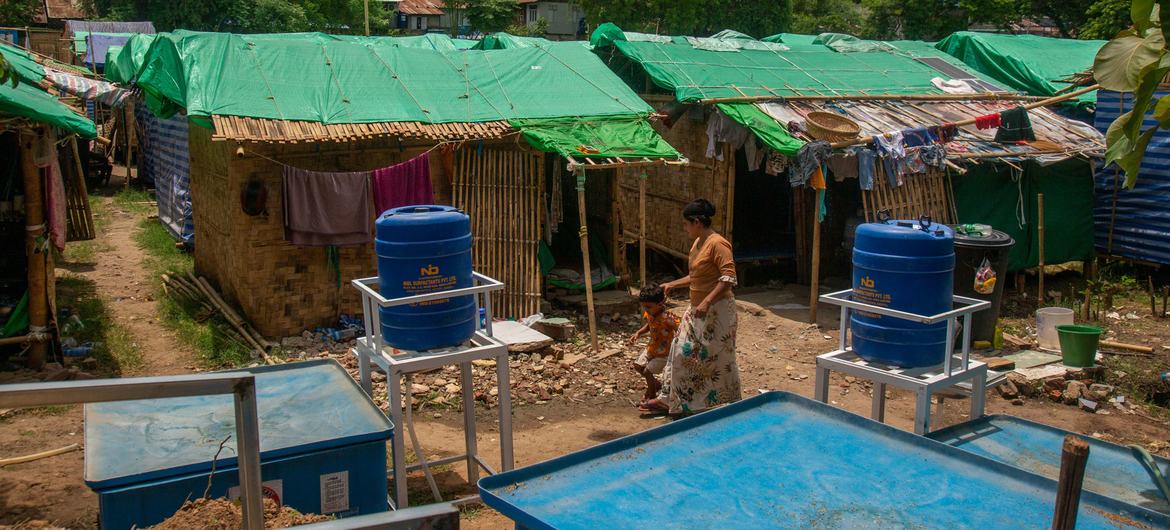
Disasters and fighting has forced millions across Myanmar to flee their homes in search of safety. Many shelter in IDP camps like this one in central Myanmar.

Floods, landslides upend lives

In the flood-affected areas of Bago, Kayin and Mon states, more than 85,000 people have been affected, with homes destroyed, roads cut off and emergency services overstretched.

Relief partners report significant shortages of food, safe drinking water and medical supplies. In Taungoo district (Bago) alone, three flood-related deaths have been confirmed, while six more people reportedly died in a landslide in Shan state.

The pathway out of the deteriorating situation in Myanmar requires an end to the violence 
– UN spokesperson Farhan Haq

The pathway out of the deteriorating situation in Myanmar requires an end to the violence and unimpeded access for relief workers and supplies,” Mr. Haq stressed, noting that health systems are also under acute strain.

Disease outbreaks rising

A humanitarian bulletin from the World Health Organization (WHO)-led Health Cluster warns that floodwaters are driving spikes in acute watery diarrhoea, dengue and malaria.

There are deep concerns over outbreaks of vaccine-preventable diseases like measles, and polio is increasing due to low immunization rates and poor hygiene conditions in overcrowded camps.

WHO has verified 27 attacks on healthcare facilities so far this year, with other monitoring groups reporting over 140 additional incidents.

Meanwhile, severe funding shortages – exacerbated by cuts in United States funding – have forced the suspension of services at 65 health facilities and 38 mobile clinics across Myanmar. Services at a further 28 mobile clinics have been scaled down.

Hakha, the capital of Chin state in Myanmar.

Elections under military cannot be credible

The political context remains grim. Since the February 2021 military coup, which overthrew the elected government and imprisoned top leaders including State Counsellor Aung San Suu Kyi, Myanmar has seen a steady escalation of armed conflict and repression.

The junta’s plans to hold elections have drawn deep concern, including from the UN.

The Secretary-General reiterates his concern over the military’s plan to hold elections amid ongoing conflict and human rights violations, and without conditions that would permit the people of Myanmar to freely and peacefully exercise their political rights,” said Mr. Haq.

He recalled Security Council Resolution 2669, adopted in 2022, which called for the immediate release of all arbitrarily detained prisoners, including President Win Myint and Aung San Suu Kyi; upholding democratic institutions and processes; and pursuing in constructive dialogue and reconciliation in accordance with the will and interests of the people of Myanmar.

Commitment to stay and deliver

Despite the volatility and access constraints, UN agencies remain committed to reaching affected populations.

As of July, nearly 306,000 people had received health services in 59 earthquake-hit townships – just 67 per cent of the target population, reflecting the limited funding and security challenges faced by aid workers.

The United Nations is committed to staying and delivering in Myanmar,” Mr. Haq affirmed, “and to working with all stakeholders, including ASEAN and other regional actors, to attain sustainable peace.

Source link

Deadly floods show need for faster, wider warnings, UN agency says

The UN World Meteorological Organization (WMO) said on Monday that more intense downpours and glacier outburst floods are becoming increasingly frequent, with deadly consequences for communities caught off guard.

Flash floods are not new, but their frequency and intensity are increasing in many regions due to rapid urbanization, land-use change and a changing climate,” said Stefan Uhlenbrook, WMO Director of Hydrology, Water and Cryosphere.

Each additional degree Celsius of warming enables the air to hold about 7 per cent more water vapour.

This is increasing the risk of more extreme rainfall events. At the same time, glacier-related flood hazards are increasing due to enhanced ice melting in a warmer climate,” he added.

Thousands of lives lost every year

Floods and flash floods claim thousands of lives each year and cause billions of dollars in damage. In 2020, severe flooding across South Asia killed more than 6,500 people and caused $105 billion in economic losses.

Two years later, catastrophic floods in Pakistan left over 1,700 people dead, 33 million affected and losses exceeding $40 billion, reversing years of development gains.

This year, the onslaught has continued. In July alone, South Asia, East Asia and the United States have seen a string of deadly events, from monsoon rains to glacial lake bursts and sudden flash floods.

Each year, extreme weather and climate events take a massive toll on lives and economies worldwide.

Asia reels from monsoon onslaught

In India and Pakistan, heavy monsoon rains have severed transport links, washed away homes and triggered landslides. Pakistan declared a state of emergency in its worst-hit areas, deploying military helicopters for rescue missions after forecasters warned of exceptional flood risk along the upper Jhelum River.

The Republic of Korea suffered record-breaking downpours between 16-20 July, with rainfall exceeding 115 mm per hour in some locations. At least 18 people were killed and more than 13,000 were evacuated.

In southern China, authorities issued flash flood and landslide alerts on 21 July, just a day after Typhoon Wipha battered Hong Kong, underscoring the compound risks of sequential storms.

Texas flash flood strikes overnight

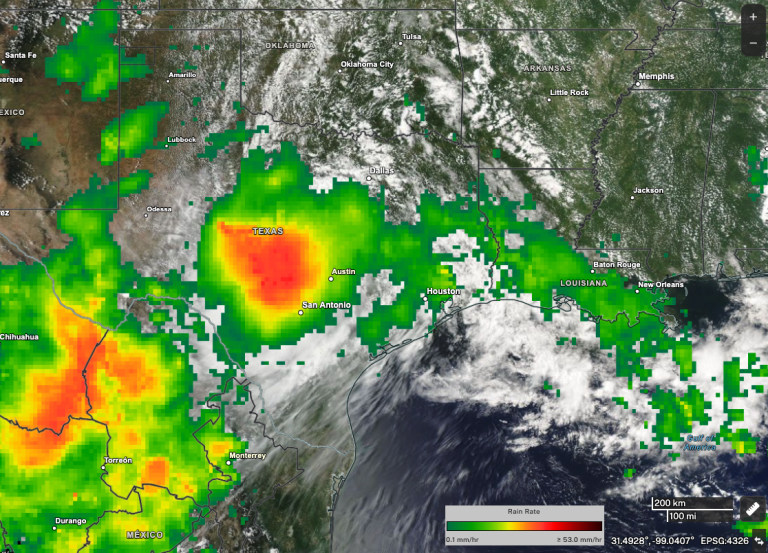
Overnight 3 into 4 July, a sudden deluge turned Texas Hill Country into a disaster zone, killing more than 100 people and leaving dozens missing. In a few hours, 10-18 inches (25–46 cm) of rain swamped the Guadalupe River basin, sending the river surging 26 feet (8 metres) in just 45 minutes.

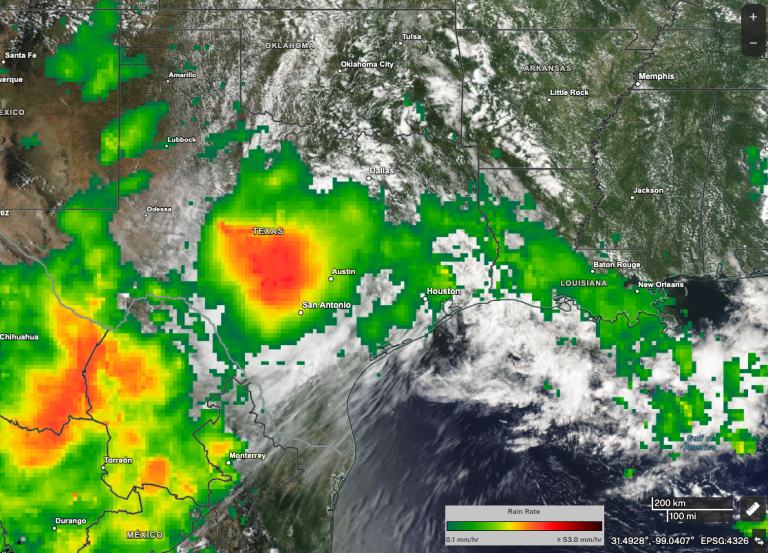
1-day precipitation totals from NASA’s IMERG multi-satellite precipitation product show heavy rainfall over central Texas on July 4, 2025.

Many of the victims were young girls at a summer camp, caught unaware as floodwaters tore through sleeping quarters around 4 AM. Although the US National Weather Service issued warnings ahead of time, local sirens were lacking and the final alerts came when most were asleep.

Glacier outburst floods surge

Not all floods this month were caused by rain.

In Nepal’s Rasuwa district, a sudden outburst from a supraglacial lake – formed on a glacier’s surface – swept away hydropower plants, a major bridge and trade routes on 7 July. At least 11 people were killed and more than a dozen are reported missing.

Scientists at the International Centre for Integrated Mountain Development (ICIMOD), a WMO partner, say glacial-origin floods in the Hindu Kush-Himalaya region are occurring far more often than two decades ago, when one might strike every five to 10 years.

In May and June 2025 alone, three glacial outburst floods hit Nepal, Afghanistan and Pakistan, with two more in Nepal on 7 July. If warming continues, the risk of such floods could triple by the century’s end.

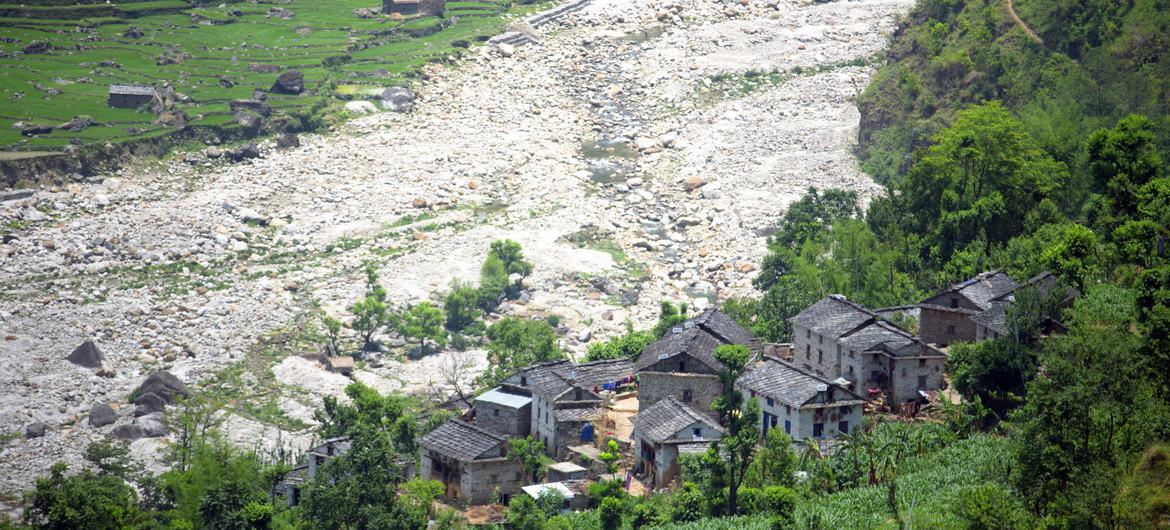
Aftermath of a flood that swept through a high-altitude village in Nepal.

Closing the warning gap

The WMO is stepping up efforts to improve flood forecasting through its global initiative and real-time guidance platform, now used in over 70 countries.

The system integrates satellite data, radar and high-resolution weather models to flag threats hours in advance and is being expanded into a country-led, globally interoperable framework.

A 2022 World Bank study estimated that 1.81 billion people – nearly a quarter of the world’s population – are directly exposed to 1-in-100-year flood events, with 89 per cent living in low- and middle-income countries.

The UN’s Early Warnings for All initiative aims to ensure that everyone, everywhere, is protected by early warning systems by 2027.

Source link

‘Very limited time to react’: Texas flash floods expose challenges in early warning

The UN World Meteorological Organization (WMO) said that the tragedy highlights growing global challenges around extreme rainfall, warning dissemination and community preparedness.

Flash floods are the most lethal form of flooding, responsible for over 5,000 deaths annually and 85 per cent of all flood-related fatalities worldwide, according to WMO data, and result in economic losses of more than $50 billion annually.

Unlike slow-onset river floods, flash floods leave very limited time for reaction,” the agency said in a news release on Wednesday.

That makes accurate short-term forecasting and community preparedness essential.

One-day precipitation totals from NASA’s IMERG multi-satellite precipitation product show heavy rainfall over central Texas on July 4, 2025.

Months of rains in hours

Overnight 3 into 4 July, torrential rains – up to 46 centimetres (about 18 inches) in a matter of hours – sent a wall of water surging through Kerr County’s Guadalupe River basin at around 4 AM, catching many residents and vacationers off guard.

The US National Weather Service issued timely alerts – including a flash flood watch more than 12 hours in advance, upgraded to a flash flood emergency about three hours before impact.

The warnings were disseminated by Weather Radio, emergency management systems and television and radio stations, but many people, including hundreds of children at summer camps, were not reached in time.

Floodwaters surged dramatically as the Guadalupe River rose nearly 8 metres (about 26 feet) in about 45 minutes.

Among the hardest hit was the all-girls summer camp, Camp Mystic, along the river, where at least 27 campers and counsellors died, according to media reports. Texas state authorities report that more than 160 people remain missing.

The disaster has triggered one of the largest search-and-rescue efforts in state history.

More frequent and severe floods

Flash floods are not new, but their frequency and intensity are increasing in many regions due to rapid urbanization, land-use change and a warming climate.

A warmer atmosphere holds more moisture and so this means that extreme rainfall events are becoming more frequent,” WMO said.

The Texas disaster joins a string of recent catastrophic floods. In 2022, flash floods in Pakistan killed over 1,700 people and displaced millions. In 2024, floods in Europe, the Middle East and Africa saw $36 billion in economic damages.

And just this week, a flash flood along the Nepalese-Chinese border swept away the main bridge linking the two countries.

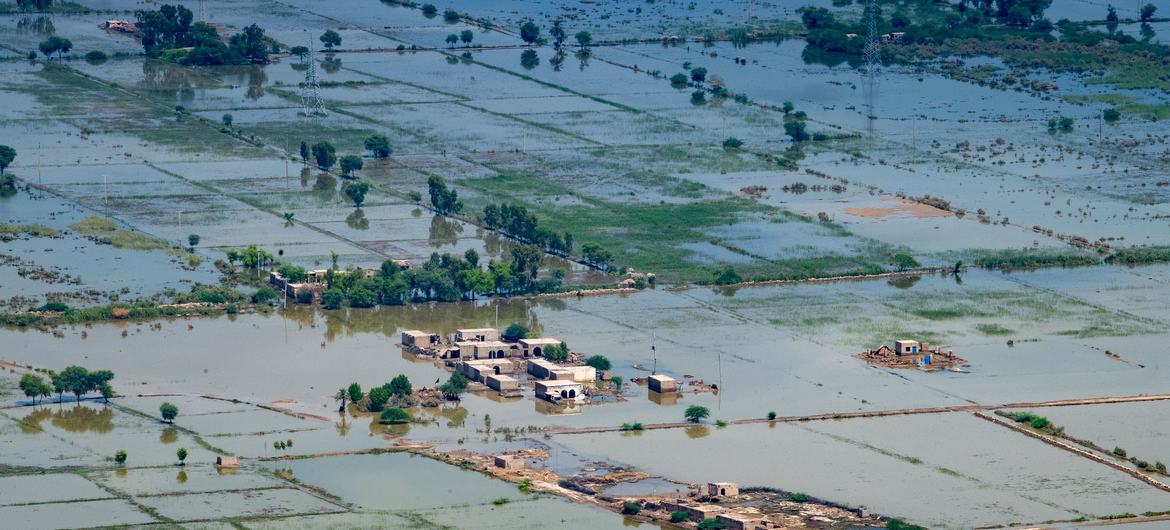
In September 2022, Pakistan was hit by devastating flooding which left large swathes of the country under water.

Supporting countries

To help countries predict such hazards, WMO operates the Flash Flood Guidance System, a real-time forecasting platform used in over 70 countries. It integrates satellite data, radar, and weather models to detect local flash flood threats and supports training programs to build national capacity.

Beyond technology, the agency plays a convening role by building national capacity, certifying experts, and facilitating real-time coordination between forecasting agencies and disaster managers.

Source link

UN chief ‘deeply saddened’ by devastating Texas floods as toll climbs past 80

In a statement issued on Monday by his spokesperson, António Guterres said he was “deeply saddened by the tragic loss of life, notably of a large number of children,” during what should have been a time of celebration.

Friday, 4 July, marked Independence Day in the United States – a time when families and communities traditionally gather for outdoor celebrations.

The Secretary-General extended his “heartfelt condolences to the families of the victims” and expressed solidarity with all those affected, including the people of Texas and the government of the United States.

According to media reports, the floods – triggered by heavy rainfall over the July Fourth weekend – caused massive damage in parts of central Texas, particularly along the Guadalupe River. The deluge struck Camp Mystic, killing at least 27 campers and counselors.

Catherine Russell, Executive Director of the UN Children’s Fund (UNICEF), said in a post on social media that “all of us at UNICEF are heartbroken at the reports coming out of Central Texas.”

Our hearts and thoughts are with those mourning loved ones and those still waiting for news of the missing, including children,” she said.

Search and recovery efforts continue as the region braces for more rain, according to media reports.

Source link

Sudan: UN warns of soaring displacement and looming floods

At Tuesday’s regular briefing at the UN Headquarters, in New York, Spokesperson Stéphane Dujarric relayed warnings from the UN Office for the Coordination of Humanitarian affairs (OCHA), citing urgent concerns across the country.

“Across Sudan, we continue to be deeply concerned about the humanitarian impact of the ongoing fighting, which is escalating displacement and driving needs even higher,” Mr. Dujarric said.

Conflict driving displacement

Clashes between rival militaries – Sudanese Armed Forces (SAF) and the Rapid Support Forces (RSF) – continue to uproot civilians, particularly in Darfur and Kordofan states. Fighting in El Fasher alone has displaced more than 400,000 people since April, according to OCHA.

In June, nearly 8,000 displaced people from North Darfur arrived in Ad-Dabba, putting pressure on overstretched resources and limited access to healthcare, shelter, clean water and food.

In North Kordofan, over 16,000 people were forced to flee their homes in Bara between 26 and 29 June alone, while another 16,000 to flee Babanusa in West Kordofan on 27 June, according to the UN International Organization for Migration (IOM).

Flood warnings

Separately, OCHA warned of increased flood risks as Sudan enters its rainy season, which runs through October. Forecasts point to above-average rainfall, heightening the threat of both riverine and flash floods – especially in areas already facing limited infrastructure and access.

“Any flooding could disrupt road access, hamper aid delivery, and heighten the threat of disease outbreaks during the ongoing lean season,” Mr. Dujarric said, noting that an ongoing cholera outbreak could worsen with the floods.

Nearly 500,000 people were affected by floods last year. With the likelihood of a repeat or worse this season, Mr. Dujarric said humanitarian agencies are ready to respond “where access and resources allow,” but warned that critical funding gaps are hampering preparedness.

UN relief visits Sudan

Mr. Dujarric also highlighted the importance of recent discussions between Under-Secretary-General for Humanitarian Affairs Tom Fletcher and senior SAF and RSF officials.

Mr. Fletcher appealed for a humanitarian pause to allow lifesaving aid to reach people in El Fasher, which has been besieged by the RSF and cut off from assistance since last April.

“Our humanitarian colleagues underscore that we will continue our engagements with the aim of facilitating the swift and safe delivery of aid to all those who need it,” Mr. Dujarric said.  

Source link

6.9-magnitude quake hits Taiwan; Three-storey building collapsed

Sep 18 (IANS):A 6.9-magnitude earthquake hit eastern Taiwan’s Hualien County at 2:44 p.m. Sunday Beijing Time, according to the China Earthquake Networks Center (CENC).

The epicenter was monitored at 23.15 degrees north latitude and 121.30 degrees east longitude, at a depth of 10 km, Xinhua news agency reported quoting the CENC.

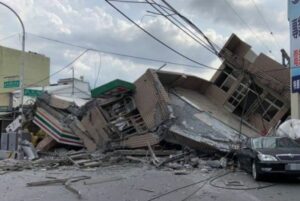
Strong tremor was felt across the island. A three-storey building in Hualien, whose ground floor was a convenience store, collapsed, trapping some people, according to local media.

Earthquake/Ians

A train carriage was turned over by a fallen rain shed in a railway station in Hualien, but all passengers left safe. A bridge fracture left two people injured. The rescue work is underway, according to local media.

Pakistan Floods: Climate Change blamed for flash floods

New Delhi, Sep 16 (IANS) Human-caused climate change likely increased the intense rainfall that flooded swathes of land across Pakistan, according to rapid attribution analysis by an international team of leading climate scientists as part of the World Weather Attribution group.

Extreme rainfall in the region has increased 50-75 per cent and some climate models suggest this increase could be entirely due to human-caused climate change, although there are considerable uncertainties in the results.

Pakistan received more than three times its usual rainfall in August, making it the wettest August since 1961.

The two southern provinces of Sindh and Balochistan experienced their wettest August ever recorded, receiving seven and eight times their usual monthly totals respectively.

The Indus river, which runs the length of the country, burst its banks across thousands of square kilometres, while the intense local rainfall also led to urban flash floods, landslides and glacial lake outburst floods.

The rains and resulting flooding affected over 33 million people, destroyed 1.7 million homes, and killed more than 1,500 people.

To quantify the effect of climate change on the heavy rainfall, scientists analysed weather data and computer simulations to compare the climate as it is today, after about 1.2 degrees Celsius of global warming since the late 1800s, with the climate of the past, following peer-reviewed methods.

The researchers focused on two aspects of the event: the 60-day period of heaviest rainfall over the Indus river basin between June and September, and the five-day period of heaviest rainfall in Sindh and Balochistan.

The scientists found that modern climate models are not fully able to simulate monsoon rainfall in the Indus river basin, as the region is located at the western edge of the monsoon and its rainfall pattern is extremely variable from year to year.

Consequently, they could not quantify the influence of climate change as accurately as has been possible in other studies of extreme weather events, such as heatwaves and heavy rainfall in areas with less variability and more reliable models.

For the five-day total rainfall, some models suggest that climate change increased the five-day total rainfall in Sindh and Balochistan by up to 50 per cent. This is in-line with recent IPCC assessments projecting more intense rains in the region and with historical weather records which show that these heavy rainfall episodes have increased 75 per cent in the region in the last few decades.

There were large uncertainties in climate modelling of maximum 60-day rainfall in the Indus basin, meaning the scientists were not able to estimate the influence of climate change on this aspect of the rainfall.

The analysis also suggests that heavy rainfall like that experienced in Pakistan this year now has approximately a one per cent chance of happening each year, although this estimate also comes with a large range of uncertainty.

The same event would probably have been much less likely in a world without human-induced greenhouse gas emissions, meaning climate change likely made the extreme rainfall more probable.

While the extreme nature of the rainfall and subsequent floods means that some level of impact was likely unavoidable, many factors contributed to increase the damage, including high poverty rates and political instability.

The study was conducted by 26 researchers as part of the World Weather Attribution group, including scientists from universities and meteorological agencies in Denmark, France, Germany, India, the Netherlands, New Zealand, Pakistan, South Africa, the UK and the US.

Fahad Saeed, Researcher at the Center for Climate Change and Sustainable Development, Islamabad, said: “Fingerprints of climate change in exacerbating the heatwave earlier this year, and now the flooding, provide conclusive evidence of Pakistan’s vulnerability to such extremes.

“Being the chair of G77, the country must use this evidence in COP27 to push the world to reduce emissions immediately.

“Pakistan must also ask developed countries to take responsibility and provide adaptation plus loss and damage support to the countries and populations bearing the brunt of climate change.”

Friederike Otto, Senior Lecturer in Climate Science at the Grantham Institute — Climate Change and the Environment, Imperial College London, said: “Our evidence suggests that climate change played an important role in the event, although our analysis doesn’t allow us to quantify how big the role was.

“This is because it is a region with very different weather from one year to another, which makes it hard to see long-term changes in observed data and climate models. This means the mathematical uncertainty is large.

“However, not all results within the uncertainty range are equally likely. What we saw in Pakistan is exactly what climate projections have been predicting for years. It’s also in line with historical records showing that heavy rainfall has dramatically increased in the region since humans started emitting large amounts of greenhouse gases into the atmosphere.”