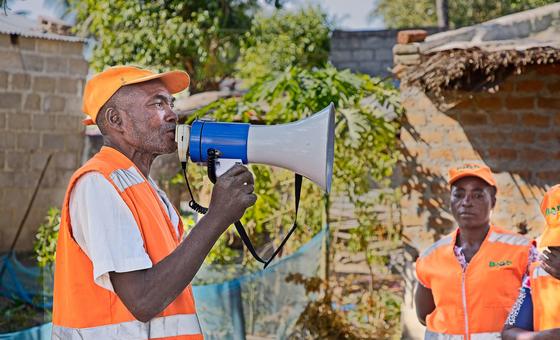
Climate science and early warnings key to saving lives

“Early-warning systems work,” he told the World Meteorological Organization (WMO) in Geneva. “They give farmers the power to protect their crops and livestock. Enable families to evacuate safely. And protect entire communities from devastation.”

“We know that disaster-related mortality is at least six times lower in countries with good early-warning systems in place,” the UN chief said.

He added that just 24 hours’ notice before a hazardous event can reduce damage by up to 30 per cent.

In 2022, Mr. Guterres launched the Early Warnings for All initiative aiming to ensure that “everyone, everywhere” is protected by an alert system by 2027.

Progress has been made, with more than half of all countries now reportedly equipped with multi-hazard early-warning systems. The world’s least developed countries have nearly doubled their capacity since official reporting began “but we have a long way to go,” the UN chief acknowledged.

At a special meeting of the World Meteorological Congress earlier this week, countries endorsed an urgent Call to Action aiming to close the remaining gaps in surveillance.

Extreme weather worsens

WMO head Celeste Saulo, who has been urging a scale-up in early-warning system adoption, warned that the impacts of climate change are accelerating, as “more extreme weather is destroying lives and livelihoods and eroding hard-won development gains”.

She spoke of a “profound opportunity to harness climate intelligence and technological advances to build a more resilient future for all.”

Weather, water, and climate-related hazards have killed more than two million people in the past five decades, with developing countries accounting for 90 per cent of deaths, according to WMO.

Mr. Guterres emphasized the fact that for countries to “act at the speed and scale required” a ramp-up in funding will be key.

Surge in financing

“Reaching every community requires a surge in financing,” he said. “But too many developing countries are blocked by limited fiscal space, slowing growth, crushing debt burdens and growing systemic risks.”

He also urged action at the source of the climate crisis, to try to limit fast-advancing global warming to 1.5 degrees Celsius above pre-industrial era temperatures – even though we know that this target will be overshot over the course of the next few years, he said.

“One thing is already clear: we will not be able to contain global warming below 1.5 degrees in the next few years,” Mr. Guterres warned. “The overshooting is now inevitable. Which will mean that we’re going to have a period, bigger or smaller, with higher or lower intensity, above 1.5 degrees in the years to come.”

Still, “we are not condemned to live with 1.5 degrees” if there is a global paradigm shift and countries take appropriate action.

At the UN’s next climate change conference, where states are expected to commit to reducing greenhouse gas emissions over the next decade, “we need to be much more ambitious,” he said. COP30 will take place on 10-21 November, in Belén, Brazil.

“In Brazil, leaders need to agree on a credible plan in order to mobilize $1.3 trillion per year by 2035 for developing countries, to finance climate action,” Mr. Guterres insisted.

Developed countries should honour their commitment to double climate adaptation funding to $40 billion this year and the Loss and Damage Fund needs to attract “substantial contributions,” he said.

Mr. Guterres stressed the need to “fight disinformation, online harassment and greenwashing,” referring to the UN-backed Global Initiative on Climate Change Information Integrity.

“Scientists and researchers should never fear telling the truth,” he said.

He expressed his solidarity with the scientific community and said that the “ideas, expertise and influence” of the WMO, which marks its 75th anniversary this week, are needed now “more than ever”.

Deadly floods show need for faster, wider warnings, UN agency says

The UN World Meteorological Organization (WMO) said on Monday that more intense downpours and glacier outburst floods are becoming increasingly frequent, with deadly consequences for communities caught off guard.

Flash floods are not new, but their frequency and intensity are increasing in many regions due to rapid urbanization, land-use change and a changing climate,” said Stefan Uhlenbrook, WMO Director of Hydrology, Water and Cryosphere.

Each additional degree Celsius of warming enables the air to hold about 7 per cent more water vapour.

This is increasing the risk of more extreme rainfall events. At the same time, glacier-related flood hazards are increasing due to enhanced ice melting in a warmer climate,” he added.

Thousands of lives lost every year

Floods and flash floods claim thousands of lives each year and cause billions of dollars in damage. In 2020, severe flooding across South Asia killed more than 6,500 people and caused $105 billion in economic losses.

Two years later, catastrophic floods in Pakistan left over 1,700 people dead, 33 million affected and losses exceeding $40 billion, reversing years of development gains.

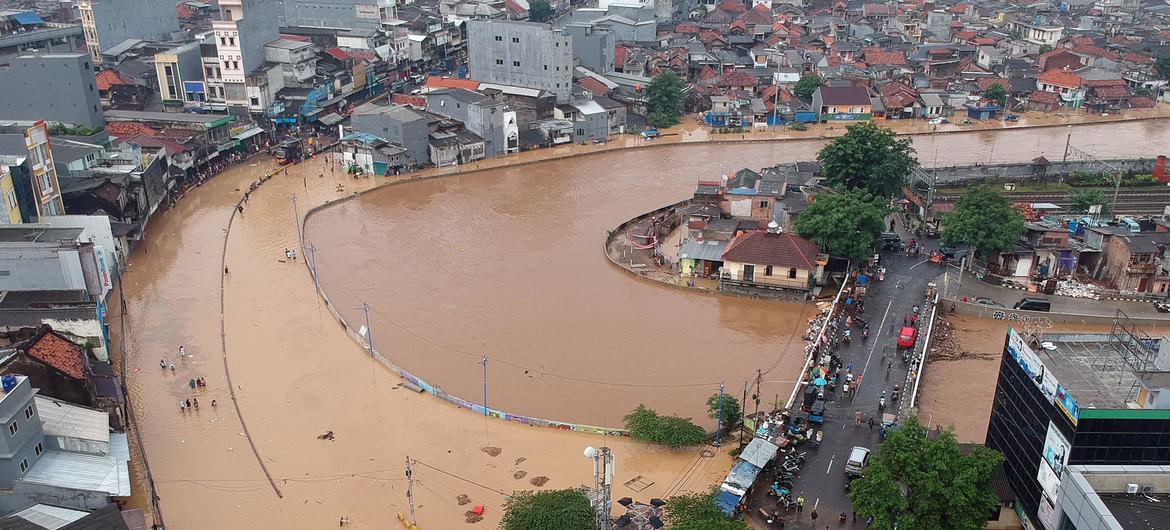
This year, the onslaught has continued. In July alone, South Asia, East Asia and the United States have seen a string of deadly events, from monsoon rains to glacial lake bursts and sudden flash floods.

Each year, extreme weather and climate events take a massive toll on lives and economies worldwide.

Asia reels from monsoon onslaught

In India and Pakistan, heavy monsoon rains have severed transport links, washed away homes and triggered landslides. Pakistan declared a state of emergency in its worst-hit areas, deploying military helicopters for rescue missions after forecasters warned of exceptional flood risk along the upper Jhelum River.

The Republic of Korea suffered record-breaking downpours between 16-20 July, with rainfall exceeding 115 mm per hour in some locations. At least 18 people were killed and more than 13,000 were evacuated.

In southern China, authorities issued flash flood and landslide alerts on 21 July, just a day after Typhoon Wipha battered Hong Kong, underscoring the compound risks of sequential storms.

Texas flash flood strikes overnight

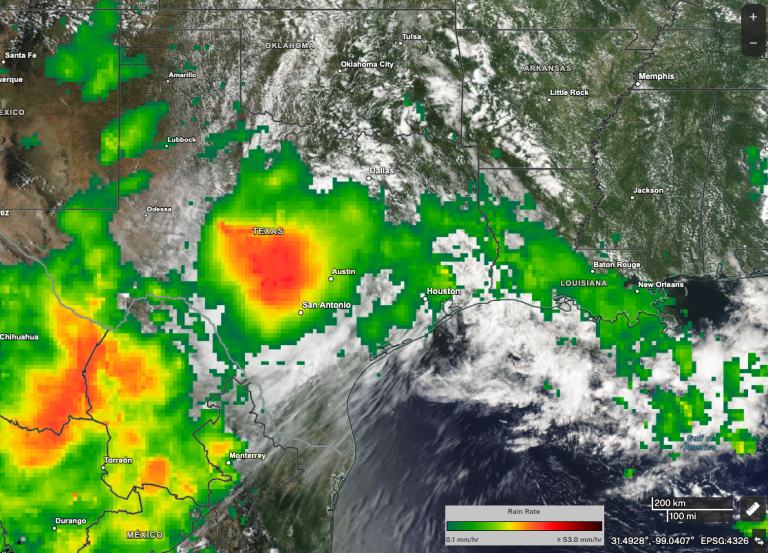
Overnight 3 into 4 July, a sudden deluge turned Texas Hill Country into a disaster zone, killing more than 100 people and leaving dozens missing. In a few hours, 10-18 inches (25–46 cm) of rain swamped the Guadalupe River basin, sending the river surging 26 feet (8 metres) in just 45 minutes.

1-day precipitation totals from NASA’s IMERG multi-satellite precipitation product show heavy rainfall over central Texas on July 4, 2025.

Many of the victims were young girls at a summer camp, caught unaware as floodwaters tore through sleeping quarters around 4 AM. Although the US National Weather Service issued warnings ahead of time, local sirens were lacking and the final alerts came when most were asleep.

Glacier outburst floods surge

Not all floods this month were caused by rain.

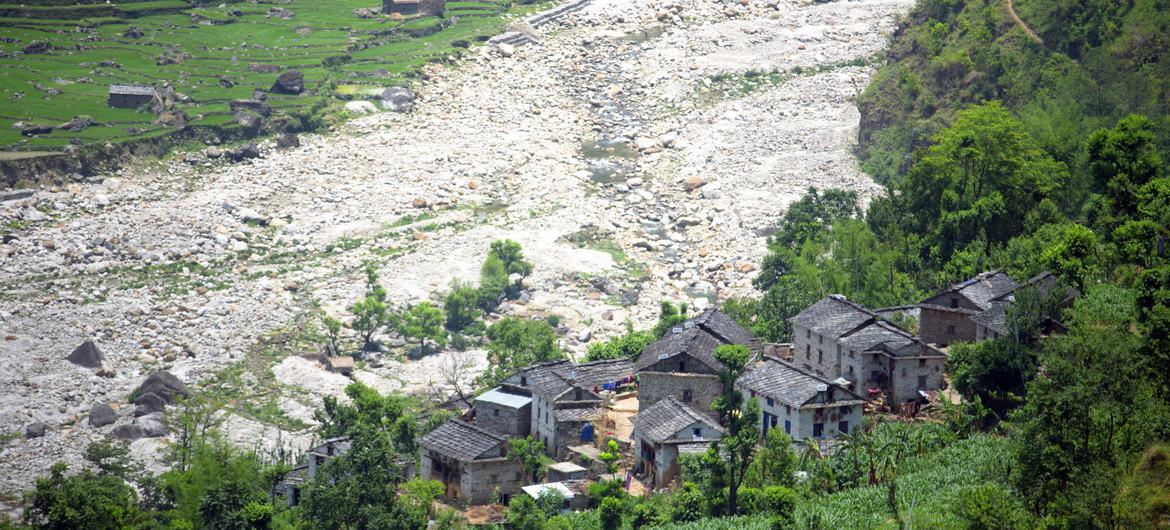
In Nepal’s Rasuwa district, a sudden outburst from a supraglacial lake – formed on a glacier’s surface – swept away hydropower plants, a major bridge and trade routes on 7 July. At least 11 people were killed and more than a dozen are reported missing.

Scientists at the International Centre for Integrated Mountain Development (ICIMOD), a WMO partner, say glacial-origin floods in the Hindu Kush-Himalaya region are occurring far more often than two decades ago, when one might strike every five to 10 years.

In May and June 2025 alone, three glacial outburst floods hit Nepal, Afghanistan and Pakistan, with two more in Nepal on 7 July. If warming continues, the risk of such floods could triple by the century’s end.

Aftermath of a flood that swept through a high-altitude village in Nepal.

Closing the warning gap

The WMO is stepping up efforts to improve flood forecasting through its global initiative and real-time guidance platform, now used in over 70 countries.

The system integrates satellite data, radar and high-resolution weather models to flag threats hours in advance and is being expanded into a country-led, globally interoperable framework.

A 2022 World Bank study estimated that 1.81 billion people – nearly a quarter of the world’s population – are directly exposed to 1-in-100-year flood events, with 89 per cent living in low- and middle-income countries.

The UN’s Early Warnings for All initiative aims to ensure that everyone, everywhere, is protected by early warning systems by 2027.

Source link

UN summit confronts AI’s dawn of wonders and warnings

The AI for Good Global Summit 2025 brings together governments, tech leaders, academics, civil society and young people to explore how artificial intelligence can be directed toward Sustainable Development Goals (SDGs) – and away from growing risks of inequality, disinformation and environmental strain.

We are the AI generation,” said Doreen Bogdan-Martin, chief of the International Telecommunications Union (ITU) – UN’s specialized agency for information and communications technology – in a keynote address.

But being part of this generation means more than just using these technologies.

It means contributing to this whole-of-society upskilling effort, from early schooling to lifelong learning,” she added.

Warnings on AI risks

Ms. Bogdan-Martin warned of mounting dangers in deploying AI without sufficient public understanding or policy oversight.

The biggest risk we face is not AI eliminating the human race. It is the race to embed AI everywhere, without sufficient understanding of what that means for people and our planet,” she said.

Her remarks reflected a growing sense of urgency among policymakers and technologists, as new “agentic AI” systems capable of autonomous reasoning and action emerge at unprecedented speed.

With some experts predicting human-level AI within the next three years, concerns about safety, bias, energy consumption and regulatory capacity have intensified.

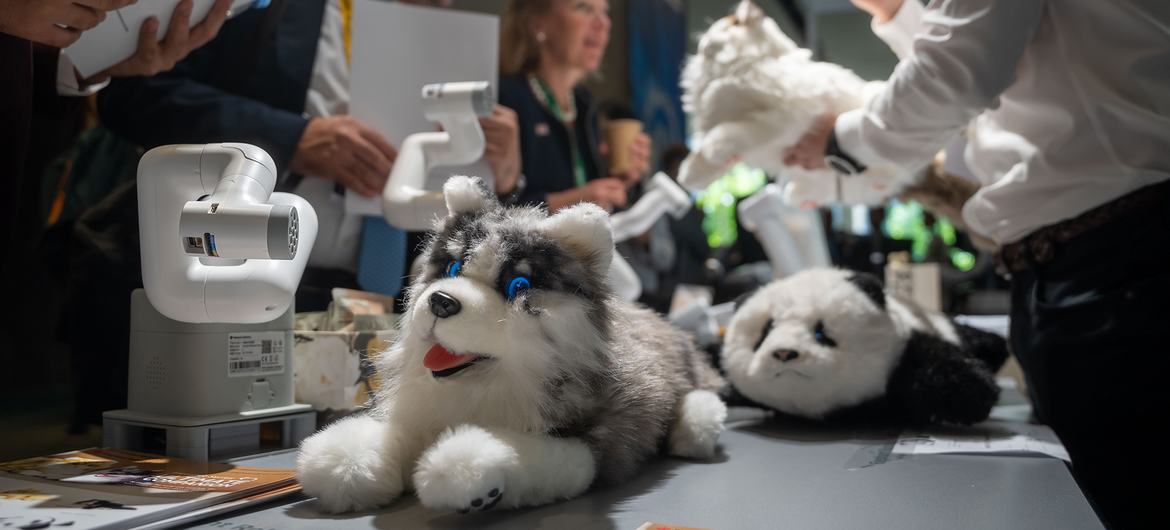
Tech on display at the AI for Good Global Summit.

Tech on display

The summit’s agenda reflects these tensions.

Over 20,000 square meters of exhibit space at Geneva’s Palexpo now hosts more than 200 demonstrations, including a flying car, a fish-inspired water quality monitor, brain-computer interfaces and AI-driven disaster response tools.

Workshops throughout the week will tackle topics ranging from AI in healthcare and education to ethics, gender inclusion and global governance.

One highlight will be the AI Governance Day on Thursday, where national regulators and international organizations will address the gap in global oversight. An ITU survey found that 85 per cent of countries lack an AI-specific policy or strategy, raising alarms about uneven development and growing digital divides.

Focus on health

Health is a prominent theme this year.

On Wednesday, the UN World Health Organization (WHO) will lead a session titled “Enabling AI for Health Innovation and Access,” bringing together technologists, regulators, clinicians and humanitarian leaders to address how AI can improve healthcare delivery – especially in low-resource settings.

Real-world applications – from AI-powered triage in emergency care to diagnostic tools for rural clinics – will be spotlighted, alongside a preview of WHO’s forthcoming Technical Brief on AI in Traditional Medicine.

Experts will also examine the challenges of interoperability, regulatory harmonisation and intellectual property rights at the intersection of AI and global health. The summit will feature the AI for Good Awards, recognising groundbreaking projects that harness AI for public benefit, with categories spanning people, planet and prosperity.

Tech on display at the AI for Good Global Summit in Geneva.

Launchpad for action

The health track exemplifies the summit’s core goal: ensuring AI serves the public good, especially in areas of greatest need.

Youth-led robotics teams from underserved communities will present solutions for disaster recovery and waste management, while startups compete in the Innovation Factory to showcase AI tools for education and climate resilience.

Live demonstrations include an autonomous orchard robot, a self-sanitising mobile toilet and a drone-eDNA system for scalable biodiversity and pest monitoring.

Closing her keynote, Ms. Bogdan-Martin reminded participants that the future of AI is a shared responsibility.

Let’s never stop putting AI at the service of all people and our planet,” she said.

Source link