World News in Brief: Children at risk in South Sudan, Balochistan attacks, summit backs boost for undersea cable security

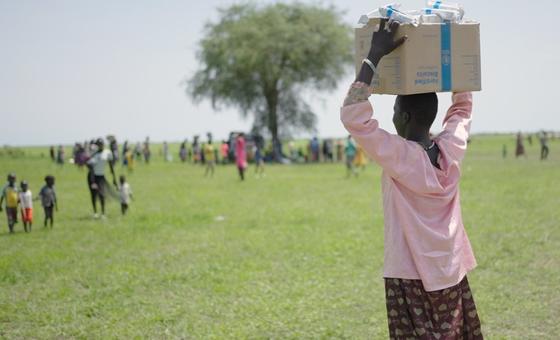
Clashes in Jonglei state since the start of 2026 have displaced at least 250,000 people, mainly in the north and centre of the state, cutting families off from lifesaving care in areas already suffering some of the highest malnutrition rates in the country.

Deadly risks

“We are extremely concerned for women and children impacted by these violent clashes,” said UNICEF Country Representative Noala Skinner. “A malnourished child without treatment is 12 times more likely to die.”

Access for aid agencies remains severely constrained, with restrictions on river, road and air travel. Six counties in Jonglei are already at, or close to, running out of therapeutic food, while 17 health facilities nationwide have closed due to conflict. 

UNICEF has also recorded 10 incidents of looting of health and nutrition supplies.

Despite the challenges, UNICEF said it is responding, delivering water purification equipment amid cholera concerns and sending malaria treatments, emergency health kits and therapeutic food to reach more than 10,000 people.

UNICEF condemns killing and injury of children in Balochistan attacks

UNICEF has expressed grave concern over reports that children were among those killed and injured during a wave of violent attacks in Pakistan’s southwestern province of Balochistan last weekend.

“Children cannot be targets nor collateral damage, and their lives must always be protected,” said UNICEF Representative in Pakistan Pernille Ironside, extending condolences to the families and communities affected. 

She warned that the escalation of violence is spreading fear, with children and families “bearing the heaviest burden”.

The attacks, which took place on 31 January, were also strongly condemned by the UN Security Council

In a press statement released on Tuesday, Council members described the incidents as “heinous and cowardly” acts of terrorism that left 48 people dead, including 31 civilians. 

Council expresses ‘deepest sympathy’

Civilian casualties reportedly included five women and three children. The so-called Balochistan Liberation Army separatist group has claimed responsibility. 

A senior local official told reporters that 145 members of the banned group had subsequently been killed by security forces.

The Council expressed its deepest sympathy to the victims’ families and to the Government and people of Pakistan, wishing the injured a full recovery. 

Global summit backs stronger protection for submarine cables

Governments and industry leaders from more than 70 countries have reaffirmed the need to protect submarine cables that carry the vast majority of the world’s digital traffic.

Meeting in Porto, Portugal, at the International Submarine Cable Resilience Summit 2026, participants adopted a declaration and recommendations aimed at strengthening cooperation to safeguard the global network of around 500 cables stretching more than 1.7 million kilometres.

Read our explainer on the summit and what’s at stake, here.

“When it comes to critical digital infrastructure like submarine cables, resilience is both an end-to-end imperative and a shared responsibility,” said ITU Secretary-General Doreen Bogdan-Martin, welcoming commitments to improve repair times, readiness and investment.

‘Meaningful impact’

The summit highlighted the importance of protecting connectivity for remote and underserved regions, which are particularly vulnerable to cable disruptions.

“I firmly believe [the advisory body] is already delivering concrete and meaningful impact,” said ANACOM Chairwoman Prof. Sandra Maximiano, noting the risks faced by countries and island communities with limited capacity to respond to outages.

The Porto meeting followed the inaugural summit in Abuja, Nigeria, as momentum builds for global action to protect what many experts see as the backbone of the digital economy.

Source link

New national climate plans unveiled at high-level summit ahead of COP30 conference

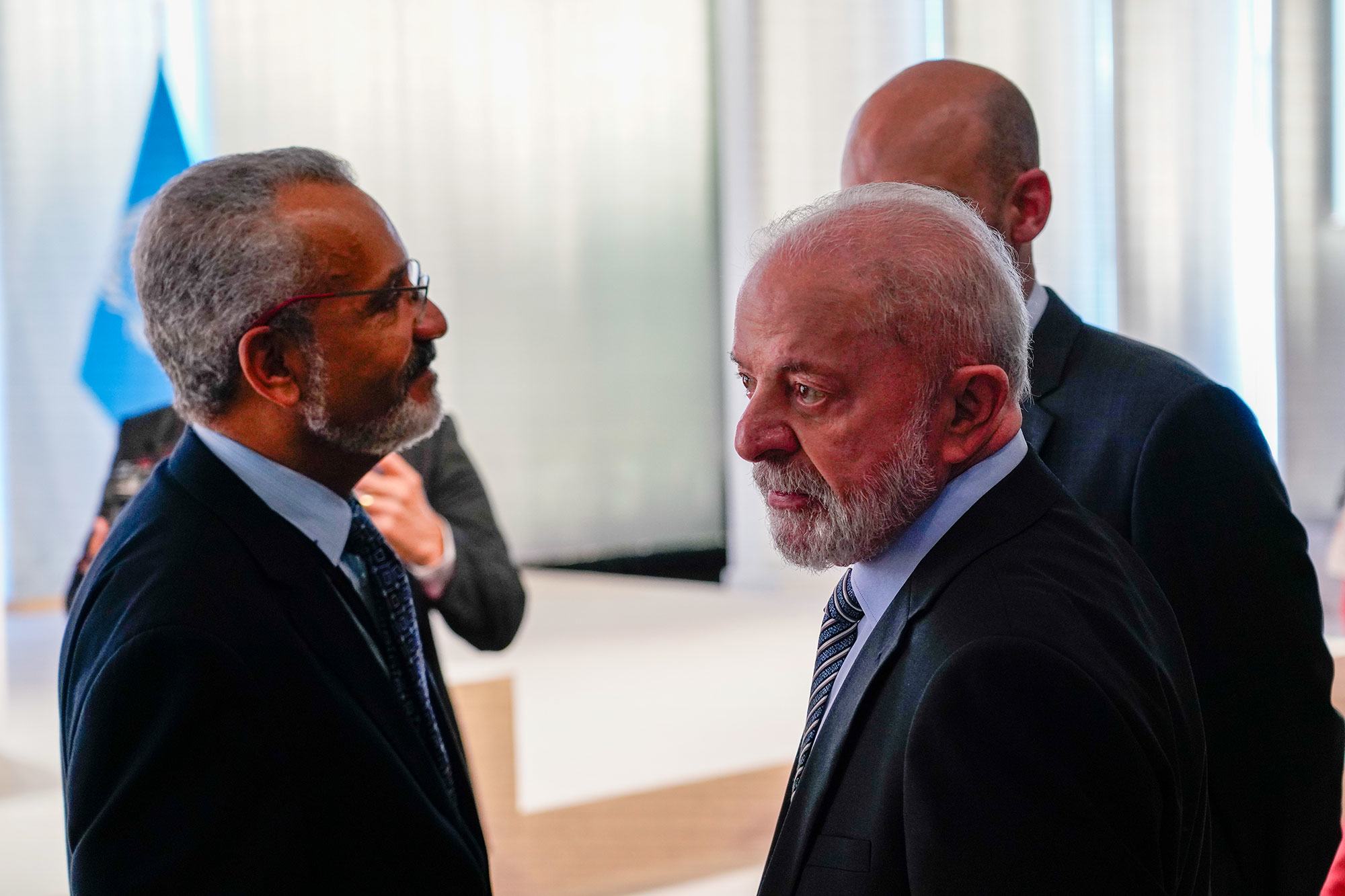
The game-changing summit was convened by Secretary-General António Guterres alongside President Luiz Inácio Lula Da Silva of Brazil, host of the COP30 conference which kicks off in November in the Amazonian city of Belém.

At the outset, leading climate scientists Johan Rockström and Katharine Hayhoe provided a stark assessment of global efforts so far to honour the Paris Agreement, the landmark 2015 treaty that seeks to limit global temperature rise to 1.5 degrees Celsius above pre-industrial levels.

‘A deep concern’

Ten years on, greenhouse gas emissions that cause global warming continue to rise, and annual global temperature change exceeded 1.5 degrees for the first time last year.

“This is a deep concern,” said Professor Rockström, chief scientist at Conservation International. “An even deeper concern is that warming appears to be accelerating, outpacing emissions.”

Yet it is still possible to meet the1.5-degree goal and the two experts highlighted solutions, including transitioning from fossil fuels to clean energy sources and transforming food systems to eliminate waste. 

We cannot prevent this catastrophe alone. But together, we can. By setting stronger targets, moving on faster timelines, and making deeper commitments,” said Professor Hayhoe, a winner of the 2019 UN Champions of the Earth Prize.

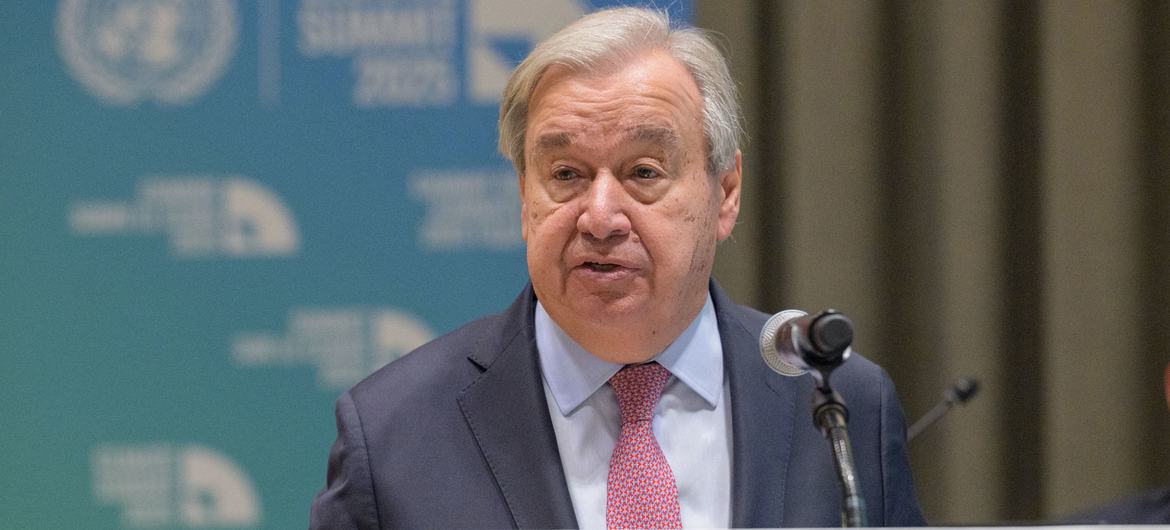
Secretary-General António Guterres addresses the Climate Summit 2025, a high-Level special event on Climate Action.

More action needed: Guterres

Under the Paris Agreement, governments are required to submit climate plans called Nationally Determined Contributions (NDCs) laying out bold action for the next decade.

The treaty has made a difference, the Secretary-General said, as projected global temperature rise dropped from four degrees to less than three over the past 10 years, if current plans are fully implemented.

“Now, we need new plans for 2035 that go much further, and much faster,” he said. “Delivering dramatic emissions cuts aligned with 1.5 degrees; covering all emissions and sectors; and accelerating a just energy transition globally.”

He stressed that COP30 “must conclude with a credible global response plan to get us on track” and outlined five crucial areas for action: accelerating the transition to clean energy, drastically cutting methane gas emissions, forest conservation, cutting emissions from heavy industry, and ensuring climate justice for developing nations.

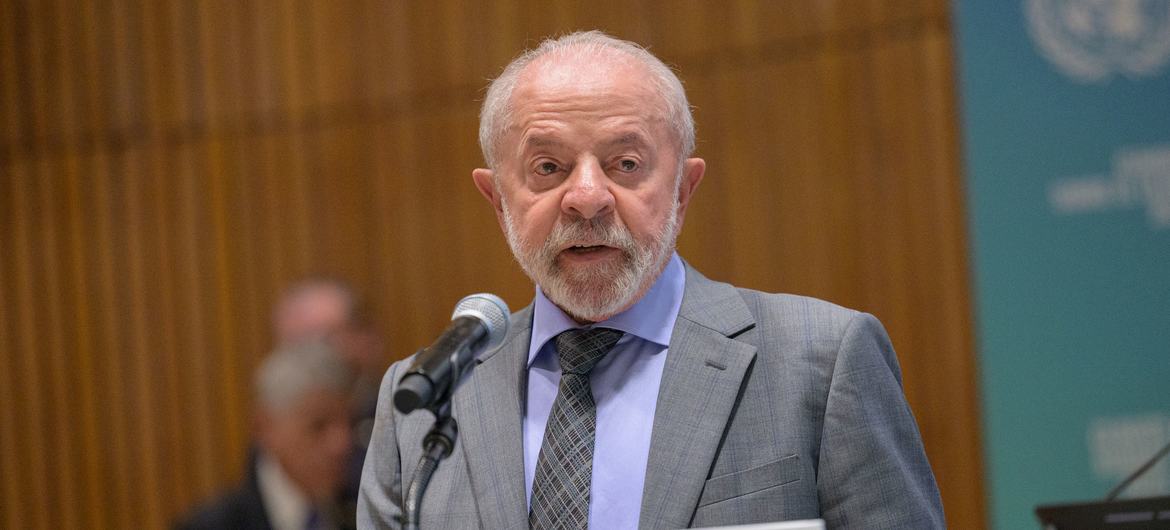
President Luiz Inácio Lula da Silva of Brazil addresses the Climate Summit 2025, a high-Level special event on Climate Action.

Do your ‘homework’, urges Lula

With just a few weeks until COP30, President Lula wondered “whether the world will arrive in Belém with its homework done.”

He said that “the energy transition opens the door to a productive and technological transformation comparable to the Industrial Revolution” and NDCs “are the road map that will guide each country through this change.”

For its part, Brazil has committed to reducing all greenhouse gas emissions between 59 per cent and 67 per cent, covering all sectors of the economy, he said, and continues efforts to end deforestation by 2030.

Commitment from China and Europe

At the meeting, President Xi Jinping of China announced that by 2035, the country will reduce economy-wide net greenhouse gas emissions by seven to 10 per cent from peak levels.  

The country will also increase the share of non-fossil fuels in total energy consumption to over 30 per cent, expand wind and solar power capacity sixfold compared to 2020 levels, and make “new energy vehicles” the mainstream in new vehicle sales, he said in a video message.

Meanwhile, “the clean transition is moving on” in the European Union, where emissions are down nearly 40 per cent since 1990, said European Commission President Ursula von der Leyen. 

European countries are also “doubling down on global partnerships” and will remain the world’s largest providers of climate finance, she said, while also mobilizing up to 300 billion Euros to support the clean energy transition worldwide.

Vulnerable nations ‘between hope and hardship’

For Belize, the 1.5-degree goal “is not an aspiration” but “a threshold between hope and hardship, between flourishing communities and forced displacement, between shared prosperity and irreversible loss,” said Prime Minister Johnny Briceño.

Its new NDC covers concrete actions, such as expanding renewable electricity generation to cover 80 per cent of domestic needs by 2035, restoring some 25,000 hectares of degraded forest, and planting a million trees over the next three years. 

“But let me be clear, ambition can only succeed if matched by support for small climate vulnerable nations like Belize. 

“This means scaled up, predictable finance; accessible technology and genuine partnerships,” he said, noting that “success depends on all of us acting with unprecedented urgency, solidarity and climate justice.” 


Climate Summit 2025: The path to COP30

The summit, which takes place on 24 September at UN Headquarters, is designed as a launchpad for COP30 but, unlike the sprawling negotiations of a UN climate conference, this is a targeted high-level event where Heads of State, Government leaders, businesses, and civil society are expected to present concrete pledges and new national climate plans. 

‘Bold action for the next decade’ 

According to the organisers, the summit has a clear mandate: parties to the Paris Agreement – the landmark 2015 pledge to climate change treaty – must bring forward new or updated NDCs (Nationally Determined Contributions, or pledges to take measures to address the climate crisis) that reflect “bold action for the next decade.”  

UN chief António Guterres has made it plain: existing pledges are nowhere near sufficient, and only a fraction of member states have up-to-date NDCs for 2025. Current national plans, according to the UNFCCC, would only cut global emissions by 2.6 per cent by 2030 compared to 2019 levels, a tiny fraction of the 43 per cent reduction that scientists say is needed to keep global temperatures to no more than 1.5 degrees Celsius above pre-industrial levels. 

The summit therefore serves as both a pressure point and an opportunity. Leaders are expected not just to restate commitments, but to announce new NDCs, show how they will be implemented, and highlight how they align with the accelerating clean energy transition. 

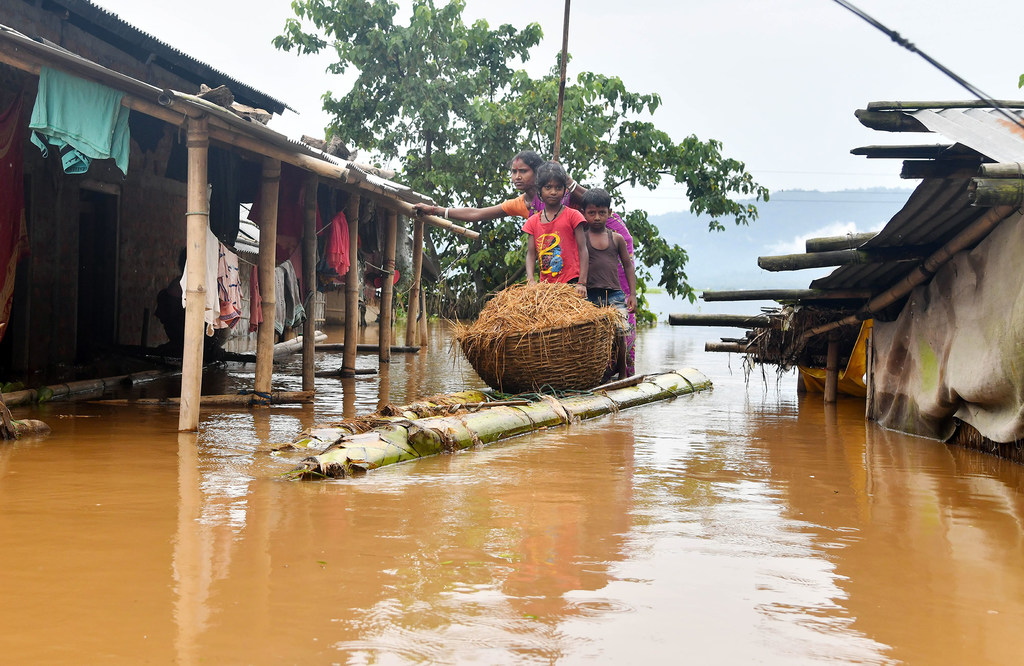
Floodwaters in Morigaon, India (file 2020)

Why Now? 

The urgency of the summit is sharpened by both scientific and political realities. The UN World Meteorological Organization reported that 2024 was the hottest year on record, with average global temperatures 1.6 degrees Celsius above pre-industrial levels. Meanwhile, the international political landscape has grown more fractured. 

The United States, which withdrew from the Paris Agreement in early 2025, remains one of the largest historical emitters. Its retreat from climate finance and clean-energy commitments has left developing nations questioning whether the promised flows of support will materialise. 

At the same time, real momentum exists. Clean energy investment topped $2 trillion in 2024, outpacing fossil fuels for the first time, and initiatives such as the proposed Fossil Fuel Non-Proliferation Treaty are gaining traction. The summit will test whether these positive trends can be harnessed and scaled. 

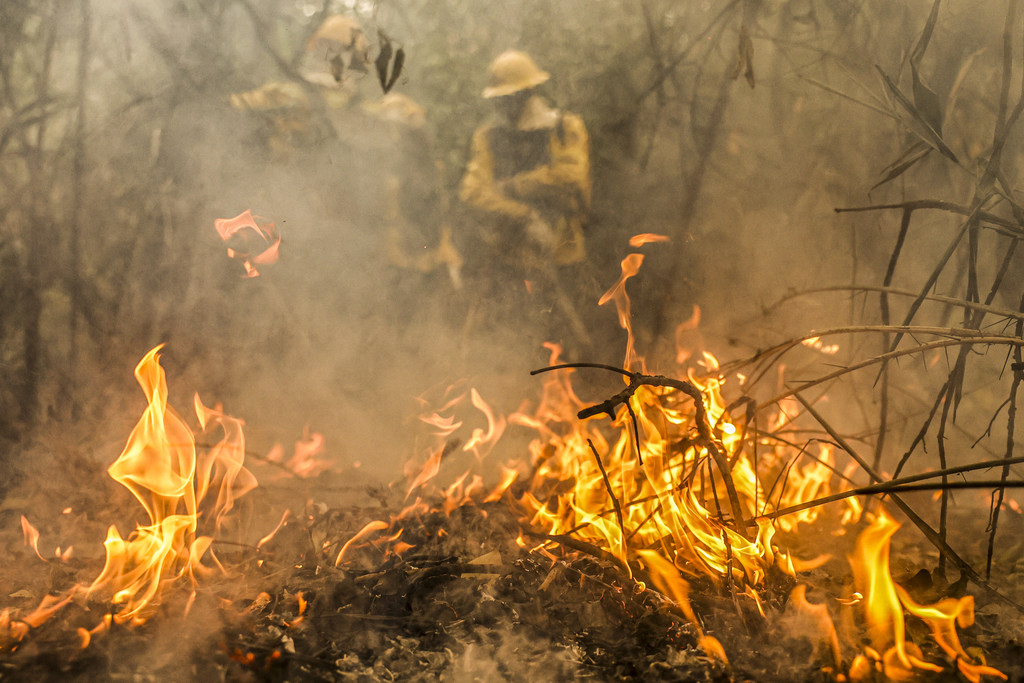
Marcelo Camargo/Agência Brasil

Firefighters in the Pantanal, Brazil (file 2024)

Reading between the lines 

The Climate Summit is not a negotiating session, but its outcomes will set the tone for COP30 in Belém. Brazil has promised to centre that conference on climate justice, forest protection, and renewable energy. Yet success in Belém will depend heavily on what happens in New York this week. 

Observers will watch closely for three signals. First, will major emitters bring plans that close the emissions gap?  Second, is climate finance scaled up beyond symbolic pledges, especially for the Loss and Damage Fund (which has attracted just under $789 million in pledges so far, far short of what is needed)?  And finally, will leaders acknowledge that expanding coal, oil, and gas is incompatible with Paris targets?   

Without progress on these fronts, COP30 risks becoming another forum of unmet expectations. 

High stakes 

For the UN Chief, the summit is about more than process. It is about rebuilding trust in multilateralism at a time when global divides are widening and demonstrating that climate action can unlock economic and social benefits. “The opportunities of climate action have never been clearer,” the UN has stressed, pointing to job creation, health improvements, and energy security linked to clean energy expansion. 

Still, for communities in Pakistan and India displaced by destructive floods, or for farmers in the Horn of Africa facing drought, the summit is less about opportunity than survival. The gap between climate impacts and the political response has never felt wider. 

From words to action 

The UN Climate Summit of September 2025 is not a substitute for COP30, but it may prove just as decisive. It is the arena where leaders can reset ambition, inject credibility, and build momentum toward Brazil. 

If it can deliver bold new pledges, credible finance, and a clear direction on fossil fuels, it could help salvage the promise of Paris. 

What to know ahead of Sept 22 UN summit on Palestine

Held on the opening day of the UN General Assembly’s high-level week, the annual September gathering of world leaders, the initiative comes amid a deeply worrying regional backdrop of  intensified Israeli military operations that have allegedly killed more than 60,000 people in Gaza since October 7, 2023, Israel’s strikes against Hamas officials in Qatar on September 9, and accelerating settlement expansion in the West Bank.

Despite the volatile regional context, the two-state solution is regaining diplomatic traction. On September 12, the General Assembly adopted by a wide margin the “New York Declaration,” following a July conference also co-hosted by France and Saudi Arabia. It called for “just and lasting peace grounded in international law and based on the two-state solution.”

To end the war, it urged Hamas to “end its role in Gaza, and handover its weapons to the Palestinian Authority.” The United States and Israel, which had boycotted the July conference, voted against the text.

The September 22 summit will likely build on that momentum, French President Emmanuel Macron is expected to announce France’s recognition of the State of Palestine, and several other Western countries, including the UK, Canada, Belgium, and Australia, are reportedly considering following suit.

In short, the summit’s impact could inject new momentum into efforts to establish a UN roadmap towards two states.

ALSO READ: London’s Far-Right Rally Sends Shockwaves Through South Asian Communities

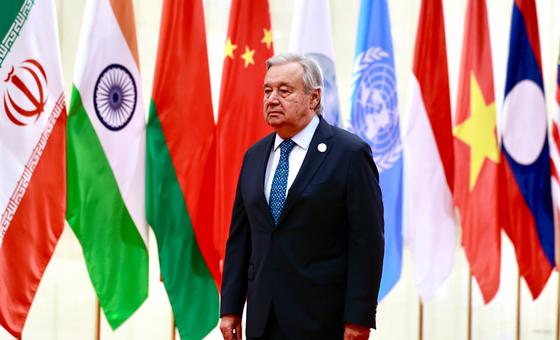
Shanghai Cooperation Organization summit: Guterres calls for strengthening multilateralism

The Eurasian bloc, comprising 10 member states, is the world’s largest regional organization by population and geography.

Mr. Guterres told leaders that “we are moving towards a multipolar world”, which is both a reality and an opportunity.

He said emerging economies are reshaping trade, diplomacy and development, but at the same time, injustices and divisions are widening.

Principled leadership needed

He stressed the need for principled leadership to strengthen multilateralism, uphold the rule of law, and deliver for people everywhere.

“The Shanghai Cooperation Organization is uniquely positioned to help shape a more peaceful, inclusive, and sustainable future,” he said.

The UN chief highlighted four priority areas, starting with peace and security.

Peace in Gaza and beyond

He pointed to the situation in Gaza, where the scale of death and destruction is horrific and famine has taken hold.

“We need an immediate and permanent ceasefire; the immediate and unconditional release of all hostages; and unimpeded, safe and sustained humanitarian access,” he said.

“And we must advance concrete and irreversible steps toward a two-State solution – the only path to a just and lasting peace for both Palestinians and Israelis.”

Mr. Guterres also addressed the war in Ukraine, saying “it is past time for a ceasefire leading to a just, comprehensive and sustainable peace – in line with the UN Charter, international law, and UN resolutions.”

He also called for protection of civilians, fostering dialogue and securing peace in Sudan, Myanmar, the Sahel, Afghanistan and beyond.

“Your leadership in diplomacy and de-escalation is essential, as are your efforts against terrorism and transnational threats,” he told leaders.

Reform and climate action

The Secretary-General called for reform of the global financial architecture to ensure fair representation for developing countries.

“We are no longer in 1945 – and our institutions must reflect today’s realities,” he said.

The third area for action concerns confronting climate change.

“We are reaching a tipping point and need meaningful reductions of emissions. G20 countries – responsible for 80 per cent of global emissions – must lead,” he said.

He urged all governments to submit new climate action plans before the COP30 UN climate conference in Brazil this November. 

“We must also set a clear path to delivering $1.3 trillion by 2030.  Developed countries must honour their commitments. And we need a breakthrough on adaptation,” he added.

He called for doubling adaptation finance, scaling up early warning systems, building resilient infrastructure and phasing out fossil fuels while speeding up the transition to renewable energy.

Cooperation on technology

The final area for action is digital cooperation as new technologies bring both opportunities and risks.

He said the UN General Assembly has just established two mechanisms – an Independent Scientific Panel and a Global Dialogue on governance of artificial intelligence (AI) – to give all countries a voice and prevent fragmentation.

“These mechanisms mark a breakthrough for global AI cooperation – leveraging the unique convening power of the United Nations,” he said.

Put people first

In conclusion, he said that as the UN marks its 80th anniversary, countries must strengthen international cooperation for the 21st century and always put people first.

In this regard, he welcomed China’s Global Governance Initiative, announced that day, which “is anchored in multilateralism and underscores the importance of safeguarding the international system with the UN at its core and the international order underpinned by international law.”

Source link

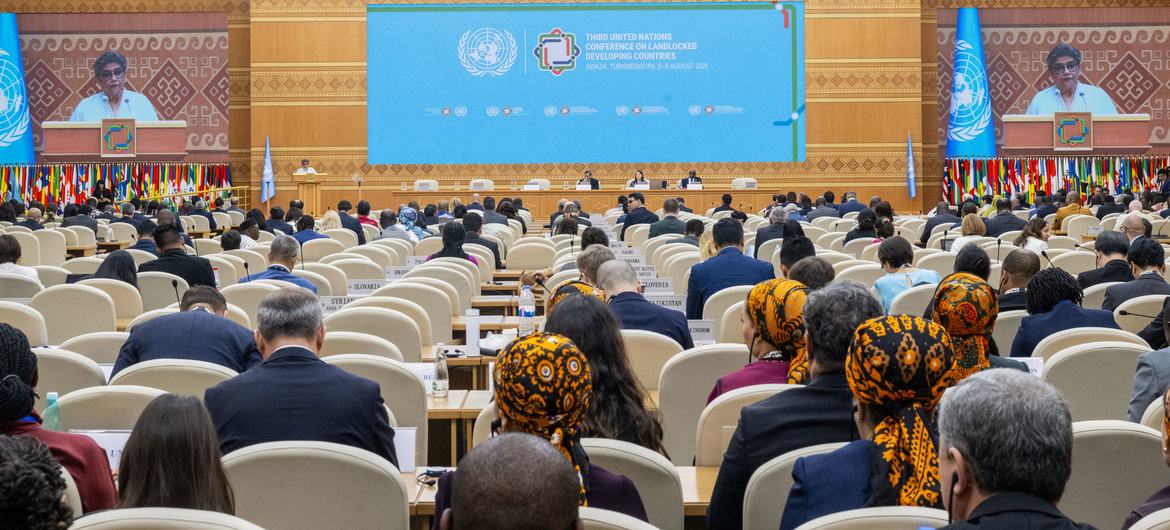
Landlocked but not left behind: UN summit in Turkmenistan wraps with bold new roadmap

Held under the theme Driving Progress Through Partnerships, the four-day forum known as LLDC3, brought together Heads of State, senior UN officials, development partners, and private sector leaders to tackle persistent challenges faced by LLDCs, including high trade costs, inadequate infrastructure, and vulnerability to climate change.

Anchored by the Awaza Programme of Action for 2024–2034, which was adopted by the UN General Assembly last year, the new ‘Awaza Declaration’ outlines a unified strategy across five priority areas:

  1. Structural economic transformation;
  2. Trade and regional integration;
  3. Transport and infrastructure;
  4. Climate change adaptation and disaster risk reduction; and
  5. Mobilizing finance and partnerships.

The Awaza Declaration marks a turning point. It is a blueprint for action, not just words,” said Under Secretary-General Rabab Fatima.

“With targeted investments in infrastructure, trade facilitation, and climate resilience, we can unlock the potential of LLDCs and ensure no one is left behind.”

Ms. Fatima, who also serves as the UN High Representative for the Least Developed Countries, Landlocked Developing Countries, and Small Island Developing States (UN-OHRLLS), said the conference would be remembered as a defining moment in the LLDC journey, ushering in a new era of bold partnerships and decisive action.

“It is this spirit…of solidarity, partnership, and shared purpose that will carry us forward. A future where we are not divided by geography, but connected through ideas, trade and innovation,” she said. 

Let us make the promise of ‘land-linked’ not only a phrase but a new way of life…the UN stands ready to support this decade of delivery,” she added.

A call for investment and inclusion

The Declaration calls for increased investments from multilateral development banks, stronger South-South cooperation, and broader inclusion of LLDC interests in global trade and climate agendas.

It also emphasizes the importance of monitoring implementation and ensuring that LLDCs themselves lead the process, coordinated by UN-OHRLLS.

Turkmenistan’s initiatives

As host country, Turkmenistan presented several initiatives aligned with the Conference’s goals, including the Global Atlas for Sustainable Transport Connectivity, the Global Hydrogen Energy Transition Programme, and the Caspian Environmental Initiative.

“The Awaza Declaration reflects our shared vision of partnership and progress,” said Gurbanguly Mälikgulyýewiç Berdimuhamedow, National Leader of the Turkmen People and Chairman of the People’s Council of Turkmenistan.

“Together – transit countries, development partners, and the private sector – we can overcome geographical constraints and build sustainable prosperity for our peoples.”

What’s next?

The Awaza Declaration represents a major step forward for LLDCs and a renewed symbol of global solidarity – turning a geographical disadvantage into a shared advantage.

Implementation will be tracked by the UN General Assembly through annual LLDC ministerial meetings.

Key upcoming platforms to advance LLDC priorities include:

  • The 2025 UN climate conference in Brazil (COP30);
  • The next meeting of the UN Conference on Trade and Development (UNCTAD); and
  • The 2027 Global Mountain Summit in Kyrgyzstan.

A mid-term review of the Awaza Programme of Action is scheduled for 2030.

Rabab Fatima (on screen), Under Secretary-General and High Representative for the Least Developed Countries, Landlocked Developing Countries and Small Island Developing States, holds a wrap-up press conference at the Third UN Conference on the Landlocked Developing Countries (LLDC3).

Cooperation begins with neighbours

At a wrap-up press briefing, Aksoltan Ataeva, Permanent Representative of Turkmenistan to the United Nations, said that for his country, “hosting LLDC3 is not only a significant political event, but it also reflects Turkmenistan’s foreign policy philosophy: to be a bridge, not a barrier.

UN Resident Coordinator in Turkmenistan Dmitry Shlapachenko told UN News the Conference was especially important for the region, bringing together several Central Asian heads of state.

Global partnerships matter – but real cooperation starts with neighbours.

Mr. Shlapachenko shared an example cited by the UN Secretary-General in meetings with Central Asian leaders:

“Before Portugal and Spain joined the European Union, trade between them was minimal. But once they became part of the EU, 40 per cent of all goods exported by Portugal went to Spain. This really improved life for [the people of both countries]. I think it’s very important to keep this in mind when we talk about Central Asia.”

There is still a lot to be done here, but we are moving in the right direction,” he added.

UN Resident Coordinator in Uzbekistan Sabine Machl noted that UN country teams in Central Asia regularly meet to coordinate their work. Uzbekistan, one of only two double landlocked countries in the world (alongside Liechtenstein), faces unique challenges – but also opportunities.

“As the United Nations country team in Uzbekistan, for the next five years, what we want to do is to harness the demographic dividend by investing in the people of Uzbekistan,” she said.

“That’s our one strategic priority. Because Uzbekistan has a very young population – 60 per cent of the population is under 30 years old.”

In Lesotho, a landlocked African country, water is a major opportunity. UN Resident Coordinator Amanda Khozi Mukawashi told UN News that the country wants to share its abundant water and other resources – but needs investment.

“Lesotho has got water. It’s one of its biggest natural assets; lots of water that flows from Lesotho and saves lives in neighboring countries like Namibia, Botswana, and so on,” she said.

“What they’re trying to do is to look for investment, to develop the infrastructure so that they can produce renewable energy, hydropower.”

She added that Lesotho could use its wind and solar resources not just for its own industrial development, but to export into a region facing challenges in both water and energy.

These and other ideas were discussed on the sidelines of the Conference and will continue to be advanced at future forums.

Farewell to Awaza

On Friday, Awaza – nesteled on the shores of the Caspian Sea, the world’s largest inland body of water – bid farewell to its guests with a ceremonial lowering of the UN and Turkmenistan flags, which had been raised at the start of the week.

Awaza will be remembered as a defining moment for the journey of LLDCs – not only for the great success of the Conference itself, but as the beginning of a new era of ambitious partnerships and decisive action,” said Ms. Fatima, wrapping up the forum.

The Third UN Conference on Least Developed Countries opened in Awaza, Turkmenistan on Tuesday, 5 August.

UN News was on the ground in Awaza, bringing you all the highlights and discussions. Find all our coverage here.

Source link

Facing rising risks, landlocked nations launch climate alliance at UN summit

Operating within the UN Framework Convention on Climate Change (UNFCCC), the group aims to amplify their voices in global climate talks, where their distinct vulnerabilities have long been overlooked.

Disproportionate climate risks

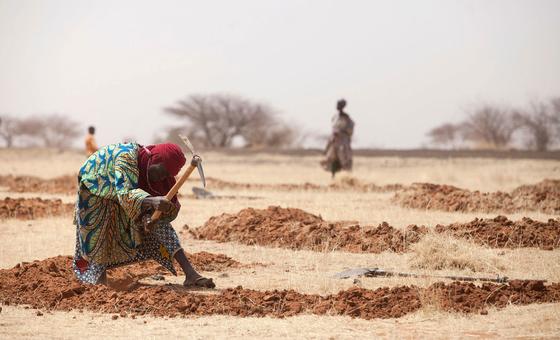
Although LLDCs account for approximately 12 per cent of the world’s land surface, they have experienced nearly 20 per cent of the world’s droughts and landslides over the past decade – underscoring their disproportionate exposure to climate-related disasters.

Lacking access to the sea, these countries rely heavily on neighboring transit states, which further increases their vulnerability to climate-induced disruptions.

The Awaza Programme of Action is not the first global framework to address the development needs of LLDCs, but for the first time, such an action plan includes a strong focus on adaptation to climate-related disasters.

A call for resilience and preparedness

Natalia Alonso Cano, Chief of the UN Office for Disaster Risk Reduction (UNDRR) Regional Office for Europe and Central Asia, emphasized this in an interview with UN News.

LLDCs, she said, face overlapping risks: over half of their territory is classified as dryland; many are in mountainous regions; and some sit in seismically active zones.

“Landlocked countries in general, they suffer about three times the economic losses compared to the global average,” she said. “Also, the mortality rates [when disasters strike these countries] much higher than the global average. Such big difference explained by a combination of this vulnerability, but also a combination of exacerbating impacts.”

Limited capacity, growing challenges

Landlocked developing countries often struggle to respond to climate challenges due to limited financial capacity, dependence on undiversified, commodity-based economies, and weak governance. In 2024, one-third of LLDCs were either in conflict or considered unstable.

The new 10-year UN action plan aims to support LLDCs in climate adaptation, sustainable development, and disaster risk reduction.

“We know that early warning saves lives. It’s a fact,” Ms. Alonso Cano explained. “When you can communicate to the communities affected that something is going to happen and they need to prepare – to evacuate, for example – they need to do certain things. If they know what they need to do, that’s part of the early warning system. Obviously, it saves lives, and it saves livelihoods as well.”

She gave an example of drought preparedness: “If there [is] a systemic drought in an area, you work in the preparedness with the communities, they can, for example, take certain measures, reduce maybe the amount of cattle in the case of that, they can congregate towards points of water, etc. There are a number of measures to address that.”

Ms. Alonso Cano stressed the need for long-term planning: “We need to take into account what is going to happen in 10, 20, 30 years. And climate change will become more extreme – we know this for sure.”

Women and girls at the forefront

Within LLDCs, women and girls are particularly at risk, making gender a key concern at Thursday’s events at LLDC3 in Awaza. One highlight was a Women Leaders’ Forum, opened by UN Under Secretary-General Rabab Fatima, who emphasized that sustainable development cannot be achieved without the full participation of women and girls.

Ms. Fatima, the High Representative for the Least Developed Countries, Landlocked Developing Countries and Small Island Developing States, noted progress over the last 25 years: women now occupy one-third of parliamentary seats in LLDCs, compared to just 7.8 per cent in 2000.

“This is higher than the global average,” she said, adding that 11 of the world’s 54 female speakers of parliament come from LLDCs.

Persistent gender gaps

Yet challenges remain. “Progress is uneven and far too slow. One in four women in LLDCs live in extreme poverty – that is nearly 75 million women; and nearly half – about 150 million – face food insecurity.”

Employment statistics show wide gender disparities. While 80 per cent of women in LLDCs work informally, without contracts or protections, the global average is 56 percent. One in three girls in LLDCs marries early – nearly twice the global rate – and only one in three completes secondary education. In addition, just 36 per cent of women in these countries have access to the internet.

“That is why gender-responsive industrial and development policies are so important,” Ms. Fatima stressed. “These policies must be tailored to national contexts, and industrial development in rural areas, business support, formalization of employment, and strengthened partnerships must be priorities.”

Digital inclusion for women and girls

She also called for improved internet access and education for women and girls.

The International Telecommunication Union (ITU), a UN specialized agency, is addressing these challenges.

Dr. Cosmas Luckysin Zavazava, Director of the ITU Telecommunication Development Bureau, told UN News that while some regions such as the CIS have achieved gender parity in internet access, LLDCs still face major barriers.

“That’s why we’ve developed special programmes for women and girls in this region,” he said. “It’s not just about access, but also about building coding skills and introducing girls to fields like robotics. Our programmes aim to motivate young women and girls to pursue careers in STEM sectors.”

Turning point for action

As the Awaza conference nears its conclusion, participants are expected on Friday to reaffirm their political commitment to the Awaza Programme of Action, which was adopted by the UN General Assembly in 2024.

The time has come for implementation – or as High Representative Rabab Fatima put it, “Let this forum be a turning point.

Source link

‘Landlocked to landlinked’: UN summit seeks to turn geography into opportunity

And increasingly, climate change is compounding the problem – damaging roads, disrupting supply chains, and threatening already fragile infrastructure with floods, droughts, and extreme weather.

But as global discussions intensify, a UN conference underway in Turkmenistan is aiming to flip the script – to help transform LLDCs from landlocked to landlinked through smarter more climate resilient infrastructure, streamlined logistics, and stronger regional ties.

As day two of the Third UN Conference on the Landlocked Developing Countries (LLDC3) got underway on Wednesday, the atmosphere at the Awaza Congress Center shifted.

With presidents and heads of government having departed after Tuesday’s opening ceremony, security measures relaxed, making it easier for delegates to move around the venue.

But the pace of the conference didn’t slow. Meeting rooms stayed packed, exhibition stands buzzed with activity, and participants navigated long white-carpeted corridors to attend back-to-back events. A large team of multilingual youth volunteers helped guide attendees through the sprawling complex, keeping the energy high and logistics smooth.

Trade troubles and the ‘geography gap’

The day’s discussions focused on overcoming the disadvantages of geography. The main thematic roundtable was devoted to trade, which is a pressing issue for the world’s 32 LLDCs, which lack direct access to seaports. As a result, they must rely on longer, more complex routes to reach international markets, driving up costs and reducing competitiveness.

And geography isn’t the only hurdle. Many LLDCs struggle with outdated infrastructure and limited use of digital tools that could speed up sluggish transport times. 

These roadblocks don’t just delay trade – they hold back economic growth and widen the gap between LLDCs and other developing nations.

On Tuesday, UN Secretary-General António Guterres told reporters in Awaza that “landlocked developing countries need smart logistics, streamlined systems, and stronger partnerships with transit countries,” adding: “We must cut red tape, digitize border operations, and modernize transport networks to reduce delays and costs.”

The numbers tell the story

The impact of geography shows clearly in the numbers.

Landlocked developing countries make up more than seven per cent of the world’s population, yet in 2024 they accounted for just 1.2 per cent of global merchandise trade. It’s a stark reminder of how physical barriers can translate into economic ones.

The Awaza Programme of Action for 2024–2034, adopted by the UN General Assembly last year, aims to change that reality. But turning ambition into results will take bold, coordinated efforts across borders and sectors.

One phrase echoing through the corridors of the Awaza Congress Center is “from landlocked to landlinked” – a rallying call for transforming geographic disadvantage into opportunity.

Mindset matters

Umberto de Pretto, Secretary General of the International Road Transport Union (IRU), told UN News: “There is proof that if you put the right policies in place … you can be landlinked … I think the biggest impediment for landlocked countries is mindset.”

The IRU, founded in 1947, supports sustainable mobility and logistics worldwide and represents over 3.5 million transport operators in more than 100 countries.

As Mr. de Pretto points out, only 11 of the world’s 32 landlocked developing countries have joined the UN-backed TIR system, which allows goods to move from origin to destination in sealed compartments under a mutually recognized customs procedure.

“The biggest user of the system that we run, the UN Convention called TIR, is Uzbekistan, one of the only two double landlocked countries. So, there is evidence that if you put in place the right policies, your country will be landlinked, not landlocked,” he explained.

Digital tools for smoother transit

New technologies offer additional ways to simplify cargo movement.

“How do you go from paper to moving information digitally across to government authorities? We need things like ‘single window’, where you have a single intake point for electronic information so the government can analyze that information and make decisions earlier,” Ian Saunders, Secretary General of the World Customs Organization, explained.

He shared examples of successful initiatives, such as cargo tracking in East and West Africa and the use of electronic TIR carnets – sometimes called a ‘merchandise passport’ – by private companies in Central Asia. These unique documents guarantee the payment of duties and taxes suspended while goods are in transit.

Climate risks and smarter infrastructure

Another example came from Dmitry Maryasin, Deputy Executive Secretary of the UN Economic Commission for Europe (UNECE).

Speaking with UN News, he noted the 2023 adoption of a roadmap for the digitalization of the Trans-Caspian Corridor. Using UN tools and harmonized regulations, the corridor leverages both land and sea transport – including rail and shipping across the Caspian Sea – to move goods between Asia and Europe.

Climate change is also making cargo transport more difficult. “We’re seeing recurrent road flooding, vulnerability to landslides, mudflows, avalanches, and droughts – all of this is now a reality in Central Asia,” Mr. Maryasin said.

In response, UNECE has developed a transport infrastructure stress-testing tool that factors in climate risks. An online platform based on satellite data has also been launched, allowing users to overlay trade routes and climate hazards on a map to support smarter investment decisions.

“Countries are already using it,” Mr. Maryasin said. Efforts are under way to integrate this platform with a similar one developed by the UN’s ESCAP office, covering South and Southeast Asia.

A Day for LLDCs

Wednesday also marked the first observance of the International Day for the Dissemination of Information on the Special Needs of Landlocked Developing Countries. While each LLDC faces unique development challenges, they also share common priorities. And with nearly 600 million people living in these countries, finding shared solutions is essential.

The message from Awaza is clear: isolation is not destiny. With the right mindset, effective policies, and meaningful partnerships, landlocked countries can become landlinked – and thrive.

LLDC3 continues tomorrow, Thursday 7 August, with roundtables and events on a range of topics, as well as a Women’s Forum. Find all our coverage here.

Source link

Geography shouldn’t define destiny: UN summit on landlocked nations opens in Turkmenistan

Urging global leaders to rethink development for landlocked nations, the UN chief declared: “We gather today to reaffirm a fundamental truth: geography should never define destiny.”

According to the UN Development Programme, of the 32 landlocked developing countries (LLDCs) worldwide, 16 are in Africa, 10 in Asia, four in Europe, and two in Latin America. Together, they are home to over 500 million people.

Trade barriers, debt distress, and deep inequality

Mr. Guterres outlined the “daunting challenges” LLDCs continue to face – steep barriers to trade, high transport costs, and limited access to global markets. He warned that the debt burden of these countries has reached “dangerous and unsustainable levels.”

Although LLDCs account for seven per cent of the world’s population, they represent just over one percent of global economic output and trade. “This is a stark example of deep inequalities that perpetuate marginalization,” said the Secretary-General, attributing this to “an unfair global economic and financial architecture that does not reflect the realities of today’s interconnected world”, as well as to the legacy of colonialism.

Decade of ambition: the Awaza Programme of Action

The task before the conference, known as LLDC3 and running in Awaza through Friday, is to find solutions to these challenges.

“LLDC3 is about launching a new decade of ambition – through the Awaza Programme of Action and its deliverables – and fully unlocking the development potential of landlocked developing countries,” said Mr. Guterres.

Adopted by the UN General Assembly in December 2024, that action plan represents a renewed and strengthened global commitment to support LLDCs’ development aspirations.

Four priorities for progress

The Secretary-General outlined four key priorities:

  1. Accelerate Economic Diversification & Digital Transformation
    • Invest in value-added industries, local innovation, and inclusive growth.
    • Bridge the digital divide to unlock AI, e-commerce, and smart logistics.
  2. Strengthen Trade, Transit & Regional Connectivity
    • Upgrade infrastructure and simplify cross-border procedures.
    • Integrate LLDCs into global value chains and reform trade systems.
  3. Advance Climate Action & Resilience
    • Double adaptation finance and build climate-resilient infrastructure.
    • Support LLDCs in green transitions with technology and partnerships.
  4. Mobilize Financing & Partnerships
    • Reform global financial systems to ensure fair, accessible funding.
    • Scale concessional finance and unlock climate investment at speed.

“The success of landlocked developing countries is essential to the success of the 2030 Agenda,” Mr. Guterres stressed.

“We have the knowledge, and we have the tools … Together, we can transform geography from a barrier to a bridge – connecting not just markets, but the peoples and cultures that give meaning to development.”

Speaking to reporters later, Mr. Guterres emphasized that the conference reflects a new era of cooperation taking shape across Central Asia – one grounded in mutual trust, shared priorities, and growing regional solidarity.
 
“At a time when multilateral cooperation is being tested, this spirit of partnership is more essential than ever,” he said.

Regional challenges, global solidarity

The session opened with a welcome from Turkmenistan’s President, Serdar Berdimuhamedov, who highlighted national initiatives to strengthen international cooperation in healthcare, climate action, and environmental protection.

He also drew attention to regional challenges such as the drying of the Aral Sea and falling water levels in the Caspian Sea, which is the world’s largest enclosed body of water and the setting for the Third UN LLDC Conference.

In his remarks, UN General Assembly President Philemon Yang noted the “rapidly approaching deadline for the 2030 Agenda” and called for decisive action and a renewed commitment to multilateralism and foundational values.

He emphasized that the three pillars of the UN Charter – peace, development, and human dignity – must remain at the heart of all efforts, and that actions must reflect the promise to leave no one behind.

Noting LLDCs’ vulnerability to climate change and structural challenges, Mr. Yang said these countries “must never lack access to opportunity, prosperity, or hope,” and called for international solidarity, infrastructure investment, and the practical realization of freedom of transit.

He also announced that the General Assembly had proclaimed 6 August as the International Day of Awareness on Landlocked Developing Countries, to be observed annually.

“The General Assembly will continue to serve as a global platform in support of these countries,” he said, emphasizing the importance of monitoring the Awaza Programme of Action and preparing for its high-level review in 2029.

Turning vulnerability into opportunity

Also addressing the opening session, Lok Bahadur Thapa, President of the UN Economic and Social Council, said LLDC3 is “a pivotal moment” for the 32 landlocked nations striving to overcome structural barriers to development.

Hailing from Nepal, which is both landlocked and least developed, he emphasized that the Awaza Programme of Action must serve as a “bold, ambitious, actionable, and future-oriented blueprint” to turn vulnerability into opportunity for over 570 million people.

Mr. Thapa underscored the urgency of addressing the “growing complexity, scale and urgency” of challenges facing LLDCs, including debt distress, climate impacts, and infrastructure gaps. Mr. Thapa urged the creation of an infrastructure investment facility for LLDCs, along with scaled-up climate finance, increased concessional resources, and accelerated technology transfer.

He also stressed the importance of regional cooperation and sustainable transport, praised Turkmenistan’s leadership, and reaffirmed ECOSOC’s commitment to advancing the Awaza Programme of Action – pledging to integrate LLDC priorities such as food security, youth empowerment, and climate resilience across all ECOSOC discussions and processes.

LLDC3 continues tomorrow, Wednesday 6 August, with roundtables and events on a range of topics, including connectivity and transport, South-South cooperation, youth engagement and more. Find all our coverage here.

Source link

Deputy UN chief urges bold action to transform food systems at global summit in Addis Ababa

Delivering closing remarks at the UN Food Systems Summit +4 Stocktaking Moment (UNFSS+4) in Addis Ababa, co-hosted by Ethiopia and Italy, Ms. Mohammed praised the growing momentum behind food systems transformation.

But she also warned that with just five years left to 2030, “hunger and malnutrition persist. Climate shocks, conflict, debt, and inequality are widening the cracks in our systems.”

“Too often food systems are seen as part of our challenges,” she said. “When in fact, they can be one of the greatest solutions to deliver for people, planet, peace and prosperity.”

A global process for transformation

The UN Food Systems Summit process was launched in 2021 “in the midst of a global pandemic” to catalyse national and global action to make food systems more inclusive, resilient and sustainable.  

The 2025 stocktake brought together over 3,000 participants from governments, civil society, Indigenous Peoples, youth, and the private sector to assess progress and renew commitments.

To date, more than 130 countries have developed National Pathways for food systems transformation, supported by UN agencies and development partners.

Moving the UNFSS process forward

In her address, Ms. Mohammed highlighted several areas of progress and called for urgent, coordinated action:

  • Food systems as climate solutions: 
    “Food and agriculture are now part of the climate plans of 168 countries,” she said, noting their potential to reduce emissions and build resilience.
  • School meals as a strategic investment: 
    Over 170 countries are implementing school meal programmes. These are not just meals – they are investments in children, our farmers, and the future.
  • Cities driving innovation: 
    Urban centres are leading efforts to reduce food waste and strengthen local supply chains. Cities are showing what innovation looks like on the ground.
  • Inclusion is essential: 
    Ms. Mohammed called for inclusion of youth, Indigenous Peoples, women, and marginalized communities. “These are powerful commitments to transform food systems for people and the planet that you have helped inspire.”
  • Financing must match ambition: 
    She urged donors and development banks to align investments with national pathways.  

“As we conclude this Stocktake, we must acknowledge that we met in the face of challenges that test our moral values and threaten the future sustainability of our planet, underscoring the urgency of our work together.”

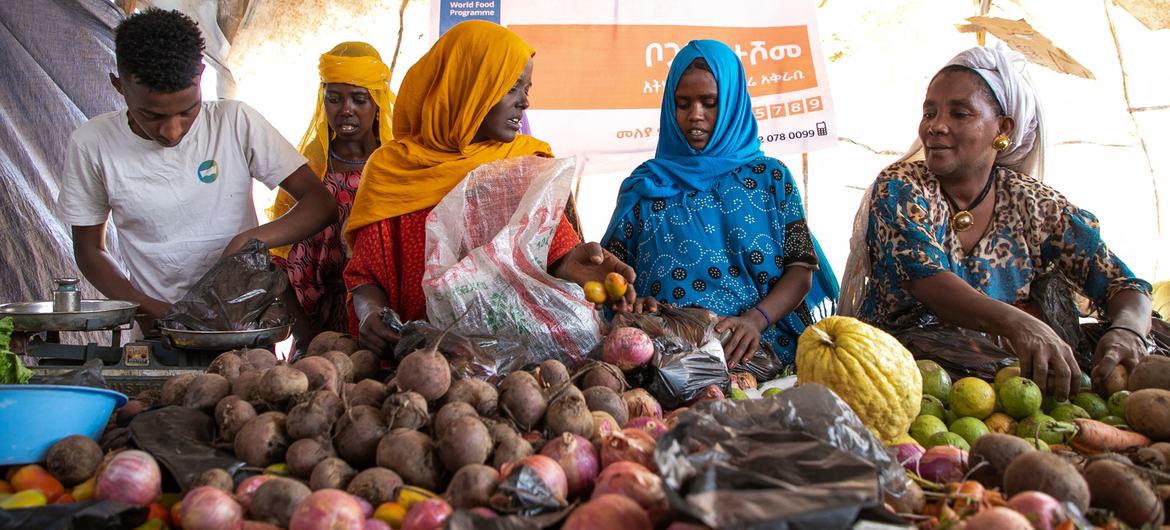
A food market in the Amhara region of Ethiopia.

Global hunger declines, but regional disparities persist

The Summit, which has been running in the Ethiopian capital since 27 July, saw the launch of the State of Food Security and Nutrition in the World 2025 (SOFI) report, which revealed a modest decline in global hunger – but a troubling rise in food insecurity in Africa and Western Asia  

Jointly produced by FAO, IFAD, UNICEF, WFP and WHO, the report highlights how persistent food price inflation has undermined access to healthy diets, especially for low-income populations. Vulnerable groups – including women, children, and rural communities – remain disproportionately affected.

The report calls for:

  • Coherent fiscal and monetary policies to stabilize markets
  • Open and resilient trade systems
  • Targeted social protection for at-risk populations
  • Sustained investment in resilient agrifood systems

While noting an encouraging decrease in the global hunger rate, the report underscored that progress is uneven. SOFI 2025 serves as a critical reminder that the international community must intensify efforts to ensure that everyone has access to sufficient, safe, and nutritious food.  

Hope for those who need it most

At a key side event on Tuesday, Ms. Mohammed appealed for long-term, inclusive solutions to food insecurity in crisis-affected regions. She highlighted the staggering toll of acute malnutrition, noting that over 37 million children under five will face acute malnutrition this year – nearly 10 million of them suffering from severe wasting, the deadliest form of undernutrition.

“Communities are trapped in relentless cycles of hardship,” she said. “But courage is on display at all moments.”

Ms. Mohammed urged governments and partners to move beyond short-term interventions and embrace transformative, locally driven solutions. She praised countries embedding resilience into national strategies and combining traditional knowledge with science to rebuild food systems.

“These governments are not waiting for permission – they are leading,” she said.

She outlined three priorities for action: Catalytic finance that builds local capacity; Coordinated responses that bridge humanitarian and development divides; and Community-centred approaches, especially for women and youth.

“Food systems transformation is especially critical in complex settings,” she said. “It drives food security, resilience, stability, and inclusive growth.”

She wrapped up the event with a call to strengthen multilateralism and unlock opportunity “for and with those who need it most.”

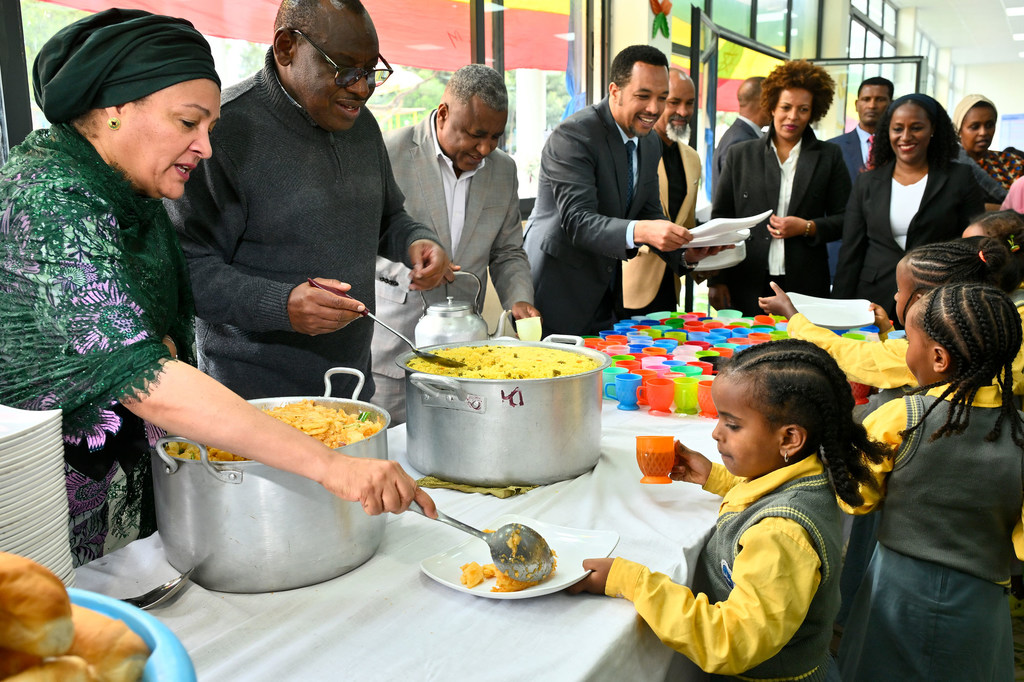
UN Deputy Secretary-General Amina Mohammed (left) serves food to children at a UN Food Systems Summit event in Addis Ababa, Ethiopia.

Looking ahead

Ms. Mohammed closed the Summit with a call to action:

“Our movement has shown what is possible when we work together in deliberate ways across sectors, stakeholders, and countries with a shared purpose.”

She called on governments and people everywhere to build on what has been accomplished and continue to work together for peace and to realize the vision of the 2030 Agenda.

“Let’s continue to lead the way – together.”

Source link

UN’s Guterres declares fossil fuel era fading; presses nations for new climate plans before COP30 summit

In a special address at UN Headquarters in New York, Mr. Guterres cited surging clean energy investment and plunging solar and wind costs that now outcompete fossil fuels.

The energy transition is unstoppable, but the transition is not yet fast enough or fair enough,” he said.

The speech, A Moment of Opportunity: Supercharging the Clean Energy Age – a follow‑up to last year’s Moment of Truth – was delivered alongside a new UN technical report drawing on global energy and finance bodies.

“Just follow the money,” Mr. Guterres said, noting that $2 trillion flowed into clean energy last year, $800 billion more than fossil fuels and up almost 70 per cent in a decade.

Key points from the address

  • Point of no return – The world has irreversibly shifted towards renewables, with fossil fuels entering their decline
  • Clean energy surge – $2 trillion invested in clean energy last year, $800 billion more than fossil fuels
  • Cost revolution – Solar now 41 per cent cheaper and offshore wind 53 per cent cheaper than fossil fuel alternatives.
  • Global challenge – Calls on G20 nations to align new national climate plans with the 1.5°C target of the Paris Agreement
  • Energy security – Renewables ensure “real energy sovereignty”
  • Six opportunity areas – Climate plan ambition, modern grids, sustainable demand, just transition, trade reform, and finance for emerging markets.

A shift in possibility

He noted new data from the International Renewable Energy Agency (IRENA) showing solar, once four times costlier, is now 41 per cent cheaper than fossil fuels.

Similarly, offshore wind is 53 per cent cheaper, with more than 90 per cent of new renewables worldwide beating the cheapest new fossil alternative.

This is not just a shift in power. It is a shift in possibility,” he said.

Renewables nearly match fossil fuels in global installed power capacity, and “almost all the new power capacity built” last year came from renewables, he said, noting that every continent added more clean power than fossil fuels.

Clean energy is unstoppable

Mr. Guterres underscored that a clean energy future “is no longer a promise, it is a fact”. No government, no industry and no special interest can stop it.

Of course, the fossil fuel lobby will try, and we know the lengths to which they will go. But, I have never been more confident that they will fail because we have passed the point of no return.

He urged countries to lock ambition into the next round of national climate plans, or NDCs, due within months. Mr. Guterres called on the G20 countries, which are responsible for 80 per cent of emissions, to submit new plans aligned with the 1.5°C limit and present them at a high‑level event in September.

Targets, he added, must “double energy efficiency and triple renewables capacity by 2030” while accelerating “the transition away from fossil fuels”.

Real energy sovereignty

The Secretary-General also highlighted the geopolitical risks of fossil fuel dependence.

“The greatest threat to energy security today is fossil fuels,” he said, citing price shocks after Russia’s invasion of Ukraine.

There are no price spikes for sunlight, no embargoes on wind. Renewables mean real energy security, real energy sovereignty and real freedom from fossil-fuel volatility.

Six opportunity areas

Mr. Guterres mapped six “opportunity areas” to speed the transition: ambitious NDCs, modern grids and storage, meeting soaring demand sustainably, a just transition for workers and communities, trade reforms to broaden clean‑tech supply chains, and mobilising finance to emerging markets.

Financing, however, is the choke point. Africa, home to 60 per cent of the world’s best solar resources, received just 2 per cent of global clean energy investment last year, he said.

Only one in five clean energy dollars over the past decade went to emerging and developing economies outside China. Flows must rise more than five-fold by 2030 to keep the 1.5-degree limit alive and deliver universal access.

Mr. Guterres urged reform of global finance, stronger multilateral development banks and debt relief, including debt‑for‑climate swaps.

The fossil fuel age is flailing and failing. We are in the dawn of a new energy era,” he said in closing.

That world is within reach, but it won’t happen on its own. Not fast enough. Not fair enough. It is up to us. This is our moment of opportunity.

Source link

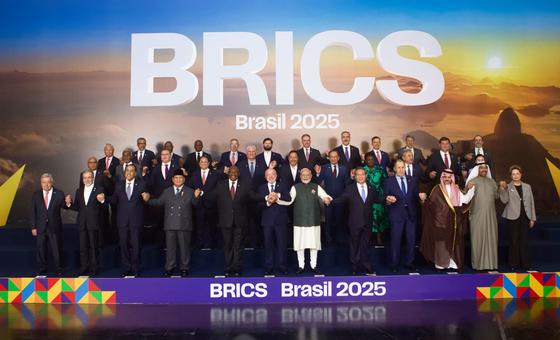
‘Cooperation is humanity’s greatest innovation,’ UN chief declares at BRICS summit

Speaking at the 17th BRICS summit in Rio de Janeiro, Brazil, he emphasised the human impact of environmental devastation and climate change.  And as environmental disasters increase, the sustainable development goals are also being left behind.  

Across the world, lives and livelihoods are being ripped apart, and sustainable development gains left in tatters as disasters accelerate,” Mr. Guterres said. 

The impact on human health is atrocious…the vulnerable and the poorer pay the highest price.” 

BRICS was founded by Brazil, Russia, India and China in 2006. South Africa joined in 2011 and Egypt, Ethiopia, Indonesia, Iran, Saudi Arabia and the United Arab Emirates joined the group since. Collectively, these eleven States represent over half of the world’s population and approximately one-third of the world’s GDP.  

Artificial intelligence must benefit all

On Sunday, Mr. Guterres addressed a session on strengthening multilateralism, economic-financial affairs and artificial intelligence, where he called for efforts to “minimize the risks and maximize the potential” of the breakthrough technology.

Artificial intelligence is reshaping economies and societies. The fundamental test is how wisely we will guide this transformation, how we minimize the risks and maximize the potential for good,” he said.  

To maximize the potential, the Secretary-General argued that AI cannot be “a club of the few but must benefit all,” calling for the “real voice” of developing countries to be included in global AI governance.

He also said that human rights and equity must be the guiding principles which shape any international governance structure for AI.  

“We cannot govern AI effectively – and fairly – without confronting deeper, structural imbalances in our global system,” he said.  

Collaboration is key

UN Secretary-General António Guterres stressed the need for peace amid conflicts in Gaza, Ukraine, Sudan and Myanmar.

He called for urgent reform of global institutions, noting that bodies like the Security Council and international financial systems were “designed for a bygone age, a bygone world, with a bygone system of power relations.”

“The reform of the Security Council is crucial,” he said, highlighting also calls from the recent financing for development conference in Sevilla.

Priorities include greater voice for developing countries in global governance, effective debt restructuring, and tripling multilateral bank lending – especially in concessional and local-currency terms.

Call for reform

Mr. Guterres concluded his remarks highlighting the power of cooperation and trust.

At a time when multilateralism is being undermined, let us remind the world that cooperation is humanity’s greatest innovation,” he said.

Let us rise to this moment – and reform and modernize multilateralism, including the UN and all the systems and institutions to make it work for everyone, everywhere.” 

Source link

UN summit confronts AI’s dawn of wonders and warnings

The AI for Good Global Summit 2025 brings together governments, tech leaders, academics, civil society and young people to explore how artificial intelligence can be directed toward Sustainable Development Goals (SDGs) – and away from growing risks of inequality, disinformation and environmental strain.

We are the AI generation,” said Doreen Bogdan-Martin, chief of the International Telecommunications Union (ITU) – UN’s specialized agency for information and communications technology – in a keynote address.

But being part of this generation means more than just using these technologies.

It means contributing to this whole-of-society upskilling effort, from early schooling to lifelong learning,” she added.

Warnings on AI risks

Ms. Bogdan-Martin warned of mounting dangers in deploying AI without sufficient public understanding or policy oversight.

The biggest risk we face is not AI eliminating the human race. It is the race to embed AI everywhere, without sufficient understanding of what that means for people and our planet,” she said.

Her remarks reflected a growing sense of urgency among policymakers and technologists, as new “agentic AI” systems capable of autonomous reasoning and action emerge at unprecedented speed.

With some experts predicting human-level AI within the next three years, concerns about safety, bias, energy consumption and regulatory capacity have intensified.

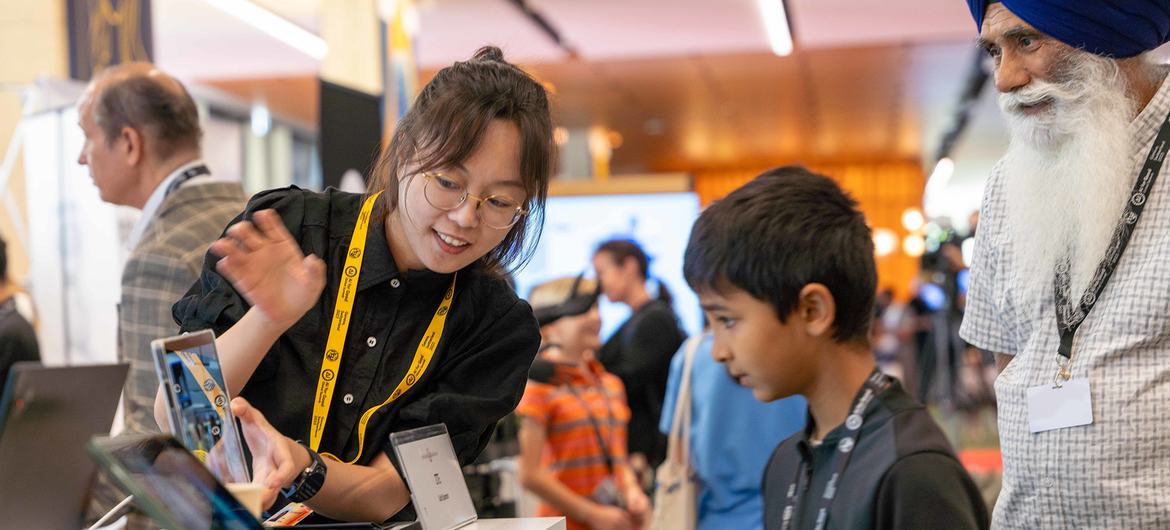
Tech on display at the AI for Good Global Summit.

Tech on display

The summit’s agenda reflects these tensions.

Over 20,000 square meters of exhibit space at Geneva’s Palexpo now hosts more than 200 demonstrations, including a flying car, a fish-inspired water quality monitor, brain-computer interfaces and AI-driven disaster response tools.

Workshops throughout the week will tackle topics ranging from AI in healthcare and education to ethics, gender inclusion and global governance.

One highlight will be the AI Governance Day on Thursday, where national regulators and international organizations will address the gap in global oversight. An ITU survey found that 85 per cent of countries lack an AI-specific policy or strategy, raising alarms about uneven development and growing digital divides.

Focus on health

Health is a prominent theme this year.

On Wednesday, the UN World Health Organization (WHO) will lead a session titled “Enabling AI for Health Innovation and Access,” bringing together technologists, regulators, clinicians and humanitarian leaders to address how AI can improve healthcare delivery – especially in low-resource settings.

Real-world applications – from AI-powered triage in emergency care to diagnostic tools for rural clinics – will be spotlighted, alongside a preview of WHO’s forthcoming Technical Brief on AI in Traditional Medicine.

Experts will also examine the challenges of interoperability, regulatory harmonisation and intellectual property rights at the intersection of AI and global health. The summit will feature the AI for Good Awards, recognising groundbreaking projects that harness AI for public benefit, with categories spanning people, planet and prosperity.

Tech on display at the AI for Good Global Summit in Geneva.

Launchpad for action

The health track exemplifies the summit’s core goal: ensuring AI serves the public good, especially in areas of greatest need.

Youth-led robotics teams from underserved communities will present solutions for disaster recovery and waste management, while startups compete in the Innovation Factory to showcase AI tools for education and climate resilience.

Live demonstrations include an autonomous orchard robot, a self-sanitising mobile toilet and a drone-eDNA system for scalable biodiversity and pest monitoring.

Closing her keynote, Ms. Bogdan-Martin reminded participants that the future of AI is a shared responsibility.

Let’s never stop putting AI at the service of all people and our planet,” she said.

Source link

With sustainable development under threat, Sevilla summit rekindles hope and unity

“The human consequences of rising debt burdens, escalating trade tensions and steep cuts to official development assistance have been brought into sharp relief this week,” she told the closing session of the pivotal gathering, amid sizzling temperatures across southern Spain.

Multilateralism at work

But against that backdrop, the conference has delivered a strong response – a unifying outcome document focused on solutions that reaffirms the Addis Ababa commitments made a decade ago, which seeks to “rekindle the sense of hope” through the Sustainable Development Goals (SDGs) and shows that multilateral cooperation still matters and still works, Ms. Mohammed said.

She welcomed host nation Spain’s commitment to help launch a new UN Sevilla Forum on Debt, calling it a crucial step in helping countries better manage and coordinate debt restructuring efforts.

“Sevilla will be remembered not as a landing zone, but as a launchpad for action, to improve livelihoods across the world,” said Carlos Cuerpo, host Spain’s chief finance minister, at the closing press conference.

Together, we have sent a strong message of commitment and trust in multilateralism that can yield tangible results to put sustainable development back on track.”

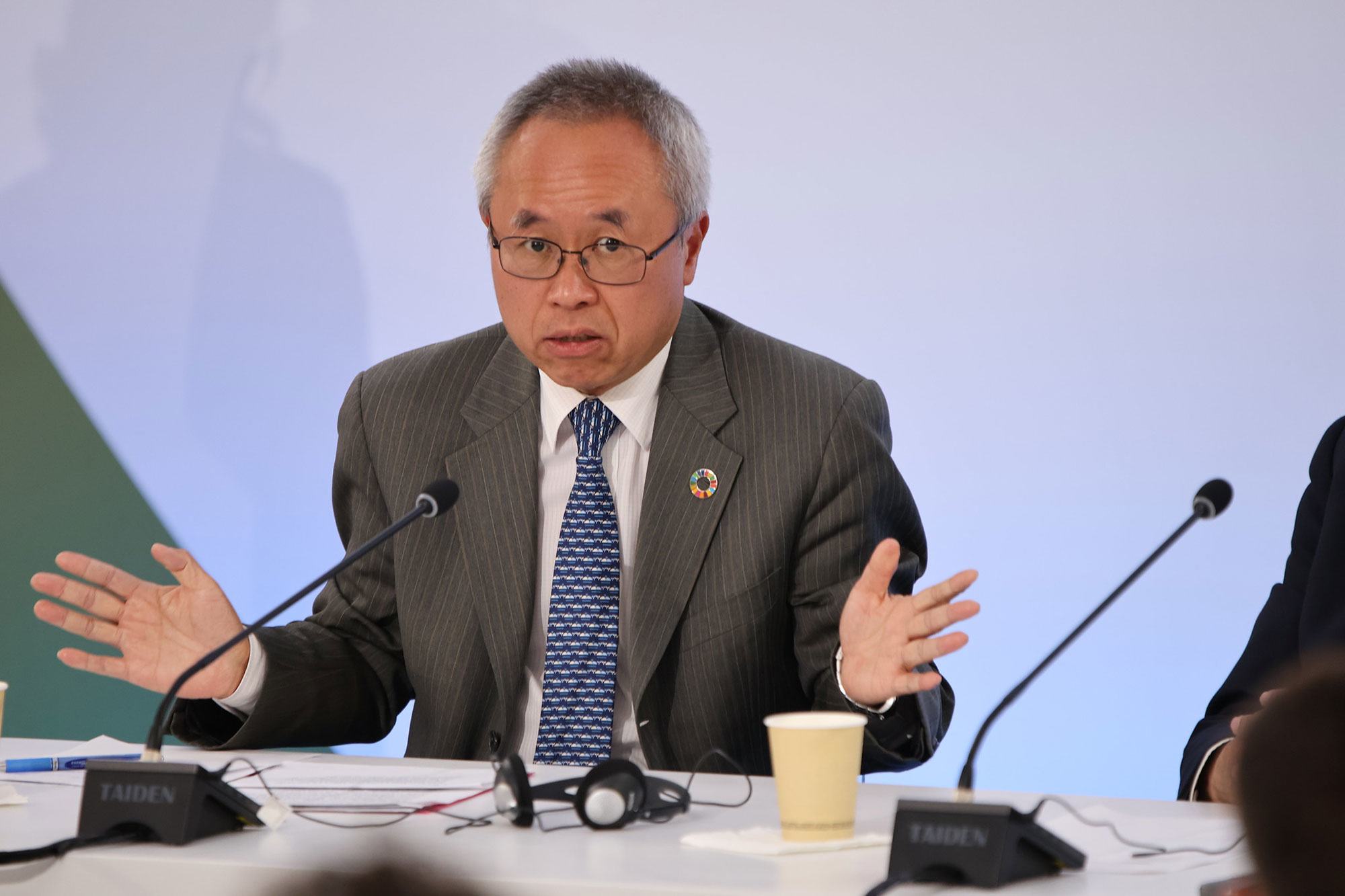
Li Junhua, UN Under-Secretary-General for Economic and Social Affairs and Secretary-General of the Conference said the week had proved the UN is “more than just a space for dialogue; it is a powerful platform for solutions that transform lives.”

“In Sevilla, we have demonstrated our collective will to confront the most urgent and complex financing challenges of our time,” the DESA chief underscored at the closing.

Concrete plan of action

Ms. Mohammed told the closing press conference delegates had made “a serious and long overdue attempt to confront the debt crisis” while aiming to close the massive financing gap for the 2030 Sustainable Development Goals (SDGs).

She reiterated the three main action areas for the Sevilla Commitment:

  • A major investment push to close the SDG financing gap
  • Concrete steps to address unsustainable debt burdens
  • A greater voice for developing countries in global financial decision-making

Alongside this agreement, over 100 new initiatives were launched under the Sevilla Platform for Action. These include a global hub for debt swaps, a “debt pause” alliance, and a solidarity levy on private jets and first-class flights to fund climate and development goals.

This platform has sparked new partnerships, innovative solutions that will deliver real change in people’s lives,” Ms. Mohammed said. “They’re not a substitute for broader funding commitments, but a sign that creative thinking is finally breaking through.”

Acknowledging criticism from civil society groups about limited access to official discussions, she pledged to push for greater inclusion. “We hear you,” she declared, adding that “this trust needs to be earned.”

Here’s a summary of key commitments going forward from Sevilla:

Tackling debt burdens:

  • Spain and the World Bank will lead a Debt Swaps for Development Hub to scale up debt-for-development deals.
  • Italy will convert €230 million in African debt into development investments.
  • A Debt Pause Clause Alliance of countries and development banks will suspend debt payments during crises.
  • The Sevilla Forum on Debt will help countries coordinate debt management and restructuring efforts.

Mobilising investment:

  • A Global Solidarity Levies coalition will tax private jets and premium flights to raise climate and SDG funds.
  • The SCALED platform will expand blended finance, backed by public and private partners.
  • FX EDGE and Delta will help scale up local currency lending through risk management tools.
  • Brazil and Spain will lead work on fairer taxation of the wealthy.
  • New technical assistance hubs will support project preparation and delivery.

Strengthening financial systems:

  • Country-led financing platforms will support national plans.
  • The UK-Bridgetown coalition aims to expand disaster financing.

Private sector role:

At the International Business Forum, companies pledged to increase impact investment, with $10 billion in projects showcased.

Source link

Ahead of UN summit, countries finalise landmark ‘Compromiso de Sevilla’

On Tuesday, Member States at UN Headquarters endorsed the finalized outcome document, known as the Compromiso de Sevilla (the Seville Commitment), following months of intensive intergovernmental negotiations.

It is intended as the cornerstone of a renewed global framework for financing sustainable development, particularly amid a widening $4 trillion annual financing gap faced by developing countries.

A reinvigorated framework

Co-facilitators of the outcome document – Mexico, Nepal, Zambia and Norway – hailed the agreement as an ambitious and balanced compromise that reflects a broad base of support across the UN membership.

“This draft reflects the dedication, perseverance, and constructive engagement of the entire membership,” said Ambassador Alicia Buenrostro Massieu, Deputy Permanent Representative of Mexico.

“Sevilla is not a new agenda. It is a strengthening of what already exists. It renews our commitment to the Addis Ababa Action Agenda and aligns fragmented efforts under a single, reinvigorated framework,” she added.

Nepal’s Ambassador Lok Bahadur Thapa called the outcome a “historic opportunity” to confront urgent financing challenges.

“It recognizes the $4 trillion financing gap and launches an ambitious package of reforms and actions to close this gap with urgency,” he said, highlighting commitments to boost tax-to-GDP ratios and improve debt sustainability.

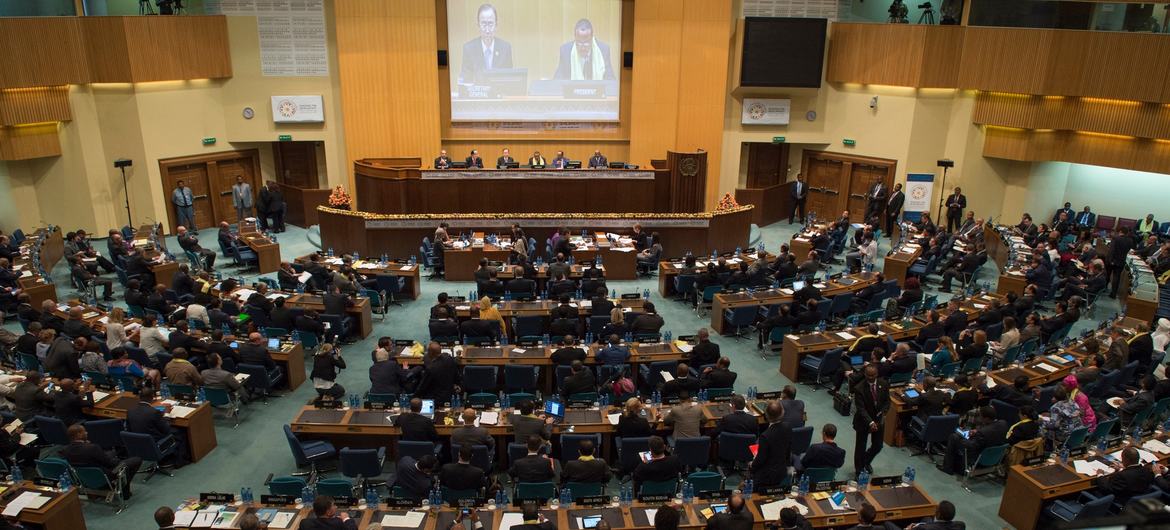
Opening of third International Conference on Financing for Development, in 2015, which adopted the historic Addis Ababa Action Agenda.

United States withdrawal

The agreement came despite sharp divisions on several contentious issues, culminating in the United States decision to exit the process entirely.

“Our commitment to international cooperation and long-term economic development remains steadfast,” said Jonathan Shrier, Acting US Representative to the Economic and Social Council.

“However, the United States regrets that the text before us today does not offer a path to consensus.”

Mr. Shrier voiced his country’s objection to proposals in the draft, which he said interfered with the governance of international financial institutions, introduced duplicative mechanisms, and failed to align with US priorities on trade, tax and innovation.

He also opposed proposals calling for a tripling of multilateral development bank lending capacity and language on a UN framework convention on international tax cooperation.

Renewal of trust

Under-Secretary-General for Economic and Social Affairs Li Junhua welcomed the adoption of the document, calling it a clear demonstration that “multilateralism works and delivers for all.”

He praised Member States for their flexibility and political will in finalizing the agreement, despite challenges.

“The FFD4 conference presents a rare opportunity to prove that multilateralism can deliver tangible results. A successful and strong outcome would help to rebuild trust and confidence in the multilateral system by forging a renewed financing framework,” Mr. Li said.

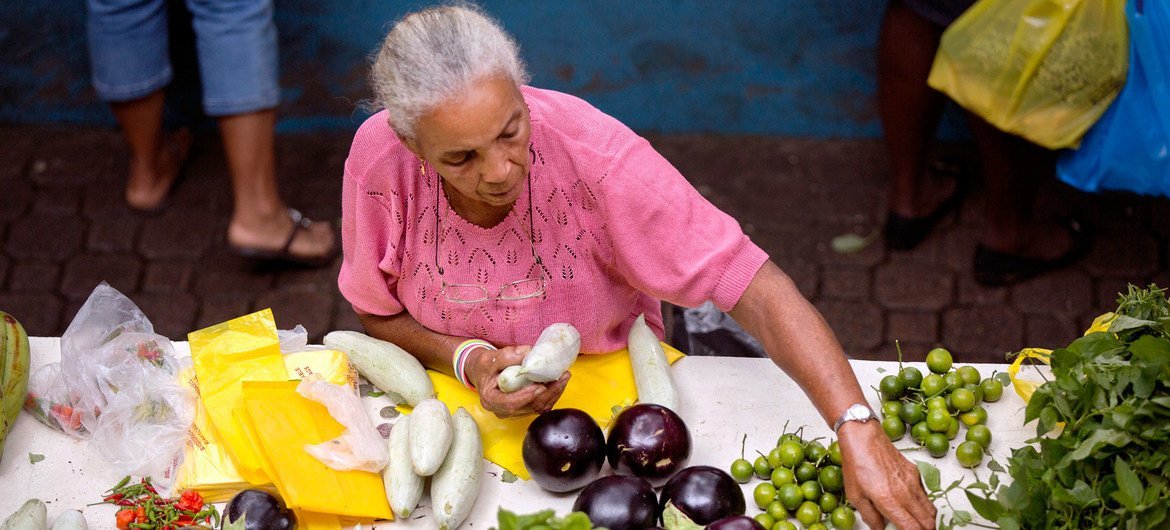
A woman sells vegetables in a market in Seychelles. Despite ongoing efforts, progress toward achieving several SDGs — including those on women’s empowerment – remains off track for 2030.

For the common good

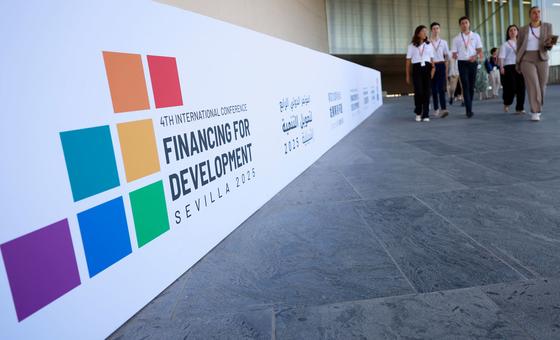
The Sevilla conference, to be held from 30 June to 3 July will mark the fourth major UN conference on financing for development, following Monterrey (2002), Doha (2008) and Addis Ababa (2015).

It is expected to produce concrete commitments and guide international financial cooperation in the lead-up to and beyond the 2030 deadline of the Sustainable Development Goals (SDGs).

“We firmly believe that this outcome will respond to the major challenges we face today and deliver a real boost to sustainable development,” said Ambassador Thapa of Nepal.

Source link

UN ocean summit in Nice closes with wave of commitments

“We close this historic week not just with hope, but with concrete commitment, clear direction, and undeniable momentum,” Li Junhua, the UN’s Under-Secretary-General for Economic and Social Affairs and Secretary-General of the summit, told reporters.

Co-hosted by France and Costa Rica, the five-day event brought 15,000 participants, including more than 60 Heads of State and Government, to France’s Mediterranean coast.

With over 450 side events and nearly 100,000 visitors, the gathering, dubbed UNOC3, built on the momentum of previous ocean summits in New York (2017) and Lisbon (2022). It culminated in a shared call to expand marine protection, curb pollution, regulate the high seas, and unlock financing for vulnerable coastal and island nations.

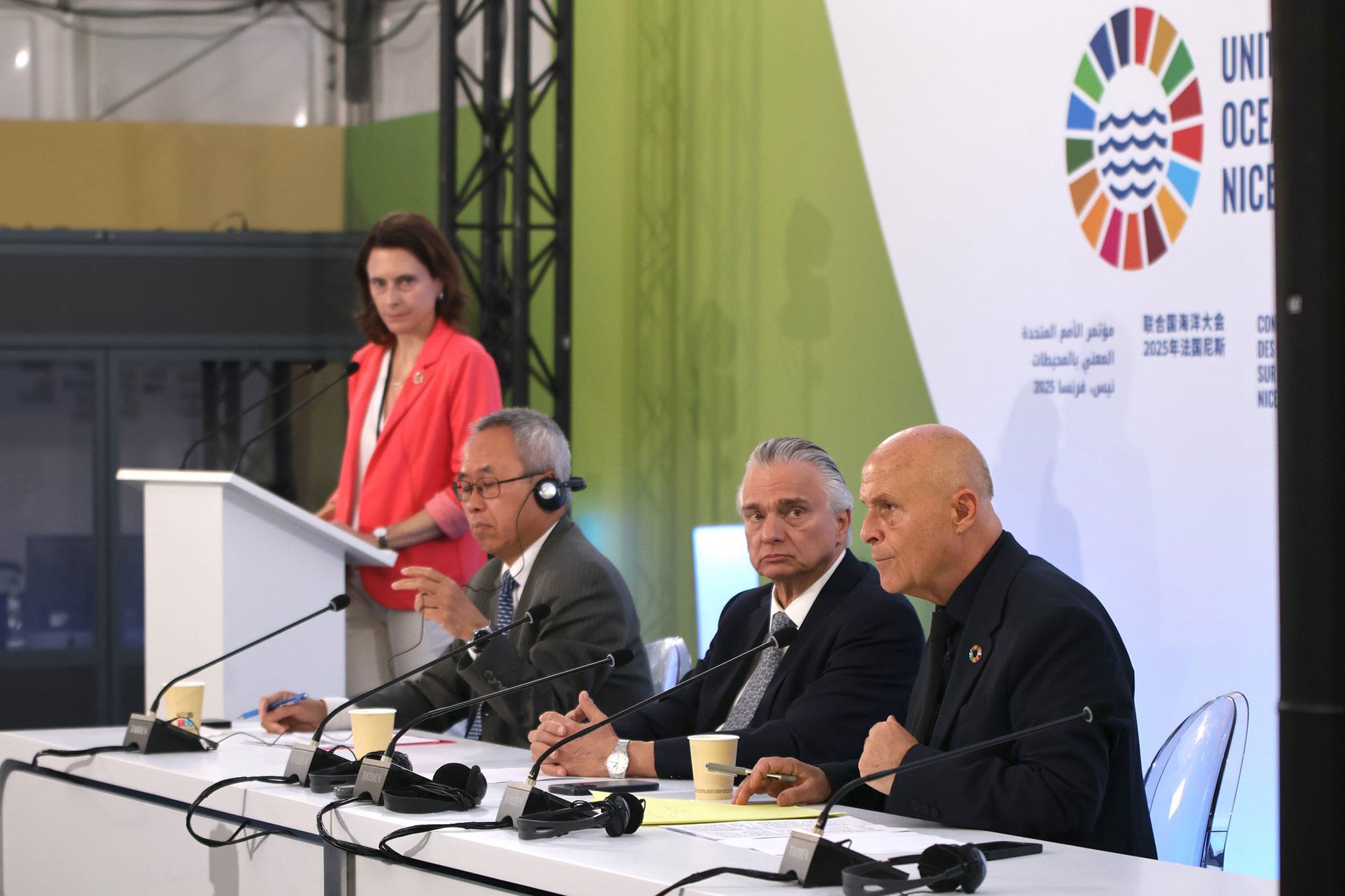
Li Junhua, the UN’s Under-Secretary-General for Economic and Social Affairs and Secretary-General of UNOC3, at the closing press conference, in Nice.

Ambitious pledges

The conference’s outcome, known as the Nice Ocean Action Plan, is a two-part framework that comprises a political declaration and over 800 voluntary commitments by governments, scientists, UN agencies, and civil society since the previous conference.

“These range from advocacy by youth to deep-sea ecosystem literacy, capacity building in science and innovation, and pledges to ratify intergovernmental treaties,” Mr. Li said.

The pledges unveiled this week reflected the breadth of the ocean crisis. The European Commission announced an investment of €1 billion to support ocean conservation, science, and sustainable fishing, while French Polynesia pledged to create the world’s largest marine protected area, encompassing its entire exclusive economic zone – about five million square kilometers.

Germany launched a €100-million programme to remove underwater munitions from the Baltic and North Seas. In addition, New Zealand committed $52 million to strengthen ocean governance in the Pacific, and Spain announced five new marine protected areas.

A 37-country coalition led by Panama and Canada launched the High Ambition Coalition for a Quiet Ocean to tackle underwater noise pollution. Meanwhile, Indonesia and the World Bank introduced a ‘Coral Bond’ to help finance reef conservation in the country.

“The waves of change have formed,” Mr. Li said. “It is now our collective responsibility to propel them forward – for our people, our planet, and future generations.”

Olivier Poivre d’Arvor (right), France’s special envoy for the conference, at UNOC3;s closing press conference, in Nice.

A diplomatic stage

The summit opened Monday with stark warnings. “We are not treating the ocean as what it is – the ultimate global commons,” said UN Secretary-General António Guterres, alongside the presidents of France and Costa Rica, Emmanuel Macron and Rodrigo Chaves Robles, who called for a renewed multilateralism anchored in science.

On Friday, France’s special envoy for the conference, Olivier Poivre d’Arvor, recalled the stakes: “We wanted in Nice… to take a chance on transformative change. I believe we have moved forward, but we can no longer go backwards.”

One of the conference’s main objectives was to accelerate progress on the High Seas Treaty – known as the BBNJ agreement – adopted in 2023 to safeguard marine life in international waters. Sixty ratifications are needed for it to enter into force. Over the past week, 19 countries ratified the accord, bringing the total number as for Friday, to 50.

“This is a significant victory,” said Mr. Poivre d’Arvor. “It’s very difficult to work on the ocean right now when the United States is so little involved.”

The French envoy was alluding to the absence of a senior US delegation, as well as President Donald Trump’s recent executive order advancing deep-sea mining. “The abyss is not for sale,” he said, echoing remarks made earlier in the week by President Macron.

Still, Mr. Poivre d’Arvor emphasized the broad agreement achieved at the summit. “One country may be missing,” he said. “But 92 per cent of the ‘co-owners’ were present today in Nice.”

His counterpart, Arnoldo André-Tinoco, the Foreign Minister of Costa Rica, urged other nations to accelerate financing for ocean protection. “Each commitment must be held accountable,” he said at the conference’s closing meeting.

Momentum – and a test

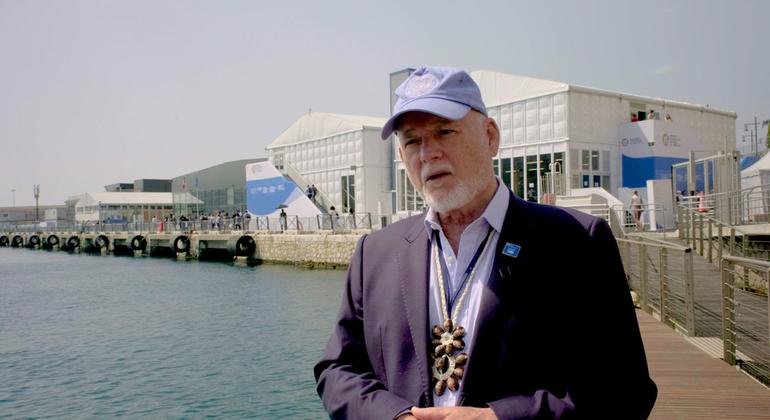
For Peter Thomson, the UN’s Special Envoy for the Ocean, Nice marked a turning point. “It’s not so much what happens at the conference, it is what happens afterwards,” he told UN News, recalling the early days of ocean advocacy when Sustainable Development Goal 14 (SDG14), on life below water, was first established.

“From the desert we were in back in 2015… to where we are now, where you see this incredible engagement.”

Looking ahead, attention is already turning to the Fourth UN Ocean Conference, slated to be co-hosted by Chile and South Korea in 2028.

“We’re going to again see a big surge upwards from here,” Mr. Thomson predicted. He expressed hope that major global agreements — including the BBNJ treaty, the WTO Fisheries Subsidies Agreement, and the future Global Plastics Treaty – will all be ratified and implemented by then.

The 2028 summit will also mark a moment of reckoning, as SDG 14 approaches its 2030 target.

“What do we do when SDG 14 matures in 2030?” Mr. Thomson asked. “Obviously, it’s got to be raised ambition. It’s got to be stronger.” He emphasized that while SDG14 had aimed to protect 10 per cent of the ocean by 2020 – a target the world failed to meet – the new benchmark is 30 per cent by 2030.

Wearing a shell necklace gifted by the Marshall Islands, the Fiji native praised small island nations and atoll collectives for setting ambitious marine protections.

“If small countries can make big measures like that, why can’t the big countries follow suit?” he said.

He also saluted the 2,000 scientists who gathered for the One Ocean Science Congress ahead of the summit. “What a great way to run things,” he said.

A show of unity

Despite the celebratory tone, tensions lingered. Small Island Developing States pushed for stronger language on loss and damage – harms inflicted by climate change that go beyond what people can adapt to. “You cannot have an ocean declaration without SIDS,” one delegate warned earlier this week.

Others, including President Chaves, of Costa Rica, called for a moratorium on deep-sea mining in international waters until science can assess the risks – a step not included in the final declaration.

Still, the political declaration adopted in Nice, titled Our ocean, our future: united for urgent action, reaffirms the goal of protecting 30 percent of the ocean and land by 2030, while supporting global frameworks like the Kunming-Montreal Biodiversity Agreement and the International Maritime Organization’s climate goals.

“The real test,” Mr. Li said, “is not what we said here in Nice – but what we do next.”

As the sun dipped behind the Promenade des Anglais and the conference’s final plenary adjourned, the sea – ancient, vital, and imperiled – bore silent witness to a fragile but shared promise.

‘No Ocean Declaration without small islands’: Delegates push for inclusion as UN summit nears end

With the conference, known as UNOC3, set to close Friday, the stakes couldn’t be higher.

Li Junhua, the UN’s Under-Secretary-General for Economic and Social Affairs, told UN News on Thursday that the past four days have been marked by a rare sense of solidarity around Sustainable Development Goal 14 (SDG 14) – protection life below water.

“This is the true testament to the impact of this Conference on the future of our ocean,” he added.

Draft outcome signals sense of urgency

Under way since Monday on France’s sun-drenched Côte d’Azur, UNOC3 is set to conclude with the adoption of a consensus-backed package aimed at securing the future of the world’s oceans.

Delegates are preparing to endorse a political declaration alongside a sweeping set of voluntary commitments from participating nations – collectively known as the Nice Ocean Action Plan.

The declaration itself, titled ‘Our Ocean, Our Future: United for Urgent Action,’ has undergone four rounds of intense intergovernmental negotiations at UN Headquarters in New York since January, alongside informal consultations with key delegations and civil society groups.

At the heart of the conference’s mission – mobilizing action to safeguard and sustainably manage marine ecosystems – the declaration, in draft form, signals a marked shift in tone, underscoring an unprecedented sense of urgency.

It calls for immediate and transformative measures to protect oceans, reflecting growing concerns over climate change, biodiversity loss, and the depletion of marine resources.

© Coral Reef Image Bank/Tom Vierus

The people of Galoa Village and their ancestors have depended on the reef system for hundreds of years for sustenance and income.

In addition, the draft declaration outlines measures to protect marine ecosystems and foster sustainable ocean-based economies. It also emphasizes accelerating action, highlighting that SDG 14 remains one of the least funded UN goals. 

To drive global ocean initiatives forward, the draft declaration calls for significant, accessible financing and the fulfillment of existing commitments under international agreements.

The draft highlights the ocean’s deep ties to climate and biodiversity, urging nations to fully implement the Convention on Biological Diversity. It also reaffirms commitment to an international, legally binding agreement on plastic pollution, emphasizing a comprehensive approach that addresses plastics across their entire life cycle.

Final negotiations are under way, and tomorrow we’ll report on whether nations have reached a consensus to tackle the global ocean emergency, turning decades of pledges into meaningful marine protection.

H.E. Safiya Sawney, Special Envoy and Ambassador for Climate, Government of Grenada.

Small island voices are vital to ocean policy

Among all the stakeholders, small island nations have a key role in shaping the Declaration. As communities most vulnerable to rising seas and marine degradation, their firsthand experience and leadership are essential to crafting effective, inclusive ocean policy.

Safiya Sawney, Special Envoy and Ambassador for Climate of Grenada, told UN News that she is pleased to see the reference in the draft outcome to the Antigua and Barbuda Agenda for Small Island Developing States, or ABAS, which was adopted during the fourth International Conference on Small Island Developing States on May 2024.

Ms. Sawney said that including the Antigua and Barbuda Agenda in the UNOC3 political declaration signals growing unity among island nations. She emphasized that, despite numerous challenges, small islands are committed to implementing every obligation under ABAS, demonstrating their determination to turn commitments into action.

“A big part of our heritage, of our culture, of our economy is derived from the ocean,” she said, “So for us, you cannot have an ocean declaration without SIDS.”

‘No compromise with nature’

As for the negotiation process on the draft declaration, Ms. Sawney said that Grenada and other delegations in the Alliance of Small Island States (AOSIS) affirmed that they were leveraging strength and experience from past climate talks and bringing that to the ocean space.

“Part of healthy multilateralism is knowing that you have to compromise,” she admitted, but also adding that “the one thing that we cannot compromise with, however, is nature”.

To ensure that “we’re able to all be successful together in supporting this ocean agenda”, she suggested that “there are some countries that need to do more than others”. She added that small island developing States are asking those countries to show their leadership, not just through offsets or financing, but through “real action”.

Ocean Coordination Mechanism Secretariat

Representatives from 14 Caribbean countries sign the Declaration Of Actioning Blue: The Caribbean 30×30 Vision and Roadmap For Our Ocean at a high-level launch event at the 3rd United Nations Ocean Conference (UNOC3) in Nice, France.

Caribbean governments acting together

Calling themselves “large ocean nations” at UNOC3, small island developing States are aggregating their weight to not only participate in but shape the global ocean agenda, said Ms. Sawney. Among these efforts, Caribbean governments have been keen to demonstrate political unity and regional ambition throughout the run of the conference.

On the opening day of UNOC3, the Actioning Blue: Caribbean 30×30 Vision for the Ocean was officially launched. It reflects an urgent call by political leaders of the Caribbean to advance collective regional advocacy aligned with the Kunming-Montreal Global Biodiversity Framework, as well as SDG14.

“Coming into UNOC3, we endorsed 12 Caribbean governments, including independent states and territories, and we’ve had one additional signature and expression of interest from three different governments,” explained Ms. Sawney.

Changing the tide of over-reliance

Recalling the 2008 Caribbean Challenge Initiative that advanced the protection of roughly 49,000 km of marine protected areas in the region, Ms. Sawney said part of what the newly launched Vision does is remind the international community that “we will continue to work, we’ll continue to show up, and we really like their help”.

Describing the Caribbean as “capacity-constrained”, she however pointed to the region’s over-reliance on external help, experts, and capacity.

“We’re trying to change the tide,” she continued, by stressing the importance of letting donors know that the region is very invested in building its own capacity and owning its own implementation.

Seeing UNOC3 as an important opportunity to get across this message, Ms. Sawney stated that Caribbean Islands are not just looking forward to the end of the Conference, but what happens afterwards.

“The real work begins after all of this is over,” she concluded with hope.

Source link

Guterres calls for an end to ocean ‘plunder’ as UN summit opens in France

“The ocean is the ultimate shared resource,” he told delegates gathered at the port of Nice. “But we are failing it.”

Oceans, he warned, are absorbing 90 per cent of the excess heat from greenhouse gas emissions and buckling under the strain: overfishing, rising temperatures, plastic pollution, acidification. Coral reefs are dying. Fish stocks are collapsing. Rising seas, he said, could soon “submerge deltas, destroy crops, and swallow coastlines — threatening many islands’ survival.”

Port Lympia, Nice’s historic marina, now transformed into a secured diplomatic zone known as the Blue Zone for UNOC3.

Call for stewardship

More than 50 Heads of State and Government took part in the opening ceremony, including Brazilian President Luiz Inácio Lula da Silva and European Commission President Ursula von der Leyen — a show of political force underscoring the summit’s weight.

In total, over 120 countries are participating in the five-day gathering, signaling a growing recognition that ocean health is inseparable from climate stability, food security, and global equity.

French President Emmanuel Macron, whose country is co-hosting the summit alongside Costa Rica, followed with a forceful appeal for science, law, and multilateral resolve.

Brazilian President Luiz Inácio Lula da Silva, at the opening ceremony of UNOC3

“The abyss is not for sale, any more than Greenland is for sale, any more than Antarctica or the high seas are for sale,” he declared. “If the Earth is warming, the ocean is boiling.”

He insisted the fate of the seas could not be left to markets or opinion. “The first response is therefore multilateralism,” Mr. Macron said. “The climate, like biodiversity, is not a matter of opinion; it is a matter of scientifically established facts.”

Costa Rican President Rodrigo Chaves Robles took the podium next, thanking Mr. Guterres for elevating the ocean on the global agenda, then shifting to a stark warning.

“The ocean is speaking to us — with bleached coral reefs, with storms, with wounded mangroves,” he said. “There’s no time left for rhetoric. Now is the time to act.”

Condemning decades of treating the ocean as an “infinite pantry and global waste dump,” Mr. Chaves urged a shift from exploitation to stewardship.

“Costa Rica is a small country, but this change has started,” he said. “We are now declaring peace with the ocean.”

Most notably, the Costa Rican leader called for a moratorium on deep-sea mining in international waters until science can adequately assess the risks — a position already backed by 33 countries, he noted.

A treaty within reach

One of the summit’s core objectives is to help bring into force the landmark High Seas Treaty — known as the BBNJ accord — adopted in 2023 to safeguard life in international waters. Sixty ratifications are required for the treaty to become binding international law. Emmanuel Macron announced that this milestone is now within reach.

“In addition to the 50 or so ratifications already submitted here in the last few hours, 15 countries have formally committed to joining them,” he said. “This means that the political agreement has been reached, which allows us to say that this [Treaty] will be properly implemented.”

Whether the legal threshold is crossed this week or shortly after, the French President added, “it’s a win.”

The plenary hall of the third UN Ocean Conference (UNOC3) in Nice.

High-stakes negotiations in the ‘Blue Zone’

The tone set by the opening speeches made clear that Nice will be the stage for high-stakes negotiations — on finalizing a global treaty on plastic pollution, scaling up ocean finance, and navigating the controversy surrounding seabed mining.

Hundreds of new pledges are expected to be announced, building on more than 2,000 voluntary commitments made since the first UN Ocean Conference in 2017. The week-long talks will culminate in the adoption of a political declaration and the unveiling of the Nice Ocean Action Plan, a blueprint aligned with the landmark Kunming-Montreal Global Biodiversity Framework, a 2022 agreement to protect 30 per cent of marine and terrestrial ecosystems by 2030.

“The deep sea cannot become the Wild West,” António Guterres warned, urging that decisions be “grounded in science, guided by precaution, and in line with the rights and obligations enshrined in the UN Convention on the Law of the Sea.”

The summit is being held in a purpose-built venue overlooking Port Lympia, Nice’s historic marina, now transformed into the secured diplomatic ‘Blue Zone.’ On Sunday, a symbolic ceremony led by Li Junhua, head of the UN Department of Economic and Social Affairs and Secretary-General of the conference, saw the French and UN flags raised above the harbor.

“This ceremony marks not only the formal transfer of this historic port into the hands of the United Nations, but also the beginning of a week of shared commitment, responsibility, and hope,” said Mr. Li.

Ludovic Burns Tuki marked the start of the summit by blowing a pu, a traditional conch shell

Culture, science, and collective memory

Before the negotiations began in earnest, Monday’s opening turned to ritual and reflection. Polynesian climate activist Ludovic Burns Tuki marked the start of the summit by blowing a pu, a traditional conch shell.

“It’s a way to call everyone,” he told UN News after the ceremony. “I blow with the support of our ancestors.” In Polynesian navigation, the conch is sounded upon arrival at a new island to signal peaceful intent. Mr. Tuki, born in Tahiti to parents from the Tuamotu and Easter Islands, sees the ocean as both boundary and bond.

“We are not only countries,” he said. “We need to think like a collective system, because this is one ocean, one people, a future for all.”

The cultural segment also included a blessing by Tahitian historian Hinano Murphy, a martial arts performance by French taekwondo master Olivier Sicard, a scientific reflection by deep-sea explorer Antje Boetius, and a poetic testimony by Mauritanian filmmaker Abderrahmane Sissako, accompanied by kora musician Wassa Kouyaté.

What was lost can return

The goals of the conference are clear — but ambitious: to advance the ‘30 by 30’ pledge, promote sustainable fisheries, decarbonize maritime transport, and unlock new streams of “blue finance,” including ocean bonds and debt-for-nature swaps to support vulnerable coastal states.

In addition to plenary sessions, Monday will feature two high-level action panels: one on conserving and restoring marine ecosystems — including deep-sea habitats — and another on strengthening scientific cooperation, technology exchange, and education to bridge the gap between science and policy.

In his opening statement, António Guterres stressed that Sustainable Development Goal 14 , on ‘Life Below Water’, remains the least funded of the 17 UN’s global goals.

“This must change,” he said. “We need bold models to unlock private capital.”

“What was lost in a generation,” he concluded, “can return in a generation. The ocean of our ancestors — teeming with life and diversity — can be more than legend. It can be our legacy.”

Source link

The world’s oceans are dying. Can a UN summit in Nice turn the tide?

From June 9 to 13, the coastal city of Nice will host the Third United Nations Ocean Conference (UNOC3), a high-level summit co-chaired by France and Costa Rica. Its mission: to confront a deepening ocean emergency that scientists warn is nearing a point of no return.

“The ocean is facing an unprecedented crisis due to climate change, plastic pollution, ecosystem loss, and the overuse of marine resources,” Li Junhua, a senior UN official serving as Secretary-General of the event, told UN News.

“We hope the conference will inspire unprecedented ambition, innovative partnerships, and maybe a healthy competition,” he said, highlighting the need for international cooperation to avoid irreversible damage.

The pressure is on. UNOC3 is bringing together world leaders, scientists, activists, and business executives to tackle the growing crisis in the world’s oceans. The goal: to spark a wave of voluntary pledges, forge new partnerships, and — if organizers succeed — inject a much-needed dose of accountability into the fight against marine degradation.

The week-long talks will culminate in the adoption of a political declaration and the unveiling of the Nice Ocean Action Plan — an effort to match the scale of the crisis and accelerate action to conserve and sustainably use the ocean.

Warming seas, bleaching reefs

The crisis isn’t a distant threat: it’s happening now. In April, global sea surface temperatures hit their second-highest levels ever for that monthaccording to the European Union’s Copernicus Climate Change Service. Meanwhile, the most extensive coral bleaching event in recorded history is underway — sweeping across the Caribbean, the Indian Ocean, and parts of the Pacific. More than a single event, it’s a planetary unraveling.

Coral reefs, which sustain a quarter of all marine species and underpin billions in tourism and fisheries, are vanishing before our eyes. Their collapse could unleash cascading effects on biodiversity, food security, and climate resilience.

And the damage runs deeper still. The ocean continues to absorb more than 90 per cent of excess heat from greenhouse gas emissions — a worldwide service that may be nearing its limits. “Challenges like plastic pollution, overfishing, biodiversity loss, ocean acidification, and warming are all linked to climate change,” Mr. Li warned.

Turning versus tipping points

Still, there have been notable breakthroughs. In 2022, the World Trade Organization struck a far-reaching deal to phase out harmful subsidies that fuel overfishing, offering a rare glimmer of multilateral resolve. The following year, after decades of deadlock, nations adopted the High Seas Treaty, known by the shorthand BBNJ, to safeguard marine life in international waters. That long-awaited agreement is now poised to enter into force at the Nice summit.

But policy alone cannot reverse an ecosystem in free fall. “The global response is insufficient,” Li Junhua cautioned.

Progress, in other words, depends not only on political will but on the resources to match it.

An estimated 60 per cent of the world’s marine ecosystems have been degraded or are being used unsustainably.

A lifeline starved of funds

Despite its vital role in regulating life on Earth — producing half of our oxygen and buffering against climate extremes — the ocean remains chronically underfunded.  Sustainable Development Goal 14 , on ‘Life Below Water’, receives the least resources of the 17 global UN goals Member States agreed to meet by 2030.

The estimated cost to protect and restore marine ecosystems over the next five years is $175 billion annually. “But less than $10 billion was allocated between 2015 and 2019,” Mr. Li noted, signaling the need to move ocean funding from trickle to torrent.

That ambition is at the heart of what the Conference aims to deliver.

The Nice Ocean Action Plan

The theme of UNOC3, Accelerating action and mobilizing all actors to conserve and sustainably use the ocean, reflects a shift from declarations to delivery.

Over five days, participants will grapple with the big questions: how to stem illegal fishing, reduce plastic pollution, and scale sustainable blue economies. Hundreds of new pledges are expected to build on the more than 2,000 voluntary commitments made since the first ocean summit in 2017.

The Nice Ocean Action Plan is set to align with the Kunming-Montreal Global Biodiversity Framework, a 2022 agreement calling for the protection of at least 30 per cent of marine and terrestrial ecosystems by 2030.

Alongside new pledges, the plan will include a formal declaration, which Mr. Li described as a “concise” and “action-oriented” political document.

“The draft political declaration, led by Australia and Cabo Verde, focuses on ocean conservation and sustainable ocean-based economies and includes concrete measures for accelerating action,” the UN official teased.

The rapid loss of biodiversity threatens the livelihood of 3 billion people, including coastal communities.

Crisis by the numbers — and what Nice hopes to deliver

  • Up to 12 million metric tons of plastic enter the ocean every year — the equivalent of a garbage truck every minute.

    At Nice, delegates hope to advance a global agreement to tackle plastic pollution at its source.

  • Over 60 per cent of marine ecosystems are degraded or unsustainably used.

    The summit aims to bolster efforts toward protecting 30 per cent of the ocean by 2030 and to launch a roadmap for decarbonizing maritime transport.

  • Global fish stocks within safe biological limits have plunged from 90 per cent in the 1970s to just 62 per cent in 2021.

    Nice hopes to pave the way for a new international agreement on sustainable fisheries.

  • More than 3 billion people depend on marine biodiversity for their livelihoods.

    In response, the summit seeks to boost financing for blue economies and elevate community-led solutions.

In small developing island states, the ocean is not just an economic engine, it’s a lifeline.

From Paris to Nice

The timing of the summit is intentional. A decade after the landmark Paris Agreement set targets for limiting global warming, UNOC3 is pushing to place the ocean at the center of climate action — not as an afterthought, but as a frontline battlefield.

“UNOC 3 addresses the interconnected crisis facing our oceans,” noted Mr. Li.

The summit also aims to be inclusive, highlighting voices often sidelined in global forums, such as women, Indigenous people, fisherfolk, and coastal communities. “These groups are the first to suffer the impacts of climate change and ocean degradation,” Mr. Li emphasized. “But they are also leaders and problem solvers, so they must be empowered.”

A pivotal moment

Nice isn’t just a scenic backdrop — it’s part of the story. The Mediterranean is warming 20 per cent faster than the global average, making it a so-called climate “hot spot.” For many, the location only sharpens the stakes.

Whether the conference generates real momentum or simply more declarations will depend on what countries, companies, and communities bring to the table.

As delegates descend on the sun-drenched coast of Nice, the sea laps gently at the shores. But the question rising with the tide is anything but gentle: can the world still turn this around?

Source link

At Arab League Summit, Guterres reiterates call for Gaza ceasefire

António Guterres told leaders meeting in the Iraqi capital that “the region and the world face trials and tests on all fronts,” starting with the situation in Gaza.

He reiterated that neither the atrocious 7 October 2023 terror attacks by Hamas nor the collective punishment of the Palestinian people can be justified.

Permanent ceasefire now

“We need a permanent ceasefire, now. The unconditional release of all hostages, now. And the free flow of humanitarian aid ending the blockade, now,” he said.

The Secretary-General expressed alarm over reports that Israel plans to expand ground operations in Gaza and stressed that the UN “will not participate in any so-called aid operation that does not adhere to international law and the humanitarian principles of humanity, impartiality, independence and neutrality.”

He again called for full support for UN Palestine refugee agency UNRWA, including funding.  

Two-State solution at risk

The UN chief rejected the repeated displacement of the Gaza population, as well as any suggestion of forced displacement outside Gaza, and urged leaders to remain focused on the terrible situation in the occupied West Bank.

“Let’s be clear,” he said. “Annexation is illegal.  Settlements are illegal. Only a two-State solution can deliver sustainable peace.”

He said the high-level conference in June, co-chaired by France and Saudi Arabia, is an important opportunity.

“The world, the region – and, most of all, the people of Palestine and Israel – cannot afford to watch the two-State solution disappear before our eyes,” he said.

Respect Lebanese sovereignty

The Secretary-General addressed the situation in Lebanon.  He emphasized that the country’s sovereignty and territorial integrity must be respected, and the Government must have full control over the entire territory.

He was encouraged by continued progress on reforms as well as efforts to deploy the Lebanese Armed Forces to the south, with support from the UN Mission in the country, UNIFIL.

Mr. Guterres touched on Syria, saying sovereignty, independence, unity and territorial integrity are critical.  He urged strong support for an inclusive Syrian-led and Syrian-owned political process that safeguards the rights and participation of all the country’s people and ensures their protection.

Regarding Yemen, he noted that attacks by Houthi rebels in the Red Sea have caused significant damage to regional and local economies. He welcomed the cessation of hostilities between the Houthis and the United States, announced by Oman on 6 May.

The Secretary-General also called for the release of UN staff and other personnel in Yemen who have been arbitrarily arrested.

Engagement on Sudan

In Sudan, renewed and coordinated multilateral engagement is crucial to help stem appalling violence, famine, and mass displacement, he said, and thanked the Arab League and African Union (AU) for the excellent coordination meeting convened the previous day.  He also commended the Arab League’s efforts to strengthen multilateral coordination.

The Secretary-General turned next to Somalia, saying unity and inclusive dialogue are imperative. Furthermore, assistance from Somalia’s partners will be essential in the fight against Al-Shabaab militants and to strengthen peace and security.

For this reason, Mr. Guterres said he has put forward a recommendation to the UN Security Council to enable predictable and sustainable financing for the AU Support and Stabilization Mission in the country.

Meanwhile in Libya, the UN is also actively engaging in efforts to end the confrontation between armed groups, to preserve the independence of key oversight institutions, to address obstacles preventing national elections, and set the course for long-term stability and prosperity in line with the people’s needs and aspirations.

Lessons from Baghdad

The Secretary-General concluded his remarks by commending the progress Iraq has made over since the restoration of sovereignty in 2004, such as strengthening institutions, resolving outstanding disputes through dialogue, and promoting sustainable development as well as human rights.

He said the UN Assistance Mission in Iraq (UNAMI) has accompanied the country on this path and is working to ensure the successful delivery of its residual mandate and an orderly drawdown by the end of the year.

“Despite the enormous challenges, let us draw lessons and hope from here in Baghdad. Working in unity and solidarity, we can help resolve conflicts and build a future of peace and prosperity,” he said.

Gaza situation ‘beyond inhumane’

Speaking later to reporters, Mr. Guterres said the situation for Palestinians in Gaza “is beyond description, beyond atrocious and beyond inhumane.”

Since 2 March, Israel has banned the entry of cargo into the Strip, including aid and other life-saving supplies. UN agencies continue to warn that the entire population, 2.1 million people, is at risk of famine and one if five faces starvation.

“A policy of siege and starvation makes a mockery of international law,” he said, calling for the blockade to end immediately.

Source link