What is South-South cooperation, and can it be the gateway to a fairer world?

In practical terms, South-South cooperation is a process whereby developing countries – regardless of their actual geographical location – seek to achieve their individual or shared development goals through the exchange of knowledge, skills, and resources, in partnerships involving governments, regional organisations, civil society, academia, and the private sector.

The experiences and goals of most countries in what is known as the Global South, intersect as they continue to chart their post-colonial future and strive to meet the development needs of their people.

In recognition of mutual cooperation between these nations, the UN established the UN Office for South-South Cooperation (UNOSSC) in 1974, supporting these efforts on the international stage and within the UN system.

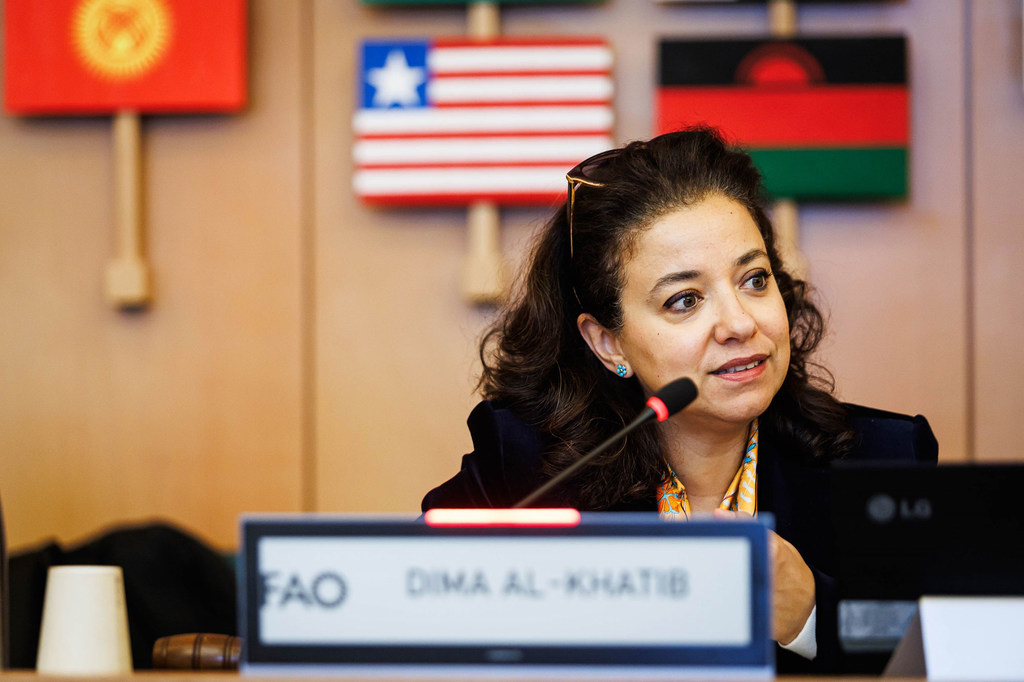
Dima Al-Khatib speaking on South-South and triangular sharing of experiences and innovative approaches in multi-dimensional evaluation, during a conference at FAO Headquarters in Rome, Italy.

Pioneering innovators

Ahead of the International Day for South-South Cooperation, marked on 12 September, UNOSSC Director Dima Khatib told UN News that countries of the South – home to 80 per cent of the world’s population – possess huge levels of untapped human and natural resources, and tremendous potential to drive development forward.

“We believe that countries in the Global South not only have challenges but also have solutions and innovations and we must support, encourage, and highlight their pioneering role in these areas,” she declares.

Nevertheless, the challenges are real and daunting, including rising geopolitical tensions, debt burdens, a widening digital divide, and social complexities, at a time of declining humanitarian and development funding from developed countries.

This harsh landscape is motivating developing countries to look for development financing by cooperating more closely with each other.

Ms. Khatib points to recent studies conducted by her office that demonstrate that South-South cooperation has the potential to change the economic equation, create jobs, and build local capacity, in countries ranging from Ethiopia, to Paraguay, Rwanda and others.

Shot of a 100% electric bus near Expo City in Dubai United Arab Emirates, where the UN Climate Change Conference (COP28) is under way.

Exciting potential in the Middle East

In the Middle East, it’s bearing fruit in areas such as renewable energy, digital transformation, and climate change adaptation. For example, Morocco’s experience with large-scale solar farms has been used as a model for renewable energy projects in parts of sub-Saharan Africa.

Ms. Al-Khatib says that Gulf countries are not only providing financial support in times of crisis but have also become leaders in sharing their expertise.

She points to Saudi Arabia, which shares its extensive experience in seawater purification with countries facing drought, and Masdar City in the United Arab Emirates, which conducts research – and develops capabilities that benefit countries in the Global South.

The UN official also notes that the Islamic Development Bank has been a key driver of progress, facilitating knowledge exchange among its 57 member states and supporting initiatives such as advanced irrigation technologies, sustainable agriculture, and climate-resilient infrastructure.

A driving force for multilateralism

Ms. Khatib notes that countries in the Global South are not only coming together, but also demonstrating their ability to take the lead, citing the India-UN Development Partnership Fund and the India-Brazil-South Africa Fund, both of which are hosted by UNOSSC.

She emphasises that this demonstrates the power of collective action and sends a strong message that cross-border cooperation is both possible and effective.

Amid the tense international political climate the world is witnessing today, South-South cooperation can be a driving force for renewing and strengthening multilateralism, but it is not a replacement for cooperation between all countries.

The senior UN official says there can be no divide between the countries of the Global North and the Global South, but rather, “we must build bridges,” a task to which the United Nations is well suited, given its core mandate to treat all countries equally.
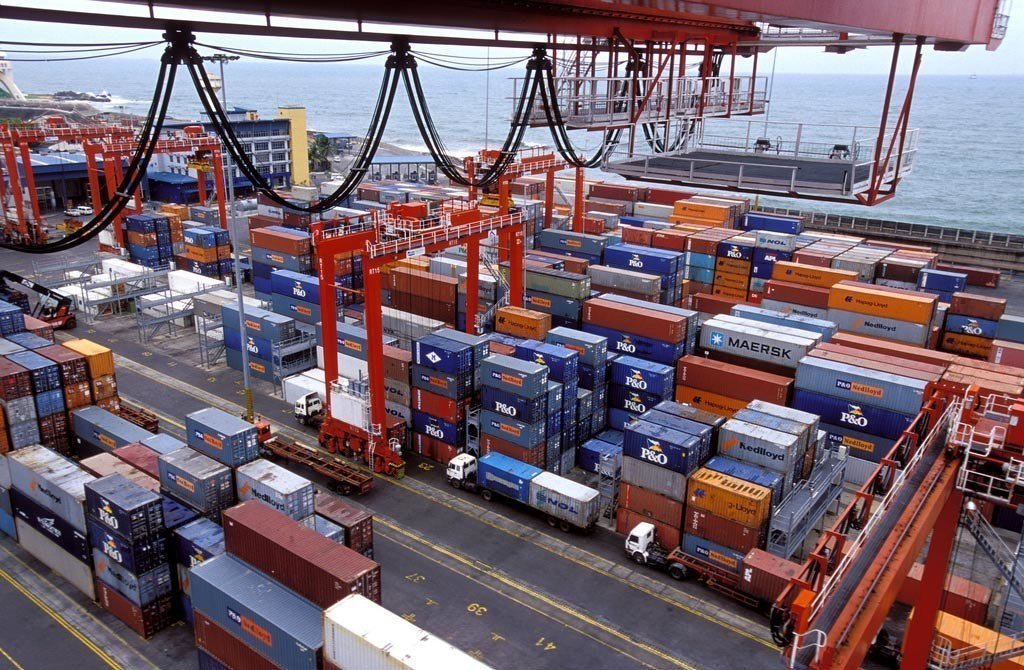
Photo: Dominic Sansoni/World Bank

Quay cranes on docks in Sri Lanka. The global economy is critically dependent on the international merchant fleet of carriers and tankers to keep commodities moving swiftly, safely and efficiently.

Source link

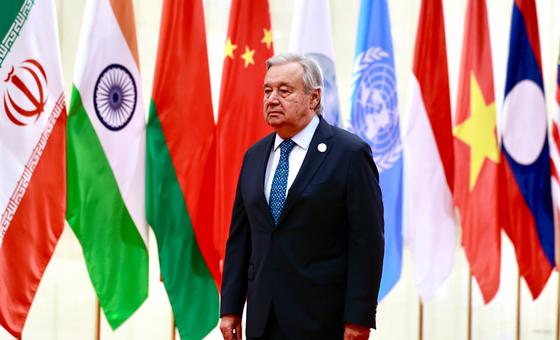
Shanghai Cooperation Organization summit: Guterres calls for strengthening multilateralism

The Eurasian bloc, comprising 10 member states, is the world’s largest regional organization by population and geography.

Mr. Guterres told leaders that “we are moving towards a multipolar world”, which is both a reality and an opportunity.

He said emerging economies are reshaping trade, diplomacy and development, but at the same time, injustices and divisions are widening.

Principled leadership needed

He stressed the need for principled leadership to strengthen multilateralism, uphold the rule of law, and deliver for people everywhere.

“The Shanghai Cooperation Organization is uniquely positioned to help shape a more peaceful, inclusive, and sustainable future,” he said.

The UN chief highlighted four priority areas, starting with peace and security.

Peace in Gaza and beyond

He pointed to the situation in Gaza, where the scale of death and destruction is horrific and famine has taken hold.

“We need an immediate and permanent ceasefire; the immediate and unconditional release of all hostages; and unimpeded, safe and sustained humanitarian access,” he said.

“And we must advance concrete and irreversible steps toward a two-State solution – the only path to a just and lasting peace for both Palestinians and Israelis.”

Mr. Guterres also addressed the war in Ukraine, saying “it is past time for a ceasefire leading to a just, comprehensive and sustainable peace – in line with the UN Charter, international law, and UN resolutions.”

He also called for protection of civilians, fostering dialogue and securing peace in Sudan, Myanmar, the Sahel, Afghanistan and beyond.

“Your leadership in diplomacy and de-escalation is essential, as are your efforts against terrorism and transnational threats,” he told leaders.

Reform and climate action

The Secretary-General called for reform of the global financial architecture to ensure fair representation for developing countries.

“We are no longer in 1945 – and our institutions must reflect today’s realities,” he said.

The third area for action concerns confronting climate change.

“We are reaching a tipping point and need meaningful reductions of emissions. G20 countries – responsible for 80 per cent of global emissions – must lead,” he said.

He urged all governments to submit new climate action plans before the COP30 UN climate conference in Brazil this November. 

“We must also set a clear path to delivering $1.3 trillion by 2030.  Developed countries must honour their commitments. And we need a breakthrough on adaptation,” he added.

He called for doubling adaptation finance, scaling up early warning systems, building resilient infrastructure and phasing out fossil fuels while speeding up the transition to renewable energy.

Cooperation on technology

The final area for action is digital cooperation as new technologies bring both opportunities and risks.

He said the UN General Assembly has just established two mechanisms – an Independent Scientific Panel and a Global Dialogue on governance of artificial intelligence (AI) – to give all countries a voice and prevent fragmentation.

“These mechanisms mark a breakthrough for global AI cooperation – leveraging the unique convening power of the United Nations,” he said.

Put people first

In conclusion, he said that as the UN marks its 80th anniversary, countries must strengthen international cooperation for the 21st century and always put people first.

In this regard, he welcomed China’s Global Governance Initiative, announced that day, which “is anchored in multilateralism and underscores the importance of safeguarding the international system with the UN at its core and the international order underpinned by international law.”

Source link

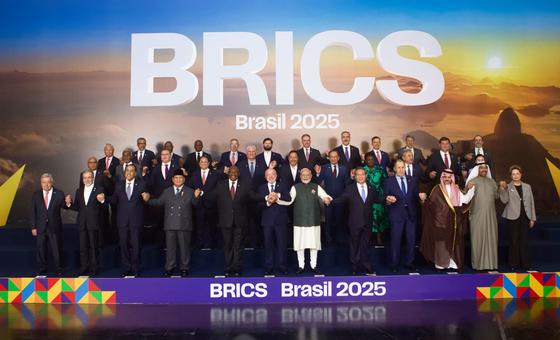
‘Cooperation is humanity’s greatest innovation,’ UN chief declares at BRICS summit

Speaking at the 17th BRICS summit in Rio de Janeiro, Brazil, he emphasised the human impact of environmental devastation and climate change.  And as environmental disasters increase, the sustainable development goals are also being left behind.  

Across the world, lives and livelihoods are being ripped apart, and sustainable development gains left in tatters as disasters accelerate,” Mr. Guterres said. 

The impact on human health is atrocious…the vulnerable and the poorer pay the highest price.” 

BRICS was founded by Brazil, Russia, India and China in 2006. South Africa joined in 2011 and Egypt, Ethiopia, Indonesia, Iran, Saudi Arabia and the United Arab Emirates joined the group since. Collectively, these eleven States represent over half of the world’s population and approximately one-third of the world’s GDP.  

Artificial intelligence must benefit all

On Sunday, Mr. Guterres addressed a session on strengthening multilateralism, economic-financial affairs and artificial intelligence, where he called for efforts to “minimize the risks and maximize the potential” of the breakthrough technology.

Artificial intelligence is reshaping economies and societies. The fundamental test is how wisely we will guide this transformation, how we minimize the risks and maximize the potential for good,” he said.  

To maximize the potential, the Secretary-General argued that AI cannot be “a club of the few but must benefit all,” calling for the “real voice” of developing countries to be included in global AI governance.

He also said that human rights and equity must be the guiding principles which shape any international governance structure for AI.  

“We cannot govern AI effectively – and fairly – without confronting deeper, structural imbalances in our global system,” he said.  

Collaboration is key

UN Secretary-General António Guterres stressed the need for peace amid conflicts in Gaza, Ukraine, Sudan and Myanmar.

He called for urgent reform of global institutions, noting that bodies like the Security Council and international financial systems were “designed for a bygone age, a bygone world, with a bygone system of power relations.”

“The reform of the Security Council is crucial,” he said, highlighting also calls from the recent financing for development conference in Sevilla.

Priorities include greater voice for developing countries in global governance, effective debt restructuring, and tripling multilateral bank lending – especially in concessional and local-currency terms.

Call for reform

Mr. Guterres concluded his remarks highlighting the power of cooperation and trust.

At a time when multilateralism is being undermined, let us remind the world that cooperation is humanity’s greatest innovation,” he said.

Let us rise to this moment – and reform and modernize multilateralism, including the UN and all the systems and institutions to make it work for everyone, everywhere.” 

Source link

The Sevilla Commitment: A vital step to rebuild trust in global cooperation

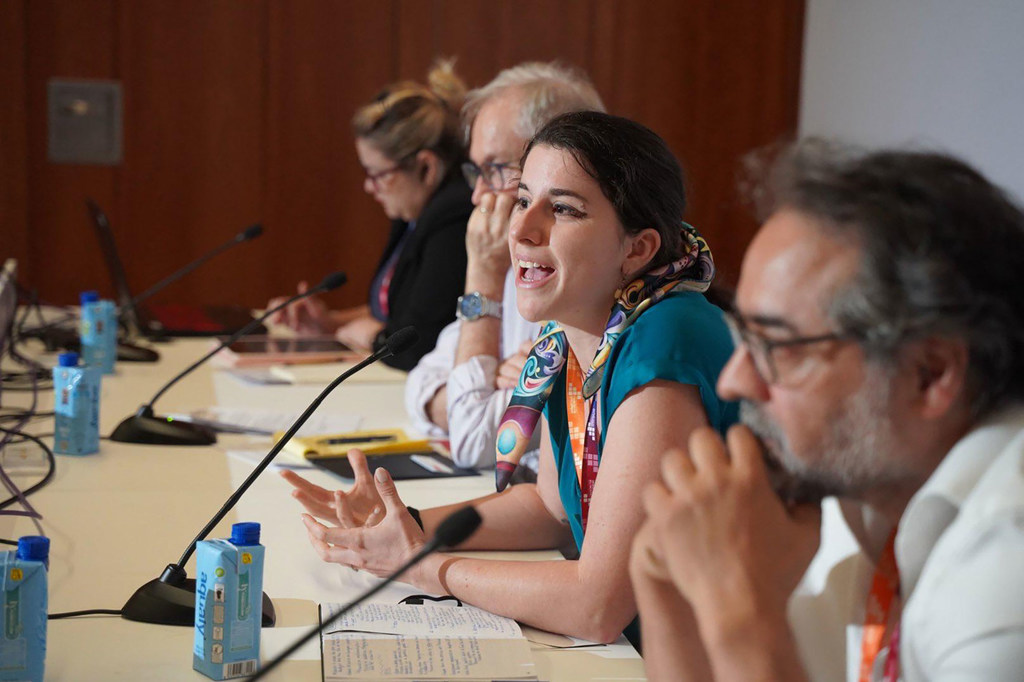
Activists, many from the Global South, attending the talks in Spain, are calling for greater leadership and commitment from wealthier nations to help address long-standing structural inequalities.

The 4th International Conference on Financing for Development (FFD4) carries strong symbolic weight, reflected in the agreed priorities of the Sevilla Commitment.

Courtesy of Paula Sevilla

Paula Sevilla, International Institute for Environment and Development.

However, organizations warn that there is still a long way to go before promises translate into tangible action.

Good timing

That is the message from Paula Sevilla, a representative of the International Institute for Environment and Development (IIED) – a London-based research centre – who has worked for decades on sustainability and climate justice in Latin America, Africa, and Asia.

“This summit has come at a crucial time to try to restore faith in international cooperation, especially after the pandemic, which exposed a lack of global solidarity,” she stated.

One of IIED’s main goals in Sevilla has been to ensure that the announced financial commitments actually reach local communities at the forefront of the climate crisis.

To that end, the organization emphasizes the need to address issues such as external debt – draining public budgets – and to support innovative mechanisms like blended finance to direct resources to those who need them most.

“We’re seeing countries spend more on debt payments than on healthcare or education, while inequalities are deepening,” the expert warned, speaking shortly after a respectful but forceful protest inside the conference centre.

A place to call home

Housing solutions linked to sustainable development are notably absent from the summit’s final document.

“It’s regrettable that it’s not even mentioned, at a time when we are facing a global cost-of-living crisis – not only in the Global South but also here in Spain. Housing is a source of anguish and distrust among citizens, and it has been completely ignored,” Ms. Sevilla said.

Despite this, her organization is working to leverage the Sevilla outcome to find ways to channel funding into providing more affordable homes.

Commenting on the initiative led by Spain and Brazil to work towards fair taxation and push back against tax avoidance by the world’s richest – promoting more transparency and accountability – the IIED representative said it could be a useful path toward correcting structural inequalities.

Tax for development

We need leadership from the Global North, where many of the world’s major tax-avoiding corporations are based. Without their commitment, we won’t move forward,” she stated.

She also criticized the absence of the United States from the summit – not  only as a diplomatic setback but also as a worrying precedent following the dismantling of its international development agency, USAID.

“We’re talking about people counting their pills to figure out how many days of life they have left. This is dramatic,” she emphasised.

With just five years remaining to meet the Sustainable Development Goals, Ms. Sevilla warned that time is running out – and that the Sevilla Commitment will be meaningless without real change.

We need political leadership, a will to cooperate, and a commitment to protect democratic space. In the end, it’s organized people who keep hope alive and hold leaders accountable,” Sevilla concluded.

The Sevilla Commitment in brief:

  • The Sevilla Commitment sets out a new global roadmap to raise the trillions of dollars needed each year to achieve sustainable development, building on previous international agreements
  • It calls for fairer tax systems, cracking down on tax evasion and illicit financial flows, and strengthening public development banks to support national priorities
  • The agreement highlights the need for new tools to ease debt pressures on vulnerable countries, including debt-swap schemes, options to pause payments during crises, and better transparency
  • Countries committed to boosting the capacity of multilateral development banks, increasing the use of special drawing rights, and attracting more private investment to support development
  • It also aims to make the global financial system more inclusive and accountable, with improved coordination, stronger data systems, and broader participation from civil society and others

The Commitment launches the Sevilla Platform for Action, which includes over 130 initiatives already underway to turn the pledges into real-world results.

Source link

Lack of cooperation from Iran hampers nuclear checks, says atomic energy watchdog

Rafael Grossi, Director-General of the International Atomic Energy Agency (IAEA), said on Monday that Iran’s growing stockpile of highly enriched uranium and unresolved questions about its programme remain serious issues.

Unless and until Iran assists the agency in resolving the outstanding safeguards issues, the Agency will not be in a position to provide assurance that Iran’s nuclear programme is exclusively peaceful,” he said.

He was addressing IAEA’s Board of Governors, which comprises 35 countries – including France, Russia, the UK and the US.

Lack of credibility

Mr. Grossi further noted that Iran had failed to provide technically credible explanations for the presence of man-made uranium particles at three undeclared sites – Varamin,  Marivan and Turquzabad – despite years of consultations.

Based on its assessments, IAEA can conclude that these three locations were part of a structured nuclear programme that operated until the early 2000s and involved undeclared nuclear material, he said.

“The agency also concludes that Iran did not declare nuclear material and nuclear-related activities at these three undeclared locations in Iran…as a consequence of this, the Agency is not in a position to determine whether the related nuclear material is still outside of safeguards.”

The situation is exacerbated by the country’s decision to stop implementing some provisions of its Safeguards Agreement, a legal requirement under international law, he added, urging Tehran to urgently restore transparency and comply with international obligations.

Highly enriched uranium

Mr. Grossi also expressed alarm at the rapid accumulation of over 400 kilogrammes of highly enriched uranium, which has serious implications.

Given the potential proliferation implications, the agency cannot ignore [this],” he said.

While commending Egypt’s recent diplomatic efforts to mediate between Iran and the United States, Mr. Grossi stressed that only a diplomatic solution, backed by IAEA verification, could restore trust.

He said the agency stands ready to verify any future agreement between the two sides.

“The effect of a stabilised situation in Iran with regards to its nuclear programme will be immediate and bring the Middle East one big step closer to peace and prosperity,” he said.

‘Clear violations’ in DPR Korea

Turning to the Democratic People’s Republic of Korea (DPRK), Mr. Grossi said the IAEA continues to monitor nuclear activity remotely, despite being denied direct access to the country.

North Korea’s five-megawatt electrical reactor at Yongbyon “likely continues” to be operating in its seventh cycle, while reprocessing of irradiated fuel has likely resumed at the Radiochemical Laboratory.

He noted ongoing construction at a new building with similarities to the Kangson enrichment site and said the light water reactor at Yongbyon remains active.

“The continuation and further development of the DPRK’s nuclear programme are clear violations of relevant UN Security Council resolutions and are deeply regrettable,” he said, adding that IAEA stands ready to play its role in verifying the DPRK’s nuclear programme.

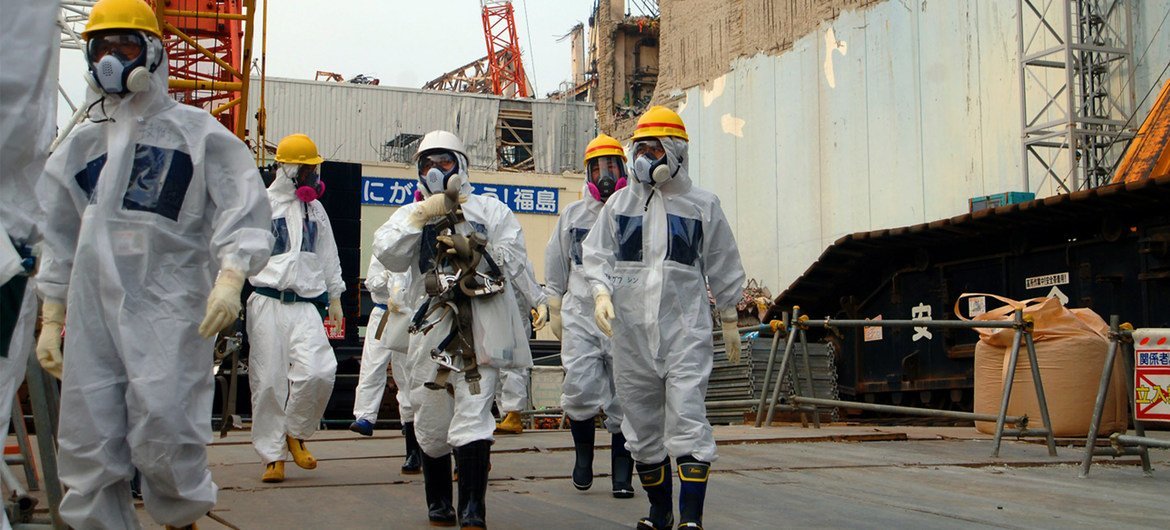
IAEA experts depart Unit 4 of Fukushima Daiichi Nuclear Power Station. (April 2013 photo).

Monitoring discharge in Japan

Mr. Grossi said the IAEA continues to monitor the controlled release of ALPS-treated water from the Fukushima Daiichi Nuclear Power Station in Japan, which suffered major damage in a 9.1 magnitude earthquake and tsunami in March 2011.

In April this year, IAEA and international experts collected and analysed diluted samples ahead of discharge.

“The IAEA has maintained its independent monitoring and analysis efforts, confirming that tritium concentrations in the discharged batches remain far below operational limits and align with the international safety standards,” Mr. Grossi said.

‘Precarious situation’ in Ukraine

Director-General Grossi also highlighted the precarious situation at Ukraine’s Zaporizhzhya Nuclear Power Plant, where all six reactors remain in cold shutdown amid continued military activity.

A full damage assessment is also underway at Chernobyl, which was the site of a drone strike and ensuing fire in February that resulted in “significant damage” to a confinement arch that is critical to maintaining long-term safety at the site.

The power plant suffered a massive nuclear accident in 1986 and has since been encased in a protective structure to contain radioactive material and prevent its release.

“As the military conflict moves further into its fourth year, Ukraine needs support, and the IAEA is providing it,” Mr. Grossi said, reaffirming the Agency’s commitment to supporting Ukraine’s nuclear infrastructure during wartime and throughout the eventual post-war reconstruction.

Source link

ISRO to Explore Space With Japan Agency JAXA

The Indian Cabinet has been apprised of the MoU signed between the Indian Space Research Organisation (ISRO) and the Japanese Aerospace Exploration Agency (JAXA) for cooperation in the field of outer space exploration, which was signed on November 11, 2016 during PM Narendra Modi’s visit to Tokyo.

The MoU seeks to pursue future cooperation in outer space exploration activities and in pursuing space research activities in space science technology and applications including earth observation, satellite communication and navigation; exploration and space sciences; Research and development of space systems and space technology; and Space industry promotion.

ISRO and JAXA will bear the costs of their respective activities under this Memorandum, unless they decide otherwise in writing. Ability to fulfil their respective roles and activities under this Memorandum and its relevant separate Implementation Arrangement is subject to their respective funding procedures, the availability of appropriated funds and their respective national laws.

India and Japan have been cooperating in the field of space research for over 5 decades and carried out several studies in the field of atmospheric study, observation of universe and scientific investigation in remote sensing.

The formation of JAXA by Japan in 2003 opened up gates for joint studies and potential future cooperation in the field of outer space under a pact signed in October 2005 between ISRO and JAXA. Subsequent pacts addressing lunar exploration, satellite navigation, X-ray astronomy and Asia Pacific Regional Space Agency Forum (APRSAF) were also signed.

During the ISRO-JAXA bilateral meeting held at New Delhi on April 05, 2016, both sides prepared the draft of a new ‘Memorandum of Understanding (MoU) between ISRO and JAXA concerning cooperation in the field of outer space that was signed on November 11, 2016 at Tokyo during the visit of Prime Minister of India to Japan.