UN chief reports progress in Cyprus talks, urges swift implementation of trust measures

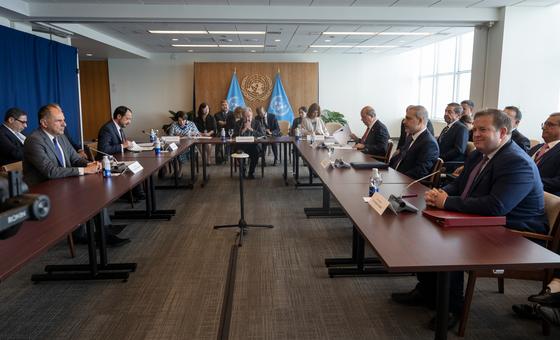
Mr. Guterres was speaking to reporters after hosting Greek Cypriot leader Nikos Christodoulides and Turkish Cypriot leader Ersin Tatar at the UN Headquarters in New York.

Today’s discussions were constructive. Both leaders reviewed the progress on the six initiatives they agreed to in March to build trust,” he said.

Out of these six initiatives, four have been achieved: the creation of a technical committee on youth, initiatives on the environment and climate change, restoration of cemeteries, and an agreement on demining that will be closed once the final technical details are established.

“And discussions will continue on the remaining two,” the UN chief added, referring to the opening of four crossing points on the divided island and solar energy in the buffer zone.

New initiatives

In addition, the leaders reached a common understanding on new initiatives, including a consultative body for civil society engagement, exchanging cultural artifacts, improving air quality monitoring, and addressing microplastic pollution.

It is critical to implement these initiatives – all of them – as soon as possible for the benefit of all Cypriots,” Mr. Guterres said.

The Secretary-General also confirmed that he will meet both leaders again during the UN General Assembly’s high‑level week in September. Another informal meeting in the same format is planned later this year.

A long road ahead

There’s a long road ahead. And it is important to think about what the future can mean – for all Cypriots,” he said.

But these steps clearly demonstrate a commitment to continuing a dialogue on the way forward and working on initiatives that benefit all Cypriots,” he added.

Secretary-General Guterres speaks to the media at the UN Headquarters, in New York.

Supporting dialogue

The United Nations has been playing a central role in efforts towards a comprehensive and mutually acceptable settlement to the Cyprus issue, supporting dialogue between Greek Cypriot and Turkish Cypriot leaders.

While sufficient common ground has not been found to allow for the resumption of formal negotiations, engagement towards that end continues – including informal meetings convened by the Secretary-General and other top UN officials.

Meanwhile, the UN Peacekeeping Force in Cyprus (UNFICYP), deployed since 1964, remains on the ground, helping to maintain stability across the island.

Source link

The Sevilla Commitment: A vital step to rebuild trust in global cooperation

Activists, many from the Global South, attending the talks in Spain, are calling for greater leadership and commitment from wealthier nations to help address long-standing structural inequalities.

The 4th International Conference on Financing for Development (FFD4) carries strong symbolic weight, reflected in the agreed priorities of the Sevilla Commitment.

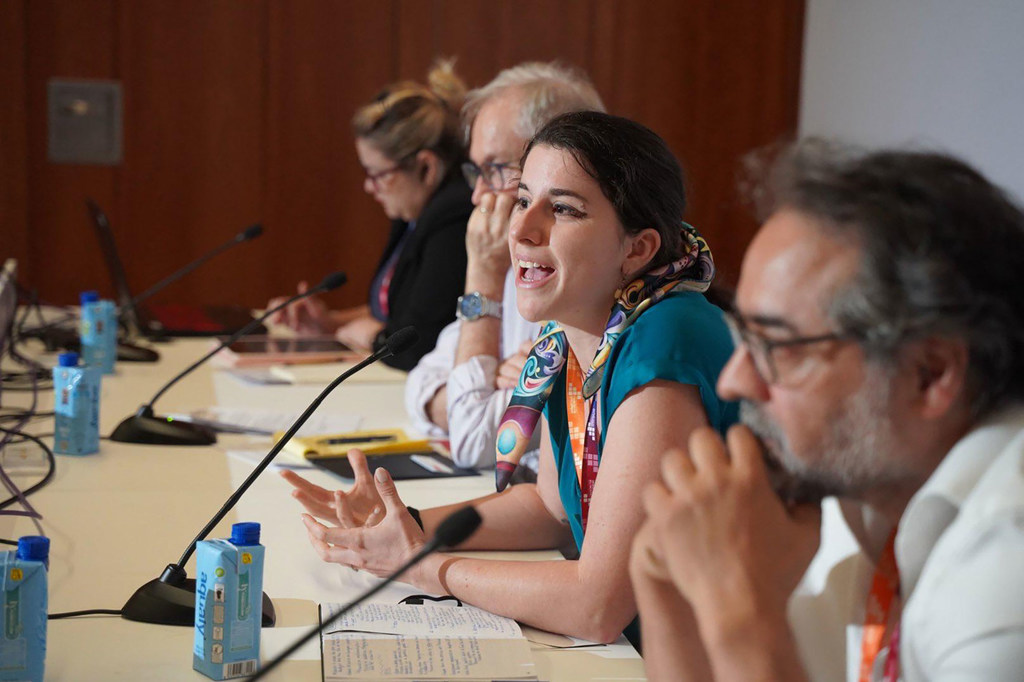
Courtesy of Paula Sevilla

Paula Sevilla, International Institute for Environment and Development.

However, organizations warn that there is still a long way to go before promises translate into tangible action.

Good timing

That is the message from Paula Sevilla, a representative of the International Institute for Environment and Development (IIED) – a London-based research centre – who has worked for decades on sustainability and climate justice in Latin America, Africa, and Asia.

“This summit has come at a crucial time to try to restore faith in international cooperation, especially after the pandemic, which exposed a lack of global solidarity,” she stated.

One of IIED’s main goals in Sevilla has been to ensure that the announced financial commitments actually reach local communities at the forefront of the climate crisis.

To that end, the organization emphasizes the need to address issues such as external debt – draining public budgets – and to support innovative mechanisms like blended finance to direct resources to those who need them most.

“We’re seeing countries spend more on debt payments than on healthcare or education, while inequalities are deepening,” the expert warned, speaking shortly after a respectful but forceful protest inside the conference centre.

A place to call home

Housing solutions linked to sustainable development are notably absent from the summit’s final document.

“It’s regrettable that it’s not even mentioned, at a time when we are facing a global cost-of-living crisis – not only in the Global South but also here in Spain. Housing is a source of anguish and distrust among citizens, and it has been completely ignored,” Ms. Sevilla said.

Despite this, her organization is working to leverage the Sevilla outcome to find ways to channel funding into providing more affordable homes.

Commenting on the initiative led by Spain and Brazil to work towards fair taxation and push back against tax avoidance by the world’s richest – promoting more transparency and accountability – the IIED representative said it could be a useful path toward correcting structural inequalities.

Tax for development

We need leadership from the Global North, where many of the world’s major tax-avoiding corporations are based. Without their commitment, we won’t move forward,” she stated.

She also criticized the absence of the United States from the summit – not  only as a diplomatic setback but also as a worrying precedent following the dismantling of its international development agency, USAID.

“We’re talking about people counting their pills to figure out how many days of life they have left. This is dramatic,” she emphasised.

With just five years remaining to meet the Sustainable Development Goals, Ms. Sevilla warned that time is running out – and that the Sevilla Commitment will be meaningless without real change.

We need political leadership, a will to cooperate, and a commitment to protect democratic space. In the end, it’s organized people who keep hope alive and hold leaders accountable,” Sevilla concluded.

The Sevilla Commitment in brief:

  • The Sevilla Commitment sets out a new global roadmap to raise the trillions of dollars needed each year to achieve sustainable development, building on previous international agreements
  • It calls for fairer tax systems, cracking down on tax evasion and illicit financial flows, and strengthening public development banks to support national priorities
  • The agreement highlights the need for new tools to ease debt pressures on vulnerable countries, including debt-swap schemes, options to pause payments during crises, and better transparency
  • Countries committed to boosting the capacity of multilateral development banks, increasing the use of special drawing rights, and attracting more private investment to support development
  • It also aims to make the global financial system more inclusive and accountable, with improved coordination, stronger data systems, and broader participation from civil society and others

The Commitment launches the Sevilla Platform for Action, which includes over 130 initiatives already underway to turn the pledges into real-world results.

Source link

Trust collapsing as job fears surge worldwide, warns UN

According to the World Social Report 2025 launched on Thursday, the sobering sentiment indicates a widespread lack of confidence in the future.

Despite people living longer, being better educated and more connected than ever before, many believe that life today is worse than it was 50 years ago.

Close to 60 per cent of people surveyed on life satisfaction reported that they were “struggling” with a further 12 per cent describing themselves as “suffering”, the report notes.

Financial insecurity everywhere

According to the report, economic instability is no longer limited to the world’s poorest regions.

Even in high-income countries, rising job uncertainty, gig work and the digital transition are contributing to this trend.  

These jobs may offer flexibility but often come at the cost of security and rights – reducing workers to mere service providers in a commodified labour market.

The insecurities are further compounded by an alarming rise in informal employment. In many low and middle-income countries, jobs with no safety net remains the norm, locking workers into cycles of low pay, instability, and zero benefits.

Even those who manage to enter formal employment face significant risks of being pushed back into the informal sector, especially during downturns.

For over 2.8 billion people living on less than $6.85 a day – the threshold for extreme poverty – “even a small shock can send people into extreme poverty and any escapes from poverty are often temporary,” the report warns.

The situation is further complicated by rising climate change impacts and worsening conflicts, further undermining local economies and deepening inequality, especially in the developing world.

Collapse of trust

As financial pressures mount and stability erodes, public confidence in institutions – and in one another – has also taken a severe hit, particularly among young people.

Over half the world’s population (57 per cent) now expresses low levels of confidence in government. Among those born in the 21st century, trust levels are even lower – raising concerns about long-term civic disengagement and political instability.

People’s trust in one another is also eroding. Fewer than 30 per cent of people in countries with available data believe that most others can be trusted, undermining social cohesion and complicating efforts for collective action.

“The spread of misinformation and disinformation, facilitated by digital technologies, is reinforcing divisions and fuelling distrust,” the report says, warning of abuse and misuse of digital platforms and social media to spread deceit and hate speech, and stoke conflicts.

“Often, users find themselves immersed in virtual and siloed ‘echo chambers’ where they are exposed to news and opinions that align with and may even radicalize their views.”

Platform algorithms facilitate the creation of such echo chambers and reward more extreme content and engagement with higher visibility, the report adds.

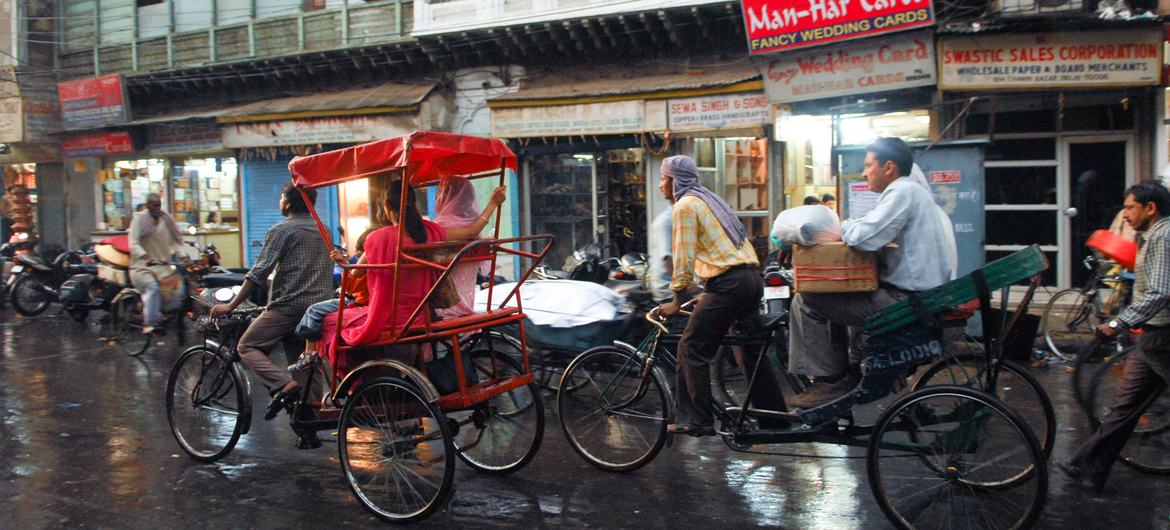
Cycle rickshaw drivers navigate the busy streets of Old Delhi, India – a livelihood for many in the informal economy.

Time for bold policies

To reverse these damaging trends, the report calls for a bold shift in policymaking – one grounded in equity, economic security and solidarity.

It urges governments to invest more in people through expanding access to quality public services – such as education, healthcare, housing and robust social protection systems.

These investments are not discretionary, the report stresses, but essential to promote resilience and inclusive growth.

It also highlights the need to rebuild trust through inclusive and accountable institutions. At the same time, power and wealth needs to become less concentrated at the very top of society.

Collective solutions

Now more than ever, we must strengthen our resolve to come together and build a world that is more just, secure, resilient and united
– Secretary-General Guterres

As momentum builds toward the Second World Summit for Social Development, which will be held in Doha in November, global leadership will be key to driving transformative change.

UN Secretary-General António Guterres stressed the need for unity and decisive action in a foreword to the report.

The global challenges we face demand collective solutions,” he wrote.

“Now more than ever, we must strengthen our resolve to come together and build a world that is more just, secure, resilient and united for each and every one of us.”

Source link