
Deadly Attacks, Trembling Services Push Sudan Closer to Catastrophe

According to local reports, heavy shelling and assaults late last week in El Fasher, the capital of North Darfur state, killed at least six civilians and injured scores more, triggering fresh displacement from the already besieged city.

Sudan has been roiled in a brutal civil war between rival militaries – the Sudanese Armed Forces and the paramilitary Rapid Support Forces (RSF) and affiliated militias. Thousands of civilians have been killed, villages and farmlands destroyed, and nearly 12 million people driven from their homes – over four million as refugees into neighbouring countries.

The country also risks becoming the world’s largest hunger crisis in recent history as infrastructure, trade routes and supply chains lie in ruins. Famine has already been confirmed in the Zamzam camp, which once sheltered hundreds of thousands of civilians – and many more areas are at risk.

Humanitarians warn that essential services are breaking down. Water trucking to the only functioning hospital was suspended over the weekend and community kitchens shut down after running out of food.

Without urgent support, they warn that the most vulnerable people could face severe hunger within days. Across Darfur, hospitals remain under immense strain.

Nearly 100 wounded people, including women and children, were admitted to medical facilities in a single day last week, with several pronounced dead on arrival, according to reports from the medical charity Médecins Sans Frontières (MSF – Doctors Without Borders).

Survivors who managed to escape El Fasher described “unbearable” conditions in the city, which has endured more than a year of siege by the Rapid Support Forces (RSF) and allied groups.

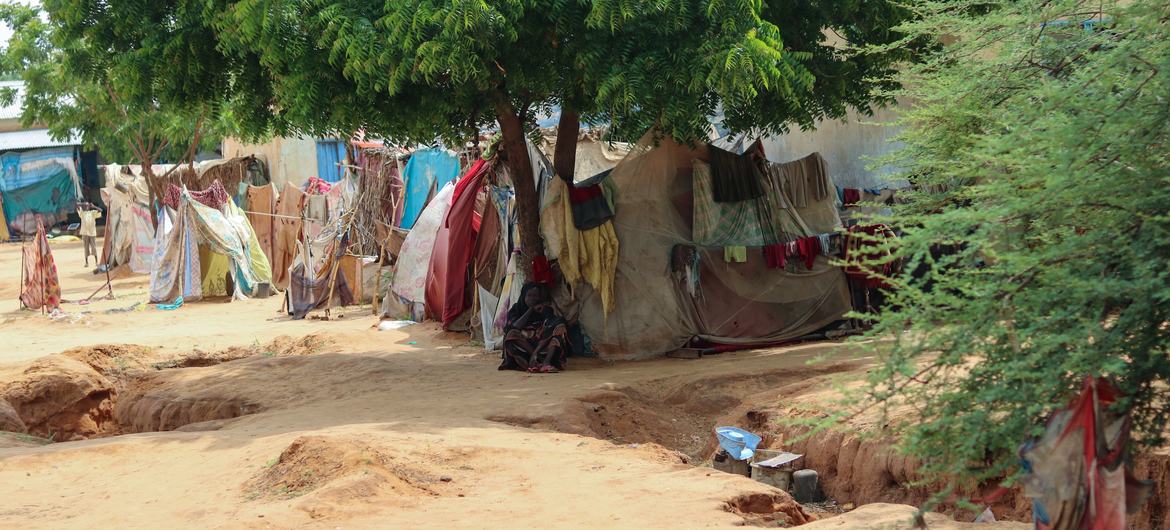
Children sit beside makeshift tents in El Fasher, North Darfur, where intensified fighting has left thousands trapped.

Drone strikes on 10 September hit multiple locations across Darfur, injuring scores. A strike landed just four kilometres (about 2.5 miles) from an MSF-supported hospital in Central Darfur, forcing staff to activate a mass casualty plan. The following day, two more strikes struck Nyala in South Darfur, reportedly killing at least four people, including a child.

The fighting is not confined to Darfur. In Khartoum, RSF airstrikes on 9 September damaged a power station, causing a blackout in parts of the capital and disrupting critical hospital equipment and services.

Disasters add to misery

Meanwhile, Sudan is grappling with natural disasters on top of conflict. A landslide triggered by heavy rains on 31 August in Sharg Aj Jabal, near the Central and South Darfur border, killed an estimated 400 people, half of them children, according to local reports.

Furthermore, over 4,000 people were displaced and 550 homes destroyed in Aj Jazirah state in flash floods last week.
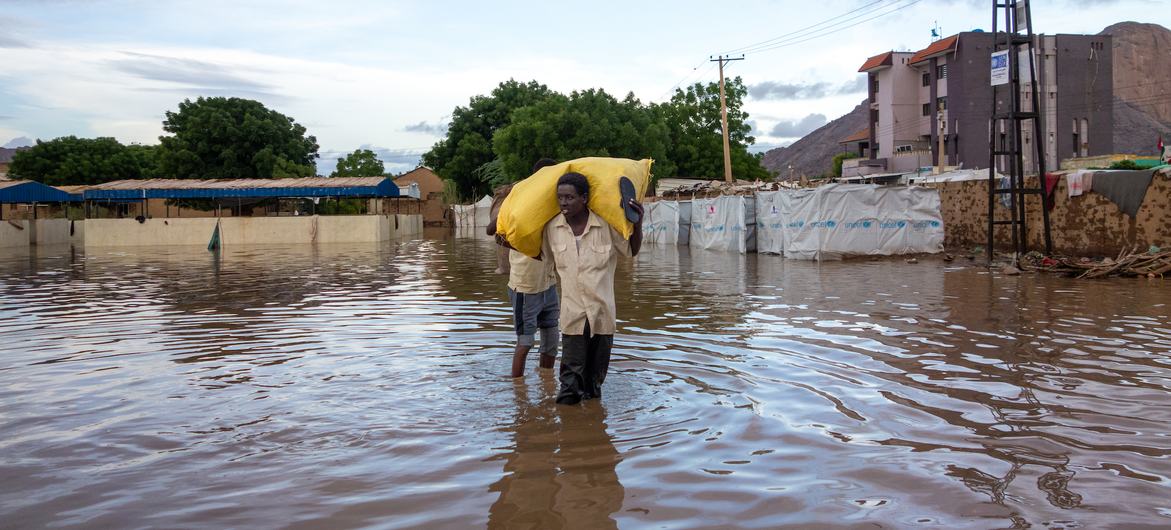
Every year, hundreds of thousands of people in Sudan are affected by heavy rains, flash floods and landslides.

The UN Office for the Coordination of Humanitarian Affairs (OCHA) stressed that civilians remain at the epicentre of the violence. “[We] once again call for an immediate cessation of hostilities, protection of civilians, safe and unimpeded humanitarian access, and increased international support to sustain life-saving operations across Sudan,” the Office said.

In Khartoum, OCHA reported some improvements in restoring basic services and security. Yet more than 800,000 people who have returned to the capital in recent months still urgently need assistance to rebuild their lives.

On the political front, the Secretary-General’s Personal Envoy for Sudan, Ramtane Lamamra, is currently in Port Sudan after concluding consultations in Nairobi.

According to UN Spokesperson Stéphane Dujarric, Mr. Lamamra has held “very constructive engagements” with Sudanese stakeholders across the spectrum as well as key international interlocutors.

“These discussions will help lay the groundwork necessary to support an inclusive process that can deliver a sustainable solution that preserves Sudan’s sovereignty, its unity and its territorial integrity,” Mr. Dujarric said.

He added that the UN also looks forward to working closely with regional partners, including the African Union, the east African regional bloc Intergovernmental Authority on Development (IGAD), and the League of Arab States, to restart efforts toward an intra-Sudanese dialogue.
Trust collapsing as job fears surge worldwide, warns UN

According to the World Social Report 2025 launched on Thursday, the sobering sentiment indicates a widespread lack of confidence in the future.

Despite people living longer, being better educated and more connected than ever before, many believe that life today is worse than it was 50 years ago.

Close to 60 per cent of people surveyed on life satisfaction reported that they were “struggling” with a further 12 per cent describing themselves as “suffering”, the report notes.

Financial insecurity everywhere

According to the report, economic instability is no longer limited to the world’s poorest regions.

Even in high-income countries, rising job uncertainty, gig work and the digital transition are contributing to this trend.  

These jobs may offer flexibility but often come at the cost of security and rights – reducing workers to mere service providers in a commodified labour market.

The insecurities are further compounded by an alarming rise in informal employment. In many low and middle-income countries, jobs with no safety net remains the norm, locking workers into cycles of low pay, instability, and zero benefits.

Even those who manage to enter formal employment face significant risks of being pushed back into the informal sector, especially during downturns.

For over 2.8 billion people living on less than $6.85 a day – the threshold for extreme poverty – “even a small shock can send people into extreme poverty and any escapes from poverty are often temporary,” the report warns.

The situation is further complicated by rising climate change impacts and worsening conflicts, further undermining local economies and deepening inequality, especially in the developing world.

Collapse of trust

As financial pressures mount and stability erodes, public confidence in institutions – and in one another – has also taken a severe hit, particularly among young people.

Over half the world’s population (57 per cent) now expresses low levels of confidence in government. Among those born in the 21st century, trust levels are even lower – raising concerns about long-term civic disengagement and political instability.

People’s trust in one another is also eroding. Fewer than 30 per cent of people in countries with available data believe that most others can be trusted, undermining social cohesion and complicating efforts for collective action.

“The spread of misinformation and disinformation, facilitated by digital technologies, is reinforcing divisions and fuelling distrust,” the report says, warning of abuse and misuse of digital platforms and social media to spread deceit and hate speech, and stoke conflicts.

“Often, users find themselves immersed in virtual and siloed ‘echo chambers’ where they are exposed to news and opinions that align with and may even radicalize their views.”

Platform algorithms facilitate the creation of such echo chambers and reward more extreme content and engagement with higher visibility, the report adds.

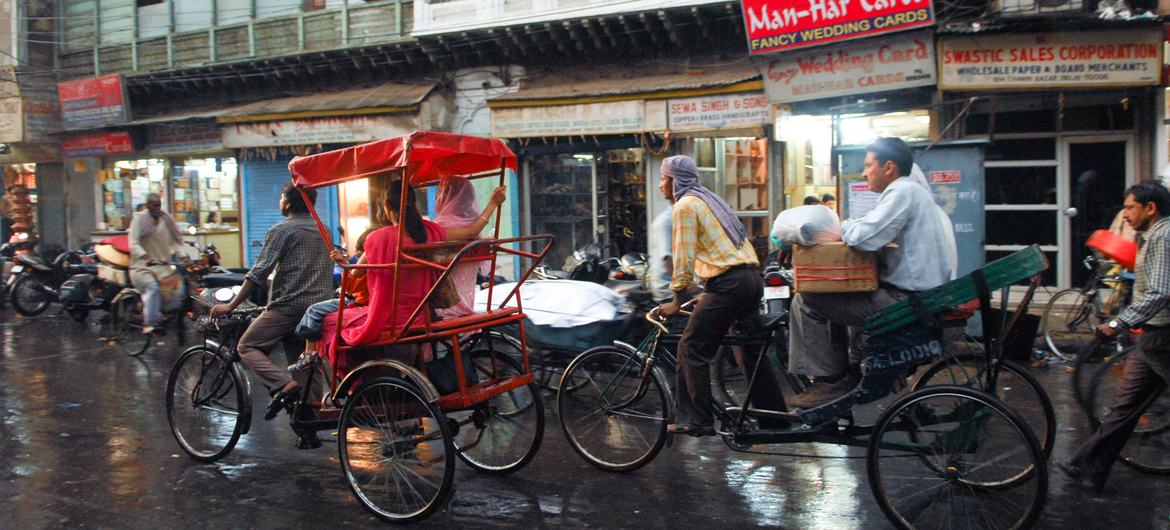
Cycle rickshaw drivers navigate the busy streets of Old Delhi, India – a livelihood for many in the informal economy.

Time for bold policies

To reverse these damaging trends, the report calls for a bold shift in policymaking – one grounded in equity, economic security and solidarity.

It urges governments to invest more in people through expanding access to quality public services – such as education, healthcare, housing and robust social protection systems.

These investments are not discretionary, the report stresses, but essential to promote resilience and inclusive growth.

It also highlights the need to rebuild trust through inclusive and accountable institutions. At the same time, power and wealth needs to become less concentrated at the very top of society.

Collective solutions

Now more than ever, we must strengthen our resolve to come together and build a world that is more just, secure, resilient and united
– Secretary-General Guterres

As momentum builds toward the Second World Summit for Social Development, which will be held in Doha in November, global leadership will be key to driving transformative change.

UN Secretary-General António Guterres stressed the need for unity and decisive action in a foreword to the report.

The global challenges we face demand collective solutions,” he wrote.

“Now more than ever, we must strengthen our resolve to come together and build a world that is more just, secure, resilient and united for each and every one of us.”

Source link