World News in Brief: Deadly strikes in Sudan, health systems in South Sudan near the brink, Guterres calls for unity ahead of Ramadan.

Over the past week, North Kordofan state recorded more than a dozen attacks in and around the towns of El Obeid, Bara, Rahad and Um Rawaba.  

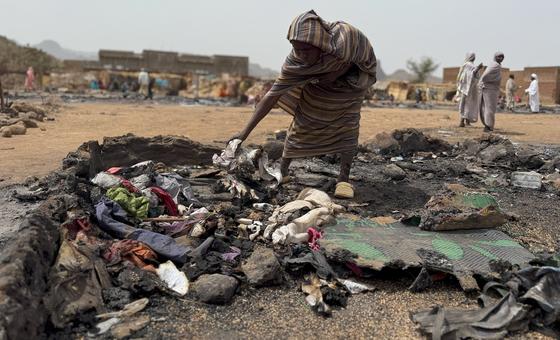
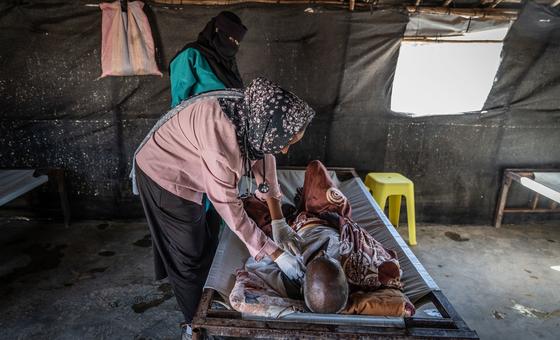
In South Kordofan, suspected drone strikes hit health facilities in the state capital, Kadugli, and in Kuweik town, reportedly killing four medical workers, injuring more than 20 people. 

Concerns over the conflict continue to deepen after a report today from the UN Human Rights Office revealed the “sustained” and “systematic attacks” to civilians in the neighbouring Darfur region in late 2025 that may “amount to crimes against humanity”. 

Growing humanitarian concerns 

“The violence is triggering a new wave of displacement, with reports of many fleeing homes, in need food, health care and protection,” warned the Spokesperson for the Secretary-General Stéphane Dujarric on Friday. 

While the humanitarian situation in Dilling and Kadugli continues to deteriorate, he emphasised that “rapid, safe, unhindered and sustained humanitarian access is essential for us to scale up our response.” 

Commercial vehicles, telecommunications infrastructure and key transport routes have been affected the drone strikes, disrupting humanitarian movements and supply chains. 

Mr. Dujarric called for “the protection of humanitarian infrastructure, in line with international humanitarian law” and urged for more funding through UN aid coordination office OCHA to support displaced families across Sudan. 

Violence pushes South Sudan’s health system to the brink 

Since late December 2025, a devasting escalation of violence has swept across northern and central parts of South Sudan, the UN children’s agency (UNICEF) said on Friday. 

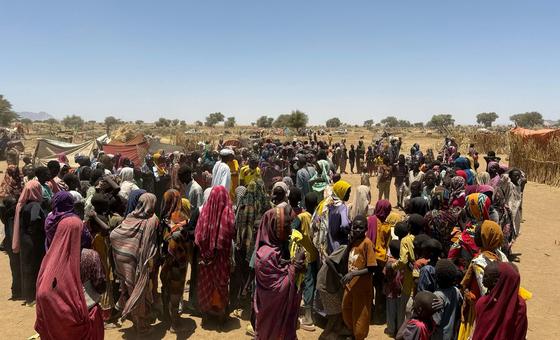
In Jonglei state alone, at least 280,000 people have been displaced – the majority being women and children.

“They fled with nothing. They are sleeping in displacement camps left over from the not-so-distant civil war – camps where there are barely any services. Others are out in the open, in remote locations, with nothing at all,” said UNICEF’s representative in South Sudan, Obia Acheng. 

Children were believed to make up 53 percent of those displaced.

“These children face killing and maiming. Recruitment into armed groups. Separation from their families. Gender-based violence. And profound psychological distress that will mark them for years,” Mr. Acheng emphasised.

Delivering for children

South Sudan’s health system is on the verge of collapse, with 11 health facilities attacked or looted since fighting intensified and many nutrition centres forced to close, UNICEF said.

Cholera cases have surged to 479 nationwide, with treatment centres overwhelmed and resources running low.

Around 825,000 children across Jonglei, Unity, and Eastern Equatoria states are now at risk of acute malnutrition — conditions that make children 12 times more likely to die without treatment.

Pregnant and nursing mothers are increasingly cut off from care, and humanitarian infrastructure is under assault.

Despite these grim numbers, UNICEF continues to run primary healthcare, nutrition, water and sanitation, and child protection programmes across the country. 

The UN Security Council also issued a statement expressing grave concern about the escalating violence in Jonglei, Eastern Equatoria, and throughout South Sudan. 

Members strongly called on all parties to de-escalate and immediately cease renewed hostilities and to resolve issues through peaceful dialogue.  

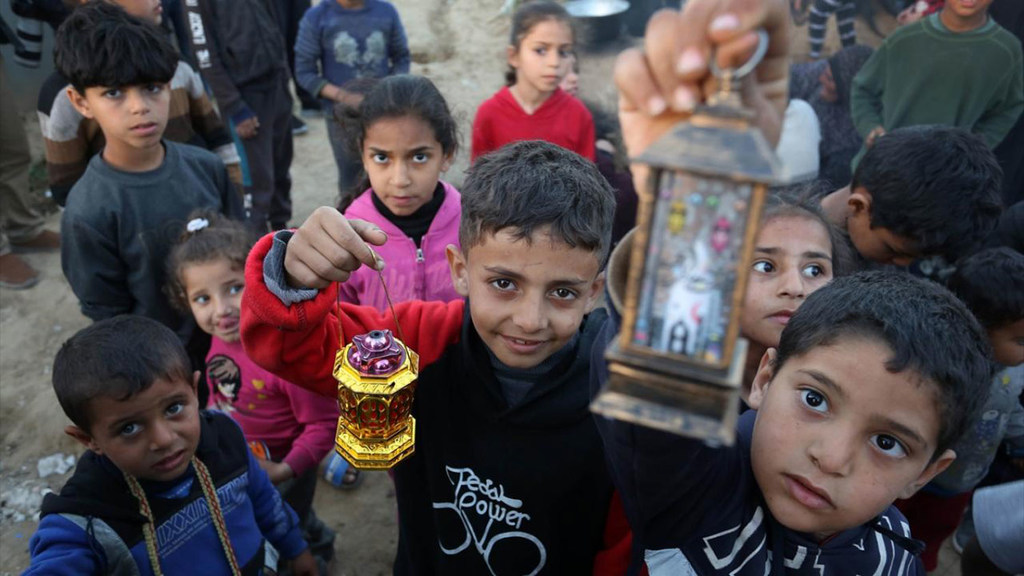
Children in Gaza hold lanterns to celebrate the advent of Ramadan. (file)

UN chief calls for unity and compassion ahead of Ramadan 

UN Secretary-General António Guterres has urged people worldwide to embrace the spirit of peace, compassion and solidarity as Muslims prepare to observe the holy month of Ramadan.  

“For Muslims around the world, the holy month of Ramadan is a sacred period of reflection and prayer. Ramadan also represents a noble vision of hope and peace.” Mr. Guterres said in a message ahead of the start on Tuesday.  

He noted, however, that for many — from Afghanistan to Yemen, Gaza, and Sudan — this vision of hope and unity remained distant amid conflict, hunger, and displacement. 

The UN chief called on the global community to bridge divides, deliver aid to those in need, and uphold human rights and dignity for all. 

“May this Holy Month inspire us to work as one to build a more peaceful, generous and just world for all people,” he said. 

Source link

Civilians and aid operations under fire as Sudan airstrikes intensify

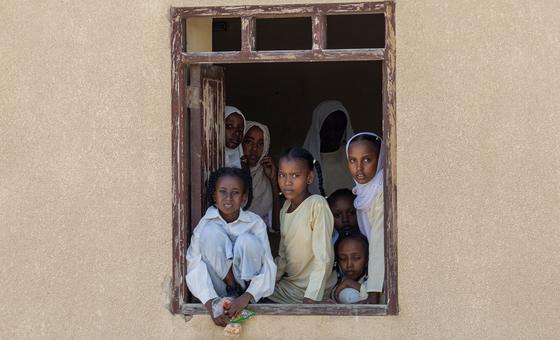
Two children were reportedly killed and 13 others injured in a drone strike on a mosque in Al-Rahad, North Kordofan, where all the victims were students at the adjoining school. The attack came just hours after a primary school in Dilling, South Kordofan, was hit, with further injuries reported. 

WFP warehouse hit 

The warehouse of the UN World Food Programme (WFP) in the South Kordofan capital, Kadugli, also was struck by suspected rockets, significantly damaging buildings and mobile storage units.  

Recent days have also seen drone strikes reported in other parts of South Kordofan, North Kordofan and West Kordofan states, UN Spokesperson Stéphane Dujarric told journalists in New York. 

Strikes have occurred close to key supply routes linking the city of El Obeid in North Kordofan to Dilling and Kadugli in South Kordofan, and this is endangering civilians, including humanitarian workers. 

Not a target 

The fact that we have to reiterate almost every day that civilians and civilian infrastructure, places of worship, schools and hospitals cannot and should not be targeted is a tragedy into itself,” he said. 

“Yet, we have to remind the parties of this almost every day and that they need to respect international humanitarian law.”  

Meanwhile, the UN and partners continue their efforts to provide humanitarian assistance to the Sudanese people. 

The war between the national army and former allies-turned-rivals the Rapid Support Forces (RSF) – which erupted in April 2023 – has sparked the world’s worst humanitarian crisis, with some 30 million people in need of assistance. 

Aid convoy breakthrough 

Mr. Dujarric said a multi-agency UN convoy made up of 41 trucks carrying nearly 800 metric tonnes of food and other essential supplies departed El Obeid for Kadugli on Tuesday, marking a significant breakthrough along a previously closed route. 

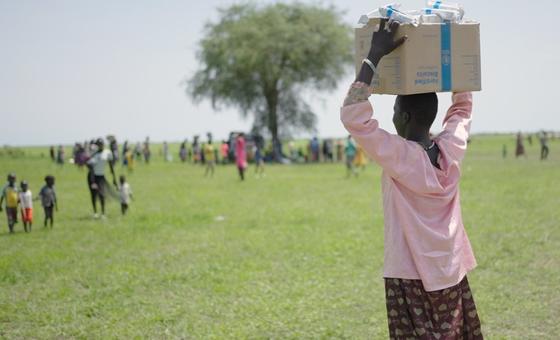
In South Kordofan, humanitarians have distributed nearly 600 metric tonnes of food to nearly 70,000 people, but the continued arrival of families fleeing their homes is depleting what limited stocks are available.  

More than 115,000 people have been displaced across the Kordofan region since late October, according to the International Organization for Migration (IOM). 

Diplomatic concern 

The UN and four other organizations working to promote political dialogue in Sudan voiced grave concern at the continued escalation of the conflict in a statement issued on Wednesday. 

The Quintet – which comprises the African Union (AU), East African bloc IGAD, the League of Arab States (LAS), the European Union (EU) and the UN – expressed particular alarm over the rapidly deteriorating situation in the Kordofan region and Blue Nile state. 

The statement highlighted the urgent need for action, citing: 
• Deadly drone strikes and tightening sieges around population centres 
• Attacks on hospitals, schools and humanitarian assets 
• Widespread displacement and severe constraints on humanitarian access 
• Direct attacks on humanitarian aid convoys 

Protect civilians, allow aid access 

The Quintet recalled the horrors that occurred in El Fasher, capital of North Darfur state, “and the repeated warnings issued ahead of those atrocities that went unheeded with devastating consequences for civilians”. 

The city was under siege by the RSF for more than a year during which crimes such as rapes, executions, mass killings, attacks on displacement were committed. 

The Quintet insists that civilians must no longer bear the cost of ongoing hostilities,” the statement said. 

“Civilians and civilian infrastructure must be protected, international humanitarian law must be respected, and safe, rapid and unhindered humanitarian access to all areas in need must be ensured.” 

Ramadan plea 

The partners also emphasised the need for coordinated international efforts to de-escalate the conflict and halt the flow of weapons and fighters sustaining the violence. 

Ahead of Islam’s holy month of Ramadan, they urged all concerned “to seize the opportunity presented by ongoing efforts to broker a humanitarian truce and to immediately deescalate hostilities, to prevent further loss of life and enable life-saving assistance.” 

Source link

Violence surges in South Sudan leaving civilians at risk and peacekeepers stretched thin

Briefing ambassadors in the Security Council on Tuesday, UN peacekeeping chief Jean-Pierre Lacroix said instability had risen sharply in recent weeks, driven by political deadlock among signatories to the 2018 Revitalised Peace Agreement and a dangerous escalation in armed confrontations.

Fighting has intensified most dramatically in Jonglei state, where clashes between Government forces and opposition elements displaced more than 280,000 people, according to government sources.

Reports of aerial bombardments, inflammatory rhetoric and severe restrictions on humanitarian access have raised fears of a return to the widespread violence seen in 2013 and 2016.

Communities, Mr. Lacroix said, are once again “on the move,” fleeing areas where fighting has erupted and basic services have collapsed.

Click here to read a summary of threats to South Sudan’s peace process and the converging political, security and humanitarian crises, and their impact on civilians.

Humanitarian statistics for South Sudan as of December 2025.

Crisis unravelling

In late January, Government forces instructed civilians, UN personnel and humanitarian workers to temporarily relocate from several counties in Jonglei, including from the UN Mission in South Sudan (UNMISS) base in Akobo, citing an anticipated military operation.

Although the Government later denied issuing such a directive and reiterated its cooperation with humanitarian partners, the episode underscored the volatility of the situation.

Regional bodies, including the African Union (AU) and the Intergovernmental Authority on Development (IGAD), have voiced alarm at the escalation, stressing that there is no military solution and that the peace agreement remains the only viable framework for stability.

Political deadlock deepens

Mr. Lacroix warned that unilateral initiatives to amend the peace agreement risk undermining its primacy, particularly proposals to defer key transitional tasks such as constitution-making until after elections scheduled for December 2026.

The Sudan People’s Liberation Movement/Army-in-Opposition (SPLM-IO) has said it cannot engage in political dialogue while its leader, First Vice-President Riek Machar, remains subject to ongoing legal proceedings, further complicating efforts to break the stalemate.

Mr. Machar, once an ally of President Salva Kiir, has been under house arrest since March 2025 and reportedly faces charges of murder and treason – which he denies.

The UN Security Council meets on the situation in South Sudan.

Humanitarian crisis worsens

The deteriorating security situation is compounding what Mr. Lacroix described as one of the world’s most dangerous environments for aid workers.

In 2025 alone, 350 attacks on humanitarian personnel and facilities were recorded, a sharp increase from the previous year, as the country grapples with its worst cholera outbreak on record.

Since September 2024, more than 98,000 cholera cases have been reported nationwide, with a resurgence now underway in Jonglei. Flight restrictions and blocked movements are delaying medical evacuations and the delivery of lifesaving supplies.

Recent incidents include an airstrike on a hospital in Lankien on 3 February, which destroyed critical medical stocks and injured staff, and the looting of a health facility in Pieri the same day. Violence has also forced the closure of 24 nutrition sites in Jonglei, cutting off care for nearly 8,000 children, including more than 2,600 suffering from severe acute malnutrition.

Peacekeepers stretched thin

Against this backdrop, UNMISS is grappling with significant funding-driven capacity reductions.

Mr. Lacroix said cost-cutting measures have already reduced protection patrols by up to 40 per cent in some areas and by as much as 70 per cent where bases have closed. Human rights monitoring missions have been cancelled, and tensions have increased in areas left without a UN presence.

At the same time, the Mission has been forced to redeploy forces to hotspots such as Akobo and establish temporary operating bases to deter violence and protect civilians.

“The trends we are currently observing are clear,” Mr. Lacroix said, urging the Security Council and international partners to ensure sustained political and financial support.

The presence of UNMISS continues to matter a lot. It matters to the people that we protect, it matters to our humanitarian partners that we assist, and it matters to the peace process that we actively support and engage in.”

Source link

In Sudan, sick and starving children ‘wasting away’

As heavy fighting continues between former allies the Sudanese Armed Forces and the paramilitary Rapid Support Forces and their allies, the UN Children’s Fund (UNICEF), said that in parts of North Darfur more than half of all children are acutely malnourished.

The warning follows the release of new data from the IPC, a UN-backed global food security monitoring system, from three localities there – Um Baru and Kernoi and At Tine – indicating “catastrophic” malnutrition rates.

“Extreme hunger and malnutrition come for children first, the youngest, the smallest, the most vulnerable,” said UNICEF spokesperson Ricardo Pires. “In Sudan, it’s spreading… These are children between six months and five years old, and they are running out of time.” 

Starvation spreading

The UN agency stressed that famine thresholds have been surpassed in locations not previously considered at risk, such as Um Baru and Kernoi. 

Conflict, mass displacement, the collapse of services and blocked access which have sparked starvation alerts for these localities exist “across vast swathes of Sudan”, Mr. Pires insisted. 

If famine is looming there, it can take hold anywhere,” he warned.

Mr. Pires also warned of the prevalence of disease as a further threat to children’s survival: 

“These children are not just hungry; nearly half of all children in At Tine had been sick in the previous two weeks. Fever, diarrhoea, respiratory infections, low vaccination coverage, unsafe water and a collapsing health system are turning treatable illnesses into death sentences for already malnourished children.”

He called on the world to “stop looking away” from Sudan’s children, warning that more than half of the youngsters in North Darfur’s Um Baru are “wasting away while we watch”. 

“That is not a statistic. Those are children with names and a future that are being stolen,” the UNICEF spokesperson said.

Nearly three years since war erupted between the once-allied Sudanese Armed Forces (SAF) and the Rapid Support Forces (RSF), 13.6 million people have fled their homes, including 9.1 million displaced within the country. 

Healthcare under attack

Dr Shible Sahbani, the UN World Health Organization (WHO)’s representative in Sudan, told reporters that while the displaced require “urgent” care, the health system has been “ravaged by attacks, loss and damage of equipment and supplies, a shortage of health workforce and operational funds”. 

Since the start of the war in April 2023, WHO has verified 205 attacks on health care that have led to 1,924 deaths and 529 injuries, Dr Sahbani said.

“Such attacks deprive communities of care for years to come, instilling terror in patients and health workers and creating unsurmountable barriers to life-saving treatment,” he added. Meanwhile, the country faces multiple disease outbreaks, including cholera, malaria, dengue and measles.

While WHO and partners are supporting the response to these outbreaks, Dr. Sahbani insisted on the need for greater access and protection of health workers and facilities, in line with international humanitarian law.

Patients and healthcare workers should not risk death while seeking and providing care,” he said. “Above all, we call for peace…Peace is long due for Sudan.”

His call echoed that of UN High Commissioner for Human Rights Volker Türk, who on Monday once again sounded the alarm over the deadly conflict in Sudan, briefing the Human Rights Council in Geneva on the “preventable human rights catastrophe” that took place in North Darfur’s capital El Fasher in October last year. 

Thousands of people were killed there in a matter of days after an 18-month-long siege of the city, multiple testimonies gathered by Mr. Türk’s office have indicated.

Kordofans could be next

The new danger is a possible repeat of these abuses in the Kordofan region, he said.

Responding to journalists’ questions in Geneva about the involvement of other countries in the conflict, the High Commissioner’s spokesperson, Ravina Shamdasani underscored his concerns – “whether they’re directly involved, whether there are mercenaries on the ground from different countries, whether they’re providing arms, intelligence, funding or other support, whether they’re involved in the political economy of the conflict in Sudan”.

Source link

Sudan: UN rights chief says worse is to come without international action

We can only expect worse to come” unless action is taken to halt the bloodshed, Mr. Türk told Member States at the Human Rights Council in Geneva, as he reiterated his call for the extension of an arms embargo from Darfur to include all of Sudan.

Rival militaries from the national army and Rapid Support Forces (RSF) militia have been battling for control of the country for nearly three years.

Something must be done to address the “continuous inflow of weapons”, the High Commissioner for Human Rights insisted, after recounting testimonies of survivors of atrocity crimes in El Fasher, the capital of North Darfur, by paramilitary Rapid Support Forces (RSF) who overran the city last October.

Mass killings

“In one horrific example, people who fled to separate locations, thousands of kilometres apart, gave consistent accounts of the mass killing of hundreds of people sheltering at El Fasher University,” he said, describing convincing testimony that some victims were targeted based on their non-Arab ethnicity – in particular, members of the Zaghawa ethnic group. 

“Survivors also spoke of seeing piles of dead bodies along roads leading away from El Fasher, in an apocalyptic scene that one person likened to the Day of Judgment,” the High Commissioner continued, his comments echoing the International Criminal Court’s (ICC) conclusion last month that war crimes and crimes against humanity had taken place in El-Fasher, linked to the RSF’s siege. 

“Our own findings are fully consistent” with that ICC assessment, Mr. Türk told the Human Rights Council, at a meeting held specifically on the Sudan emergency.

Dire warnings

Previously, the UN rights chief noted that his office has warned about previous atrocity crimes such as the RSF offensive to capture Zamzam camp for displaced people in April 2025. 

Responsibility for these atrocity crimes lies squarely with the RSF and their allies and supporters,” he said.

The war in Sudan erupted in April 2023, after a power-sharing agreement broke down in the resource-rich central African nation between the Sudanese Armed Forces (SAF) and the RSF. 

The resulting humanitarian emergency has affected more than 30 million people in Sudan; many have faced repeated displacement and others have been impacted by famine and systematic sexual violence, including gang rape.

As the fighting continues away from the Darfurs in the west to the central Kordofans regions, observers fear that further grave abuses are bound to happen, including by “advanced drone weaponry systems used by both sides”, Mr. Türk warned.

Deadly drone war

“In the last two weeks, the SAF and allied Joint Forces broke the sieges on Kadugli and Dilling,” the High Commissioner said. “But drone strikes by both sides continue, resulting in dozens of civilian deaths and injuries. 

Civilians are at risk of summary executions, sexual violence, arbitrary detention, and family separation.”

Mediation measures

In a bid to prevent further bloodshed, the High Commissioner announced a series of measures “to support mediation efforts” and de-escalate violence. 

These include commitments not to target civilians or residential areas with explosive weapons, to enable the unimpeded delivery of humanitarian aid, to end arbitrary detention and cease attacks on civilian infrastructure.

“I witnessed the damage done by RSF attacks on Merowe dam and hydroelectric power station, which once supplied 70 per cent of Sudan’s electricity. Repeated drone strikes have disrupted power and water supplies to huge numbers of people, with a serious impact on healthcare,” he said.

Source link

Guterres condemns escalating violence in South Sudan as aid operations come under fire

In a statement issued by his Deputy Spokesperson, Farhan Haq on Saturday, the UN chief said nearly 10 million people – “more than two thirds of the population” – now require life-saving humanitarian assistance and “continue to bear the brunt of the conflict”.

He expressed grave concern over fighting, attacks and looting affecting humanitarian and health facilities, as well as movement restrictions and insecurity along key supply routes. 

These conditions, the statement said, are “crippling humanitarian operations and shutting down essential services, placing civilians, including aid workers, at serious risk”.

Healthcare services attacked

Since late December, at least 11 healthcare facilities have been attacked in Jonglei State alone, disrupting critical services for communities already under severe strain. The assaults have also involved the seizure of 12 vehicles, including an ambulance.

“In the past week alone,” the statement noted, incidents have included “repeated attacks on a World Food Programme (WFP) convoy, an airstrike on a hospital run by the leading NGO Médecins Sans Frontières, and the burning of a Save the Children field office and destruction of its health centre”.

The Secretary-General said that “this clear disregard for medical and humanitarian operations is unacceptable and must stop”, stressing that such work “must be facilitated and respected”.

The violence has driven mass displacement, with more than 370,000 people reportedly forced from their homes so far this year, including over 280,000 in Jonglei State, amid a rapidly worsening cholera outbreak.

South Sudan, the world’s youngest nation, gained independence from Khartoum in 2011 but soon descended into a brutal civil conflict marked by political rivalry, ethnic violence and repeated peace deal breakdowns. 

‘Immediate and decisive’ end to fighting needed

Despite a 2018 agreement, insecurity and localised fighting have continued to undermine stability and recovery.

The UN chief called on all parties to “immediately and decisively halt all military operations”, de-escalate tensions through dialogue, uphold international law, protect civilians and ensure safe, sustained humanitarian access, including the security of aid workers and UN peacekeepers.

Source link

Child malnutrition hits catastrophic levels in parts of Sudan

According to an alert from the IPC, a global food security monitoring system, thresholds for acute malnutrition were surpassed in two new areas of North Darfur – Um Baru and Kernoi – following the fall of the regional capital, El Fasher, in October 2025 and a massive exodus.

December assessments found acute malnutrition levels among children of 52.9 per cent in Um Baru – nearly twice the famine threshold – and about 34 per cent in Kernoi.

The IPC stressed that the alert does not constitute a formal famine classification but warned that conditions are deteriorating rapidly – and action is urgently needed.

These alarming rates suggest an increased risk of excess mortality,” the experts said, adding that many other conflict-affected or inaccessible areas may be facing similarly catastrophic conditions.

Projection acute food insecurity in Sudan from February to May 2026.

See our UN News explainer on the evidence-based IPC index here.

Um Baru and Kernoi

Um Baru and Kernoi are in remote areas of northwestern North Darfur, near key displacement corridors leading toward the Chadian border.

Both areas have absorbed large numbers of civilians fleeing fighting in and around El Fasher, where conflict has shattered markets, disrupted livelihoods and sharply curtailed humanitarian access.

Sudan’s war, which erupted in April 2023 between the once-allied Sudanese Armed Forces (SAF) and the Rapid Support Forces (RSF), has devastated food systems nationwide, triggering mass displacement, market collapse and repeated disruptions to health, water and nutrition services.

Across the country, nearly 4.2 million cases of acute malnutrition are now expected in 2026, including more than 800,000 cases of severe acute malnutrition, representing a sharp increase from 2025 levels, according to IPC projections.

What the alert means

The IPC alert is intended to draw urgent attention to the worsening conditions and does not introduce any new formal classification.

It builds on earlier IPC analyses that confirmed famine (IPC Phase 5) in El Fasher, North Darfur in 2024, and Kadugli, South Kordofan, in September 2025 – and projected famine risk in at least 20 other areas across greater Darfur and greater Kordofan.

The new findings indicate that famine-like conditions are likely spreading beyond previously assessed locations, driven by continued fighting, displacement and the collapse of food, health and water systems, IPC analysts said.

Greater Kordofan at risk

The IPC also warned of rapidly deteriorating conditions across Greater Kordofan, where famine was already confirmed in Kadugli and severe conditions were projected in Dilling and the Western Nuba Mountains.

Renewed fighting since late October has displaced more than 88,000 people in the region, pushing total displacement above one million. Markets there are among the least functional in Sudan, with food prices far above national averages.

Without an immediate end to the fighting and large-scale humanitarian access, IPC experts said preventable deaths are likely to rise.

Source link

South Sudan: UN forced to suspend food aid after ‘unacceptable’ attacks on convoy

As fighting intensifies there between opposition forces and national troops, there are reports of airstrikes and daily civilian casualties.

UN agencies warn that worsening insecurity is blocking lifesaving aid, while hunger projections deteriorate and cholera treatment centres struggle to cope with an influx of newly displaced people.

The renewed violence comes as South Sudan’s 2018 Revitalised Peace Agreement continue to fall apart amid stalled reforms, rising political tensions ahead of planned elections in 2026, and mounting pressure from more than one million refugees fleeing the brutal war in neighbouring Sudan.

Click here to read a summary of threats to South Sudan’s peace process and the converging political, security and humanitarian crises, and their impact on civilians.

Humanitarian statistics for South Sudan as of December 2025.

WFP convoy attacked, activities suspended

The UN World Food Programme (WFP) on Wednesday suspended all activities in Baliet County, Upper Nile state, following repeated attacks on a convoy carrying humanitarian assistance down river.

Between last Friday and Sunday, a 12-boat convoy transporting more than 1,500 metric tonnes of food and other relief items was attacked several times by armed youth.

The cargo was later looted in multiple locations, despite receiving prior security assurances for the safe passage of aid.

WFP said the suspension would remain in place until the safety of its staff, partners and contractors is assured and authorities take immediate steps to recover the stolen supplies.

Attacks on humanitarians are never acceptable,” WFP said, urging all parties to respect humanitarian workers and safeguard the facilities and resources essential for delivering aid.

Aid access under threat

The convoy attack reflects a broader collapse in humanitarian access, particularly in Jonglei state, where renewed fighting since late December has intensified clashes between the South Sudan People’s Defense Forces and the South Sudan People’s Liberation Army-in-Opposition across multiple counties.

According to the UN relief coordination office, OCHA, fighting and airstrikes have displaced around 280,000 people since late December, including more than 235,000 across Jonglei alone. Many have fled to areas with minimal water, sanitation and health services, sharply increasing the risk of disease outbreaks.

Humanitarian partners report that at least seven aid facilities have been looted or damaged in Jonglei, with assets confiscated and aid workers intimidated, forcing the suspension of operations in several locations.

South Sudan: Humanitarian snapshot (December 2025).

Hospitals hit, services halted

The medical charity Médecins Sans Frontières (MSF) reported that Government forces bombarded its hospital in Lankien, Jonglei State, overnight on 3 February, destroying the main warehouse and most critical medical supplies. One MSF staff member suffered minor injuries.

In a separate incident the same day, MSF’s health facility in Pieri was looted by unknown assailants, forcing staff to flee. The NGO said the violence had left around 250,000 people without healthcare, as the organization had been the only provider in the area.

Hunger and disease risks rising

UN agencies warn that escalating conflict is expected to significantly worsen food insecurity, particularly in northern Jonglei and Upper Nile states.

Projections indicate that the number of counties facing emergency-level hunger (IPC Phase 4) between February and May will more than double, with some households at risk of slipping into catastrophic conditions (IPC Phase 5).

Insecurity has already forced WFP to pause plans to pre-position 12,000 metric tons of food ahead of the rainy season in Jonglei, raising concerns that access will further deteriorate once roads become impassable.

Since September 2024, South Sudan has recorded nearly 98,000 cholera cases and more than 1,600 deaths, with Jonglei among the worst affected, overwhelming treatment centres.

Source link

In Washington, Fletcher presses for action as Sudan war grinds on

Speaking at a donor conference in Washington, DC, UN Emergency Relief Coordinator Tom Fletcher warned that the brutal conflict, famine and mass displacement are pushing millions of civilians deeper into crisis, while aid access remains severely constrained.

Fighting erupted between the once-allied Sudanese Armed Forces and paramilitary Rapid Support Forces (RSF) in mid-April 2023, spreading quickly through a country already undergoing political turmoil, increased ethnic tensions, and climate extremes.

Move from words to action

There have been “too many days of famine, of brutal atrocities, of lives uprooted and destroyed,” Mr. Fletcher said, while women and girls have been forced to endure “terrifying sexual violence.”

He stressed that the international community must move beyond expressions of concern to deliver more support and political pressure on combatants for a ceasefire. With that must come extensive humanitarian access.

Mr. Fletcher said the United Nations fully supports diplomatic efforts led by the “Quad” – the United States, Egypt, Saudi Arabia and the United Arab Emirates – aimed at securing a humanitarian truce, including the demilitarization of key areas to allow life-saving aid to reach civilians.

The guns must fall silent and a path to peace must be charted,” he said.

UN ready to deliver

Under its comprehensive 2026 humanitarian response plan, UN agencies aim to reach more than 20 million people across Sudan with emergency assistance. To achieve that target, the Organization requires about $2.9 billion.

Alongside funding, safe and unhindered access for humanitarians and civilians are critical to ensure aid reaches those in need.

Civilians and aid workers must be protected, Mr. Fletcher stressed, urging donors to respond quickly and decisively.

Let today be at last the signal that the world is uniting in solidarity for practical impact,” he said.

Crisis deepens on the ground

Meanwhile, fighting rages on the ground in Sudan.

According to media reports, Government forces on Tuesday entered South Kordofan’s capital, Kadugli, which was under a months-long siege by the RSF. The army had also recently broken the blockade of Dilling, a major town about 110 kilometres north of Kadugli.

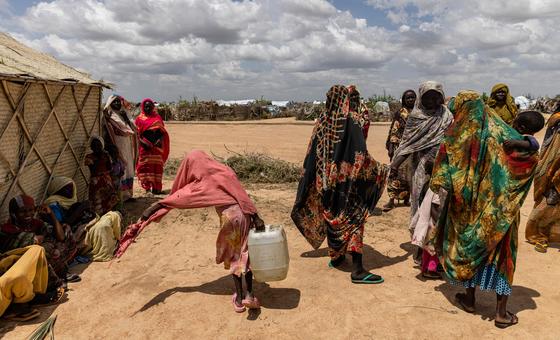
The fighting continues to drive thousands from their homes into IDP camps and makeshift settlements, facing critical shortages of food, healthcare, water, sanitation, shelter and education.

According to the Office of the UN High Commissioner for Refugees (UNHCR), nearly 11.7 million people have been forcibly displaced by the conflict, including seven million internally displaced and 4.5 million who have fled to neighbouring countries.

Source link

World News in Brief: Children at risk in South Sudan, Balochistan attacks, summit backs boost for undersea cable security

Clashes in Jonglei state since the start of 2026 have displaced at least 250,000 people, mainly in the north and centre of the state, cutting families off from lifesaving care in areas already suffering some of the highest malnutrition rates in the country.

Deadly risks

“We are extremely concerned for women and children impacted by these violent clashes,” said UNICEF Country Representative Noala Skinner. “A malnourished child without treatment is 12 times more likely to die.”

Access for aid agencies remains severely constrained, with restrictions on river, road and air travel. Six counties in Jonglei are already at, or close to, running out of therapeutic food, while 17 health facilities nationwide have closed due to conflict. 

UNICEF has also recorded 10 incidents of looting of health and nutrition supplies.

Despite the challenges, UNICEF said it is responding, delivering water purification equipment amid cholera concerns and sending malaria treatments, emergency health kits and therapeutic food to reach more than 10,000 people.

UNICEF condemns killing and injury of children in Balochistan attacks

UNICEF has expressed grave concern over reports that children were among those killed and injured during a wave of violent attacks in Pakistan’s southwestern province of Balochistan last weekend.

“Children cannot be targets nor collateral damage, and their lives must always be protected,” said UNICEF Representative in Pakistan Pernille Ironside, extending condolences to the families and communities affected. 

She warned that the escalation of violence is spreading fear, with children and families “bearing the heaviest burden”.

The attacks, which took place on 31 January, were also strongly condemned by the UN Security Council

In a press statement released on Tuesday, Council members described the incidents as “heinous and cowardly” acts of terrorism that left 48 people dead, including 31 civilians. 

Council expresses ‘deepest sympathy’

Civilian casualties reportedly included five women and three children. The so-called Balochistan Liberation Army separatist group has claimed responsibility. 

A senior local official told reporters that 145 members of the banned group had subsequently been killed by security forces.

The Council expressed its deepest sympathy to the victims’ families and to the Government and people of Pakistan, wishing the injured a full recovery. 

Global summit backs stronger protection for submarine cables

Governments and industry leaders from more than 70 countries have reaffirmed the need to protect submarine cables that carry the vast majority of the world’s digital traffic.

Meeting in Porto, Portugal, at the International Submarine Cable Resilience Summit 2026, participants adopted a declaration and recommendations aimed at strengthening cooperation to safeguard the global network of around 500 cables stretching more than 1.7 million kilometres.

Read our explainer on the summit and what’s at stake, here.

“When it comes to critical digital infrastructure like submarine cables, resilience is both an end-to-end imperative and a shared responsibility,” said ITU Secretary-General Doreen Bogdan-Martin, welcoming commitments to improve repair times, readiness and investment.

‘Meaningful impact’

The summit highlighted the importance of protecting connectivity for remote and underserved regions, which are particularly vulnerable to cable disruptions.

“I firmly believe [the advisory body] is already delivering concrete and meaningful impact,” said ANACOM Chairwoman Prof. Sandra Maximiano, noting the risks faced by countries and island communities with limited capacity to respond to outages.

The Porto meeting followed the inaugural summit in Abuja, Nigeria, as momentum builds for global action to protect what many experts see as the backbone of the digital economy.

Source link

UN chief ‘deeply concerned’ by escalation of violence in South Sudan

The tensions are concentrated in South Sudan’s Jonglei State, where many deaths and injuries have been reported in response to renewed fighting between opposition militia and army forces, leading to the displacement of 180,000 people. 

According to news reports, the army launched a major offensive in Jonglei against opposition forces, ordering civilian evacuations on Sunday and telling aid agencies to leave areas where military operations are ongoing. 

Secretary-General António Guterres said in a statement released on Thursday by his Spokesperson that he is “deeply concerned regarding the impact of the escalating violence”, adding that it “will further harm civilian populations who are already in a vulnerable situation”.

Aid and protection at risk

Mr Guterres emphasised the need to prioritise the protection of civilians and ensure the safe delivery of humanitarian aid and security in a country where two-thirds of the population are projected to require some form of aid. 

Calling on the military operations to stop, the Secretary-General urged the Government of South Sudan and opposition forces to take “immediate and decisive action to halt all military operations and deescalate the situation through inclusive dialogue.”

Political solution 

In the wake of a 2018 peace agreement between the president and his vice-presidential rival and following the establishment of a Revitalised Transitional Government in February 2020, elections have continued to be postponed. 

Mr Guterres’s statement reminded relevant parties to find a “political not military solution” and pave the way for a path to credible elections. 

The Secretary-General has welcomed efforts from the African Union and East African regional bloc IGAD in their support for inclusive dialogue.

Source link

South Sudan: ‘All the conditions for a human catastrophe are present’

Briefing journalists based at UN Headquarters in New York on Friday, Anita Kiki Gbeho, Officer in Charge of the UN Mission in South Sudan (UNMISS), said Jonglei has become a ‘flashpoint’ for fighting, with civilians caught in the crossfire.

With over 200,000 people displaced by the conflict this month, the senior official – who also serves as Resident Coordinator – warned of a ‘sharp surge’ in cholera cases. 

Over 500 were reported nationwide this month whilst treatment centres are ‘overwhelmed’ and ‘critically short’ of supplies. 

Aid delivery difficulties

Although aid efforts are continuing with government support, access continues to be ‘severely challenged’ by road and river restrictions that are preventing aid distribution and medical evacuations. 

The world’s youngest nation gained independence in 2011 but soon slid into civil war with fighting between forces loyal to the national army under President Salva Kiir and those supporting main opposition leader Riek Machar, who is currently on trial facing serious charges, including murder, which he denies. 

Check out our explainer on the long running conflict, here.

A Government offensive got underway this week in three counties of Jonglei following opposition gains. All civilians and aid workers were urged to evacuate.

Humanitarian facilities ‘looted’ 

Ms. Gbeho told reporters that “humanitarian facilities are being looted and damaged (including at least seven [sites] in Jonglei), assets are being confiscated, and aid workers intimidated,” while the UN peacekeeping force is facing “similar challenges”. 

The disruptions to aid and peacebuilding efforts are having an “intolerable impact on people,” with the mission warning that “all the conditions for a human catastrophe are present.”

Speaking online from South Sudan, Ms. Gbeho underscored that despite the release of $10 million to support the humanitarian response from the Central Emergency Relief Fund, “more support is needed.” 

Restore peace 

Despite the shortages of supplies, Ms. Gbeho stated that the priority is “to stop the fighting, protect civilians and preserve the peace process” and to work with the African Union and the IGAD bloc of nations in the region to “restore adherence to the [2018] peace agreement.” 

Echoing the remarks of the Secretary-General on Thursday, Ms. Gbeho reiterated that “the solution to the current crisis is political, not military”, calling on the country’s leaders to take “urgent, immediate action to cease hostilities, de-escalate tensions through inclusive dialogue, and return to consensus-based decision-making”. 

‘A defining moment’

To conclude, Ms. Gbeho emphasised that “the power to make positive change rests with the South Sudanese themselves.” 

She described the juncture as “a defining moment – a critical junction for South Sudan. The decisions it makes now could either lead them on a path towards peace or to further conflict.” 

Source link

World News in Brief: IOM warning for Sudan returnees, Nipah virus alert for India, food security in Afghanistan

They did so despite extensive damage to housing, basic services, vital infrastructure, and an uncertain future. 

The highest number of returns were recorded in Khartoum State, where more than 1.3 million people have made the journey home, followed by nearby Aj Jazirah State, according to IOM’s latest data.

Pockets of security

IOM says the number of returnees is rising, signaling pockets of perceived relative security in parts of the country. 

Overall, 83 per cent of returnees had been internally displaced, while 17 per cent returned from neighbouring countries, including Egypt, South Sudan, and Libya, as well as from the Gulf States. 

However, across areas in Darfur and Kordofan where violence continues to escalate, increased displacement has been recorded.

IOM warns that without adequate resources and renewed efforts toward peace, millions of families will remain trapped in protracted displacement and instability.

WHO: India on alert with two cases of Nipah virus in January

India has confirmed two cases of the sometimes-fatal Nipah virus this month in the eastern state of West Bengal, according to an update by the World Health Organization (WHO). 

This is the seventh documented Nipah outbreak in India and the third in West Bengal, following outbreaks in 2001 and 2007.

The infected individuals are a male and a female nurse working at the same private hospital. As of last week, the male patient is recovering, while the female patient remains in critical condition.

Nipah is a virus transmitted mainly from bats to humans, sometimes through contaminated food or close contact. It can also spread from animals such as pigs to humans, and in some cases between people.

Nipah virus infection can range from asymptomatic illness to severe respiratory disease and fatal encephalitis.

Low transmission risk

 Historically, Nipah outbreaks in the WHO Southeast Asia Region have been limited to Bangladesh and India, occurring sporadically or in small clusters. There have been no known instances of international spread through travel.

WHO says India has demonstrated its capacity to manage previous outbreaks well and public health measures are currently being implemented.

As of 27 January, no additional cases have been detected. The national government has deployed an outbreak response team to West Bengal to work closely with state authorities.

For Nipah, no licensed vaccine or treatment is currently available, making early detection and prevention essential.

$100 Million initiative launched to strengthen food security in Afghanistan

In Afghanistan, the UN food agency (FAO) and the Asian Development Bank (ADB) are implementing a $100 million initiative to bolster food and nutrition security and restore agricultural livelihoods for more than one million vulnerable people over the next two years.

Backbone of the economy

Although agriculture remains the backbone of Afghanistan’s rural economy, it continues to face challenges such as low productivity, restricted market opportunities, and repeated natural disasters. 

The project will reach over 151,000 households – that’s just over a million people – including returnees, host communities, and disaster-affected families. 

With millions of Afghans already facing mounting pressures and at risk of slipping into deeper acute food insecurity and malnutrition, there is an urgent need for sustained investment that goes beyond emergency response to strengthen long-term resilience.

In 2026, 17.4 million people are projected to face acute food insecurity, including 4.7 million classified as being in the emergency phase – just one away from famine conditions. 

FAO has supported about 5.6 million people since 2022. 

Through its partnership with ADB, millions more rural households will gain the tools and resources needed to produce food, safeguard livestock, and secure their families’ nutrition.

Source link

South Sudan: UN and rights experts warn against risk of mass violence in Jonglei

UNMISS expressed grave concern following reports that a senior military leader is urging troops to inflict discriminate violence against civilians, with more than 180,000 people fleeing their homes.  

Inflammatory rhetoric calling for violence against civilians, including the most vulnerable, is utterly abhorrent and must stop now,” Graham Maitland, Officer in Charge, said on Sunday. 

Ongoing hostilities 

South Sudan – the world’s youngest country – gained independence in July 2011 but soon slid into civil war with fighting between forces loyal to either President Salva Kiir or the main opposition leader, First Vice President Riek Machar. 

Despite a 2018 peace agreement and the establishment of a transitional unity government, clashes and tensions persist. 

UNMISS said communities in Jonglei and other locations are suffering immense harm from the escalating conflict, including direct military confrontations between forces. 

Put people first 

Although South Sudan’s leaders continue to underline their commitment to peace, hostilities and violations of the ceasefire continue unabated. 

The Mission urged leaders to put the interests of the people first by stopping the fighting and upholding their commitments under the peace agreement. 

“This includes returning to consensus-based decision-making, adhering to power-sharing arrangements, and agreeing on a path to peacefully end the transitional period through inclusive dialogue,” said Mr. Maitland. 

‘Risk of mass violence’ 

The UN Commission on Human Rights in South Sudan expressed grave alarm over the situation in Jonglei, saying the inflammatory rhetoric by senior military figures and reports of force mobilisation “significantly heighten the risk of mass violence against civilians and further erode the peace agreement.” 

Members noted that under international law, military and civilian leaders who incite crimes or who exercise effective control over forces may be held criminally responsible.   

Furthermore, those who fail to prevent or punish crimes they knew about – or should have known were being committed – are equally criminally liable.  

Dangerous words 

“Language that calls for the killing of those who are hors de combat (no longer participating in hostilities) and civilians, including the elderly – with assertions that ‘no one should be spared’ – is not only shocking, it is profoundly dangerous,” said Yasmin Sooka, Chair of the Commission. 

“In South Sudan’s past, such rhetoric has preceded mass atrocities. When such language is issued or tolerated by those in positions of command, it signals permission to commit violence and removes any expectation of restraint.”  

The current escalation is not an isolated incident, but part of a wider political breakdown, the Commission said. This is being driven by sustained violations of the peace deal and the erosion of command discipline in an already volatile and ethnically fractured environment. 

Appeal for de-escalation 

“When senior figures issue reckless or violent rhetoric, or fail to counter it decisively, they lower the threshold for abuses and send a signal that restraint no longer applies,” Commissioner Barney Afako said. 

“The mobilisation of forces in this context, coupled with ethnicised messaging, risks triggering a spiral of retaliatory violence that could rapidly escalate beyond control.” 

The Commission called for all parties to immediately cease inflammatory rhetoric and force mobilisation to de-escalate tensions. 

Furthermore, as Commander-in-Chief, President Kiir bears a heightened duty to exercise effective control over forces. Other senior officials such as the Chief of Defence Forces and the Minister of Defence also share in this duty. 

Avert a catastrophe 

The Commission also called on South Sudan’s regional and international partners to urgently re-engage to preserve the peace deal and press leaders to return to the political path. 

Failure to do so risks an all-out ethnic conflict and another preventable tragedy, they said. 

“This crisis is not inevitable,” Ms. Sooka insisted. “Leadership, restraint and accountability can still avert catastrophe. But deliberate incitement and the abuse of command authority will have consequences, and the window to act is closing fast.” 

About the Commission 

The Commission on Human Rights in South Sudan was first established by the UN Human Rights Council in March 2016, and its mandate has been renewed annually. 

The three commissioners who serve are not UN staff and do not receive a salary for their work. 

Source link

At the edge of war: the Central African Republic’s uneasy border with Sudan

Since the beginning of the civil war in Sudan, tens of thousands of refugees have fled south to the area, carrying with them not only what they could salvage from their homes, but the woes of the world’s largest humanitarian crisis.

On a sweltering November day, at the start of the dry season, a tall woman was standing in the shade of a tree near a plastic tent, amid the thatched-roof houses of Korsi, a neighbourhood hastily built on the outskirts of Birao to absorb the tide of new arrivals. 

Nafeesa, as we’ll call her, said she came from a city outside Khartoum, the Sudanese capital, more than 700 miles away.

When the war broke out there, in April 2023, she and her family headed west to South Darfur, where her husband opened a small shop in a local market. One day, armed men burst into the store and threatened him. He managed to escape, but they followed him home.

UN News/Alban Mendes de Leon

Nafeesa (center, from behind), whose real name has been changed to protect her safety, said she came from a city outside Khartoum, the Sudanese capital, more than 700 miles away.

That same night, the men returned to finish the job. 

“They came to us at 1:30am,” Nafeesa, whose real name has been changed to protect her safety, recalled in Arabic. “He got out of bed, but they shot him three times.” 

About this article

This reported story was produced with the support of the UN peacekeeping mission in the Central African Republic (MINUSCA). It explores how the war in neighbouring Sudan is affecting communities in areas where the mission is tasked with protecting civilians. 

The mission at a glance

  • Deployed: 2014, following the outbreak of the Central African civil war 
  • Mandate: Protection of civilians; support to stabilization, the peace process, and the restoration of state authority
  • Personnel: 18,313 uniformed and civilian staff, including 13,307 troops 
  • In northern CAR: roughly 900 peacekeepers, including 600 in Birao

She and her nine-year-old son were tied up as her husband lay dying. “They took our money, our belongings, and our clothes.”

She spoke in a soft voice, her hands covered with dainty henna patterns, but her face was hardened by grief and exile.

After the killing, she decided to leave Sudan with the rest of her family.

The war spreads

The events that forever altered the course of Nafeesa’s life were put into motion by the rupture between Sudan’s army chief, general Abdel Fattah al-Burhan, and the paramilitary commander of the Rapid Support Forces (RSF), Mohamed Hamdan Daglo. 

Nearly three years later, what started as a power struggle in Khartoum metastasized into nationwide bloodshed. Roughly 30 million people have been pushed into humanitarian distress and more than 10 million have fled their homes, half of them children. Since the summer of 2024, famine has taken hold in various parts of the country.

In late October 2025, the war reached a new threshold. After more than 500 days of siege, the RSF seized the city of El Fasher, the last government stronghold in North Darfur. Hundreds of thousands were displaced. Reports emerged of ethnically targeted massacres against non-Arab communities, mass rape, and summary executions.

For many Darfuris, the violence felt chillingly familiar. The RSF trace their origins to the Janjaweed militias that fought alongside the Sudanese government during the Darfur war, more than two decades ago. 

That conflict pitted them against the region’s non-Arab communities – the Fur, the Masalit, and the Zaghawa. Just weeks before the fall of El Fasher, the International Criminal Court (ICC) convicted Ali Muhammad Ali Abd-Al Rahman – a former Janjaweed leader known as Ali Kushay – of war crimes and crimes against humanity committed in West Darfur in 2003 and 2004. Prosecutors warned that similar atrocities were again being committed today, often with rape used as a weapon of war.

Borders without barriers

Like Nafeesa, many people living in Darfur cross south into the Central African Republic, where they arrive in Am Dafock, a border town sitting on marshy ground two hours away from Birao.

They came to us at 1:30am…. He got out of bed, but they shot him three times.

There is no fence, no physical barrier marking the end of one country and the beginning of the other – just a dried-up riverbed spanning the invisible line drawn on maps.

People move back and forth freely – by foot, riding donkeys, or with cattle. Armed men cross, too. 

In the words of Ramadan Abdel Kader, the area’s deputy governor, the town’s recent history has been defined by fear. “The population was plunged into absolute distress,” he told us. Men suspected to be RSF fighters crossed the border to loot, kill, and terrorize villagers. 

At the height of the violence, he said, up to 11,500 people – a large chunk of the Am Dafock population – fled their homes. 

They found shelter near the local base of MINUSCA, the UN peacekeeping mission in the Central African Republic (CAR), which set up camp in the border town after the Sudanese crisis erupted. “Were it not for its presence here, this locality would have been overrun by armed elements from Sudan,” the official said.

UN News/Alban Mendes de Leon

In the north of the Central African Republic, where seasonal flooding regularly cuts the region off from the rest of the country, MINUSCA forces patrol vast distances with limited infrastructure.

Born of another war

The reason for MINUSCA’s presence in the country has scarcely anything to do with its embattled neighbour. The mission was deployed in 2014 as the Central African Republic descended into chaos, following the seizure of power by the Séléka, a predominantly Muslim coalition that overthrew the president at the time, François Bozizé. What followed was a spiral of violence in which Séléka fighters and mostly Christian militias known as the anti-Balaka committed widespread abuses against civilians – killings, looting, sexual violence – plunging the country into cycles of communal bloodshed.

The violence pushed the country to the brink of collapse. Entire communities were displaced along religious lines. State authority evaporated outside the capital, Bangui. 

More than a decade later, the Séléka has disbanded, two presidential elections have been held, and a 2019 peace agreement brought 14 armed groups into a political process. Still, large swaths of the country remain unstable, and the UN mission maintains more than 13,000 troops across the landlocked nation.

We are operating in an environment where the state is still rebuilding itself

In the north, where seasonal flooding regularly cuts the region off from the rest of the country, MINUSCA forces patrol vast distances with limited infrastructure. “We are operating in an environment where the State is still rebuilding itself,” said Major Obed Mumba, the commander of the roughly 200 peacekeepers stationed in Am Dafock. “Our role here is first and foremost to protect civilians and to prevent any escalation that could destabilize the region further.”

With the Sudanese war raging at its doorstep, the mission has taken on a renewed sense of urgency. For Major Sifamwelwa Akalaluka, who leads MINUSCA’s community engagement efforts in Birao, its work is inseparable from the human terrain. “We engage with the population every day,” she said. “We listen to women, to youth, to community leaders. This helps us understand where tensions are rising before they turn into violence.”

When land becomes contested

Those tensions, local officials and residents told us, were not driven solely by the presence of armed men crossing over from Sudan. They were also fuelled by competition over land and resources between Sudanese pastoralists, fleeing violence with their herds, and Central African farmers, whose fields lie along transhumance routes – traditional paths used to move livestock in search of pasture.

As Sudanese breeders have moved south with their cattle, crops were trampled, wells were strained, and disputes multiplied. 

What had once been seasonal friction hardened into confrontation, exacerbated by rumours, opportunistic traders, and the circulation of weapons in an already volatile border zone. Suspected RSF fighters and other armed elements exploited the chaos.

By September, according to Tamia Célestin, one of Am Dafock’s community leaders, the situation had reached a breaking point. “We recorded numerous cases of rape,” he said. “Young girls, some of them 12 or 13 years old, were attacked. People were afraid to go to their fields.” That month, local leaders registered six bodies shot dead and nearly 26 cases of sexual violence. 

UN News/Alban Mendes de Leon

Talking under the trees

In response, MINUSCA facilitated a cross-border dialogue, bringing together Central African and Sudanese communities who had been living face to face – and increasingly at odds. From October 27 to 30, 2025, more than a hundred delegates gathered in Am Dafock, sitting on benches and mats beneath trees, in the absence of any formal meeting hall.

Religious leaders, village chiefs, traders, members of transhumance committees, and nine women faced one another across the dusty clearing. “The dialogue was not easy,” Mr. Célestin, who took part in the three-day talks, recalled. “But people spoke.” Grievances were aired. Accusations exchanged. Boundaries redrawn – not on maps, but in words. “In the end, we agreed that the violence had to stop,” he said

A local agreement was signed just two weeks before our arrival. It banned the carrying of weapons, reaffirmed transhumance corridors for cattle, and committed both sides to resolving disputes through local committees rather than force. Since then, residents said, the gunfire had mostly quieted. The fields were being cultivated again. The border remained open – but calmer.

Am Dafock was buzzing with preparations for the upcoming general elections, as residents were preparing to choose an official mayor for the first time in decades – municipal polls had not been held in the country since 1988.

On December 28, Central Africans voted overwhelmingly for the incumbent president, Faustin-Archange Touadéra, securing him a third term. 

For many residents there, the ballot carried the promise of normalcy, or at least continuity, in a region long starved of both.

That promise, however, remains elusive.

UN News/Alban Mendes de Leon

Major Sifamwelwa Akalaluka, who leads MINUSCA’s community engagement efforts in Birao, talks to women at the town’s market.

Waiting for somewhere safe

Back in 2023, Nafeesa did not stay long in Am Dafock, where she’d arrived with her family after the murder of her husband. Like thousands of other Sudanese seeking distance from the war, the insecurity at the border pushed her onward to Birao. 

There, the UN refugee agency (UNHCR) worked with local authorities to register new arrivals and organize their survival. “They gave us blankets and mattresses for my children,” she said. “They gave me the house where I am staying now.”

Today, more than 27,000 Sudanese refugees live in and around Birao, an overwhelming number for a town that claims fewer than 18,000 residents of its own. “This is a rather unusual situation,” acknowledged Jofroy Fabrice Sanguebe-Nadji, a UNHCR staff member on the ground. 

“The arrival of a significant number of refugees has put a strain on resources that were already limited in the first place.” Water and basic services have been stretched thin. 

People entered at night and killed the boy. We couldn’t find him.

In Korsi, the refugee neighbourhood where Nafeesa now lives, humanitarian organisations have carved out a delicate ecosystem. “This is not a camp,” explained Mr. Sanguebe-Nadji. “It is an out-of-camp approach, where refugees live alongside the host community.” 

Still, most residents remain dependent on humanitarian aid – food assistance, shelter materials, access to healthcare, and schooling – even as financial support dwindles. “The main difficulty today,” the official added, “is the critical lack of funding.”

Nafeesa survives by selling whatever small goods she can find. “They gave me a small table for the market,” she said. “Thank God, life is okay.”

Safety, though, is still an issue. While the agreement signed in Am Dafock has eased intercommunal tensions along the border, violence still creeps in – including here, in Birao. “The other day, they killed a boy in the camp,” Nafeesa said. “People entered at night and killed the boy. We couldn’t find him.”

Returning to Sudan with her mother and children is out of the question, at least for now; the war has swallowed her past. But staying in Birao is not guaranteed either. Without lasting protection and steady work, displacement remains a temporary fix, not a long-term solution.

And so Nafeesa waits. Like the uneasy calm along the Sudanese border, her refuge endures – for now.


Humanitarian emergency

  • After nearly three years of war, humanitarian funding for Sudan has fallen sharply. The World Food Program has warned that food aid could run out in March.
  • In 2026, the UN is asking for $2.9 billion to provide lifesaving aid to 20 million people in Sudan, with another $500 million to help 2.6  million Sudanese refugees who have fled the country.
  • The UN is also asking for $264 million to help 1.3 million people in the Central African Republic.

Donate

Donations to these agencies help sustain food distributions, shelter, health services, and protection for civilians affected by the conflict:

Further reading

For more information, please consult our coverage on Sudan’s civil war, the Central African Republic, and peacekeeping operations, as well as the official websites of MINUSCA and UN peacekeeping


Source link

Sudan: Atrocities ‘repeated town by town’, ICC prosecutor tells UN Security Council

Briefing ambassadors, ICC Deputy Prosecutor Nazhat Shameem Khan said the situation in Darfur had “darkened even further,” with civilians subjected to what she described as collective torture amid a widening war between Sudan’s rival military forces.

The picture that is emerging is appalling: organised, widespread, mass criminality including mass executions,” Ms. Khan said. “Atrocities are used as a tool to assert control.

Epicentre of ‘profound suffering’

Sudan has been engulfed in conflict since April 2023, when fighting erupted between former allies the Sudanese Armed Forces (SAF) and Rapid Support Forces militia (RSF).

What began as a power struggle metastasised into conflicts across the country, most devastating in the Darfur region, which also saw longstanding ethnic tensions – which prompted allegations of genocide in the early 2000s – being reignited.

She said the fall of North Darfur’s regional capital El Fasher to the RSF had been followed by a “calculated campaign of the most profound suffering,” particularly targeting non-Arab communities.

The crimes, she said, include rape, arbitrary detention, executions and the creation of mass graves, often filmed and celebrated by perpetrators.

Nazhat Shameem Khan (on screen), Deputy Prosecutor of the International Criminal Court (ICC), briefs the Security Council.

Fighters ‘celebrating executions’

Based on video, audio and satellite evidence collected, the ICC Prosecutor has concluded that war crimes and crimes against humanity were committed in El Fasher, particularly in late October, following a prolonged RSF siege of the city. 

Ms. Khan said video footage showed patterns similar to those documented in earlier atrocities in Darfur, including the detention, mistreatment and killing of civilians from non-Arab tribes.

Members of the RSF are seen celebrating direct executions and subsequently desecrating corpses,” she said.

El Geneina investigations

The Office of the Prosecutor is also advancing investigations into crimes committed in El Geneina, where witnesses have provided accounts of attacks on displacement camps, looting, gender-based violence and crimes against children.

In 2023, El Geneina witnessed some of the worst violence of the war as RSF fighters and allied militias carried out massacres against the Massalit community, forcing hundreds of thousands to flee into neighbouring Chad.

UN officials and human rights investigators described the violence as ethnically motivated and warned of possible crimes against humanity.

Evidence now indicates that the patterns of atrocities seen in El Geneina have since been replicated in El Fasher, Ms. Khan said.

This criminality is being repeated in town after town in Darfur,” she warned. “It will continue until this conflict, and the sense of impunity that fuels it, are stopped.

A school in El Geneina in West Darfur State, which had been serving as a displaced persons shelter, is burned to the ground. (file)

Rape as a weapon of war

Sexual violence, including rape, is being used as a weapon of war, Ms. Khan said, adding that gender-based crimes remain a priority for ICC investigations. She acknowledged cultural and security barriers that prevent survivors from reporting abuse, stressing the need for gender-sensitive and survivor-centred investigations.

While much of the briefing focused on RSF abuses, the Deputy Prosecutor said the ICC was also documenting allegations of crimes committed by the Sudanese Armed Forces (SAF), underscoring that all parties to the conflict are bound by international law to protect civilians.

Impunity overshadows progress

Ms. Khan cited the conviction last October of Ali Muhammad Ali Abd-Al-Rahman, known as Ali Kushayb – a former Janjaweed militia leader – as a landmark step toward accountability, but cautioned that the scale of ongoing atrocities far outweighed any sense of progress.

She closed with a pointed call on Sudanese authorities to act against senior suspects long sought by the Court, including former president Omar al-Bashir, former interior minister Ahmad Harun and former defence minister Abdel Raheem Muhammad Hussein.

“Action must now be taken,” she said, warning that justice for Darfur’s victims would remain hollow without arrests at the highest level.

Source link

UN rights chief bears witness to trauma and resilience in Sudan

Volker Türk briefed journalists in the Kenyan capital following a five-day mission to Sudan, where “a chronicle of cruelty is unfolding before our very eyes”.

He called on “all those who have any influence, including regional actors and notably those who supply the arms and benefit economically from this war” to act urgently to bring it to an end.

Mr. Türk last visited Sudan in November 2022.  Back then, he was deeply inspired by civil society—particularly the young people and women who spearheaded the 2018 revolution.

Salute to the people’s struggle for peace 

While the war between the Sudanese Armed Forces (SAF) and the Rapid Support Forces (RSF) “has plunged the country into an abyss of unfathomable proportions” – affecting the entire nation and all its people – “the spirit of the struggle for peace, justice and freedom…is not broken,” he affirmed.

“I bore witness in Sudan to the trauma of the unspeakable brutality that people have suffered – but also to the resilience and defiance of the human spirit.”

Mr. Türk met with various sectors of society, including young people who organise and deliver aid to their communities “often in the face of massive bureaucratic hurdles, risking detention and violence.”

As one volunteer told him, “The price of war is being paid by young people. Sudanese young people are at the frontlines of this war, serving those who are in need of humanitarian aid.”

End ‘intolerable attacks’ on infrastructure

The rights chief highlighted attacks on critical civilian infrastructure, such as the Merowe dam and hydroelectric power station which once supplied 70 per cent of electricity needs nationwide.  

It has been repeatedly hit by drones launched by the RSF, including in recent weeks. Such attacks are serious violations and can amount to war crimes.

He called for both warring parties to “cease intolerable attacks against civilian objects that are indispensable to the civilian population, including markets, health facilities, schools and shelters.”

Mr. Türk also met people displaced from the besieged city of El Fasher in North Darfur who are now living in the Al Afad camp some 1,200 kilometres away. Among them was a four-year-old who lost his hearing due to bombardment and a three-year-old who wouldn’t smile.

“One woman saw her husband and only son killed,” he said. “She is still bedridden from grief, trauma, and the bullet she took in her shoulder while trying – in vain – to shield her son.”

Women’s bodies ‘weaponized’

He shared the testimony of Aisha*, 20, who was fleeing El Fasher on a donkey cart in October when armed men on camels ordered the women to come down. Her brother tried to intervene but was shot, while her mother begged the men to take her instead of the children.

“They hit her, took me and told me to keep quiet or they will kill my mother. Then what happened…happened. My period has not come since then,” she told Mr. Türk.

In Sudan, “women and girls’ bodies have been weaponized,” he said. Sexual violence is being used as a weapon of war – also a war crime – and it is widespread and systematic.

The UN rights chief also heard accounts of widespread summary executions. He underlined that all parties to the conflict “have perpetrated gross violations and abuses of international human rights law and serious violations of international humanitarian law, notably when the fighting intensifies to control new areas.”

Concern for the Kordofan region

He expressed deep concern that atrocity crimes committed inf El Fasher are at risk of being repeated in the Kordofan region, where fighting has intensified since late October. This is happening amid famine conditions in the city of Kadugli and risk of famine elsewhere, including Dilling, he said in a stark warning.

He deplored the proliferation of advanced military equipment across Sudan, particularly drones, saying “it is despicable that large sums of money are being spent on procuring increasingly advanced weaponry – funds that should be used to alleviate the suffering of the population.”

Another concern is the increasing militarization of society by all parties to the conflict, including through the arming of civilians and recruitment and use of children. Civil society and journalists are also facing restrictions or being targeted through smear campaigns.

Focus on the Sudanese people

The UN rights chief concluded his remarks by calling on the warring parties to protect civilians and civilian infrastructure, guarantee safe passage for people to leave conflict areas, and ensure unimpeded access for the delivery of humanitarian aid.

“Measures, such as humane treatment of detainees, accounting for and establishing the fate of missing persons, and releasing civilians detained for alleged ‘collaboration’ with the opposing party are also priority areas,” he added.

Mr. Türk repeated the plea that he made when he last visited Sudan.

I urge all those involved to set aside entrenched positions, power games, and personal interests, and to focus on the common interests of the Sudanese people,” he said.

“Again, I leave with a plea that human rights be central to building confidence and bringing this war to an end, to resuming the difficult task of building a sustainable peace.”

This is difficult, he acknowledged, “but certainly not impossible, with the resilience and power of the Sudanese people.”

*Name changed for protection purposes.

Source link

Sudan: Intensifying hostilities bring new displacement, more casualties

Hostilities have been intensifying between the Sudanese Armed Forces (SAF) and two armed groups – the rival Rapid Support Forces (RSF) militia that has been battling the military government for control since April 2023 and the Sudan People’s Liberation Movement-North.

Over the weekend, drone attacks targeted a UN base killing six peacekeepers from the UNIFSA mission, while another six people were killed in a hospital attack in South Kordofan State, according to initial information from the UN human rights office (OHCHR).

Meanwhile, OCHA said artillery shelling was reported on Monday, posing further threats to civilians.

I urge all parties to the conflict and States with influence to ensure an immediate ceasefire and to prevent atrocities,” said UN human rights chief Volker Türk in a statement.

Mr. Türk also cautioned that medical facilities are protected under international humanitarian law.

New displacement

The UN International Organization for Migration (IOM) estimates that more than 1,700 people were displaced between Thursday and Saturday from multiple towns in South Kordofan.

Meanwhile, in North Darfur State, displacement continues to rise from the besieged El Fasher into Tawila, where the UN is delivering emergency aid.

More than 25,000 people in Twila have been registered since late October, after fleeing along insecure routes where they face extreme danger.

Despite severe access and logistical constraints, the World Food Programme (WFP) assisted about half a million people in Tawila in November and has consistently reached some 2 million people every month across the Darfur region.

Attacks against peacekeepers

Providing an update at Tuesday’s noon briefing in New York, UN Deputy Spokesperson Farhan Haq said that the wounded peacekeepers who underwent lifesaving surgery in Kadugli, Sudan, were evacuated to the UN mission headquarters in the disputed Abyei region on Tuesday morning.

Other injured personnel were also evacuated there, and four of them have since been sent to Nairobi, Kenya, for further medical treatment.

The remains of the six fallen soldiers have been transported to Entebbe, Uganda, and arrangements are underway for their repatriation to Bangladesh.

Mr. Haq underscored that “attacks targeting United Nations peacekeepers may constitute war crimes under international law and call for accountability.”

ALSO READ:

London’s Far-Right Rally Sends Shockwaves Through South Asian Communities

Sudan War: Cholera Vaccination Campaign Begins in Darfur

The World Health Organization (WHO)’s Deputy Representative to the country Hala Khudari reported on Tuesday that the outbreak, which started in July 2024 in Kassala, has spread to all 18 states of the country.

More than 113,600 cases have been registered so far and over 3,000 deaths – a “concerning case fatality rate” of 2.7 per cent.

Speaking from Port Sudan, she said that the past year saw surges in White Nile and Khartoum among other states, resulting from the impact of the conflict and increased population movement. This critical situation has been compounded by severely limited basic services such as water, food and health, caused by ongoing heavy fighting between the Sudanese army and the paramilitary Rapid Support Forces.

Cholera is an acute intestinal infection that spreads through bacteria-contaminated food and water. According to WHO, it can kill within hours when not treated, and case fatality rates above one per cent indicate “serious gaps in case management and delayed access to care”.

Conditions ripe for disease

The resurgence of cholera in Sudan has been fuelled by heavy rains and flooding, overcrowding and lack of access to clean water in displacement sites and within communities.

In the Darfur region, where cholera has been spreading since May, the number of cases continues to increase amid “severe access constraints” which are impeding the response, including inaccessible roads due to the rainy season, Ms. Khudari said. As of two days ago 12,739 cases and 358 deaths were reported in more than half of all the localities of the five Darfur states.

In certain localities in West Darfur, the case fatality rate has been as high as 11.8 per cent, she said.

Ms. Khudari explained that WHO and partners have been working to control the outbreak with a vaccination campaign in the worst-hit communities. It began last Sunday “after weeks of preparations to overcome access, transport and logistical challenges”.

The campaign aims to protect 1.86 million people in six priority localities of the Darfurs.

The WHO representative said that the “biggest challenge” in launching the campaign was to “actually get the vaccines there”. She described the difficulties in delivering the life-saving immunizations and supporting supplies via “long routes” to Nyala in South Darfur state earlier this month, amid ongoing security concerns.

El Fasher survivors

Preparations are ongoing to launch the campaign by the end of September in Tawila in North Darfur State, which hosts more than 575,000 internally displaced people, most of whom have fled from the besieged city of El Fasher.

The vaccines are being deployed in Sudan with the support of the UN Children’s Fund (UNICEF), whose spokesperson Ricardo Pires raised the alarm over the severe risks of cholera for children.

Children under five have been “disproportionately affected”, he told reporters, and so far at least 380 have died.

Access to life-saving treatment for cholera in Sudan is limited as the almost two-and-a-half-year-old violent conflict has devastated the health system.

The outbreak comes at a time when “more than 70 per cent of hospitals in conflict-affected areas are non-operational, with health centres being damaged or destroyed during the conflict, lacking supplies and even staff, as well as facilities being often used as shelter,” Mr. Pires stressed.

The UNICEF spokesperson also underscored the impact of “relentless” attacks on the country’s power and water infrastructure which have off cut millions of people including many children from safe and clean water, forcing families to collect water from unsafe and contaminated sources.


Deadly Attacks, Trembling Services Push Sudan Closer to Catastrophe

According to local reports, heavy shelling and assaults late last week in El Fasher, the capital of North Darfur state, killed at least six civilians and injured scores more, triggering fresh displacement from the already besieged city.

Sudan has been roiled in a brutal civil war between rival militaries – the Sudanese Armed Forces and the paramilitary Rapid Support Forces (RSF) and affiliated militias. Thousands of civilians have been killed, villages and farmlands destroyed, and nearly 12 million people driven from their homes – over four million as refugees into neighbouring countries.

The country also risks becoming the world’s largest hunger crisis in recent history as infrastructure, trade routes and supply chains lie in ruins. Famine has already been confirmed in the Zamzam camp, which once sheltered hundreds of thousands of civilians – and many more areas are at risk.

Humanitarians warn that essential services are breaking down. Water trucking to the only functioning hospital was suspended over the weekend and community kitchens shut down after running out of food.

Without urgent support, they warn that the most vulnerable people could face severe hunger within days. Across Darfur, hospitals remain under immense strain.

Nearly 100 wounded people, including women and children, were admitted to medical facilities in a single day last week, with several pronounced dead on arrival, according to reports from the medical charity Médecins Sans Frontières (MSF – Doctors Without Borders).

Survivors who managed to escape El Fasher described “unbearable” conditions in the city, which has endured more than a year of siege by the Rapid Support Forces (RSF) and allied groups.

Children sit beside makeshift tents in El Fasher, North Darfur, where intensified fighting has left thousands trapped.

Drone strikes on 10 September hit multiple locations across Darfur, injuring scores. A strike landed just four kilometres (about 2.5 miles) from an MSF-supported hospital in Central Darfur, forcing staff to activate a mass casualty plan. The following day, two more strikes struck Nyala in South Darfur, reportedly killing at least four people, including a child.

The fighting is not confined to Darfur. In Khartoum, RSF airstrikes on 9 September damaged a power station, causing a blackout in parts of the capital and disrupting critical hospital equipment and services.

Disasters add to misery

Meanwhile, Sudan is grappling with natural disasters on top of conflict. A landslide triggered by heavy rains on 31 August in Sharg Aj Jabal, near the Central and South Darfur border, killed an estimated 400 people, half of them children, according to local reports.

Furthermore, over 4,000 people were displaced and 550 homes destroyed in Aj Jazirah state in flash floods last week.

Every year, hundreds of thousands of people in Sudan are affected by heavy rains, flash floods and landslides.

The UN Office for the Coordination of Humanitarian Affairs (OCHA) stressed that civilians remain at the epicentre of the violence. “[We] once again call for an immediate cessation of hostilities, protection of civilians, safe and unimpeded humanitarian access, and increased international support to sustain life-saving operations across Sudan,” the Office said.

In Khartoum, OCHA reported some improvements in restoring basic services and security. Yet more than 800,000 people who have returned to the capital in recent months still urgently need assistance to rebuild their lives.

On the political front, the Secretary-General’s Personal Envoy for Sudan, Ramtane Lamamra, is currently in Port Sudan after concluding consultations in Nairobi.

According to UN Spokesperson Stéphane Dujarric, Mr. Lamamra has held “very constructive engagements” with Sudanese stakeholders across the spectrum as well as key international interlocutors.

“These discussions will help lay the groundwork necessary to support an inclusive process that can deliver a sustainable solution that preserves Sudan’s sovereignty, its unity and its territorial integrity,” Mr. Dujarric said.

He added that the UN also looks forward to working closely with regional partners, including the African Union, the east African regional bloc Intergovernmental Authority on Development (IGAD), and the League of Arab States, to restart efforts toward an intra-Sudanese dialogue.