Measles cases drop in 2025 across Europe and Central Asia, but outbreak risks remain

While cases have reduced, the conditions that led to the resurgence of this deadly disease in recent years remain and must be addressed,” said Regina De Dominicis, the UN Children Fund (UNICEF) regional director for Europe and Central Asia.

Fifty-three countries in Europe and Central Asia reported 33,998 measles cases in 2025, down from 127,412 in 2024.

The overall decreasing trend in cases reflects both outbreak response measures and the gradual decline in the number of people susceptible to measles infection as the virus made its way through under-vaccinated communities, according to UN agencies.

Tackling deadly misinformation

However, many cases could have been prevented with higher routine vaccination coverage at community level and more timely response to outbreaks, UN agencies said.

“Until all children are reached with vaccination, and hesitancy fuelled by the spread of misinformation is addressed, children will remain at risk of death or serious illness from measles and other vaccine-preventable diseases,” she warned.

Hans Henri P. Kluge, WHO regional director for Europe, said eliminating measles is essential for national and regional health security, stressing that “in today’s environment of rampant fake news, it’s also crucial that people rely on verified health information from reliable sources such as WHO, UNICEF and national health agencies.”

Measles still present

The number of cases in 2025 still exceeded what has been reported for most years since 2000, and some countries reported more cases in 2025 than in 2024. Measles cases continue to be detected in 2026 in the region, according to WHO.

“Over 200,000 people in our region fell ill with measles in the past three years,” Dr. Kluge said.

“Unless every community reaches 95 per cent vaccination coverage, closes immunity gaps across all ages, strengthens disease surveillance and ensures timely outbreak response, this highly contagious virus will keep spreading.”

Highly contagious

Measles is one of the most contagious viruses affecting people. For every one person who has measles, up to 18 other unvaccinated people will be infected.

This makes measles around 12 times more contagious than influenza. As well as hospitalisation and death, the virus can cause long-term, debilitating health complications.

It can also damage the immune system by “erasing” its memory of how to fight infections for months to even years, leaving measles survivors vulnerable to other diseases and death.

Two doses of measles-containing vaccine provide up to 97 per cent life-long protection against measles

A vaccination rate of 95 per cent with two doses of the measles vaccine in every community each year is needed to prevent measles outbreaks and achieve herd immunity, which protects infants too young for measles vaccination and other people for whom it is not recommended due to medical conditions, like those who are immunocompromised.

Public health priorities

Outbreak preparedness and response alongside the target of measles elimination, remain public health priorities.

UNICEF and WHO work together with governments and with the support of partners, including Gavi, the Vaccine Alliance, and the European Union, to prevent and respond to measles outbreaks by, among other things:

  • engaging with communities
  • training health care workers
  • strengthening immunisation programmes and disease surveillance systems
  • initiating measles vaccination catch-up campaigns

Source link

At the edge of war: the Central African Republic’s uneasy border with Sudan

Since the beginning of the civil war in Sudan, tens of thousands of refugees have fled south to the area, carrying with them not only what they could salvage from their homes, but the woes of the world’s largest humanitarian crisis.

On a sweltering November day, at the start of the dry season, a tall woman was standing in the shade of a tree near a plastic tent, amid the thatched-roof houses of Korsi, a neighbourhood hastily built on the outskirts of Birao to absorb the tide of new arrivals. 

Nafeesa, as we’ll call her, said she came from a city outside Khartoum, the Sudanese capital, more than 700 miles away.

When the war broke out there, in April 2023, she and her family headed west to South Darfur, where her husband opened a small shop in a local market. One day, armed men burst into the store and threatened him. He managed to escape, but they followed him home.

UN News/Alban Mendes de Leon

Nafeesa (center, from behind), whose real name has been changed to protect her safety, said she came from a city outside Khartoum, the Sudanese capital, more than 700 miles away.

That same night, the men returned to finish the job. 

“They came to us at 1:30am,” Nafeesa, whose real name has been changed to protect her safety, recalled in Arabic. “He got out of bed, but they shot him three times.” 

About this article

This reported story was produced with the support of the UN peacekeeping mission in the Central African Republic (MINUSCA). It explores how the war in neighbouring Sudan is affecting communities in areas where the mission is tasked with protecting civilians. 

The mission at a glance

  • Deployed: 2014, following the outbreak of the Central African civil war 
  • Mandate: Protection of civilians; support to stabilization, the peace process, and the restoration of state authority
  • Personnel: 18,313 uniformed and civilian staff, including 13,307 troops 
  • In northern CAR: roughly 900 peacekeepers, including 600 in Birao

She and her nine-year-old son were tied up as her husband lay dying. “They took our money, our belongings, and our clothes.”

She spoke in a soft voice, her hands covered with dainty henna patterns, but her face was hardened by grief and exile.

After the killing, she decided to leave Sudan with the rest of her family.

The war spreads

The events that forever altered the course of Nafeesa’s life were put into motion by the rupture between Sudan’s army chief, general Abdel Fattah al-Burhan, and the paramilitary commander of the Rapid Support Forces (RSF), Mohamed Hamdan Daglo. 

Nearly three years later, what started as a power struggle in Khartoum metastasized into nationwide bloodshed. Roughly 30 million people have been pushed into humanitarian distress and more than 10 million have fled their homes, half of them children. Since the summer of 2024, famine has taken hold in various parts of the country.

In late October 2025, the war reached a new threshold. After more than 500 days of siege, the RSF seized the city of El Fasher, the last government stronghold in North Darfur. Hundreds of thousands were displaced. Reports emerged of ethnically targeted massacres against non-Arab communities, mass rape, and summary executions.

For many Darfuris, the violence felt chillingly familiar. The RSF trace their origins to the Janjaweed militias that fought alongside the Sudanese government during the Darfur war, more than two decades ago. 

That conflict pitted them against the region’s non-Arab communities – the Fur, the Masalit, and the Zaghawa. Just weeks before the fall of El Fasher, the International Criminal Court (ICC) convicted Ali Muhammad Ali Abd-Al Rahman – a former Janjaweed leader known as Ali Kushay – of war crimes and crimes against humanity committed in West Darfur in 2003 and 2004. Prosecutors warned that similar atrocities were again being committed today, often with rape used as a weapon of war.

Borders without barriers

Like Nafeesa, many people living in Darfur cross south into the Central African Republic, where they arrive in Am Dafock, a border town sitting on marshy ground two hours away from Birao.

They came to us at 1:30am…. He got out of bed, but they shot him three times.

There is no fence, no physical barrier marking the end of one country and the beginning of the other – just a dried-up riverbed spanning the invisible line drawn on maps.

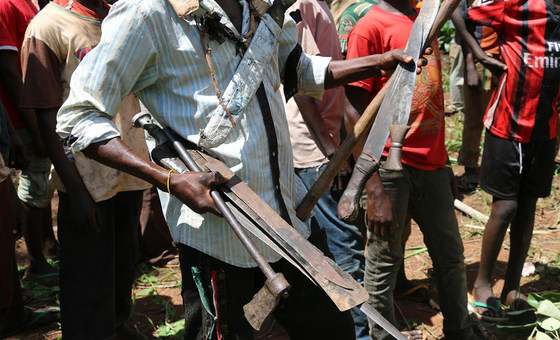
People move back and forth freely – by foot, riding donkeys, or with cattle. Armed men cross, too. 

In the words of Ramadan Abdel Kader, the area’s deputy governor, the town’s recent history has been defined by fear. “The population was plunged into absolute distress,” he told us. Men suspected to be RSF fighters crossed the border to loot, kill, and terrorize villagers. 

At the height of the violence, he said, up to 11,500 people – a large chunk of the Am Dafock population – fled their homes. 

They found shelter near the local base of MINUSCA, the UN peacekeeping mission in the Central African Republic (CAR), which set up camp in the border town after the Sudanese crisis erupted. “Were it not for its presence here, this locality would have been overrun by armed elements from Sudan,” the official said.

UN News/Alban Mendes de Leon

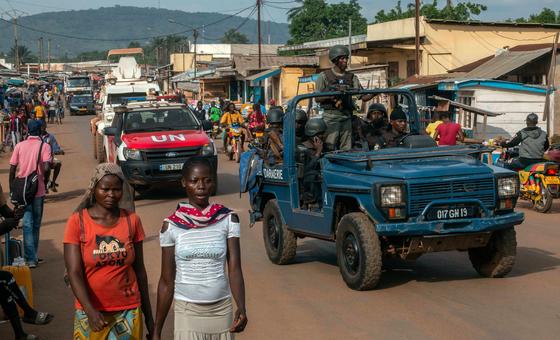
In the north of the Central African Republic, where seasonal flooding regularly cuts the region off from the rest of the country, MINUSCA forces patrol vast distances with limited infrastructure.

Born of another war

The reason for MINUSCA’s presence in the country has scarcely anything to do with its embattled neighbour. The mission was deployed in 2014 as the Central African Republic descended into chaos, following the seizure of power by the Séléka, a predominantly Muslim coalition that overthrew the president at the time, François Bozizé. What followed was a spiral of violence in which Séléka fighters and mostly Christian militias known as the anti-Balaka committed widespread abuses against civilians – killings, looting, sexual violence – plunging the country into cycles of communal bloodshed.

The violence pushed the country to the brink of collapse. Entire communities were displaced along religious lines. State authority evaporated outside the capital, Bangui. 

More than a decade later, the Séléka has disbanded, two presidential elections have been held, and a 2019 peace agreement brought 14 armed groups into a political process. Still, large swaths of the country remain unstable, and the UN mission maintains more than 13,000 troops across the landlocked nation.

We are operating in an environment where the state is still rebuilding itself

In the north, where seasonal flooding regularly cuts the region off from the rest of the country, MINUSCA forces patrol vast distances with limited infrastructure. “We are operating in an environment where the State is still rebuilding itself,” said Major Obed Mumba, the commander of the roughly 200 peacekeepers stationed in Am Dafock. “Our role here is first and foremost to protect civilians and to prevent any escalation that could destabilize the region further.”

With the Sudanese war raging at its doorstep, the mission has taken on a renewed sense of urgency. For Major Sifamwelwa Akalaluka, who leads MINUSCA’s community engagement efforts in Birao, its work is inseparable from the human terrain. “We engage with the population every day,” she said. “We listen to women, to youth, to community leaders. This helps us understand where tensions are rising before they turn into violence.”

When land becomes contested

Those tensions, local officials and residents told us, were not driven solely by the presence of armed men crossing over from Sudan. They were also fuelled by competition over land and resources between Sudanese pastoralists, fleeing violence with their herds, and Central African farmers, whose fields lie along transhumance routes – traditional paths used to move livestock in search of pasture.

As Sudanese breeders have moved south with their cattle, crops were trampled, wells were strained, and disputes multiplied. 

What had once been seasonal friction hardened into confrontation, exacerbated by rumours, opportunistic traders, and the circulation of weapons in an already volatile border zone. Suspected RSF fighters and other armed elements exploited the chaos.

By September, according to Tamia Célestin, one of Am Dafock’s community leaders, the situation had reached a breaking point. “We recorded numerous cases of rape,” he said. “Young girls, some of them 12 or 13 years old, were attacked. People were afraid to go to their fields.” That month, local leaders registered six bodies shot dead and nearly 26 cases of sexual violence. 

UN News/Alban Mendes de Leon

Talking under the trees

In response, MINUSCA facilitated a cross-border dialogue, bringing together Central African and Sudanese communities who had been living face to face – and increasingly at odds. From October 27 to 30, 2025, more than a hundred delegates gathered in Am Dafock, sitting on benches and mats beneath trees, in the absence of any formal meeting hall.

Religious leaders, village chiefs, traders, members of transhumance committees, and nine women faced one another across the dusty clearing. “The dialogue was not easy,” Mr. Célestin, who took part in the three-day talks, recalled. “But people spoke.” Grievances were aired. Accusations exchanged. Boundaries redrawn – not on maps, but in words. “In the end, we agreed that the violence had to stop,” he said

A local agreement was signed just two weeks before our arrival. It banned the carrying of weapons, reaffirmed transhumance corridors for cattle, and committed both sides to resolving disputes through local committees rather than force. Since then, residents said, the gunfire had mostly quieted. The fields were being cultivated again. The border remained open – but calmer.

Am Dafock was buzzing with preparations for the upcoming general elections, as residents were preparing to choose an official mayor for the first time in decades – municipal polls had not been held in the country since 1988.

On December 28, Central Africans voted overwhelmingly for the incumbent president, Faustin-Archange Touadéra, securing him a third term. 

For many residents there, the ballot carried the promise of normalcy, or at least continuity, in a region long starved of both.

That promise, however, remains elusive.

UN News/Alban Mendes de Leon

Major Sifamwelwa Akalaluka, who leads MINUSCA’s community engagement efforts in Birao, talks to women at the town’s market.

Waiting for somewhere safe

Back in 2023, Nafeesa did not stay long in Am Dafock, where she’d arrived with her family after the murder of her husband. Like thousands of other Sudanese seeking distance from the war, the insecurity at the border pushed her onward to Birao. 

There, the UN refugee agency (UNHCR) worked with local authorities to register new arrivals and organize their survival. “They gave us blankets and mattresses for my children,” she said. “They gave me the house where I am staying now.”

Today, more than 27,000 Sudanese refugees live in and around Birao, an overwhelming number for a town that claims fewer than 18,000 residents of its own. “This is a rather unusual situation,” acknowledged Jofroy Fabrice Sanguebe-Nadji, a UNHCR staff member on the ground. 

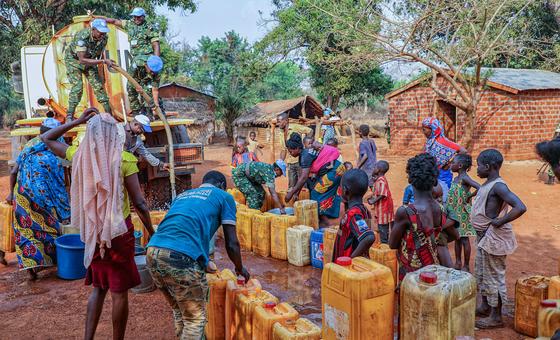
“The arrival of a significant number of refugees has put a strain on resources that were already limited in the first place.” Water and basic services have been stretched thin. 

People entered at night and killed the boy. We couldn’t find him.

In Korsi, the refugee neighbourhood where Nafeesa now lives, humanitarian organisations have carved out a delicate ecosystem. “This is not a camp,” explained Mr. Sanguebe-Nadji. “It is an out-of-camp approach, where refugees live alongside the host community.” 

Still, most residents remain dependent on humanitarian aid – food assistance, shelter materials, access to healthcare, and schooling – even as financial support dwindles. “The main difficulty today,” the official added, “is the critical lack of funding.”

Nafeesa survives by selling whatever small goods she can find. “They gave me a small table for the market,” she said. “Thank God, life is okay.”

Safety, though, is still an issue. While the agreement signed in Am Dafock has eased intercommunal tensions along the border, violence still creeps in – including here, in Birao. “The other day, they killed a boy in the camp,” Nafeesa said. “People entered at night and killed the boy. We couldn’t find him.”

Returning to Sudan with her mother and children is out of the question, at least for now; the war has swallowed her past. But staying in Birao is not guaranteed either. Without lasting protection and steady work, displacement remains a temporary fix, not a long-term solution.

And so Nafeesa waits. Like the uneasy calm along the Sudanese border, her refuge endures – for now.


Humanitarian emergency

  • After nearly three years of war, humanitarian funding for Sudan has fallen sharply. The World Food Program has warned that food aid could run out in March.
  • In 2026, the UN is asking for $2.9 billion to provide lifesaving aid to 20 million people in Sudan, with another $500 million to help 2.6  million Sudanese refugees who have fled the country.
  • The UN is also asking for $264 million to help 1.3 million people in the Central African Republic.

Donate

Donations to these agencies help sustain food distributions, shelter, health services, and protection for civilians affected by the conflict:

Further reading

For more information, please consult our coverage on Sudan’s civil war, the Central African Republic, and peacekeeping operations, as well as the official websites of MINUSCA and UN peacekeeping


Source link

Aid cuts push millions in West and Central Africa deeper into hunger

The UN World Food Programme (WFP) issued the warning on Friday, citing latest analysis from the food security framework Cadre Harmonisé, the regional equivalent of the Integrated Food Security Phase Classification (IPC) that uses a one to five scale – with five spelling catastrophe/famine – to inform response.

It projects that 13 million children are also expected to suffer from malnutrition this year while over three million people will face emergency levels of food insecurity – more than double the 1.5 million in 2020.

Nigeria, Chad, Cameroon, and Niger account for 77 per cent of the food insecurity figures, including 15,000 people in Nigeria’s Borno state at risk of catastrophic hunger for the first time in nearly a decade.

Although a combination of conflict, displacement, and economic turmoil has been driving hunger in West and Central Africa, the slashes to humanitarian funding are now pushing communities beyond their ability to cope.

“The reduced funding we saw in 2025 has deepened hunger and malnutrition across the region,” said Sarah Longford, WFP Deputy Regional Director.

“As needs outpace funding, so too does the risk of young people falling into desperation.”

Rations reduced, hunger soars

WFP urgently requires more than $453 million over the next six months to continue its humanitarian assistance across the region, where the impacts of the aid budget cuts are evident.

In Mali, when families received reduced food rations, areas experienced a nearly 65 per cent surge in acute hunger (IPC 3+) since 2023, compared with a 34 per cent decrease in communities that received full rations.

Continued insecurity has disrupted critical supply lines to major cities – including for food – and 1.5 million of the country’s most vulnerable people are on track to face crisis levels of hunger.

Malnutrition levels deteriorate

In Nigeria, funding shortfalls last year forced WFP to scale down nutrition programmes, affecting more than 300,000 children.  Since then, malnutrition levels in several northern states have deteriorated from “serious” to “critical.”

The UN agency will only be able to reach 72,000 people in Nigeria in February, down from the 1.3 million assisted during the 2025 lean season.

Meanwhile, more than half a million vulnerable people in Cameroon are at risk of being cut off from assistance in the coming weeks.

‘Paradigm shift’ needed

WFP underscored the importance of having adequate funding for its operations, which have helped to improve food security in the region.

For example, teams have worked with local communities in five countries to rehabilitate 300,000 hectares of farmland to support more than four million people in over 3,400 villages.

WFP programmes have also supported infrastructure development, school meals, nutrition, capacity building and seasonal aid to help families manage extreme weather and security risks, stabilise local economies and reduce dependency on aid.

“To break the cycle of hunger for future generations, we need a paradigm shift in 2026,” Ms. Longford said.

She urged governments and their partners to step up investment in preparedness, anticipatory action, and resilience-building to empower local communities.

Cholera outbreak in West and Central Africa poses crisis for children

“The heavy rains, widespread flooding and the high level of displacement are all fuelling the risk of cholera transmission and putting the lives of children at risk,” said UNICEF regional director for West and Central Africa Gilles Fagninou.

Cholera is an acute diarrhoeal infection caused by consuming food or water contaminated with bacteria. The disease can be treated with oral rehydration solution and antibiotics, but can be fatal within hours if untreated.

Young children are particularly vulnerable to cholera due to factors such as poor hygiene, inadequate sanitation and access to safe water and a greater risk of severe dehydration.

Regional hotspots

Active outbreaks in the hotspots of the Democratic Republic of the Congo (DRC) and Nigeria are fuelling the risk of cross-border transmission to neighbouring countries.  

The DRC is the hardest hit country in the region, reporting more than 38,000 cases and 951 deaths in July. 

Children under five now account for nearly 26 per cent of cases in the DRC, and without stronger containment measures, they may face the worst cholera crisis since 2017.

The situation in the capital, Kinshasa, is particularly critical as intense rainfall and widespread flooding have caused cases to surge sharply over the past four weeks. Straining an already overwhelmed healthcare system, the city is now facing an alarming case fatality rate of eight per cent.

Nigeria is the second most affected country in the region, with 3,109 suspected cholera cases and 86 deaths as of the end of June. Cholera is endemic in the country, where major outbreaks have re-occurred in recent years.

Region-wide crisis

Chad, Republic of Congo, Ghana, Côte d’Ivoire and Togo are also facing ongoing epidemics.

A total of 612 cholera cases were reported in Ghana as of 28 April, 322 cases and 15 deaths in Côte d’Ivoire as of 14 July and 209 cases and five deaths in Togo as of June 22.  

Niger, Liberia, Benin, the Central African Republic and Cameroon are also under close surveillance due to their vulnerability.

UNICEF response

Urgent and scaled-up efforts are needed to prevent further spread and contain the disease across the region.

Throughout the outbreaks, UNICEF has delivered lifesaving health, water, hygiene and sanitation supplies to treatment facilities and communities.  

The agency has also supported cholera vaccinations, scaled up preparedness and response efforts and encouraged families to seek timely treatment and improve their hygiene practices.

“We are in a race against time, working hand in hand with the authorities to deliver essential healthcare, safe water and proper nutrition to children already at risk of deadly diseases and severe acute malnutrition,” said Mr. Fagninou.  

“Together with an array of partners, we are strengthening community engagement and extending our reach to remote and underserved areas, making every effort to ensure that no child is left behind.”

UNICEF West and Central Africa urgently requires $20 million over the next three months to scale up critical support in health, WASH, risk communication and community engagement. 

Two ex-militia leaders in Central African Republic sentenced for war crimes, crimes against humanity

Alfred Yekatom and Patrice-Edouard Ngaïssona received prison sentences of 15 and 12 years for their roles in brutal attacks against civilians – primarily from the country’s mainly Muslim Seleka population – during the 2013-14 civil war.

They were found guilty “beyond any reasonable doubt” of leading and facilitating attacks on civilians in the capital, Bangui, and the country’s west.

Thousands of people were killed in the violence that swept CAR following a 2012 coup led by the mainly Muslim rebel coalition, Séléka. The fighting took on a deeply sectarian tenor as Anti-Balaka militia started a brutal campaign of reprisal attacks.

Long list of crimes

The ICC’s Trial Chamber V found Mr. Yekatom responsible for a number of crimes he committed in the context of the attack on Bangui (the capital of CAR), the events at Yamwara (a school where he had established a base), and during the advance of his group on the PK9-Mbaïki axis.

These included murder, torture, forcible transfer and deportation, directing an attack against a building dedicated to religion and persecution.

Mr. Ngaïssona was convicted for aiding and abetting many of the same crimes, including persecution, forcible displacement and cruel treatment.

Both men were also found to have targeted Muslims based on the Anti-Balaka’s perception of collective guilt for Seleka abuses.

The judges sentenced Mr. Yekatom to 15 years and Mr. Ngaïssona to 12 years, with time already served to be deducted.

Charges of war crimes of pillaging and directing an attack against a religious building during the attack on Bossangoa were not upheld against Mr. Ngaïssona, and those of conscription, enlistment and use of children were not upheld against Mr. Yekatom.

‘Instrumentalization of religion’

The Chamber noted that while religion was instrumentalised by armed groups during the conflict, the violence was not initially religious in nature.

Many witnesses testified that Muslims and Christians had lived peacefully together prior to the conflict.

The convictions mark the conclusion of a trial that began in February 2021. Over the course of proceedings, the Prosecution called 114 witnesses, while the Defense teams called 56. A total of 1,965 victims participated in the trial through legal representatives.

Source link

Upcoming elections ‘crucial opportunity’ for Central African Republic, UN top official tells Security Council

December’s local, legislative and presidential elections “represent a crucial opportunity” to strengthen democratic governance, promote reconciliation and consolidate stability, Jean-Pierre Lacroix, Under-Secretary-General for Peace Operations told ambassadors in the Security Council.

The timely holding of presidential and legislative elections is a constitutional requirement, and the Government has consistently demonstrated its commitment to holding local elections, he added.

Although the final electoral roll is currently delayed due to technical difficulties, national authorities, supported by the UN peacekeeping mission, MINUSCA, have made significant efforts to advance the revision of the electoral register through nationwide registration.

“This process took place without major security incidents, reflecting effective collaboration between the Central African national defence forces and MINUSCA, as well as public interest in engaging with the political process,” said Mr. Lacroix.

Challenges remain

Although the 19 April agreement between the government and leaders of various opposition armed groups aimed to end hostilities in the country, violence – primarily perpetrated by armed groups and militias – continues to undermine stability.

“The security situation remains fragile in border regions,” said Mr. Lacroix, noting the spillover effects of the conflict in neighbouring Sudan.

Last week, a Zambian peacekeeper was killed when suspected Sudanese armed elements opened fire on a MINUSCA patrol responding to reports of an attack against civilians in the north-east of the country.

Mr. Lacroix also informed the Security Council of human rights and humanitarian concerns.

Though progress has been made in advancing judicial accountability, notably by the Special Criminal Court, a lack of funding is expected to jeopardise the Court’s operations by September.

In addition, as urgent needs continue to outpace available resources, “the humanitarian situation remains dire,” said Mr. Lacroix, calling for strong support for lifesaving humanitarian assistance.

Source link

Guterres condemns deadly attack on peacekeepers in Central African Republic

The ambush took place on Friday along the Birao-Am Dafock axis in the volatile Vakaga Prefecture, in northeastern CAR, close to the border with conflict-hit Sudan.

According to the stabilization mission, MINUSCA, the patrol was targeted by “unidentified armed elements” in the locality of Am-Sissia.

Attack may be a war crime

In a statement released by his Spokesperson on Sunday, Secretary-General António Guterres extended his deepest condolences to the bereaved families, as well as to the Government and people of Zambia, and wished a swift recovery to the injured soldier.

He stressed that attacks against UN peacekeepers may constitute war crimes under international law and urged the Central African authorities “to spare no effort in identifying the perpetrators of this tragedy so that they can be brought to justice swiftly”.

This marks the third fatal attack against MINUSCA peacekeeping patrols since the start of 2025.

In March, a Kenyan peacekeeper was killed in the Haut-Mbomou prefecture, and a month earlier, a Tunisian ‘blue helmet’ lost his life in the north. Earlier this week, two Nepalese peacekeepers were injured during an assault in the southwest.

Valentine Rugwabiza, head of the UN mission, decried the “multiplication of attacks against peacekeepers” and echoed the call for justice, urging the authorities to act decisively against those responsible.

Since its deployment in 2014, MINUSCA has suffered significant losses, with around 150 peacekeepers paying the ultimate price.

The 17,000-strong force was established to help stabilise CAR, a country wracked by decades of political instability, armed conflict, and humanitarian crises.

According to a February report by the UN refugee agency (UNHCR), worsening insecurity across parts of the country has forced MINUSCA to step up patrols in several regions, including areas near the border with Sudan where violence and displacement have surged in recent months amid the brutal civil war between rival militaries there.

The Secretary-General reaffirmed the UN’s solidarity with the people and Government of CAR, underlining the world body’s continued commitment to peace and stability in the region.

Source link

Central Africa at a crossroads amid rising tensions and instability

With violence worsening in both the Lake Chad Basin and the Great Lakes, the Security Council met on Monday to examine the threats confronting the wider region.

Central Africa remains rich in potential, but the challenges are still significant,” said Abdou Abarry, Head of the UN Regional Office for Central Africa (UNOCA).

Some progress

While countries such as Chad and Gabon have made progress in terms of political development, newly elected authorities must capitalise on this momentum to implement key democratic reforms, said Mr Abarry.

In Chad and Gabon, recent elections and reforms have promoted greater participation of women in the democratic process.

Today, women represent 34 per cent of Chad’s National Assembly, while Gabon’s new electoral code mandates that women must account for at least 30 per cent of electoral lists provided to voters.

Political challenges

In recent months, online disinformation and hate speech have been on the rise in Cameroon, said Mr Abarry. UNOCA reported that 65 per cent of political content shared on social media between January and April this year was either false or previously manipulated.

At the same time, Cameroon has seen a surge in intercommunal violence in the southern and central regions of the country. This trend underscores the importance of UNOCA’s work in supporting development strategies aimed at preventing conflict related to electoral processes.

Insecurity hotbeds

Two major centres of insecurity persist, with violence escalating in both the Lake Chad Basin and the Great Lakes region.

Around Lake Chad, groups affiliated with Boko Haram extremists and other armed insurgencies have demonstrated “their resilience and their ability to adapt and respond to the coordinated operations of the defence and security forces” of the region, said Mr Abarry.

Notably, on the night of 24 March, drones carrying explosives killed at least 19 Cameroonian soldiers in southern Nigeria.

Meanwhile, growing tensions between the Democratic Republic of the Congo (DRC) and Rwanda have led to large-scale displacement in eastern DRC, where the humanitarian crisis is further compounded by conflict in neighbouring Sudan.

As budget cuts exacerbate ongoing humanitarian crises in the region, there is growing concern that “the inaction of the international community could lead to a worsening of the humanitarian situation,” the head of UNOCA told ambassadors. 

Source link

More than 50 million in West and Central Africa at risk of hunger

More than 36 million are struggling to meet their basic food needs, which is projected to rise to over 52 million during the lean season from June to August, latest analysis reveals.

This includes almost three million people facing emergency conditions, and 2,600 people in Mali who are at risk of catastrophic hunger.

Although needs are at a historic high, resources are limited, with millions of lives at stake. 

Without immediate funding, WFP will be forced to scale down even further both in the number of people reached and the size of food rations distributed,” said Margot van der Velden, Regional Director for West and Central Africa. 

‘Extremely difficult and dire’ 

In 2019, only four per cent of the population was food insecure compared to 30 per cent today, according to Ollo Sib, a senior research adviser with WFP.

“We hope that our voice will be heard because this food security situation in the Sahel remains extremely difficult and dire,” he said, speaking from Dakar to journalists in Geneva.

Mr. Sib recently travelled to some of the affected areas, such as communities in northern Ghana grappling with unprecedented drought.

“They were forced to replant two to three times, and for them, each failed sowing is an additional financial burden as the cost of fertilisers and seeds were extremely high in those locations,” he said.

The assessment team also went to northern Mali, which is the only place in the region where people are facing catastrophic food security conditions.

“We had the opportunity to interact with pastoralist elders who typically sell their livestock to buy cereals,” he said. 

“This year they were worried because the cost of food rose by 50 per cent compared to the five-year average. But at the same time, they are not able to access markets to sell their goods.” 

Fighting, food inflation and floods

WFP said unyielding conflict is among the factors driving deepening hunger in West and Central Africa.  

Fighting has displaced more than 10 million of the most vulnerable people across the region, including more than two million refugees and asylum seekers, in Chad, Cameroon, Mauritania and Niger. 

Nearly eight million more have been internally displaced, mainly in Nigeria and Cameroon. 

Meanwhile, food inflation exacerbated by rising food and fuel costs are pushing hunger levels to new highs.

At the same time, recurrent extreme weather “erodes the ability of families to feed themselves,” WFP said. 

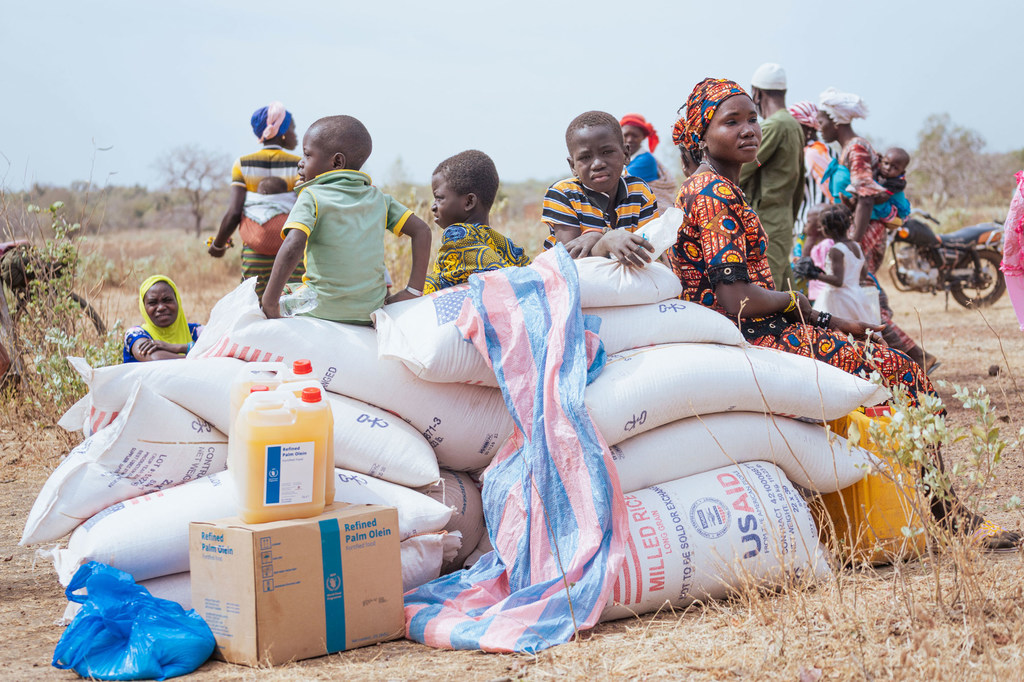
© WFP/Desire Joseph Ouedraogo

Vulnerable populations in Morolaba, Burkina Faso, receive emergency airlifted food assistance.

Five million at risk

WFP stands ready to respond and scale up vital assistance in West Africa and the Sahel. The UN agency is seeking $710 million to support its life-saving operations through the end of October.

The aim is to reach almost 12 million people this year with critical assistance.

So far, teams have already reached three million of the most vulnerable including refugees, internally displaced people, malnourished children under five, and pregnant or breastfeeding women and girls.

The agency said that five million risk losing assistance unless urgent funding is found.

Address root causes

WFP also called for governments and partners to invest in sustainable solutions aimed at building resilience and reducing long-term dependency on aid.

Since 2018, the UN agency has been working with regional governments to address the root causes of hunger through a programme that has rehabilitated over 300,000 hectares of land to support over four million people in more than 3,400 villages. 

Source link