Two ex-militia leaders in Central African Republic sentenced for war crimes, crimes against humanity

Alfred Yekatom and Patrice-Edouard Ngaïssona received prison sentences of 15 and 12 years for their roles in brutal attacks against civilians – primarily from the country’s mainly Muslim Seleka population – during the 2013-14 civil war.

They were found guilty “beyond any reasonable doubt” of leading and facilitating attacks on civilians in the capital, Bangui, and the country’s west.

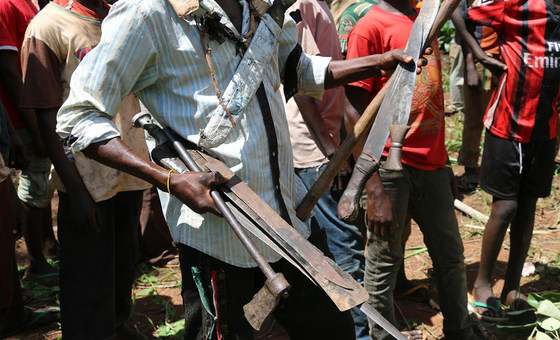
Thousands of people were killed in the violence that swept CAR following a 2012 coup led by the mainly Muslim rebel coalition, Séléka. The fighting took on a deeply sectarian tenor as Anti-Balaka militia started a brutal campaign of reprisal attacks.

Long list of crimes

The ICC’s Trial Chamber V found Mr. Yekatom responsible for a number of crimes he committed in the context of the attack on Bangui (the capital of CAR), the events at Yamwara (a school where he had established a base), and during the advance of his group on the PK9-Mbaïki axis.

These included murder, torture, forcible transfer and deportation, directing an attack against a building dedicated to religion and persecution.

Mr. Ngaïssona was convicted for aiding and abetting many of the same crimes, including persecution, forcible displacement and cruel treatment.

Both men were also found to have targeted Muslims based on the Anti-Balaka’s perception of collective guilt for Seleka abuses.

The judges sentenced Mr. Yekatom to 15 years and Mr. Ngaïssona to 12 years, with time already served to be deducted.

Charges of war crimes of pillaging and directing an attack against a religious building during the attack on Bossangoa were not upheld against Mr. Ngaïssona, and those of conscription, enlistment and use of children were not upheld against Mr. Yekatom.

‘Instrumentalization of religion’

The Chamber noted that while religion was instrumentalised by armed groups during the conflict, the violence was not initially religious in nature.

Many witnesses testified that Muslims and Christians had lived peacefully together prior to the conflict.

The convictions mark the conclusion of a trial that began in February 2021. Over the course of proceedings, the Prosecution called 114 witnesses, while the Defense teams called 56. A total of 1,965 victims participated in the trial through legal representatives.
Source link

Upcoming elections ‘crucial opportunity’ for Central African Republic, UN top official tells Security Council

December’s local, legislative and presidential elections “represent a crucial opportunity” to strengthen democratic governance, promote reconciliation and consolidate stability, Jean-Pierre Lacroix, Under-Secretary-General for Peace Operations told ambassadors in the Security Council.

The timely holding of presidential and legislative elections is a constitutional requirement, and the Government has consistently demonstrated its commitment to holding local elections, he added.

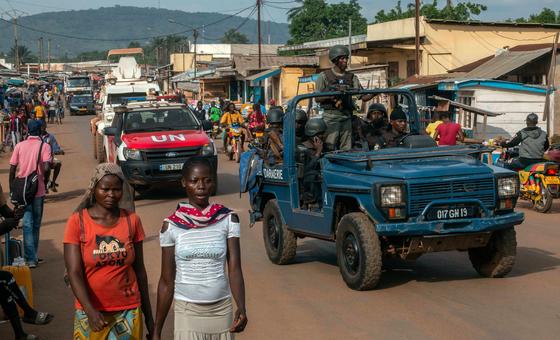
Although the final electoral roll is currently delayed due to technical difficulties, national authorities, supported by the UN peacekeeping mission, MINUSCA, have made significant efforts to advance the revision of the electoral register through nationwide registration.

“This process took place without major security incidents, reflecting effective collaboration between the Central African national defence forces and MINUSCA, as well as public interest in engaging with the political process,” said Mr. Lacroix.

Challenges remain

Although the 19 April agreement between the government and leaders of various opposition armed groups aimed to end hostilities in the country, violence – primarily perpetrated by armed groups and militias – continues to undermine stability.

“The security situation remains fragile in border regions,” said Mr. Lacroix, noting the spillover effects of the conflict in neighbouring Sudan.

Last week, a Zambian peacekeeper was killed when suspected Sudanese armed elements opened fire on a MINUSCA patrol responding to reports of an attack against civilians in the north-east of the country.

Mr. Lacroix also informed the Security Council of human rights and humanitarian concerns.

Though progress has been made in advancing judicial accountability, notably by the Special Criminal Court, a lack of funding is expected to jeopardise the Court’s operations by September.

In addition, as urgent needs continue to outpace available resources, “the humanitarian situation remains dire,” said Mr. Lacroix, calling for strong support for lifesaving humanitarian assistance.

Source link

Guterres condemns deadly attack on peacekeepers in Central African Republic

The ambush took place on Friday along the Birao-Am Dafock axis in the volatile Vakaga Prefecture, in northeastern CAR, close to the border with conflict-hit Sudan.

According to the stabilization mission, MINUSCA, the patrol was targeted by “unidentified armed elements” in the locality of Am-Sissia.

Attack may be a war crime

In a statement released by his Spokesperson on Sunday, Secretary-General António Guterres extended his deepest condolences to the bereaved families, as well as to the Government and people of Zambia, and wished a swift recovery to the injured soldier.

He stressed that attacks against UN peacekeepers may constitute war crimes under international law and urged the Central African authorities “to spare no effort in identifying the perpetrators of this tragedy so that they can be brought to justice swiftly”.

This marks the third fatal attack against MINUSCA peacekeeping patrols since the start of 2025.

In March, a Kenyan peacekeeper was killed in the Haut-Mbomou prefecture, and a month earlier, a Tunisian ‘blue helmet’ lost his life in the north. Earlier this week, two Nepalese peacekeepers were injured during an assault in the southwest.

Valentine Rugwabiza, head of the UN mission, decried the “multiplication of attacks against peacekeepers” and echoed the call for justice, urging the authorities to act decisively against those responsible.

Since its deployment in 2014, MINUSCA has suffered significant losses, with around 150 peacekeepers paying the ultimate price.

The 17,000-strong force was established to help stabilise CAR, a country wracked by decades of political instability, armed conflict, and humanitarian crises.

According to a February report by the UN refugee agency (UNHCR), worsening insecurity across parts of the country has forced MINUSCA to step up patrols in several regions, including areas near the border with Sudan where violence and displacement have surged in recent months amid the brutal civil war between rival militaries there.

The Secretary-General reaffirmed the UN’s solidarity with the people and Government of CAR, underlining the world body’s continued commitment to peace and stability in the region.

Source link

UN warns of rising deportations of Haitian mothers and newborns from Dominican Republic

According to the UN migration agency, IOM, recent weeks have seen an increase in the deportation of women, including those who are pregnant or breastfeeding, as well as children and newborn babies. 

The agency has emphasised the heightened risks these groups face being returned to Haiti, where access to basic services remains severely limited.

On Tuesday alone, IOM staff at the Belladère border crossing in Haiti received 416 deportees, including 11 pregnant women and 16 women who are still breastfeeding.

Meeting the needs

“While IOM teams are not present during the deportation process itself, their efforts focus on the needs of deportees upon arrival, many of whom arrive in precarious and highly vulnerable conditions, often without any resources,” said UN Spokesperson Stéphane Dujarric, speaking in New York.

He explained that IOM provides immediate humanitarian assistance, including food, water, and hygiene kits, as well as first aid, medical referrals, and psychosocial support.

Special attention is given to maternal health, and temporary places to live are arranged for women who are breastfeeding when necessary, he added.

Worsening conditions

Mr. Dujarric also updated on the situation in Haiti, where rising violence and recent funding cuts are undermining essential services and worsening the humanitarian situation, particularly in the Centre Department.

Escalating violence on the part of armed groups has triggered mass displacement, with more than 51,000 people, over half of them children, fleeing recent attacks. Many are now stranded at makeshift sites or seeking safety in other regions. 

No safety inside hospitals

He noted that the University Hospital of Mirebalais – a major referral facility with about 300 beds – has suspended operations following a wave of insecurity in the area. 

“Armed attacks, a mass prison break and the destruction of public infrastructure forced the hospital to gradually shut down. Before its closure, it served nearly 850 patients each day, including through maternal care and advanced cancer treatment,” he said.

Meanwhile, two other hospitals in the area – St. Therese in Hinche and Albert Schweitzer Hospital in Artibonite – are now coming under increased strain and face critical shortages, including oxygen and emergency medical kits. 

Since the closure of the University Hospital in Mirebalais, they have treated more than 200 patients for gunshot wounds, strokes, suspected cholera and malnutrition. 

“St. Therese alone has received more than 3,500 internally displaced people – tripling its outpatient caseload,” Mr. Dujarric said.

The UN Children’s Fund (UNICEF) and humanitarian partners are working to relieve pressure on the health system in Centre Department.

Mobile clinics are being deployed to reach 30,000 people in host communities and displacement camps, in coordination with the Haitian authorities and the Catholic charity Caritas.

Humanitarians are seeking $908 million to support nearly four million people in Haiti this year. Only six per cent of the funding, $57 million, has been received to date

Source link