Political violence against MPs rising worldwide

Head of the IPU, Martin Chungong, told a UN conference in New York on Wednesday that “if the phenomenon goes uncontrolled, there will be major implications for democracies, parliaments and human rights worldwide”.

In an interview with UN News, Valentina Grippo, an Italian MP with the European Delegation to the IPU – which partners with the UN – emphasised the difficulties MP’s have just doing their job today: “If you say something that is not perfectly in line with what your audience wants to hear, then you have multiple attacks.”

The report titled When the public turns hostile: Political violence against parliamentarians, includes responses from parliamentarians across 85 countries, with in-depth case studies in Argentina, Benin, Italy, Malaysia and the Netherlands to reflect diverse political and regional contexts.

Key Findings

  1. Violence is heavily concentrated online with between 65 and 77 percent of MPs across the five-case studies report experiencing abuse online. 
  2. Most common forms of intimidation:
    – Insults and degrading language
    – Spread of false or misleading information
    – Direct threats 
  3. A majority of respondents say the situation is worsening. In Argentina and the Netherlands, eight out of 10 MPs report an increase in violence over the past five years. 
  4. Online violence frequently increases around:
    – National or local elections
    – High-profile legislative debates
    – Polarizing political or cultural issues 
  5. Gender gap:
    – 76 per cent of women MPs report exposure to violence
    – 68 per cent of men MPs report exposure 
  6. Gendered abuse: Women are disproportionately targeted with gendered and sexualized violence, particularly online. 
  7. Impact of emerging technologies: Abuse is increasingly amplified by AI-generated content and deepfakes. 
  8. MPs from minority or disadvantaged groups, including racial minorities, people with disabilities, and LGBTQIA+ communities, face heightened levels of online violence.

Why the increase?

The IPU report highlights several factors driving the increase in public hostility, including rising political polarization, economic and social pressures that contribute to public frustration, the amplification of anger through social media, and declining trust in public institutions

Ms Grippo emphasised that “you no more have the confrontation between ideas, which is normal, which is part of politics, but you really have a fight between identities.”

Who is committing the violence?

Violence against Members of Parliament is most often carried out by individuals rather than organised groups.

Online, anonymous users are identified as the main perpetrators by nearly nine in 10 MPs in Argentina, Italy, Malaysia and the Netherlands (89–93 per cent).

“Those we surveyed consistently told us that sustained online abuse affected their offline behaviour including their willingness to engage publicly and their sense of personal safety,” Mr Chungong said.

Impact on democracy

The IPU warns that public intimidation of Members of Parliament can have serious consequences for democracy.

As hostility increases, many MPs report censoring themselves, avoiding certain public appearances, and experiencing negative impacts on their family members.

Some also choose to step down or not seek re-election. Over time, the report warns, these trends can erode democratic representation, discourage diversity, and weaken parliaments as democratic institutions.

“It makes it more difficult to somehow be able to deliver a message without fearing that it is misunderstood.” Ms Gruppo added that “we always have to remember that there are big parts of the world where you cannot say what you think without fearing for your safety.”

The report calls on political and parliamentary leadership to set boundaries when it comes to acceptable public discourse and to ensure that intimidation does not succeed in silencing dissenting and minority voices.

The IPU is the global organization of national parliaments. It was founded in 1889 as the first multilateral political organization in the world, encouraging cooperation and dialogue between all nations. 

Today, the IPU comprises 183 national Member Parliaments and 15 regional parliamentary bodies. It promotes peace, democracy and sustainable development. 

It helps parliaments become stronger, younger, greener and more gender-balanced. It also defends the human rights of parliamentarians through a dedicated committee made up of MPs from around the world.

Source link

UN warns of rising internet shutdowns as digital blackouts spread worldwide

In a statement issued this week, UNESCO said governments are increasingly cutting internet access during protests, elections and times of crisis, despite the central role online connectivity plays in democratic participation and the exercise of basic rights.

The agency noted that 2024 was the worst year on record for internet shutdowns since 2016, citing data from the civil society monitoring group Access Now.

It warned that the trend has continued into 2026, with blanket shutdowns already imposed in several countries facing major demonstrations or electoral processes.

“Access to information is an integral part of the universal right to freedom of expression,” UNESCO said, stressing that internet connectivity is also essential for other rights, including education, freedom of association and assembly, and participation in social, cultural and political life.

It called on governments to adopt policies that facilitate access rather than erect barriers to connectivity.

Internet disruptions also fuel misinformation. When journalists, media outlets and public authorities are cut off from digital channels, verified information becomes harder to access, creating space for rumors and unverified content to spread.

Shutdowns during protests and elections

Recent months have seen a series of high-profile internet shutdowns and digital restrictions imposed amid political unrest.

In January 2026, authorities in Iran imposed a near-total nationwide blackout during renewed protests, sharply curtailing online communications. Connectivity monitors reported traffic falling to minimal levels, disrupting businesses and severely limiting the ability of citizens, journalists and civil society groups to share information.

In Afghanistan, the Taliban ordered a nationwide shutdown in September-October 2025, further constraining humanitarian operations, journalism and access to education, particularly for women and girls.

Elsewhere, governments have increasingly relied on targeted platform bans. In Nepal, authorities suspended access to 26 social media and messaging platforms in September 2025 amid political unrest.

In Sri Lanka, a law adopted in 2024 grants broad powers to restrict online content, raising concerns about shrinking digital civic space.

In Africa, election-related disruptions have remained a recurring feature.

Internet connectivity was significantly disrupted in Cameroon during the October 2025 presidential election, while Tanzania imposed internet restrictions and partial shutdowns around its October 2025 polls, drawing criticism over a wider crackdown on civil freedoms.

Human rights implications

The growing concern echoes warnings from a 2022 report from the UN human rights office (OHCHR), which examined the causes and impacts of internet shutdowns worldwide.

The report detailed how shutdowns can prevent hospitals from contacting doctors in emergencies, deprive voters of information about candidates, cut off small businesses from customers, and leave protesters unable to call for help during violent crackdowns.

It found that internet shutdowns rarely meet international human rights standards, particularly the principles of legality, necessity and proportionality.

Because of their indiscriminate reach, the report said, shutdowns often affect millions beyond the situations they are meant to address, deepening digital divides and undermining social and economic progress.

Source link

Rising hunger and displacement pose growing economic risk, UN tells Davos

The UN World Food Programme (WFP) has reported that an estimated 318 million people worldwide now face crisis levels of hunger or worse, with hundreds of thousands already experiencing famine-like conditions.

It cautioned that deep funding shortfalls are forcing it to cut rations and scale back assistance at a time of surging needs.

Current forecasts put WFP’s funding at just under half of its required $13 billion budget for 2026, leaving the agency able to reach about 110 million people – a third of those in need.

Combatting hunger yields dividends

“Hunger drives displacement, conflict, and instability and these not only threaten lives, but disrupt the very markets that businesses depend on,” said Rania Dagash-Kamara, WFP Assistant Executive Director for Partnerships and Innovation.

“The world cannot build stable markets on a foundation of 318 million hungry people.”

Ms. Dagash-Kamara, who is attending the forum, said the private sector has a direct stake in addressing food insecurity, calling on companies to invest in supply chains, technology and innovation that can help stabilize fragile markets and protect workforces.

WFP is urging business leaders in Davos to keep hunger and food security among their top priorities, invest in supply chain systems that strengthen fragile markets, and support food-related technologies that improve efficiency and resilience.

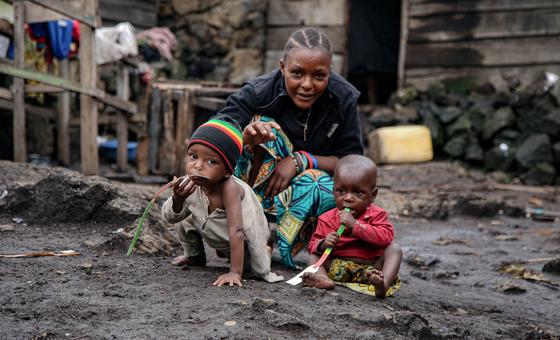
Displaced families in South Kivu, Democratic Republic of the Congo, receive food aid. (file photo)

Migration powers growth and development

The UN International Organization for Migration (IOM) is also taking its case to the annual forum in Switzerland, calling on political and business leaders to rethink migration as a driver of growth rather than a burden.

Migration is one of the most powerful drivers of development when managed responsibly,said IOM Director General Amy Pope.

“Mobility can unlock economic potential, help communities thrive independently, and provide lasting solutions to displacement, while respecting national sovereignty and human rights.”

Partnerships and innovation

IOM said partnerships with private companies and foundations are already helping realise that approach.  

This includes using artificial intelligence to improve health screening and labour market policies, and programmes that support vocational training, entrepreneurship and durable solutions for displaced people.

At Davos, the agency is also highlighting the role of diaspora communities as investors and innovators.

“By using remittances and diaspora capital to support business creation and digital financial access, IOM aims to open new markets and create jobs, while helping communities become more self-reliant,” the agency said.

Other senior UN officials attending the forum include President of the General Assembly Annalena Baerbock; WHO chief Tedros Adhanom Ghebreyesus; Alexander De Croo, Administrator of the UN Development Programme; UN High Commissioner for Refugees Barham Salih; and Rafael Mariano Grossi, Director-General of the International Atomic Energy Agency.

Source link

Peacekeeping: Lacroix warns of rising threats to ‘blue helmets’ in Middle East

Briefing journalists by video link from Jeddah following an extensive visit to the region, Jean-Pierre Lacroix, said there has been an uptick in dangerous incidents involving peacekeepers and the fragile environment in which missions are operating.

He added that UN missions are continuing to deliver on their mandates despite increasingly challenging conditions on the ground.

“There is no pre-drawdown mandate,” Mr. Lacroix said of the UN Interim Force in Lebanon (UNIFIL), stressing that the mission will continue to operate under its current authorisation until the end of December 2026.

UNIFIL, he said, remains focused on supporting the Lebanese Armed Forces (LAF) and advancing implementation of Security Council resolution 1701, which brought an end to hostilities between Israeli forces and Hezbollah in 2006.

Mr. Lacroix said cooperation with Lebanese authorities and the LAF remained “excellent,” and welcomed recent statements by the Government regarding progress in establishing operational control in the south, while acknowledging that “a number of things remain to be done.”

Increasing danger

At the same time, he expressed grave concern over a growing number of hostile incidents affecting UN peacekeepers, particularly those involving the Israeli Defense Forces.

“The frequency of these incidents has been quite high – it has been increasing,” he said, warning that several encounters “could have had very tragic consequences” for peacekeepers.

He said he had raised the issue with Israeli counterparts, stressing that “it is in no one’s interest to put the lives of peacekeepers at risk,” and reminded all parties of their responsibility to ensure the safety and security of UN personnel.

Mr. Lacroix also described widespread devastation in southern Lebanon, where entire villages and civilians remain unable to return to their homes, undermining prospects for recovery and reconstruction.

Beyond security risks, Mr. Lacroix highlighted the impact of funding shortfalls on peacekeeping operations, noting that UNIFIL and other missions have had to implement savings plans due to delayed or incomplete contributions by some Member States.

He praised peacekeepers for adapting under pressure, saying they had “succeeded in mitigating the impact” of financial constraints through innovation and operational adjustments.

Syria and regional dynamics

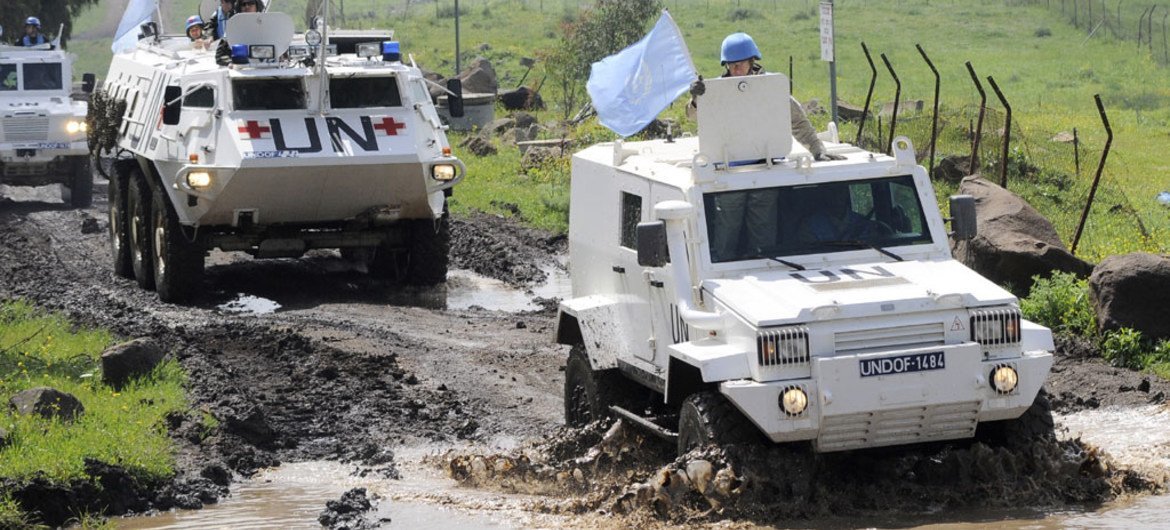
Turning to Syria, Mr. Lacroix said the UN Disengagement Observer Force (UNDOF) continues to carry out its mandate with strong backing from both the Security Council and Syrian authorities.

However, he noted that conditions on the ground have changed significantly since Israeli forces established positions inside the area of separation defined by the 1974 disengagement agreement.

Established in May 1974, following the Yom Kippur War, UNDOF is mandated to maintain the ceasefire between Israel and Syria, and supervise the areas of separation as provided in the 1974 agreement.

What we would want is a return to the situation where UNDOF would be the only military presence in the area of separation,” Mr. Lacroix said, describing recent talks between Israel and Syria, mediated by the United States, as “positive.”

UN Photo/Wolfgang Grebien

UNDOF peacekeepers on patrol in the Golan Heights.

Mine action and wider needs

He also underscored the growing importance of UN mine action efforts in Lebanon, Syria, Gaza and the Occupied Palestinian Territory overall, saying needs were “huge” and urging greater donor support.

We are willing to do more,” Mr. Lacroix said, stressing that additional resources would be critical to protect civilians and support recovery in conflict-affected areas.

DR Congo: Rising insecurity in the east impedes diplomatic progress, Security Council hears

Despite diplomatic progress in recent months, with the United States brokering a peace agreement between the DRC and Rwanda, and Qatar facilitating a Declaration of Principles between the Congolese Government and M23 rebels, tensions remain high in the eastern DRC – where multiple armed groups operate.  

The Security Council has also sought to promote peace in the restive region, notably through its adoption of resolution 2773 in February 2025 calling upon all parties to refrain from violence against civilians. Still, casualties continue to rise in the east of the country.

“In North Kivu, the situation has escalated significantly since April,” Martha Ama Akyaa Pobee, Assistant Secretary-General for Africa in the Departments of Political and Peacebuilding Affairs and Peace Operations told ambassadors.  

The DRC is currently facing one of the most acute humanitarian emergencies in the world, with food insecurity on the rise and 5.9 million Congolese currently internally displaced.  

Significant escalation

Regrettably, the evolution of the security situation on the ground has not matched the progress achieved on the diplomatic front,” said Ms Pobee.  

Recent attacks carried out by the M23 and Congo River Alliance (AFC) armed groups, as well as assaults by the Allied Democratic Forces – a militia associated with the terrorist group ISIL – have dramatically increased civilian casualties.

Meanwhile, humanitarian workers continue to risk their lives to provide limited assistance to populations in need.  

Amid general indifference, conflict-related sexual violence persists, as does the forced recruitment of children. 

‘Critical juncture’

We cannot and must not accept the extreme suffering and recurrent horrors that are commonplace in eastern DRC,” said Ms Pobee.  

To protect civilians, restore law and order, and address the profound humanitarian needs of the population, the parties must cease hostilities.  

“At this critical juncture for the DRC and the region, it is crucial that this Council place its full weight behind current peace efforts, alongside exerting its influence to ensure respect for and compliance with resolution 2773”, she told the Security Council.  

While the situation on the ground remains dire, genuine engagement by the parties, together with concerted support from the international community, will help lay the groundwork for a durable peace, the top official underlined. 

Source link

UN agencies warn of rising heat stress risks for workers worldwide

The new joint report, Climate change and workplace heat stress, underscores the mounting risks as climate change fuels longer, more extreme, and more frequent heatwaves.

Stressing that workers in agriculture, construction, and fisheries are already suffering the impacts of dangerous temperatures, the report points out that vulnerable groups in developing countries – including children, older adults, and low-income communities – face increasing dangers.

Heat stress is already harming the health and livelihoods of billions of workers, especially in the most vulnerable communities,” said Dr. Jeremy Farrar, WHO Assistant Director-General for Health Promotion, Disease Prevention and Care.

This new guidance offers practical, evidence-based solutions to protect lives, reduce inequality, and build more resilient workforces in a warming world”, he added.

Drawing on five decades of research, the report highlights how rising temperatures are hitting both health and productivity.

WMO confirmed that 2024 was the hottest year on record, at 1.55 degrees Celsius above pre-industrial temperatures, and with daytime highs above 40 °C becoming commonplace – and in some areas, even exceeding 50 °C. 

Occupational heat stress has become a global societal challenge, which is no longer confined to countries located close to the equator – as highlighted by the recent heatwave in Europe,” said Ko Barrett, WMO Deputy Secretary-General. “Protection of workers from extreme heat is not just a health imperative but an economic necessity.”

Alarming findings

The report details how extreme heat is reshaping the world of work. It finds that worker productivity drops by 2 to 3 per cent for every degree above 20°C.

The health consequences are wide-ranging, including heatstroke, dehydration, kidney dysfunction, and neurological disorders. Overall, nearly half of the world’s population is now experiencing negative effects from high temperatures.

Path forward

Calling for urgent occupational heat action plans tailored to industries and regions, WHO and WMO guidance includes several recommendations:

  • Develop targeted occupational heat-health policies based on local weather and workforce vulnerabilities.
  • Prioritize protections for middle-aged and older workers, those with chronic health conditions, and individuals with lower physical fitness.
  • Train health professionals, employers, and workers to recognize and treat heat stress, which is often misdiagnosed.
  • Involve workers, unions, and local authorities in shaping heat-health strategies.
  • Promote affordable, sustainable, and scalable solutions, alongside innovation and new technologies.
  • Strengthen research and monitoring to ensure measures remain effective.

The guidance builds on International Labour Organization (ILO) findings that more than 2.4 billion workers are exposed to excessive heat globally, resulting in over 22.85 million occupational injuries each year.

‘Critical milestone’

“This report represents a critical milestone in our collective response to the growing threat of extreme heat in the world of work,” said Joaquim Pintado Nunes, ILO Chief of Occupational Safety and Health and the Working Environment.

“Aligned with the ILO’s mandate to promote safe and healthy working environments as a fundamental right, it offers robust, evidence-based guidance to help governments, employers and workers confront the escalating risks of climate change.”

A call to action

Both UN agencies stress that addressing heat stress is central to safeguarding lives, livelihoods, and economies. The guidance supports the UN Sustainable Development Goals (SDGs), urging decisive action to protect vulnerable workers, reduce poverty, and promote sustainable growth.

Urgent and coordinated action is no longer optional – it is essential, the report says.

World News in Brief: Cholera strikes Sudan and beyond, humanitarian needs grown for returning Afghans, rising insecurity in DR Congo

So far this year, cholera has killed more than 4,300 people across 31 countries. These figures are underestimates and there is particular concern for those impacted by war in Sudan, Chad, the Democratic Republic of the Congo, South Sudan and Yemen.  

In Sudan, the disease has already claimed over 1,000 lives since 1 January. It has reached every state in the country, one year after the outbreak started, according to WHO.

Cases rise in war-torn Darfur

With the sub-Saharan rainy season now underway, the UN agency is worried about a spike in the waterborne disease, linked to the huge numbers of people fleeing ongoing violence.

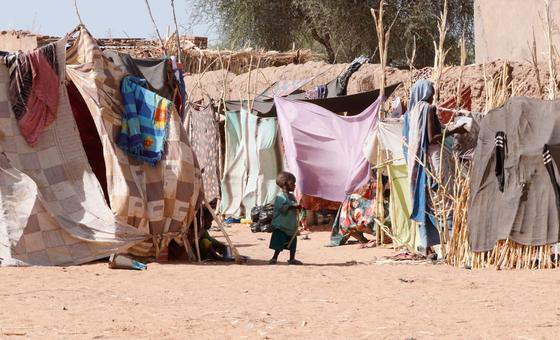
“While cases have plateaued or decreased in some areas, including Khartoum, they are rising in the Darfur region and neighboring Chad. In Tawila, North Darfur,” said WHO’s Kathryn Alberti.

Refugees have quadrupled the population from close to 200,000 to over 800,000, causing immense strain on water and sanitation systems, she added.

“People have as little as three litres of water daily and this is for cooking, washing, cleaning and drinking.”  

To respond to the problem, WHO and partners have set up task forces, deployed rapid response teams for surveillance and stockpiled essential cholera supplies in Darfur – although “large parts” of Darfur and Kordofan remain unreachable.

Humanitarian needs keep growing in Afghanistan

Four years after the de-facto Taliban regime took over Afghanistan, more than half of the population needs vital aid, according to the UN humanitarian office (OCHA).

Women and girls are particularly vulnerable due to the increasingly restrictive policies that Taliban authorities have imposed, excluding them from education, the workforce and public life.

“Humanitarian aid is a lifeline for women and girls who are otherwise unable to access essential services and assistance,” said UN Spokesperson Stéphane Dujarric, at Friday’s daily briefing in New York.  

1.7 million returnees 

OCHA also warned that the return of 1.7 million Afghan citizens from Iran and Pakistan this year has further increased humanitarian needs, as most have limited community ties and are struggling to find shelter and ways of making a living.

To support the response of the under-resourced host communities, the UN Central Emergency Response Fund (CERF) recently released $10 million, and additional funding is in the pipeline from the Afghanistan Humanitarian Fund.

But more resources are urgently needed. This year’s Humanitarian Needs and Response Plan in Afghanistan is just 25 per cent funded, with $624 million received of the $2.4 billion that are needed, and another influx of refugees is expected ahead of Pakistan’s 1 September deadline for Afghan Proof of Registration cardholders to exit.

Insecurity also rising in DR Congo’s restive east

In the war-torn eastern parts Democratic Republic of the Congo, OCHA says insecurity is on the rise in Djigu territory, in Ituri province.

Clashes between multiple armed groups and the Congolese armed forces in several areas has resulted in nearly 50 civilian deaths and more than 30 injuries in the past month alone there.

In the same period, violence and insecurity have led to the displacement of more than 80,000 people in Djugu.

In the attacks, homes were looted or burned, and those who fled are now sheltering in schools, churches and other public buildings.

Targeted killings

There have been three targeted attacks on sites hosting internally displaced people.

These clashes have severely limited humanitarian access, depriving around 250,000 people of essential services. In the Nizi health district in the Ituri territory, nine out of 12 health facilities are now out of service.

The UN and its humanitarian partners are ready to respond, but they need unimpeded, safe access to do so.

“All parties must take urgent measures to protect civilians and facilitate humanitarian access. Civilians must be protected at all times, in line with international law,” stressed Mr. Dujarric on Friday. 

Source link

Facing rising risks, landlocked nations launch climate alliance at UN summit

Operating within the UN Framework Convention on Climate Change (UNFCCC), the group aims to amplify their voices in global climate talks, where their distinct vulnerabilities have long been overlooked.

Disproportionate climate risks

Although LLDCs account for approximately 12 per cent of the world’s land surface, they have experienced nearly 20 per cent of the world’s droughts and landslides over the past decade – underscoring their disproportionate exposure to climate-related disasters.

Lacking access to the sea, these countries rely heavily on neighboring transit states, which further increases their vulnerability to climate-induced disruptions.

The Awaza Programme of Action is not the first global framework to address the development needs of LLDCs, but for the first time, such an action plan includes a strong focus on adaptation to climate-related disasters.

A call for resilience and preparedness

Natalia Alonso Cano, Chief of the UN Office for Disaster Risk Reduction (UNDRR) Regional Office for Europe and Central Asia, emphasized this in an interview with UN News.

LLDCs, she said, face overlapping risks: over half of their territory is classified as dryland; many are in mountainous regions; and some sit in seismically active zones.

“Landlocked countries in general, they suffer about three times the economic losses compared to the global average,” she said. “Also, the mortality rates [when disasters strike these countries] much higher than the global average. Such big difference explained by a combination of this vulnerability, but also a combination of exacerbating impacts.”

Limited capacity, growing challenges

Landlocked developing countries often struggle to respond to climate challenges due to limited financial capacity, dependence on undiversified, commodity-based economies, and weak governance. In 2024, one-third of LLDCs were either in conflict or considered unstable.

The new 10-year UN action plan aims to support LLDCs in climate adaptation, sustainable development, and disaster risk reduction.

“We know that early warning saves lives. It’s a fact,” Ms. Alonso Cano explained. “When you can communicate to the communities affected that something is going to happen and they need to prepare – to evacuate, for example – they need to do certain things. If they know what they need to do, that’s part of the early warning system. Obviously, it saves lives, and it saves livelihoods as well.”

She gave an example of drought preparedness: “If there [is] a systemic drought in an area, you work in the preparedness with the communities, they can, for example, take certain measures, reduce maybe the amount of cattle in the case of that, they can congregate towards points of water, etc. There are a number of measures to address that.”

Ms. Alonso Cano stressed the need for long-term planning: “We need to take into account what is going to happen in 10, 20, 30 years. And climate change will become more extreme – we know this for sure.”

Women and girls at the forefront

Within LLDCs, women and girls are particularly at risk, making gender a key concern at Thursday’s events at LLDC3 in Awaza. One highlight was a Women Leaders’ Forum, opened by UN Under Secretary-General Rabab Fatima, who emphasized that sustainable development cannot be achieved without the full participation of women and girls.

Ms. Fatima, the High Representative for the Least Developed Countries, Landlocked Developing Countries and Small Island Developing States, noted progress over the last 25 years: women now occupy one-third of parliamentary seats in LLDCs, compared to just 7.8 per cent in 2000.

“This is higher than the global average,” she said, adding that 11 of the world’s 54 female speakers of parliament come from LLDCs.

Persistent gender gaps

Yet challenges remain. “Progress is uneven and far too slow. One in four women in LLDCs live in extreme poverty – that is nearly 75 million women; and nearly half – about 150 million – face food insecurity.”

Employment statistics show wide gender disparities. While 80 per cent of women in LLDCs work informally, without contracts or protections, the global average is 56 percent. One in three girls in LLDCs marries early – nearly twice the global rate – and only one in three completes secondary education. In addition, just 36 per cent of women in these countries have access to the internet.

“That is why gender-responsive industrial and development policies are so important,” Ms. Fatima stressed. “These policies must be tailored to national contexts, and industrial development in rural areas, business support, formalization of employment, and strengthened partnerships must be priorities.”

Digital inclusion for women and girls

She also called for improved internet access and education for women and girls.

The International Telecommunication Union (ITU), a UN specialized agency, is addressing these challenges.

Dr. Cosmas Luckysin Zavazava, Director of the ITU Telecommunication Development Bureau, told UN News that while some regions such as the CIS have achieved gender parity in internet access, LLDCs still face major barriers.

“That’s why we’ve developed special programmes for women and girls in this region,” he said. “It’s not just about access, but also about building coding skills and introducing girls to fields like robotics. Our programmes aim to motivate young women and girls to pursue careers in STEM sectors.”

Turning point for action

As the Awaza conference nears its conclusion, participants are expected on Friday to reaffirm their political commitment to the Awaza Programme of Action, which was adopted by the UN General Assembly in 2024.

The time has come for implementation – or as High Representative Rabab Fatima put it, “Let this forum be a turning point.

Source link

Afghan women returnees face rising risks, UN warns

UN Women – which champions gender empowerment and equality – alongside the international humanitarian agency CARE International and partners, issued the call in a report published on Thursday that also highlights the key challenges and needs of women aid workers assisting the returnees.

The Gender Alert comes amid a surge in returnees to Afghanistan, where the Taliban has ruled for four years, implementing numerous decrees that restrict women’s rights amid economic crisis, climate shocks and immense humanitarian needs.

Strangers in a strange land

Since September 2023, more than 2.4 million undocumented Afghan migrants have returned, or were forced to return, from Pakistan and Iran.

Women and girls account for a third of returnees from Iran so far this year, and about half of those coming from Pakistan.   

Many arrive in a country they have never lived in, with no home, income or access to education and healthcare.

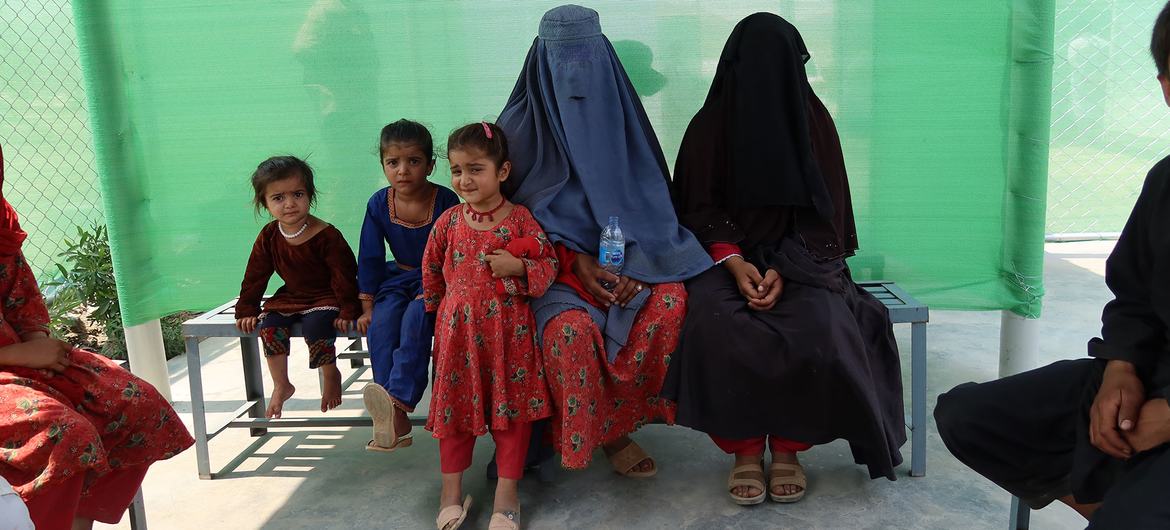
Women and children who have returned to Afghanistan, wait to be seen at a maternity clinic.

A myriad of risks

Like all women and girls in Afghanistan, the returnees face increased risks of poverty, early marriage, violence, exploitation and unprecedented restrictions on their rights, movements and freedoms.  

Vulnerable women and girls arriving with nothing into communities that are already stretched to breaking point puts them at even greater risk,” said Susan Ferguson, UN Women Special Representative in the country. 

We need a place to stay, a chance to learn and a way to earn.

“They are determined to rebuild with dignity, but we need more funding to provide the dedicated support they need and to ensure women humanitarian workers are there to reach them.” 

Housing, income and education

The report outlines urgent and long-term needs, such as safe and affordable shelter, livelihood support and girls’ education.  

As one participant in a focus group in Nangahar province put it, “We need a place to stay, a chance to learn and a way to earn.”

Currently, only 10 per cent of women-headed households live in permanent shelter, nearly four in 10 fear eviction, and all girls are banned from attending secondary school.

Impact of aid cuts

Although women humanitarian workers at border points are critical to reaching female returnees, cuts in foreign aid and movement restrictions increasingly hamper their efforts.

For example, women humanitarians are required to be accompanied by a male guardian, or mahram, when travelling.  However, “funding cuts have sharply eroded staff mahram support in the provinces of Kandahar and Nangarhar, leaving provision inconsistent, delayed, or absent altogether,” the report said.

The funding cuts have severely weakened the capacity of humanitarian organizations to respond, and women humanitarian workers at border points report that they are overwhelmed by the sheer number of arrivals and being unable to meet even their basic needs. 

‘Distressed, disoriented and without hope’

“Witnessing the volume of arrivals and the hardship faced by women, children and families – many distressed, disoriented and without hope – has left a deep impact on all of us responding to this crisis,” said Graham Davison, CARE Afghanistan Director.

He underscored the urgent need for support to provide basic services, safe spaces and protection for women and girl returnees. 

The report noted that Afghanistan is already facing one of the world’s most dire humanitarian crises, driven by decades of conflict, poverty and natural disasters.

As this latest wave of returns threatens to push already fragile communities further into crisis, the partners urged the international community to act now to protect the rights of Afghan women and girls and to invest in the women humanitarians who support them.

Arafat Jamal, the UN refugee agency (UNHCR) Representative in Afghanistan, recently spoke about the surge in returnees from Iran.

Record number of returns

Separately, the International Organization for Migration (IOM) also called for international support as Afghanistan confronts “one of the largest return movements in recent history.”

Returnee numbers are on track to increase as one million more Afghans are expected to return from Pakistan following the Government’s decision not to extend their stay.

IOM operates four reception centres at major border crossings in Afghanistan, including Islam Qala and Milak with Iran, and Torkham and Spin Boldak with Pakistan. 

The UN agency is appealing for additional funding to scale up its response to address growing needs at the borders and in areas of return.

Source link

World News in Brief: Violence in Haiti, rising insecurity in DR Congo, expert panel on nuclear war

Displaced Haitians are dispersed among the 250 active displacement sites across the country, most of which are informal. Just over a fifth of these sites are managed by humanitarian organizations, meaning that many are living in precarious conditions.  

In June alone, more than 200 alerts were reported across displacement sites, over 80 per cent of which were related to essential needs such as lack of water, food, shelter or healthcare.

OCHA noted that nearly 1.3 million people are now internally displaced in Haiti, the highest number ever recorded in the country due to violence.

Constrained UN response

The UN and partners have supported more than 113,000 displaced Haitians this year, providing essential services such as water, shelter, sanitation and healthcare.

The humanitarian response is severely constrained by limited funding and persistent insecurity, hampering humanitarian access to the most affected areas and delaying the delivery of aid. 

Despite the challenges, the agency continues to work closely with Haitian authorities and humanitarian partners to coordinate relief efforts and mobilise additional resources to support displaced communities. 

DR Congo: Ongoing violence in the east drives displacement, impedes aid delivery

Ongoing violence in North and South Kivu provinces in the eastern Democratic Republic of the Congo (DRC) continues to claim the lives of civilians and to trigger new displacement. 

In North Kivu, UN partners on the ground in Rutshuru and Lubero territories reported that fighting between M23 and other armed groups was ongoing until Tuesday, resulting in eight civilian deaths and 42,500 displaced people as of earlier this week. 

Since early July, heavy clashes between M23 and other armed groups in South Kivu have also persisted, as local partners said the fighting has displaced at least 37,000 people from their homes. 

Aid access restrictions 

The surge in violence is making it harder for humanitarians to deliver assistance to vulnerable communities. 

While partners and teams on the ground are doing their best to maintain services for those affected, access restrictions and severe funding shortages pose significant obstacles. 

A humanitarian convoy coordinated by OCHA along the road between the provincial capital Bukavu and the city of Uvira, primarily planned for this Friday, has been postponed due to a lack of security guarantees on that route. 

Many UN partners on the ground are forced to scale back their operations, disrupting essential services for those in need. 

OCHA called on the international community to take urgent action to address these severe funding gaps and avert a humanitarian tragedy. 

New panel to examine the effects of a nuclear war

The UN Secretary-General has appointed an independent scientific panel of 21 experts to examine the physical and societal consequences of a nuclear war on a local, regional and planetary scale in the days, weeks and decades following such an event.

The creation of the panel, mandated by a General Assembly resolution, comes at a time when nuclear guardrails are being eroded and “the risk of nuclear war is higher than at any point since the depths of the Cold War,” UN deputy spokesperson Farhan Haq said on Friday during the daily media briefing from Headquarters in New York. 

The panelists will seek input from a wide range of stakeholders – including international and regional organizations, the International Committee of the Red Cross (ICRC), civil society and affected communities. 

Members will hold their first meeting in September and will submit a final report to the General Assembly in 2027. 

Source link

SECURITY COUNCIL LIVE: Emergency meeting on rising tensions in Syria

The Security Council met on Thursday afternoon for an emergency session on Syria after deadly violence in the south and a wave of Israeli airstrikes that reportedly hit military sites and key locations in Damascus. Khaled Khiari, a senior UN political affairs official briefed ambassadors, warning that renewed bloodshed could derail prospects for a credible, inclusive political transition and widen regional fault lines. UN News App users can follow here.

Source link

Sudan: Humanitarian needs deepen amid rising hostilities and heavy rains

Nearly 27 months have passed since fighting broke out between the Sudanese Armed Forces (SAF) and a former ally, the paramilitary Rapid Security Forces (RSF), creating an unprecedented humanitarian crisis.

The UN voiced grave alarm over escalating hostilities in El Fasher, the besieged capital of North Darfur state. 

Serious risk of renewed violence

Large numbers of RSF fighters reportedly entered the city on Friday for the first time since the siege began over a year ago.

Local sources report that recent fierce fighting, particularly in the southwest and east of El Fasher, has led to civilian casualties.

“The situation remains highly volatile and unpredictable, with a serious risk of renewed violence, as well as further displacement and disruption of humanitarian operations – which are already under severe strain,” OCHA said.

Insecurity in North Kordofan state

Meanwhile, in North Kordofan State, growing insecurity forced 3,400 people to flee their homes over the weekend, according to the UN International Organization for Migration (IOM). 

Local reports indicate that at least 18 civilians were killed, and homes were burned in several villages.

OCHA reminded all parties that attacks on civilians and civilian infrastructure are prohibited under international humanitarian law, and that civilians must be protected at all times.

Rainy season constraints

Meanwhile, heavy rains have been reported in West and Central Darfur states, which may affect road conditions in some locations and worsen the challenges humanitarians are already facing in accessing people in need.

“With the rainy season continuing through October, the risk of floods, access constraints and disease outbreaks is growing – especially during this critical lean season, a time between harvests when food stocks traditionally run low,” OCHA warned.

Families return to West Darfur

The agency said that despite the crisis, signs of small-scale returns are visible in West Darfur state, where displaced families have been returning from Chad to three localities – Sirba, Jebel Moon and Kulbus – to cultivate their farms. 

Furthermore, local authorities report about 40 people returning daily to Kulbus, with 300 arriving over the past week.

OCHA urged all parties to enable safe and unimpeded access to all people in need across Sudan, and for donors to step up their support.

Some 30 million people nationwide – more than half the population – need vital aid and protection this year. 

Source link

UN Peacebuilding Commission ‘more needed than ever’ amid rising conflict

They shared their experiences at an event this week at UN Headquarters to mark 20 years of the Peacebuilding Commission (PBC).

The intergovernmental advisory body supports countries emerging from conflict in areas such as governance, justice, reconciliation, institution-building and sustainable development.

Pain and promise

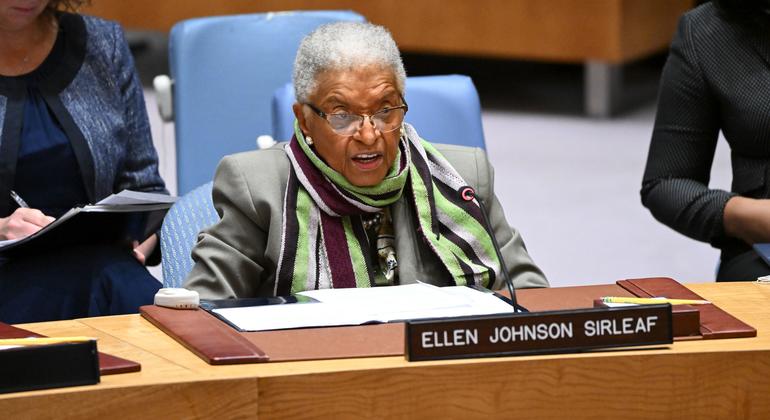
Liberia’s story is one of pain, but also of promise,” Ms. Johnson-Sirleaf said in a video message.

“A nation once brought to its knees by protracted conflict now stands as a testimony to what is possible when national will is matched by international solidarity.”

In August 2003, the Liberian Government, two rebel groups and several political parties signed a peace accord in Accra, Ghana, after 14 years of civil war.

Building a new Liberia

“Knowing that Liberia could not return to what it was, we had to construct a new nation based on new governance structures of inclusion, transparency, justice and hope,” said the former President and Nobel Peace Prize laureate.

Critical institutions such as the Central Bank, the judiciary, the anti-corruption commission, and even civil society organizations, had to be restructured or built from the ground up. And women played a central role in peace efforts by leading advocacy, mediation and community rebuilding.

“Importantly, also, Liberia’s path to peace could not be walked alone,” she said.

Ms. Johnson-Sirleaf pointed to the essential role played by the international community through the UN and its peacekeeping Mission UNMIL, regional bloc ECOWAS, the African Union, the European Union, and other entities.

‘A work in progress’

She also expressed gratitude to multilateral and bilateral partners – including the PBC – whose technical, financial and moral support laid the foundations for the peace enjoyed today.

“Liberia’s peace remains a work in progress,” she said. “We still face challenges -economic fragility, governance bottlenecks and the aspirations of a youthful population seeking opportunity. But we have also come a long way.”

The PBC has backed peacebuilding efforts in more than 30 countries and regions, for example supporting democratic transition in The Gambia and collaborating with Timor Leste to advance stability.

Its “intervention and decisiveness at a critical juncture is not only manifestly historic but serves as a cardinal reference point for preventive diplomacy and international solidarity,” said Gambia’s Foreign Minister Mamadou Tangara.

Conflicts on the rise

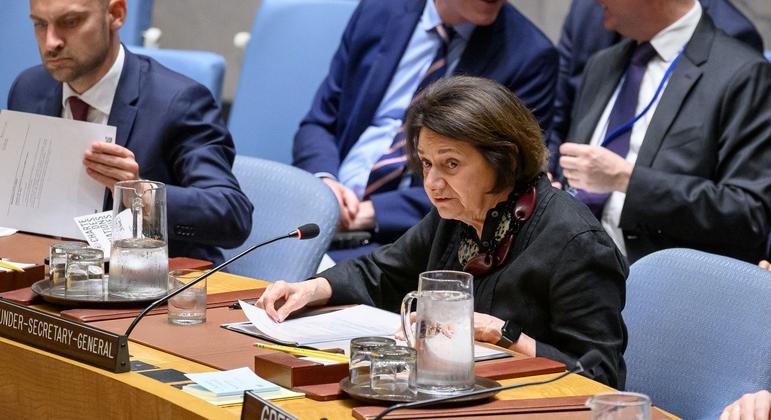
Rosemary DiCarlo, UN Under-Secretary-General for Political and Peacebuilding Affairs, remarked that the event was being held at a time when conflicts are becoming more numerous, more protracted and more complex, and as negotiated settlements are becoming even harder to achieve.

Against this backdrop, the role of the Peacebuilding Commission remains critical and more needed than ever,” she said.

She highlighted the Pact for the Future, adopted by UN Member States last September, which recognizes the central role of civil society, women and youth, and the value of UN partnerships with regional organizations and international financial institutions.

“Crucially, the Pact decided on the strengthening of the Peacebuilding Commission,” she said.  “Our task is to translate this ambition into practical progress.”

Still relevant today

Ms. DiCarlo said the PBC “should be equipped, strengthened and empowered to assist interested Member States to develop and implement national strategies for prevention and peace building.”

It should also have more systematic and robust links to other UN bodies and processes, such as the Security Council, and engage more deeply with regional organizations, international financial institutions and other key partners.

“The Commission is no longer a new institution, but its relevance and potential are undiminished at a time of increasing need. We must equip it to invest to deliver fully on its mandate.” 

Source link

World News in Brief: Global investment plunges, hurricane season in Haiti, rising cholera and hunger in South Sudan

Their latest data shows that the outlook for international investment this year “is negative”, a sharp course correction from January, when “modest” growth seemed possible.

The reasons for this range from trade tensions and tariffs whose main effect has been a “dramatic increase in investor uncertainty”, said UNCTAD Secretary-General Rebeca Grynspan.

She said that investment in renewable energy, water and sanitation fell by some 30 per cent and that agriculture saw a 19 per cent drop in investor confidence.

Only the health sector saw an increase of nearly 20 per cent, Ms. Grynspan said, although that only accounts for “less than $15 billion globally”.

‘Very real consequences’

“Behind those numbers are very real consequences. Jobs not created,” she said. “Infrastructure not built, sustainable development delayed. What we see here is not just a downturn. It is a pattern.”

Ms. Grynspan also cited “growing geopolitical tensions” in addition to rising trade barriers around the world as reasons for the fall in global investment for development.

In critical sectors as hi-tech industries and rare earth minerals, governments are also tightening screening measures on proposed foreign investment, the UN agency noted.

Supplies to limit hurricane impact in Haiti critically low

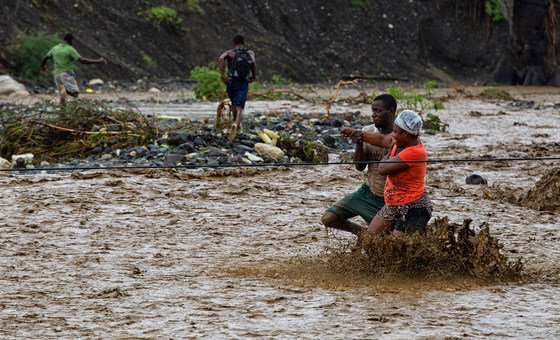
The Humanitarian Country Team in Haiti warned Wednesday that funding and pre-positioned contingency supplies are critically low ahead of what is forecast to be an above-average hurricane season.

Haiti is highly vulnerable to extreme weather, with 96 per cent of the population at risk. Forecasts project 12 to 19 tropical storms and up to five major hurricanes this year.

The alert comes as the fragile island nation grapples with a worsening humanitarian crisis. Armed gangs control much of the country, the collapse of essential services and growing displacement have left 5.7 million people food insecure, 1.3 million displaced and 230,000 living in makeshift shelters ill-equipped to withstand severe weather.

Limited preparations  

Humanitarian actors have pre-positioned limited stocks of essential items, but they are at a record low for a hurricane season posing such high risk.  

For the first time, Haiti will begin the hurricane season without pre-positioned food supplies or the financial resources necessary to initiate a rapid response.  

Meanwhile, UN Humanitarian Office (OCHA) is coordinating missions with UN agencies and partners to assess how to safely resume aid operations in high-need areas, following their suspension on 26 May due to insecurity.

“I am deeply concerned for communities, families, and vulnerable groups who have already been affected by violence and are living in precarious conditions,” said Ulrika Richardson, Humanitarian Coordinator in Haiti, calling for immediate support.

As of mid-June, the $908 million Humanitarian Response Plan for Haiti is just 8 per cent funded.

Worsening cholera and hunger in South Sudan

OCHA raised the alarm on Thursday over rising malnutrition and cholera cases in war-torn South Sudan.

An estimated 2.3 million children under five urgently need treatment for acute malnutrition, a 10 per cent increase since last July.

This crisis is unfolding amid the world’s most severe cholera outbreak this year, with almost 74,000 cases and at least 1,362 deaths reported as of 16 June.  

The start of the rainy season and waning immunity risk a significant surge in infections.

UN response

The 2025 Humanitarian Needs and Response Plan for South Sudan is only 20 per cent funded.

Despite limited resources and many challenges, the UN and partners have scaled up efforts, delivering vaccines and life-saving aid to contain the disease and protect the most vulnerable.

“This dire situation is a stark reminder that we need funding urgently to expand food assistance, to expand nutrition and expand health services to those who need it the most,” said UN Spokesperson Stéphane Dujarric at the daily briefing in New York. 

Source link

UNHCR forced to make deep cuts, despite rising needs worldwide

This will entail cutting just under half of all senior positions at the agency’s Geneva headquarters and regional bureaux. 

Around 3,500 permanent staff posts have been discontinued, hundreds of temporary staff positions have been terminated, and some offices have been downsized or closed worldwide.

According to the report, decisions on where to cut costs were guided by the priority to maintain operations in regions with the most urgent refugee needs.

Financial realities

The announcement follows a warning in March from UNHCR that severe funding cuts were putting millions of refugee lives at risk, with immediate and devastating consequences.

The agency anticipates it will end the year with available funding at roughly the same level as a decade ago – despite the number of refugees forced to flee having nearly doubled in that time to over 122 million.

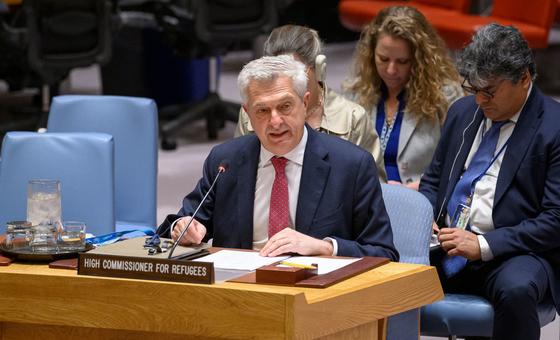
“In light of difficult financial realities, UNHCR is compelled to reduce the overall scale of its operations,” said Filippo Grandi, the United Nations High Commissioner for Refugees. “We will focus our efforts on activities that have the greatest impact for refugees, supported by streamlined headquarters and regional bureau structures.” 

‘Unshakeable’ commitment to refugees

Despite the prioritisation of refugee needs, key programmes – including financial assistance to vulnerable families, health, education, and water and sanitation – have been significantly impacted. 

In response, UNHCR is coordinating with UN partners, aid groups and host countries to mitigate the impact on those who rely on its support by streamlining operations, exploring new models and utilising technology to enhance efficiency.

“Even as we face painful cuts and lose so many dedicated colleagues, our commitment to refugees remains unshakeable,” said Mr. Grandi. 

“Although resources are scarcer and our capacity to deliver is reduced, we will continue to work hard to respond to emergencies, protect the rights of refugees and pursue solutions.”  

Source link

Rising hunger in Gaza highlights urgent need for ‘unfettered’ aid supplies

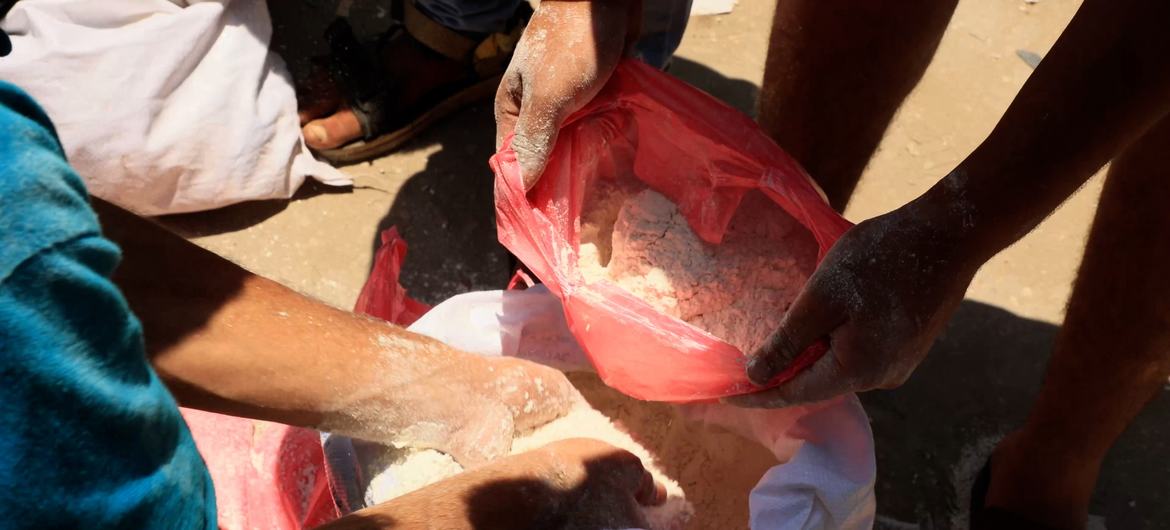
Only around 6,000 tonnes of wheat flour have entered the war-torn enclave since Israel began to allow limited supplies back in last month.  

However, 10,000 tonnes are urgently needed in the face of rising malnutrition, according to the UN aid coordination office OCHA.

The only way to address the situation on the ground is by re-opening additional crossings,” said OCHA’s Olga Cherevko, speaking to UN News from Khan Younis.

Beyond food aid

She also stressed the need to allow “unlimited and unfettered supply of aid to enter,” which includes items that go beyond food such as shelter materials, fuel, cooking gas, “and other necessary elements to sustain life in Gaza.”

Ms. Cherevko urged the Israeli authorities to make the task of delivering aid easier by “providing a safe and enabling environment,” reducing waiting times for humanitarian missions and ensuring access to people in need. 

People in Gaza are suffering from harsh living conditions. Since March, Israeli restrictions on border crossings have tightened, making it even more difficult for Gaza’s population – more than two million people – to access food. 

Senior UN officials, including Secretary-General António Guterres and Humanitarian Affairs chief Tom Fletcher, have described the aid that has entered as merely  “a trickle” or a  “a drop in the ocean”.

Difficult decisions

Although markets are crowded with people, they lack two essential elements: liquidity and goods.

Most residents thus face three bitter choices: either seek food aid from the newly established US and Israel-backed distribution mechanism, which has already claimed dozens of lives in recent days; watch their children starve; or pay dearly for what’s left of the goods and looted humanitarian aid in markets.

“Prices are unnatural, much higher than in Europe,” civil servant Akram Yousef recently told our UN News correspondent in Gaza.

“The situation is very difficult, and we have been like this for two years. In addition to displacement, homelessness, bombing, destruction, and devastation, traders are raising prices, and citizens are unable to bear this burden. What can we do?”

More than 20 months of conflict have made living conditions in the Gaza Strip unbearable, and the cost of living is now among the highest in the world. 

Ahmed Al-Bahri, who was displaced from Beit Lahia with his family, said a loaf of bread now sells for seven shekels, or roughly $2.

There is no flour, no milk, no diapers for children, or anything to eat,” he said. “We live in a state of constant hunger. Where can I get seven shekels to buy a loaf of bread for my child? What is this child’s sin?”

A flour seller in Gaza.

Exorbitant fees 

The cessation of Palestinian banks’ operations since the start of the war in October 2023 has exacerbated the suffering. 

People are forced to use phone apps to withdraw money from their bank accounts and to access their pensions through local merchants who charge exorbitant commissions.

Mr. Youssef, the civil servant, said the commission for withdrawing his salary was 20 per cent, but over time it has increased to nearly 50 per cent.

‘We have become envious of the dead’

Several residents told UN News that the price of one kilogramme of flour is now 100 shekels, equivalent to roughly $29.

“If a salary is 2,000 shekels, it becomes 1,000 shekels after commission,” another man, Ashraf Al-Deiri, explained.

“The daily expenses of an average or small family are no less than 500 shekels (roughly $143). So, we are experiencing great suffering and need someone to have mercy on us and stand by us.”

A young man called Raed Tafesh expressed shock over the high prices, especially since most of his peers are unemployed and lack any source of income. 

We don’t earn a single shekel. We are not employed, and we don’t have jobs. We are dying slowly. We have become envious of the dead,” he said.

The tragic conditions are reflected in the eyes of mothers and fathers who see their children starving, such as Nimir Ghazal.  She said her salary is not even enough to buy fruits, vegetables or any healthy food for her children.

“Sometimes I cry when my hungry children ask for a piece of bread. A kilo of flour costs 100 shekels, and lentils cost 50. One kilo is not enough for my family, but I buy it and share it among them,” she said.

UN efforts continue

On Monday, UN teams were able to collect some supplies, mainly flour, from the Kerem Shalom border crossing.  The aid was bound for Gaza City when hungry and desperate people snatched it directly from the trucks.

There have also been previous instances of looting and attacks on truck drivers which the UN categorically rejects. 

OCHA has emphasized that Israel, as the occupying power, bears responsibility for maintaining public order and safety in Gaza. This should include allowing more essential supplies to enter through multiple crossings and roads to meet humanitarian needs and help curb looting. 

Source link

Central Africa at a crossroads amid rising tensions and instability

With violence worsening in both the Lake Chad Basin and the Great Lakes, the Security Council met on Monday to examine the threats confronting the wider region.

Central Africa remains rich in potential, but the challenges are still significant,” said Abdou Abarry, Head of the UN Regional Office for Central Africa (UNOCA).

Some progress

While countries such as Chad and Gabon have made progress in terms of political development, newly elected authorities must capitalise on this momentum to implement key democratic reforms, said Mr Abarry.

In Chad and Gabon, recent elections and reforms have promoted greater participation of women in the democratic process.

Today, women represent 34 per cent of Chad’s National Assembly, while Gabon’s new electoral code mandates that women must account for at least 30 per cent of electoral lists provided to voters.

Political challenges

In recent months, online disinformation and hate speech have been on the rise in Cameroon, said Mr Abarry. UNOCA reported that 65 per cent of political content shared on social media between January and April this year was either false or previously manipulated.

At the same time, Cameroon has seen a surge in intercommunal violence in the southern and central regions of the country. This trend underscores the importance of UNOCA’s work in supporting development strategies aimed at preventing conflict related to electoral processes.

Insecurity hotbeds

Two major centres of insecurity persist, with violence escalating in both the Lake Chad Basin and the Great Lakes region.

Around Lake Chad, groups affiliated with Boko Haram extremists and other armed insurgencies have demonstrated “their resilience and their ability to adapt and respond to the coordinated operations of the defence and security forces” of the region, said Mr Abarry.

Notably, on the night of 24 March, drones carrying explosives killed at least 19 Cameroonian soldiers in southern Nigeria.

Meanwhile, growing tensions between the Democratic Republic of the Congo (DRC) and Rwanda have led to large-scale displacement in eastern DRC, where the humanitarian crisis is further compounded by conflict in neighbouring Sudan.

As budget cuts exacerbate ongoing humanitarian crises in the region, there is growing concern that “the inaction of the international community could lead to a worsening of the humanitarian situation,” the head of UNOCA told ambassadors. 

Source link

UN Security Council extends South Sudan mission amid rising instability

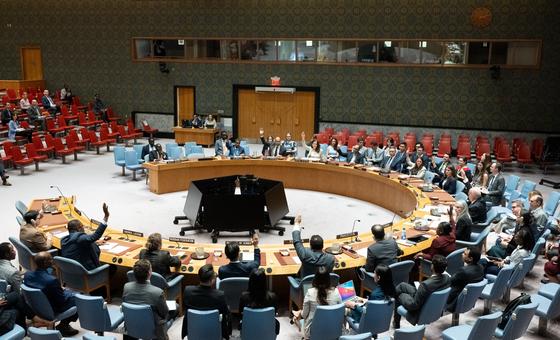
Introduced by the United States and supported by 11 other Council members, the resolution extended the mandate of UNMISS until 30 April next year.

This action follows a short nine-day “technical rollover” approved by the Council on 30 April to allow more time for negotiations.

Through the text – adopted on Thursday – the Security Council authorized the peacekeeping mission to “use all necessary means” to implement its mandate – including the protection of civilians, assisting aid delivery, supporting implementation of the 2018 peace agreement, and investigating violations of international law.

Three nations – China, Pakistan, and Russia – abstained.

Volatile situation on the ground

The renewal comes amid an increasingly volatile political and security situation in South Sudan.

Head of UNMISS Nicholas Haysom warned ambassadors in April that the fragile 2018 Revitalized Peace Agreement – signed by historic rivals President Salva Kiir and former First Vice President Riek Machar – is unravelling.

The political standoff, including the arrest of Mr. Machar, has reportedly escalated into open military confrontation, while misinformation and hate speech are fuelling ethnic divisions and instability.

“This situation is darkly reminiscent of the conflicts of 2013 and 2016, which cost over 400,000 lives,” Mr. Haysom said.

UNMISS mandate

The resolution maintains the mission’s overall force ceilings at 17,000 troops and 2,101 police, including 88 justice and corrections advisors.

The Council also expressed its readiness to consider adjusting force levels and capacity-building based on future conditions.

The resolution expressed “deep concern” over delays in implementing the 2018 agreement, urging South Sudan’s leaders to urgently show political will and build mutual trust. It urged the parties to engage in open and constructive dialogue.

It also stressed that the “organization and funding of free and fair elections is the responsibility of the South Sudanese authorities”, calling on the transitional government to adopt an appropriate legislative framework to fund national elections.

The resolution also condemned the use of sexual violence, recruitment of child soldiers and interference in any humanitarian operations.

UNMISS was initially established by the Security Council in 2011, following South Sudan’s independence from Sudan, to help maintain peace and stability at the time when the young nation faced significant internal conflicts and humanitarian challenges.

Broadcast of the Security Council meeting.

Ditch ‘ideological goals’: US

Speaking before the adoption, US Acting Representative Dorothy Shea called on the international community to bring South Sudan “back from the brink.”

She cited deteriorating conditions on the ground, including recent attacks against civilians and infrastructure. She also noted ongoing challenges facing UNMISS – including being asked to vacate its Tomping base – which undermine the mission’s ability to carry out its mandate.

“In short, as I hope we can all agree, the goal of UNMISS should be to render itself unnecessary by ushering in a lasting peace. The day that a peacekeeping operation is no longer required in South Sudan will be a bright one,” Ambassador Shea said.

She added that UN peacekeeping mandates, including UNMISS, “should not pursue ideological goals that are difficult to define and even more challenging to implement on the ground, but rather focus on core Chapter VII functions,” referring to the Chapter of the UN Charter stressing action to further international peace and security.

Unnecessarily politicised: Pakistan

Pakistan, which abstained from the resolution alongside China and Russia, explained its position.

Deputy Permanent Representative Muhammad Usman Iqbal Jadoon said UN Peacekeeping Missons should enjoy “complete and unified support” of the Security Council.

“However, this task is complicated when mandate resolutions are unnecessarily politicised,” he said, stating that mission mandates “must be tailored to the needs on the ground, not the political priorities of Council members.”

The resolution contained issues “which have no direct link” with UNMISS, preventing consensus among the 15 Council member States, he added.

That said, Mr. Jadoon reiterated his country’s full support for UNMISS and its leadership.

“UNMISS remains a force of stability in South Sudan. We greatly appreciate the dedication of its personnel and peacekeepers, who are performing their duties under difficult conditions.”

Source link

UN warns of rising deportations of Haitian mothers and newborns from Dominican Republic

According to the UN migration agency, IOM, recent weeks have seen an increase in the deportation of women, including those who are pregnant or breastfeeding, as well as children and newborn babies. 

The agency has emphasised the heightened risks these groups face being returned to Haiti, where access to basic services remains severely limited.

On Tuesday alone, IOM staff at the Belladère border crossing in Haiti received 416 deportees, including 11 pregnant women and 16 women who are still breastfeeding.

Meeting the needs

“While IOM teams are not present during the deportation process itself, their efforts focus on the needs of deportees upon arrival, many of whom arrive in precarious and highly vulnerable conditions, often without any resources,” said UN Spokesperson Stéphane Dujarric, speaking in New York.

He explained that IOM provides immediate humanitarian assistance, including food, water, and hygiene kits, as well as first aid, medical referrals, and psychosocial support.

Special attention is given to maternal health, and temporary places to live are arranged for women who are breastfeeding when necessary, he added.

Worsening conditions

Mr. Dujarric also updated on the situation in Haiti, where rising violence and recent funding cuts are undermining essential services and worsening the humanitarian situation, particularly in the Centre Department.

Escalating violence on the part of armed groups has triggered mass displacement, with more than 51,000 people, over half of them children, fleeing recent attacks. Many are now stranded at makeshift sites or seeking safety in other regions. 

No safety inside hospitals

He noted that the University Hospital of Mirebalais – a major referral facility with about 300 beds – has suspended operations following a wave of insecurity in the area. 

“Armed attacks, a mass prison break and the destruction of public infrastructure forced the hospital to gradually shut down. Before its closure, it served nearly 850 patients each day, including through maternal care and advanced cancer treatment,” he said.

Meanwhile, two other hospitals in the area – St. Therese in Hinche and Albert Schweitzer Hospital in Artibonite – are now coming under increased strain and face critical shortages, including oxygen and emergency medical kits. 

Since the closure of the University Hospital in Mirebalais, they have treated more than 200 patients for gunshot wounds, strokes, suspected cholera and malnutrition. 

“St. Therese alone has received more than 3,500 internally displaced people – tripling its outpatient caseload,” Mr. Dujarric said.

The UN Children’s Fund (UNICEF) and humanitarian partners are working to relieve pressure on the health system in Centre Department.

Mobile clinics are being deployed to reach 30,000 people in host communities and displacement camps, in coordination with the Haitian authorities and the Catholic charity Caritas.

Humanitarians are seeking $908 million to support nearly four million people in Haiti this year. Only six per cent of the funding, $57 million, has been received to date

Source link