From ruins to rebuilding: Three Jamaican mothers face the future after hurricane

Three women in Jamaica whose lives were upended by the destructive force of a hurricane which battered the Caribbean island are looking to rebuild their future. 

Right before Hurricane Melissa swept across Jamaica in late October 2025, Rose* took her two children to a friend’s sturdy concrete home to keep them safe. When they returned the next morning, everything had vanished.

“The house was gone,” she said. “I didn’t even see the roof, just a piece of lumber.”

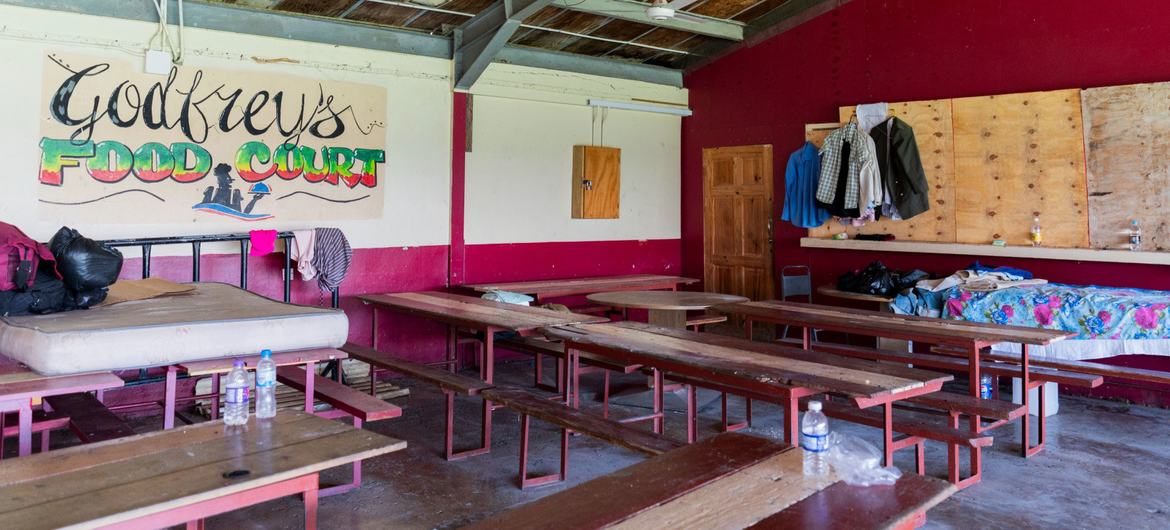
A school serves a temporary shelter for people whose lives were upended by Hurricane Melissa.

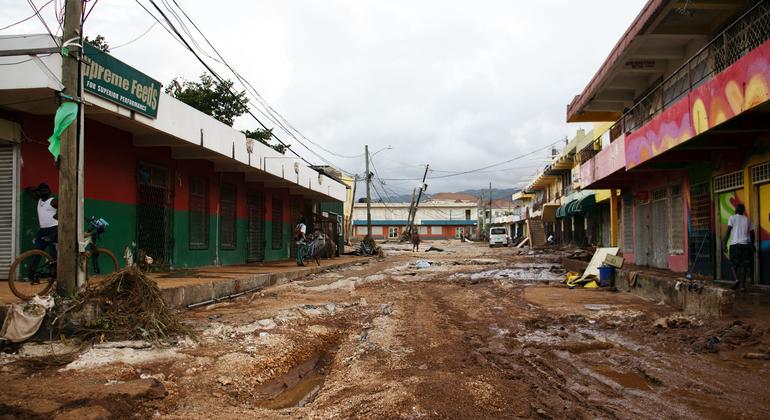
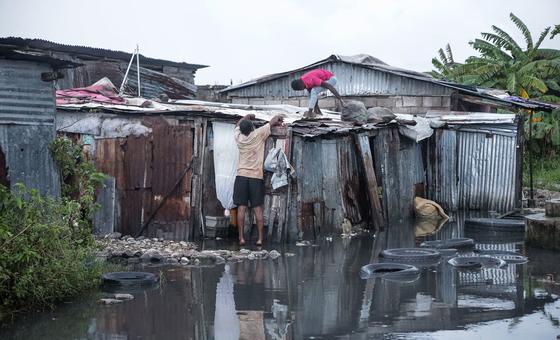
Entire neighbourhoods were reduced to splinters by the hurricane which left 36 per cent of houses in the western part of the country either damaged or destroyed.

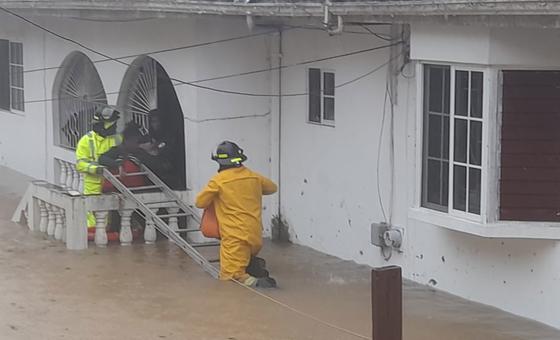
Schools became shelters overnight, turning classrooms into temporary homes. Roads disappeared under water, power outages spread, and thousands were cut off for days. 

Nearly half a million people were left in precarious living conditions, facing profound uncertainty.

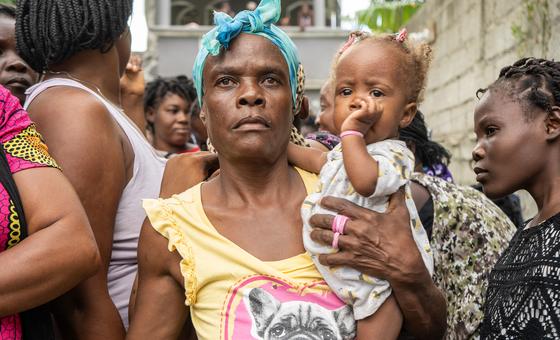
Among them are Rose, Sharon, and Sonia – three mothers whose lives changed overnight.

‘I have a key but no house’

For nine years, Rose lived in her small wooden home, a donated structure that had become her family’s refuge. 

Now, only the foundation remains. “I have a key to the house but no house,” she said. The air reeked of mud and decay. Nothing could be saved.
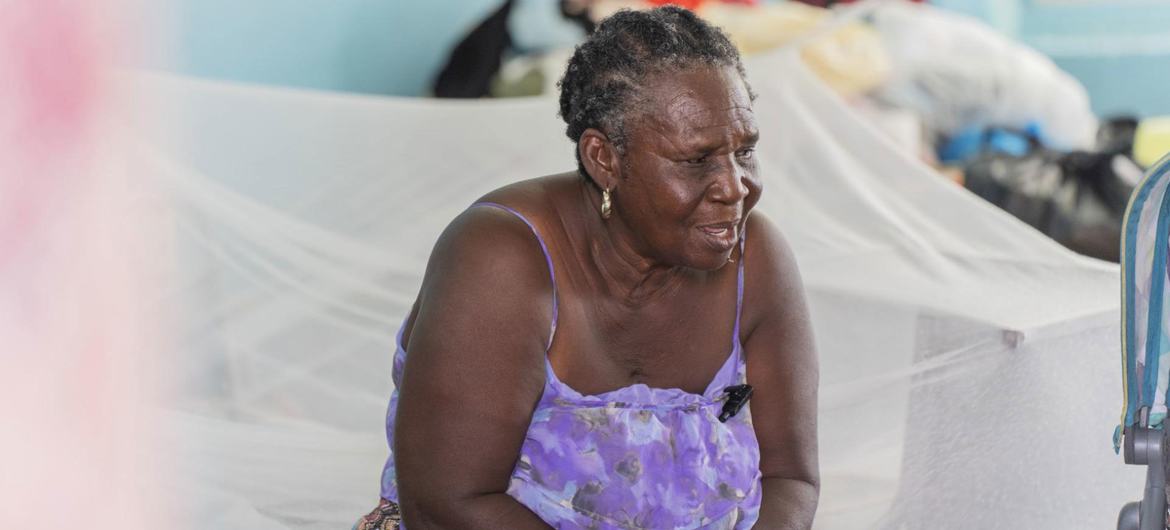
Sonia sits on a bed at a shelter for people who lost their homes due to Hurricane Melissa.

Before the storm, Rose worked as a cruise dispatcher in Negril, and her son as a hotel photographer. Both lost their jobs when the tourism industry shut down.

A few classrooms away, Sharon* faces a similar struggle. She arrived at the shelter with her two small children the same day her home, and her father’s collapsed. 

Before the storm, she worked as a gas station supervisor, now her workplace is closed indefinitely. Her children sleep on desks in the sweltering heat.

Between the rows of desks and makeshift beds, families share what little they have: a meal, a blanket, a few words of comfort. Amid loss, small acts of kindness create fragile connections.

Living in limbo 

More than 1,100 people remain in 88 shelters in Jamaica, and over 120,000 households need urgent repairs after Melissa’s destruction. 

Among them is Sonia*, who fled her coastal home carrying her grandson with a heart condition. 

“I can’t swim, so I grabbed him and ran,” she recalled.

Since the start of the emergency, the International Organization for Migration (IOM) teams have supported the Government of Jamaica and the wider UN response, delivering tarpaulins, shelter repair materials, hygiene kits, generators, and other essentials to families whose homes were damaged or destroyed.

For women like Rose, Sharon, and Sonia, each day is a test of endurance and solidarity. Their homes are gone, but the support of their communities helps them move forward. 

Their lives, once far apart, are now linked by loss, uncertainty, and the slow process of rebuilding.

*Names changed to protect identities


Fifty days on, Jamaica struggles to rebuild after Hurricane Melissa’s unprecedented destruction

Current estimates place the total damage and loss between $8 billion and $15 billion – nearly a quarter of Jamaica’s gross domestic product (GDP), said Dennis Zulu, UN Resident Coordinator for Jamaica, the Bahamas, Bermuda, the Cayman Islands, and Turks and Caicos.

The hurricane affected more than 626,000 people and claimed 45 lives, underscoring its profound human toll.

Despite notable progress in recovery efforts, 90 emergency shelters are still up and running, accommodating nearly 950 people who have yet to return home.

Communities left exposed

Entire communities are still fully exposed, with at least 120,000 buildings – most of them in southwestern Jamaica – having lost their roofs, reported Mr. Zulu.

Hurricane Melissa triggered “prolonged” and “cascading” disruptions to essential services, added the resident coordinator.

“Western parishes were left without electricity for weeks on end.”

In addition, many children remain out of school due to extensive damage to educational facilities.

Approximately 450 schools, nearly two-thirds of all institutions nationwide, have reported significant impacts, including roof loss, structural failure, and other damages.

Unprecedented scale of destruction

The tourism industry and agricultural production – once the cornerstones of Jamaica’s economy and major sources of employment – have suffered extensive damage, putting thousands of jobs and livelihoods at risk, adding further strain.

This scale of destruction has not only been unprecedented, but it has also really reversed hard-won development gains in a country that was firmly on a positive social and economic trajectory,” emphasised M. Zulu.

Despite these challenges, the United Nations continues to work closely with the Government of Jamaica, national institutions, civil society, and international partners, delivering life-saving aid to the most vulnerable communities.

Immediate priorities for recovery:

  • Restore health services to safe and fully functional operating levels.
  • Support the education sector, particularly as schools prepare to reopen.
  • Assist in restoring essential community services for areas still without access.
  • Contribute to the repair and reconstruction of homes, roads, and critical infrastructure.
  • Restore livelihoods through targeted support to small farmers, fishers, and micro and small enterprises
  • Strengthen the agriculture sector to enhance food production, food security, and rural employment.
  • Support the tourism sector as a key employer and source of foreign exchange to safeguard jobs and accelerate recovery.
  • Ensure recovery efforts are inclusive, climate-resilient, and risk-informed, enabling Jamaica to rebuild stronger and better than before.

Jamaica: International support ‘crucial’ to hurricane recovery says Guterres

António Guterres spoke by phone to Jamaica’s Prime Minister Andrew Holness earlier in the day emphasising afterwards in a statement that “international support is crucial” as the country deals with the effects of the category 5 storm which brought rain, storm surges and catastrophic flooding.

He calls for the mobilisation of massive resources to deal with the loss and damage from the hurricane,” said the Deputy UN Spokesperson.

UN provides $4m aid injection

The UN Emergency Relief Coordinator, Tom Fletcher, has allocated $4 million from the Central Emergency Response Fund (CERF) so agencies and their partners can rapidly scale up humanitarian operations in Jamaica.

Five days after the most powerful storm in the island’s history made landfall in the west, many residents are still waiting for aid to arrive, according to local news reports, with many roads still inaccessible and communities without power and running water.   

The Government reported on Saturday that the death toll has risen to at least 28. The top UN official on the island, Dennis Zulu, told UN News on Friday that around 13 UN agencies were working as quickly as possible alongside authorities to clear roads and make essential repairs.

“My team here remains committed…to ensure that Jamaica gets back on its feet,” he said.

Support for vulnerable children

UN children’s agency, UNICEF, said on Saturday more than 700,000 children across the Caribbean had been impacted by the hurricane, which also made landfall in Cuba and caused chaos across western Haiti.

UNICEF is supporting the Jamaican Government to reach more than 284,000 children to address urgent nutrition needs, access to safe water, sanitation and hygiene including mental health support.

In Haiti, UNICEF is deploying hygiene and emergency health kits, cash to households at risk and engaging communities.

UN aid coordination office, OCHA, accompanied UNICEF at José Martí airport in Cuba on Saturday to unload supplies for over 90,000 people affected by Melissa – alongside national authorities – working as a single team, driving emergency response.

International solidarity ‘a lifeline’

UN relief chief Tom Fletcher, said on Friday: “In times like this, international solidarity isn’t just a principle – it’s a lifeline.”

An OCHA team has been deployed to Jamaica to strengthen coordination and information management.

UN agencies and NGOs are helping restore access, deliver emergency health and water services, and assist communities whose homes, schools and hospitals have been hit hard.

Well-prepared in Cuba

A $4 million allocation from the OCHA-managed CERF for Cuba, allowed UN agencies to position life-saving support before the storm hit.

  • The World Food Programme (WFP) provided food for 180,000 people;
  • UNICEF deployed mobile water-treatment units and hygiene kits for thousands;
  • the Pan-American Health Organization (PAHO) airlifted medical supplies and generators;
  • the Food and Agriculture Organization (FAO) and UN Development Programme (UNDP) moved seeds and tarpaulins to protect livelihoods and homes;
  • and reproductive health agency, UNFPA, distributed health and dignity kits.

The Cuban Red Cross assisted with preventive evacuations, early-warning messages and psychosocial support, in coordination with the International Federation of Red Cross (IFRC).

Early-warnings across Haiti

In Haiti, a country reeling from a massive humanitarian crisis and deadly armed violence, humanitarian teams are working alongside national authorities to respond to the urgent needs. Several days before the hurricane struck a $4 million CERF allocation allowed aid to be pre-positioned.

In addition, over 3.5 million alerts were sent out to vulnerable populations, saving lives. UN agencies and partners are now supporting temporary shelters and providing food, shelter, non-food items and cash assistance.

“Local leadership, global solidarity, and early action are saving lives across the region,” Mr. Fletcher said. “This is the humanitarian reset at work – acting together with greater impact.”

Hurricane Melissa leaves thousands displaced across the Caribbean

The hurricane caused widespread damage to homes, infrastructure and crops, leaving thousands displaced.

However, extensive storm preparation by governments, assisted by UN agencies and other NGOs, appears to have helped lessen the impact and saved lives in many areas. 

In Cuba, the hurricane struck the province of Santiago de Cuba with winds exceeding 200 km/h per hour and six hours of torrential rain. “Melissa is one of the three most powerful hurricanes ever recorded in Cuba and the strongest worldwide this year,” said Francisco Pichon, UN Resident Coordinator for Cuba, during a press briefing via videoconference in New York.

More than three million people were exposed to life-threatening conditions, and nearly 240 communities are cut off due to flooding and landslides”, he added speaking via video.

Existing vulnerabilities

The storm compounded existing vulnerabilities. Many affected areas had already suffered from last year’s Hurricane Oscar and earthquakes – while drought, rising viral diseases, and energy shortages caused further strain.

Despite these challenges, Cuba’s civil defence system helped evacuate over 77,000 people to protection centres, including schools temporarily repurposed as shelters.

Mr. Pichon highlighted the UN’s anticipatory action framework, which pre-positioned relief supplies and personnel before the storm hit. “This mechanism allowed us to respond quickly and ensure that essential goods reached the people who needed them most,” he said.

Plans are underway to reach two million people in the coming days, including food security, health, education, shelter, water and sanitation, and logistics.

Early preparedness saves lives

In Haiti, the storm’s slow movement brought flash floods, landslides, and severe damage to crops, said Gregoire Goodstein, the UN’s interim Humanitarian Coordinator.

“At least 24 people have died, 17 were injured, and 18 remain missing,” he reported. Around 15,000 people are currently sheltering in over 120 temporary facilities.

Early preparedness helped save lives. “We deployed emergency stocks, set up evacuation shelters, and sent out 3.5 million early warning messages,” Mr. Goodstein told journalists. “Rapid response teams worked alongside national authorities to ensure communities could evacuate safely,” he added.

Haiti faces the storm amid an ongoing humanitarian crisis, with 1.4 million people displaced, widespread hunger affecting half the population, and cholera outbreaks in some areas.

Mr. Goodstein noted that the UN’s Humanitarian Response Plan is currently 87 per cent underfunded, putting life-saving operations at risk.

“Humanitarian needs remain immense, and international cooperation is crucial.”

The UN continues to coordinate assistance across the Caribbean, supporting both immediate relief and longer-term recovery efforts in the wake of Hurricane Melissa.

World News in Brief: Global investment plunges, hurricane season in Haiti, rising cholera and hunger in South Sudan

Their latest data shows that the outlook for international investment this year “is negative”, a sharp course correction from January, when “modest” growth seemed possible.

The reasons for this range from trade tensions and tariffs whose main effect has been a “dramatic increase in investor uncertainty”, said UNCTAD Secretary-General Rebeca Grynspan.

She said that investment in renewable energy, water and sanitation fell by some 30 per cent and that agriculture saw a 19 per cent drop in investor confidence.

Only the health sector saw an increase of nearly 20 per cent, Ms. Grynspan said, although that only accounts for “less than $15 billion globally”.

‘Very real consequences’

“Behind those numbers are very real consequences. Jobs not created,” she said. “Infrastructure not built, sustainable development delayed. What we see here is not just a downturn. It is a pattern.”

Ms. Grynspan also cited “growing geopolitical tensions” in addition to rising trade barriers around the world as reasons for the fall in global investment for development.

In critical sectors as hi-tech industries and rare earth minerals, governments are also tightening screening measures on proposed foreign investment, the UN agency noted.

Supplies to limit hurricane impact in Haiti critically low

The Humanitarian Country Team in Haiti warned Wednesday that funding and pre-positioned contingency supplies are critically low ahead of what is forecast to be an above-average hurricane season.

Haiti is highly vulnerable to extreme weather, with 96 per cent of the population at risk. Forecasts project 12 to 19 tropical storms and up to five major hurricanes this year.

The alert comes as the fragile island nation grapples with a worsening humanitarian crisis. Armed gangs control much of the country, the collapse of essential services and growing displacement have left 5.7 million people food insecure, 1.3 million displaced and 230,000 living in makeshift shelters ill-equipped to withstand severe weather.

Limited preparations  

Humanitarian actors have pre-positioned limited stocks of essential items, but they are at a record low for a hurricane season posing such high risk.  

For the first time, Haiti will begin the hurricane season without pre-positioned food supplies or the financial resources necessary to initiate a rapid response.  

Meanwhile, UN Humanitarian Office (OCHA) is coordinating missions with UN agencies and partners to assess how to safely resume aid operations in high-need areas, following their suspension on 26 May due to insecurity.

“I am deeply concerned for communities, families, and vulnerable groups who have already been affected by violence and are living in precarious conditions,” said Ulrika Richardson, Humanitarian Coordinator in Haiti, calling for immediate support.

As of mid-June, the $908 million Humanitarian Response Plan for Haiti is just 8 per cent funded.

Worsening cholera and hunger in South Sudan

OCHA raised the alarm on Thursday over rising malnutrition and cholera cases in war-torn South Sudan.

An estimated 2.3 million children under five urgently need treatment for acute malnutrition, a 10 per cent increase since last July.

This crisis is unfolding amid the world’s most severe cholera outbreak this year, with almost 74,000 cases and at least 1,362 deaths reported as of 16 June.  

The start of the rainy season and waning immunity risk a significant surge in infections.

UN response

The 2025 Humanitarian Needs and Response Plan for South Sudan is only 20 per cent funded.

Despite limited resources and many challenges, the UN and partners have scaled up efforts, delivering vaccines and life-saving aid to contain the disease and protect the most vulnerable.

“This dire situation is a stark reminder that we need funding urgently to expand food assistance, to expand nutrition and expand health services to those who need it the most,” said UN Spokesperson Stéphane Dujarric at the daily briefing in New York. 

Source link

World News in Brief: Global growth slows, deadly Ukraine attacks, Haiti hurricane hunger risk, legal migration for refugees

Growth is projected to weaken to 2.3 per cent, or nearly half a percentage point lower than expected at the start of the year, according to the Global Economic Prospects report.

“The global outlook is predicated on tariff rates close to those of late May prevailing,” it said.

“Accordingly, pauses to previously announced tariff hikes between the United States and its trading partners are assumed to persist.”

Although a global recession is not expected, average global growth is on track to be the slowest of any decade since the 1960s.

Poor countries suffer

Growth forecasts are being slashed in nearly 70 per cent of all economies, with the poorest countries most affected.

In most developing countries, nearly 60 per cent, growth should average 3.8 per cent in 2025 before reaching an average 3.9 per cent in the following two years – more than a percentage lower than the average in the 2010s.

The slowdown will impact efforts by developing countries in areas such as job creation, poverty reduction and closing income gaps with richer economies.

“The world economy today is once more running into turbulence. Without a swift course correction, the harm to living standards could be deep,” said Indermit Gill, Senior Vice President and Chief Economist.

The report calls for rebuilding trade relations as “economic cooperation is better than any of the alternatives – for all parties,” he said.

Countries are also urged to improve business climates and to promote employment by ensuring workers are equipped with necessary skills.

At least three dead in new Russian drone assault on Ukrainian cities 

A massive new wave of Russian drone attacks has killed at least three civilians and left Kyiv, Odesa and Zaporizhzhia engulfed in clouds of thick smoke, aid teams said on Tuesday. 

The attack was reportedly one of the largest since Russia’s full-scale invasion more than three years ago.

In an online update, the UN aid coordinating office, OCHA, said that a maternity ward in Odesa had come under fire, causing injuries and widespread damage to homes. 

Another terrible night

The UN Children’s Fund, UNICEF, underscored the impact of the violence on civilians, citing 16-year-old Sonya from Kyiv in an online post. “It was a terrible night,” she said. “The sounds were so frightening – a buzzing sound that was getting closer and explosions every five minutes.”

Russia has intensified its airstrikes on Ukraine in recent days. 

According to Moscow, it stepped up its bombing campaign in retaliation for Ukraine’s suprise drone attacks deep inside Russian territory last week codenamed operation spiderweb.

Amid the ongoing conflict, UN humanitarian teams and partners continue to work to help civilians in cities across Ukraine.

They provide first aid, protection services, food, construction materials and other support including counselling and legal advice.

Haiti: Hurricane season is here, but there are no food supplies

The World Food Programme (WFP) has reported that for the first time ever, it has no prepositioned food supplies in Haiti for the hurricane season, which lasts from June to November. 

WFP also said staffers do not have the financial resources to respond quickly to an emergency weather event in the country. 

Other UN agencies have prepositioned water and sanitation kits for 100,000 and health supplies for 20,000 people. However, these are not sufficient, especially in the absence of food, to meet needs during an emergency. 

“The current lack of contingency stocks and operational funds leaves Haiti’s most at-risk communities dangerously unprotected at a time of heightened vulnerability,” Deputy Spokesperson Farhan Haq said in a briefing Tuesday. 

Famine-like conditions

Food insecurity and malnutrition are already rampant, with over half the population facing acute hunger. Haiti is one of five countries worldwide which is experiencing famine-like conditions. 

Continuing armed violence by gangs in the capital and in other regions has displaced over one million people, compounding the hunger crisis and limiting access to other basic services such as clean water and health care. 

UN agencies in the country estimate that they will need $908 million to continue providing life-saving resources in Haiti, but currently, they have only received $78 million in emergency support. 

Refugees find hope through legal migration

Nearly one million refugees from eight countries with high asylum recognition rates were granted entry permits to 38 destination countries between 2019 and 2023, according to a new report from UN refugee agency, UNHCR, and the Organisation for Economic Co-operation and Development (OECD), Safe Pathways for Refugees

These permits were issued through existing systems for work, study, or family reunification.

“Refugees are using the same legal channels that millions rely on every day,” said Ruven Menikdiwela, UNHCR’s Assistant High Commissioner for Protection. 

“We don’t need new systems – just safer access to the ones already in place.”

In 2023 alone, nearly 255,000 permits were issued, marking a 14 per cent increase from 2022 and the highest number recorded since tracking began in 2010. 

Countries such as Germany, Canada, the United States, the United Kingdom and Sweden have played a leading role. 

UNHCR is urging States to remove obstacles for refugees and integrate them into regular migration systems. It also calls for stronger partnerships to expand access to legal pathways amid growing displacement and strained asylum systems. 

Source link

Haiti: WFP concerned over humanitarian situation as hurricane season begins

With roughly half the population, 5.7 million people, facing some sort of emergency level of hunger, Haiti is one of five countries in the world with catastrophic levels of hunger.  

“Despite all the violence, displacement and collapse”, WFP remains in Haiti, Lola Castro, Regional Director in Latin America and the Caribbean, said during a briefing on Tuesday, having recently returned from the country. 

More than one million people in Haiti are displaced due to ongoing gang violence and insecurity.

As the hostilities are disrupting the food systems and supply chains in the capital Port-au-Prince, WFP is facing a “quite dramatic” situation, Ms. Castro said. 

Displaced population 

Displaced populations, notably in and around Port-au-Prince, are faced with a “very problematic” situation, she said, as hostilities have recently uprooted around 14,000 people from the commune of Kenscoff.  

“Kenscoff is a commune where people used to come and sell their food,” she said, and the same people are now relying on food assistance after their houses were burned and their livelihoods “destroyed.” 

Gender-based violence  

With 6,000 cases of gender-based violence having been reported this year, the situation of women and girls in Port-au-Prince is dramatic, according to Ms. Castro.  

The city is probably “one of the most dangerous places in the world” for women and girls. “We need to provide them support to assure that they become less vulnerable and are not exposed to all this violence,” she said.  

Dwindling aid stocks  

The 2025 Humanitarian Response Plan for Haiti calls for just over $908 million but is only eight per cent funded. Ms. Castro said WFP alone needs $46.4 million over the next six months to sustain its emergency response and address the root causes of hunger and malnutrition. 

The hurricane season began on 1 June and runs through the end of November. She warned that at this moment when half of all Haitians are already going hungry, a single storm could push millions into a humanitarian catastrophe. 

While in past years, WFP had humanitarian stocks ready in the country and could assist between a quarter to half a million people in the immediate aftermath of a disaster, “this year, we start the hurricane season with an empty warehouse,” she said.  

Unless resources are made available, the agency will have no capacity to respond—there are no contingency supplies, no logistical buffer, and no lifeline for the most vulnerable. 

“We cannot forget the people of Haiti,” Ms. Castro said, calling on the humanitarian community to provide urgent support.  

Source link