
Fifty days on, Jamaica struggles to rebuild after Hurricane Melissa’s unprecedented destruction

Current estimates place the total damage and loss between $8 billion and $15 billion – nearly a quarter of Jamaica’s gross domestic product (GDP), said Dennis Zulu, UN Resident Coordinator for Jamaica, the Bahamas, Bermuda, the Cayman Islands, and Turks and Caicos.

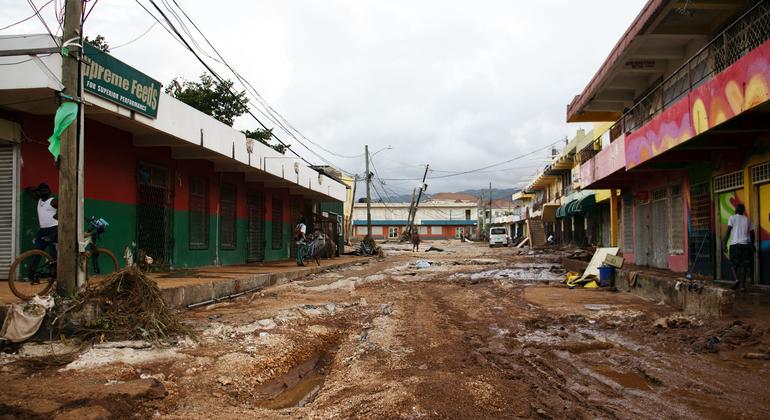
The hurricane affected more than 626,000 people and claimed 45 lives, underscoring its profound human toll.

Despite notable progress in recovery efforts, 90 emergency shelters are still up and running, accommodating nearly 950 people who have yet to return home.

Communities left exposed

Entire communities are still fully exposed, with at least 120,000 buildings – most of them in southwestern Jamaica – having lost their roofs, reported Mr. Zulu.

Hurricane Melissa triggered “prolonged” and “cascading” disruptions to essential services, added the resident coordinator.

“Western parishes were left without electricity for weeks on end.”

In addition, many children remain out of school due to extensive damage to educational facilities.

Approximately 450 schools, nearly two-thirds of all institutions nationwide, have reported significant impacts, including roof loss, structural failure, and other damages.

Unprecedented scale of destruction

The tourism industry and agricultural production – once the cornerstones of Jamaica’s economy and major sources of employment – have suffered extensive damage, putting thousands of jobs and livelihoods at risk, adding further strain.

This scale of destruction has not only been unprecedented, but it has also really reversed hard-won development gains in a country that was firmly on a positive social and economic trajectory,” emphasised M. Zulu.

Despite these challenges, the United Nations continues to work closely with the Government of Jamaica, national institutions, civil society, and international partners, delivering life-saving aid to the most vulnerable communities.

Immediate priorities for recovery:

  • Restore health services to safe and fully functional operating levels.
  • Support the education sector, particularly as schools prepare to reopen.
  • Assist in restoring essential community services for areas still without access.
  • Contribute to the repair and reconstruction of homes, roads, and critical infrastructure.
  • Restore livelihoods through targeted support to small farmers, fishers, and micro and small enterprises
  • Strengthen the agriculture sector to enhance food production, food security, and rural employment.
  • Support the tourism sector as a key employer and source of foreign exchange to safeguard jobs and accelerate recovery.
  • Ensure recovery efforts are inclusive, climate-resilient, and risk-informed, enabling Jamaica to rebuild stronger and better than before.

Unprecedented Afghan returns are ‘a test of our collective humanity’

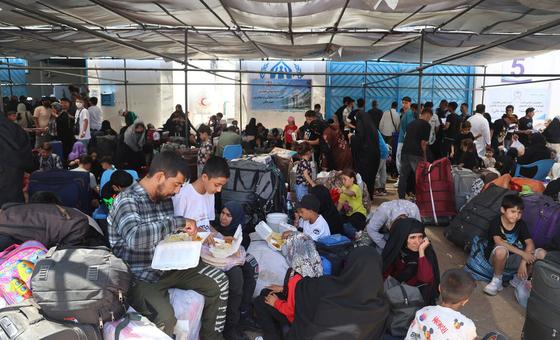
Roza Otunbayeva, the Secretary-General’s Special Representative for Afghanistan, made the appeal during a visit to the Islam Qala border crossing with Iran on Tuesday where she witnessed the daily influx of tens of thousands of returnees.

She also met returnee families, aid partners and regional de facto officials.

Alarm bells should be ringing

What should be a positive homecoming moment for families who fled conflict decades ago is instead marked by exhaustion, trauma, and profound uncertainty,” said Ms. Otunbayeva, who also heads the UN Assistance Mission in Afghanistan (UNAMA).

“The sheer volume of returns – many abrupt, many involuntary – should be setting off alarm bells across the global community,” she added.

It is a test of our collective humanity. Afghanistan, already grappling with drought, and a chronic humanitarian crisis, cannot absorb this shock alone.” 

Local communities overstretched

Since January, more than 1.3 million have been largely compelled to head back to Afghanistan – a country where 70 per cent of the population lives in poverty. 

Women and children face the gravest risks, UNAMA said, as they are returning not only to dire economic hardships but to a context where their access to basic services and social protections remains severely constrained.

The UN has repeatedly highlighted the assault on women’s rights under Taliban rule, including bans affecting higher education, employment and freedom of movement.

Reintegration support critical

The returns are happening at a time when humanitarian operations remain woefully underfunded, forcing agonising choices between food, shelter, and safe passage.

Ms. Otunbayeva also underscored the critical need for immediate reintegration assistance as initial evidence shows that stabilising return communities requires urgent livelihood programmes and community infrastructure investments. 

She warned that without swift interventions, remittance losses, labour market pressures, and cyclical migration will lead to devastating consequences.

These could include the further destabilization of both returnee and host populations, renewed displacement, mass onward movement, and risks to regional stability.

‘We cannot afford indifference’

She urged donors, development partners, and regional governments not to turn away and abandon Afghan returnees.

“What we are witnessing are the direct consequences of unmet global responsibilities,” she said. “We must act now – with resources, with coordination, and with resolve.” 

Meanwhile, the UN in Afghanistan is calling for an integrated approach that resources humanitarian needs while scaling up assistance in areas of return.

At the same time, regional dialogue – including with Iran, Pakistan, and Central Asian states – must be prioritized to halt disorderly returns and uphold the principle of voluntary, dignified and safe repatriation.

“Afghanistan’s stability hinges on shared responsibility: We cannot afford indifference,” said Ms. Otunbayeva. “The cost of inaction will be measured in lives lost and conflicts reignited.” 

Source link