Madagascar: ‘Overwhelming’ destruction, surging needs after back-to-back cyclones – WFP

Speaking to reporters from Madagascar’s capital Antananarivo, WFP Country Director Tania Goossens said some 400,000 people are facing acute humanitarian needs after the island was hit by back-to-back cyclones in the space of three weeks.

Ms. Goossens recently returned from a mission to the port city Toamasina (also known as Tamatave), the country’s second largest urban centre, where Gezani made landfall on Tuesday evening with wind gusts of up to 250 kilometres per hour.

“The scale of the destruction is really overwhelming,” Ms. Goossens insisted.

Nearly 40 deaths

She said that according to the authorities, 80 per cent of the city has suffered damage and that it is “running on roughly five per cent electricity at the moment.”

“There’s no water and one of WFP’s warehouses and our office was also completely destroyed during the cyclone,” she added.

Assessments are ongoing but to date the authorities report 38 deaths and 374 people injured.

Families left with nothing

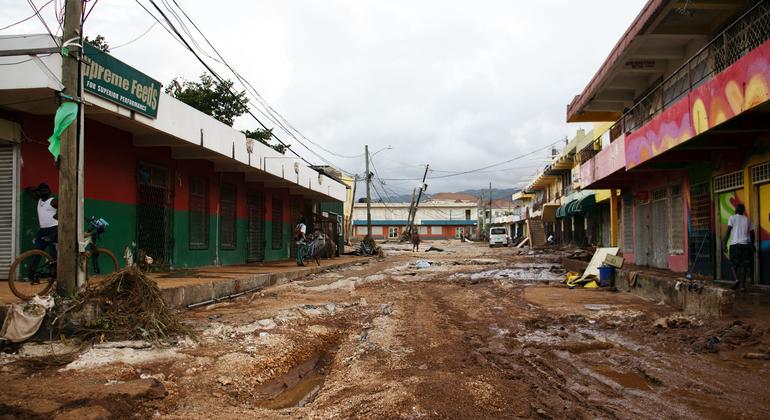
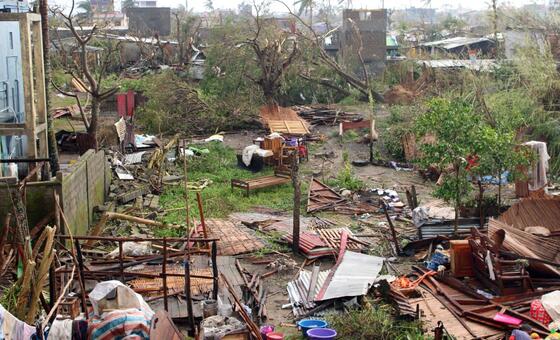
The UN food agency official said that many families have left their homes and that there was “severe” damage to buildings, businesses, schools and the city’s hospital.

“During my visit, I saw families trying to recover the little that was left of their home,” she recounted. “Many are spending the night in homes where the roofs have been torn off.”

Uprooted trees and debris across the city are blocking streets, Ms. Goossens said, and fuel is difficult to come by.

“Families are telling us that they have lost everything,” she stressed. “Many are sheltering in damaged homes or temporary sites and uncertain about how they can access their next meal.”

Rising needs

In addition to the urgent need for food Ms. Goossens highlighted humanitarians’ concerns about water, sanitation and hygiene conditions, as a lack of clean water and damaged infrastructure raise the risk of disease outbreaks.

She also mentioned “rising protection concerns for vulnerable groups” such as women, children, the elderly and persons with disabilities.

Mobilising support

In anticipation of the shock WFP and partners have been providing cash assistance to the most vulnerable households allowing them to purchase some food and better prepare before the storm struck.

The UN food agency is now mobilising its “last food stocks,” which will be distributed in coordination with national disaster relief teams, Ms. Goossens explained.

However, the needs on the ground exceed WFP’s capacity and the agency is calling for urgent donor support.

The latest disaster “comes on top of an already very critical food security situation,” Ms. Goossens said, as already before the back-to-back cyclones 1.57 million people across the country were food insecure, including 84,000 facing emergency levels of hunger, according to the latest data from the IPC, a UN-backed global food security monitoring system.

“We’re also in the peak of the lean season here in Madagascar and funding shortfalls remain alarming… Our lean season response as well as cyclone response faces a $18 million gap over the next six months,” the WFP official warned.

“We will need… sustained support over the coming months to help people recover, to rebuild and strengthen their resilience against further shocks,” she added. “In fact, we are in at the start of the cyclone season. So, we are also concerned that this is only just the beginning.”

Source link

Fifty days on, Jamaica struggles to rebuild after Hurricane Melissa’s unprecedented destruction

Current estimates place the total damage and loss between $8 billion and $15 billion – nearly a quarter of Jamaica’s gross domestic product (GDP), said Dennis Zulu, UN Resident Coordinator for Jamaica, the Bahamas, Bermuda, the Cayman Islands, and Turks and Caicos.

The hurricane affected more than 626,000 people and claimed 45 lives, underscoring its profound human toll.

Despite notable progress in recovery efforts, 90 emergency shelters are still up and running, accommodating nearly 950 people who have yet to return home.

Communities left exposed

Entire communities are still fully exposed, with at least 120,000 buildings – most of them in southwestern Jamaica – having lost their roofs, reported Mr. Zulu.

Hurricane Melissa triggered “prolonged” and “cascading” disruptions to essential services, added the resident coordinator.

“Western parishes were left without electricity for weeks on end.”

In addition, many children remain out of school due to extensive damage to educational facilities.

Approximately 450 schools, nearly two-thirds of all institutions nationwide, have reported significant impacts, including roof loss, structural failure, and other damages.

Unprecedented scale of destruction

The tourism industry and agricultural production – once the cornerstones of Jamaica’s economy and major sources of employment – have suffered extensive damage, putting thousands of jobs and livelihoods at risk, adding further strain.

This scale of destruction has not only been unprecedented, but it has also really reversed hard-won development gains in a country that was firmly on a positive social and economic trajectory,” emphasised M. Zulu.

Despite these challenges, the United Nations continues to work closely with the Government of Jamaica, national institutions, civil society, and international partners, delivering life-saving aid to the most vulnerable communities.

Immediate priorities for recovery:

  • Restore health services to safe and fully functional operating levels.
  • Support the education sector, particularly as schools prepare to reopen.
  • Assist in restoring essential community services for areas still without access.
  • Contribute to the repair and reconstruction of homes, roads, and critical infrastructure.
  • Restore livelihoods through targeted support to small farmers, fishers, and micro and small enterprises
  • Strengthen the agriculture sector to enhance food production, food security, and rural employment.
  • Support the tourism sector as a key employer and source of foreign exchange to safeguard jobs and accelerate recovery.
  • Ensure recovery efforts are inclusive, climate-resilient, and risk-informed, enabling Jamaica to rebuild stronger and better than before.

Amid massive destruction of Gaza City, UN chief renews ceasefire call

“It is vital to reach immediately a ceasefire in Gaza,” the Secretary-General told reporters on the sidelines of the Ninth Tokyo International Conference on African Development (TICAD9), “and the unconditional release of all hostages and to avoid the massive death and destruction that a military operation against Gaza City would inevitably cause.

Around one million people still live in the city – Gaza’s largest – in the north of the war-torn enclave. The Israeli army has reportedly described it as a stronghold of Hamas, the terror group whose deadly attacks in Israel and hostage-taking sparked the war on 7 October 2023.

The UN chief also condemned the Israeli Government’s decision to approve a long-shelved settlement expansion project in the occupied West Bank.

The decision by the Israeli authorities to expand illegal settlement construction, which would divide the West Bank, must be reversed. All settlement construction is a violation of international law,” he insisted.

The settlement is believed to have permission for well over 3,000 houses, schools and a clinic, cutting off East Jerusalem from the occupied West Bank, which Israel captured during the 1967 Six-Day war after defeating Egypt, Jordan and Syria.

Urban destruction

Meanwhile in Gaza City, whole urban areas are being “totally destroyed”, the UN understands, with further destruction now underway in the south and southeast, as military manoeuvres continue.

Recent attacks have been particularly devastating in the Az Zaytoun neighbourhood of the city, the UN human rights office (OHCHRreported on Wednesday.

Highlighting more than 50 attacks on residential buildings and entire blocks in Gaza City since 8 August, OHCHR warned that its “systematic destruction” had begun.

Acute malnutrition soaring

Meanwhile, UN aid teams highlighted the catastrophic impact of the accelerating Israeli military operation, with acute malnourishment soaring among children in Gaza City to 28.5 per cent, or more than one in four youngsters.

“Children continue to die from man-made starvation,” UNRWA said in a statement, noting that it has screened more than 95,000 children aged six months to five years for malnutrition across the Gaza Strip since March 2025, after the ceasefire collapsed.

While the ceasefire still held in early March and relief supplies were allowed into Gaza in far greater quantities than today, malnutrition rates were six times lower in Gaza City, at 4.5 per cent, according to the UN agency for Palestinians, UNRWA. 

Across Gaza, acute malnutrition rose to nearly 16 per cent in mid-August, more than three times higher than the 5.2 per cent level recorded by the UN agency in March, it said.

Vital services in danger

Today, services provided by UNRWA in Gaza City are at “severe risk”, the agency warned, pointing to the tens of thousands of people who still live in its shelters and the “many more” who remain in surrounding areas.

There is particular concern for UNRWA’s Gaza Field Office compound – its largest logistics hub in northern Gaza – as the UN agency’s operations in the south have been “crippled” by displacement orders and bombardment.

As an indication of UNRWA’s key role in aid and relief provision across Gaza, it noted that last month alone, it provided more than 100,000 medical consultations and screened 3,500 children for malnutrition in Gaza City.

UNRWA also delivered drinking water to 220,000 people, domestic water to 250,000 and cleared hundreds of tons of waste.

Education and protection specialists from the UN agency reached thousands more in temporary learning spaces or by offering counselling, recreational activities and risk awareness training about the dangers of lethal unexploded weapons.

“While our colleagues, like the rest of the UN, are determined to stay and deliver, all of these services are now at risk as the military operations intensify,” UNRWA said.

Source link

Amid ongoing Israeli attacks, ‘the systematic destruction of Gaza City is already underway’: UN rights office

Recent attacks have been particularly devastating in the Az Zaytoun neighbourhood, where airstrikes, artillery shelling and gunfire are continuous and intense, causing a high number of civilian casualties and the large-scale destruction of residential buildings and public facilities, the UN human rights office, OHCHR, in the Occupied Palestinian Territory said in a statement.

Since 8 August, the office has recorded 54 attacks on residential buildings and entire blocks in Gaza City, killing 87 Palestinians, including at least 25 children and entire families.

It also recorded attacks on shelters for internally displaced people, including tents and schools, killing at least 14.

These casualty figures “indicate that the systematic destruction of Gaza City is already underway,” the statement said.

However, OHCHR stressed that these devastating figures are only a portion of the actual toll due to underreporting in such dire circumstances.

Impact of attacks

As a result of recent attacks, hundreds of families have been forced to flee, with nowhere safe to go amid dire humanitarian conditions across the Gaza Strip.

However, those who remain trapped are completely cut off from food, water and medical supplies.

OHCHR emphasised that “Israel’s reported decision to take full control of Gaza City and to forcibly displace its population will lead to mass killings of civilians and destruction of infrastructure vital to the survival of the population.”

The office is seeing the Israeli military repeat means of warfare that caused mass killings, serious injuries, forced displacement, arbitrary detention, starvation and extensive destruction in previous operations in North Gaza and Rafah.

To reportedly prepare for the offensive, the Israeli military has repeatedly called on Palestinians to move to Al Mawasi, west of Khan Younis.

However, Israel has repeatedly struck tents of the displaced in Al Mawasi, where people are struggling to survive with barely any access to food, water and other necessities.

Violations of international law

Under international law, Israel must not destroy civilian property unless it is rendered necessary by military operations. Yet, the widespread destruction of residential buildings in Gaza City is not seen as an imperative military necessity.

Additionally, by forcing the entire population of Gaza City and those remaining in North Gaza into displacement – with no shelter, food or medical provisions and no indication for allowing them to return to their homes in the future – OHCHR is concerned that these are grave breaches of the Fourth Geneva Convention.

Thus, the office is urging States party to the Geneva Conventions to follow their obligation “to exert maximum pressure on Israel to immediately halt this offensive, which risks triggering an unprecedented, life-threatening humanitarian crisis and permanently extinguishing the Palestinian presence in Gaza’s largest urban area.”

Worst-case famine

Meanwhile, the World Food Programme (WFP) welcomed Japan’s life-saving contribution of 500 million yen ($3.3 million) to provide emergency food and nutrition assistance to Palestinians as they face severe food insecurity.

Adding to the assistance, on 4 August, limited commercial truck entries resumed, containing mainly dry food items and a small amount of fresh produce, according to the UN aid coordination office, OCHA.

However, the risk of spoilage and infestation of food supplies has drastically increased due to being stranded for months, heat and impending expiration dates.

Furthermore, cooking gas has not entered Gaza for over five months, and firewood has become increasingly unaffordable, forcing many to use waste and scrap wood as alternative cooking sources, exacerbating health and environmental risks.

Due to such limited aid, WFP underscored that the latest Integrated Food Security Phase Classification report finds that the worst-case scenario of famine is currently occurring in the Gaza Strip.

“I meet families who have lost everything and don’t know where their next meal will come from.” said Antoine Renard, WFP Representative and Country Director in Palestine.

But thanks to this support from Japan, he continued, “WFP can continue procuring life-saving food assistance, but we urgently need a ceasefire and sustained access to reach those most at risk and prevent a full-scale famine.” 

President’s Durga Puja Greetings

The President of India, Shri Ram Nath Kovind in his message on the eve of Durga Puja has said:-

“On the auspicious occasion of Durga Puja, I extend greetings to my fellow citizens and wish them happiness and prosperity. The festival celebrates the triumph of virtue and destruction of evil.

Durga Puja is also a festival that cherishes the love we feel for daughters in our families. It symbolises feminine energy, empowerment and determination. Let it further our resolve to build a society in which every woman is able to achieve her true potential- and be an equal stakeholder in every avenue of human achievement. May this be a moment of blessing for our country and our collective well-being”.