The ‘unthinkable’ is underway in Gaza City, UNICEF warns

Tess Ingram, Communication Manager for UNICEF’s Middle East and North Africa Regional Office, recently spent nine days there, describing it as “a city of fear, flight and funerals.”   

“The last refuge for families in the northern Gaza Strip is fast becoming a place where childhood cannot survive,” she said, speaking from the enclave to journalists in New York.

Children ‘fighting for survival’

Nearly a million people remain in Gaza City, where the collapse of essential services is leaving its youngest and most vulnerable residents “fighting for survival” as famine spreads and aid barely trickles in.

Only 44 out of 92 UNICEF-supported outpatient nutrition treatment centres are still functional, which means thousands of malnourished children lack access to these critical lifelines.

Meanwhile, hospitals “are on their knees”.  Only 11 are still partly functioning and only five have neonatal intensive care units, or NICUs.

“The 40 incubators between them are running at up to 200 per cent capacity, meaning there are as many as 80 babies fighting for life in overcrowded machines, utterly dependent on generators and medical supplies that may run dry at any moment,” she said.

‘Small bodies shredded by shrapnel’

In Gaza City, Ms. Ingram met displaced families on the run once again, children who have been separated from their parents, and mothers whose children either died from starvation or who fear their offspring will be next.

“I’ve spoken to kids in hospital beds, their small bodies shredded by shrapnel,” she said.  “The unthinkable is not looming. It is already here. The escalation is underway.”

Famine is ‘everywhere’ in Gaza City

Famine was “everywhere I looked in Gaza City”, she said. “Just an hour in a nutrition clinic is enough to erase any questions about whether there is a famine,” she added.

At these clinics, waiting rooms are filled with tearful parents, “children fighting the double punch of disease and malnutrition”, mothers unable to breastfeed, and “babies losing their vision, their hair and their strength to walk.”

Like elsewhere in the enclave, whole families are surviving on one bowl of lentils or rice a day from community kitchens.  Parents often go without so that their children can have something to eat.

A sad reunion

Last week, Ms. Ingram visited a stabilisation centre that treats malnourished children and was shocked to find a woman there called Nesma and her daughter, Jana.  

UNICEF had evacuated the girl for treatment in southern Gaza more than a year ago and she recovered. Jana and her mother then returned to northern Gaza during the ceasefire earlier this year to reunite with the rest of their family 

“Then the blockade on aid, hunger returned, and this time both of Nesma’s children deteriorated.” Her two-year-old daughter Jouri died from malnutrition last month and Jana “is barely hanging on”.

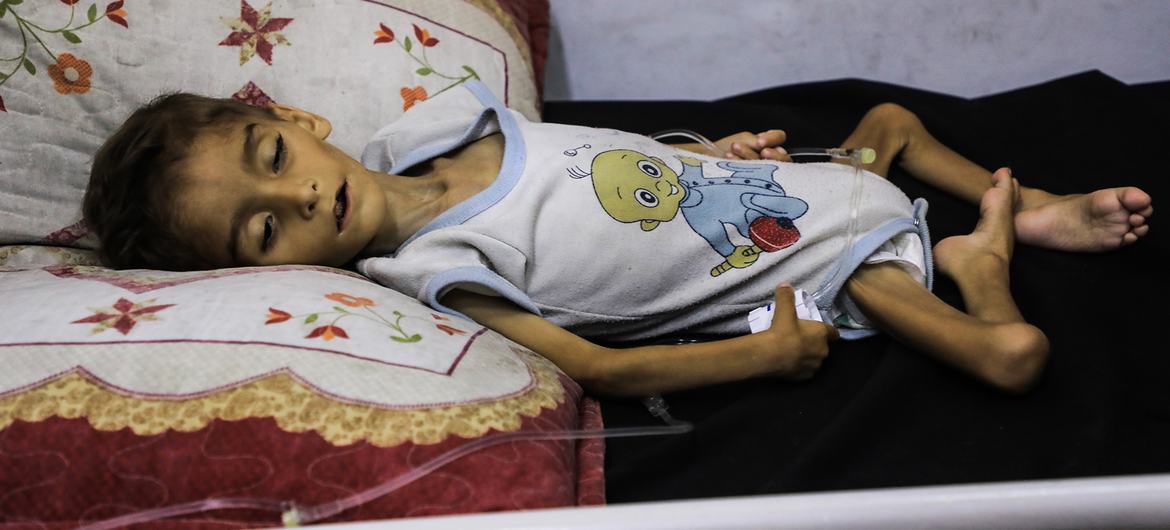
© UNICEF/Mohammed Nateel

A child suffering from malnutrition lies on a bed in the Patient Society Hospital in Gaza City .

‘More children will starve’

Ms. Ingram said children like Jana “are returning to emergency wards or relapsing just weeks after finishing treatment for malnutrition because of the ongoing lack of food, safe water and other essential supplies” in the Gaza Strip.

She affirmed that “without immediate and increased access to food and nutrition treatments, this recurring nightmare will deepen and more children will starve – a fate that is entirely preventable.”

UNICEF continues to respond to the crisis and in the past two weeks provided partners on the ground with enough ready-to-use therapeutic food to support more than 3,000 acutely malnourished children over the six-week course of treatment.

The agency also provided complimentary food to support more than 1,400 infants as well as high energy biscuits for more than 4,600 pregnant and breastfeeding women, among other assistance such as safe drinking water and construction of temporary learning centres.

“Our team is doing everything in their power to help children, but we could do far more, reach every child here, if our operations on the ground were enabled at scale and we were well funded,” she said.

Malnutrition numbers rising

UNICEF is seeking $716 million this year for its response in Gaza, where needs are immense and childhood malnutrition continues to rise. In February, just over 2,000 youngsters were admitted for treatment.  In July, the number climbed to 13,000 and by mid-August had already reached 7,200.

The agency continues to call on Israel to review its rules of engagement to ensure that children are protected, and for Hamas and other armed groups to release all remaining hostages, Ms. Ingram said.

She underlined the need for Israel to allow sufficient aid to enter, while humanitarians must be able to safely reach families where they are.

Her final plea was for the international community, especially States and stakeholders with influence, to use their leverage to end the war now: “because the cost of inaction will be measured in the lives of children buried in the rubble, wasted by hunger and silenced before they even had a chance to speak.” 

Source link

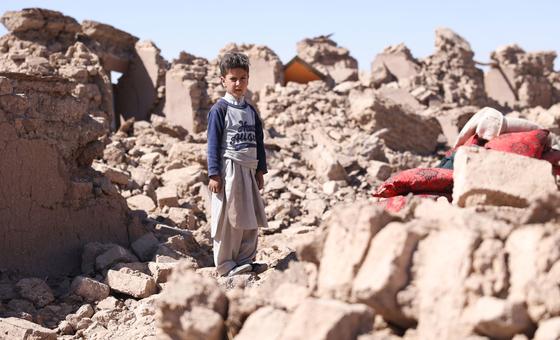
Aid effort underway after Afghanistan quake ‘wipes out’ villages

“I stand in full solidarity with the people of Afghanistan after the devastating earthquake that hit the country earlier today,” the Secretary-General said in an online message. “I extend my deepest condolences to the families of the victims and wish a speedy recovery to those injured. The @UN team in Afghanistan is mobilized and will spare no effort to assist those in need in the affected areas.”

On the ground, several UN agencies reported devastation across four eastern provinces of Afghanistan including Nangarhar and Kunar, where staff and humanitarian partners are already supporting relief efforts. 

Hundreds of houses are believed to have collapsed in remote hillside communities, where many likely crumbled on top of others located on terraces further downhill.

“When an earthquake of this magnitude happens, the homes basically tumble on top of each other,” Salam Al-Jabani from the UN Children’s Fund (UNICEF) told UN News. “And because it was so late at night, families were at home sleeping and that’s why we see such big losses.”  

The UN Humanitarian Air Service has scheduled additional flights connecting Kabul and Jalalabad for personnel and cargo to scale up the response. 

Trapped inside

Witnesses reported that the earthquake happened at around midnight local time, heightening fears that many Afghans may still be trapped under the rubble of their homes. The UN Children’s Fund (UNICEF) reported that many youngsters had been killed, as first responders said that poor phone and signal quality was impacting rescue and assessment activities.

The tremor’s epicentre is estimated to have been only around eight kilometres (six miles) underground, causing buildings to shake in the Afghan capital, Kabul, and in Pakistan’s capital city, Islamabad, according to reports.

Among those providing assistance are the UN Assistance Mission in Afghanistan (UNAMA), the UN aid coordination office (OCHA) the UN World Health Organization (WHO) and many more.

“As reports of deaths and injuries from the #earthquake in eastern region of #Afghanistan continue to emerge, @WHOAfghanistan teams are on the ground in hospitals and health facilities, supporting the treatment of the wounded and assessing urgent health needs,” the UN health agency said.

“We are actively delivering essential medicines and supplies and deploying health teams to affected areas to help #SaveLives.”

How the UN helps

United Nations teams are on the ground in more than 160 countries, working with the authorities and partners on joint programmes in communities to promote climate action, food security, gender equality and safety of civilians.

The UN has been present in Afghanistan since 1949; the global body’s work there is driven by the Resident Coordinator, Indrika Ratwatte, as head of a country team which includes around 20 UN agencies and international organizations such as the World Bank and Asian Development Bank.

International appeal

Also on the ground to provide assistance, the UN refugee agency, UNHCR, noted that up more than 2,000 people have been likely injured in the province of Kunar alone. It is feared that the trading city of Jalalabad may have suffered a “very high death toll”, said UNHCR spokesperson Babar Baloch.

The UN agency is among those rushing lifesaving support to affected areas including medical equipment, shelter, clean water, tents and blankets. It underscored how the emergency has added “death and destruction” to Afghanistan’s many other existing human challenges that include drought and the return of millions of nationals from neighbouring countries.

Mr. Baloch insisted that the scale of this disaster “far exceeds the current capacity of local authorities and communities… We are appealing to the donor community globally to support urgently required relief efforts. Afghans need our support and assistance now, before it’s too late for many others.”

Aid teams will have to overcome challenging terrain to help some of the most remote communities who can only be reached on foot, OCHA noted.

It said that the de facto authorities have deployed heavy machinery to Nurgal and Chawkay districts to remove road blockages and that some sections have reportedly been reopened. Critically injured people have also been airlifted by helicopterto Jalalabad and Asadabad hospitals which are now the main referral points for victims in Nangarhar and Kunar provinces.

But “a number of isolated communities” can only be reached by foot with travel time currently up to three hours from the point of obstruction, OCHA noted, highlighting those in Dewagal Valley in Chawkay district and Mazar Valley in Nurgal district, Kunar province.

The earthquake is one of the worst to hit Afghanistan and comes less than two years since three deadly 6.3 magnitude quakes shook Herat on the other side of the country. They struck on 7, 11 and 15 October, killing 1,480 people and injuring 1,950 others across 382 villages, leaving widespread destruction.

Source link

Amid ongoing Israeli attacks, ‘the systematic destruction of Gaza City is already underway’: UN rights office

Recent attacks have been particularly devastating in the Az Zaytoun neighbourhood, where airstrikes, artillery shelling and gunfire are continuous and intense, causing a high number of civilian casualties and the large-scale destruction of residential buildings and public facilities, the UN human rights office, OHCHR, in the Occupied Palestinian Territory said in a statement.

Since 8 August, the office has recorded 54 attacks on residential buildings and entire blocks in Gaza City, killing 87 Palestinians, including at least 25 children and entire families.

It also recorded attacks on shelters for internally displaced people, including tents and schools, killing at least 14.

These casualty figures “indicate that the systematic destruction of Gaza City is already underway,” the statement said.

However, OHCHR stressed that these devastating figures are only a portion of the actual toll due to underreporting in such dire circumstances.

Impact of attacks

As a result of recent attacks, hundreds of families have been forced to flee, with nowhere safe to go amid dire humanitarian conditions across the Gaza Strip.

However, those who remain trapped are completely cut off from food, water and medical supplies.

OHCHR emphasised that “Israel’s reported decision to take full control of Gaza City and to forcibly displace its population will lead to mass killings of civilians and destruction of infrastructure vital to the survival of the population.”

The office is seeing the Israeli military repeat means of warfare that caused mass killings, serious injuries, forced displacement, arbitrary detention, starvation and extensive destruction in previous operations in North Gaza and Rafah.

To reportedly prepare for the offensive, the Israeli military has repeatedly called on Palestinians to move to Al Mawasi, west of Khan Younis.

However, Israel has repeatedly struck tents of the displaced in Al Mawasi, where people are struggling to survive with barely any access to food, water and other necessities.

Violations of international law

Under international law, Israel must not destroy civilian property unless it is rendered necessary by military operations. Yet, the widespread destruction of residential buildings in Gaza City is not seen as an imperative military necessity.

Additionally, by forcing the entire population of Gaza City and those remaining in North Gaza into displacement – with no shelter, food or medical provisions and no indication for allowing them to return to their homes in the future – OHCHR is concerned that these are grave breaches of the Fourth Geneva Convention.

Thus, the office is urging States party to the Geneva Conventions to follow their obligation “to exert maximum pressure on Israel to immediately halt this offensive, which risks triggering an unprecedented, life-threatening humanitarian crisis and permanently extinguishing the Palestinian presence in Gaza’s largest urban area.”

Worst-case famine

Meanwhile, the World Food Programme (WFP) welcomed Japan’s life-saving contribution of 500 million yen ($3.3 million) to provide emergency food and nutrition assistance to Palestinians as they face severe food insecurity.

Adding to the assistance, on 4 August, limited commercial truck entries resumed, containing mainly dry food items and a small amount of fresh produce, according to the UN aid coordination office, OCHA.

However, the risk of spoilage and infestation of food supplies has drastically increased due to being stranded for months, heat and impending expiration dates.

Furthermore, cooking gas has not entered Gaza for over five months, and firewood has become increasingly unaffordable, forcing many to use waste and scrap wood as alternative cooking sources, exacerbating health and environmental risks.

Due to such limited aid, WFP underscored that the latest Integrated Food Security Phase Classification report finds that the worst-case scenario of famine is currently occurring in the Gaza Strip.

“I meet families who have lost everything and don’t know where their next meal will come from.” said Antoine Renard, WFP Representative and Country Director in Palestine.

But thanks to this support from Japan, he continued, “WFP can continue procuring life-saving food assistance, but we urgently need a ceasefire and sustained access to reach those most at risk and prevent a full-scale famine.” 

The final straw? Plastic pollution talks get underway in Geneva

Unless an international accord is inked, plastic waste is projected to triple by 2060, causing significant damage – including to our health – according to the UN Environment Programme (UNEP).

The UNEP-led talks follow a decision in 2022 by Member States to meet and develop an international legally binding instrument to end the plastic pollution crisis, including in the marine environment, within two years.

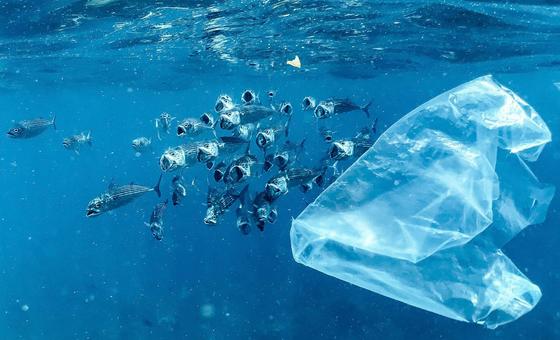
The scale of the problem is massive, with straws, cups and stirrers, carrier bags and cosmetics containing microbeads just a few of the single-use products ending up in our oceans and landfill sites.

Supporters of a deal have compared it to the Paris Climate Accord in terms of its significance. They have also pointed to the pressure allegedly being brought to bear against a deal by petrostates, whose crude oil and natural gas provide the building blocks of plastics.

“We will not recycle our way out of the plastic pollution crisis: we need a systemic transformation to achieve the transition to a circular economy,” UNEP Executive Director Inger Andersen has insisted.

Circular argument

The aim of the deal is for it to encompass the full life cycle of plastics, from design to production and disposal “to promote plastic circularity and prevent leakage of plastics in the environment”, according to the text being used to guide the talks of the Intergovernmental Negotiating Committee (INC) gathering in the Swiss city.

At 22 pages, the INC document contains 32 draft articles which will be discussed line by line. The text is designed to shape the future instrument and will serve as a starting point for negotiations.

10-day stint

For 10 days from 5-14 August, delegations from 179 countries are due to pore over the INC text as they meet at UN Geneva, alongside more than 1,900 other participants from 618 observer organizations including scientists, environmentalists and industry representatives.

A key aim of the meeting is to share tried and tested ways of reducing plastic use such as non-plastic substitutes and other safer alternatives.

Ahead of the talks in Geneva, the respected medical journal The Lancet published a warning that the materials used in plastics cause extensive disease “at every stage of the plastics life cycle and at every stage of human life”.

According to more than two dozen health experts cited in the journal, infants and young children are particularly vulnerable. “Plastics are a grave, growing, and under-recognized danger to human and planetary health” and are responsible for health-related economic losses exceeding $1·5 trillion annually”, it noted.

To follow the plastic pollution talks live on UN Web TV, click here: https://webtv.un.org/en/asset/k16/k16cqrvu2w 

Leading the talks in Geneva is Jyoti Mathur-Filipp, Executive Secretary of the Intergovernmental Negotiating Committee (or the INC) on Plastic Pollution, and Head of the INC Secretariat.

“In 2024 alone, humanity was projected to consume over 500 million tonnes of plastic. Of this, 399 million tonnes will become waste,” she said.

Latest forecasts indicate that plastic leakage into the environment will grow 50 per cent by 2040. “The cost of damages from plastic pollution could rise as high as a cumulative $281 trillion between 2016 and 2040,” she maintained. 

The road to an international accord:

Five negotiation sessions towards a plastics treaty have taken place so far:

  • The first was in Uruguay in November 2022.
  • Two more followed in 2023 – in France and Kenya.
  • In April 2024, the Intergovernmental Negotiating Committee (INC) convened in Canada.
  • Most recently, discussions took place in Busan, Republic of Korea, at the end of last year. These talks were adjourned after delegations agreed to resume discussions in Geneva, under the leadership of the Chair of the Committee, Ambassador Luis Vayas Valdivieso of Ecuador.

Source link