
UN chief warns of ‘grave moment’ as final US-Russia nuclear arms treaty expires

In a statement issued as the treaty expired at midnight GMT Thursday, he said the world was entering uncharted territory, with no remaining legally binding constraints on the nuclear arsenals of the United States and the Russia – the two countries that together hold the vast majority of the world’s nuclear weapons.

For the first time in more than half a century, we face a world without any binding limits on the strategic nuclear arsenals” of the two countries, he said.

The New START treaty – formally known as the Treaty on Measures for the Further Reduction and Limitation of Strategic Offensive Arms – was signed in 2010 and entered into force the following year.

It capped each side’s deployed strategic nuclear warheads at 1,550 and imposed limits on delivery systems such as intercontinental ballistic missiles and heavy bombers.

The agreement also included verification measures, including data exchanges, notifications and on-site inspections, designed to reduce mistrust and prevent miscalculation.

Tools for stability

Mr. Guterres said decades of nuclear arms control agreements – from the Cold War-era Strategic Arms Limitation Talks to New START – played a crucial role in preventing catastrophe and reducing global nuclear stockpiles.

Throughout the Cold War and in its aftermath, nuclear arms control between these governments helped prevent catastrophe,” he said, adding that such frameworks “built stability” and “prevented devastating miscalculation.”

The Secretary-General warned that the collapse of this system of restraint comes at a particularly dangerous time, as geopolitical tensions rise and the risk of nuclear weapon use is “the highest in decades.”

Reimagine arms control

But he added that the watershed also provides an opportunity to reimagine arms control for a changing security environment, welcoming statements from both US and Russian presidents acknowledging the dangers of a renewed nuclear arms race.

The world now looks to the Russian Federation and the United States to translate words into action,” Mr. Guterres said, urging both sides to return to negotiations “without delay” and to agree on a successor framework that restores verifiable limits, reduces risks and strengthens global security.

Source link

Yemen: Security Council votes on final extension of Hudaydah Mission

Resolution 2813 (2026), submitted by the United Kingdom, received 13 votes in favour and none against. Two countries – China and Russia – abstained. 

It calls for the effective, efficient and safe drawdown of the UN Mission to Support the Hudaydah Agreement (UNMHA), as well as planning and preparation for transitioning any residual functions to the Office of the Secretary-General’s Special Envoy for Yemen. 

Liquidation will commence on 1 April. 

Tireless efforts 

UNMHA was established by the Council in 2019 to support implementation of an agreement signed by the Yemeni Government and Houthi rebels in Stockholm, Sweden, the previous year. 

The UN brokered the accord at a time when a battle over Hudaydah – critical for the entry of food and medicine into war-ravaged Yemen – appeared imminent.  

UK Deputy Permanent Representative Archie Young welcomed the mandate extension.  

He also thanked “those UNMHA officials who have worked tirelessly since 2019, especially in the face of continued Houthi restrictions which inhibited the Mission’s ability to fulfill its mandate.” 

Concern for UN personnel 

He stressed that the safety of UN personnel in Yemen “remains of the utmost importance” and reiterated the UK’s condemnation of arbitrary detentions by the Houthis. 

The rebel movement which controls much of the country, including the capital, is holding 69 UN staff, alongside personnel from non-governmental organizations (NGOs), civil society and diplomatic missions.  

UN Secretary-General António Guterres, his Special Envoy Hans Grundberg and other senior officials have repeatedly called for their immediate and unconditional release

Important stabilising role 

Russia’s Deputy Permanent Representative Anna Evstigneeva explained why Moscow abstained from voting. 

“We did not block the adoption of this resolution purely due to the request of representatives of Yemen, as the host state, as well as from some of our regional partners,” she said. 

“In principle, we do not agree with the idea set out by the authors of this document:  the idea that UNMHA is ineffective and incapable of duly fulfilling the mandate entrusted to it by the Council, hence the need to sunset the Mission.”  

She said the Mission “has played and continues to play an important stabilising role on the ground, notwithstanding the operational difficulties linked to implementation of its mandate, which arise from time to time.”  

Among its “still relevant functions” are monitoring implementation of the Stockholm Agreement; facilitating maintenance of the civilian nature of the ports of Hudaydah, Salif and Ras Isa, and oversight of mine clearance operations.  

Source link

COP30 enters its final stretch: urgency, ambition, and voices from the streets

UN climate chief Simon Stiell set the tone on Monday:

“There is a deep awareness of what’s at stake, and the need to show climate cooperation standing firm in a fractured world.”

His warning was blunt: “There is no time to lose with delays and obstruction.”

For the next two days, ministers will lay out their positions in what is often the most charged phase of the summit. Mr. Stiell urged delegations to tackle the hardest issues now – not in a last-minute scramble.

“There is no time to waste with tactical delays or stonewalling,” he said, and added: “The time for performative diplomacy has now passed.”

© UNFCCC/Diego Herculano

Simon Stiell, Executive Secretary of UN Climate Change, speaks during the Opening Plenary of the High-Level Segment.

The President of the UN General Assembly echoed that urgency, reminding negotiators that despite “headwinds” and the many “ebbs and flows” of climate talks, they “do not have the luxury of wallowing when people are counting on them.”

Annalena Baerbock struck a note of optimism, pointing to unstoppable momentum in renewables and innovation: “The money exists but needs to be redirected.”

She highlighted a stark figure: developing countries paid $1.4 trillion last year in external debt service – funds that could transform climate action if channeled into clean energy and resilience.

Speaking to reporters, Ms. Baerbock recalled that on Sunday she had taken a 30-minute boat ride from Belém to visit Combu Island

There, on the edge of the Amazon rainforest, she met with local Indigenous communities “who are showing how sustainable development, economic growth, and protection of the forest can go hand-in-hand.”

This, she said, “underlines again that climate action is not a ‘nice to have’. It’s not a charity. Climate action is in all of our security and economic interests.”

The 30th edition of the annual UN climate summit opened last Monday on 10 November and is set to wrap up this coming Friday.

From words to action: Brazil calls for a new era

Brazil’s Vice-President Geraldo Alckmin declared that COP30 must mark a turning point. “The world must stop debating goals and start fulfilling them,” he declared, adding that this means moving from negotiation to implementation.  

Mr. Alckmin spotlighted the Belém Commitment, an initiative to quadruple the use of sustainable fuels by 2035, already backed by 25 nations. He called for creativity in areas like bioeconomy and decarbonization, reaffirming Brazil’s pledge to “clean energy, innovation, and inclusion.”

Brazilian officials confirmed two major decision packages are now on the table: one tied to frameworks and topics mandated by previous COPs​, and the other covering additional issues under negotiation, such as a gender action plan​. 

A draft of the first package is expected midweek, but COP30 President André Corrêa do Lago warned the schedule will be tight, with night sessions likely.

Beyond the official halls: People’s Summit delivers its verdict

While ministers debated inside, the streets of Belém pulsed with energy. The People’s Summit, held from 12–16 November, drew more than 25,000 participants – the largest ever – and culminated in a climate justice march of 70,000 people, the biggest demonstration of its kind.

On Sunday, civil society handed over a package of proposals to Mr.do Lago, along with COP30 CEO Ana Toni and key ministers including Marina Silva and Sônia Guajajara.

Maureen Santos, from the Summit’s political committee, told us:

“I think this COP is serving as an example of democracy not only for the United Nations, but also for the world. And this is what multilateralism is: when parties truly engage beyond States, and you see greater visibility for those suffering the impacts of the crisis, who also bring forward the alternatives to confront it.”

Social movements are pressing hard on climate finance, warning of potential “ecological debts,” and demanding a broader vision of just transition – one that includes jobs, food sovereignty, and territorial rights, not just renewable energy.

Agência Brasil/Tânia Rêgo

The president of COP30, Ambassador André Corrêa do Lago, gives a speech during the closing of the People’s Summit.

Solidarity in action: 300,000 meals served

The People’s Summit wasn’t just about speeches. It was about solidarity. Groups like the Landless Workers Movement (MTST) organized a vast “solidarity kitchen,” drawing on experience from last year’s flood response in Rio Grande do Sul.  

Over 300,000 free meals were served, featuring Amazonian staples like jambu, açaí, and pirarucu.

Rudi Rafael, who helped lead the operation, described the scale:

“We had 21 pots of 500 liters each, with a production line preparing meal boxes in just 26 seconds.”

For many, the kitchen symbolized hope, especially for those defending indigenous lands, traditions and cultures. It is a reminder that climate justice is as much about dignity and community as it is about policy.

UN News is reporting from Belém, bringing you front-row coverage of everything unfolding at COP30.

Security Council: UN peacekeeping mission in Lebanon extended for a ‘final time’

But the resolution stipulates it will then begin a one year “orderly and safe drawdown and withdrawal of its personnel”, in close consultation with the Lebanese Government.

The UN Interim Force in Lebanon (UNIFIL) was established by the Security Council in 1978 to oversee the withdrawal of Israeli troops from the south and has played an important role in monitoring security in southern Lebanon ever since.

The mission’s ‘blue helmets’ are mandated to implement resolution 1701 which brought an end to hostilities between Israeli forces and Hezbollah militants in 2006.

Since the formal end of fighting between the two sides last November which devastated areas of southern Lebanon, UNIFIL has been supporting the national army’s (LAF) mission to establish full control of the south – but Israel continues to have a presence in violation of Lebanese sovereignty.

Continuing role during drawdown

During the withdrawal period after the end of next year, the resolution says UNIFIL is authorised to continue providing security and assistance to UN personnel, while continuing to “maintain situational awareness” around UNIFIL outposts and bases.

It will also “contribute to the protection of civilians and the safe civilian-led delivery of humanitarian assistance.”

Furthermore, the resolution calls on the Secretary-General to present options by 1 June next year for the future implementation of resolution 1701 to establish a permanent end to fighting between Israel and militants in Lebanon.

Negotiations went down to the wire this week, with the United States acting Permanent Representative telling Thursday’s meeting it was already time for Lebanese forces to assume greater responsibility, without UN peacekeepers.

Penholder France led negotiations over the mandate, and their representative told ambassadors that UNIFIL’s ongoing efforts were vital: “Any premature withdrawal could undermine or even weaken the efforts of the Lebanese Government” in the south, he said.
Source link

The final straw? Plastic pollution talks get underway in Geneva

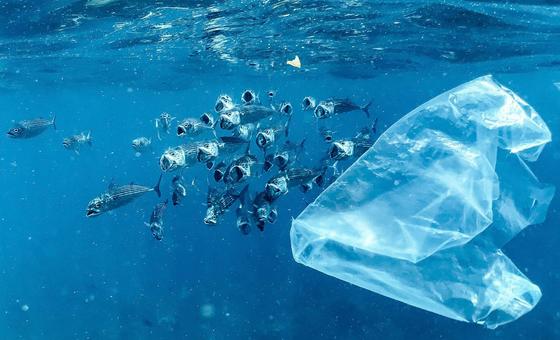
Unless an international accord is inked, plastic waste is projected to triple by 2060, causing significant damage – including to our health – according to the UN Environment Programme (UNEP).

The UNEP-led talks follow a decision in 2022 by Member States to meet and develop an international legally binding instrument to end the plastic pollution crisis, including in the marine environment, within two years.

The scale of the problem is massive, with straws, cups and stirrers, carrier bags and cosmetics containing microbeads just a few of the single-use products ending up in our oceans and landfill sites.

Supporters of a deal have compared it to the Paris Climate Accord in terms of its significance. They have also pointed to the pressure allegedly being brought to bear against a deal by petrostates, whose crude oil and natural gas provide the building blocks of plastics.

“We will not recycle our way out of the plastic pollution crisis: we need a systemic transformation to achieve the transition to a circular economy,” UNEP Executive Director Inger Andersen has insisted.

Circular argument

The aim of the deal is for it to encompass the full life cycle of plastics, from design to production and disposal “to promote plastic circularity and prevent leakage of plastics in the environment”, according to the text being used to guide the talks of the Intergovernmental Negotiating Committee (INC) gathering in the Swiss city.

At 22 pages, the INC document contains 32 draft articles which will be discussed line by line. The text is designed to shape the future instrument and will serve as a starting point for negotiations.

10-day stint

For 10 days from 5-14 August, delegations from 179 countries are due to pore over the INC text as they meet at UN Geneva, alongside more than 1,900 other participants from 618 observer organizations including scientists, environmentalists and industry representatives.

A key aim of the meeting is to share tried and tested ways of reducing plastic use such as non-plastic substitutes and other safer alternatives.

Ahead of the talks in Geneva, the respected medical journal The Lancet published a warning that the materials used in plastics cause extensive disease “at every stage of the plastics life cycle and at every stage of human life”.

According to more than two dozen health experts cited in the journal, infants and young children are particularly vulnerable. “Plastics are a grave, growing, and under-recognized danger to human and planetary health” and are responsible for health-related economic losses exceeding $1·5 trillion annually”, it noted.

To follow the plastic pollution talks live on UN Web TV, click here: https://webtv.un.org/en/asset/k16/k16cqrvu2w 

Leading the talks in Geneva is Jyoti Mathur-Filipp, Executive Secretary of the Intergovernmental Negotiating Committee (or the INC) on Plastic Pollution, and Head of the INC Secretariat.

“In 2024 alone, humanity was projected to consume over 500 million tonnes of plastic. Of this, 399 million tonnes will become waste,” she said.

Latest forecasts indicate that plastic leakage into the environment will grow 50 per cent by 2040. “The cost of damages from plastic pollution could rise as high as a cumulative $281 trillion between 2016 and 2040,” she maintained. 

The road to an international accord:

Five negotiation sessions towards a plastics treaty have taken place so far:

  • The first was in Uruguay in November 2022.
  • Two more followed in 2023 – in France and Kenya.
  • In April 2024, the Intergovernmental Negotiating Committee (INC) convened in Canada.
  • Most recently, discussions took place in Busan, Republic of Korea, at the end of last year. These talks were adjourned after delegations agreed to resume discussions in Geneva, under the leadership of the Chair of the Committee, Ambassador Luis Vayas Valdivieso of Ecuador.

Source link

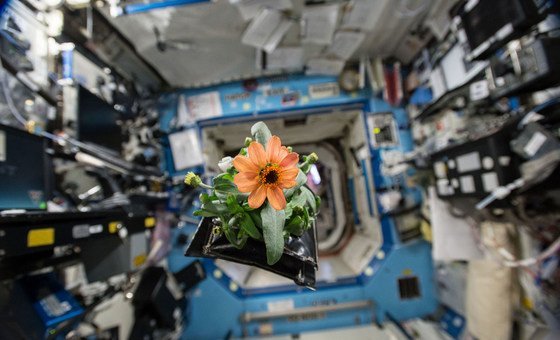
Space is not the final frontier – it is the foundation of our future: UN deputy chief

Addressing delegates at a UN forum on peaceful uses of outer space, Amina Mohammed urged greater international cooperation as the world becomes increasingly reliant on satellites for everything from disaster response to climate monitoring.

Space is not the final frontier. It is the foundation of our present,” she said.

“Without satellites orbiting overhead right now, global food systems would collapse within weeks. Emergency responders would lose their lifelines. Climate scientists would be flying blind. And our hopes of achieving the Sustainable Development Goals (SDGs) would be out of reach,” she added.

Expanding access to space

For nearly seven decades, the UN Committee on the Peaceful Uses of Outer Space – the forum’s official name, has advanced international cooperation through five space treaties, sustainability guidelines and the Space 2030 Agenda.

Ms. Mohammed highlighted the UN’s efforts through the Office for Outer Space Affairs (OOSA), in helping make space more accessible – particularly for the more than half of UN Member States that still lack a satellite in orbit.

OOSA’s programmes are opening opportunities for youth and women in developing countries, cultivating a more inclusive new generation of space leaders.

It also supports countries in building their space capabilities through technical workshops and assistance for emerging programmes, having assisted Kenya, Guatemala, Moldova and Mauritius in launching their first satellites.

Similarly, it is helping countries like Tonga, Trinidad and Tobago and Ghana, use satellite data to create detailed digital models of entire cities, allowing faster disaster response and saving lives.

Space and sustainable development

Fresh from the Fourth International Conference on Financing for Development in Sevilla, Spain, Ms. Mohammed stressed that the areas the UN defines as critical for sustainable development acceleration all depend on space technologies.

She also relayed a critical message from the conference: “In an era of constrained investment, we must align capital with high-impact solutions,” she said. “Space is one of them.”

The view from space shows no countries, no borders – only one shared planet, one common home. Let that perspective guide you as you build the governance frameworks for space exploration and use,” she concluded.

Let us make space a catalyst for achieving the SDGs.” 

Source link