‘When finance flows, ambition grows’: COP30’s call for action

At every negotiation table and in every diplomatic statement lies a stark truth shared by nations on the front lines of the climate crisis: without funding, there is no path to safety, justice, or survival.

Many urgent actions are required to secure a livable planet and protect millions of lives. But all of them – every breakthrough, every shield of resilience – depend on one essential driver: financing.

On Saturday, discussions at the UN climate change conference, as the annual COPs are formally known, revolved around financial mobilization, or what leaders called the engine of climate transition.

A question of survival

Convening the Third High-Level Ministerial Dialogue on Climate Finance, COP30 heard from representatives of nations deeply affected by climate impacts, many of whom described access to financial resources as “a matter of survival.”

UN General Assembly President Annalena Baerbock said in her opening remarks that COP30 should mark the beginning of implementing up to $1.3 trillion in annual climate finance – disbursements that “reach those most in need, quickly, transparently and fairly.”

She stressed that climate action and social justice are “inseparable,” noting:

“Climate insecurity fuels hunger and poverty, poverty drives migration and conflict; and conflict, in turn, deepens poverty and deters investment.”

Breaking this vicious cycle, she said, is essential to deliver on global climate goals.

Renewable energy takes the lead

Reflecting on the 10th anniversary of the Paris Agreement, Ms. Baerbock recalled that in 2015, many delegates had been moved to tears by the historic outcome that produced the first legally binding global climate treaty, involving more than 190 countries.

She noted that at the time, renewable energy was widely considered “unrealistic.” Today, it is the fastest-growing energy source on Earth.

In 2024, global investment in clean energy reached $2 trillion – about $800 billion more than in fossil fuels. Solar power has become the cheapest form of electricity in history.

Africa’s untapped potential

Yet Ms. Baerbock warned that “vast potential remains untapped because capital is still not flowing to where it is most needed,” particularly in Africa.

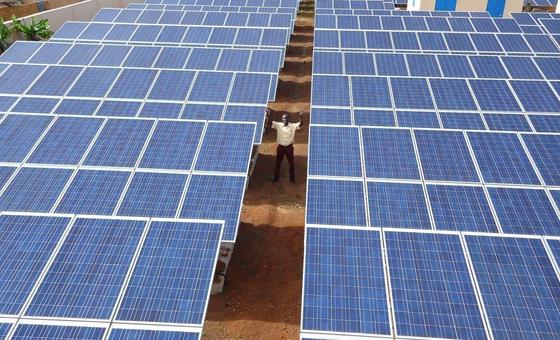
More than 600 million Africans still lack access to electricity, even though the continent’s renewable energy potential is 50 times greater than the world’s projected electricity demand for 2040.

She urged developed nations to fulfill their technological and financial commitments and to advance reform of global financial institutions.

The ‘lifeblood’ of climate action

UN Climate Change Executive Secretary Simon Stiell also addressed the meeting, underscoring the transformative power of climate finance.

He described finance as the “lifeblood of climate action,” capable of turning “plans into progress” and “ambition into implementation.”

Mr. Stiell stressed that the most vulnerable countries continue to face major challenges, accessing funds that have long been pledged.

‘When finance flows, ambition grows’

Despite billions invested worldwide in clean energy, resilience and just transitions, Mr. Stiell said the total volume remains “neither sufficient nor predictable enough,” and not equitably shared.

At COP30, the world is looking for proof that climate cooperation delivers.

“Real finance, flowing fast and fair, is central to that proof,” he said, urging delegates to not only demonstrate that climate cooperation is working, but that investments made now can shape the “growth story of the 21st century.”

The UN climate chief emphasized:

“When finance flows, ambition grows,” enabling implementation that creates jobs, lowers the cost of living, improves health outcomes, protects communities and secures a more resilient, prosperous planet for all.

UN News is reporting from Belém, bringing you front-row coverage of everything unfolding at COP30.

COP30 enters its final stretch: urgency, ambition, and voices from the streets

UN climate chief Simon Stiell set the tone on Monday:

“There is a deep awareness of what’s at stake, and the need to show climate cooperation standing firm in a fractured world.”

His warning was blunt: “There is no time to lose with delays and obstruction.”

For the next two days, ministers will lay out their positions in what is often the most charged phase of the summit. Mr. Stiell urged delegations to tackle the hardest issues now – not in a last-minute scramble.

“There is no time to waste with tactical delays or stonewalling,” he said, and added: “The time for performative diplomacy has now passed.”

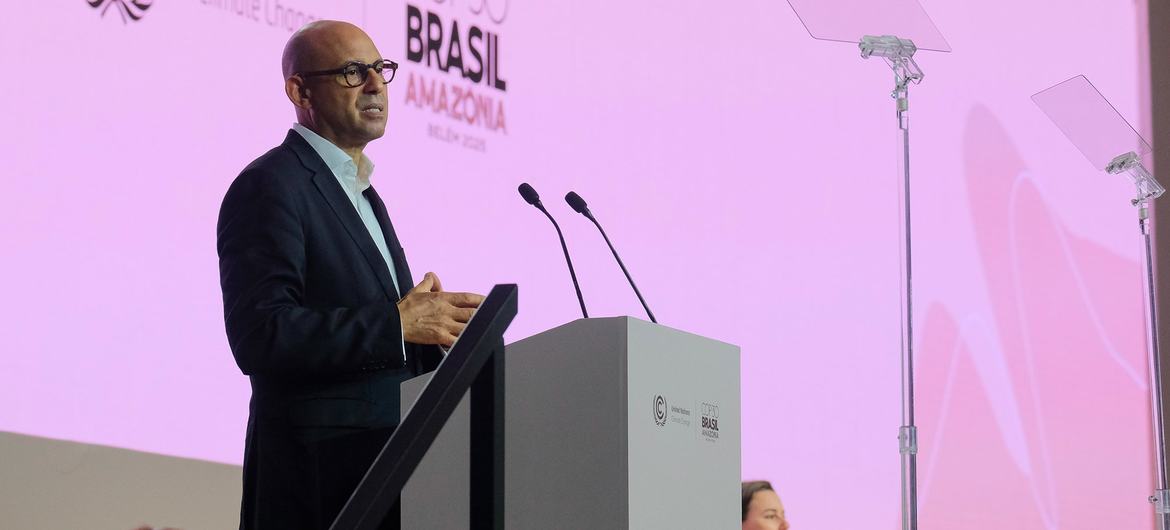
© UNFCCC/Diego Herculano

Simon Stiell, Executive Secretary of UN Climate Change, speaks during the Opening Plenary of the High-Level Segment.

The President of the UN General Assembly echoed that urgency, reminding negotiators that despite “headwinds” and the many “ebbs and flows” of climate talks, they “do not have the luxury of wallowing when people are counting on them.”

Annalena Baerbock struck a note of optimism, pointing to unstoppable momentum in renewables and innovation: “The money exists but needs to be redirected.”

She highlighted a stark figure: developing countries paid $1.4 trillion last year in external debt service – funds that could transform climate action if channeled into clean energy and resilience.

Speaking to reporters, Ms. Baerbock recalled that on Sunday she had taken a 30-minute boat ride from Belém to visit Combu Island

There, on the edge of the Amazon rainforest, she met with local Indigenous communities “who are showing how sustainable development, economic growth, and protection of the forest can go hand-in-hand.”

This, she said, “underlines again that climate action is not a ‘nice to have’. It’s not a charity. Climate action is in all of our security and economic interests.”

The 30th edition of the annual UN climate summit opened last Monday on 10 November and is set to wrap up this coming Friday.

From words to action: Brazil calls for a new era

Brazil’s Vice-President Geraldo Alckmin declared that COP30 must mark a turning point. “The world must stop debating goals and start fulfilling them,” he declared, adding that this means moving from negotiation to implementation.  

Mr. Alckmin spotlighted the Belém Commitment, an initiative to quadruple the use of sustainable fuels by 2035, already backed by 25 nations. He called for creativity in areas like bioeconomy and decarbonization, reaffirming Brazil’s pledge to “clean energy, innovation, and inclusion.”

Brazilian officials confirmed two major decision packages are now on the table: one tied to frameworks and topics mandated by previous COPs​, and the other covering additional issues under negotiation, such as a gender action plan​. 

A draft of the first package is expected midweek, but COP30 President André Corrêa do Lago warned the schedule will be tight, with night sessions likely.

Beyond the official halls: People’s Summit delivers its verdict

While ministers debated inside, the streets of Belém pulsed with energy. The People’s Summit, held from 12–16 November, drew more than 25,000 participants – the largest ever – and culminated in a climate justice march of 70,000 people, the biggest demonstration of its kind.

On Sunday, civil society handed over a package of proposals to Mr.do Lago, along with COP30 CEO Ana Toni and key ministers including Marina Silva and Sônia Guajajara.

Maureen Santos, from the Summit’s political committee, told us:

“I think this COP is serving as an example of democracy not only for the United Nations, but also for the world. And this is what multilateralism is: when parties truly engage beyond States, and you see greater visibility for those suffering the impacts of the crisis, who also bring forward the alternatives to confront it.”

Social movements are pressing hard on climate finance, warning of potential “ecological debts,” and demanding a broader vision of just transition – one that includes jobs, food sovereignty, and territorial rights, not just renewable energy.

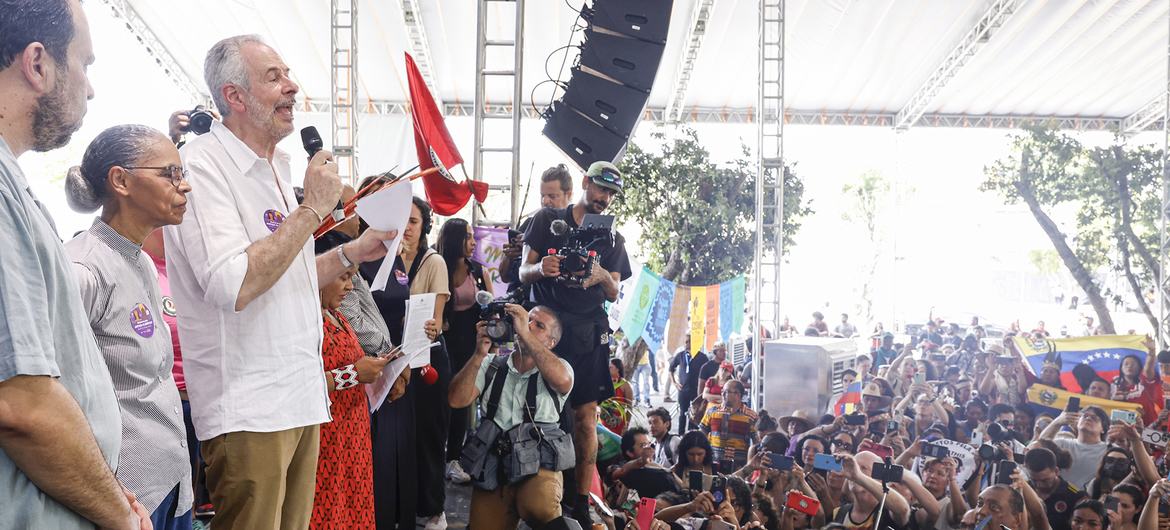
Agência Brasil/Tânia Rêgo

The president of COP30, Ambassador André Corrêa do Lago, gives a speech during the closing of the People’s Summit.

Solidarity in action: 300,000 meals served

The People’s Summit wasn’t just about speeches. It was about solidarity. Groups like the Landless Workers Movement (MTST) organized a vast “solidarity kitchen,” drawing on experience from last year’s flood response in Rio Grande do Sul.  

Over 300,000 free meals were served, featuring Amazonian staples like jambu, açaí, and pirarucu.

Rudi Rafael, who helped lead the operation, described the scale:

“We had 21 pots of 500 liters each, with a production line preparing meal boxes in just 26 seconds.”

For many, the kitchen symbolized hope, especially for those defending indigenous lands, traditions and cultures. It is a reminder that climate justice is as much about dignity and community as it is about policy.

UN News is reporting from Belém, bringing you front-row coverage of everything unfolding at COP30.