
COP30 enters its final stretch: urgency, ambition, and voices from the streets

UN climate chief Simon Stiell set the tone on Monday:

“There is a deep awareness of what’s at stake, and the need to show climate cooperation standing firm in a fractured world.”

His warning was blunt: “There is no time to lose with delays and obstruction.”

For the next two days, ministers will lay out their positions in what is often the most charged phase of the summit. Mr. Stiell urged delegations to tackle the hardest issues now – not in a last-minute scramble.

“There is no time to waste with tactical delays or stonewalling,” he said, and added: “The time for performative diplomacy has now passed.”

© UNFCCC/Diego Herculano

Simon Stiell, Executive Secretary of UN Climate Change, speaks during the Opening Plenary of the High-Level Segment.

The President of the UN General Assembly echoed that urgency, reminding negotiators that despite “headwinds” and the many “ebbs and flows” of climate talks, they “do not have the luxury of wallowing when people are counting on them.”

Annalena Baerbock struck a note of optimism, pointing to unstoppable momentum in renewables and innovation: “The money exists but needs to be redirected.”

She highlighted a stark figure: developing countries paid $1.4 trillion last year in external debt service – funds that could transform climate action if channeled into clean energy and resilience.

Speaking to reporters, Ms. Baerbock recalled that on Sunday she had taken a 30-minute boat ride from Belém to visit Combu Island

There, on the edge of the Amazon rainforest, she met with local Indigenous communities “who are showing how sustainable development, economic growth, and protection of the forest can go hand-in-hand.”

This, she said, “underlines again that climate action is not a ‘nice to have’. It’s not a charity. Climate action is in all of our security and economic interests.”

The 30th edition of the annual UN climate summit opened last Monday on 10 November and is set to wrap up this coming Friday.

From words to action: Brazil calls for a new era

Brazil’s Vice-President Geraldo Alckmin declared that COP30 must mark a turning point. “The world must stop debating goals and start fulfilling them,” he declared, adding that this means moving from negotiation to implementation.  

Mr. Alckmin spotlighted the Belém Commitment, an initiative to quadruple the use of sustainable fuels by 2035, already backed by 25 nations. He called for creativity in areas like bioeconomy and decarbonization, reaffirming Brazil’s pledge to “clean energy, innovation, and inclusion.”

Brazilian officials confirmed two major decision packages are now on the table: one tied to frameworks and topics mandated by previous COPs​, and the other covering additional issues under negotiation, such as a gender action plan​. 

A draft of the first package is expected midweek, but COP30 President André Corrêa do Lago warned the schedule will be tight, with night sessions likely.

Beyond the official halls: People’s Summit delivers its verdict

While ministers debated inside, the streets of Belém pulsed with energy. The People’s Summit, held from 12–16 November, drew more than 25,000 participants – the largest ever – and culminated in a climate justice march of 70,000 people, the biggest demonstration of its kind.

On Sunday, civil society handed over a package of proposals to Mr.do Lago, along with COP30 CEO Ana Toni and key ministers including Marina Silva and Sônia Guajajara.

Maureen Santos, from the Summit’s political committee, told us:

“I think this COP is serving as an example of democracy not only for the United Nations, but also for the world. And this is what multilateralism is: when parties truly engage beyond States, and you see greater visibility for those suffering the impacts of the crisis, who also bring forward the alternatives to confront it.”

Social movements are pressing hard on climate finance, warning of potential “ecological debts,” and demanding a broader vision of just transition – one that includes jobs, food sovereignty, and territorial rights, not just renewable energy.

Agência Brasil/Tânia Rêgo

The president of COP30, Ambassador André Corrêa do Lago, gives a speech during the closing of the People’s Summit.

Solidarity in action: 300,000 meals served

The People’s Summit wasn’t just about speeches. It was about solidarity. Groups like the Landless Workers Movement (MTST) organized a vast “solidarity kitchen,” drawing on experience from last year’s flood response in Rio Grande do Sul.  

Over 300,000 free meals were served, featuring Amazonian staples like jambu, açaí, and pirarucu.

Rudi Rafael, who helped lead the operation, described the scale:

“We had 21 pots of 500 liters each, with a production line preparing meal boxes in just 26 seconds.”

For many, the kitchen symbolized hope, especially for those defending indigenous lands, traditions and cultures. It is a reminder that climate justice is as much about dignity and community as it is about policy.

UN News is reporting from Belém, bringing you front-row coverage of everything unfolding at COP30.

UN aims to transform urgency into action at Nice Ocean Conference

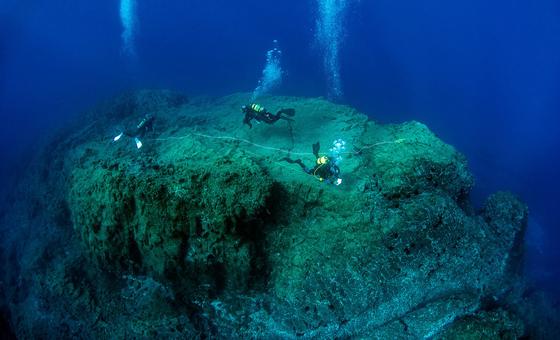
The third United Nations Ocean Conference (UNOC 3) from 9-13 June will bring together Heads of State, scientists, civil society and business leaders around a single goal: to halt the silent collapse of the planet’s largest – and arguably most vital – ecosystem.

The ocean is suffocating due to rising temperatures, rampant acidification, erosion of biodiversity, plastic invasion, predatory fishing.

‘A state of emergency’

Our planet’s life support system is in a state of emergency,” said Li Junhua, head of the UN Department of Economic and Social Affairs (DESA) and the Secretary-General of the upcoming summit. 

He insisted that there is still time to change course.

The future of the ocean is not predetermined.  It will be shaped by the decisions and actions that we are making now,” Mr. Li said on Tuesday during a press briefing at UN Headquarters in New York. 

In the eyes of the senior official, UNOC 3 “will not be just another routine gathering.” 

“We hope that it proves to be the pivotal opportunity to accelerate action and mobilize all stakeholders across the sectors and borders.”

World-class conference

More than 50 world leaders are expected on the Côte d’Azur, alongside 1,500 delegates from nearly 200 countries. 

The programme includes 10 plenary meetings, 10 thematic roundtables, a blue zone reserved for official delegations, and a series of parallel forums during five days of negotiations.

For France, which is co-hosting the conference alongside Costa Rica, the challenge is clear: to make Nice a historic milestone. 

“This is an emergency,” declared Jérôme Bonnafont, Permanent Representative of France to the UN, during the press conference.

“An ecological emergency: we are witnessing the deterioration of the quality of the oceans as an environment, as a reservoir of biodiversity, as a carbon sink.”

France hopes to make the conference a turning point and the goal “is to produce a Nice agreement that is pro-oceans, as the Paris Agreement 10 years ago now was for the climate.” 

This agreement will take the form of a Nice Action Plan for the Ocean, a “concise action-oriented declaration,” according to Mr. Li, accompanied by renewed voluntary commitments.

Three milestones

Three events will prepare the ground for UNOC 3.

The One Ocean Science Congress, from 4-6 June, will bring together several thousand researchers. The Summit on Ocean Rise and Coastal Resilience to be held the following day will explore responses to rising sea levels. Finally, the Blue Economy Finance Forum, on 7-8 June in Monaco, will mobilize investors and policymakers.

For Costa Rican Ambassador Maritza Chan Valverde, there is no more time for procrastination.

We’re expecting concrete commitments with clear timelines, budgets and accountability mechanisms. What is different this time around, zero rhetoric, maximum results,” she said.

‘Transform ambition into action’

The conference’s theme Accelerating Action and Mobilizing All Stakeholders to Conserve and Sustainably Use the Ocean will address several topics, ranging from sustainable fishing to marine pollution and the interactions between climate and biodiversity.

This is our moment to transform ambition into action,” Mr. Li concluded, calling for governments, businesses, scientists, and civil society to come together in a common spirit. 

He also praised the “visionary leadership” of France and Costa Rica, without whom this large-scale mobilization would not have been possible.

A slogan promoted by Costa Rica seems to sum up the spirit of the summit: “Five days. One ocean. One unique opportunity.” 

Source link