In the hands of innovators from the Global South, AI can transform lives

Fodder cutters are fearsome machines with huge circular blades spinning at high speed, powered by small generators. Operated by rural workers in several developing countries, including India, Pakistan and Kenya, they pose a constant risk – many have had hands or arms amputated following accidents.

The consequences are devastating. Tasks that shape daily life – harvesting crops, kneading dough, stitching embroidery – suddenly become impossible. Thousands of women are left with reduced independence, lost livelihoods, and, too often, social exclusion.

Until recently, advanced prosthetics were far beyond their reach. Now, homegrown AI tools are opening the door to the same kinds of sophisticated devices available in wealthier countries.

Karachi-based Bioniks Technologies partnered with UN Women to design and deliver prosthetic limbs tailored specifically for affected female workers in Pakistan’s Sindh province. The initiative harnessed frontier technologies – 3D modelling, digital scanning, and artificial intelligence – to create lightweight, durable, and intuitive bionic arms capable of transforming daily life.

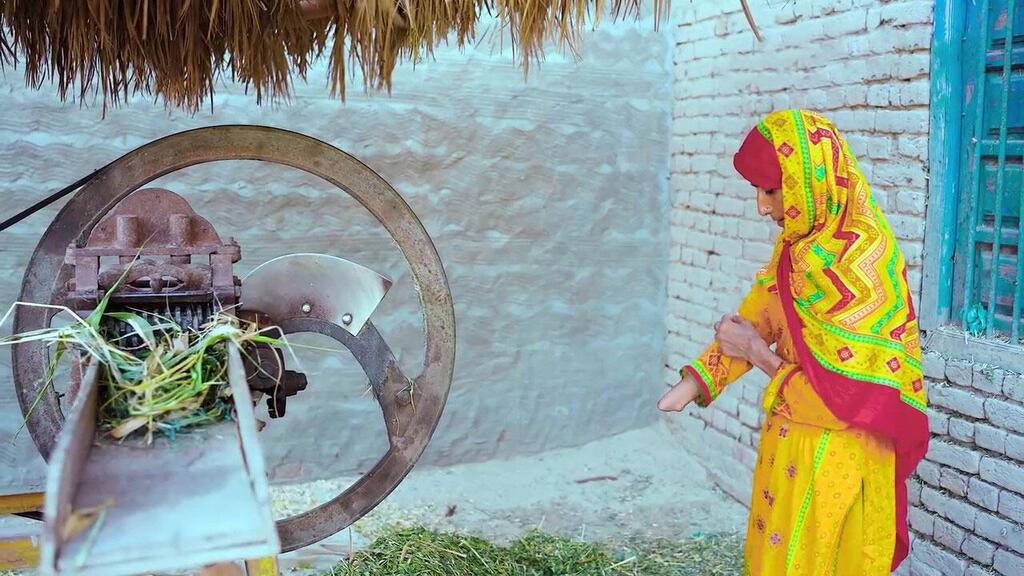
A rural Pakistani woman injured by a fodder cutter.

“Through this collaboration, we provided advanced prosthetic arms, hands-on training, psychological support and awareness sessions to help communities understand safety practices and prevent such injuries in the future,” says Ayesha Zulfiqar, co-founder of Bioniks.

“Watching these incredible women regain their mobility, dignity, independence and return to hand embroidery, their main source of income, has been profoundly inspiring. This is more than technology, it’s restoring hope, confidence and opportunity.”

The India AI Impact Summit: A first for the Global South

This initiative is a powerful example of what can be achieved when AI is available to innovators based in the Global South. 

Democratising AI is a major priority for the United Nations, which is working to ensure that this rapidly evolving technology is developed ethically and benefits people everywhere.

At the India AI Impact Summit, taking place from 16 to 20 February in New Delhi, several UN agencies will showcase the initiatives they are supporting in the country and across developing nations.

The Summit is the first major event of its kind in the Global South. Building on the momentum of the 2023 AI Safety Summit convened by the UK, and the 2025 AI Action Summit in France, it will also feature UN Secretary‑General António Guterres and Amandeep Gill, his Special Envoy for Digital and Emerging Technologies.

Speaking to author and podcaster Anirudh Suri in the run-up to the conference, Mr. Gill said that the UN is focused on bridging the growing ‘AI divide’ (between wealthy and developing economies, as well as the rich and poor within countries) and making AI more accessible to people everywhere.

“The concentration of economic and technological power is our biggest concern at the United Nations,” said Mr. Gill. “We’ve seen this story before, during previous industrial revolutions, when those who missed steam power found themselves 50 years behind in terms of development. We cannot afford to let that happen again.”

Despite the fears he expressed, Mr. Gill pointed to regions that have put plans in place to capitalise on AI and avoid being left behind. “I see this in Southeast Asia, in many parts of Africa and in India, where the government is taking the lead, subsidising access to AI for researchers, developers and smaller companies.”

Although the AI Impact Summit is not a UN event, Mr. Gill has been involved in shaping the agenda and considers it to be an important moment on the path to international governance. “It’s exciting to see the focus on bridging the AI divide, building capacity and involving citizens in a democratic approach to the technology.”

Source link

Deputy UN chief urges bold action to transform food systems at global summit in Addis Ababa

Delivering closing remarks at the UN Food Systems Summit +4 Stocktaking Moment (UNFSS+4) in Addis Ababa, co-hosted by Ethiopia and Italy, Ms. Mohammed praised the growing momentum behind food systems transformation.

But she also warned that with just five years left to 2030, “hunger and malnutrition persist. Climate shocks, conflict, debt, and inequality are widening the cracks in our systems.”

“Too often food systems are seen as part of our challenges,” she said. “When in fact, they can be one of the greatest solutions to deliver for people, planet, peace and prosperity.”

A global process for transformation

The UN Food Systems Summit process was launched in 2021 “in the midst of a global pandemic” to catalyse national and global action to make food systems more inclusive, resilient and sustainable.  

The 2025 stocktake brought together over 3,000 participants from governments, civil society, Indigenous Peoples, youth, and the private sector to assess progress and renew commitments.

To date, more than 130 countries have developed National Pathways for food systems transformation, supported by UN agencies and development partners.

Moving the UNFSS process forward

In her address, Ms. Mohammed highlighted several areas of progress and called for urgent, coordinated action:

  • Food systems as climate solutions: 
    “Food and agriculture are now part of the climate plans of 168 countries,” she said, noting their potential to reduce emissions and build resilience.
  • School meals as a strategic investment: 
    Over 170 countries are implementing school meal programmes. These are not just meals – they are investments in children, our farmers, and the future.
  • Cities driving innovation: 
    Urban centres are leading efforts to reduce food waste and strengthen local supply chains. Cities are showing what innovation looks like on the ground.
  • Inclusion is essential: 
    Ms. Mohammed called for inclusion of youth, Indigenous Peoples, women, and marginalized communities. “These are powerful commitments to transform food systems for people and the planet that you have helped inspire.”
  • Financing must match ambition: 
    She urged donors and development banks to align investments with national pathways.  

“As we conclude this Stocktake, we must acknowledge that we met in the face of challenges that test our moral values and threaten the future sustainability of our planet, underscoring the urgency of our work together.”

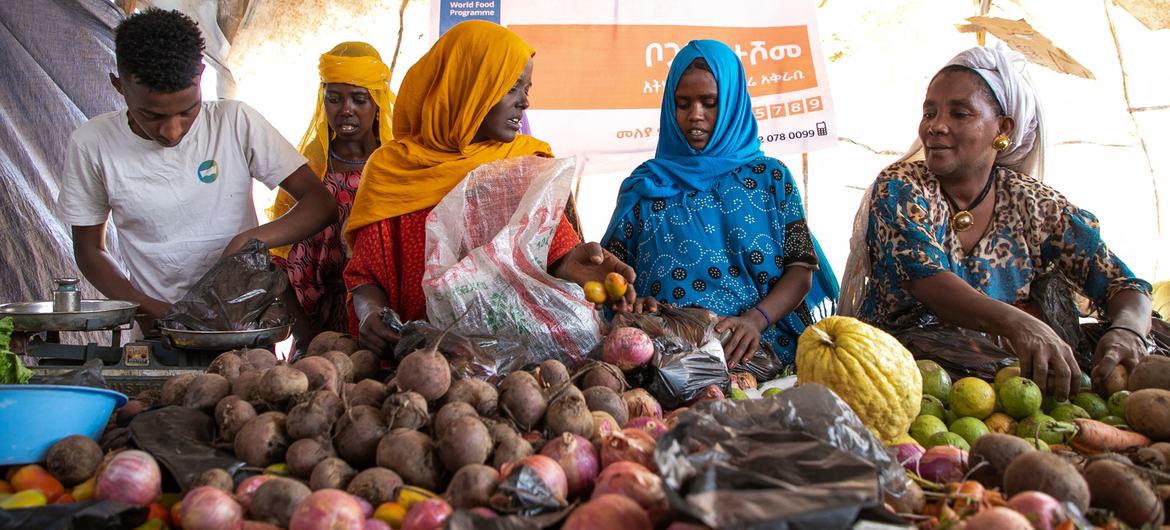
A food market in the Amhara region of Ethiopia.

Global hunger declines, but regional disparities persist

The Summit, which has been running in the Ethiopian capital since 27 July, saw the launch of the State of Food Security and Nutrition in the World 2025 (SOFI) report, which revealed a modest decline in global hunger – but a troubling rise in food insecurity in Africa and Western Asia  

Jointly produced by FAO, IFAD, UNICEF, WFP and WHO, the report highlights how persistent food price inflation has undermined access to healthy diets, especially for low-income populations. Vulnerable groups – including women, children, and rural communities – remain disproportionately affected.

The report calls for:

  • Coherent fiscal and monetary policies to stabilize markets
  • Open and resilient trade systems
  • Targeted social protection for at-risk populations
  • Sustained investment in resilient agrifood systems

While noting an encouraging decrease in the global hunger rate, the report underscored that progress is uneven. SOFI 2025 serves as a critical reminder that the international community must intensify efforts to ensure that everyone has access to sufficient, safe, and nutritious food.  

Hope for those who need it most

At a key side event on Tuesday, Ms. Mohammed appealed for long-term, inclusive solutions to food insecurity in crisis-affected regions. She highlighted the staggering toll of acute malnutrition, noting that over 37 million children under five will face acute malnutrition this year – nearly 10 million of them suffering from severe wasting, the deadliest form of undernutrition.

“Communities are trapped in relentless cycles of hardship,” she said. “But courage is on display at all moments.”

Ms. Mohammed urged governments and partners to move beyond short-term interventions and embrace transformative, locally driven solutions. She praised countries embedding resilience into national strategies and combining traditional knowledge with science to rebuild food systems.

“These governments are not waiting for permission – they are leading,” she said.

She outlined three priorities for action: Catalytic finance that builds local capacity; Coordinated responses that bridge humanitarian and development divides; and Community-centred approaches, especially for women and youth.

“Food systems transformation is especially critical in complex settings,” she said. “It drives food security, resilience, stability, and inclusive growth.”

She wrapped up the event with a call to strengthen multilateralism and unlock opportunity “for and with those who need it most.”

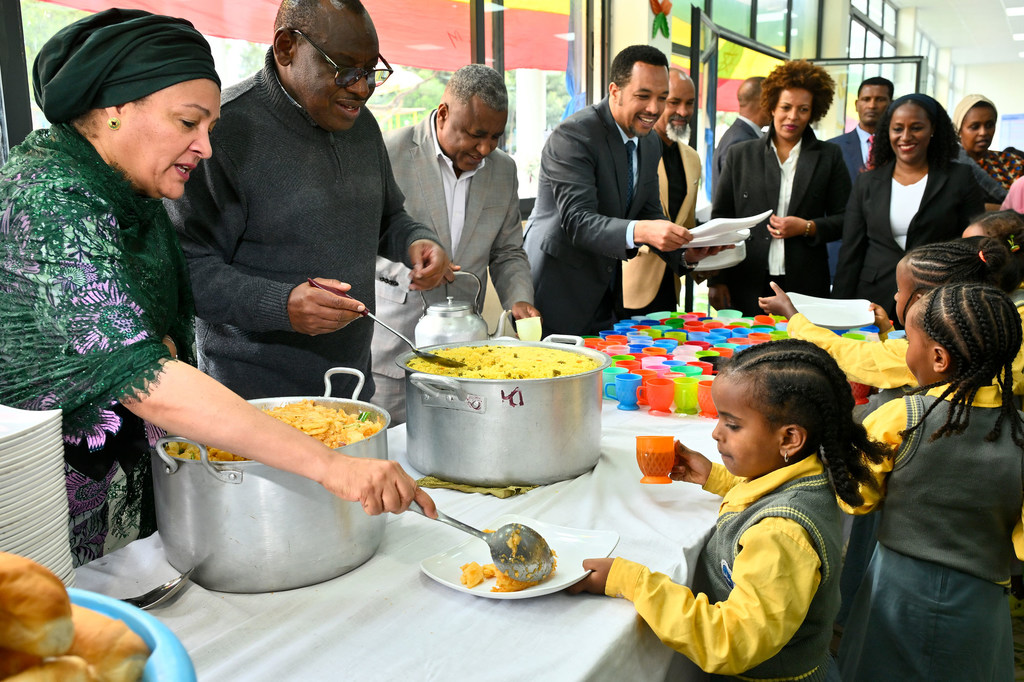
UN Deputy Secretary-General Amina Mohammed (left) serves food to children at a UN Food Systems Summit event in Addis Ababa, Ethiopia.

Looking ahead

Ms. Mohammed closed the Summit with a call to action:

“Our movement has shown what is possible when we work together in deliberate ways across sectors, stakeholders, and countries with a shared purpose.”

She called on governments and people everywhere to build on what has been accomplished and continue to work together for peace and to realize the vision of the 2030 Agenda.

“Let’s continue to lead the way – together.”

Source link

UN aims to transform urgency into action at Nice Ocean Conference

The third United Nations Ocean Conference (UNOC 3) from 9-13 June will bring together Heads of State, scientists, civil society and business leaders around a single goal: to halt the silent collapse of the planet’s largest – and arguably most vital – ecosystem.

The ocean is suffocating due to rising temperatures, rampant acidification, erosion of biodiversity, plastic invasion, predatory fishing.

‘A state of emergency’

Our planet’s life support system is in a state of emergency,” said Li Junhua, head of the UN Department of Economic and Social Affairs (DESA) and the Secretary-General of the upcoming summit. 

He insisted that there is still time to change course.

The future of the ocean is not predetermined.  It will be shaped by the decisions and actions that we are making now,” Mr. Li said on Tuesday during a press briefing at UN Headquarters in New York. 

In the eyes of the senior official, UNOC 3 “will not be just another routine gathering.” 

“We hope that it proves to be the pivotal opportunity to accelerate action and mobilize all stakeholders across the sectors and borders.”

World-class conference

More than 50 world leaders are expected on the Côte d’Azur, alongside 1,500 delegates from nearly 200 countries. 

The programme includes 10 plenary meetings, 10 thematic roundtables, a blue zone reserved for official delegations, and a series of parallel forums during five days of negotiations.

For France, which is co-hosting the conference alongside Costa Rica, the challenge is clear: to make Nice a historic milestone. 

“This is an emergency,” declared Jérôme Bonnafont, Permanent Representative of France to the UN, during the press conference.

“An ecological emergency: we are witnessing the deterioration of the quality of the oceans as an environment, as a reservoir of biodiversity, as a carbon sink.”

France hopes to make the conference a turning point and the goal “is to produce a Nice agreement that is pro-oceans, as the Paris Agreement 10 years ago now was for the climate.” 

This agreement will take the form of a Nice Action Plan for the Ocean, a “concise action-oriented declaration,” according to Mr. Li, accompanied by renewed voluntary commitments.

Three milestones

Three events will prepare the ground for UNOC 3.

The One Ocean Science Congress, from 4-6 June, will bring together several thousand researchers. The Summit on Ocean Rise and Coastal Resilience to be held the following day will explore responses to rising sea levels. Finally, the Blue Economy Finance Forum, on 7-8 June in Monaco, will mobilize investors and policymakers.

For Costa Rican Ambassador Maritza Chan Valverde, there is no more time for procrastination.

We’re expecting concrete commitments with clear timelines, budgets and accountability mechanisms. What is different this time around, zero rhetoric, maximum results,” she said.

‘Transform ambition into action’

The conference’s theme Accelerating Action and Mobilizing All Stakeholders to Conserve and Sustainably Use the Ocean will address several topics, ranging from sustainable fishing to marine pollution and the interactions between climate and biodiversity.

This is our moment to transform ambition into action,” Mr. Li concluded, calling for governments, businesses, scientists, and civil society to come together in a common spirit. 

He also praised the “visionary leadership” of France and Costa Rica, without whom this large-scale mobilization would not have been possible.

A slogan promoted by Costa Rica seems to sum up the spirit of the summit: “Five days. One ocean. One unique opportunity.” 

Source link